Instagram Live with Celest Pereira, DPT 4/16/2025
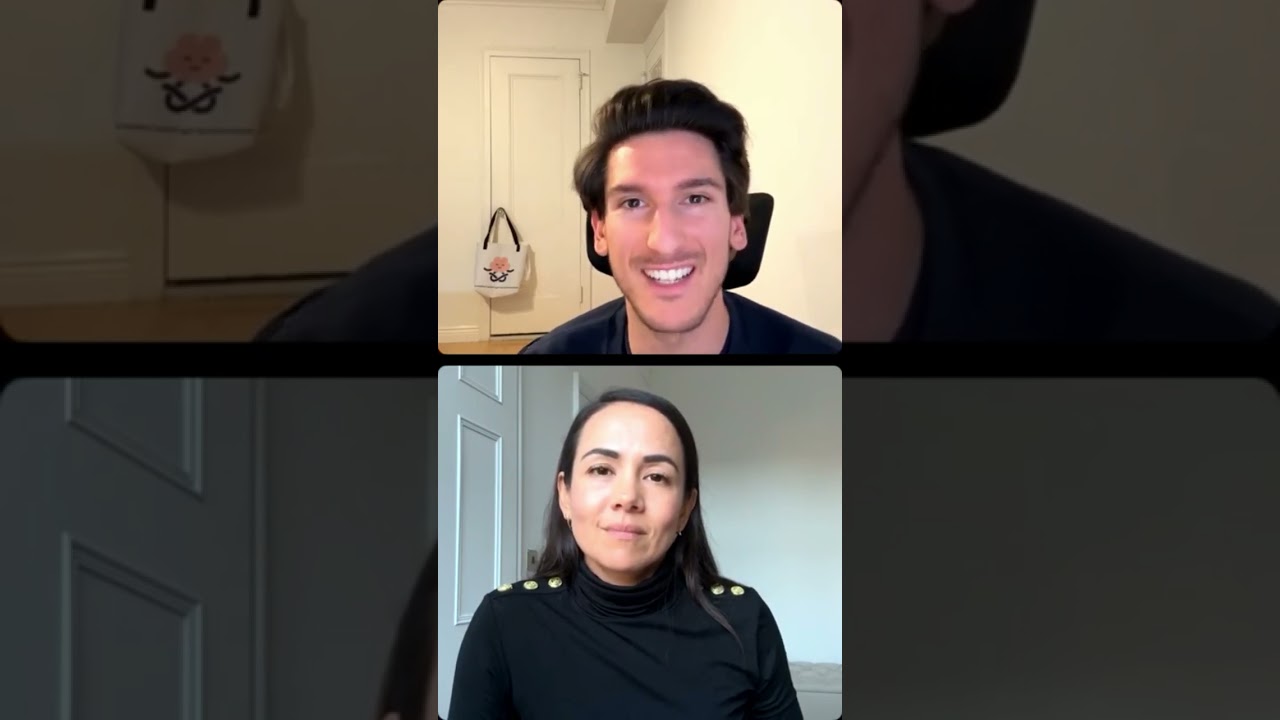
Functional neurologist Celest Pereira discusses treating concussion and post-concussive syndrome with yoga-based tools like vision drills, breath-work, and proprioceptive training. About 20% of concussions develop into lasting post-concussive syndrome, which she says the medical system under-recognizes. Her clinical approach combines aerobic exercise, targeted breathing, sensory mapping, and vision work, tracked through symptom monitoring.
Chapters
Hello everyone. Hey Celeste.
Hey Jonathan, and welcome everyone to our live.
Hello everyone. So happy you're here. So we have a very special live today. I, I think less of an interview, more of a discussion, but I do have some questions for Celeste. And I'm super excited because Celeste is an expert in yoga interventions, using yoga to help people with brain injury and concussion. And she's going to be sharing some of her work during the upcoming Neuroscience and Yoga Conference. And I'm really looking forward to it. I've had a little bit of a sneak peek of it, but I'm excited for the actual class.
Just mention to everyone that actually there's already been 4,000 people that have signed up to the yoga conference that you're running and everyone's invited. So if you haven't already, I highly recommend grabbing your spot.
Thank you, Celeste. Yes, I'm, I was just going to say the conference is free if anyone wants to attend and there are upgrade options if you want to take them.
And they are. The conference is fantastic. Like we had Dr. Jonathan speak at our, our teacher training and it was absolutely mind-blowing. People were beside themselves afterwards. So thank you for your time and sharing your knowledge with us.
Likewise, Celeste. Thank you. So I have a really important question to start with for you, which is, it's a challenging one. What, what does your personal yoga practice look like?
So, I go to my local yoga studio where I have my local teacher. But what I will say is that my yoga practice looks a little bit different to most people in the room because I have been specializing as a functional neurologist. And I've been taking the tools that I've been learning and actually applying them to my own body to either amplify my practice, to make me better at certain things, or to help rehab certain issues that my body's facing. And I would say that's what makes it distinctive and look a little bit different. So, anything from potentially using a vision stick to practice things Like convergence is something that I will do potentially before a deep forward fold because convergence will help to stimulate your flexor tone. These little hacks are the kinds of things that I'll probably kind of pepper into my practice.
That's really interesting. And tell me a little bit more about like your background and what got you interested in this and yeah, how you got started.
So I'm a qualified physiotherapist and I decided that after my degree I would get my teacher training and then I've been teaching since 2008 actually. So I decided that at a certain point when I wanted to start specializing, just to be a little bit more targeted in my approach, and I started to realize actually how many people struggled with post-concussion syndrome. They often come to me with challenges such as chronic pain. And interestingly, the pain moves around and they often engage in months and months of physical therapy, which is unsuccessful. And it's a real shame because it's quite debilitating in terms of how they're managing to live their lives. And it's actually when I then start addressing the concussion that the people's symptoms start to improve.
Yeah. And it's, it's, you mentioned that it was a huge number. I think it's something like 20-ish percent of people who get a concussion will end up developing post-concussive syndrome. So that's symptoms like migraine, difficulty concentrating, mood disturbances lasting more than 3 months. And so this is a significant percent of the population. There's so many people who would benefit from these types of interventions and I just have to say there's no alternative really. Like there's the, there's no medication for concussion, post-concussive syndrome. There's no surgery for it. And, you know, there are some growing modalities that might be helpful, but these kinds of interventions that you're talking about are, are one of the best tools that we have right now. Would you agree with that? Yeah.
And actually just to, sorry, go back a quick step to the statistics that you just raised, I would actually put my neck on the line to argue that that's probably quite conservative. Particularly because most people don't connect the dots. When they do have a concussion, it's either very mild, so they're sent home. And I think that the scans that a lot of even the severe concussed people go through come back actually that these people are okay. But when we start to rehab the concussion, this is years after the concussion, when we actually start to take someone's history and go, oh, you had 2 whiplash injuries, like, Maybe we should address that. So many people, chronic pain, mood issues, sleep issues, light sensitivity, sound sensitivity, these things that they're living with, struggling with so much day to day, start to get better. And so I personally think that actually the medical, the medical world maybe needs to start taking any head trauma, no matter how mild, far more seriously. And actually they should, they should be more targeted. directions that we can send people in to help get help from very early because it's actually, there's so many like little easy things that people can do to help them rehab quite quickly if they know what to do.
Right. Yeah, because many of the exercises are going to target the visual system, the coordination system, and just with those rehab exercises, people can get a lot better.
Yeah. Visual system is a big one. I would say the vestibular system, the cerebellum, those are other 2 really big systems. And I would say things like really encouraging people with post-concussion syndrome to do cardiovascular exercise because often their brain is using far more energy and yet they're not getting the oxygen supply that they need. So I think this is where yoga really comes in and can be quite powerful because yoga, of course, puts a massive emphasis on breathwork. And actually something that's not traditionally yogic, but it is a breathwork tool that is Highly effective for people with post-concussion syndrome is air hunger drills. Because when you start to hold your breath, you increase the amount of carbon dioxide and increased CO2 opens the gateways for oxygen to be absorbed into the tissues. So when we analyze their oxygen saturation with a pulse oximeter, they often have high blood oxygen saturation, but they are not getting that oxygen into their brain. And so that is where something like And that can be so, so useful, but just any kind of correct breathing is already such a brilliant step in the right direction. Another, and not typically yogic, but you can easily do this with yoga pants, is just to tie them around your waist so that it's a resisted breath. And that resistance against your respiratory muscles is so, so powerful for people's rehab.
That's really interesting. And do you tell us about how you apply this clinically, like in your physical therapy practice? And yeah, tell us about how, how you've been doing that.
So I basically have got like a little checklist of things which I run through, and I typically start with the first 2. First, I make sure that they understand the power of aerobic exercise and how important that is. And so if it is more of a yoga client, I'll make sure that I start to incorporate cardiovascular drills into the session. Secondly, I mentioned already breathing. And then we start going into things like mapping, you know, understanding that their joints, particularly their jaw, the joint-rich areas of the hand, thoracic spine, seat, those need to be very well mapped because they have such a strong influence on the neural tissue that they connect with. And when I say things should be well mapped, that I'm not just talking in terms of movement mapping, but also sensory mapping. And sensory mapping, of course, is far more than just hands touching bodies. This can also be hot, cold, sharp, dull vibration. All of those tools can help to improve proprioception. And so particularly, I mentioned joint-rich areas, but scars, tattoos, these are typically quite undermapped areas of the brain. So if we can light those tissues up, it can actually help. People improve quite a lot. We've obviously spoken already about vision and the vestibular system, but really simple exercises that we can do with people, teaching them how to get their eyes to track smoothly with targets, how to get them to converge and diverge appropriately without their eyes, two eyes doing two different things, actually the eyes working together. You'd think, oh, that's so easy. That sounds so simple. But for a lot of people that have sustained a head trauma, and guys, even if you haven't sustained a head trauma, disuse atrophy is a massive issue in today's society because we're so much on our devices. We've lost the ability to actually have our eyes moving together. And this doesn't just have an implication on acuity, AKA how well you can see. It has a huge implication on how well your body functions because your eyes, it doesn't stop with vision. It has an impact on all of the musculature and how efficiently your body is moving through life.
Yeah, I used to, so there's this blood test called the erythrocyte sedimentation rate, the ESR. It's like a measure of inflammation. And the chair of my department used to say that the smooth pursuit of the eyes, so the ability to follow something, you know, with smooth pursuit without having choppy eye movements, that's like the ESR of the brain. So it's basically like measuring someone's brain inflammation, just like a quick and dirty way. And there's some truth to that, you know, not just some, there's quite a bit of truth to that, that any kind of injury or insult to the brain, including inflammatory, traumatic, the responses to the trauma, including the inflammation that comes after, really affects people's visual system. And it's one of the easiest places to detect subtle changes with concussion and then to help people get better. So it's really a, it's one of the biggest parts of concussion.
I will say one thing though, because, you know, a lot of times, particularly in the movement world, we'll look at the body from the neck down and we'll influence movement, you know, to help our bodies function better. We forget actually that so much is governed here, particularly the brainstem and the cranial nerves. If we can actually target what's happening up here, it has a massive effect on everything underneath the neck. But we need to remember that some people are not going to respond well. To bottom-up approach, and some people will not respond well to a top-down approach. So what I mean by that is using your body to influence how well your brain is functioning, or using brain tools to influence how well your body's functioning. We have to test. I think one of the things that I really wanted to emphasize was even if you're a yoga teacher, even if you're a physical therapist, we shouldn't just be thinking, well, you know, this tool. is really, really powerful to help people rehab, we should be testing it because individualization is so hypercritical for people to get better. Yeah.
Yeah. Because, you know, sometimes people say like, if you've seen one person with concussion, you've seen one person with concussion because each one is so unique and different.
Exactly. And so there are definitely some patterns. I use like a really clever little measuring chart and it tracks things like Sleep, mood, discomfort in their bodies, light sensitivity, sound sensitivity. And it has a ratio from 0 to 6. And I get before each session then to create a tick on how severe things have been for them that week. And my goal is to see if the intervention that I'm applying is moving their ticks closer to the zeros, because then I know what I'm doing is successful. If they're staying all the way over in the 6s, what I'm doing isn't working.
Yeah.
And I think that that is a test-retest. I think everybody A, should be taking a history, whether you're a movement coach or a doctor. And B, we should be using these trackers to kind of see if our intervention is effective.
Yeah. We do have a question from the audience, which is, what do you think about a combination of both top-down and bottom-up?
Absolutely brilliant, but we do need to test, as I mentioned. What are— the reason I mentioned top-down, bottom-up is some people, for example, I have a post-concussional client. When I do vestibular drills with her, which is your inner ear, and we start to tilt the head and keep the eyes focused or move the eyes along with a target like this, and it affects your balance, she gets very nauseous and very dizzy straight away. So a top-down approach for her is really ineffective. However, we get really great results when we do joint mapping, sensory mapping. Then we can actually see that that helps to improve Her neurological function. And then it makes it easier for us to go into things like vestibular drills.
Can you clarify what would be a top-down approach for someone like that? Like, what would that look like compared to the more body approach?
Uh, so that would be something like all of your cranial nerves are a top-down approach, your vision drills and your vestibular drills, your cerebellar drills. A body approach would be, I mean, they're all interlinked. It's hard to separate the systems because everything is kind of It's one at the end of the day. But if I was going to do more sensory work on the peripheral nervous system to improve proprioception, or I was going to do more motor-based work, it still obviously all comes from the brain or goes back to the brain. But sensory work, I would say, is one of the best bottom-up approaches that you can use for people.
Yeah. Yeah, I totally agree with you that sometimes the top-down, bottom-up thing gets really blurry. Like what, what actually, what's top, what's bottom here? Like, Exactly. But yeah, I think, I think I know during the class that you're doing during the conference that there's going to be a lot more of this and people already are asking, you know, where they can learn more about you and your work. And I think that your Instagram page is a great place. Oh, for sure. So for anyone asking, you'll easily be able to find that with this Instagram Live. And then also during the conference, you'll have an hour-long session with us, which I think everyone's really looking forward to.
I'm so excited. Yeah, I've got a whole slide deck prepared for you guys. We're going to go into a lot of this stuff. We're going to be doing a lot of the drills as well. So come ready to move because I'm going to make you do the vision drills. The vestibular drills will be test, retesting. And I think that's going to be powerful for you because you're going to be able to feel, wow, when I do a vestibular drill, that makes me dizzy. Now I just want to clarify, whilst that is very common, it's not normal. You should be able to move your head in lots of different ways and not get dizzy or nauseous off the back of that. That is a normal function. But if it is problematic for you, then it's something you have to rehab because it can only get worse as you age and falls are such a high risk for the elderly, for their mortality. So yeah, I just, just, I'm very excited about sharing what I have prepared for the conference.
Yes. And it will be a very practical session with people walking away with exactly what exercises they can incorporate.
Exactly.
So I think that's awesome. And so that's going to be April 24th, 9:00 AM Eastern Standard Time, which is 2:00 PM UK time.
I'm glad you figured that out for me. I was like, okay.
I have so many time zones memorized now to keep track of every speaker's schedule.
You're incredible. And just well done for your hard work, because obviously we know you're working full time. You give so much love to this conference. It's such a huge value add to the community. So what you're doing is very, very special.
Thank you so much, Celeste. And likewise for all that you're doing. I think that your education initiatives are really, really helping people. And I'm, I'm really looking forward to your talk. I'm really looking forward to the Brain Injury Day, which is April 24th. And if anyone has any questions for either of us, pop 'em in the chat really quickly now before we wrap up. Or, you know, you can just DM us. Exactly. We're Both pretty nailed.
Absolutely. Thank you so much, Jonathan. It's been a pleasure speaking again.
Likewise. And I always look forward to talking to you and I likewise look forward to next week.
Yeah. Thank you everybody.
Bye. Thank you. Bye.










