Instagram Live with Dr. Rajbhandari 4/7/2025
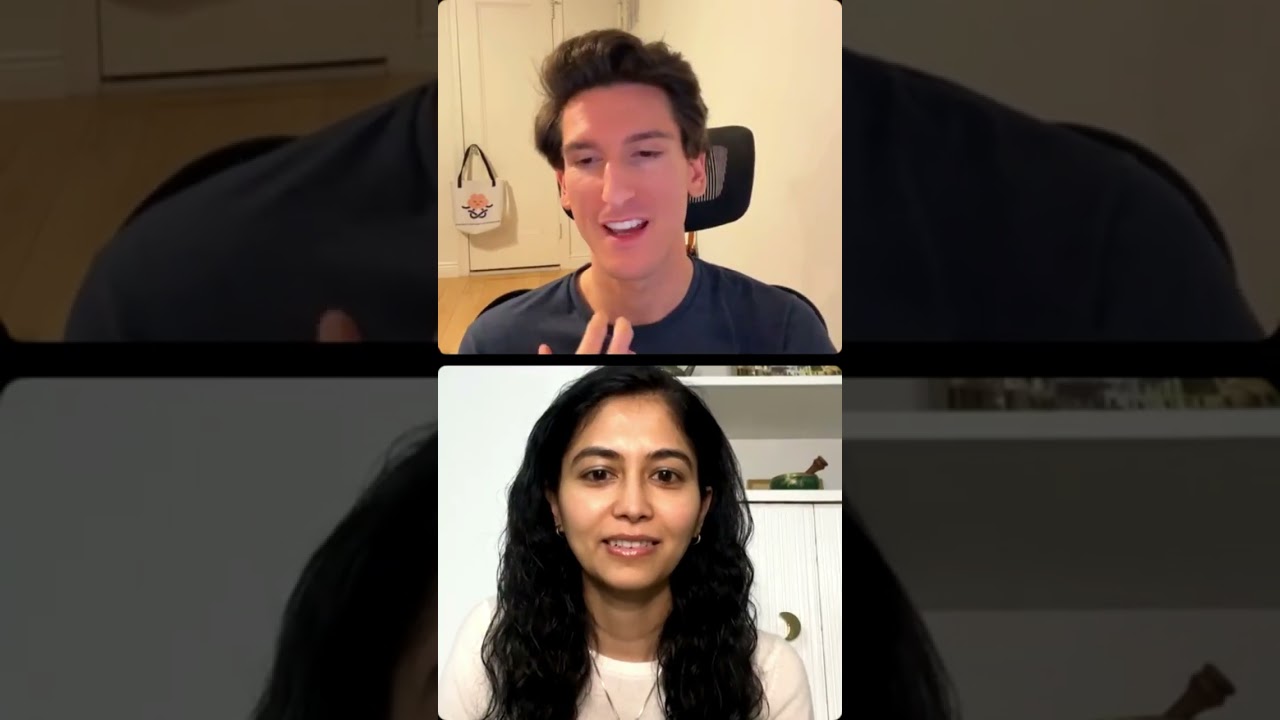
Dr. Jonathan Rosenthal and Dr. Abha Karki Rajbhandari discuss the 2025 Neuroscience and Yoga Conference (April 23-27), which will make 8,500 yoga studies freely accessible. Three tracks cover brain injury, endocrine health, and reproductive health, with speakers like Dr. Reema Datta on male infertility and Dr. Elissa Epel on prenatal stress. Registration includes free online, paid CE options, and in-person day passes.
Chapters
Hello. We're, we're doing a live with Abha today. Hello, Dr. Rajbhandari.
Hello, Dr. Rosenthal.
How are you doing?
I'm okay. How about you?
Pretty good. I think I did something weird. There was this, there was this button when I opened live that was like 8K HD or something. And I was like, my camera is in HD. Like, I wonder what this does, but I think it just made me look orange actually.
Really bright.
It's very bright.
Such a gloomy day today, so it worked.
Yeah, exactly.
Like very little light all day.
So we have a very special Instagram Live tonight, and we'll just give it a couple more seconds so people can log in. But we're going to be talking about 3 interesting topics: yoga and brain injury, yoga and endocrine health, and yoga and Reproductive health. And we'll also be talking about the upcoming Neuroscience and Yoga Conference.
Exciting.
And just having a fun conversation, lots of opportunity for discussion and questions. And yeah, we love talking about this stuff.
So. Yeah. Thank you all for joining. And then we'll have this recorded also, right on the, on our pages.
Correct. And I should be able to download it and also send it out via email. So that's—
Oh, wonderful. I didn't know you could do that.
Yeah. Hello everyone. All right, maybe we can get started. Should we introduce ourselves? Sure.
Who, who wants to go first? You wanna?
Sure, I can go first. So I am Jonathan. Hello everyone. I am a neurologist in New York City, which means that I'm a medical doctor that specializes in diseases of the nervous system. I have a very niche subspecialty called intraoperative monitoring where I try to prevent injuries to the brain and spine during surgeries. But outside of that, I have a really strong interest in yoga. I started practicing as a teenager sort of because I read a book about yoga and got really interested in that. And after practicing for some time, I found my current teacher, Sri Dharmamitra, and I've been a student of his for 14 years now, which is pretty crazy. And I And I, I always felt kind of like a pariah in the science world because I was so into yoga. Like it was kind of hippie or woo-woo. And then in the yoga world, I felt like no one really respected science. Like people were like, oh, don't go to the doctor. Like just do yoga. And I, I don't, also, I think that that really wasn't the truth. Like I don't think that that's the majority of people in either of those worlds, but that was just what I was like picking up on. And so I started reading scientific studies about yoga and got really interested in the research on yoga and ultimately was like, oh, these aren't so at odds at all. And now I, I kind of, yeah, it's like one of my biggest passions to understand yoga scientifically and share that information widely so that yoga students and teachers everywhere can benefit from it.
Amazing. Love that background. And I totally relate to the aspect you're sharing about how this wasn't talked about, like the 2 aspects, right, of yoga science. And I mean, I guess even the spiritual aspect and all in one place, but there is a shift. But let me introduce myself first.
Yeah.
Yeah. So, hi everyone. For those of you who don't know me, my name is Abha Karki Rajbhundari, and I am a neuroscientist by profession, which means I do research, mostly benchwork, wet lab stuff, looking at different aspects of how the brain and the body are connected with one another, specifically focusing on brain-heart communication via the vagus nerve. And what we are interested in looking at, how, how is breathing, how is vagus nerve, how is heart rate, all of these functions associated with brain functions and how brain alterations can affect these functions too, because we're learning more and more how, how much the brain and body are intricately connected to one another. And so like Jonathan, I've also been a yoga practitioner pretty much all my life, but different aspects of yoga, right? Like bhakti yoga versus asana-based yoga. And so when I moved to the U.S. for my higher studies after high school from Nepal, that's where I was born, I decided to actually practice more asana-based yoga for my own stress, right? Stress of graduate school, you know, going through PhD and postdoctoral work. And it opened up, same as Jonathan was saying, this aspect of my life was something I didn't used to talk about in scientific realms very much because it was something I did outside of lab, right? And it was so interesting. How in that time, that was like now almost 10, 12 years ago, how this was all like separate. And it's interesting to me now that I am a professor and running my own lab, this aspect of brain-body, mind-body health has become so intricately related. Like I'm part of a brain-body center or institute at Mount Sinai Hospital where I work. And there is a lot more, I think, openness now to understanding, you know, these kind of holistic practices, either as complementary approaches for stress and, you know, any kind of other aspects of our health, but also understanding science. And the science is also growing at a very high proportion now, and which really helps, right, to talk more about the scientific aspects, you know, for people who need validation of why yoga works. It's really amazing. Yeah. And so amazing to be connected with Jonathan, you know, since I moved to the, moved to New York almost 6 years ago, right? Time flies by. And, and been part of the yoga conference that he organizes. So do you want a good transition to talk about the yoga conference? Sure.
Absolutely. So the Neuroscience and Yoga Conference is coming up, everyone. And so we're excited to tell you about it. Both of us will be there in person if anyone wants to come hang out with us. So the whole point of the Neuroscience and Yoga Conference is to bring the 8,500 and study, sorry, 8,500 studies that are published on yoga and make them just available to everyone. Like no paywalls, like you can talk to the scientists, really get your questions answered, learn what there is in the scientific literature about yoga. So we really help yoga students, teachers, and researchers learn the actual science of yoga so they can improve how they practice, teach, and advocate for yoga. And, you know, going to a conference is great. It's great to hang out, learn things, have fun, but walking away with knowledge that you can then implement in life is really the goal for this one. So taking facts and being able to improve how you teach, taking some knowledge and organizing a document so that you can Go to a school, a hospital, prison, and say, I want to teach yoga here, and here's the evidence why. And so that's really the goal of the conference is to get this knowledge out to people so that they can do stuff with it. And every year we have different topics. This year we have yoga and brain injury and concussion, yoga and endocrine health, and yoga and reproductive health. And each of those topics is a different day of the conference. And on those days, we have experts from all over the world presenting. on these topics. And so it is a super exciting 5 days. I forget the exact number of researchers, but it's over 20, and they're from all over the world. It's really, really cool that we can all connect this way. So that's a little bit about the conference. Just some other things I should say about it.
Awesome.
So there's the option to attend online for free for everyone. There's an option to upgrade and get continuing education credit online, and that also comes with workbooks and quizzes, like really making it kind of like school, like, like an online teacher training. And then there's also an in-person option to really immerse yourself in this. Hands-on adjustments from the teachers, food with the researchers and the yoga teachers. Like we're gonna have breakfast, lunch, and dinner together every day. Yeah. So those are kind of the main ways to participate.
Yeah. That's, that's so amazing. And it's growing too right now after COVID, like when it started being in person, it was So amazing to actually, right, have this. And now the conference size has also grown, right? I saw in one of the emails almost 2,500 or more.
Yeah, we're over 3,000 right now. So we'll see how many people actually end up attending, but you know, I try not to focus on the numbers. It's the experience that matters. Like I want everyone to have the best time.
Yes. But also it's really nice, the reach, right? That means, you know, so many people can benefit from understanding the science of yoga and applying either through teaching or for their own own practices. So it's really amazing.
Agreed. 100%. It's, it's, it really kind of signals like a strong interest in the yoga community for more scientific knowledge.
Yeah.
And I think many people who like went through a yoga teacher training, for example, you don't really get much scientific knowledge. You know, a lot of the anatomy and physiology that's taught is memorizing muscle names, which I personally didn't find helpful. I mean, obviously I did that elsewhere in my life too, but I wasn't sure how it necessarily applied to yoga.
Definitely. Yeah. There's a lot of limitations, right? In terms of what is taught, but also the topics at this conference. Every year there's 3 vast topics and there's, it's so vast, right? Like even for the topics for this year, right? Like you, you wouldn't think there would be so nuanced aspects of research done in these areas. And every year there's like new topics and it's really amazing, right?
I completely agree. That's my favorite thing that makes me so passionate about hosting the conference is I like just open PubMed and I'm like, all right, let's see what's out there. And the things that I find, I'm like, I had no idea. I had no even inkling of the thought this could exist. Yeah. You know, like for example, one of them that really surprised me this year is how much work has been done on yoga interventions for male infertility.
Wow.
And I, I had no idea. And so, I mean, really it, it's gonna be an amazing presentation by Dr. Reema Datta. She's in India. And yeah, I don't want to spoil it or anything, but there's really cool research that she demonstrates at the cellular level. So looking at sperm and how they move and their function and their shape, and then also looking at clinical outcomes. So how successful is conception? So really, really cool.
That's amazing. Wow. Yeah, totally. Right. Like so many aspects we'll talk about later, like even the last topic about pregnancy and others, like. I was also blown away how much research there has been done on that topic.
And you're presenting the prenatal yoga and pregnancy talk, which is, I, if I remember correctly, it's already at the point where it's being discussed for inclusion in OB-GYN guidelines.
That's what I saw. Yeah. Many doctors recommend actually, you know, and insurance companies cover it too, which is amazing. Right. And so that's probably why. I didn't realize there was so much research. It was difficult to choose, you know, the papers on any one particular area for that too. It was, there's a lot, which is a good thing, right? I think that can be used as, used as an example for, we can talk about a little bit later about some of that.
Yeah.
But I was wondering, like, for the first topic, the brain injury and concussion too, right? There's so many aspects of that. You know, one of the labs I was working at as postdoc, We, you know, there was some research being done on brain injury, but looking at its comorbidity with PTSD. And so I'm interested also, you know, to learn more about how yoga helps, but there's some that I knew a little bit about how yoga helps with, you know, some, some of the aspects of even executive function or cognitive health, even for chronic brain injury, right? Which is really amazing. But I don't know, what do you, what do you think, like, in terms of how much there's known?
Yeah, so the brain injury literature surprises me. And for brain injury in the conference, we're covering a few things. So not only just, you know, usually when people hear brain injury, they are thinking of experiences that they've seen in their own personal lives. And most people are familiar with something like concussion, right? So common in sports, especially in young people. And concussion has been all over the news recently because of the risks of cognitive decline and more serious permanent damage with repeated concussions.
Mm-hmm.
And so that's what most people think of when they think of brain injury. I think I, I could be wrong, but then there are other types of brain injuries. And so really interestingly, we're gonna have presentations on stroke as well. So stroke is the leading cause of disability in the world and the 4th leading cause of death. So, very important topic. And then also some of the results of these types of brain injuries. So, some of the symptoms that people experience, one of them is aphasia or the inability to talk. And so, if you've ever known someone with aphasia, it's very frustrating for them. They have a hard time finding words, putting words together. That's the most common type of aphasia, but then there are also aphasias where people can't understand what other people are saying. So it's almost like you're exper— you're living in a world where everyone else is speaking a foreign language and it's, it's very difficult. So these are—
On yoga's effect on that.
Exactly. So I was just gonna say, so the, the, all the studies that are being presented look at all of these conditions and yoga interventions for them. Of course, there are other things that help these conditions too, right? But we're, we're a yoga conference. So the yoga aspects, not only are we gonna be looking at What the research is. So how did it work? What was the outcome? But also, what did they actually do? Like, what are they calling yoga? What were the practices included? And we're gonna have yoga classes with some of the people who did these studies.
Mm-hmm.
So the, the yoga teachers from the studies are doing the classes, which is super cool. That's cool.
Yeah, that'll be amazing. And which day is that?
That is day 2, April 24th.
Yeah, I'll have to keep track of all the days. I mean, I'll be there all the days except I think one, one of the days, but yeah, it'll be amazing. But also with the brain injury thing, you know, there's also, I was wondering, which I don't know if there's aspects of this, probably some researchers will cover, you know, some, most of these conditions, right? A lot of times yoga can help with just sleep or rest and that itself can help also many other aspects of like maybe even healing and others. I don't know if these are some of the things also researchers will cover, right?
Yes, exactly. And, you know, any disease you look at, like across all populations, yoga improves mood, yoga improves sleep, yoga improves pain, yoga improves quality of life. Like it's just a consistent theme. And so the theme is very similar for yoga for concussion, but there's the added angle of people with concussion have other Deficits or symptoms like headaches and cognitive deficits. And so also looking at how yoga affects that.
That makes sense. Yeah. And I had learned that, you know, the brain injury, like you were saying, can be of 3 different kinds, right? It can be mild or medium or, or I guess severe or could, I guess stroke and others could be maybe the severe, but even some concussions are considered mild, right?
I guess. Yeah. Concussion by definition is mild. And then usually the mild, moderate, severe is for traumatic brain injury.
Yeah.
So from some kind of force hitting the skull.
Mm-hmm.
And the key differentiators are how long loss of consciousness lasted, whether there are imaging findings and stuff like that. So I, I don't, I don't think we, I don't wanna go into the specifics cuz frankly I don't remember them. But the, the, I think the key point is that most people will know someone who's had a mild traumatic brain injury or a concussion. Like you'll, you, everyone knows someone who's had a concussion basically, or you've had one yourself or more than one. And so yeah, this really affects a lot of people. Yeah.
That's so interesting. It'll be interesting to learn about this.
Oh yeah.
By the way, if anybody has any questions, do post it here.
Please. We love questions.
Mm-hmm. We're just picking on topics, you know, related to the conference or things we're interested in talking about, you know, just so keep that, share with us if you have any queries or concerns or questions. And then—
or critiques.
Oh, definitely open to that too. And then the other topic is the endocrine health, right? That's also such a vast topic because, you know, endocrine health covers Not only, right, like hormones, but then even aspects of insulin and others can also be part of endocrine health. And so it's a vast topic. And that's also, I think, well researched in terms of yoga's effect, right?
Correct. Which, so we have presentations on many different endocrine glands. So one of them that I'm sure everyone is super interested in is the thyroid. There's a presentation like basically answering the question, does yoga affect the thyroid or not? You know, you hear it in yoga classes all the time. Is it true or not? And so the title of that one is actually Myth or Fact. Oh, okay. Yeah.
There's method to that. You know, I, I'm interested or curious to know, 'cause you know, sometimes people in media will say, oh, this asana helps with like thyroid gland or this helps. And so my also own sort of curiosity is like, are there really like asana specific ones that help with You know, certain glands. And then also like pranayama versus meditation, like how do these all come together? So that'll be also interesting, right? Looking at how all the glands, if there are, because you, you, do you see, you see those, right? Yes.
Yeah. Yeah. Yeah. I think it's, I think it's really important that we talk about that because it's, it's so commonly said and we need to know like to what extent it's true and is it helpful to say it and all of that. So. We have a whole presentation about it, which I'm super excited for. It's, there's not a lot published on thyroid, but there are a few studies, so it's enough to at least start to get a sense and answer some of those questions.
Yeah.
And then we also have the pancreas, as you mentioned. So metabolism and diabetes, another condition that affects so many people in the world. And so there's really quite a bit about yoga for diabetes. So we'll look at the research on that, how it works, what needs to be done. We also have some really cool yoga classes that day that focus on diabetes actually, and how to incorporate yoga into your life, even if you have the busiest life in the world. And so those'll be really, really great, I think. And then we have yoga and stress physiology. And of course, you know, endocrine, you know, you don't necessarily think of stress, but of course the endocrine system is involved in the stress response.
Cortisol.
And so. Exactly. And so we have a whole presentation about trauma and stress and how yoga affects the whole stress system and stress physiology. And then we have a really interesting one that's kind of at the intersection of like everything in the conference, but it's a, it's a talk by Dr. Elissa Epel, who's like one of the most cited researchers of all time, which is so cool. And she is going to be highlighting The, the, this whole body of work she did where she was doing mindfulness and yoga interventions for pregnant women, and she studied how it affected their metabolism first.
Mm-hmm.
And also their stress response. But then she also— Whole body metabolism, huh?
Whole metabolism or cellular metabolism?
Whole body. Whole body.
Mm-hmm.
And then she also followed the children of those moms who did mindfulness and Yoga for 8 years.
Wow.
And saw their development and how their parents, her, their mother practicing affected their development, which is super cool. It's very unique research. And yeah, there's really no other research like that. Like looking at how a mother practicing yoga and mindfulness affects a child even way later in life without the child ever touching yoga. You know?
Wow.
So it'll be—
Oh, it's like the opposite of the, you know, the intergenerational trauma.
Yes. Yes.
Intergenerational, what's the word? I guess—
Facilitation or like, yeah, it's like intergenerational awakening. I don't know.
Yeah. The opposite of post-traumatic, post-traumatic stress, post-traumatic, like post-traumatic growth.
Yeah. Yeah. Yeah.
Right. Something like that.
That's a really interesting way to say it. Yeah.
Mm-hmm. That's so, it looks like—
I think that's gonna be a great, great talk. And then we have another area of endocrine health, which is bone health. Mm-hmm. So looking at osteopenia and osteoporosis, this is where the bones become weak with age and looking at yoga interventions that have been tried for that. And you know, sometimes there's a lot of hype about this and so we wanna know like how, how How much can we believe the results? How critical should we be of the results? And, you know, the whole conference is about science. So the whole time we're gonna be really thinking like, okay, this is what the data are. How much do we trust that? And what, what more data do we need to be convinced?
Mm-hmm.
And sometimes, you know, my favorite thing about the conference, not my single favorite, but one of my favorites is when people end up attending the conference and then decide to get like a master's in yoga. Like in yoga research. And then like some people will tell me afterwards like, oh yeah, now I'm getting my PhD in yoga research. I think it's so cool that we need more yoga researchers. So this is like exactly what.
So it can also be like this prophylactic thing, right? Instead of trying to treat a disease, I've been thinking of this a lot, right? Like where you actually have these kinds of practices, mind-body practices as part of life. So, so that you don't even get diseases, right? And, and so I think more researchers Doing that or even, you know, getting master's degrees will help with that.
So that's great. Exactly.
Yeah.
Yeah. And then the little last topic.
Mm-hmm.
Should we talk about yoga and reproduction?
Yeah, please.
So this one is also really interesting. You know, I, I wouldn't think that yoga has this much of an effect on many of the aspects of reproductive health. We talked a little bit about fertility already, so we talked about fertility in men. And the, there's some research on yoga for that, but there's also research on fertility in women.
Mm-hmm.
And disorders like PCOS.
Yeah. And that's a normal, right?
It's a huge topic. Mm-hmm. Huge topic. So many, I think, I forget the exact number, but it's about 15% of young women have PCOS.
Mm-hmm.
And so really understanding, can yoga help with that? Mm-hmm. And then the one that everyone experiences. you know, if they make it to 50 years old, is menopause. And so looking at yoga interventions for menopause. And then the last one is prenatal yoga and pregnancy, which is super important. Do you want to talk a little bit more about that one?
Yeah, sure. Yeah, I'm going to be covering an aspect more like bringing, you know, a lot of the research that's already out there in one place. And in that regard, also the prenatal, during pregnancy, and postpartum, right? There's All these 3 aspects of ways yoga intervention can help, studies have been conducted. And a lot of the studies are at the level of either psychological outcomes, like many conditions like PTSD and others. So they've looked at psychological measures. And then they've also looked at hormonal changes. And then most of the studies, like you were saying, right, there's always stress is involved in everything, including pregnancy, right?
Yeah.
So there is Even at the level of prenatal, during pregnancy, and postpartum, there can be different aspects of stress affecting women's health. And so there is aspects of that being covered or looked at through yoga intervention as well. So yeah, the topic that I will be bringing along these lines, especially, you know, related to stress, because, you know, that's my background work and how, you know, this background of stress, but now when you add pregnancy, how that affects the brain-body health, and then how yoga actually helps women deal with that. So in terms of stress, you know, I would also be covering aspects of anxiety, depression, overall quality of life that's affected by yoga. And there's a lot of research on that at all 3 levels, prenatal, during pregnancy, and postpartum.
Yeah. Super awesome. I'm so excited for that.
Yeah. And then I'm also excited for the endocrine health Chrissy Shorts.
Yes.
many years, who's going to be, who's using this aspect or, you know, the aspect of yoga that combines meditation and aerobic exercise, right? I also don't want to give away a lot, but her talk is also something I'm really looking forward to as well. Many other talks. Oh my gosh.
Yeah. And it's super cool. Tracy's going to be in person with us, giving her presentation live from in person. So, um, yeah. I just love that we're all gonna get to meet and sit and have lunch and dinner every day.
Yeah.
So there is one more day to the conference this year, which is a conclusions day. Oftentimes people ask for presentations or topics that kind of don't fit on any of the other days. So that's kind of where I put all the kind of like—
Originally I had looked and there weren't, I thought it was just a conclusion day, but now there are presentations.
Oh, there are presentations. Okay. So we have. One that I think will interest you a lot, Abha. It's, it's called Consciousness Is All There Is. And it's by Dr. Tony Nader.
Okay.
And so, so he's a, a neurologist and neuroscientist and also very involved in the Transcendental Meditation movement.
Okay.
And so he is gonna be sharing his perspective on consciousness. It's, it's much less of a research talk and more of a very interesting talk that people asked for.
The big— And nowadays all my talks, I end with aspect of consciousness, right? Like, yeah, see, all right, the consciousness is something that I wanna talk about, even like if it's talking about science of yoga and all, because I think that's also a realm where science and spirituality are merging so nicely and talking about like how, you know, instead of duality, how we can be non-dual in terms of you know, the world we're living in and how we can use these aspects of knowledge of our own consciousness, you know, into this. And so this is really amazing. Definitely gonna—
And we should have time for question and answers during that one. So I'm sure we'll have like really good discussion during that talk. And then we have another talk about mantra. And so it's a research— her name is Gemma. She's a researcher in Australia. And she has been studying mantra for over 10 years. And so that one's gonna be really interesting. And then we have a few yoga classes that day. And let me just make sure I'm not missing anything on that day. Yeah, those, those are the main ones. Those are the ones that kind of didn't fit other days, but that are really cool.
Yeah.
And I should also mention the introductory day is designed so that no matter what level you're starting from, you can come to the conference and get a ton of benefits. You don't have to be a scientist to come to this conference.
Oh yeah. Because there is, right? That's the day where you go over also how to read a paper or like how to understand scientific research, right?
Exactly. We go over all the basic terms you need to know, how research works, what is neuroscience, what are the basics of neuroscience you need to know. We even have a talk, what is yoga? So that, you know, we're all on the same page about what yoga is. And then with all of that together, we all have this shared foundation that now we can launch into the research presentations. So everyone is welcome. It doesn't matter your level of science background.
Yep. Yeah. That's the point, right? Like being able to digest and understand some of the languages and methods that are used in these scientific papers that use, uh, yeah. Oh yeah. One question. Is there a PhD program offered by any university in the U.S. that has a focus on neuroscience and yoga? Not that I know of. I know, like you mentioned, there's master's program, right?
Yeah, there are, there are at least 2 master's programs. One is in California at, I think it's Loyola Marymount, if I'm remembering correctly. And then I might be messing that up. I'm so sorry. I feel like I am. And then the second one that I know of is in India at Vyasa.
University.
And I think there's another one in addition to that somewhere in the US. I, I keep a list of this because I get this question a lot. And so I just need to check my sources. And if you email me, I can send it to you. And in terms of PhD programs, I don't think it's that there's a dedicated PhD program, but you find an advisor who does yoga research and then you get your PhD in a field. It could be any field, but you're doing yoga research. So you could get a PhD in neuroscience and do yoga research. You could get a PhD in kinesiology and do yoga research. Any, any of those.
But yeah, that's a good point. And there are some researchers who are going to be at the conference who do exactly that, right? They're, they do yoga research, but then your degree will be in PhD if you are able to join one of their labs.
Yeah, exactly. And it, that's another great outcome of the conference is people connecting with the researchers to join.
Yeah.
That's great.
All right. It's 7:03. I don't know if there are any other questions, but this is great. Like it always goes by so fast, right?
Yeah.
Time flies, but really looking forward to the conference. Again, I guess the reminder dates are April 23rd to the 27th. 27th. And registration is open and there's also registration for the whole conference as well as daily. I have gotten some of that question, right?
Yes. So there are a lot of registration options this year. And basically when you sign up, it's one step at a time. So it'll, there's no, like, you have to look for the exact thing you're going to sign up for. Sign up for the free pass on the main page. It'll show you what's available. And we have an early bird offer for everyone. And then you see what that looks like. And then the, some people may want to sign up just for particular days to come in person. So looking for day passes, if you look on the FAQs of the upgrade page, you will find the link to day passes. You can also email me or message me. I'll send you the link to the day passes. And the, yeah, basically everything that you need will come via email. So just make sure you're reading everything and you'll find everything that you need. And if you can't find it, you just email and we have a great support team.
Amazing. Sounds so great. Really excited. Looking forward to that. And thank you for joining.
Thank you so much, Abha. It's so great to talk as always. Always.
Yeah.
And, uh, uh, thank you everyone who joined and to everyone who watches later. And, uh, we look forward to seeing you either at the conference or somewhere else.
Yep, for sure.
All right. Good night, everyone.










