Orientation to the Neuroscience and Yoga Community Showcase
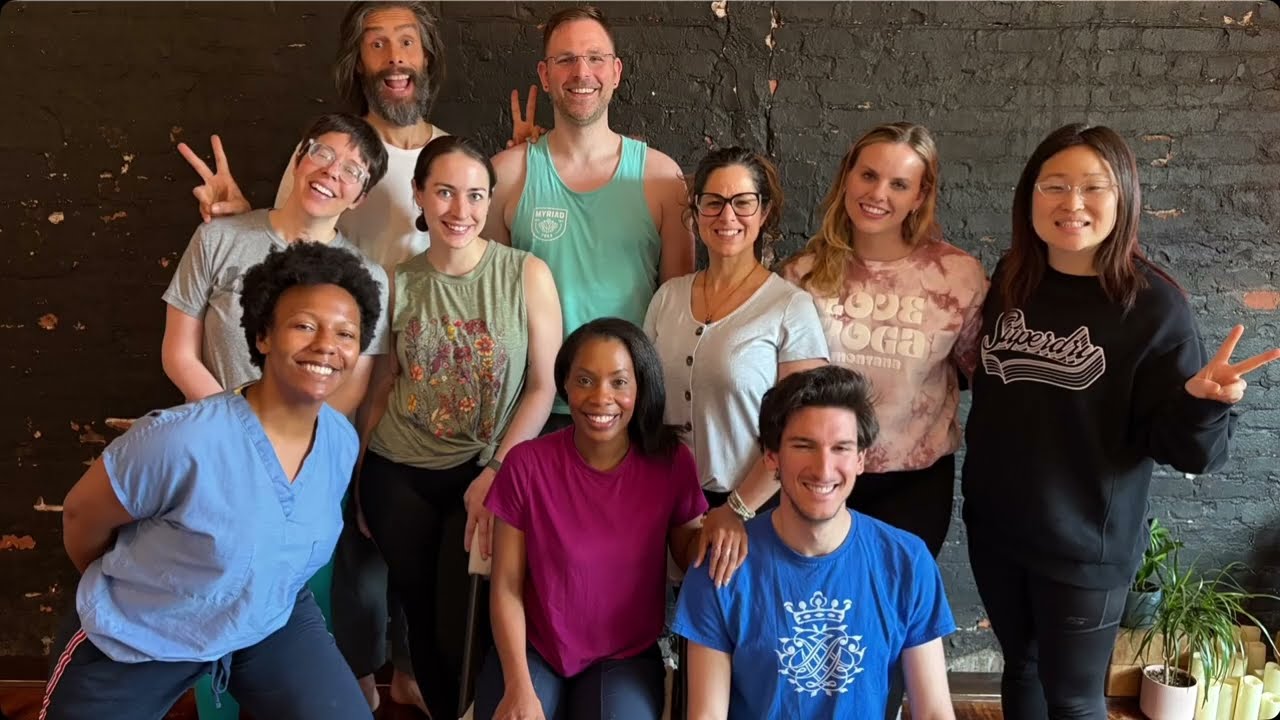
In this orientation video, neurologist and yoga practitioner Jonathan Rosenthal welcomes participants to the inaugural Neuroscience and Yoga Community Showcase, a new event designed to help attendees translate neuroscience‑informed yoga into real‑world community projects. He introduces himself, outlining his credentials as a physician, neurologist, clinical neurophysiologist, and long‑time yoga student, establishing credibility and a personal connection. Jonathan then explains how the Showcase differs from the traditional Neuroscience & Yoga Conference: the conference focuses on scientific research, while the Showcase emphasizes implementation, peer‑reviewed project presentations, and practical tools. He describes the event structure—pre‑recorded peer presentations from November 10‑15 across seven thematic categories (aging, metabolism, pain, youth, spirituality, anxiety, trauma) and a live, Zoom‑based project clinic day on November 16. He details the speaker recruitment process, the diversity of projects (spanning initiation to closure stages), and the benefits of the unlimited pass, which includes unlimited replay access, comment boxes, a community lobby, a speaker directory, early‑access research tools, certificates, and giveaways. Jonathan walks viewers through the platform (login, My Schedule, adding talks, accessing resources, earning certificates, and sharing for raffle entries) and outlines communication channels (asynchronous comments, community lobby, live Zoom clinics, AI ChatGPT support, and email). He concludes with community guidelines emphasizing safe, constructive, and skeptical feedback, and provides clear next‑step actions for attendees: manage emails, log in, build a personal schedule, engage with content, and attend the live clinic day.
Chapters
Hello everyone. This is Jonathan here. I'm so incredibly excited to welcome you to the Orientation to the Neuroscience and Yoga Community Showcase. This is a new event from our organization so that you can learn from your peers and gain inspiration to help you turn neuroscience-informed yoga into real-world projects that make an impact in your community. We're going to go over the story behind the Community Showcase, The goal of the Community Showcase, how the Community Showcase works, how to get the most out of events, how to win prizes, what to expect daily, how to learn and have fun at the same time. I promise it's possible. Frequently asked questions, and of course, where to go with further questions. If any questions come up as you're listening to the orientation, please save them for the end. You can put them in the comments and I will reply to them. And I just want to emphasize that everyone in the Showcase is passionate about yoga, and together we are really a movement to keep advancing the yoga field. So I couldn't be more excited for this event. For those who don't know me, I suppose I should introduce myself. I have to say, for me, it's so fun to meet all of you, and especially to hear about all of the projects you have going on applying yoga. And so it's only fair in return that I introduce myself. And so the first thing to know about me is that I am a yoga student. This is me pictured with my teacher, Sri Dharmamitra, in 2013, and again in 2024. I've been going to the Dharma Yoga Center all of these years. Yoga is a huge part of my life. The next thing to know about me is that I'm a physician, so science is really, really important to me. I see science save lives every day. And I'm a neurologist, which means that I specialize in taking care of patients with diseases like stroke and epilepsy, multiple sclerosis, Parkinson's. And I subspecialize in something called clinical neurophysiology and intraoperative neuromonitoring. The next thing to know about me is that I'm really passionate about neuroscience outreach, and that just means sharing neuroscience with everyone. And these neuroscience and yoga events are a way of doing that for me. This photo on the right is from the 2025 Neuroscience and Yoga Conference. I'm holding a brain that was donated by someone so that learners could study brain anatomy. And, uh, I'm sharing all of this so that you think of me as approachable and human. I'm here and I'm available to help, and I hope you have a really amazing experience during this community showcase. And these events started in 2014. So there's a lot of history, a lot of people interested in these events. And we have more photos and more photos and more photos and more photos and more photos. And this one is from the conference last year, 2025. And for those who have not attended the Neuroscience and Yoga Conference, the encore, which is the free recordings, are available. All year long. We really want this information to be available to as many people as possible. And then of course, the Community Showcase is new and different than the conference this year, so I really want to emphasize what is the difference between the conference and the Community Showcase. Well, the first thing to know is that both of them have the mission to help you learn the actual science of yoga, to improve how you practice, teach, and advocate for yoga. And while the conference really focuses on the actual science part, the showcase is focusing on the implementation part, the improving how you practice, teach, and advocate. And how do we do this? Well, the conference presenters are primarily MDs and PhDs who are researching yoga, while the community showcase presenters are primarily yoga teachers and yoga therapists, who are focused on implementing yoga in their communities. And so with that, the focus of the conference is really on scientific understanding, whereas for the community showcase, it's on real-world implementation. And the format differences related to this are that the conference has longer sessions really focused on diving deep into the research, while the community showcase is shorter, peer presentations with collaborative peer review, live project clinics, and ongoing chat forums. And all of this is with the goal that by the end of the Showcase, you'll have clear next steps for your yoga project, no matter what stage you're starting at, feedback from peers and mentors, new collaborators, partnerships, and mentors, And practical tools and templates so that you can apply evidence-based yoga in your community setting. And so I want to introduce you to the amazing speakers included in the community showcase. You'll get to meet each of them more during their sessions and by visiting their speaker page, which is in the menu bar at the top. But I want to tell you about how the speakers were recruited. So the speakers were recruited by sending out an invite to our neuroscience and yoga community. Asking people to submit projects that they're working on to be included in the showcase. I personally reviewed all of the submissions and included those that focused on yoga, had clear project aims, and were grounded in scientific reasoning. And I was blown away by the results. I was expecting maybe 30 presentations, and we have almost 100 amazing presentations. And the speakers come from all over the world, all different ages and backgrounds, and their work is truly stellar in the field of of yoga. I also want to introduce you to the amazing sponsors. You can check out any of the services that they're offering and chat with them in their sponsor booths by clicking sponsors at the top of any page. And the sponsors are primarily speakers who want to share their services rather than just their projects with you. And so these are people who are established in their field, and I highly recommend you check out what they're doing. Okay, so if the goal of the community showcase is to leave with next steps for your personal project implementing yoga in your community, let's talk about projects just for a second. So this is one way of conceptualizing projects, that there is a stage at which they start, the initiation, a stage at which they're planned, a stage at which they're executed, a stage at which they're monitored and adjusted, And then ultimately a stage where the project is closed, and that may lead back into a new initiation stage. And the projects included as presentations in the showcase come from all of these different stages. Some are at initiation and conceptualization, some are in planning, some in execution, some are even at closure. And all of them have valuable learning in them. And all of them will benefit from your peer input to advance to the next stage or iteration. So please make sure to be generous giving feedback to others as you go through this community showcase. I think you'll learn even more by doing that. I'll also mention that not all of the presentations included in the community showcase contain fully scientific information. So part of your peer review and giving feedback can be asking for more rigor or more background for some of the claims that are purported to be scientific. And then all of the presentations can be grouped together into specific categories. So there are 7 categories in the community showcase: aging, neurodegeneration, and sleep; metabolism, cardiorespiratory hormones, cancer, and skin; pain, headache, and neurological injury; youth, students, and neurodiversity; spirituality, philosophy, and general well-being; Anxiety, depression, and burnout. And finally, trauma, addiction, and eating disorders. The first 6 days, November 10th to the 15th, will consist of prerecorded peer presentations from these topics. During those days, you'll be communicating mostly asynchronously through comments boxes and built-in chat features, which I will show you. On the last day, Sunday, November 16th, We'll have live project clinics, discussion groups, and meet and greets so you can workshop your ongoing projects and find your future collaborators and mentors. And so I want to go over next what's included in an unlimited pass. There's only one pass to the Community Showcase, and it has unlimited access to everything included. So the first thing is all of the presentations and replays. So nearly 100 practical evidence-based talks and all of their replays. We'll have comment boxes on every presentation to foster meaningful discussion and feedback. We'll have live project clinics on November 16th, and for those who can't make it to the full thing live, you will be able to access the recordings of those. We'll also have a community lobby for ongoing asynchronous connection and exchange, and this will stay available after the community showcase ends as well. We'll have an attendee and speaker directory so that you can connect with future collaborators, mentors, and peers. And we'll have early access to new research tools and templates to develop your next project, which I'm really excited to show you at the end of the event. During the community showcase, emails are going to be super important. I promise I try to keep them concise and organized, but there's a lot of information to make sure you're aware of. And so please make sure that you are receiving our emails and that they are not going to spam. And just a heads up that if you unsubscribe, you will not receive any more communication from the Community Showcase, which is totally fine. But if you're planning to unsubscribe, maybe do it at the end of the event. On the left is the email you'll receive in the morning each day, which will show you what talks you're booked into. And how to access them. On the right is the email you'll receive at the end of each day, which will include all of the replay links. Again, the replays are available indefinitely, so you don't have to feel pressured to catch up on them. Only talks that you book yourself into will show up in these emails, so make sure to update your schedule, which I'll show you how to do in a moment. So let's say you're trying to access the website. So the main website for the Community Showcase is communityshowcase2025.neuroyoganyc.com. You can also find the Community Showcase website by going to our main page, and you'll see a little popup on the bottom left with a link to the Showcase. Once you're on the main page for the Showcase, on the top right, you can click Log In if you've already registered. Or Book My Place if you've yet to sign up. This will take you to a login screen if you've already registered. And if you click I'm an Attendee and type in your email address that you used to sign up, it will send you an email with the link to sign in. From there, you'll have the main page again. And if you click this little icon with the person inside, it will open up a menu where you can select My Schedule. And the My Schedule is kind of like your central hub during the event. So we're gonna take a look at all of the main features now. So first, you probably want to go through and add talks to your schedule, which you can do by clicking Add Additional Talks. A little side panel will open up and you can tap the individual categories to see talks in those categories, and then you can select presentations one by one, or you can just select all, which is highlighted in red here. Once you go back to the My Schedule page, you'll see all of the talks that you are booked into at the bottom, and ones that you haven't watched will show up under Not Watched. Additionally, you can add the talks to your calendar and then move them around on your calendar to find times that work for you by clicking this button, Add to Calendar. Next, on the right, you'll see My Resources. And this is where you can access many of the offers from the speakers. So media includes all of the presentation slides and handouts from speakers. Freebies are special bonuses from sponsors for no charge. Exclusive offers are special discounts from sponsors, and those include giveaways, which are high-value bonuses that are only given to one person. And you must watch the speaker's talk in order to be entered into the raffle to win that giveaway. So I highly recommend checking all of these out. There are so many cool offers, and they'll also be included on the presentation page for each associated presentation. Next, from the My Schedule page, you'll also see Attendance Certificate. You can click this after you've watched all the talks that you plan to. And just so you know, you must watch 100% of a talk to get credit for it, but you can watch it at any playback speed. Credits can be submitted to any society and they're IAYT pre-approved. It's 0.25 credits per talk, and you must watch 100% of the talk to get credit. Also from the My Schedule page, you can choose Help Spread the Word to be taken to a page that you can share the Community Showcase with others in order to enter into a raffle to get your Unlimited Pass refunded. This is what the raffle looks like, and all you have to do is follow the individual steps, and each step you do will give you additional entries in order to get your Community Showcase Pass refunded. If you haven't purchased a Community Showcase Pass, You can also get a free ticket this way. And by sharing, you're not only entering to win, you're also helping to expand our community and bring the benefits of yoga to more people. So thank you so much for doing that. Next, I want to show you the presentation pages. If a presentation is not available yet, it will say so, but if the presentation is available, it will look like this. Replays will also look like this and will be available indefinitely. And only if we run out of space will we have to take them down. So they should be up for at least a year. And just to go over the page, you're able to see the video, you're able to have controls over the speed, the volume, the closed captioning, which is available in English. You'll have a description of the talk and you'll have a link to the speaker page if you want to learn more about the speaker. So how will communication work during the event? Well, from November 10th to the 15th, It will be asynchronous. And on November 16th, we will be able to communicate live on Zoom for the workshops and project clinics. The first asynchronous option is the comments box. And for every single presentation, you'll see a comments box. For presentation-specific discussion, this is the best place. I really encourage you to try to give one piece of constructive feedback to help the presenter of each presentation you watch improve their project. Every comment you leave can help someone refine a project that brings yoga to more people. These will stay open even after November 16th, so you can keep the conversation going. The next asynchronous option is the community lobby, and this is a place to have ongoing discussions, especially introducing yourself, networking, Checking announcements from the event organizers and sharing your daily takeaways. These will stay open even after November 16th as well, again, so you can keep the conversation going. Finally, the synchronous way for us to communicate will be through the live project clinics on November 16th. Zoom links will be available on the website and emailed to you, and everyone will have the opportunity to talk about their projects during the, these sessions. And collaborate with peers to get the next steps. The structure of the day will be from 10:00 AM to 10:30 AM Eastern Standard Time. I'll be giving a plenary overview, so summarizing the Neuroscience and Yoga Community Showcase and giving insights into next steps for everyone. From 10:30 to 10:45, we'll have a few minutes to reflect, organize our thoughts, and prepare what we'd like to share in the coming sessions. From 10:45 to 12, we'll have question and answer sessions and feedback discussion on the presentations included in the community showcase. From 12 to 12:30, we'll have lunch with optional speed networking, so you'll have time to join individual small groups in Zoom and meet people in the community showcase. From 12:30 to 2 will be the project clinics where attendees who did not submit to be included in the community showcase can have their projects reviewed. And so we'll be doing 2 minutes for attendees to present their projects, and then they'll receive 3 minutes of targeted feedback from mentors and peers. And so this is an energizing, rapid-fire exchange of ideas to help refine your next steps. From 2 to 2:15, we'll have a micro break. Some time to just stretch and breathe and take a pause. And then from 2:15 to 3:15, we'll have a rotating series of 5-minute one-on-one conversations that will be random. And so it's a fun, structured way to meet future collaborators, mentors, and partners. We'll have another break from 3:15 to 3:30. And finally, we'll close the day with community reflections and 1-minute takeaways, celebrating what you've learned and how you'll apply it in your own community. And I just want to tell you about this because it's available for anyone who loves souvenirs and cozy, and cozy clothing with our cute little brain logo. All of this is available in the conference shop, and this material is made on demand and shipped around the world, and the proceeds help support continued neuroscience and yoga education. So let's say you're trying to find the answers to your questions during the community showcase. You can always click the support button at the top of the page, which will take you to this. And from here, you'll be able to watch this orientation video, which has many of the answers. And if you don't find an answer in there, you can talk to AI support, which knows everything about the Community Showcase and can answer most questions. You do need a ChatGPT account, even a free one, in order to do that. And if you do not get your answer from AI support, or you don't want to talk to AI, you can always email me. I will be doing my best to keep up with all of the questions, but I do think that because AI can answer in seconds, it's probably going to be faster than me. And now I just want to go over community guidelines for everyone participating in the community showcase so that we all have a good experience. First, This is a safe place to give and receive feedback. Second, please be open to giving and receiving constructive feedback. Third, feedback should always be kind, even if it is constructive. Fourth, not everything is a vetted scientific claim. We should always be skeptical. We should always be challenging each other to improve. Fifth, if someone tells you something you don't like, pause and say, thank you for challenging the way I'm thinking. And you may ultimately disagree with them, but you will grow by taking on a different perspective, even for a brief time. And finally, this is really important. Everything included in the showcase is for educational purposes only. This is not personalized medical advice. Okay, so you've made it to the end of the orientation. So what are your next steps? First, make sure you're getting our emails. Check spam and junk, and you can always search for my email, jonathan@neuroyoganyc.com, in your emails to find them. And please add to your safe sender list to make sure you continue receiving them. Next, make sure you can log in on communityshowcase2025.neuroyoganyc.com. Next, add all the talks you want to attend to your schedule. Fourth, each day of the Community Showcase from November 10th to the 15th, enjoy the presentations, leave comments with helpful feedback in the comments box of presentations, and post daily takeaways in the community lobby. And fifth, think about your own projects as you go through the event and think about how you want to incorporate what you learn To get to the next step of your own project. And then finally, plan to attend the live project clinics on Sunday, November 16th, from 10 AM to 5 PM Eastern Standard Time. There will be plenty of breaks built in, and I can't emphasize enough what an amazing opportunity this will be to learn from each other. So again, from the bottom of my heart, thank you so much for being here. Thank you for your contributions and interest in this community. I'm so excited to see what comes out of this. And if you have any questions, please leave them in the comments of this video. And I look forward to seeing you during the community showcase. Take care.










