Q&A 3/6/24
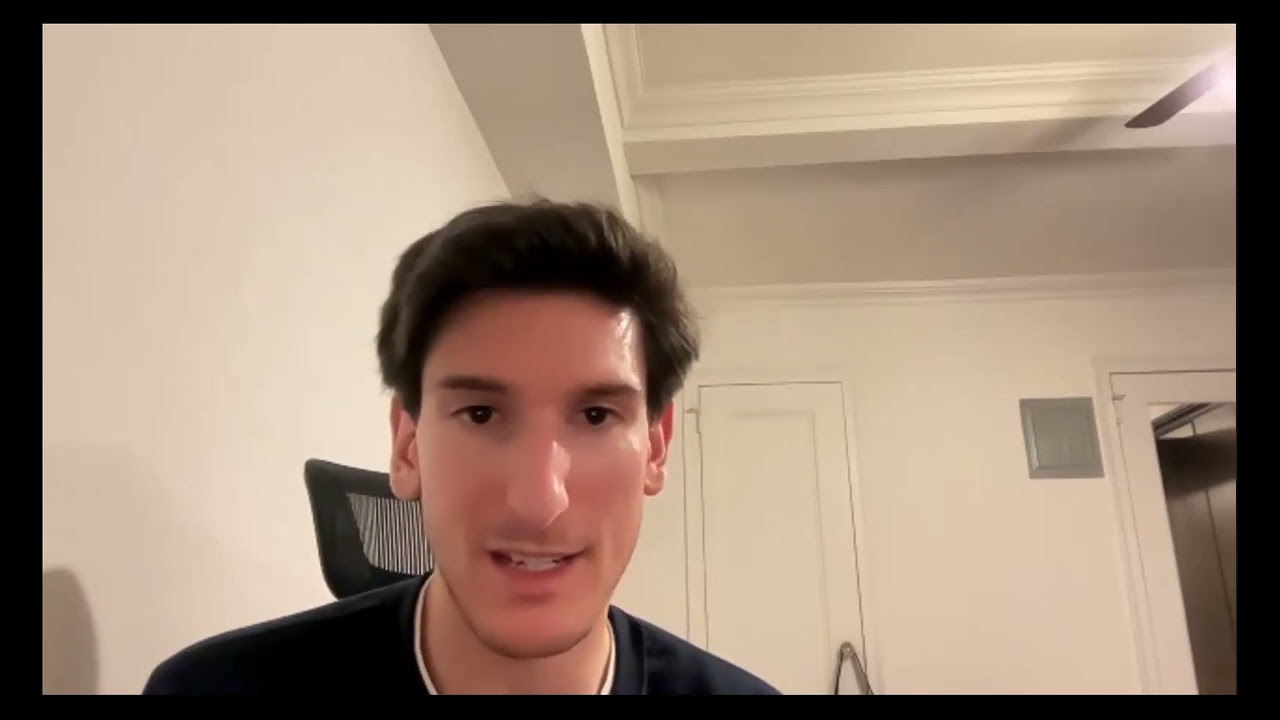
Dr. Jonathan Rosenthal answers questions about the 2024 Neuroscience & Yoga conference. The event offers two ticket tiers, an optional $50 in-person upgrade, live presentations with Q&A, daily yoga classes, and 25 hours of continuing education credits. Speakers join remotely from Austin, India, and the UK, with in-person sessions running 11 am to 3 pm daily.
Chapters
All right.
So I'm going to begin the question and answer session. For those who don't know me, my name is Jonathan and I am a neurologist here in New York City. So I take care of patients with stroke and seizures and multiple sclerosis and all kinds of things. And I'm really passionate about yoga as an intervention in medicine. And 10 years ago, I think it was honestly March 14th, 2014, but I have to double check. I started hosting events for Brain Awareness Week about how yoga affects the brain. And this ultimately became this Neuroscience and Yoga online conference to which all of you are invited. And this is a project that I want to answer all of your questions about, not just neuroscience and yoga. We can talk neuroscience and yoga stuff forever, but also answer all of your questions about the conference as you're deciding You know, how are you gonna sign up? What pass do you want? What do you get? What do you not get? Who's gonna be there? Uh, what's the benefit? All of that stuff. And so, yeah, I had the form collect questions and there were so many questions that I'm a little bit overwhelmed by the number. So I actually fed it into AI to give me a summary of what the questions are.
Hmm.
And so these are some of the questions about the conference that people had. The biggest one was about the in-person component to the conference. And last year we started bringing back in-person after COVID, and this year it's much more formalized. And so the in-person part is available to people who sign up for a Live Access Pass or a Lifetime Access Pass, and it's an add-on to either of those passes. So live access or lifetime, you need that first. And actually, as you're doing the checkout process, that's when it'll ask you if you want to do the live part as well, in person, I mean. And so it is a $50 upgrade for the 4 days. And basically what that $50 is going to cover is food and some support staff and things like that. We're actually going to have a cake to celebrate the 10th anniversary of these events. So I'm really looking forward to having that in person. So that was one of the biggest questions. And then a couple of other questions that came up was about how interactive is this going to be? Like, are we just going to be sitting there staring at a screen or are we going to be talking? And it is interactive. So even with the donation-based pass, many of the events are live presentations with Q&As at the end. And so you'll have the opportunity to talk with the researchers. The Live Access Pass does add more interaction. So it includes all of the question and answer sessions. So there are some really dedicated question and answer sessions, and it also includes discussion groups at the end of each day. And these are going to be kind of a redevelopment of something we did last year. Last year, we had a session where we broke out into groups based on our interests and found research papers. Summarized them within our small group, and then presented that to the big group. And this was really to practice finding, interpreting, and sharing research. So we're going to do that every day, but with an extra piece of how would you use that knowledge to advocate for yoga? How would you take that into a school? How would you take that into a healthcare organization? How would you take that into a prison in order to really advocate for yoga? And so I think that's going to be, you know, I was having a conversation with one of the speakers today and learning things is great, but the real benefit comes from what you can do with that knowledge. And I think the benefit of learning all of this science about yoga is how it helps all of us advocate for yoga in society. And so, yeah, that's going to be a really unique part of this conference, I think. So that's really where the interactivity comes in. And then there are yoga classes throughout the conference as well that will be interactive and you'll have the opportunity to ask the yoga teachers, you know, why did you include this and not that? How do you decide on this? So that'll be another great opportunity. Is it professionals delivering the conference? Okay. Yes. Okay. I, I'm not bragging because it's not about me, but I think that these speakers are the preeminent people to be giving these talks. So I look up to all of them immensely. They are the leading researchers on these topics. So they have published many, many papers in the scientific literature. They're featured all over the place. You can see some of the news sources and famous journals that have featured them. So yes, I think that they are, we're so lucky to have them. They're going to teach us so much. So another question was about the schedule. And I, I agree, the schedule can be a little complicated. There are a lot of moving pieces and I'm so sorry. Every year I try to do my best to make it clearer. I'm going to pull up the schedule page right now and let people ask their questions. I'll share my screen. Okay, great. So there are 2 ways to look at the schedule. The first way is this Google Calendar, which shows it by time. There is one very confusing thing that I cannot get Google to fix, and it's this part on top. Like, why is 6 PM above 9 AM? And the reason is that this event spans 28 hours. It goes from 6 PM on March 14th. Until 10 PM on March 15th. This is all Eastern time. So the reason for that, these are when the presentations are available for presentation and live access pass holders. And so this is like the window where you can catch the cancer presentations. And for whatever reason, Google, whenever there's a, an event that spans more than a day, it's put on top. So that's the reason for that. So you'll see that at the top of every day. So you'll see this one continues till 10:00 PM and this one starts at 6:00 PM. And then same thing with the sleep and eating disorders one. Okay. And then anything that says live requires a live access pass or a lifetime access pass, but anything that says presentation is open to all passes.
Jonathan, I have a question. Yes, you do. So, so you Those speakers that are listed over here, they're all gonna be there in person and recorded then, is that correct? And then available online. Just trying to think if we visit in person, then are they someplace else presenting or are they there in person?
Great question. Some will be in person, some will be somewhere else.
Got it.
So for, I can give you for all of them right now. So Deepak will be in Austin, Texas, so he will not be able to be with us in person. But he's going to be on, so, oh, I should say the in-person part will be from 11 AM to 3 PM every day. So anything that falls in that time, that's what you would be joining in person. And the, so this one will be, we'll be watching the screen of Deepak, but he will be live, just not in person. This one also, Sapir is going to be in India. Eddie Stern will be teaching in person. So we will be able to take that yoga class right here in person. For the next day between 11 and 3, Heather Mason will be remote. Sarah Thomas will be in person. For Saturday, Dharma will be in New York, but not where we will be. So that one will be remote.
Okay.
And then Satbir will be remote. And then the discussion group will be in person. And then on the last day, we're really lucky that Chelsea Roth is able to join us. So this yoga class will be in person. This will be remote. Now, you'll notice that between 11 and 3, there are some times that are not filled. This is on purpose. So the people who are coming in person will have some downtime to hang out, eat snacks, meet everyone. And talk. So there is built-in downtime for the in-person part. Jonathan, what about Dr. Cohen?
Will he be live or—
He, he will be remote. He's gonna be in the UK.
Thank you.
Of course. Is it making more sense? Did that help at all?
Yes, very much. Thank you.
Okay. So I'll show you the next part of the schedule. So this is where you can get more details about each event. In the past, they were all on one page, and I noticed that people really didn't look at them. So I'm trying this new format where it expands when you click it. So it's the title, who's presenting, and it's organized by day. And these are in order of time. And then as you know, if there's one you really want to learn more about, you just click it and you can read more about it.
Hi, Jonathan.
Hi, everybody. Jonathan, I'm sorry, I may have missed the point that you made about the $50. I'm registered for the conference, but if I did pay the additional $50, what exactly would that provide over and beyond what I'm already going to be having access to the presentations and some of the practice tools? So I'm just wondering what is included in addition if I do pay for the $50.
That is the in-person part, and it basically covers like the snacks, the food, the drinks, and some of the staff who are gonna help kind of like clean up and take care of the place. So it's the $50 is the in-person upgrade.
Okay.
So because I'm not in New York City, I guess that means no free for me to pay the additional amount.
Yeah.
But yeah, thank you. The program is phenomenal. So I really, really am so excited for all the different presentations. Thank you again. For opening this up.
Thank you. Yeah, I'm really excited too. I think these are gonna, well, I've actually seen all the presentations almost cuz I've been editing them, but they're really good.
And I've shared it with a lot of people here, so thanks again.
Thank you. And one other thing, so we got a lot of feedback in the past that people wanted, in addition to the science, to hear about people's personal experience. So we have some built-in sessions where people who have used yoga for different conditions talk about their experience. So Alexia Michelle has had, she's very open about this, so I think I can share this. She struggled with anorexia in the past and yoga was a huge part of her healing journey. So she's gonna talk about that. And then for the Yoga and Cancer Day, Lynn Goldberg is gonna talk about her experience, not only with her mom having cancer, but herself then having cancer afterwards and how yoga helped her through that. Okay. I'm going to go to the next. I see a bunch of questions in the chat. Yes. So every, just to be clear, even when things are in person, they will still be online because kind of the structure of this conference is that it, it is built to be online. Um, and the in-person part is like an add-on. So you will not be like, the only thing you'll miss is like the mingling and just like running into people and sharing snacks and drinks and stuff. Yes. And so the, the, just to be clear what the lifetime access pass includes, this is really for people who want to almost consider this like a mini teacher training. And so this is really geared towards getting continuing education credits. So in addition to unlimited access to all the presentations, so they don't expire after 24 hours, you also get workbooks and quizzes and all these extra things to try to enhance your learning. And yeah, it's usually a really good learning resource for everyone. I get a lot of really happy, positive feedback about the Lifetime Access Pass. Yes, you can definitely attend just part of the in-person portion. Yes, I can share about the education part, and I actually have a really big update on the ed— the continuing education part. So as in the past, we are able to offer 25 hours of Yoga Alliance continuing education credit. And then the new thing is the International Association of Yoga Therapists has finally approved the conference. And so we will also be able to offer continuing education credits for yoga therapists. And then sometimes people ask like, what about another society that does certifying? So we don't have an arrangement with them right now, but I'm always happy to provide a certificate and a letter of attestation. And I think in the past we had some success with the occupational therapy certifying body in Canada approving that. But it's just a matter of, yeah, I, I choose them based on how interested people are. So if you're in the Facebook group, you'll see like before the conference starts, I usually ask like, okay, what should we add this year? And International Association of Yoga Therapists by far won. Ooh, this is a good one. Yeah. People really want to connect with others who are interested in this, like kind of network and build community. And I think that's really important because it's much easier to learn when you feel like you're a part of something. And the, someone's asking what's the name of the Facebook group? I was just gonna say, so the Facebook group is, I think, really beautiful. So for example, people are posting about their educational achievements, degrees they're earning as they study yoga, and everyone's so supportive and I just really love to see that. Um, so when you sign up, you'll get a welcome email and I usually call that like the welcome pass. And in that is instructions about how to join the Facebook group. One thing to note, okay, this is important to say. I've noticed, so the way that people get approved for the Facebook group is automated. Because I can't, I personally don't have enough energy anymore to manually approve everyone. And so you have to agree to the group rules, which just basically says I will be nice, I will be respectful, and I won't like, you know, steal people's information and stuff like that. So I very, it's a small percentage of people, maybe 10% of people as they sign up are being rejected because they're not agreeing to the rules. So if that happens to you, just try again and make sure you scroll down on the like popup to sign up and just agree. That's it. Thank you guys. I really appreciate all the kind words about the conference. I think it's a really unique thing that we have in the yoga world. We're kind of at this point where yoga research is accelerating and there's so much to learn. So it's really cool to be able to share this with everyone.
Yeah, so I'm intrigued by all the presenters. Uh, so it's great that you're doing that, Austin. Obviously in the, I think the more, you know, the field of medicine and, you know, the sciences understands and, you know, because yoga is always seen as, as more spiritual and, and religious or, you know, whatever connotations versus this is a science, this is the brain functioning, you know? And so to really, you know, people like you just reiterating that and having a platform.
Yeah.
Like the conference is just amazing.
Yeah. I always felt like they were totally separate and like I felt like I was an alien in the yoga world because I was into science and then, you know, pariah in the science world cuz I was a hippie yogi. But I don't think that's true anymore. I think, you know, there are doctors everywhere who will tell their patients to practice yoga and we'll, we'll learn this in the conference, but I'll spill the beans right now. Yoga is in the guidelines for cancer from 3 national cancer societies, meaning like it is standard practice to recommend yoga to help with symptom management while going through cancer. So, and we're gonna talk about all the research that led to those guidelines.
Mm-hmm.
Is there anything on mental health and psychiatry?
There is. So not, we don't have a whole day on that. We did that a couple years ago, but the Yoga and Cancer Day will have a presentation about the comorbid anxiety and depression in the cancer population and a meta-analysis analysis that's been done by Dr. Maria Gonzalez in Australia. And her work was actually one of the things that pushed for the guidelines that yoga should be recommended to manage mood symptoms.
Mm-hmm.
In cancer.
Yeah.
In cancer. Okay.
Yeah.
I mean, obviously in America we are also, you know, it's uphill with insurance companies and so a lot of healthcare providers struggle with that, right?
So.
And we're gonna talk about that too. That comes up every year and I, I keep learning about it too. But I think the main takeaway is if you want insurance to pay for it, it has to be billed as physical therapy and you have to have a physical therapist bill it.
Yeah.
But there are things in the works like, you know, the VA, you can get it paid for if someone is on the VA system.
Yeah.
Oh, Carla just put that in.
Yeah.
So yeah, that's the current state of it. We are gonna have presentations about how Heather Mason managed to advocate for yoga to be included in healthcare in the UK. And just model, obviously it's a different healthcare system, but just that model and how it worked.
Right.
And she has a lot of data about how cost-effective it is. So I think that'll be interesting for everyone to see.
Right.
Because it's a preventative medicine. Right? I mean, it's a preventative practice, I should say. And I think in America, you know, it's very much a medical model and we don't really practice preventative. We, we just do, you know, symptom management. So yoga then is in, you know, it's, it's at odds with, with the philosophy then, right? Of treatment here.
Yeah.
Yeah, potentially. I think hopefully no. Hopefully, hopefully it's not just, I think people want prevention. It's just hard in the system sometimes, you know?
Right. Yeah.
I just have a question on the, on the conference.
Yeah.
If you're, if you're going online about it, so it says 24-hour access and then, so if I'm watching a presentation, I have 24 hours to see it and then is it gone?
Great question. So it's a little bit longer than 24 hours, but I say 24 hours so that you're You know, if you run late, it's okay. But it's from 6 PM one day to 10 PM the next day is when each set of presentations will be available. And they start the day before. So, for example, the Yoga and Cancer day is Friday, March 15th. So that means Thursday, March 14th, those presentations will be available. They come out 6 PM Eastern Standard Time. So in the evening, while you're doing your normal evening things, you can watch some of the presentations. And then you have the whole next day until 10 PM Eastern Time. Does that make sense?
Yeah, that's, that's great.
And then the next day's presentations will be available at 6 PM the following day. So they have a 4-hour overlap, so you can catch up on whatever you're, you need to catch up on.
Okay. Okay. That's good. I appreciate it. Thank you.
Yeah, of course. So someone is asking about whether the Lifetime Access Pass gives access to prior conferences, and this question comes up a lot, so I wanna make it clear they're separate. So there's a Lifetime Access Pass for every year, and when you get a Lifetime Access Pass, you can buy the previous years, but they are separate.
Um, hi Jonathan, this is Vasu. I'm calling you from California. I, I attended part of this, uh, in New York last year.
Yes, I remember you.
Oh my God.
Yes.
Yeah.
Yeah.
Um, I came, right?
Right.
Yeah.
You remember? You got a great memory. Okay. Yeah. So I signed up for the lifetime access. So this lifetime will be for this year, I'm assuming. And, uh, but this is lifetime, right? For this year's session. Yeah.
Right.
So you'll have unlimited access to all of this year's sessions. And I'm just going to make sure on the backend. I think this is you. Yes, that is exactly right. Yep. Okay, great.
So you will let us know how to access and so on and so forth.
So for anyone who logs into the lifetime access portal, there is nothing in there for 2024 yet because the conference hasn't happened yet. I'm still, you know, editing videos, cleaning things up, putting the subtitles on. So during the conference is when things will start getting added there, but I really want people to watch them via the email links at first because that's where the question form will be. So when you submit questions for the Q&A sessions, it will be embedded in not the, the member portal, but in the regular website. And also, I haven't said this yet, but I am pretty responsive over email. You know, I'm kind of shooting myself in the foot by saying that because, but I want people to feel comfortable emailing. Like, if there's an issue, please reach out. Like, I want to fix things right away. And it's really helpful for me if you like include a screenshot or something, just so I know what it looks like on your end. And yeah, just never, never hesitate to reach out.
This is Deborah. I have a question for you.
Yep.
So I'm a yoga teacher. I teach cancer patients as well as in other places. So for me to, I'd probably be online cuz I'm not in New York, but the benefits of this for me or my, my student would be, can you just elaborate on those a little bit for me?
Yeah. This is a great question. So I think there are multiple layers of benefits. The first is just the knowledge. Here's the evidence of what effect we can expect from yoga for the cancer population. What ex— what effect can we expect on depression, on anxiety, on pain, on sleep, on quality of life? Those are gonna be the main presentations. And just being able to share that with people. I think it's very motivating, you know, like here's the data. If you continue with yoga, this is usually what we expect. I think people really respond well to that. The other thing though is we're going to have some presentations finally. The biggest question I always get is, well, what posture do I have to do to sleep better? Or what posture do I have to do to relieve this pain? Or what posture, right? And it's always what specific practice do we have to do in order to Achieve some outcome? And it's so hard to answer that because there are no studies comparing if you do this exact same series, but you leave out this posture, then this happens, right? It's, we don't have those studies, but what we do have is expert opinion, which is where yoga teachers, yoga therapists who work with a lot of clients observe what works and what doesn't. And then they share what they've seen. And so we're gonna have a few of those presentations kind of helping you think about what to include and what not to include. And especially in the cancer population, there are certain risks. So in the cancer population, people are much more likely to have a risk of bone fracture. First, because chemotherapy increases osteoporosis, but second, because you can also have metastasis to bone that can damage the bone. And so, you know, there are many other modifications. So if there's cancer in the lung, how do you adjust the breathing exercises? How might you have to change the pace in order for them to be comfortable with their breathing? And so the next thing you'll learn is really how to think about, you, you, there's no way to answer this is the perfect, you know, way to do it.
Sure.
But how to think about what practices to include and exclude. Based on someone's condition.
I appreciate it.
Of course. Thank you. Doreen asked, I'm delivering a presentation for suicide prevention. Which part of the conference might help with that? Great, great question. So Doreen, you have the prior conferences. In 2021, we covered mental health, really looking at depression and suicide, and I think that is your source. We also had a separate day last year on trauma, which might also be applicable. Check it out and see what you think.
Hey Jonathan, this is Carla. I just wanted to say thank you so much for today. I really loved your presentation and my husband, who I am sitting right next to right now, totally loved it. He put a message for you in the chat to let you know what his thought was. So I look forward to seeing you, uh, uh, on the 14th. And I just thank you so much.
Likewise.
And Carla's husband, know that we love Carla. Everyone at the conference loves Carla and knows Carla. That's good to hear.
I'm not surprised.
Alrighty.
Oh, I hope all you can make it because you'll totally love it. See you soon. Bye.
Bye. Good night. All right. If anyone needs anything else, never hesitate to reach out and please send me your thoughts and feedback at any point. And yeah, I'll see you guys next week. I'm thinking of hosting another one of these next Wednesday, just so we have one right before the conference starts. But, you know, we'll see how my schedule is. All right. Good night, everyone. Thank you.
Bye.










