David vs. Goliath: 3 ways Small Investors Are Winning Big in Multifamily
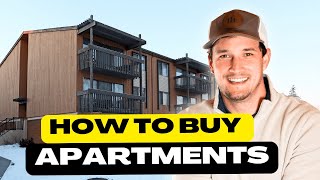
Smaller multifamily investors are beating big institutional buyers by targeting 10-100 unit properties in local markets, buying value-add deals, and moving fast with creative structures. Things like adding washer/dryer income and hands-on management give them an edge that scale can't match.
Foreign guys, welcome. Today we have the whole crew on, we are going to be diving into why smaller investors right now are doing from our, our side of things, from our perspective, are doing about 10x what the bigger guys are doing. While a lot of people, a lot of the big multi family guys out there are stuck on the sidelines. They can't make deals work. They've done little to no deals and are stagnant. We are seeing deals flying off the shelves. So we're going to be talking about that diving in. But today we have Larry, we have Randy on the call and representing about 500 million in assets under management in total. So we're looking forward to it. Let's dive straight in. So number one reason, we're going to give you three key reasons. All right, we're going to chime in on this and just drive these points home because if you are looking to level up into multi family, if you're new to the channel, you know, we help smaller investors grow their portfolio and then some medium sized investors scale to the next level as well. But using capital partners to get the funds for the deal and make these deals work, if you are looking to do that, you need to write down these three things. Okay, Number one is your buy box. Okay, Number one thing that smaller investors have as an advantage over these bigger guys is simply the buy box. And it breaks down into two things. That's your geography and your unit count. All right, so first off, let's start off. 10 to 100 units is typically what we are seeing as far as smaller investors and what we're preaching as far as if you are coming to us asking us how do I scale in multifamily, I'm say start with 10 to 100 units, right? Maybe you got a single family or two straight to, you know, we, we've been interviewing people left and right on these, on these podcasts every single week and they're bringing in 30 unit deals, 50 unit deals when they've only had two or three to begin with. So 10 to 100 units, why do we do that? Well, number one, too small for the big guys, too big for the small guys is typically what we say. But it's even more important in today's market that you understand that is a lot of people refer to that as no man's land, right? So your, your big guys aren't looking at anything under, you know, 100 units, right. A lot of times. And so they're ruling themselves out just right there by itself. And so let's let's dive into that a little bit more. What are you saying, Randy? Why don't you start us off as far as.
Yeah, for sure.
Exact buy box.
Absolutely, yeah. I mean we had had a core focus in that arena for quite some time. You know, that call it, you know, 75 to 100 units. It's, you know, we were able to get scale with location, but also it's a smaller dynamic than, you know, like you said, what larger institution players are looking at. And then even to that 30 to 70 unit category, it is more typically that is your mom and pop seller, meaning, you know, we call it kind of mom PA kettle where they're not, you know, highly sophisticated. We've talked with many of those folks in the seller direct component and a lot of times, you know, they don't have a well put together T12. They're just, you know, doing the books by hand themselves in Excel or stuff like that. We've encountered that quite a bit. And so that gives you an opportunity to connect with somebody. And a lot of times they've owned it for quite a period of time. There's, you know, significant equity in the property and there's not a lot of other people typically looking at it. And then even in some of the examples that, you know, we talked about over the last couple of weeks with some of the, the members who bought deals, I think one or two of them were actually by a broker, were on market but then didn't really get transacted and then kind of came off market, so to speak. And then there was still an ability to execute. So that that size component is, is really a differentiator that in today's moment you're not wrong. It's like, look, if you can get a deal, I think the one that we looked at last week was like a 8 cap going in on real financials. That's a great number in today's moment. And you're not going to necessarily find that in a 150 or 2200 unit deal in a major MSA. It's just not going to be there because there's going to be plenty of other people even in today's moment with higher interest rates and constrictions on capital that they would jump on it. So. Absolutely. I don't know, I don't know if I'd say a hidden gem because it's been known for a while. It's just, it's tougher for people to execute in that unless you're, you know, nimble and ready to do it.
Yeah, that's good, that's good. And the sec, the second thing is geography. So people don't understand this, but a lot of people, you know, the, the institutional guys are focused on relying on data in a certain market to be able to invest. The local guys, that's a massive advantage because you have real time knowledge on that specific market. A lot of people come to us and say, you know, what market should I be investing in? And all this kind of stuff. And to be frank, you need to be investing local, if you can. Now, I understand some people are located in the states, not landlord friendly. And you say, look, you know, I don't want to invest in the state, that's totally fine. But the other thing, the workaround for that is getting a boots on the ground, getting in a community, a mastermind or something where you can find someone in that area to partner with you. And that's another reason we're seeing a lot of deals transact is because partnerships are key. Commercial real estate is a team sport. If you understand that concept, you're gonna, you're gonna do a lot better. But getting back to the local presence, it beats data, right? Like, you gotta know the data, but at the end of the day, you're there, you know that one street's different from another street. And so that's a massive advantage that I would recommend to anybody that's jumping in for the first time. You know, first off, 10 to 100 units, I probably wouldn't be under that. You know, I prefer 20 plus. I wouldn't be over that because the inverse is true, right? You, you start looking at bigger deals, you're competing with the bigger guys and it's just a higher chance of you being, you know, just wasting your time, right? But then your geography, if you're local to the deal, you're going to be able to make deals work that the bigger guys couldn't make work, right? You're going to be able to be safer in deals because you have real time local knowledge. Okay, so, and then that leads you to, I mean, Larry can probably attest to this, but you know, we're seeing, we have a group of real estate investors and you know, these guys are partnering up, they're saying, hey, look, I'm looking for deals, but I'll also be boots on the ground for someone else's deal, right? And that's a massive situation, right? We're seeing just the other week, think it was last week we had Kevin Harris on the show. If you haven't seen that you need to go back and check out the podcast from last week. But he. He just, just shared with us about him doing a deal in North Carolina and he's in Texas. And, you know, he had Tim Crowder come on that deal. Because Tim was in North Carolina. He was able to. Able to be boots on the ground there. So Tim got equity in the deal and. And then Tim's able to actually keep eyes on the deal and actually participate as boots on the ground, so they both win. You know, Kevin was able to get his first deal, went from two units to 56 units. Tim was able to get his second deal through just partnership. So, yeah, that's a. That's a big opportunity.
Well, the. The week before, you know, we had the guy on, who's a member of the community, who. He had a restaurant in that area in Michigan, you know what I mean? And the guy knew him from that and also knew that he was, you know, previously interested in real estate. And it. It ultimately ended up being where he got a smoking deal on a. On a property that I think it was 30 some units or whatever. I can't remember the exact. Right down the street from the university. So it's like, like he knew immediately, based on the geography, plus being a known entity in the area, that it was a great deal and was able to capitalize on it. So it's like, yeah, you know, now, again, being honest, like, I would have a tougher time doing that in wherever that was in Michigan. You know what I mean? Like, I just. I don't have the right boots on the ground there at this time. You know, it's not an area that I've looked at. I don't know anything about it. But when you looked at the mechanics of the deal a couple weeks ago, it was a great deal.
Right?
You know, so that's where I think it's important, you know, for. For people to get a true understanding of where it is. And like, you see that happening now where people are migrating to the Midwest. At another friend of mine, he's been buying for years out in the Midwest these, you know, 20 to 40, 50 unit deals, and he's amassed, you know, 1200 units, but everyone that he was buying was like an eight, eight and a half cap. And I remember telling him years ago, it's like, dude, you just need to keep doing this, man. Like, keep buying, keep doing it, keep doing it. And, you know, the Midwest, it didn't go up, it didn't go down. It's just, you know, it's been a steady Eddie and that's been a good thing, you know, and so you see more eyes going to that right now because that's been a more steady performer where some of the other markets has been more tough.
That's good. Yeah. And, and here's the last thing on that point, guys. When you're local, you have the ability to build better relationships with your banks, your lenders, your contractors. And, and look, a majority of the opportunity lies in the ability to have those relationships type, right? This is a financing game. And so those relationships with the local banks, with all these different people that are going to play a key part, a major part of this deal, you know, there's a lot of advantage to being able to have that. And it can mean the difference between making a million dollars and making $2 million, right? It can mean the difference of, you know, a deal working out and a deal not working out. So that's another big advantage when it comes to your buy box being local or picking the right geography there and having that unit count dialed in. Okay, and so number two, number two, big step here. Value add opportunity or no wait, I just gave you the third one. Number two.
You just did number two.
Yeah, that's right. I just did number two. Okay. All right, number three. We are on to number three. I'm confused, baby. Moving fast. All right, number three, value add opportunity. Look guys, we have a mastermind for multi family real estate investors. And the biggest opportunity right now, I promise you, is finding value add apartment deals. And we're typically looking at C and B minus properties that we can then improve and we're dependent. Whereas the bigger investors are looking at market rate opportunities. Right? Your, your, your opportunities that have five, ten years before you see any kind of major returns. But small guys are able to make deals work and there's much more inventory on the market for these types of deals, right? And so first off, we have volume of deals, we have that advantage versus the bigger guys are just looking at these market rate opportunities. There's just not a lot out there that actually pencils in the financing market we're in, right? And these value add opportunities, if you can find these, these are, these are worth their weight in gold. And so you have our mastermind that's that all these guys are doing deals left and right and we're constantly like, man, there's so many deals happening, but it's because they have a better structure and they're not dependent on market appreciation, they're dependent on force appreciation. So over a two Year span, they two, three year span at the max, they're able to offer investors 20 plus percent annualized returns, right. And still have, you know, in a lot of cases, the majority ownership of the deal. Now obviously that's going to be dependent on how you want to do the deal, how the deal pencils out for you and what size deal and all different types of factors. But we're able to create volumes of deals because we have systems in place like our VA system where we hire, recruit, train to manage a virtual assistant. And, and we, we basically place them in clients portfolios and they send off market deals. If you're looking at wanting to generate more deals, I would highly recommend getting a virtual assistant. Somebody who, you know, they could be out of the Philippines paying four or five bucks an hour to just call apartment owners all day, right. Call these mom and pops like Randy talks about and then have them send you the people willing to get an offer on their property. Right. And so being able to have systems like that, that's just one idea for you. But being able to have systems like that generate a lot of leads, a lot of opportunities and then we can find the best deals that are value opportunity and we're depending on force appreciation, right. Basically down the street there's a property that's already at those market rents, same amenities, same everything, and we can guarantee you we can get that property up to that place within 15, 24 months somewhere around there.
Right.
So Larry, you want to chime in.
On that just, just to recap some of that. I mean it's really all about knowing your numbers and being in the, having the most opportunities in front of you, being in the front row seats for those deals. And all these points Jonathan just mentioned kind of covers that if you, if you open your buy box up down to 10 units. If I'm in my market that I know or the market that I'm operating in and I'm looking for only 200 unit deals. I've got what a dozen. I'm looking, if I take that down to 10 units now I've got 10 times, 20 times that. But you just want to be the go to guy for that market and you got to be direct to seller to get in those front row seats. You either got to be direct seller or you got to be direct to a broker who looks at you as one of the go to guys in that market. And if you're, if you know that market and have that market knowledge, you're going to be able to run your numbers a Lot more accurately than. Than your competition. And you can't prevent somebody from. That doesn't know the market from overpaying, because that'll happen too. But yeah, God bless them for that.
Yeah.
Well, then it falls out and, and it falls out of contract, and that's usually what happens. Yeah, yeah. So, I mean, in fact, we have a commercial acquisition director that says, you know, I always want to be number two. Right. If I'm number one, a lot of times that means I'm overpaying. Right. As far as the. The. As getting your offer accepted. But a lot of times we see a lot of deals transact because number two person actually gets a call back once the number one person falls out of contract because they just couldn't make it work.
It happens a lot. I mean, this broker's job is to get the highest price for the property, but they also got to get somebody that can close. But sometimes they give. They give them a shot anyway. But we get those calls a lot.
A lot.
Yeah, sure, Randy does too.
That.
Yeah, the price was a lot higher, but it didn't. Did not close.
Yeah, that's. Well, today, today's environment, certainty matters, you know what I mean? That's for sure. You know, and that's what people are interested in is, you know, certainty of clothes is part of an element of that, you know, and, and the value add proposition. We were just working through that on a property that we have where it's like, all right, you know, couldn't. Could we sell it now? Probably not the best moment right now, just given the current, you know, interest rate environment, to be able to hit the numbers that we want to or need to. And then it's like, all right, well, what does it look like to refinance the property? And is there an ability to do more at the property? And so we just spent literally, you know, like an hour yesterday with our team and an hour earlier in the week, two on the same thing, but really identifying and just meticulously going through, you know, that there are a number of one bedrooms and two bedrooms. You know, we'd already renovated probably, I think, 82 out of 107 units. But now there's at least probably 65 units where you can do another level of finish, meaning new cabinet faces, premium lighting package, black or stainless appliance, and move the rents another 150 to 175 or $200, depending on what is the, you know, layout of a two, one and a half, two one, two, two, one bedroom, Etc. And, you know, we we diligently went in because we know the area. Our management team knows too. Pulled the exact comps, you know, saw that there's, you know, one direct competitor that's a lesser quality finish, same amenities. They're getting 14.95 and our target was 1475. And so it just was able to really validate. You know, what, yeah, we could go ahead, get the refinance done in over an 18 month period, go through and meticulously, you know, up rents by a certain amount. And then a certain number of those people we would, would move out. We would then execute on renovation there at the property, increase that to the full market value, rent for the new renovated unit or premium, you know, platinum unit, and able to capture that. And so then by doing that, that adds, you know, roughly speaking, based on the increase in the overall income, it adds about another, you know, almost $2 million in, in value. And the other thing too we look at doing is implementing a washer dryer program. There's like 37 of the units that have built in washer dryer connections. And so, you know, we can buy the washer dryers for relatively inexpensive. We just got a group package from a liquidator for like $475 a package and you can rent it for 50 bucks now and again. A lot of times people go 50 bucks, what's that? It's like, well, but when you do it against 37 units times 12 and then divided by a six and a half cap, it's worth $350,000. So you spent, you know, call it $18,000 on washer dryers, but created real value.
I'll never look at a washer and dryer the same.
350,000.
Yeah, 350 grand on 18,000 spent like and like. We did it at another community just recently. Again, same type thing. We're refinancing this project. There's an ability to implement that across, you know, nine plus units. We just delivered it and put it in 12 units, immediately sent out an email, six people snapped it up immediately, you know, so over the course of, you know, probably 12 to 18 months, we'll have full adoption at the community. And so if you have, you know, 85 units at 50 bucks a piece, that's 4,250amonth. Well, not big, but over the course of 12 months, it's $51,000. And on a six and a half cap, that's worth $785,000.
Wow. Let's go. Like, that's why people get into These opportunities. Yeah, that's exactly what you're looking at.
And in today's environment on the selling side, the seller and their lender are looking at that. They're counting that. You know what I mean? It's different maybe than what it was, call it three years ago in 2021, when interest rates were 3%, they're genuinely looking at what kind of income have you collected. And so when you add that 50 grand of ancillary income, that boosts the proceeds that they're able to get on the loan and then it also boosts the, the reality of the value of the property that they're willing to pay.
That's good, that's good. That'll get you fired up. Let's go do some deals. Look, we're going to give you one more that I think is actually pretty critical, guys. Number four. Number four this time. I know, I know which one we're on is speed, flexibility and creativity. And I'll say this before because Larry mentioned something very good about even going back to point number one as far as being local guys, that also gives you the ability to know your market to the point where you can get more offers out quicker. You can, you can actually underwrite more deals because you know, you don't have to do as much research on the deal. You know what that, that market rents are, you know, you know what the cap rate in that area is and you can be able to steward your time better. And these. And at the end of the day, to be a successful investor, you've got to be able to be able to clear your desk of the junk and not spend your time on things that are not going to pencil out. Right. That's what kills a lot of investors that we see. But if you are local, you, you know the market, you've done your homework and you can give more of a substantiated, you know, evidence of, of and have it by memory. You can, you can underwrite deals quicker and get offers out and you don't.
Have to live in that market. I don't think you mean you don't.
Have to live in it. No.
You don't mean within five miles of your home? Yeah, you can be in a market, Randy, that's good. You operated heavily in one market. That's hours. It's a flight from your house. Right. But you still became a go to guy in that market.
Yeah, yeah, for sure. Yeah, yeah, I think, and that's the Larry's point. It's like you have to, and I know we've advised this and done a great job within the community. Like you got to be a master of the market. You can't, you know, into Larry's point. You can be in an area that's a short flight away or a short drive, you know, three, five hours, whatever, but you've picked it, you know, because some people in that phase starting off, they're like, I'm gonna get in these eight or nine markets. It's like, I don't think that you're going to really be able to be a go to guy in eight or nine markets and, or have the real kind of intimate knowledge that you need. And so, yeah, for sure. I mean that's, that's 100% that you need to be able to do that with just a simple example of it is somebody, when we're doing the exercise I just shared, they were tracking the rents at like 1550, because some of the stuff they saw online and it's like in a reality when I'd love it to be 1550, but when we dug in, it's like we thought maybe the best day is 1525. We tested out one unit, kind of a platinum finish, and we found that really the numbers, like 1475, that's what we had thought. But it's like, all right, well let's test it. And so the person that was not like right there, they thought, oh yeah, because of what Larry's mentioned before, the data. Oh, it's yeah, 1550. And that's not, that's not going to be easily achieved. So yeah, it's important to have that intimate knowledge for sure. Yeah.
And I wanted to add, you know, with the exception of a few states and a few cities, you probably should look where you live and where you drive by every day.
Right.
And because you're, you're going to be, it's easier, going to be easier to have more knowledge and you're just going to have more knowledge. I can't tell you how many times somebody. I'm in a lot of networks and a lot of other investors. I can't count the number of times somebody's called me from out of town and been excited because they know I'm in, in this market or in a certain market and they're super excited because they think they got a deal under contract. And I have to tell them the reality that they don't know the area, they don't know the economic situation right in that one pocket because every city's that way. You know, you can drive two minutes and you're in a totally different.
Exactly.
Environment. So it's just key to, to know that market. And one of those deals a broker called me about actually this week, and, and the poor guy, I didn't know the guy, and he did buy the deal and they put a lot of money into it and it's just not a, not a sustainable, you know, over renovated. That's. Everybody knows that story, right? If I just renovate it nicer, I can get more rents. And if I renovate it, even renovate it even nicer, I can get even more rents. But that's not true.
Yeah, well, just even to that point, there was a deal. Oh, yeah. So I'm just saying there was a deal that I talked with Larry on. I don't know, must been about a year ago. I said, hey, man, look, we're looking at this deal. You know, here's the skinny. Larry's like, oh, yeah, we looked at that deal before too. You know, here's the good, the bad, the ugly, because he drives by it every day, you know what I mean? And, and, and so I was like, yeah, you know, it was not a make or break decision. But, you know, because Larry was there, he had more knowledge than I had on it, and that's why I called him, you know?
Yeah, yeah, right. I could do all of the best research with all the tools I have at my disposal, and I'm not getting near as good of information or accurate is if I call you and it's somewhere you, you live and operate or where you've operated properties for a number of years, right?
Yeah.
You're going to give me the answer in five seconds.
And so here's the last thing. Speed, flexibility and creativity. All right? You know, a lot of smaller investors can act faster and make creative decisions, right. Without having, you know, layers of approvals or rigid investment committees like these bigger guys, right? So, you know, being able to structure deals creatively, like seller financing, partnerships, lease options, you know, different things. Right. That big firms a lot of times won't consider. All right, so that's, that's a, that's another advantage. And then being able to move quicker on opportunities, right? And not to mention following up, right. A big advantage that you have is being able to hit the phones and, and follow up with these sellers, right. Stay on top of them, right. The people who get the deal. It's not about the follow up, it's about the frequency of the follow up. Right? And then being able to write offers quicker, being able to negotiate terms quicker. Being able to pivot strategies in days, not just weeks. Right. So all of these things allow a smaller investor to be more agile.
Right.
Where these bigger guys are just staying stuck because they have these systems and structures that have to be followed. So that's another big one. Does have anything on that?
Well, we're talking about doing smaller deals. I feel like somebody's sitting out there saying, wait, I thought we're supposed to scale and do these big multi family deals and everybody wants to own hundreds of units or thousands of units. You hear that all the time. But you could own 100 units and buying 10 to 20 unit deals, still double your portfolio in a year by buying these smaller deals. And it's. Yeah, the, you know, how do you scale your portfolio or how do you start a portfolio? You, you buy a deal, you know, whether that's a 10, 20 and it's going to compound. Yeah, it's going to always compound.
Yeah. And it depends on your goals too, guys. If your goal is to replace, you know, to be able to hit 20k a month, or your goal is just to have another million in assets under management, you got to define what is your goal and where, what are you looking to achieve and buy when. And then we can really have a better discussion about what that looks like as far as your situation. Because everybody's time is worth something and it's different based off, you know, what you need in terms of income. Right. If you were to say, okay, I want to go all in a multifamily, you know, I've got this job, but I want to make sure I have security, you got to say, like, what's your time worth? It may not be worth you doing a 5, 10 unit deal. Right. You may need to go ahead and jump into that 30, 40 unit deal, which is totally fine. And then you need to build out metrics around that. Okay, what avenues do I need to go down to ensure that that can happen? Right. So the roadmap. Yeah, you got to have a road map. So look, guys. Go ahead, Randy.
Well, and I would just say that too. I mean, the comment that we were talking on before and Larry mentioned just now is that, you know, you also have to be wise and flexible within the context of what's taking place within the market. And yeah, so you've got a goal and you've got a place to get there. And maybe you did desire to buy 50, 75 units or whatever, but it's more tough right now to achieve that. You're better off to be able to buy two of those 30 unit deals in the course of the year because now you've accomplished something towards your goal. But you've done it within the context of the necessary flexibility of the market conditions. Because just the interest rates, competition and you know that's where you know that's that you, that that's there's using wisdom in that and that's what's also going to help you long term is not just doing things by rote, but really identifying what's the landscape, what's the appropriate moment that's going to be best for us to continue moving towards our goal. I think Earl Nightingale said success is the continuous progress towards a worthwhile ideal goal. And that is a great definition of success because oftentimes we want to just call success like hey, I reached this and a million bucks or whatever. But it's like if you're consistently moving to a worthwhile ideal or goal, you're moving in the direction of your dreams and praise God, that's where God's leading you in the growth.
That's good, that's good. Well, look guys, if you are here with us this long, you deserve an award and you are serious about scaling your multifamily. I'd love to hear from you. If you have things that you want us to answer on this show, drop it in the comments. I'd love to hear any of your questions. What are you looking to achieve in the next 6, 12, 24 months? What's your goal? What's your buy box? What does that look like? And what questions do you have? What constraints do you have? Love to answer on this call and so drop it in there and we'd love to check it out. If you're looking for a community of like minded investors, people that are scaling up together, I can't tell you how important it is that you find other people that are doing what you're doing and are further along than you are. Larry and I, Randy and I spend hundreds of thousands a year to just get in the rooms with people who's already solved the next 10 problems we have, who have gone where we want to go. And, and that is we could all say that has been pivotal in our journey of actually growing our portfolio is being in that room. And so I would just encourage you find community of people that are like minded. If you want to have a conversation with us and, and see how we can help you would love to see if that might be a good fit for you. So we'll drop a link in the description, check that out and we can have a chat. But God bless you. Until next week. Have a great week.
More from Jonathan




NEVER Buy an Apartment Building Without Checking These 5 Things (I'm a Real Estate Attorney)





