Faith, Failure, and Fortune ($50M): How Jesus Transformed a Business Leader’s Life - Mitchell Miles
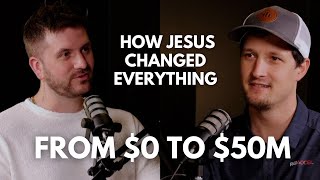
Mitchell Miles scaled a company to $50 million in four years, then left to start a ministry after a suicide attempt and spiritual reckoning. He now teaches executives a three-phase protocol combining spiritual formation, nervous-system healing, and psychology to rebuild identity and purpose.
Questions this video answers
$50 million per year
Within four years (as stated in the interview)
Age 8
Age 13
Age 19
From the time I like rededicated my life to Jesus and then decided to lead differently, I was like, I'm going to be a different version of myself. Like, I don't need anything. I'm here to serve. You just need to become better. Leadership is not about being in charge. It's about taking care of the people in your charge.
Today we have a guest that is a faith based entrepreneur. He, the, the biggest thing about this guy is he made over seven figures a year and scaling a company to $50 million a year within four years. And he quit that job to go and start a ministry to help people in mental health and help people that are wanting to grow in, in their life and business. And so I'm really excited to have this guest on here. Mr. Mitchell Miles. Welcome to the show.
What's up? Thanks for having me.
Yeah, let's go, man. So you know we met two years ago, right? Yeah, yeah. You were on. We hired a, a, a sales mentor or a sales team leadership mentor and you were working for that company and this company we were just talking about.
Yeah, yeah.
And yeah. So you, you were super instrumental in helping us scale our business from that standpoint. And then you helped us hire some people and it was, it was, it was exciting. And then, and now you're going off and starting your own thing. So love to dive into that, but I think the biggest thing I respect about you is you consume knowledge, you consume research unlike anything, you know, anyone I've ever seen. Right. You know, what's going on. Like you are. You call it biohacking.
Biohacking? Yeah.
Yeah.
I didn't invent the term, but yeah.
Well, yeah, it's, it's pretty exciting. And so I think, I mean, from my observation, that is a major thing that's been a player in what you've created. But you know, and we were talking this morning about, you know, how every big accomplishment starts with, you know, test. And so I also want to dive into that because I know you've been through some, some big things and has created this story that you've. And, and things that you're diving into now. So love to just hear kind of how it all started and. Yeah.
How far back you want to go. Yeah.
Well, how, how did you get into scaling a company? You know, how did you get into growing a company? How did you get into, you know, and even in that, like, like what does that look like?
Yeah, Yeah. A great question. I mean, for me, I never planned on it. It wasn't even something I really set out to do. I always felt, you know, like, my purpose in life was to do ministry. And I. I grew up doing ministry with my mom and dad. And so I did that, like, at a young age. I was heavily involved in their ministry and in church. And I. That was my vision for my life, you know, was to just serve my mom and dad's ministry and travel with them and all that. So. And I mean, let me think. So what was interesting is a lot of things happened at a young age. So When I was 8, my mom was diagnosed with stage 4 cancer and. And then had a miraculous. It was like, miraculously healed. And that sort of kick started the ministry where she started getting invited to these churches to, like, share her testimony of how God healed her. And we would have these, like, healing meetings and things like that. And we were going, oh, spent a lot of time in, like, Nevada, Colorado. Those are like the. Maybe the two main ones, Texas, you know, the places like that, at these, like, small churches. And so I started traveling with them and. But then my mom, when I was 13, she has. She had a stroke. And then that. That really hurt us financially, like, the family, because my mom and dad owned, like, a company. It was like a renovation company. That's what kind of helped pay the bills, allowed us to do things. So. But that we got under, like, very intense financial stress. We were like, God, I had to move out of our house. It was like I was like, living with friends and things like that. And so one thing led to another and they pulled me out of school in the eighth grade and they were going to, like, homeschool me. But because of the stress and things that were going on, it never ended up never even happening. I was just working for their company, which was the renovation company. So that sort of was, you know, to me, like, you have to, you know, putting yourself in my shoes. Like, I'm 13 years old, I hadn't even started high school. And by the time I'm, you know, 18 or 17, 18, my friends are like, graduating. I haven't even started high school. I have no education. And to. That was, you know, I, I, to me, like, I told myself, you know, I'm thinking to myself, okay, I'm just gonna do ministry for sure, because I have no other options. Like, I'm not gonna build a career. I haven't even attended high school yet. So. But I get. I get married at the age of 19 and then a few years pass and she has an affair with her boss. And that was that. Like, I was like, Gutted. And around that time, I had these falling out with these pastors and stuff. So to me, I'm thinking, okay, my chances of doing ministry is over. I don't. I haven't even started, you know, high school. I, like, I'm screwed. Like, and then the one thing that I was like holding on to mentally was like, my marriage. And then that fell apart and I, you know, so I thought I didn't have any, like, an opportunity, but I started just doing tons of research online. I, like, maxed out credit cards. I was like, selling. I sold like my bed frame to buy this, like, course, and there's a sleeping on the floor and just poured myself into my work. And it's kind of strange because you asked, you asked me, you know what, how did you get into, like scaling a company? I was just so motivated to not be broke really, that I look up and I'm like. It was like, I looked up and over the course of a few years, I was like, doing really well. But there was. It was just a lot of obsession, a lot of hunger, a lot of sacrifice. And one thing led to another. And then Cole reached out to me. So Cole was the founder of the company that I helped scale. And we met because we were on a sales team together.
Yeah.
And so he, So I leave that company, he leaves that company. Later, I started this company where I was like, helping entrepreneurs build appointment setting teams. And then he reaches out to me and he's like, hey, I'm gonna start doing recruiting. And like, you know, we should do this together. And I'm like, okay. So I, I left what I was doing and joined him. And dude, he was. The funny thing was he was convinced it wouldn't scale, like when we started doing sales recruiting, because he, at the time he was just selling sales training. But when he's like, hey, I think we should sell recruiting, I told, like, he just kept saying over and over, it's not going to scale. It's not going to scale. I just don't think it's going to scale. But, dude, I mean, it took off and within three years we were. I mean, we were at like 30 million and we, we just crushed it. So. Wow.
Yeah, let's go.
That was like my whole life story, but there you go.
Oh, that, that's exciting, man. So obviously there was a lot of build up to that, though. I mean, I mean, as far as the getting into scaling the company, you had a lot of hardships there, right? I mean, there's a lot of things that led You. To where you're. What you're doing now.
Yeah.
And I mean, you're super. You said you're super passionate. You're super, you know, just going hard.
Yeah.
What, what, what motivated you in terms of just that drive? Like, what. How did that, you know, come about.
Yeah, I mean, it probably sounds, you know, dark, but I. It was just the. So one of my friends, one time, one of my friends, he. He made the joke. We used to work together and he made the joke. He was like, dude, you're like Darth Vader. He's like. Because. So you. To give you more context. So I. I was actually in the.
Give to the darkness.
Yeah. But I was in the program that. Cole's program. So I was one of his, like, first clients. So I went through his sales training and did really well.
Yeah.
And what's funny is he hired this guy named David. So David was my sales coach. But fast forward like a year, and I ended up. I ended up. Or he. I ended up joining the company and sooner than later, rather than later. I'm David's boss. And so I'm now doing one on ones. Like, he used to do one on ones with me. I'm now doing one on ones with him. And so. But he made the joke. Like, he's like, dude, you're like Darth Vader. He's like, you, like, climb the ranks all for, like the wrong reasons. Like, you're just like. Yeah, like, because. Because, you know, I just had. I think the underlying emotion for me was just like self hatred, to be honest, which again, sounds. Probably sounds morbid, but I was just so. Wow. Like, you know, like my whole. Like my mom and dad were always under financial distress, and then that's changed, actually. My dad's now in sales too, and he's doing a phenomenal job, and I'm happy for him, you know, but when we were young, When I was younger. Yeah. I mean, we were just. It was always poverty, like, in my family, you know, and. Which, you know, and a lot of people go through, and I think a lot of people just don't really think they have the power to change that. But the truth is, I think God's put a power in all of us to.
So. So you said you grew up in poverty and you're constantly in that cycle, and then that led to self hatred is what you're saying.
Yeah. Yeah. So there was a few really distinct moments that sort of built up over time. So I was like. I said I used to work for my mom and dad. And that was years of, of like just pouring, like giving them my life. I was like, just, you know, you're taught when in church when you know, like, you should serve, you know, serve, serve, serve. So which, which you should. But that was me thinking, you know, I'm like, I was doing the right thing. I'm like, okay, I'm gonna serve my mom and dad. And one thing led to another and basically we had this falling out. And then shortly after, you know, I'm thinking to myself, what am I going to do? Like, my whole life was. My whole life was centered around them. They were like my parents, my pastors, my mentors, my bosses. I like literally tithe to their ministry. Like everything was Miles Global Ministries. And but shortly after I get this offer to. At this church, Life Church in Boise, Idaho, I ended up getting this job. And so that's is sort of like gave me meaning, like hope. I was like, oh, okay, well, I lost this thing. But now I have this other thing and I'm going to like pour myself into that. Well, I end up starting this Bible study at my house. And it grows over the like the first night was like for young people. It was like college for like college age people. Yeah, it was like four people the first night. Within like four weeks. There's like 40 in my apartment. They were like packed out. People sitting on the kitchen counter, sitting on the floor. It's growing really fast. And they start calling me pastor and they start, you know, calling it the, the life Church, Young adults ministry, because there wasn't one. And word, you know, word gets to the pastors and they like shut it down. They were like, you are not a pastor. This is not a ministry. This is just a Bible study.
And how old were you?
I was at this age just like 20. 20.
You were 20?
Yeah, I was 20. Yeah. Newlywed and living on my own, you know. Wow.
And.
But that's grown really. It was growing really fast and they kind of shut it down and were like, you should. They're like, no, if we need to have a pastor sit in on these meetings before you're a pastor, like, we need to, you know, prove, like make make sure that you're preaching the right stuff. And I get it. At the time I was really mad, but I was really immature. But like, you know, 10 years later I'm thinking, you know, actually I don't really blame on whatever, but you know, things can get weird, I guess. But at the time I was really, I was, you know, I was just really. I Got really like mad about it and I'm like, why don't like I'm just doing the right thing. I'm just trying to do what God wants me to do. Why are like, why is there this like red tape all the time? Like there was with my parents. Now it's, now it's life church. So we ended up having this falling out over there, you know, and because they sent a pastor to send out on these meetings at my house, but he only came to like two and then stopped. So I'm thinking, okay, well there's no future for me here. So then I get connected with this other church. Right. And like basically the same thing happens. And so I, So it was like three times I felt like I was almost like, I don't know, rejected or whatever. And then that's when I started pouring myself into business. I was like, okay, well I'm just going to take all this energy that I'm putting into ministry and try to not be broke anymore. So I start reading all these books on business and buying all these courses and binging YouTube videos and doing whatever I can reading blog articles and. But then my ex wife, you know, I end up, I find out that she's having an affair for like a year with her boss. So I like knew this guy and it just, that's, that's when I was gutted. Like I was really depressed and instead of me like shutting down and not doing anything with my life, I just became like a workaholic. So to answer your question, that's where the motivation came from was I was just like, I'm going to prove them all wrong, you know. Yeah. So. And it worked out to a degree. I don't recommend doing that for too long. I think, I think a lot of times people, the motivation can come from that place of. Yeah. Disgust in a way. Like, like you're just angry. Like I call that like the dark energy. You know, you can be motivated to prove them wrong or whatever that can be. Be an okay place to start. But you burn like really hot and then you burn out. And so you have to have like a better reason. Yeah. Like something that's a compelling why as opposed to just self serving. You got to have like some mission.
Yeah. Okay. So. So because you were kind of rejected, you felt rejected, you felt like you're going to prove him wrong. And then I'm guessing that kind of stirred you also kind of took that identity on and kind of self hatred also kind of started happening where you were just like, I'm the problem. And, like, you know, and you're just, like, getting back at yourself or getting back it.
Trying to. Yeah. Prove it to myself. Prove it to them, you know?
Yeah.
You know. You know, it's like you. You know, when people have. Yeah. Like, there's a chip on their shoulder, they got something.
Yeah. Yeah, exactly. Yeah. No, I mean, I. I find myself. I can be. Slip into that.
Yeah.
I mean, I can slip into that easy, you know, when you're. When you're driving hard, you're. You're seeing success, but then you're. You know, you got to keep it up, you know, and the pressure's on.
You know, I think the thing. The big thing I learned along the way was that, you know, I think we. We all have. We all have this, like, mental kind of finish line. This, like, thing. There's, like, a. And it. We may not even consciously know what it is, but it's like, in our mind, there's, like, this top of the mountain, and it's like, if I could just get there, you know? And that was me. Like, it was like, if I could just make, you know, 10k a month, like, I'd. I was making, like. I think. I think prior to getting into business, I made literally, like, $12,000 working for my parents. They were paying me, like, around $1,000 a month. So I was like, I. To make 10 in a month was crazy. I was like, what? I'm, like, freaking rich at that point. So I made 10, and I didn't feel any better, you know? And then I'm like, if I could just make 20. I made 20. It didn't feel any better. If I could just make 50. I mean, 50. I didn't feel any better. I was like, if I could just end up being a leader, like, if I could just be a sales manager. I don't want to be closer anymore. I do. That didn't feel any better. If I could just be an executive and I get to the executive market. Didn't feel any better. So I realized fairly quickly that, like, that's not the answer. Like, whatever finish line you think, whatever top of the mountain you think is going to make you happy or make you feel good about yourself, it won't. And that. That's. That. That's the problem. I think we're all, like, sort of. A lot of entrepreneurs and high performers are trying to answer this question, like, am I enough? And you will never answer that question externally. Like, that's only answered internally. Yeah, by Jesus.
Right?
And so when you Realize that he is the one who says you're enough, not because of anything you've done, but because of what he did. Wow. Then you can finally find internal peace and then perform at a high level for the right reasons. Right. Not to earn anything, but just to serve. You know what I mean?
Yeah.
That's the difference.
Yeah. And I know, you know, this podcast is primarily about, you know, helping people scale in business, and specifically Christian business leaders and helping people scale in real estate portfolios and all that kind of stuff, but I think this is the most important discussion around that. You know, as much as we need the tactical. We need all that kind of stuff. Like, the most important thing is understanding what we're talking about, because people burn out. People. I mean, and so. And so how did you. How did that progression, like, keep. Keep going on that because you. You were motivated and you feel like in the short term, that's okay, but what happened as you continue down the path because you're scaling a company and. And we, like, we've already said. I mean, four years later, you know, it's $50 million, and you're see, or you're the president, you know, and, like, it's pretty wild what you accomplished.
Yeah.
Um, but it took a lot.
Yeah. Yeah, exactly. And the reason why the conversation around. Around what we were just talking about is so important is because it. It. It affects how you show up. Right. It affects how you view others, affects how you view yourself. It affects how you navigate problems, the decisions that you make. And I think what's really important is to make sure that you're. You're healthy internally, or else the pressure will destroy you, you know? Yeah. And that's. That's the key. So for me, the turning point was. And I'll get kind of raw and vulnerable is. Is that I got to a point in my own life where I. I, you know, I wasn't living, like, a Christian life. I wasn't, like, doing anything. Right. I was like, like, what do you do when you have, like, a really depressed young man who has a heart, a broken heart from a woman, and then. And then you give him, like, a lot of money? For me, I was like. I was just partying. Oh, yeah. Well, I was just partying all the time, drinking all the time. Like, got into, like, drugs, alcohol, dating, hookup culture, that kind of thing. So I was even, like, buying dating courses. Like, I was, like, hiring coaches to teach me how to, like. Yeah. You know, it's crazy. I was just. It's like. It was so. So just looking back, I, like, feel bad for that version of Mitchell, but, like, it's like, you know, but the thing is, I learned fairly quickly, so, like, I got to a point where none of it's working right. And one night I was partying, and I ended up having this, like, depressive episode. I was, like, really drunk, and I go home, and I'm, like, throwing everything. Like, I'm throwing these glass bottles, these candles, knocking stuff off the counter. Like, just depressed. And at one point, sounds like a movie scene. Like, I. Like, there's all this broken glass, and I slip, and I fall in the glass, and, like, I'm, like, bleeding, and I'm gonna have my phone in my hand, like, shaking, you know? It's like there's blood all over my hands and stuff. And I decided to text my suicide note to my friend Trent. And I told him, like, I'm just. I'm just gonna do it. Like, I'm. I'm tired of it. I hate it. Like, I'm not enough for anyone. I wasn't enough for my ex. Was enough for God. I wasn't enough, you know? And I realized, well, thank God he ends up calling my family and friends, and they show up and, like, make sure I don't do the thing. So. But this moment led to the next day. I. I was so kind of humiliated. Like, when you tell people you're gonna do that, and then you don't. I was, like, really humiliated. And they were telling me I need to get on medication. And I was like, I don't want to. And meanwhile, again at work, I'm crushing it, right? But not. I wasn't crushing it enough. Like, this is the. The important point I'll get to in a second. But I. I remember that the next day, I'm thinking to myself, like, what happened to me? Like, I used to, like, lead a Bible study. Now I'm like, Like, how did I get here? And I hadn't, like, been to church. I hadn't prayed. I haven't done anything. You know, I haven't done anything to deserve was what was about to happen. But I heard this. Like, it was. It was like this booming voice that cut through, like, all the noise, like, all the chaos, all the inner turmoil. And he. And I just. It was God, but it was this booming, loving voice. I was like, son, I never left you. And it. I. It broke me. I mean, I. Right then and there, I gave my life back to him. I was like. He called me son. Wow. And, like, I hadn't done anything to deserve that. I was like, I think for the first time in my life, I was like, I encountered the loving grace of God, like that. It. It was. It changed me forever. And. But the crazy thing is that after I did that, after I let. I. I kind of flipped the switch internally. It was like, if I'm enough for the creator of the universe, for the King of Kings, the Lord of Lords, if I'm enough for him, like, why am I not enough for me? Right? Like, that's crazy.
Yeah.
So I just decided, like in, you know, I decided to make the switch. It was like, instead of trying to be enough, I just. I just realized I am enough. And like, my performance, like, the reason I perform at a high level is not to answer that question. It's not to prove it to anyone. It's just to do it because he's created me to be a leader. Right. He created me to be his witness, to advance the kingdom, to build wealth. He says to be fruitful, to multiply. Right. He's, you know, he's called us to make an influence. And that's. And so the, the crazy thing was is that my income went up way faster, my leadership improved because I wasn't leading people, trying to fill a void. You know what I mean? Yeah. Too many leaders do that. Like, especially, you know, the industry that I was in, it's kind of a stereotype. Like, most CEOs and founders in this industry that I'm in are like, they have a stereotype of being narcissists. And the underlying emotion of a narcissist is envy and self hatred, literally. So you would think it's the opposite because they show up very confident, but it's because they secretly, like, hate themselves. So they're overcompensating, you know, and you can look this up. So. But around that time, I went on a binge and I. I started reading, like, a lot of things on theology, psychology, neuroscience, physiology. And that's when I got really into high performance, self development, things like that. And that's kind of. We can get to that in a second. But sort of what I'm doing now, helping people with that. Yeah, yeah, yeah.
And so you kind of shared. I mean, the. The moment where it kind of exploded or it was kind of.
Yeah, everything changed after that. What's crazy is I had people tell me that too. Like, I remember in one week. So from the time I, like, rededicate my life to Jesus and then decided to lead differently, I was like, I'm going to be a different version of myself where I'm leading again, not trying to fill the void, but just from a place of groundedness, security. Like, I don't need anything. I'm here to serve. Right. And when I did that, I mean, I still remember on mo like three different times that people said you just like, you're like glowing or like, or I think one of my old sales mentors, Eli Wilde, said he's like, you're literally like. He's like, there's just a life to you that's different. Yeah. And then like this other guy, Sid, he was a friend of mine and he's like a high performance coach as well. And he was like, dude, you just like, there's like a, like just a heaviness that's gone. And I hadn't told anybody what I'd been through. I was like hiding all of that. So it, it. People notice. Like you think if, if you're like listening and you're that or watching or whatever, and you're like that leader that is leading from a place of need and scarcity and like self hatred or self loathing or whatever. Like, people, they may not know it, but they know it. And if you can make that switch, they'll know. They'll, they'll completely change that. And, but when I made that switch, I mean, I started attracting like a players into the company. Okay. Like I was able to recruit, like people were like closing their businesses down, like shutting their business. Your account manager, Elizabeth, was one of them. You know, she like shut her business down to come and work. To come and work like for like Cole and I. And, and again, it takes like, like you can't be a B player leader and expect a players to work for you.
That's really good.
I mean.
Yeah, you say that again. Yeah, say louder for the people in the back.
Yeah. You can't be a B player leader and expect a players to want to work for you.
Let's go. Yeah.
Yeah.
That's really good. So I mean the, the big thing was you broke through that and I'm guessing you would say you wouldn't have been able to create what you created unless there was that breakthrough.
No, I mean I, I, it was, the, the success was already crushing me.
Yeah.
And I was, I don't even consider so a lot of people that was probably. I had achieved a high level success, but not to my standards. I hadn't. I had. It's like before I was even to the where I wanted to be, I was like freaking destroying Myself. Yeah. Yeah, right.
So. So the biggest thing to creating what you created and hitting the goal you hit was that breakthrough. And you feel like, I mean, was there was that kind of the primary.
There's one of them. So I mean, that's the foundation. Yeah. Nothing else matters without that switch. But after that, I mean, optimizing my physiology also just leadership development, learning how like, you know, there's, there's just certain hard skills and soft skills that you need to be an effective entrepreneur and effective investor and effective leader.
Yeah, well, let's, let's get into that. But I will say to, to those that may me feel like, how do you really break free from that fear driven kind of thing? Because I mean, that's a big deal.
It is.
I mean, especially in entrepreneurship, when you're first starting out, it's just like fear or a lot of times, I'm not saying for everybody, I'm saying for those.
It'S fear of failure. For some it's fear of success. Fear of failure. For, for some it's, you know, fear of. Again, I would say more often than not, it's that fear of not being enough. Like if I do hit that peak and it's still not enough, they either need another peak or they just give up and resign. You know, there's that quote from, you know, is it Thoreau, the philosopher Thoreau, where he says the mass of men live lives of quiet desperation and he equates desperation to resignation, meaning they resign from life.
That's good.
So a lot of people just quit out of desperation, you know, and. Yeah, I think it's just a fact of life, you know.
Yeah, I mean, that's a, that's a hard thing. And I mean, I guess it is. You kind of have to balance it though, because there is a healthy level of fear, right? I mean, there's a healthy level.
Well, I'd say reverence.
Yeah.
You know, like, I think when, like, for example, like when the Bible refers to like the fear of the Lord, referring to like reverence to. Reverence to. I, I think to him. And, and I think that's healthy. Yeah, but fear of like, fear of not being enough or fear what? There's a, you know, I think that kind of fear is. Yeah, you got to get rid of that. It's like the opposite of faith.
Well, the hard thing is there's a lot of like really successful people that like attribute a lot of that to it. And, and so the scary thing is once you do like truly come out of that, you're saying, well, what's going to motivate me to like, really get out there and, and make it happen?
Right.
I mean, what, what, what? I mean, you said earlier to put a why in front of it, you know, and, and really that that was a major piece that brought you out of that. Having that why having that extra thing. What's the vision?
Yeah, right.
And I'm big on that, man. You know, Bible says without vision, my people perish.
Yeah, right.
Yeah. And that, I mean, you need vision like you need air, like you need water.
Right.
And it's real.
It is.
And, and you can drive a team with enough vision, you can do. I mean, there's so much there, but it's still kind of like, you know, you got to truly conquer fear and then have a foundation of. I mean, it's, you know, I mean, what, what's really driving you? You know what I mean?
Yeah. I think it boils down to vision or aim.
Yeah.
You know, and then it boils down to as well as, like, you know, I think there's, you know, habits, which, you know, there's plenty of books and stuff on that, but I, I think it's so key, just habits and I like to call them like inputs.
Yeah.
Again of like, where are you going? Why are you going there? How are you going to get there? And then, and then there's. That, I think, is. If I remember correctly, don't quote me on this. It might not be this book, but I think there's a. It's Atomic Habits by James Clear. I think it might have been in that book, but he says that we don't rise to the level.
Mitchell's the book guy.
I am.
I mean, I'm always quoting you need. You're gonna have to give us a list of your. The best books.
Well, this is one of them. That's pretty good.
Yeah.
But he says you don't, like, rise to the level of your goals. You fall to the level of your systems. And so I think a lot of people, they have these goals, right? And they, they think, well, if I could just work hard enough, I'll get there. But the thing is like, that, that enthusiasm and like, motivation will eventually run out. You know, some, sometimes it takes longer for others, sometimes it's really right away. But you need systems. Like, you just have to have systems where you don't need willpower to do it, you just do it, you know, And I think that that comes down to, like, in the book, like, he talks about how, like, it's. It's identity. Like, it comes back down to identity. So I talk a lot about that, like, creating an identity, you know, of who are you going to. Like, who do you need to be to achieve that vision that you have? And then, like, what are the things that that version of you does on a daily basis? Right. So, yeah, I think it's vision. I think it's habits. I think it's standards, communication. I love talking about all those things.
Yeah, that's huge. So you got this foundation set. Creating a $50 million empire doesn't just happen. Right. So there's some major keys there, and I want to get into the mental health side because it's wild that you made that transition. Obviously, you feel pretty passionate about that, so I want to jump into that. But I guess, you know, for those that are really, like, man, you know, what's. What's the keys for me, what would you say is just the biggest thing to the entrepreneur that is around, you know, million or whatever, you know, maybe they're starting out. Yeah, but what is the number one thing outside of that just identity shift that you describe? Like, what are. What are those things?
Yeah, well, I think it's. It's, you know, clarity, Right? I mean, I think clarity is power, you know, and it's clarity on division. Because I think. I think people, like, if I say vision, I think this. It seems kind of esoteric, and people are, like, thinking that it's just, like, a really fun idea. Like, oh, I would love to do that with my life. And that's a vision. No, it's not a. It's not a vision. Like. Like, vision is. It's in the word, right? You got to see it. You gotta, like, see it. You gotta, like, envision it, you know, and envision it consistently. And so you have to have, like, a plan. I think. I think a vision is. It's like a really big reality that you want to. That you want to make happen, right? And that means it's gonna be hard, but you gotta have a plan to get there. So, like, you know, actual. Yeah, break it down, you know, to. If it's like a number, you know, that you want your company to do in a year, break it down to monthly, Break it down to weekly, Break it down to daily. Break it down to how many sales. How many salespeople. So you, you know, so I think clarity and the next thing, too, is, I think is necessity. I think that's another thing that's really important is, like, you have to be consciously aware. If I don't show up, what's gonna happen? So I'll give you an example, right? So you know my background, how I got started in all this. And, you know, this is sales, you know, so I was a salesperson. I became a sales trainer and then. And a sales manager, all that stuff. So I got really good at teaching sales and doing sales. And on a sales call, you're getting someone to make, especially in my industry, it was a. It was a decision that could dramatically transform their life. And so you're getting someone to do make a really hard decision. Something is uncomfortable. You're getting on the phone and you have 45 minutes to do this. You get on there, they don't know who you are. You guys just met, and you have 45 minutes to get them from being like, so what do you guys do to like, giving you 10, 20, you know, upwards of. I would call, like, $70,000 deals, you know, $100,000 deals. And whether that's one call or a few calls, it doesn't matter. But the point being is that you. You're leading them in this direction of making a very uncomfortable commitment and then giving you money for it. And in order to do that, you are essentially, you're. You're having to play, like, mental chess, right? You have to get them to. To believe certain beliefs and agree on certain things. And it's like, so you have to understand what do they want? And. Yeah, and there's so that's like, you know. Desire.
Yeah.
Right. So what in there's desire, then there's a consequence. So if they don't get that, what's at stake? Right? And then who's involved as well? There's, like, support and things. But the. I think the thing I am really grateful that I did early on was take the principles that I was applying on sales calls and just do it with myself.
Yeah.
So that I think that's the point is, like, I would get really clear on what do I want, right? Why do I want that? And then also, what's the consequence if I don't do this? And there's an experiment that I give my clients, too. I tell them, you know, you guys can just steal this, but, like, I force them to write a letter, an apology letter to their family. So some of them have kids and wives or whatever, or husbands or whatever, but some of them don't. And I tell them, just, you just got to get in the mental state. So. But I did this with myself. I took a letter or a piece of paper, and I just like, had to mentally get into the mode of, like, I'm at the end of my life, I'm on my deathbed, you know, I'm like closing my eyes. And you got to picture this. You're on your deathbed, your family's there, and they're looking at you in the eye and you're, it's over. There's no going back. And you're only full of regrets. And you're, I want you. And I told them, like, and I did this. I was like, I wrote a letter to my family, my grandkids, my kids, apologizing that I didn't do the things I said I would like. Nothing will motivate you more than that. This, this is something called necessity. So you get really clear on what's at stake. If I don't do my commitments, if I don't do what I said I'm going to do. So that's. So to answer your question, again, clarity as well as necessity. And then the next thing is, like, physically, you need enough energy, so you got to take care of yourself. And I love talking about that too. Nervous system. Yeah.
Well. And what's awesome is you've. And like I said at the beginning, biggest thing that I admire about you is you're, you're focused on research and optimization for your life and for building a team, building a company. Like, you basically have to do that in order to create an A team. Right. You have to do that because the biggest thing to creating a 50 million dollar company is the people that you're bringing in and that how you're developing people.
Yeah, right.
I mean. Yeah, you're not.
Yeah.
So. So it's immediately shifting from your abilities and your ability on the sales call to your ability to manage people, grow people. And so I imagine like, that what's so important is you transferring what you're talking about right now into a team.
Yeah.
So I guess that's the next big milestone for just about everybody here.
Right.
I mean, you know, sales, obviously you need, you need that. That's the foundation.
Right. You're.
You're creating, you know how to sell. You can build just about anything, but you're not going to go very far until you switch into just team. And so can you kind of talk about that? What was. So, you know, how, how was it building the team to that scale? Like, how did you go from just you and, and just you and Cole to scaling a. A company?
Yeah. Yeah. Well, and I, I want to reinforce what you were just saying because, like, that's so it's so important, I think if people want, like again, if your vision is where. Fill in the blank, right. You want to build a company or you want to make an impact, you have to become the best, the best version of yourself. You got to become like. And I think Jim Rohn says that. Right. He says work on yourself. I know Jim, right. He's like the granddad I never had, you know, but he's, but he, he said, you know, work on yourself just as more than you work on your job or work on yourself more than you work on your company. Right. So you just need to become better, healthier, more clear, more energized, more motivated, more strategic, whatever it is. So you need to become an A player because. And, and then that bleeds over to the next point that you're making because again, I said this earlier, you can't be a B player and expect A players to want to come work for you and the re. And if you don't think that that's important, it's like you clearly aren't. Yeah. You haven't built anything substantial.
Right.
Because I can't stress enough that it's all about team. Like, you know, it's all about team. It's all about that is the competitive advantage. Like you, like, you know, if you, let's say like I learned this early on in Closers, we, we kind of paved the way for sales recruiting, you know, in this industry at least. Yeah. You know, because there's other sales recruiters or whatever. But in the industry of high ticket info products, which is like a, you know, high ticket services course, creators, coaching programs, masterminds and this. In that industry we paved the way. Nobody else was doing that everybody was trying to do like sales agencies. And in the, in this, you know, very quickly, like once we did that, other people started to try and copy us and they would see our ads because we were spending a lot on ads and they would see our ads and think that that's the secret sauce. Or they would be like, oh, I'm just gonna like copy this VSL and copy this ad word for word. And we saw it all the time. People started doing it left and right and sooner rather than later those companies would fall apart. And, and so I, I realized like, okay, so there's this concept called a moat right around a business. It's like how you protect yourself. Like what's your moat? And our moat, I quickly learned like they can copy our ads.
Sure.
They can even hop on a call and copy our Sales script, right? They could copy our funnels, they could copy whatever. But you know that what they could never copy was our team. Right? So I think people need to. You got to shift your mindset away from trying to build an amazing product or build an amazing, amazing promotion. Don't get me wrong, you got to build an amazing product. But the mental shift is away from just trying to create an amazing promotion or just trying to create amazing product and instead assemble a team. A machine that on autopilot spits out amazing products and amazing solutions.
Right.
I think it's all about recruiting, you know, and in like the tech industry, like they've got that down pat. You know, they do this really well. You know, big, the big companies like Google and Facebook, like they were just all about poaching and recruiting the best people, you know. You know Apple did that, right? I mean it, like how can they just assemble an amazing team of geniuses? The best of the best of the best. I like to think of it like the Avengers. Like, you know, so I literally, I used to think that like I, I love like Tony Stark and how he would like assembled the Avengers and that's what I used to think about. So, you know, so I, that's when I started getting obsessed with like leadership development. I started binging like Patrick Lencioni and like Jim Collins, you know those guys, John, John Wooden. Like how can I become an amazing leader and create an amazing company culture where the best of the best in the industry wanted to come work for, for us. Right? And then so it's all about culture and it's all about recruiting and it's all. And, and so I should say this. So the skill set of recruiting means you can attract them. Like you can maybe get them to at least agree to come work for you. A lot of people I've seen companies who have great recruiting processes, they can't keep them. Right. And so that's where culture comes into play. It's like how can you actually attract a players, ramp them up and keep them happy, keep them motivated, keep them bringing their best. And it all comes down to company culture. And like culture is the competitive advantage. Yeah, it 100 is a competitive advantage. Like if you like someone else may have a better product. Products have life cycles, you know, that product may run out. If you want to build something that lasts for generations, you got to have amazing company culture and. Because that will outlast just a product.
Yeah, yeah. I mean especially with AI coming out, man, like, you know, yeah, it's going to scale up to where info is irrelevant. I mean, no one's paying for info, right?
Yeah.
Like, it's just about people. Your team. Oh, yeah. Coaches. Your people that are really. Yeah. And the services, too.
And those are the people. And, like, that's the thing. Like, you know, a lot of people, like, if I were to ask a CEO, like, what you're responsible for, you know, a lot of them would say, well, I'm responsible for my customers. Like, no, your team's responsible for your customers. You're responsible for your team. Right. Leader. I think it was Simon Sinek who said, like, leadership is not about being in charge. It's about taking care of the people in your charge. Right. So it's all about, like. And I think, you know, all the best of the best leaders, like, say something along those lines. I think Jeff Bezos said, like, I don't worry about my customers. I just take care of my team. My team takes care of my customers.
Wow. Yeah.
It's all about developing the people. You're responsible for the people. You're leaders. And so it's like, you got to find them, develop them, build them up, and then that's. It becomes not necessarily easy, but easier to just crush dominate when you have an amazing team. So, again, I think leadership is made up of a few skill sets. And I think that this is what I became very obsessed about. You know, it's about just killer, like, communication, like, everything from influence. Like, again, I learned that on sales calls, but, like, conflict resolution, recruiting. Yeah. You know, and, you know, casting, vision, like, you gotta become obsessed about those things.
Yeah, yeah, exactly. And I think that the important shift just to kind of, like, recap, you know, you go from. Because I was the same way. I was just all about product.
Mm.
Wanted to create the best product. And we. And I think we have. I think we've created something that is the best of the best, but I don't think that it's contributed. Focus on product is really contributed. Focus on customer, focus on the person, you know, being customer centric. Being the person centric. And that comes with the team, you know?
Yeah.
And it is a big shift. I think that especially in entrepreneurship, when it's really hard and you're just grinding, trying to make sure everything stays afloat and grows and all this kind of stuff, you get stuck in that mentality of just, like, doing what you always did.
Yeah.
And do it, like, staying in that mindset and what you did is not going to take you to the next level. Exactly. It's like, yeah. You got to focus everything on team.
Yeah. Oh yeah, yeah. 100, I think. And I think you've been experiencing that, Right. Like you've been obsessed about product and now you kind of hit a point in the company where you're like, there's kind of a plateau, you know, and in order to break through that ceiling, you need leaders. So like, again, it always comes back to this, like your, your ability, the speed at which you can scale is the speed at which you can attract and raise up high performing leaders over you.
Yeah, exactly. That's a good quote right there.
Yeah.
Speed at which you can scale is the speed at which you can attract.
And develop high performing leaders. Yeah, yeah, that's good.
Well, yeah, so that's, that's, that, that's, that's a good place to kind of shift into kind of the mental health side.
Yeah.
Because like we've already been saying, you know, we can't scale, we can't do anything massive with our lives if we're not addressing mental health. And the other thing, you know, I'd say I already said what I love most about you, but, you know, you do the research and I've already heard from so many people that work with you or from outside sources that you combine science and the spirit so well. And realistically, the Bible is the foundation of all science. Right. So there's nothing that science is finding out that, oh, The Bible's like 100%. So man, I like to just think.
Of it as like, as like truth.
Yeah.
People like separate the science and the Bible as if it's like.
Right.
But in reality, you know, if you're. If what? If you value truth.
Yeah.
Allegedly, like the, this is huge. Yeah. Essentially the Bible should, should be validated by science and science validated by the Bible. 100.
Exactly. If it's not, if it's, if it's contradicting the Bible, it's not science. Yeah, it's not, it's not real.
Yeah. And most people, you know, they may disagree with that or whatever and they'll be like, what about this one study? But I would just encourage people to like, do enough research because over time a lot of like, things that people think were right or wrong. So like, science has been wrong so many times and the more, the more science that comes out, the more research that comes, gets published, it just consistently.
Validates, consistently validates the Bible over and.
Over and over and over.
And if it doesn't, then wait a few more years and it will. Right. I mean, it's real.
It is.
It's so. And I was just talking today about how practical the Bible is. How practical, and, you know, that's a big focus here, is, you know, we want to share the principles of the Bible are literally the principles. So what. What we just went through, scaling a company is what we're talking about now is the foundations of that, is the actual source behind all of that. Right. Which is how you're taking care of yourself. You know, how you're. How you're showing up. Are you even showing up, you know, and so it's all those things. And so, yeah, like, you know, I know that you had bouts with depression or bouts with those types of things, so why don't you kind of share that journey into.
Yeah, well, yeah, I mean, I think I shared, you know, kind of that turning point for me. But, you know, everything didn't change overnight. You know, I. I definitely felt alive for the first time in a while. I felt, you know, I felt amazing. I felt, like, loved and at peace. But, you know, I still had tendencies. I still had habits and patterns, you know, and. Yeah, I had to repattern. I had to repattern. And this is what the Bible refers to as the, you know, the renewal of the mind. Yeah. So. And I'm such a. Just a firm believer in that a lot. There's, you know, a lot of people. Not because the Bible says it, but usually it's just what they grew up in. Or maybe it was preached by someone that. It's like, there's this belief that if you get saved or go to church that, like, you're just gonna be amazing and better and it's just not. Oh, yeah. I'm like that. Is that how it worked out for you? I guess some people it does. You know, like, I think Todd White kind of shares his experience. He got saved, is, like, immediately healed of, like, schizophrenia, the depression, and then.
He left King Challenge.
Yeah.
But.
But for me, it was not the case.
I got my masters in Teen Challenge. You know, they. I got kicked out and had to restart.
Really?
Yeah.
Wow. Yeah.
Shout out to Team Challenge. I'm Masters. Really? I just had my time restarted, you know.
You know what I did? I didn't know that Teen Challenge was founded by David Wilkerson.
David Wilkerson.
I didn't know that.
Yeah.
For the longest time, I didn't know that. I found that out the other day, man. Yeah, he is.
I. Yeah, he's got a church that he started in New York called Times Square Church.
It's still going yeah.
If you're ever in Times Square, you got to go by that church. And I haven't been since they changed pastors. It was Carter Conlon in there. But it's, it's powerful.
I'll be in New York here in a few weeks.
Oh, yeah, you got to go. Times Square Church.
Yeah. That's awesome.
They actually, before 911 happened, like, David Wilkerson got a word from the Lord that they should all just start, like, before it ever happened. They should all. It was a week before. They should all start making sandwiches, like, to, to go give out. Like, they just started making thousands of sandwiches. Yeah, I mean, like, I have to look it up. But that's wild. Something like that. Like where they were making thousands and they were preparing for this major event that happened, like, I want to say, a week later.
Holy moly. That's.
Yeah.
Pretty awesome.
David Wilkerson's the man.
Yeah, he is the man. That's so cool.
Yeah.
Well, so I, I pr. I, I, when I, you know, gave my life back to Jesus and, you know, obviously I'm like, I have people I'm responsible for. You know, I was doing, you know, on the outside, I was doing very well for myself, but I. I knew there was just like a level of like, the version God, the version of Mitchell God created me to be. I was like, not him, you know, and so that's. That's when I started. I just got again, I got obsessed, like, as you. You've been stating, you know, I'm just very passionate. Like, my appetite for information, concepts and ideas is just, you know, is pretty large. So I started reading a lot of books and courses and.
And this is when you're in closers.
Yeah.
You're doing. You're making seven figures a year now.
Not quite.
Not quite.
I was maybe making like 50,000. Thousand month.
Okay.
Yeah.
And. And so you'd already had the breakthrough, but then kind of started going kind of back or kind of just deviating a little bit.
Yeah. Yeah. Well, yeah, I mean, you know, I just was. Again, it was just like a lot of just inner turmoil. And so whenever I gave my life back to Jesus around that time, I was still like, on a, you know, taking a lot of sales calls and things like that. So I wasn't necessarily like a. I was a leader, but I wasn't like, I didn't have, like, department departments. I wasn't like an executive yet. We were still smaller, you know.
Got it.
Yeah. But I. That's when I started pouring myself into again. Like, learning everything about renewing the mind. You know, a lot of, like, I was just. I really got obsessed about that scripture that, you know, be no longer conformed to the patterns of this world, but be transformed by the renewing of your mind. And so I started looking at, you know, looking into the Bible around, you know, just the theology, and I think. I think it's important that we address, like, the theology of self development. Like, what does that look like biblically? You know, is that wrong? Is it right? Because I think some people think that, you know, you should. You shouldn't really work hard on yourself like that because you just put it, you know, cast your cares upon him. But. But it's. It's. It's obvious that in the Scripture, you know, your spirit is made new. Yeah. Right in the moment of your. You give your life to Jesus, Your spirit's made you. Your mind, though, isn't. Right. Yeah. It says it's being renewed. Right. And then your. Your body. The Bible clearly indicates that it will be renewed. That, like, we don't get our glorified bodies until later. Right. So you have to understand, like, your mind and your body is still. Still kind of under the. The curse of this, like, broken world. And so you do need to take care of yourself. Right. Like, you have to renew your mind. And I just went. I just went really hard on that and studying a lot about, like, physiology and nutrition and belief patterns and, like, the science of trauma, understanding trauma and how to. How to repattern, essentially how to repattern your mind. And. And so I started sharing this with people, like, for one. One guy, Marcus, for example, is maybe one of the earlier ones. I started working with him, and he was. He was like. He was an alcoholic, and he was addicted to cannabis, you know, and he ends up. He was really depressed, and he ends up checking himself into a rehab center because he was gonna take his own life. So he, like, his wife, like, was like, you need to go here or whatever. It was one of those places you go for, like, 48 hours or something, and, like, you can't have your phone on you, but they, like, allow a phone call or something. So I get in touch with him. We end up on the phone together on, like, the second day he was there.
Yeah.
And we just decide to. I'm gonna, like, help him out. And, dude, I mean, just applying these scientific, biblical, you know, just essentially truth, you know, just applying these truths to his life. He's, like, completely sober. Yeah. He's free from, you know, marijuana. He's happy, he's healthy, he's motivated. He just bought a house for him and his kids. His marriage is like completely saved. And in, in his own words, he like found the purpose for his life. He's now like, I think I'm called to be a pastor, you know.
Yeah.
So.
And there's these, these stories aren't just, you know, people that are, you know, under a certain income. These are high level people.
Oh yeah. I mean usually it's business people that are the alcoholics, right?
Yeah. High level executive.
Yeah.
So that's pretty wild.
Yeah. So. So I, I get really, I got really passionate about this and I felt, you know, God calling me to leave what I was doing, which was a huge sacrifice. I mean, I was doing really well for myself and I had felt like that company was like my family.
Yeah.
And I've been there for. So since the beginning, I was the first full time person on that team, you know, and, but I, so I, I did that to start this ministry, you know, called New. Yeah. And as well as a, a company to kind of help fund. So it's made up of two parts. There's like New, which is a non profit and we just had our first conference a couple months ago.
Yeah, I was there. Yeah, you were there.
Yeah. On the theme of mental health and, and you know, from a biblical perspective and everything. But also starting a company where I, I'm working with. Right now my focus is working with executives, entrepreneurs and leaders. But I also have like other products, like lower ticket products for just for everybody. But yeah, my big focus is I want to work because that was sort of my, my experience. Right. Like I was an executive, high performing executive. I was miserable. And in getting healthy and learning how to perform at a high level is more than double my income. Like all my success, I, I really attribute to that, you know, just those principles. So it, I think a lot of people just, you know, they kind of forget what Jim Rohn was saying. Work on yourself more than you work on your job or your company. Work on yourself.
Yeah, I was just, I was just checking him out. He said you can have more than you have because you can become more than you. You are.
Yeah. Jim Row, man.
He has a way of making just like obvious statements, like, so profound.
Yeah.
You know. Yeah. Or anyway. Yeah. Well, so, so you mentioned like Marcus, like, and kind of the principles you were walking him through or the strategies. Tactics. What were some of those things that, you know, were really just pivotal for him.
Yeah, yeah, I think so. I call this protocol Neurophysio repatterning. And it's kind of a complicated term. So I've. It's being coined right now as, like, the new. Well, method, because that's the company's new one.
Yeah.
And it's. It's made up of three phases, and it's literally a protocol. Like, anybody can just. If you just go through this, I don't want to say 100. I don't know, but if you go through it and apply. I would say close to 100 of people will completely be a different person by the end of it. And it starts off with the spirit and then the physiology and then the psychology. So spirit, body, mind. And so the first, you know, three steps that I. I was taking Marcus through include was kind of like what just worked for myself was like my theology around God, my identity. Again, addressing the theology, like the spirit, you know, in the. And then phase two was physiology. So it's like optimizing sleep, optimizing nervous system, optimizing nutrition, optimizing movement. Those things. I. I'll say most people really underestimate how much physiology can affect their mental health. They really underestimate. Like, I. I've seen people who are, like, depressed, and I'm not a doctor. Okay. But you can look this up. There's, like, a lot of studies around this that a change in diet alone will cure depression pretty consistently.
Yeah.
You know, and so. Yeah, so physiology has a lot to do with mental clarity, mental motivation, energy, those things. And then the last one is. Then we get. We really go deep on the psychology, the mind. Like, we address, you know, past traumas, painful memories, things like that. And. And then last but not least, I think this one's underrated. The last step in the whole thing is. Is service and calling. Because I think a lot of people, you know, at least in my experience, especially high performers, like, if you are someone who's, like, really motivated, you're working hard, you're building a company, or you're an executive at a company, or maybe you're. Maybe you're a salesperson. Like, I was. Whatever it was, if you don't have like a. Like you were saying, like a vision, like, if you don't really know what your purpose is in life, a lot of times that's when you end up falling into coping patterns. You know, I think it was Irwin McManus said that sin is what happens when you have too much time and too little purpose in your life. And I found that to be true. So. So for a lot of alcoholics it's like if they kind of go back, you know. Yes, there's a lot of factors at play, but one of the factors I feel like is not talked about enough is they just didn't have like an aim in life. They didn't have like a purpose that they were striving for or something. So, so I take people through those three phases and it ends with helping them to identify like the vision for their life and their mission. Yeah, yeah. So again, spirit, you know, again, their theology around themselves, like, who is God? How do you view God? How do you view yourself? How do you view the world? That's kind of the spirit, kind of high level stuff. And they get really practical about their physical habits, their morning routines, their night routines, how they journal, how they set goals, all these things. And then last but not least is the psychology, like. Yeah, yeah, yeah.
And I know everyone kind of comes in with a different kind of perspective or coming in with a different type of trauma or something like that, you know, that they have to uproot. How do you, you know, one of the biggest things I, I think is kind of a danger is that people can get into kind of a rut of feeling like they got so many past traumas or so many issues, so many different things, and they'll never all be uprooted, you know, or they'll have to continuously be on the cycle of like inner healing. Oh yeah, right. Or they'll continuously, you know, and, and, and I think it's it, in my opinion, it stems from, you know, digging it up but not replacing it.
Right.
Digging up the pain, digging up the hurt, you know, revealing it, like saying, okay, you know, this is the negative belief, but what are we actually filling that with?
Right.
And, and, and then even then, like if, if you're exposing just one thing, then it seems like it's, you know, a few months later, I'm going to need to do that again. Right. And like, what, what's the balance? Because I mean, you know, we have to uproot our, our, our pain and see where, where is Jesus? Like, where is the, you know, how should I be viewing myself and life and God, you know, but there's also that point where it's like we have to believe we're healed, right? We have to just, you know, there's a scripture that says, like, you are a new creation, right. Old things are gone, new things are come. You know, what, what do you see as the balance there?
Yeah. So that you're saying the, the balance between, you know, kind of revisiting those past traumas and, like.
Yeah.
Just moving on. Yeah. Yeah. Well.
Well, just. Yeah. I mean, you know, it's our faith. It's like, what we believe affects our actions, affects our. You know, so to a degree, it's. It's belief that changes our actions. So it's. It's. How much can we believe?
Yeah. Yeah.
You know, and so there's a degree of walking by faith, not by sight. You know, I think when it.
When it comes to, you know, mental and emotional kind of barriers, you know, again, if your goal. Right. Is to. Is to be, you know, better. Right. Is to perform at a high level, to stop these things from, like, controlling you or whatever it may be. I think you just have to be ready for change, like, because it's not easy.
Yeah.
Like, there's parts of you. Like, I like to. You know, I like to use the terminology. Like what. Like what? Like this version of you has got to die. Yeah. You know, and now, like, looking back, the thing was, is that was sort of the moment that everything shifted for me. It was that moment where God said to me, son, I never left you because I. It was in that moment, I was like, oh, I kind of had this realization, like, I want to end my life right now. I'm. Instead, I'm just going to give it to him.
Yeah.
Like, I'm just going to try this out and give it to him. And then, you know, it worked. Thank God. You know, he's. He's awesome. So. But. But the moral of the story is that you have to be ready for, like, this version of you has got to. He's got to, like, you've got to be willing to lay it down. And I think that's the best question. Like, if someone's thinking to themselves they want to change, they have to be ready for that. And I think if I. If someone were to come to me and they're like, can we, like, work on all my trauma? Like, probably my first question is like, yeah, but are you ready? Are you ready to actually move on? Like, are you ready to. To get. To rewrite the narrative? And so someone asked me that question the other day. You. The one you just said of, like, what's kind of the balance between these things? And I think, you know, I think that the. You know, just, like, I like to equate the mind and the emotions to, like, just something practical, like our physical bodies. Like, if somebody has, like, a wound, like, on their leg or arm or whatever, like a physical wound, that wound's got to be, you know, you got to clean it, and then you need to, like, patch it up.
Yeah.
And it's got to heal. Right. And we don't really, like, question that.
Right.
But when it comes to, like, trauma and things, I think some people think just. Oh, just kind of move on, forget about it. Like, it's gonna, like, go away magically, but in a lot of ways, like, you've got to process that. Yeah. And. But the only thing is, is a lot of people stay in that processing way too long, which is kind of, I think, the point you were getting at. But I think it's just because they want, you know, they want. It's almost like a. Like, they feel really good about talking about all the reasons why they are where they are. Right. And it's kind of this victim mentality. It's easy to stay there.
Not. They haven't replaced it.
Yeah.
They haven't replaced the hurt with the why. The vision, the.
Yeah.
The identity, this. The purpose, like, what they.
They've also got to be willing to take responsibility for their life. Like, okay, it happened.
Yeah.
And, like, one of my favorite sayings is, like, so what now? Yeah, like, it happened. You're not going to change it. We can get meaning, we can rewrite it. We can learn from it, you know, but too many people stay in that lane of, like, it happened to me. It happened to me. And they get into these, like, trauma clubs, and they just talk about the trauma for too long and that. And that process needs to happen. But it's the equivalent of that. Of that physical wound is the equivalent of just, like, cleaning it. Like cleaning it, cleaning it, disinfecting it, cleaning it, cleaning it. But, like, you're okay. At some point, you got to patch it up and just, like, let it heal. Like, let it heal. Move on. That's good.
Yeah. And I was just in a event. John Maxwell said life is hard.
Yeah.
Those who agree with that and those who come to terms with that, you know, are those who don't agree with that have. Have it much harder, you know.
Yeah.
And those who accept it.
Yeah.
Life is a lot easier.
Yeah.
You know, if you accept life is hard, it'll be much easier. If you don't accept it, you're going to be living in a nightmare.
Yeah. Yeah. There's. You know, what's crazy is I just. I did this whole, like, presentation, this, like, keynote on resilience, you know, and you can look this up. This is pretty epic. Literally, this. This concept of resilience, like, you, you might think it's kind of like you can't. It's intangible.
Right.
It's esoteric, like, you know, but the thing is, they've actually, there's a lot of scientific studies on the concept of resilience and how it actually affects people's physical health. So mental resilience, which is your ability to bounce back after adversity, it's a little bit different than, say, fortitude. So your fortitude is your attitude going into the adversity, into the storm. It's like, let's take it. But resilience is your ability to bounce back, to. To stay strong, to keep moving forward. And what's crazy is that the, The. The more, like, the more resilient people are, the, like, the stronger their immune system is, the faster, like they recover from sickness and disease. And I, and like, it. It. It's so, it's so, so important. And I, and I just like to connect that back to the Bible of, like, when you've done all to stand. Stand.
Right.
Count it all. Joy. When you come into various trials and come on, you know, count it all joyful. Like, keep going. And you know, I think I. I don't. Again, I just don't think people talk about that stuff enough. But, like, they can actually measure. They can actually measure resilience and determine whether someone can. Will. Will. Will be healthier physically the whole. And how successful they'll be, you know. Wow. Yeah. Pretty crazy.
Yeah, that's. There's a lot we could dive into there. Yeah, that's good. But, man, I, I think. And it's been amazing having you on. I think we need to do this again.
Yeah.
I think we could dive into more of the science and the mental health side and.
Yeah.
What drives performance, you know, what drives human and what heals, what makes us truly whole? Rewiring the brain.
Right.
So, yeah. Anyway, if you are. If anyone watching this is a high performer or sees himself as. They know they're called to lead, which I don't think anyone's watching this. That's not. It doesn't think they're called to create something. You know, I think, I think, I mean, what would be like just the last kind of major words you would. You would want to just kind of give those. Those people.
Yeah. Well, I love what you just said. You know, I think leadership is something I feel very passionate about and I think a lot of people think of it as like a position or a title, but it's a. It's a way of Life. Right. I think we're all called to lead. Whether you're at home with kids, whether you're, you know, just married, whether you're running a company, whether you're a teacher, you know, whether you're, you know, you have a 9 to 5 job, it doesn't matter. But, like, you're called to lead. You're called to be a positive impact and influence on the people around you. And I think that's. I think that's what God's called us to do. You know, I like to talk about a lot of how you and I were talking the other day about the concept of an apostle, right?
Yeah.
In the Bible, there's this term apostle, like the early church apostles. And people kind of think that that word means, like, okay, it's like a preacher or something like that. But really, Jesus picked a word that was a Roman military term, you know, and an apostle in those days was someone who worked for Caesar, and he would go into a city and he would reform the culture in that city to establish Roman infrastructure, Roman way of life, Roman culture. So that, like, let's say Caesar came into that city, it looked like Rome, functioned like Rome. They talked like Rome, all these dressed like Rome. It was Roman culture. Right. So when. So what's crazy is that that was a common term then. So when Jesus said, I've called you to be my apostles, like, it wasn't. It wasn't like something they hadn't heard before. It was actually a term where they knew what that meant. And I think. But that. But that's the point, right? Like, I think we're all called. If you're, you know, if you're in Christ or if you're. Even if you're not. Like, we're all. But still, if you're. Especially if you're in Christ, you're called to reform culture, values, and shared beliefs and behaviors into the kingdom of heaven, into his ways. And so that. In other words, that's leadership. I think leadership is influence. And you're called to influence those around you in a positive way. So, again, I think you're. We all should be very interested and passionate and motivated to be the best leader we can be.
So good. Yeah. Yeah, man. That's good.
Yeah.
Well, I appreciate you being on, man.
Yeah. Thank you.
Thanks for jumping on.
More from Jonathan




NEVER Buy an Apartment Building Without Checking These 5 Things (I'm a Real Estate Attorney)





