From $0 to a $23M Multifamily Deal in 18 Months (FULL STORY)
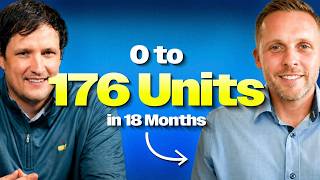
In this 18‑minute interview, host Jonathan Cronin (joined by Larry) talks with Kevin Harris, a former single‑family landlord who, within 18 months, scaled to multifamily ownership and is now pursuing a $23 million, 395‑unit deal. Kevin recounts his background—selling a tech business, losing a job, and discovering a passion for real‑estate through a mission trip. He explains how he identified a 54‑unit, greater‑Houston property that initially seemed over‑renovated, but after on‑site inspection uncovered significant value‑add potential, allowing a purchase at a 9.5% cap for $3.625 M. He details the capital raise: an oversubscribed $2.25 M (target $1.5 M) achieved via webinars and a partnership with an experienced raise‑partner, including a $200 K on‑the‑spot commitment. Tax advantages are highlighted: a cost‑segregation study and 100% bonus depreciation generated $875 K (≈42% of investor equity) in year‑one write‑offs. Kevin shares operational wins—renovating 9 units, raising rents $150 per unit, and stabilizing ahead of schedule. He discusses due‑diligence lessons, including walking away from a 116‑unit deal that didn’t meet return thresholds, emphasizing the importance of investor protection. The conversation moves to his pipeline: a 121‑unit deal under contract, capital already raised, and an upcoming LOI for a 395‑unit, $23 M property. Kevin credits the faith‑based RE Accelerator community for mentorship, networking, and shared values, and stresses that the journey required faith, partnership, and a willingness to step out of comfort zones. He offers advice to newcomers: focus on strengths, fill gaps with mentors, treat capital raising as a partnership, and trust the process. The interview concludes with reflections on personal transformation, joy in mission‑driven investing, and an invitation for viewers to connect via Everflow Capital.
Chapters
We're about to submit an LOI for a 395-unit property. It's a $23 million deal.
18 months ago, this guy had 2 single-family rentals and had never raised capital before in his life.
I didn't have the wallet that some of you may have. I don't have the connections that some of you may have. And, you know, I really was starting at ground zero. On one of our webinars, we were able to, on the spot, get someone to commit $200K.
This is what 18 months looked like when I whatever you commit to the process. What's up, guys? So I have Mr. Kevin Harris on here. Super excited to have him here. 18 months ago, this guy had 2 single-family rentals, all right, and had never raised any capital before in his life. All right. So, uh, today he's closed 56 units. And oversubscribed $750,000. So he raised $2.25 million on his first deal, first capital raise. And today he's already got a 120-unit on deck about to close. He's already got the capital raised, $4.2 million, or at least committed on a $10 million deal and is also launching a fund. So, Kevin, is all that correct?
Yeah. Hey, Jonathan, Larry, thanks for having me again.
Hey, Kevin. Good to see you.
Yep. It's been, uh, quite the journey for 18 months and, you know, we are excited. We're, we're looking to scale and lots of great things. We praise God for that, but lots of learning lessons, uh, along the way. So excited to share some of those today.
Let's go. Kevin, it's so good to have you on again. And looking forward to diving in. A lot of people are curious to know how you actually did it. And so before I jump into all of that, I want to be clear with everyone, right? These types of results aren't typical, right? The people who get into multifamily don't typically close deals at this speed or this size, right? But what I'm here today, we're going to break down exactly how this is possible for someone who just follows the process, gets in the rooms with the right people, and actually puts in the work. It's still hard. There's still gonna be trials. There's still gonna be some ups and downs, but with the right effort, right people around you, it's real. And so let's get into it. Kevin, thank you so much again. Let's jump into, so just go ahead and break down what did you close? You know, where, where's the deal at? Where's it located? What does the deal actually look like?
Yeah, so we closed last November and it's a 54-unit apartment complex in the greater Houston area. We picked it up for $3.625 million with a $1.55 million raise. And you know, when we were looking at the property, it was actually a property that we didn't even consider to begin with. We were actually looking at a different property that we were more interested in, but just through the relationship that we have with the broker, him trying to understand what we were looking to do and our buy box, he showed us this property and at the, you know, at the surface level, it didn't really check all of our boxes. And so the big learning lesson for us was just because sellers are marketing the property a certain way doesn't necessarily mean that's the actual property. And so when we went to go visit it, we actually realized that there was much more meat on the bone to this property. And that's what really excited us. And we were able to get the property for a 9.5 cap. At closing. Hmm.
9.5 cap.
Good enough, right? You said initially didn't meet your buy box. What would be one thing that it did not meet?
Yeah, so I think for us, we definitely are, you know, interested in value add, but we want to make sure that there's enough value add for us to go in there, implement our strategy, really turn the property around. And the seller was marketing that this had already had 50, 60% unit renovations. And so we were kind of turned off by that, but when we actually went to tour the property, his renovations were more your simple unit turns. So paint job here, maybe some hardware, light fixtures, but there was so much more room to grow there in terms of updates to the floor. Appliances, countertops, implementing other revenue streams like washer and dryer connections. So there's so much more that didn't meet the eye or, you know, some of the marketing materials that were initially presented to us. And so we've seen some great success from the property and I, I know we'll dig into that here in a second. Yeah.
Wow. Yeah, that's huge. Well, yeah, before we jump into the details, I mean, let's, let's just go back to the beginning, you know, back before any of this. What did your portfolio look like and what were you doing for income at that point?
Yeah, so I would, I would say you'd have to go back probably 3 years at that point. So for, for me, you know, I started a business in 2013, eventually sold it in 2020, but went to go work for a competitor. in the HR tech industry. And at that point, company went through a, a massive layoff in about 2023. My job was impacted and it really gave me the opportunity to, um, really discern what is it that I'm passionate about? Where can I leverage the gifts that God has given me into something that kind of, uh, meets both of those criteria to where I'm gonna enjoy the work that I do. And at that time, went on a missions trip, connected with a gentleman who was in commercial real estate. He and I got to talking and, you know, I was sharing with him, I have 2 single-family rentals. My plan was initially to continue to build single-family. I know a lot of people who have success doing that, but in order to scale that, it's going to take a lot of time. It's going to take a lot of money. And that's when I was introduced to you all. And so I think the stars really aligned for me in terms of my gifts, my passions, and then really trying to understand how can I scale the single-family business. And that was me taking the jump to multifamily. So that was about November of 2024 where I, joined you all, only had 2 single families at that point in time.
Wow. Yeah, that's awesome. So, I mean, and going back to that moment where you're like, I need to scale, like what was that turning point? Like what, what made you decide like, you know, things needed to change?
Yeah, I think for, for us it was really just wanting to make an impact. And I think we can do that at the single family level, but the impact is, in my opinion, much more minimal, right? Unless you have a massive portfolio to, to have an impact. Single family made the most sense to where you can have one property. And in our case right now, being able to impact and influence 54 units of over 100 different individuals. So part of us is, yes, we have a financial responsibility and obligation to our investors, but kind of a step 2 for us is now how do we impact these communities for, for Jesus Christ?
So good. That's amazing.
Yeah.
Well, that's, that's why we, uh, I think click so much is you do have that ministry mind and you're an inspiration, man. So I, I appreciate you sharing that. And, and, and even along with that, you know, a lot of people do stay stuck in the single family, we call it trap, right? I mean, the single family, it seems like the, reasonable thing, right? The easy or maybe safer route, right? But what made you really want to make the jump? I know you mentioned, you know, having one roof, but what was that for you?
Yeah, I mean, I think on the other side in terms of just impact is I think from a financial perspective, I think, you know, we, you see a lot You know, online and people marketing about financial freedom, but I think multifamily really gives you that opportunity, right? To where you, you now have one, not, not just one door, but 54 doors to where, you know, if you're improving the property, you're increasing the rents, cash flow to your investors, you're able to, it, it opens the door for you to be able to have more financial freedom to be able to enjoy. The life that God has given you.
Yeah. When you first saw this deal, 54 units came across your desk. I'm sure you had already been sourcing a lot of deals. You'd already been looking at a lot of stuff and you almost passed on this deal. What was going through your mind there when you first saw it? Like, how did that transpire there?
Yeah, I think even just from the visual appeal, it looked like the previous seller had already done some work to it. So it really didn't, in, in our mind, make sense because we thought there's probably not much more we can do to squeeze the returns that made sense for our investors, for us. And so once we actually went on site, did a tour, we were able to get much more insight in terms of the playbook that we had in mind. And I think that it just made much more sense. For what we are really trying to do and accomplish, that this was the right property. You know, I think along the way, yeah, there's definitely hurdles and hoops that you have to work through, but I think that's where God wants us. He doesn't want us to really rely on our own strength, but really rely on him to help us through. So good. To get through that.
And yeah.
All glory to him. I mean, without him being able to provide for us, our investors, and just getting the deal across the finish line, yeah, we wouldn't be here.
Yeah. And I love that because I think what it shows is you really have what I believe most people have to really learn and work hard at learning is that investor eye, that ability to see, because the investor, the seller says, you know, we've done all this renovations, you know, all this stuff. And really, they maybe have done some basic unit turns or something like that, but really there was still a lot of opportunity for value add here. And you were able to see that, right? And so then you were able to jump in there and, you know, where most people would pass, whatever, you were able to see the opportunity here and make it happen.
You always have to dig deeper.
Yeah.
Peel back the onion, right?
Yeah.
Yeah.
I know Jonathan said these results aren't typical, but they're a lot more typical for somebody that has the mindset you have and come in and do the work.
Yeah.
You've done, so what, and you closed this first deal, you didn't get complacent, right? You went on to the next one. Can you?
Yeah. So I mean, I think for us, we were fortunate enough to oversubscribe on our first deal. So I think what that triggered for me and our team was, okay, now we have capital that we need to place. We need to go find another one because why lose out on overcommitment when you can just take that? Move to the next.
What a problem to have.
Yeah, right.
Yeah.
Yeah. Well, why don't you jump into that? Because I mean, you know, as far as the numbers, I mean, why don't you just break down what are the numbers on this deal? Like, as far as you bought it for, you know, a certain amount, then you, you, what was the initial LOI? Did you end up, you know, retrading? Did anything happen there? You know, what kind of debt did you put on the property? And then, and then even through stabilization, I know there's a big win there, like through getting it up to where it needs to be, tax advantages for the investors, all that kind of stuff. Just give us that.
Yeah.
What does it look like? What does it look like today? Right.
Yeah.
Great, great question. There, there's a lot there. So if I miss anything, definitely. Yeah.
Yeah. Yeah. I just gave you a bunch.
So we initially submitted an LOI on the property for $3.8 million. And that got accepted. We moved into our due diligence. We had a team come out. Help us with that, and we were able to discover a few things that definitely needed some attention, but we were able to leverage that to renegotiate the price where we eventually closed at $3.625 million. And with that reduction in price, we were able to raise $1.5 million. That was at a 9.5 cap. The, the LOI when we, or the NOI when we took over was $360,000. So already getting, you know, 9.5 cap on this deal, market cap rate in the area is 7.5. And so getting it at a good price on day one. Now when we transitioned to, you know, at close, took over the property, that's when you really start to discover things underneath the hood. And so, you know, you can do during due diligence discovery in terms of what are the operational inefficiencies, what are, what is the actual unit by unit look like, what work needs to be done. For us in this property, we had a lot of tenants that the previous manager was kind of just giving out to her family. And so we had to go through early on some evictions to be able to get the right tenant population in there. But that didn't slow us down. We had a playbook in place that we wanted to make this place a better place to live for the tenants. And since then, we've been able to renovate 9 units. And on average been able to increase the rents $150 per unit. So we're already seeing some great success, great traction from our renovation playbook and getting the right tenants in place. And I think we're about, you know, we're only not even at 6 months since we've closed, but we're about a month away from being stabilized, the property performing Some of the rents were even beyond our pro forma numbers from when we initially underwrote the deal. So we're seeing a lot of good things from this property that we want to replicate to future deals.
I love that. Yeah, that's so good. And okay, so the tax advantages, I know there's been a big win there. Why don't you catch me up? What happened with your investors? They put in a certain amount and then there was some bonus depreciation.
Yeah.
You just had a cost seg study done. What was the deal there?
Yeah. So th— this one's really exciting. So for our investors, this play for us, it's a quick 3, 4-year hold. And what we have pitched to our investors is with 100% bonus depreciation from Trump's big beautiful bill coming back into play, year 1, you're going to get a massive tax incentive. And then year 2, through our improvement study, because we're doing a lot of renovations on the property, you're going to get an additional tax incentive in year 2. And then at year 3, that's when we plan to do, um, a, a, a sell at that point. So each year our investors are going to get some sort of incentive through the hold of this property. And we just got our cost segregation study back. We got our K-1s to our investors and through the bonus depreciation alone in year 1, our investors were able to write off 42% of their initial investment.
And how much, do you know how much the total bonus depreciation in year 1 was?
Yeah, year 1 was $875,000.
Wow. Look at that.
Wow.
$0.55 million.
Yeah, pretty good. Not too bad. All right. So look, I want to move on to kind of, you know, what was the biggest things that, and now that you're moving on to 120 unit, you've got several deals that you've, you're looking at 300-something unit. I'd love to talk about those in just a second, but you raised $1.5 million or actually $2.25 million. You only needed $1.5 million. What, I mean, what actually worked for you in capital raising? Like what, how did that come out? Yeah.
For, so you know, never raised capital before in my life. So it was a new experience. I know early on in our education with you all, you help educate us on, you know, some of the processes to capital raising. So because I hadn't done it before, I think one of the things that was key for me was finding someone who had a little bit more experience than I did. And so I was able to, through REI, connect with 2 individuals who, you know, shared interest in helping me with my capital raise. So Tim in the group, he had much— he had experience closing a deal, experienced capital raising, and so I was able to partner with him. And he is pretty tech savvy when it comes to getting webinars and marketing material together to be able to pitch to our investors. And so he kind of led that front and I joined and shared details about the property. And it was a huge success for us. I believe on one of our webinars, we were able to on the spot get someone to commit $200K at the end of one of our webinars.
So huge.
And then you had so much overflow from that. It really built up from there and that was pretty wild. Yeah, that's exciting, man. All right. Well, look, I mean, you joined RE Accelerator and obviously that's not a that's not an easy decision, right? It's not a free decision. What, what, uh, what were you thinking? What was going through your head there? What, how did that happen?
Yeah. So I think the, the, there's two things that really stand out to, to me in terms of what, why we made the jump to, to join with you all. And I think the first, um, is that you guys are faith-based. I think for us, we wanted to work, we wanted to partner, we wanted to learn from faith-based multifamily investors, people who've done it before, who've done it before the right way and share the same mission, vision, and values that we do because we are a faith-based organization that we want to replicate and do that in the communities that we are acquiring and ultimately impacting. And so I think that was definitely the big number one reason why we joined you all. And then number two is really the community that you guys have built. I think there's so many other investors or like-minded people in the group who are chasing the same thing that, that I am, right? That I want to build a portfolio. I want to grow our business. And I don't have all the answers, but I know there's someone in the group that I can tap on the shoulder to get what I need to help me grow and scale our business.
Yeah. I love that. Yeah. Thanks for sharing that. And, and I mean, there's people watching right now that think, you know, that's, this isn't for normal people, right? What you just described isn't for the everyday person, right? It's people who already have money or already have connections, right? What do you say to that person?
I mean, I chuckle because that, that wasn't, that wasn't me. I didn't have the wallet that some of you may have. I don't have the connections that some of you may have. And, you know, I really kind of was starting at ground zero. I had a passion, I had interest, and I really just had to step out in faith and just trust that God was going to lead me in the right direction, connect me with the right people. And God has provided since then, right? We closed then back in November. We have a couple deals here in the pipeline and he continues to be a part of it. Amen.
Amen. And, uh, what, you know, let's just, what was the hardest part of the whole process? What, let's just be, just be real.
Uh-huh.
What was the hardest part? Yeah.
I mean, honestly, I think there's a few things. I mean, when you, when you sign the contract, um, and not know where the capital's gonna come from. That can be pretty scary. And for us, it was a step of faith to, you know, really trust that God was going to provide. So I think that was probably the biggest, scariest thing, the most challenging thing. One, because I didn't have that experience. I feel much more confident, much more comfortable now that I've gone through that process. But I would say to you know, the listener out there who may be on the fence, uh, take that step of faith. Like God is, uh, is there, he's gonna provide, but you know, you also need to, um, put in some of the work, right? Be faithful, be obedient to, to that calling.
That's so good. Jump out of the airplane, but make sure you packed your parachute properly. Definitely a way to increase your prayer life. Like you said, get that property under contract and you got what, 30, 60 days to get that capital raised.
Yeah.
Yeah. That's so good. All right. So now you've closed the 54-unit deal. Capital was oversubscribed. Now you've got a 120-unit deal in contract. The capital is there. But what's, what's going on with that? Why don't you break that down for us?
Yeah. So I think before we even got to that deal, we, we actually were under contract on a 116-unit. And this one was about 2 miles away from our first property. So for us, we were super excited. Okay, we're going to, you know, economies of scale, be able to leverage the same property management team, split them, have them share time between properties. I mean, this is going to be great. But we went through due diligence, certain things popped up, and we just could not agree on, you know, a new price with the seller. So for us, in our minds, we have the equity raised, we have this 1031 exchange investor, but certain things, material things at the property needed work. And so we ultimately decided that because we would have to put additional capital into the property, returns ultimately got a little thin and we had to walk away. So it was super challenging for us to walk away from that property knowing that we have everything in place to get this deal closed. But because of things that popped up in due diligence, you know, we really had to make the decision that was best for our investors. And it was a huge learning lesson, but you know, early on you want to just get the deal done. But you have to keep in mind that we have an obligation to our investors. And, you know, if things are from an overall return perspective, don't make sense, you really need to question whether it's the right deal for you.
Yeah. That's so valuable. Don't get so excited about a deal that you end up working for free for 2 or 3 years, or worse than that, losing money.
Yeah. We always say better to make no deal than a bad deal. Yeah.
Some of the best deals are the deals you didn't do, right?
Yeah. And I think that's awesome about you too. I mean, first off, you have the guts to walk away. I mean, you're not so married to the deal and that shows the level at which you execute. And you know, as a partner, as an investor, you know, it makes them feel like, okay, this, this guy knows what he's doing. We can trust that he's going to execute and actually deliver the returns he says. He's not just doing any deal just to do it. And that can get a lot of people in trouble. And it's rare to find that kind of operator. And so congratulations on that. Sometimes it's, it's the deal you didn't do that makes the biggest difference. Yeah.
Yeah. So for us, right, we're in this position where Okay, now you have all this, this capital already raised. Mm-hmm. And you know, if it's 1031, they have a certain clock that started. So what we ended up doing after we walked that deal, because we've developed a lot of relationship with some brokers in the area, we just kind of tapped them on the shoulder, told them what our situation was, and they were, they were able to began to bring a lot of deals to us. And so deal flow, I would say one recommendation for those listening is, I mean, broker contacts, develop relationships with them because deal flow will start to flow to you. That's what happened to us. And we were able to do a lot of property tours since then, and we now have found a property. It's 121 units that meets the criteria for our investor, and we're now under contract to that one. We've been able to raise the capital needed for, for that deal, and we're looking to close, um, at the end of June.
And you executed that great with the 1031 money. And for people that don't know, that's where a buyer— a, a seller that sold a property is taking their gains or their profits into another property to avoid paying taxes, but they have a limited timeframe to do that. Right. So there's pressure and there's been some bad deals done over the years with people with 1031 funds. So it sounds like you navigated that perfectly.
Yeah. Well, I mean, I think we, we, I mean, you kind of alluded to it earlier, just like with the property, asking a lot of questions, really understanding the condition. We kind of did the same approach with our investor. Understand, okay, what properties are you selling? What returns are you currently getting?
It's good.
What are you expecting? So that when we are looking at deals, we know, does this property satisfy the returns that they're expecting? And if not, I mean, because we have a timeframe constraint, we need to move on. Or, and if it does, great, how can we get this across the finish line?
Yeah.
Great.
So about, about 2 to 172 units in about 18 months, somewhere around there. How, how's things changed for you now? Like actually changed in your life? Yeah.
I mean, things have been, um, things are definitely busy, but you know, it's, it, it's a good thing. I mean, I think, you know, when you really find something that you're passionate about, and find ways that you can leverage and use your gifts, it's much more enjoyable. I would say what I was doing prior to this, I mean, people could even see on my face that, man, you, you don't enjoy what you're doing. Um, and so I've had so many people share with me that they've, they've seen that transformation. So I think that joy, um, is definitely there with what we're doing. Uh, since then we've been able to build out our team. I have an acquisitions person that I'm working with. He helps me underwrite some of our deals. We've developed great relationships with property management teams to help us with future properties. But you know, that's the goal for us is to continue to grow, continue to scale. I mean, we've set some great goals for us for 2026 and you know, with this 121-unit that we're looking to close at the end of June. I mean, that's not it for us. We were about to submit an LOI for a 395-unit property. It's a $23 million deal. Things continue to at least grow for us, but we've been able to establish relationships with some equity groups, some family offices. And that's what's really helping us to be able to look at some of these larger deals.
Yeah. When you, it just takes one connection to change everything. So I love that, man. I love that. And then, you know, for the person who's watching and, you know, maybe, you know, they're exactly where you were, you know, 18 months ago, you know, 2 single-family houses, never raised capital before in their life, but they're on the fence, you know, what would you tell them?
Yeah, I would say, look, it's a journey. Um, just like with anything, um, if this is something that you are passionate about, you feel like, uh, this is a place where you can use your gifts, your talents, your time. Uh, I mean, I've seen firsthand that this process, it works. Um, you know, it, it's, it's all about surrounding yourself with the right people who can help, uh, fill some of the gaps that maybe you don't have. So understand what are your strengths. And really lean into those, but also understand your weaknesses. Like for me, uh, doing webinars or capital raising, that was a whole new experience. But finding someone that can help, uh, with some of your weaknesses, that's really gonna help propel you, um, to move forward.
Love that. Love that. So was it worth it?
Yeah, absolutely. Amen.
All right. Amen. Amen. Well, Kevin, I appreciate you so much, man, being on here, being a part of the community, and at the end of the day, this is what the kingdom is about, working together and being a family and seeing God's kingdom come on the earth. And so I, you know, it may sound wild to some people out there, but this is absolutely the Lord's work and it's about making an impact.
Yeah, we appreciate you trusting us and seeking our wisdom, but my biggest takeaway is you're seeking the wisdom of the Almighty, putting your trust in him, and that's what's carrying you forward, right?
Yeah. Yeah. And he, yeah. And you work hard. So you're the type of people that, you know, you're the type of person that we would say, you know, if anyone needs to place capital or you're looking to partner with someone, Everflow Capital, right? Everflow.Capital is where you can look up Kevin and check out what he's doing. Hopefully you have an ability for people to put their email address in and connect with you.
Yeah. Well, I appreciate, uh, you guys having me on. Um, it's been quite the journey, but yeah, obviously I would not be here without the support and even just the education and the connections that you guys have made, uh, for me. So we appreciate it.
Let's go. Yeah. Well, appreciate you, man. And so for everybody watching, this is, uh, what 18 months look like whenever you commit to the process, 56 units, $1.7 million in projected equity, oversubscribed by $750,000. And, and now we're, we're locked in on 120 units. If, uh, if, if you want to learn more about this and, and the journey Kevin's on, or you want to connect more with us, uh, we'll drop a link in the description. You can, uh, check that out, but, uh, Kevin, we'll, we'll have you back here shortly when the next one closes.
That's right. Would love to.
Appreciate it. All right, man. God bless.
See you soon.
Thanks, guys.
More from Jonathan




NEVER Buy an Apartment Building Without Checking These 5 Things (I'm a Real Estate Attorney)





