How Tim bought a 34 unit apartment deal with 0 dollars as a beginner
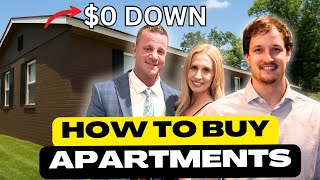
Tim Crowder bought a 34-unit apartment building in Columbia, South Carolina for $1.3M with zero of his own money. He raised $525K from investors, spent $500K on rehab, and plans to push rents from $450-$700 to $900-$1,100 in 14 months, targeting a stabilized value around $2.7M.
Questions this video answers
34 units
Columbia, South Carolina
About $1.3 million
Approximately $37,000–$38,000 per door
$525,000
Welcome, guys. We are excited today. We are diving into a real live deal that just took place in today's market. If you are somebody who wants to grow your real estate portfolio, this is only for existing real estate investors or those who have some foundation of real estate and you're wanting to grow your passive income quickly without tapping into your savings or maxing out your savings. We are going to break down a real deal today that I believe you're going to get a lot of benefit from. So we have our team here, Larry and Randy, partnering together. If you are new to the channel. We have a combined total with our partners of over 500 million in assets under management. And we also today have Mr. Tim Crowder.
Tim's in the house.
Tim Crowder's here. And this is one of our favorite people. He's one of our clients. And he has tapped into that extra mile, that extra brain to be able to invest into real estate investing. And so, Tim, thank you for being here, man.
Thank you, thank you for having me. All glory to God.
Yeah, cool. Well, let's break down this deal because a lot of people listening are looking to break into commercial real estate this year. There's all kinds of momentum in the market today with distressed properties, the big beautiful bill, all kind of different things that are compiling and just making this market today such a potent market for the specific types of multifamily deal that we're going to break down today. You know, 10 to 100 units, somewhere around there, I believe is just a sweet spot. And those that are capitalizing on it and learning how to raise capital, learning how to utilize other people's money and get in the room with other seasoned investors, they're just doing phenomenal. And so you're a prime example of that. And so, yeah, take us through the deal you found. You know, how, what is the deal? What's the units, what's the, what's the breakdown of the deal?
Well, first of all, again, just, it was all because of REI's structure and education that I was able to even make this happen. We ultimately, after spending some time looking through off market deals, we had been dealing with a couple of brokers. And I say we because I did meet a partner within the REI Group and he was the prime partner for me. He was better with the things that I'm not as seasoned with, he was a little bit better with the underwriting. And so he had been dealing with some brokers. And after the course of a couple months dealing with some brokers and some negotiation, we did come across a 34 unit in Columbia, South Carolina. And this is a property, quite honestly, I would have passed on because it was just a class C property and I was new and I kind of thought that our first property, we didn't want to have a class C maybe, or I didn't understand the specifics that, that it wasn't cash flowing on, on day one necessarily. And so I would have passed on the deal, but my partner said, no, we really got something here. And so after significant negotiation, we were able to arrive at a very great price for this property. And we came in at like 37 or 38,000 a door. I believe the purchase price was at 1.3 and the rents on this, this property were. Some of them were as low as like 450 up to about 700 and they should have been between 900 and 1100. So we saw all kinds of potential for value add to be able to give back to our investors and of course make a solid profit for ourselves as well.
So at 38 a door, C is for me, praise God. 38 a door. We're all over that. There you go.
That's awesome. Great job, man. 1.3 million 34.
No, dude, that's like, that's. Yeah, that's a steal, bro. Like you know for sure.
And I mean it in it. This is only a 14 month project. This is a really quick value add. We're soaking about a half million into it. Uh, so we were all in at uh, 1.9 and that's including all fees and everything. And the stabilized value of the property is projected to be about 2.7. So significant value add and gain. And we continued to get lucky. God is good. We pay our tithes. And God just kept delivering more and more, making this deal better and better for us. We were able to get a tax abatement, lower insurance costs out of nowhere. And then finally it appears that we're eligible for a grant for affordable housing down there. So it just keeps on getting better and better. We seriously can't believe ourselves. We took a, a property that I would have passed on and it's now a home run for my very first property.
That's great.
How did you structure that debt and equity, Tim, on that deal?
So this was a. We raised 525,000 for this. On the rest, of course, debt. And so what we're also learning now, even with the grant and such in the area for affordable housing that may help with the exterior upgrades, There is a nonprofit in the area also that does Capex short term loans at a very low like 2 or 3%. So instead of that being associated with our loan and drawing off that interest rate that way, we found another option also. So again, there's just another element that just makes it more and more profitable the deeper we got into it. And I learned so much from this property.
All right, so you raised 525, is that what you said?
Yes, my very first time raising capital.
$525,000 raised on his very first deal. Not too bad man, great job on that. Where walk us through that. Because I know a lot of people are like, you know, I need to, I want to get it tap into the game of raising capital, you know, and better leveraging my capital. What, how did you raise that capital? How did that play out?
Well, so this was all new to me. I do have a background with sales and marketing, but I have never raised capital, I've never done anything like this. So I did investigate a lot of services online and I utilized all the REI teachings for raising capital. And honestly that's what worked the best. Just following your all's guidance, your all's footsteps, initiating the conversation with high net worth individuals that I know here in my personal life and then branching out with a little bit of digital marketing, trying to attract some of the stranger investors which I'm now much better at, you know, eight months later. But in the beginning it was a learning curve just like anything else. But when you believe in yourself and you know that you are following God's ordered steps, you know you can't fail. And so I just persevered, I kept going. We did lose some capital partners a couple times halfway through and I just had to replace them. You know, things happen sometimes, so.
That's right.
I learned a lot about over raising each time I raised now to always make up for anything that doesn't work out. And so I had many, many investor lunches and dinners and communicated with anybody and everybody in my personal life that may or may not have capital laying around or they were open to rolling over some of their IRA into self directed and then into real estate. So I was exploring all options with raising the capital and ultimately the return on this property. We structured it in a way to make it extremely attractive for investors given that it was our first deal. And so this particular property wound up being a 37.1% annualized return. And so I myself, after raising a few hundred thousand, I kind of saw an opportunity. I'm like, wait a minute, this is such an amazing opportunity. I'M going to roll over my own thrift savings plan into this and seal off the amount of capital needed. So I'm a limited partner and a general partner for this deal.
Wow, nice.
37. I haven't heard of that in several years. That's, that's pretty crazy. Why don't you walk us through that? I mean, what's the, what's the return for the investors? How are you structuring that? And what's the plan for a value add? And like what, what's the year projection or what does that look like?
Okay, so. Well, that's a lot of questions here. Let me try to keep up. So, yeah, it's a built in 1965, so it's a little older property than we typically want to go after. But in this case it made sense of when you're getting it at that great of a discount. Again with, with a 37.1% annualized return that is including an 8% pref as well. The 8% preferred returns, which we originally told investors that we didn't think we were going to have that cash flow that first quarter to be able to deliver them a preferred return until all these other elements came in play, such as the tax abatement and such. And then it wound up being a heavy enough cash flow right from the beginning to where we are able to give our investors a return here in the first quarter.
There you go. There you go. And so the next two years, you're. Are you looking to refinance, you're looking to sell what it. What's the game plan?
So this particular property, as you know, it's slightly smaller than we, we really like at only 34, and the rents are only going up to 900 to 1100 somewhere in that area. This particular property, after multiple analysts and underwriters have looked at, we kind of feel that it might be better to go ahead and sell this property around the right after the most significant value add of its life cycle. So somewhere around 15 months is where we're looking. And we're going to do, do a refinance right before we sell as well and put it into agency debt. Make it an assumable loan. We want to make it easier for the next person to get into as well to keep our investors happy on a timeline that we promised them.
There you go. All right. So yeah, for those who don't understand, you know, we have a coaching deal where Tim's a part of. And typically our model in today's market is to be able to refinance or sell in a few years. And if we refinance, we can typically take out agency debt once it's over 90 occupied. Right. Agency debt would be Fannie Mae, Freddie Mac, things like that. And it has a. Typically a lower interest rate, longer term, and, but it's only for stabilized property. So he's getting this deal over 90% occupied. And once it's there. Is it already there? Where's it at in occupancy?
It actually is. There's only a 3% vacancy rate in the area.
There it is. So, yeah, there you go. Yeah. And, you know, so typically you're taking out that bridge debt and you're being able to value, create the value add, increase the income, and then you get it to market rates and stabilize. And so then that allows for greater cash flow because then we can get cheaper debt, pay out our investors. But 15 months, that's pretty aggressive. Right. So I'd imagine you guys are working your tails off trying to get this thing ready for the. To be able to do that. Right.
We have been down to the property several times doing construction management. We decided to keep the construction company and the management company that were already in place. They're also the companies for the adjacent property, and we decided to start with them. However, I'll be honest, guys, we are, we are looking to optimize everything we can. My partner does have construction management experience. And so now we are, we're actually dealing with two construction companies renovating separate, separate buildings with four units each. And they're kind of competing against each other right now in terms of cost and efficiency. And whoever does the best job will, will get the rest of the, the contract, you know.
There you go. Yeah. Well, I was hoping for a little pushback. We want to see you create systems and be able to optimize things and automate things to be able to go to the next deal. Right. And scale the portfolio. Right. So that's exciting that you're, you're taking those necessary steps, following the game plan and really being able to come through on investors and most importantly for you and the next, your family.
Right. So that's, that's really the gist of it. Because of your program and the education it offers, this is a very scalable model, which is why we chose multifamily. And because of your education and because of this amazing program, we got right to work. We finished up with the primary duties of the construction management. And now I'm partnered and we are back under contract on another 54 unit out in Pasadena, Texas. So this is a scalable model that, you know, I think even a reasonable person can. That believes in themselves and takes your education, a couple complexes a year shouldn't be a problem.
Come on.
You know, I just interject, just kind of highlight a couple of things Tim said. You know what I mean? Again, looking at this, and for those of you guys who are listening, you know, Tim is, you know, newer to this, had sales, background, experience, but again, you know, sharp guy, digs in, takes advantage of the opportunity and the information. Partners or connects together within the group. That's key, too. You know what I mean? Working together, not trying to be the solo, like there's some of y' all watching right now. You're going to be the Lone Ranger. Praise God. Even Lone Ranger had Tonto, you know what I mean? And so it's like by being a part of the group, having that additional resource and connection, but then, you know, kind of a throwaway comment, but just. It's like I just took what was there and then implemented it. It's like kind of, you know, that's something that's powerful, like in a real way. Most human beings, including myself, many years ago, you want to try to create your own wheel, right? And it's like the truth of the matter is you don't have to recreate the wheel. You can take the model of what's successful and implement that model. Yeah, sure, you put your own tweaks on it, like Tim and his partner have done. But it's like in the gist of it is you're taking what's already there and just implementing it. And then bam, here's the results. You guys already got another deal. 54 units. That's even a bigger scale, bigger results in Pasadena, Texas, and implement the same thing. And then you just said something that was sage, bro, and you didn't even realize it. Anybody with reasonable basis could do a couple of these a year. Like that is a game changer for your life, for your kids and your kids. Kids.
Absolutely.
It's like you just stay on that pathway, let's say, and do a couple of these a year for the next three, four, five years. It's a game changer, you know?
Yeah. I mean, go ahead, Larry. I was just going to say, man, that's good. You know, most people dream of doing two single family deals a year, right? And you're. You're knocking out two apartment deals a year. I mean, that's. That's incredible. And guys, Tim has never done a deal before. Never done A real estate deal. And he comes in here, he takes charge, he takes action, and he takes control of his financial future. And I mean, that's, that's ultimately what it takes is you got to have a winning mindset. You got to have, I'm going to do whatever it takes. And I mean, because a lot of people, you know, they go hire somebody, hire a coach, hire somebody, and they, they are hoping they're going to do it all for them. But, but at the end of the day, it's, it's about who you know, it's about what network you're in, and it's also about the action you take on a day to day basis. Tim's a shining example of, of taking action. You know, I'd love to take credit for your success, but you, you put it out there, man. You, you did the work, you got it to the closing table.
So I might have taken the action, but more so I followed directions and you are the one that provided the directions. And so I think for anybody out there listening, this is a program that if you follow directions and you're willing to take action, you would like to change your life. Jonathan told us from the very beginning, one deal can change your life. And that's exactly what happened.
It's a partnership, Tim. We both get credit because our program is a partnership.
Yeah.
And it just builds upon itself. You know, all that activity. I was thinking as you were talking about following our capital raising system and all those lunches and calls and relationships, it'll certainly make the next deal easier. You're just constantly building those relationships with vendors, contractors, and putting your system to work.
So that's good. Yeah. Well, look, Tim, give us a brief synopsis of what's next, man. You got some deals you're already looking at. Just close this deal just recently and now you're already looking at other deals.
Well, I mean, for, for those out there listening, I want to maybe motivate you of how scalable this kind of thing is. As a new entrepreneur, one of the things I learned up and coming through digital marketing and such was to identify the problem, identify what you can do better or what gap you can fill and milk it for all it's worth. So I personally found that with my background and digital marketing experience, a little bit of sales and marketing and professional careers, that the front side of things, the face of my business, the marketing material, the presentations, the capital raising, finding loan sponsors, that stuff kind of came a little easier for me and a little bit more natural for me than spending Hours and hours re underwriting deals over and over again. You just can't help the way you're wired. So find what talents that God gave you and chase those. So it's my goal now to be able to take that experience of raising capital and finding sponsors and be able to help others in the group and be able to partner with more people in the group and scale even faster by then taking more pieces of. Of more deals. Of course.
Let's go. Let's go, man. That's awesome. Well, look, 10 seconds. What would you advise those listening? Maybe they've done a deal before, maybe they haven't. What would you tell them to do? Immediate action steps.
First things first. Ask for God to order your steps next. Definitely. Should he lead you? Follow directions. With a really, really quality program like rei, you just can't beat and just follow directions and believe in yourself. Believe in yourself and follow those directions. There's those two things. Believe in yourself 100%. And as you build and become something, remember where credit goes, guys, I give all credit to God.
Amen. All right, thank you, Tim. Thanks for being a part man and looking forward to seeing you scale and grow, man. We're going to be doing more deals together.
Yeah, absolutely. For that next closing announcement, right?
Yes.
Amen.
He'll be back next week for another closing. Exactly. All right, guys. All right. Thanks for tuning in. You guys have a wonderful day.
Thank you.
All right.
Thanks, Sam.
More from Jonathan




NEVER Buy an Apartment Building Without Checking These 5 Things (I'm a Real Estate Attorney)





