How to Find & Close Investors FAST! - The LinkedIn Strategy That Raised $80M
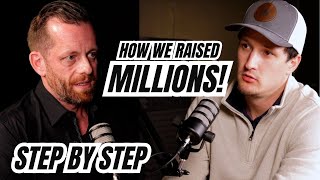
A recorded interview (YouTube) where host Jonathan Cronin interviews Anthony Simone, a marketing and capital-raising expert. Anthony recounts his transition from corporate sales to property-preservation and then to training and marketing; he explains how he accidentally discovered LinkedIn strategies that generated quick investor revenue, how to research and target audiences on LinkedIn (by profession and niche), and the importance of relationship-building and persistent email follow-up to convert leads into limited partners. Practical takeaways include narrowing to a specific investor-type, using LinkedIn search to validate audience presence, speaking to target pain points, and robust follow-up to avoid losing leads to email deliverability issues.
Questions this video answers
About 17 years.
$60,000 (collected money and equity in businesses from initial LinkedIn efforts).
Over $80 million.
anthony@anthonysimone.com (as spoken: 'Anthony@anthony simone.com').
All right, we are back today with a guest that is the go to expert in capital raising. So whether you're raising capital for a syndication, a real estate deal, syndication fund, whatever that is, this guy knows this stuff. He has a marketing agency that amongst their leadership team have raised over $80 million through this one method and using LinkedIn as a primary focus and emails as well. So I am super excited to introduce you guys to Mr. Anthony Simone. I kind of touched on a few things that you've done, how long you've been helping people in capital raising and.
Just in general in helping people, you know, drive more revenue and profits in their business. Yeah, we're going like over 17 years now. Yeah. So I, I came from the corporate world originally. I was a, I was a sales rep for Johnson Johnson. Sell their medical devices, would go into the. Or really liked it. Um, it was very interesting. Right. I got to see a lot of different surgeries and, and all that kind of stuff. But it wasn't long before I realized that every year that went by, I had to work a lot harder to make the same amount of money. Because no matter how well I did, the quote has changed. Right. So I didn't see the residual or recurring income. It was like, what have you done for me lately? Every time the, the new year came around, I get a little bit tired of that. And so one day I had a friend come to me and he said, hey, we're doing this stuff with foreclosures and we're cleaning them up and take care, taking care of them for the banks and we're making like a thousand bucks a day or whatever. I was like, that sounds interesting. He's like, if you ever want to know how to do it, I could probably help you get started. And so one day I took him up on it. You know, we went to lunch and, and I decided to take the leap. I didn't leave my job at that point, but I started this business on the side. And within, I'd say about six months, I was on track to surpass my regular income. And so one day I decided, I'm going to leave the corporate world and do this full time. And that's what I did. And so we. It was in property preservation, for those of you who may be familiar with that. A lot of people aren't, but what you're doing essentially is just taking care of, you know, the real estate owned properties. The properties that banks have taken back and now have to maintain while they have them in their gear before they, you Know, they sell them. And started that business in Missouri and quickly expanded to Los Angeles and then over to Arizona. And before long, well, basically the same friend invited me to a Dan Kennedy event. And anybody knows Dan Kennedy knows that he's like the godfather of direct response marketing. And so I'm sitting there and I'm watching all these people talk about how they're making all this money by helping people, by teaching them how to do what they do. And I thought, wow, you know, I could do that. And so what I did is I took that my service based business taking care of these, you know, these foreclosures, and I turned that into a training company. And so I started helping people that were at the time this is back in like 2008, 2009, a lot of people are losing their businesses, losing their jobs. And so I started helping them by teaching them how what we were doing by servicing these, you know, foreclosed properties. And there was a huge demand for it. And so we were just helping them replace their income. And before I knew it, I had, you know, thousands of people come through that program. And really the thing that kind of circling back to your question is, you know, what was it that, that caused me to kind of end up on this path? And I would say the first time I received an email from somebody that said, you know, Anthony, I just want to let you know you, your program has helped me to save my marriage and had another one, you know, after that said you helped me save my house, it was going to foreclosure. And right then the feeling of that just, I was like, okay, I'm making good money, but also I'm making an impact.
What do they practically do to save their marriage?
So it was, you know, financial. It's like, you know, their, their, their finances were, there's really bad shape financially. You know, think about losing your job and all of a sudden you're like, man, I may lose my house. And then, you know, it's been a wife or you know, you're, you're fighting about things that you wouldn't normally fight about because you're on edge. Okay. Yeah. And so there's so much of that and, and, and literally I probably have a couple hundred of those emails still. Store song took screenshots of them. But it was, I became addicted to that is, is what happened. And then that led to just, I really just enjoyed the, the ability to serve others, but also make a really great living. And that's why I tried to teach my kids too. You know, it's I think business sometimes gets a bad name.
Right.
Like if you're doing well in business, I think you must be messing somebody over. But you and I both know that's not the case. Right? You can be a servant and you can do well, you can deliver value. And that's what I, I've been intentionally.
Showing my kids and, and so they change their life through using your strategies to raise capital.
So, so then back then it was how to start their own business. Okay. What I was doing, got it out in the field. Yeah, these properties. And then that just one thing led to another, that business broke up. I entered it with a, with a partner and he did some shady things that I found myself on the other end of. Just a really bad situation I had. My son had a near death experience and ended up in the giving him cpr. And he survived, but we ended up in hospital for a couple of days. And, and during that time my partner came to me and had an alteration to an amendment to the agreement. And so I signed it without reading it fully and effectively just gave away my half of my half of the business. And so it changed everything for us. I mean, wow, it was really, really hard because I really did think that that business was going to be the one that I just took into retirement because it was going that well.
Yeah.
But, but from that point, you know, I realized I developed a crazy skill set and, and then started messing around with LinkedIn and I still set in.
What, like still setting marketing.
So yeah, marketing and just learning that business taught me so much about email marketing, how to do webinars, how to buy media, how to buy advertising, how to convert people from, you know, a cold prospect into a warm lead and into a customer. It was very like holistic nature because I had to learn it. I didn't. I wasn't as fortunate to have people around me at the time that understood that. Now I did go to a Dan Kennedy event and I had people to sort of look at and emulate, but I didn't have like mentorships and somebody to kind of like funnel hack or whatever you know, the latest term is for that these days. It was trial and error. And so, you know, all those skill sets just, they really led to what I do today and including capital and being in the capital raising space. Because a lot of those skill sets apply to syndicators or just people looking to raise capital. Because if you think about like your business, for example, let's say you're offering an opportunity to invest, right. You've Got an asset? Well, now you're looking for people with capital. So you, you have a, you have a list of investors that you accumulate. And some people spend thousands, tens of thousand dollars or more to build that list. But only a small percentage of that list typically is actually deploying money into the investments. So what do you do at that point? Right, you got to look for other ways to become more efficient with that list, how to get more of those people to, to be willing to deploy money. And so what we've done is we've developed or taken all the skill sets that I've developed in my partners and be able to pull that into that effort to be able to get more people to, to invest in, in, in people's deals.
So you realize you had a skill set and so then you got into LinkedIn capital raising. I mean, what, what made you decide that was the way to go?
It was by accident. So when, when the business broke up, the one I just mentioned, I was, I had become a part of a, at that point, not too long before, a really high level mastermind. It was the digital marketer war room. And it's no longer around, but made some really good friends in there. So one of them came to me not too long after that business breakup and kind of mentioned LinkedIn like, hey, we're doing some stuff on LinkedIn. And at first I thought he was trying to help me get a job. So I thought, well, you know, I'm not, I don't want to get a job at this point, I want to start another business. And I decided to start messing around on the platform. And I figured out some, took what he was doing, but then also started playing around with it, doing some other stuff that, you know, just based off of my, my gut and what I've done in other areas with marketing. And within a very short period of time, I generated $60,000 and collected money with equity in these businesses that, that I brought on. It was a, it was a new offer. I was new in the niche, you know, didn't have any fancy marketing. But I found out very quickly that you don't have to have a lot of complication even today to be able to go out and build those relationships you're looking to build to get people to, to invest in your, in your offer. So it was really kind of by accident. So once I did that and I was able to duplicate, wasn't long. You know, it's like word of mouth, people asking, what are you doing? Wow Type of thing, and just started helping folks and the crazy thing is it's like over the years now, I mean, I've helped so many different service based business professionals, you know, find their audience on LinkedIn. The main thing is, are they there? If they're there, then all of our strategies can be adapted to be able to, to get those conversations going with the right people.
Yeah. How would you know if it's, if, if your audience is there, how do you find that out?
Yeah, you do a simple search. So hop onto your LinkedIn account and search for your audience. So if you're targeting CPAs, you're targeting dentists. I'm not gonna tell you there's a lot of them on there just because.
Yeah, and, and, and that kind of goes into, you know, typically you may advise, just as a general rule, that if you're looking for accredited investors or limited partners, capital partners to invest with you, LinkedIn is probably going to be a good place. But then you're saying, even go deeper than that, like who, what type of limited partner are you going after? Is that what I'm hearing?
Right.
And so, yeah, because some people want.
To specialize in dentists, some people want to want to specialize in chiropractors or IT professionals or sales professionals. I could tell you one that is overlooked. Just a tip for those that are interested are like pharmaceutical sales representatives and medical device sales representatives. They're on the platform and there's a lot of them that make a lot of money and they're looking for a way to save on taxes.
Well, we just, we just had an event and you know, we're, we're jumping in this podcast, you know, right after you spoke at our, our Mastermind event and you were sharing earlier and one of the, one of the guys did say, I'm looking, I have a bunch of friends in the tech space or that don't know what to do with their commissions. Like have so much, so they're looking for so similar.
Yeah. So sometimes you could think outside the box a little bit because you can go after all these different professions. Professions. But there's a lot of people that make a lot of money that you don't, they don't necessarily come to mind right away.
Yeah.
So you got to kind of think about those.
Exactly. Yeah. I mean, it's wild. You'll see some people that you never knew. I mean, you were thinking they were broke, but they just came up on an inheritance or they can. So it is a little bit less predictable sometimes.
You just gotta, yeah, you also gotta, you also gotta treat you gotta remember these are, you're, we're dealing with people and the people are the asset. It's not the real estate, it's not your marketing stuff. The people are the asset. So if you're not treating the people like an asset, then you're going to run into trouble at some point. And what I mean by that is that you may get, you may talk to somebody or some buddies that maybe they're not the people that can deploy their money in your deal. Right. But guess what? Each one of us has, what is the number? 350something people in our own, like, circle of influence. Like if you grabbed your phone, you looked at it like, how many people would you invite to your wedding? Right. On average, it's like 350 people. And so.
Wow, I don't, I didn't have a big, big enough wedding for.
Well, it's like an. I forget the book. There's a, there's a guy that, that, that kind of talks about that in a book, but it's like on, on average people invite like 350 people. Well, if you think about that and when you have a conversation, it kind of changes the perspective because if you go into a conversation like, I need this person to be an lp, I need this person to deploy some money in my deal, and you kind of take yourself out of that frame of mind where you're, you're there to serve. But if you say, how can I serve this person? You go in, you have a good conversation. I see it all the time. That person may not be able to, to come up with money to do that, to deploy into your deal, but guess what? They'll send somebody that can. Yeah. So it's just a matter of like having a different frame of mind than just, you know, kind of, I guess, kind of like the, the phrase that comes to mind, I heard a long time ago was needy is creepy. You know, so if you, if they, if they think you're needy, it's going to change the vibe, right? And it's going to kind of repel them.
Yeah, got it. Yeah. So, so, okay, someone's wanting to get into LinkedIn, wanting to get, you know, start ads, start, start all that stuff. What is the biggest piece of advice you have?
I would say get clear on your audience. Like, who do you want to serve? Because clear. You know, at the end of the day, when somebody's learning about you, if you're trying to talk to everybody, you're kind of talking to nobody, right? You got to know like, what are the struggles that they deal with, what are their desires, you know, that kind of thing. And, and those are easy to find out, but you just have to find them out. Right.
If you don't know, first you got to know who, who that person is. So how do you find out who that person is?
You know, for a lot of people, if they, like, let's say you have a, you're, you have a business. Right. And you know, maybe you serve a number of different people.
Yeah.
Usually there's a certain type of person that when you are working with them, you get that warm and fuzzy feeling. Right. It's like you enjoy it. If they text you, you don't feel like, oh, gosh, you know, I don't. You get that feeling like, oh, they, they're reaching out again. That's usually the person, the type of person you're looking for. Because if not, what you're going to do is if you're trying to serve a market that maybe doesn't align well with you, it's gonna, it's gonna take a lot of energy out of you. And there's plenty of markets that would probably be better for you that you don't have to feel that way. And if this is going to be your business, you're going to do it for a long time. Yeah. Think about that. And some people, they get started and they'll tell me, anthony, I want to serve whatever it is, you name it, insurance professionals. But they haven't really served them before and they start serving them, they're like, ah, I don't really jive with them. And they learn that, okay, that's not the market and I got to go to something else. But it's really thinking about those types of things. Who do you think that you'd like to serve? And listen, if you don't know, like I said, it's easy to find out, like, what are the things they deal with, were their challenges? You know, what do they like. Very simple to figure that stuff out. You can go online and just research that kind of stuff and really understand the market. Or you can interview and you can say, look, hey, I'm starting this new thing and I'm, I'm, I'm going to be offering real estate investments.
And yeah.
Would you mind?
Well, and yeah. And it's based on your story too, right? I mean, what. Who is it that you'd be most passionate about helping but is also in that income bracket you need? Right. So it's not just, you know, if you're in the Nonprofit world and you go after nonprofit workers, you probably need to find out, you know, where's my niche that is, that has a, a big enough net worth or average income that would have a high possibility of investing.
Yeah.
So, yeah, absolutely. Yeah. So, I mean, I guess figuring out your story and then what else do you say, okay, so you got your audience, you have, and then you're looking up on LinkedIn to find out what are their pain, what are their problems, what are their, what are the things that you can help solve or speak their language. Right. I mean, can you kind of, you.
Want to talk, you. I would say you need to have a good understanding of who you're trying to serve. Yeah. But then if you talk in terms of how you're showing up, this goes for not only LinkedIn, but any type of, like, maybe it's your website even, like, you want to be able to resonate with that type of person. So how do you do that? You talk about the things that they're concerned with. So if you're talking about dentists, like there's a lady in your, in your, your group here whose husband's a dentist, well, she knows all the pain points, right? All the pain points of the dentist. What are the challenges they face, right? So now when you talk to dentists, you know, whether you're talking to them or you're, you're creating a web presence or some, some, you know, that kind of targets them, you know what to say, you know how to get them engaged with what you're talking about. So, you know, for dentists, they, you know, they end up with back problems. They end up with, you know, they, they get to a point where they don't want to work for the rest of their lives, Right. They want to be able to, you know, actually create some, some leverage and some passive income, right. And so she can talk to those pain points. She understands the industry. But like I said, it's not, I mean, it's easy to figure those things out. You can find them out. If you don't happen to have affinity with that industry, you can still sort of. It is what I'm saying. But you want to have an understanding of that. Then when you go to LinkedIn and then when you go to try to generate conversations with people that can be LPs or whatnot, you just want to, you want to show up in, in that way. You want to show them that you understand what they're dealing with, Right. You know, their, their struggles and their challenges and also tie that into what it could look like if they work with you, like why should they work with you?
Right.
What's important to them when it comes to hey, I'm going to give you a couple hundred thousand dollars or more. Right. They, they probably want to know that you're transparent. They want to know you're going to take care of their money. What is your process? Like how do you vet deals?
Yeah.
Even though you might know that you need to explicitly let them know what that is because there's two things that will happen. One is they may not understand that process and, but they might be thinking about it. But also if you don't talk about it, there's somebody else talking about it.
Yep.
So you want them to, you want how to give yourself the best chance to have that person come to you.
Yeah, that's so good. Well, look, I mean, I think it's so awesome having you on the show and I think for those listening, you know, Anthony covers the audience, covers finding your audience, finding them on LinkedIn and then the LA, the major piece to LinkedIn is creating that ad, creating all the other things. And so if you want to connect, if somebody wants to connect with you to get you to, you know, help, help them in their business or whether it's their portfolio or whatever, where would you want to connect them to connect with?
Yeah, they can go to, they can visit my website and reach out to me. Anthony@anthony simone.com.
Yeah. Okay, cool. So anthony@anthony simone.Com.
Yeah, shoot me an email. They could go to anthony simon.com and.
Then, and then, you know, simultaneously it's also about converting that lead, you know, and actually making them, nurturing them so he, he understands the whole gamut. And you know, he was speaking to RA Accelerator Boardroom today and so he did a wonderful job. And, and, and so that's what we do. And I really appreciate you partnering with us and, and helping us out.
Yeah, you're right. Because, you know, and kind of wrapping this thing up, I would say you, you really need to pay attention to the follow up. So it's one thing to get somebody's attention, but then what do you do with them from there? And that's where, that's good, that's where the building, you're building a relationship here. You're not selling a widget. So.
Right.
You're going to have to do effective email marketing. You're going to have to stay top of mind. And that's, those are the kind of things that we figured out how to do.
Yeah.
And the email marketing landscape has become very, very challenging as of past six or 12 months. And we're doing a lot of work to help people to stay out of the spam folder and to get their message to.
It's a big thing right now.
Oh, it's huge. It's huge.
Especially with Black Friday, the election, all this kind of stuff that just happened. Yeah.
There's a lot going on and you can't. It's not as easy as it used to be when it comes to email, but I can tell you that there's some people that say, oh, email marketing's dead. It's not dead. It's not going anywhere for a long time and you'd better stay on top of it because that's where you're going to take the list that you've spent so much time, energy and money building to get those people to more of those people to convert into your deals and to convert more often.
So good. Well, thanks for being here, man.
Yeah, honored. Appreciate you having me.
Yeah.
More from Jonathan




NEVER Buy an Apartment Building Without Checking These 5 Things (I'm a Real Estate Attorney)





