What is the better investment? | 1-4 units VS 5 Units
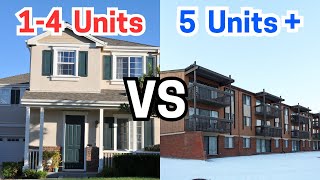
Hosts Jonathan Cronin and Randy (partners with large-scale experience) compare investing in 1–4 unit residential properties versus 5+ unit multifamily apartment complexes. They state they collectively manage hundreds of units and over $500M assets under management and walk through financing ease and inventory advantages of small assets (easier loans, better loan terms, no SEC capital‑raising rules) versus scalability, forced‑appreciation and economies of scale in larger multifamily (ability to add NOI and multiply value via cap‑rate). The video includes concrete numeric examples: washer/dryer retrofit on a 92‑unit asset adding ~$4,600/month (~$55,200/year) and an illustration of how per‑unit rent increases scale to $1M equity at different portfolio sizes; also practical constraints (10‑loan informal cap on personal mortgages, syndication/loan sponsor qualification rules, need for systems and less inventory for big deals). The hosts conclude by recommending listeners learn, choose based on stage, and consider larger multifamily for faster net‑worth growth while acknowledging tradeoffs.
Questions this video answers
Over $500 million in assets under management.
$4,600/month additional NOI, about $55,200/year.
Approximately $883,000 increase in value.
10% of the loan amount in liquid assets, net worth equal to the loan amount, and relevant experience.
Roughly 10 loans (personal mortgages) before being required to shift to business financing.
I think we are live. Hey guys, what's going on?
Indeed, indeed, indeed.
Let's go. Thanks for jumping on, guys. So today I got Randy on here, my partner. We are going to be discussing and settling the debate of whether or not one to four units is better investment than a five plus unit apartment complex. So we're going to be diving into the pros and cons of each one and talking about. And we have both. We have hundreds of units, we have over 500 million assets under management, a lot of, of, of single family duplexes, all the way up to large hundreds of unit deals. So we're going to be breaking down exactly what the pros and cons of each are and, and hopefully exactly where you're at in your investing journey. Basically, you know, we've scaled to this level, so obviously we are focused on bigger deals now and, but, but for a beginner, so hopefully you get a lot of value out of this. By the end of this, I want every, every single person walking away knowing exactly what you should do next based on your situation. So let's dive in. Thanks for joining, Randy.
Indeed, indeed, man. Good to be here. And you know, great topic. You want to get moving on the right foot. You know, it's the less time traveling down the wrong path or a bifurcated path, the better are the better off you are.
That's right. Yeah. So let's break. Let's just jump straight into one to four units. All right, so one to four units, the pros. Okay, a couple quick points. You know, first, you can get approved for a loan easier. Right? Loan requirements are not as hard to, to pass for smaller deals versus bigger deals. Now there's options for people who want to go into bigger deals and that can't qualify. But right now that is just real, right? A single family, small multifamily deal, it's going to be a lot easier to get approved for. All right. And you typically get better terms for, for those loans as well. Right. Because you can make it a small, you know, personal loan or personal, you know, mortgage, you know, single family home loan. Right. So it's going to be a lot better terms easier to get approved for.
Well, let me just throw in there and add to it. You know, you do have to have the income that also is supportive of that too. You know what I mean? So like, if you're like, hey man, I got, you know, money under the table, this, that and the other, like you're going to struggle because ultimately they're going to be looking at you to say, what kind of income do you have? So you've got to have a decent either business income or W2 income that can help you support the loan. So that's real.
Yeah, yeah. And then also they're going to be easier to find. Right. There's more inventory for single family homes. Right. Or smaller deals. Right. There's not as much inventory for big deals, so they're going to be easier to find. You know, obviously, in my opinion, you got to also think about leverage for your time going into it and like, what, what that deal can produce. But if you want to go the single family route, that's going to be easier to find. And then also lastly, on the pros, there's no SEC requirements if you don't know what that is. The securities Exchange Commission governs capital raising and bringing money together to invest in bigger deals, which if you don't have the capital for a down payment for a big deal, then you would need them involved. But for single family, obviously you can partner with somebody. You don't have to set it up in a, in a typical, you know, private investment, you know, security. Right. So you can, you can set it up where it's a JV partner, somebody brings the money and you can just kind of do a small, you know, partnership. Right. But, you know, obviously, you know, for, for SEC attorneys, you know, you'd have to bring them in if you're raising capital. You don't have to do that with single family. So that's going to be easy.
Yeah. So just an example, if you're buying like a duplex or a quad plex or a triplex, and it's, you know, 250, 350,000, whatever the number is, depending on the area you're in, you know, and then your bank or lenders loaning you, you know, 80%, you know, on 300K, they're giving you, you know, $240,000, if you will, and then you've got to bring in that 60,000. So like Jonathan saying, you got a partner that's coming in or maybe two partners that are coming in and three of you, you know, buy the deal. You know, that's part of a reality that can be easily set up and easily done and potentially a lot less money. And depending on the lender, you may get a lender that's a local bank you're working with and they'll, you know, many of those banks even today will still loan up to 80%. So again, in that same example of, you know, 300 unit or 300,000 or 200,000 duplex, you know, they're going to loan you $160,000. So now you just need 40,000. You can structure also the seller to pay closing costs. Right? So you say, okay, hey, instead of 200,000, I'm going to give you 210 and you pay all the closing cost. And so now you've cut that cash 300,000 or 200.
Yeah, 100%. Yeah. And, and so let's get into some of the cons of single family rentals and one to four units. All right, so first off, you know, with personal, with taking out loans for each of these deals, you're typically capped around, you know, your first 10 loans. And what happens then is then you're required to get a business loan. Right? So a business loan would, you know, ideally be good for large deals. But once you have to get a business loan, they don't actually look too favorably on smaller deals. So you're actually going to get worse terms. If you want to scale past 10 loans or 10 deals in terms of financing, they typically want to do bigger deals when it comes to business loans. So that's one thing. And then secondly, for those wanting to replace your income, you know, quickly, maybe you're wanting to double what you're currently making. Maybe you're wanting to make a massive impact on your, on your net worth or your income. You know, you want to replace your income in one to three years, it's going to take a lot more work on the single family side, a lot more risk. A lot of deals have to go right for you to actually make substantial amount of income. Okay, and then, and then, you know, in fact, I have a slide. Let me, let me share this. Yeah, share this screen slide and we'll kind of dive.
Think about just as Jonathan saying that like, you know, again, you figure out, okay, I'm going to make X dollars off of this duplex or the single family home. And then, you know, like he's saying you gotta get so many of those, you know, 5, 6, 7, 8, 9, 10 to really be able to equal making kind of a move the needle impact and you know, replacing your income or adding to your income, you know, and again, it's, it's not, you can't just say, oh, hey, rule of thumb, you're going to make this off this. Because every market's got different parameters, different rents, different cost structures, all like that. But, you know, even if it was that you were making a couple hundred dollars a door off of each of those units, you know, again, and you bought two duplexes, you're, you know, making an additional 800amonth, you know what I mean? Or a thousand a month. So it's like, now to some people, that's going to be big. Other people it's like, it's not touching. It's not replacing my income. And for most people, again, that's not replacing their income. You know what I mean? So it's like you just have to really take that into account.
Yeah. And so another point I have on here is minimal upside potential. Right? So if you're really thinking about growing with, with, you know, the ability to increase the value of the property substantially in the next year, two years, three years, that's not happening a whole lot. In terms of single family. It is based on the market evaluation. But in single family, you're capped at what they call the comps, right? The comparables in the area versus multifamily. And we can talk about that in a second. You know, larger deals, you're, you're typically basing it off the income of the property, right? So you can grow with not much cap. Right. And then there's a low multiplication factor, right. So you can't multiply the units. You only have one unit or four units. Right. And then typically absent property manager, you know, you're still the point person when things go wrong. Middle of the night issues, cops show up or whatever that is, right? You're still the person that they're calling. And so, Randy, you can cut me off anytime.
But yeah, no, for sure. I mean, I got, I remember in the early days, you know, getting a phone call, you know, not necessarily the cops, but like, you know, the plumbing's out and blah, blah, blah. And you know, 10 o' clock at night, I'm going over to this duplex with, you know, like a snake machine and my wife's like, what in God's green earth are you doing? And I'm like on some level asking myself, and what the heck are you doing here? But yeah, you know, and, and that's true. And that's real. I mean, that was, you know, God, I don't know, was it 90, I don't know, 9, 98, 90, 99? Or I don't know, somewhere in there, 2,000 something. It was a long time ago, right?
Yeah.
But you know, I say that because, like, look, it's real. And then the other thing is, like, some people will go, oh, but I made so much money in this house. Look, you benefited from appreciation that took place in the market in the last maybe one to three years. Right. But like in most markets you're not going to see like a significant increase in a short time period of 12 to you know, 36 months, as Jonathan said. Now again, for those of you that were in Florida or this area or Texas and then you own something three years ago. Yeah, it jumped in value or stuff out on the beach here in Florida, you know, in the last, you know, three years prior to, you know, this year, 25. Yeah. Values jumped dramatically. You know what I mean? But that's just a market appreciation that's not really inside of your control. And so, you know, you want to, as we'll talk about in the others with the five units, you have more control as to how you can force the appreciation.
Right, exactly. And then the next point is it's dependent on your personal credit and cash. Now look, you can bring in people to fund the deal, but it's just not as advantageous to most investors to put money in a small deal that's not going to appreciate very much or not going to come create as much income recurring. Right. And so it's typically dependent upon your, your credit. And then less doors equals more risk. Right. So you're either 100% occupied, you're 100% vacant. Yeah. Somebody goes out or you're single family, then all of a sudden your, your income's gone, you're not paying the bills. Right. And then, you know, like I've already said, if you want to replace your income quickly.
Yeah.
You need, if you really do the math, you take out a loan, you do all the rehab, you do everything on the deal and you need 15, 20 plus to make any substantial income on the deal.
So most, most people I'd seen in that region, if you're making two to 400, like that's, that's, you know what I mean? Like somebody that's making four or five hundred a house, I'd be like, you know, first of all, let me, let me check your math because most of the time you're, you're not accounting for various, you know, maintenance and this, that and the other, or, or downtime, you know, tenant moves out and their Property's absent for 45 days when you just lost two months worth of rent. Like, you know, so anyway, yeah, it's not wrong that you'd need a bunch of rentals to get to any type of real substantial replacement value.
Exactly, exactly. And then let's talk about multifamily large five plus unit deals. You know, I got a slide. You know, this is what we believe for us is the right option. Now again, this may not be for you, this may not be the solution or the right types of properties for you, but for us it is. But that's because we've calculated the right, you know, it's leveraging our time better.
Well, and let me just say this. A lot of times people would say that because they don't know. And that's one of the value or the benefits of the, you know, REI community and is that you have an opportunity to learn. And once you learn now, you've got this knowledge, that knowledge becomes power to help you overcome those variables that you don't know. And so that's, that's a key component for sure.
Yeah, 100%. So look, you have greater upside, potential value add, they call them appreciation multipliers. This is for five plus units. Okay. And typically we even say let's, let's start with 10 plus units because, you know, five is still kind of getting close to that headache type of property. Right.
Let's just, let me, just let me share a quick example on this of, of where this is real life deal. We're looking at and working on 92 units. They all have washer dryer. So you can go in and buy washer dryer to install and then rent them out. Right. And so again on, you know, at 50 bucks a unit, that is 92 units, it's $4,600 a month in additional money that's coming in. So over the course of 12 months, that's $55,200. So if you were to look at that in a market like Florida or some areas of Georgia where it's, you know, call it six, six and a quarter cap right now on a well stabilized operating property, call it six and a quarter, that increases your value by $883,000. That's big money. And the reality is you can buy the stackable washer dryer on a smaller scale basis, the 24 inch cycle size for probably just about $1,000. So let's call it, you know, $100,000 you spend to buy the units. And again I get, you don't have 100 grand, but I'm talking about this bigger property, you install those and over the course of 12 months, by now cycling through the lease roll with all the people, and all the people over 12 to 18 months, adopting the washer dryer program, you've now increased the value of your Property by over $850,000, yeah. Spent 100,000. That's a net gain of 750. That's real money. That when you would go to sell the property, the buyer is now valuing that additional 55,000 of NOI and they're valuing it at three quarters of a million dollars or more.
Wow. Just. Just made you 800 something thousand dollars.
A net gain of 3/4 of a million dollars. That's powerful and that's real. You know, that's, that's the power of what can be done with, you know, little increments in, you know, property asset management.
Exactly. So let's keep going here, you know, greater upside. So what Randy's saying, here's a quick math example for that. Every dollar of income equals $12.50 if it's an 8% cap rate. So it just to simplify cap rate. And we, we have videos on cap rate if you want to go check it out on our channel. We share about how, how to understand cap rate and everything, but just from a high level, it's basically, you know, if you were to go value a business, it'd be valued based on the profit, right? Based on the income, the net operating income, how much does it actually producing. And then you, you get a multiple. You times that by a multiple. And that multiple is based on, you know, factors involving the market conditions, factors involving how the business is ran, how the, you know, what type of property is, what asset class is it. Right. Well, the multiple is the same thing as the cap rate. Right. So each market determines what kind of cap rate you can get based on the property and the condition of the property. So in this, in a lot of, just say nationwide, maybe it's six and a half percent. Right? Well, in this situation is 8%. So you take, you know, you add a dollar to your bottom line, you divide that by 8% and you get $12.50. This is why people get into multifamily. This is why the apartments is so wild. Because now Randy just said he, he put one move, did one move, and could immediately go sell his property for $880,000 profit. Right. You can immediately do that with just doing one move that increased $50 per unit. Right? So that's just on a basic. And I'll share that in just a second. But look, you can rapidly scale your network worth with just one transaction versus 15, 20, 30. Right. You know, and then like I already told you, it's professionally managed. You have better property management, you can hire better people on site management. Right. And so, you know, you're not having to answer that call in the middle of the night. Right. You have somebody doing that for you and then less risk because look, the occupancy is more consistent. There's diversification, you know, the economies of scale. Right. So you have a lot more. And this, this is what attracts investors. So if you have no money, right. You think about how can I attract investors? Well, these types of properties, you know, investors are thinking are safer, they have way more upside, way better upside potential in terms of my, my money invested. And, and as long as they can trust you, you, you have something that people want. Right. So it's going to be a lot easier to be able to raise capital on a deal like this. Right. So economies of scale, occupancy, you know, you have 10% of your renters move out, you still have people paying your bills.
Yeah. And you know, that's one of the things too is you look at certain areas, you know, and you're studying. These are things that are, be able to be evaluated beforehand. You can look at the, that submarket you're looking in, you can see that the other properties in the area are all operating at about, you know, 92%. You can see that they're reasonably full all the time. And so that you would strive to do a better job, but you've at least got a good benchmark to see that there's strong demand in the area. You know, some areas it's 95%. The other thing on the, you know, forced appreciation is what the terminology is on that, you know, equity multiplier and cap rate. And so you have in advance, you're able to look at the project and say, okay, if I renovate the units and make them nicer now the rent could be moved from, you know, 800 to 1000 or 1200, you know, and again, you can also see what are the competitors in the area charging. Right. If everybody else is charging 1200 because they're nicer and newer and maybe got some amenities, you could renovate yours and, and easily get 1125 or 1150. Maybe you got a 40 unit deal or 50 unit deal that doesn't really have amenities like the other place down the road's got a pool and a gym, but by offering is just as nice of interior and $50 cheaper, you're going to attract and appeal to people because that $50 that they're saving there, they're paying their cell phone bill, you know. So again, these are all things you can look at in advance and then plan what could you do? So that's where you have that value proposition up front and have a reasonable expectation of what you're able to do in terms of creating value over a period of time, 1, 2, 3 years. And it's not as much driven by the hope of just market appreciation.
That's good, that's good. Yeah, exactly. So, and then no out of money, no money out of pocket needed. Again, you can do this with, with smaller deals, but, but it's much easier on bigger deals. You can use syndications, which, look, that's just a fancy term for pulling money together, right? All that is is pulling money together to invest in an asset, right. Don't get scared by that term. Loan sponsor you can bring if you don't qualify for the loan, which, here's the three criteria, guys. You gotta have 10% of the loan amount, you know, in liquid, right? You gotta be 10% liquid of the loan amount. And then you gotta have a net worth equal to the loan amount. And you gotta have experience, right? Now you can divide that up and have somebody with experience and somebody with the, the financial qualifications. But if you don't have those three qualifications, you can bring somebody in. That's the beautiful thing about larger deals and then creative financing, obviously you can leverage that sellers financing their property to you. Now, I want to share with you a thing, but let's get into the cons real quick of, of apartment investing. So know, first it's, you got to have good systems. So it's going to be harder to run. It's a bigger ship to turn, right? It's going to be harder to run a deal, a large deal as an owner operator, when you're not living there, you're, you're having to control it. You're, you're, you know, you can't just run to the property anytime, right? You've got a management company in place. So you can't just implement things quickly. You got to have systems in place to actually scale well.
And I would proceed that even with, you know, a lot of times we said, I mentioned before about the knowledge, you know what I mean? The knowledge and the understanding is what is a preventative measure for people, you know, where it's like, I'm not sure. And it's like, well, because you don't have the full understanding of it. And that's where again, being a part of the community, being a part of other people that are already doing it now you've got that to offset that. And then as Jonathan said too, with that knowledge and Then now coupled together with proper systems and processes, you're able to then better be able to execute at that scale. You know, if you don't then, you know, again, then people are just kind of winging it. Like that's, you know, that's, that's not as, that's a tough approach for sure.
Yeah. And then, and then secondly is going to be, there's not as much inventory.
Right.
Larger deals are harder to find. So it does take more of your time to, to lock one of these deals down. It's not like buying one single family or two or three small or two, you know, duplex or triplex. Right. You can probably find those quicker. You can lock them in quicker. The due diligence, the contract period is, is shorter. But you gotta think about that from a leverage perspective.
Yeah, it's, you know, and I would say this with everything though, there's the trade off. And so again, even where you look at that, you're putting in more time but then your payoff is bigger, right? You putting in more, you know, energy and effort to learn. But then again the results are more dramatic or difference makers in your life, you know, so with that, that's part of the thing that it requires you to be willing to make an investment in yourself in order to be able to move forward at that level.
Yeah. And look, guys, like when I first got into larger deals, I was, I had probably five or six single family homes and Airbnbs and I'm see, and then I partnered with my partner Larry who is on the show normally he, you know, is doing bigger deals and I'm seeing, man, he's making 10, 15, 20 times the amount on one deal that I have that I can make off 10 to 20 deals. Right. And so it's like, man, I'm in the wrong vehicle. He's making a million, $2 million in 12, 15 months, you know, off one deal. And I'm, I'm over here doing, you know, a few single family. I'm like, man, I'm in the wrong vehicle. So, you know, I don't get too excited. Wake up and see a five unit deal in my inbox. Right? It's not that exciting. What's, what's that going to do? Right? It's going to do a little bit, but not, it's not going to be enough to get me excited. But then I see a 50, 100 unit deal. That makes sense. And you look at closing a 50, 100 unit deal, that's something you're going to get excited about, because that can bring massive shift in your finances and in your, in your life, in your portfolio. So that's our take on it. So, you know, that's, that's the cons, I would say is, is just, you know, it takes a little bit more time on due diligence, you know, underwriting. You need to spend a few more hours making sure it's a good deal. You need to, you know, it's going to take a little bit more effort to find a good deal because there's less inventory. But like Randy said, it's the trade off, right. It's, it's the fact that you're going to see a much bigger potential in it. So.
And then.
Yeah, go ahead, Randy.
Well, I'm just saying. Absolutely. I mean, I would just say echo that with anything in life. You know, the more that you are able to put into something, the more you get out. It's the law of sowing and reaping. And so, you know, again, I wish I would tell you, you know, hey, Slick Willy, with like bing, bam, boom, it's going to be easy peasy, 1, 2, 3, Z. But it's like that's not true in life, right? Like the best things require some effort and then it's a more fruitful experience. And so that's the same with this endeavor here.
Yeah, exactly. And look, I'll conclude with this, guys, a million dollar math. If you are somebody who wants to create a million dollars quickly. I just want to show, I want to share a breakdown. Let's do the math on what it would actually take to hit a million dollars. Let's suppose like we talked about earlier, the market cap rate, six and a half percent. Your deal is valued based off of six and a half percent of your, you know, your, your income divided by six, eight percent. Well, you would need nine units. If you had a nine unit deal, you would have to increase the rent per unit $602 to make $1 million. All right, so you can do that through like Randy said, putting washer and dryers and they're increasing the income somewhere. But you've got to increase the income situation. 602 extra dollars. If you have a nine unit deal, to make a million dollars.
Per unit. Per unit.
Yeah, per unit. So that's nine times 602 and then you need six. That's, that's divided by six and a half percent gives you a million dollars. Right. And then you would do it times 12. So nine units times $602 per month per unit. Times 12 months. It gives you your annual, you know, return, actual increase. You divide that by six and a half percent, you get $1 million. Right. You do 15 units, you got to increase it $361. Right. To get $1 million, you do 32 units, you need 169, which. That's maybe more reasonable, right?
Yeah. So just real quick interjecting there. Think about this again. You're taking on the first example. Your rents are 800 bucks. You got to take the rent to $1400.
Right.
That's a big difference. Right. And now that area may not support that. Now maybe it's in a high demand area and you could rehab it up and put in, you know, granite countertops and stainless steel and make it look super nice or whatever the case may be and get that rent. But I mean, that's a big jump from 800 to 1400.
And it's not realistic. Like that's, that's not for most. Not just so, just so you understand, like, you know, that, that this $169 increase, that might be a little bit more realistic. Right. 600 or 361, that's at least 361 is going to happen.
That's monster. That's monster. You know what I mean? Like, and again, we've done tons, thousands of units. And like, you know, again, if you're able to move it, you know, and there's some, we've been able to, you know, buy it and the rents were 850 and you could move it to 1150, 1200. And that's because we got a great deal on it. It was, you know, not been moved with the market. The market had outstripped it. But by and large, most properties, it's, you know, 150 to $250 would be a normal range where you'd be able to experience value add increase of the rents alone. So that, that's a much more feasible scenario at 32, at 169.
And then you go up and you go 48 units. I just need to increase at $112. Right. 88 units. Now we're at $61. And then, you know, 100 units is just a quick $54 increase, like Randy said. Right. So that's, that's nothing. But uh, people don't even sweat that. Right. They're just attribute that to inflation, you know. So $54 is. You can see how with economies of scale, you know, things get a lot more lucrative. You know, a million dollars is a lot easier and here's reality. You know, an easy. A typical situation, we might leave room for $125 increase in the rent. You know, we find a deal that's way below market value. We come in there, we fix it up, make it nice, add in washer, dryer, 125 should be pretty attainable. Well, that's $2.3 million if you did that on 100 units. So just to give you context, guys, this is how we think about it, and I hope that helps you guys. So. Yeah. Randy, did you have anything else?
Yeah, no, it's good stuff. I mean, I would just encourage you. Look, if you're not familiar, this is great that you spend the time getting familiar and then you want to take the steps to begin to learn more. Because as you learn more, then you're going to be, you know, ready to move forward and act, praise God, 100%.
Yeah. So, guys, if you are someone who is looking to be a part of a group that is taking down deals and doing big stuff together, we do have a mastermind. Would love to see if that's a good fit for you. I think we have a link below where you can jump on a call with our team and see if it might be something that would benefit you. Going to be pretty honest on that call. We don't. We don't bring just anybody in. We're going to be pretty honest to see if it's actually a good move for you and your current situation. But definitely feel free to jump on that call. Totally free. And they can kind of break down, you know, what we do and how it works. But anyway, God bless you guys. Hope you got some value from it. Have a great day.
Have an awesome.
More from Jonathan




NEVER Buy an Apartment Building Without Checking These 5 Things (I'm a Real Estate Attorney)





