Cohort 2 - Day 1 - 3/25/2025
Jon Cheney uses ChatGPT, Groq, and Replit to build a mortgage calculator website from scratch in one session, generating the UI, server routes, database schema, and privacy policy with minimal hand-coding. He compares ChatGPT's free, Plus, and Pro versions and answers questions from cohort members about AI's speed and limitations.
Chapters
computer. You guys will get a recording of this. And so if you have to, you know, get up, walk away, go to the bathroom, when you do that, please just, you know, mute, turn off your camera, and you can get up and walk away for a second, grab some food, whatever. This is a class where you can, you can get a drink, you can eat during it. You're probably going to see me grab some of my snacks right here because I'm going to be going for 4 hours straight. And, um, I want you to be on your devices during this course. If you're not, you're, you're not learning. I want you to be doing. And so we're going to start today by doing. Um, so with that being said, does everybody— let me ask this in a different way— it— does anybody not have ChatGPT? Okay, everybody has it. Does anybody not have Grok available to them? Okay, Grok is super easy. Yep, that's okay. Groq is actually free up to a certain point, and so you'll be able to use the free version. If you need to pay and get more access, that's fine too. But you can access Groq on x.com. So I'm going to do something. We're going to— I'm going to share my screen now. We're just going to dive right in, and then we're going to let you guys do that as well. All right. So let's go share screen.
That I'd be doing it when you're doing it, Jon?
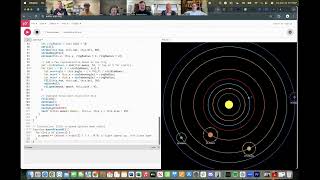
You guys can absolutely do it. What I want you to do, this is kind of how we're going to work this whole class. You're going to be watching me do it. You're going to be like, I got it. I mean, just, I want you to pull up another window when you have two windows going, you're watching me, whatever, but you're doing it and practicing and trying these things. By the end of this course, guys, before we dive into this little activity here, by the end of this course, you will be able to launch your own piece of software. Maybe multiple pieces of software. The last class I had one guy that did 3 different pieces of software simultaneously. He had Windows just going at 3 computers up and he was just like, I'm gonna do this. He was a young 22-year-old college kid. Kenzie's probably gonna, gonna make that happen anyway. So, um, but anyway, uh, if you're young and smart and quick, you know, jump ahead, do stuff, like try it. I want you to be working. But by the end of this, you'll be able to build software. You'll know how to build an entire company We're gonna talk about branding, logos, sales, marketing, all of these things. But we're gonna talk about all of those things. And many of you, like, like for example, we've got Truman Hunt sitting here on a call. Truman is the former CEO of Nu Skin, right? Of a public company, right? Obviously huge amount of experience. And maybe he's wanting to start a startup right now. I don't know. And that's fine. But maybe he has other uses for it, or maybe he wants to teach other people to do it. And all of you're gonna have kind of your own reasons. Some of you are like, no, I wanna start a business. Like today, and it's going to be done in 3 days, and I'm going to be making money by, by Friday. That's Johnny, right? Johnny's a longtime friend of mine that went to college with, and so really excited to have him on here. But he's got an idea and he's like, I'm going to make it happen, Jon. We're going to make this happen. So I'm excited to see him do that. But, but regardless of whether or not you're actually starting a business, that's kind of the premise and, you know, the context of how I'm going to teach you all of these things. But you are going to be an expert at using AI at the most advanced level that anybody is using AI today. I'm going to teach you a ton of different systems that are going to unlock the way that you approach doing almost anything, whether it's writing a talk for church or trying to come up with a better training plan, Abe, for kayaking. I met Abe, was it last week? 10 days ago? Anyway, we were in Tennessee together at Eric Jackson's house at his ranch. Abe was a kayak student there and I was kind of there. I was there as one of the instructors and helping out and doing some business stuff with EJ and, and met him there. So he's, he's awesome. But I'm excited to, for all of you guys to take the knowledge that I give you and then I, I, I wanna see how you apply it, right? So we're gonna apply it right now. We're gonna teach you guys something really fun. Now I need to ask one more question before we get started here. Who here out of anybody considers themselves to be a programmer? Hey, I'm seeing a bunch of zeros. By the way, I am not either. I couldn't write a line of code if my life depended. Actually, maybe if my life depended on it, I could be like, I think this is how you make a link in HTML. I can look at HTML and say, oh, I know what that does. Let's say I've taken 2 hours of coding classes in my entire life. Now, I do have a lot of experience as a tech CEO. I raised tens of millions of dollars and built big software companies that I took to a $100 million valuation and done some big fun things that way. But I hired people. I spent tens of millions of dollars building those things, right, of other people's money. We'll talk more about that too. We'll talk about some entrepreneurship stuff and I'll share all my failures and successes and other things in between. Everybody gets to be a developer as of right now. You guys are all developers and this is one of the big mindset shifts that the whole world is having to go through. Developers are in denial. They hate it. They really do. They're worried sick about their own jobs. A junior developer is no longer a thing because Groq is way better than everyone else. Replit and all these other systems I'm going to teach you are so, so much better. Here we go. Everyone pull up Groq. Just go to x.com. You'll be able to do this. We're going to play with a frontend language called p5.js. I know you probably didn't understand most of that sentence, so I'm going to back up just a tiny bit. Frontend is very simple. Frontend is what you're looking at. Here we're looking at a screen for Groq. There's a home button or a home, there's like a side menu over here. There's a post button, there's GenAIPI, there's a logo right here. This is all the stuff that we see and we interact with. There's a place where I can I can type right here, right? That's a front-end element. When I type and press enter, it's going to send things to a back-end server somewhere, and that server is going to do a bunch of things, and it's going to get a response, and it's going to send something back to the front-end, right? It's a front-end, it's a display language called p5.js. We're going to say this, create a mind-blowing visualization with lots of colors. Let's just start there using p5.js. This is all I have to know how to do, guys, to code. Now I'm an expert developer. Wait, hold on. It misunderstood me. This is cool. I've never actually had it do that. I want to see what it does. While it's doing that, create a mind-blowing Let's see here. Create the code for mind-blowing using p5.js. There we go. All right. I actually like those colors. That's pretty cool. So here's what it's going to do. Swirling colorful patterns that evolve over time. So it actually probably took what it did and then used its context and understanding of what I did to do this. So it's creating code for me here. It's done. So it even tells me what to do. I'm going to copy this. I just click this little button right here. Anytime there's code, that will automatically show up in this little spot right here. Then I'm going to click on Editor. I just click there. Now I'm going to select all. On Windows, it's Ctrl+A. On Mac, it's Cmd+A. I'm just going to delete this. Now I have a clean slate. I'm going to Cmd+V and I'm going to click Play. Boom. I am now developer that can make cool visualizations. That's pretty neat. I did it. That's all. Now I'm going to do a couple of things really quick and I want you all to try this. I'm going to go back to X, I'm going to say, okay, I don't like this, try something else and make it interactive. I'm not giving it very much instructions here, guys. I could obviously go in and say, I want this and I want that and I want this to work this way and whatever. I could give it more instructions and it can understand that. It can understand my natural language. That's the beauty of AI, is the input and the speaking to it is something that we can all do very well. All you have to be able to do is type or talk. Now this visualization does this. All I do is I copy, go back into my p5.js, select all, delete it, paste it, and click play on the new thing. All right. Now I click. That's cool. Just releases some balls into the— That's crazy. The thing is, I don't know if I love that. We're going to try something a little bit more practical. Let's try this. Make a model of the solar system that is accurate with the number of planets and moons. If there are too many moons, come up with an idea to show that there are still a lot of moons. So again, I didn't really have an idea about how I wanted it to do that, but I knew that some of the planets have some, you know, they have 100 moons, right? Jupiter have like 154 moons? Oh, 400. Yeah, I was way off. Oh no, 8 planets, 400 moons. No, Saturn's the one that has 274. Yeah, Jupiter 95. So I was right.
Astronomy knowledge, right?
Astronomy knowledge was off.
But that's why you got ChatGPT, Jon.
That's exactly right. That's why I have these AIs to help me out here. All right, so now I can copy this and Ctrl+Alt and paste, play. Check it out. We've got ourselves a visualization. Pretty cool. Everybody try it. Go to Groq and build something. Come up with any idea. If you have no idea, copy my prompt. Come up with something like that. Now I'm going to keep working on it and I'll talk. I'll keep talking for for a minute while you guys keep working on this. Okay. So, I'm gonna say now— great. Now allow me to click and create a shooting star. I click. Also— whoops. Also add some star— add a starry background that rotates. Slowly. Cool. By the way, I'm going to ask some of you to share your screen and show us what you build. So when one of you are ready, just speak up, say I've got something cool. And I'll let you share your screen.
Hey, Jon, I was downloading, I was just getting into Groq while you were demonstrating. How, I mean, I know how to ask Groq the prompt.
Yep.
But you lost me there where you were copying and pasting and—
Where I was going to do that?
Yeah.
Yeah, that's fine. So when you, so go into Groq, did you get Groq pulled up?
Yeah.
So go ahead and ask it, say, hey, please help me write some code for whatever visualization you want to see.
Right.
And then, and then see what it does. When it comes out, it's going to show you this right here. You see on the screen right here how to run it. You'll just click on that link and you'll just copy the— you'll click this button right here, this little copy thing. That'll copy all the code and you come over here, click here and paste it. Let's see here. I did this new one. Copy, paste, play. All right, now I've got my stars in the background and I can click and shoot shooting stars. It's pretty cool. I had my son do this. He actually took this class with me last week. He wanted to do it, so he spent 12 hours last week sitting in the class with me with the other people, and he built himself a little dinosaur game, and he ended up working on it for the whole class for the whole 12 hours. Built up something really cool. But you can use your mouse to run around. You can tell it, hey, give it controls that if I use my mouse, I can run around. Or you could build a snake, like that classic snake game that you could play on the phone. You can build that in p5.js, no problem. You can build interactive things that follow rules and have logic. Anybody got something running? Abe, let's see what you got. I'm going to stop sharing. Or are you asking a question?
Oh, one sec. We're gonna, we're gonna see what happens with this. I don't know if you guys want to, you guys want to see. I mean, my idea is kind of out there, but we're going to see if it actually works here.
Yeah. Um, get it running. Once you have it running, I want everybody to get something running right now.
Okay, copy that. All right, how do I share my screen?
I'm going to stop share, and then along the bottom on Zoom, there's a share button.
All right, let's click that.
Share my screen, and then share entire screen usually is the best way to do it.
Okay, there it is. Yep. All right, cool. All right, um, all right, don't, don't be too hard on me, it's my first time.
Oh, we're not here to be hard. We're just excited for you.
Let me see, what do I want?
What do I want?
Window. Okay.
We'll do it this way.
I already copied it. Let's click on this.
Yep.
And—
You're going to delete all that stuff on the left. Just click allow. I'll get rid of that.
Yep. Control A, V. And what?
And then play. Click play right there. Yep. Now go ahead and make your window bigger so we can see the whole thing.
Yeah.
There it is.
There we go.
Okay. All right. They're kind of doing what I wanted them to do.
So tell me the prompt. What did you ask it to do?
Okay, so I asked Grok if it would please create a— please help me write some code that has extremely athletic ants base jumping and parachuting to a megacity. So I think I want it— I need to be more specific— off of a wilderness cliff, through the woods, to finish and land in the megacity.
Got it. Yeah. So tell it, so say, hey, I want this to be more like a base jump where I start from the top and then I fly down. And then say this, I want to use my arrows on the keyboard to control the way I go.
Yeah. Cool. Cool. Because when you said about the dinosaur game, I was like, yo, all right, parachuting ants and kind of like, yeah. All right. Yeah. Cool. All right.
So go ahead and try that. I'm going to go ahead and stop your sharing. Anybody else?
Thank you.
Or something. Don't everybody jump up at once.
I have code copied, but I still don't see where to click and paste the code.
Can you share your screen, Truman, and then we'll walk you through it really quick?
Yeah.
What we're doing right now, guys, is really important as a basic. It's fun, and it helps unlock the fact that, hey, I can code. If I know what I'm doing here, right? Okay, perfect. So go ahead and yeah, go ahead and click that copy button right there. Scroll all the way to the bottom.
Scroll all the way to the bottom.
Yeah, right there. Okay, hold on. Go back up, go back up a little bit. Hold on, go back up at the very top. I wanna see your, oh, this is Python code. Yeah, this is not gonna work. Okay, okay, perfect. So go back down.
Python doesn't react the same way that it will.
Not. Yeah. So yeah, now this is something that we can take a long time to go over, but Python is something that's running behind the scenes. It's more of a backend code that's going to run a script. And so the information here is probably pretty good. So what I want you to do is where it says ask anything at the bottom there, say please make this into a p5.js P5.js. Or yeah, into P5.js code. So, get rid of the A right there. Sorry. Into P5.js code.
P5.js code.
And tell me where I can deploy it. Perfect. So, now let's see what it does here. Perfect. It's now making some adjustments to what it's trying to do there. Love what I'm seeing here. Now go ahead and pause for a second. If you see in the code, you'll see these gray, it says like //labels //drawXAxisLabelsYears. That's the AI telling you this is what this part of the code does. That's not actually code. That's saying, hey, I need to make the draw axis feature. Here's how I'm going to do that. Boom. Here's how I'm going to make the find max population for scaling feature. Boom. Go ahead and scroll to the bottom now. Let's see. Yep, there's the p5.js web editor. Go ahead and go up and click copy. The copy button. Yeah, just right there and then scroll back down. To where it gave the instructions and click on the blue thing right there. p5.js web editor. Yep, right there. Perfect. Now go ahead and just select right here on the left where it says sketch.js. Yeah, right where your mouse is. Yeah, just below there. It's just in like you're selecting the words themselves. Yeah. Then are you on a Mac or a PC? Mac. Yeah. Command A.
Command A. Yep.
Now Command V. You're going to override it, you're going to paste it. I don't know what you did. Command V? B?
I thought I did B as in boy.
Sorry, I said that wrong. V as in very. Yeah.
Oh, okay.
Let's see, how do I back up? Yeah, that's okay. What you're doing is fine. You didn't break anything. You just opened up, it looks like a thing. Now you've got all this cool code. Now on the top left there, you'll see the play button. Go and click play. Boom. There's your graph that you made of whatever it was you're doing. This was a visualization of something and it disappeared. It disappeared. That's fine. Now here's what we're going to fix it. We're going to debug it just a little bit. Go back to Groq up in the top. Just the new, right there. There you go. Scroll down or just click on the "Ask Anything." Just click on the prompt again. And say the visualization showed up, but then it disappeared.
Visualization disappeared.
Yeah. All right. Now click— now just period. Don't, don't click go yet. What I want you to do is I want you to just think about it, Truman, for a second. I want you to say, okay, what do I want better about this? Because right now all we saw was a graph, right? Maybe, maybe ask it to give some labels or help me, help me label things so that I understand what I'm looking at a little bit better. Make it interactive, add some animations. We'll just sit here and let you just type for a second and we'll go in and replace that code.
Jon, can you copy the code as it's writing or do you have to wait for it to be completed or does it already know?
No, it doesn't know what it's going to write. Yeah, good question. Yeah, you got to wait till it's completely done because it's literally logically thinking through each step and doing it as it's writing it live for you.
So same thing now, Jon, just copy and paste.
Go back up. I want to see what it says. It says since the visualization disappearing likely refers to a deployment or rendering issue, but it can't see your setup, I'll assume you're running the P5.js response and enhance it with labels, animations, and interactivity. Okay. Yeah. Perfect. Scroll down, see if it's done writing.
Perfect.
Go ahead and click that copy button right there in the top right and head back over to the p5.js web editor. You have it open in the tab already. Yep, right there. Then just click anywhere and then Command+A. Command+A. And Command+V for Victor.
And V for Victor.
Perfect. And push play. Let's see what happens. Sweet. Now it added some maybe unnecessary, like changed the colors of the line as it was drawing it. But now, hey, world population growth over 4,000 years. Yeah. Super cool. I love that. So Truman, I want you to just think about, you know, your decades of experience at Nu Skin and maybe you, you know, if you needed a graph like this, what you would have had to do in the past. I'm sure you can do it. You open up Excel and you enter in a bunch of code and then you have it plotted out on a chart and then you have to change things and you can do it, but it takes a long time, let alone the research that it did to get all the data. This did the research and plotted it and you built a visualization that you can now deploy to a website in minutes. I hope that unlocks something. Very good. Truman gets an A on his first visualization. All right, I'm going to go— Truman, what?
Sorry, I just said way to go, Truman.
I love this class.
Hey, I'm going to pick on Kenzie, the only girl today. On our last class we had a few. I'm glad we at least have one.
Yeah, what's up with that, guys?
All right, Kenzie, go ahead and share your screen. Let's see what you're building. Hopefully it's something.
Okay, nice.
You're going to blow us away.
Wait, I'm trying to find where I share the screen.
Uh, yeah, so just go to the Zoom controls, click share, and should give you some—
is it mirror my video?
No, there's a share button on the Zoom. So if you go to the Zoom panel, you'll see a share button along the bottom, like there's participants and chat and react, all these things. Click share, and then, and then you'll just click desktop 1 or something, and then click share.
Okay. Hold on. That was not it.
Yeah, you're on the— you're in the right spot, right? You're seeing the video thing, but you need— there's another button that says share.
I don't see the share button. I'm clicking the more. There's captions, settings, stop incoming video, and return to defaults. I'm on the MacBook. Do you think that could be why?
No, I'm on MacBook too. Yeah. I wish I could share my screen to show you how to do this. Look around for a second, Kenzie. We're going to bump to Kevin George, find the share thing, and then when you're ready, just tell us. Go ahead, Kevin, share your screen and we'll see what you do. Well, I'm glad you called on me because mine says syntax error. Yes, that's what I want. We want things to not work. That's amazing. What does it say? Unexpected token. Okay, so go ahead and click share your screen so we can all look at it together and learn. Okay, let me find it here. Oh, actually, I deleted it. Let's see. It's okay. It's okay. Oh, no, here it is. Here it is. Okay. Do you see the button, Kevin, to share your screen? Yeah. We're not seeing your screen yet. Guys, just look at the Zoom controls, make sure you know how to share your screen so that when I get to you, you can do that. Kevin's got it now. Perfect. Syntax error, unexpected token. I want you to click right there on the— go ahead and make that full screen. That's perfect. Go ahead and so right there down in the console on the bottom left, it shows the X and then an arrow. I want you to click that little arrow. Perfect. I want you to go ahead and try to copy, just select that syntax error @Sketch.js:1:1, all that, that whole little red code right there, just copy it. Select it, Ctrl+C or Cmd+C, and then head back over to Groq and then just say, I got this error and then paste the error. I know what's wrong. Hold on. We don't want to use HTML5, we want to use p5.js. This is where both Truman and Kevin messed up just a little bit, and that's my fault probably, I wasn't very clear. We want to tell it exactly what we want to do here, and so we're using a language called p5.js. Say I got this error period, Then paste the code. Then hold Shift and push Enter. The reason you do that is because if you just push normal Enter, it will send it off. But we want to say one more thing and say I need this in p5.js. By the way, guys, I know you're fixing your spelling errors. You can do that. Totally fine. I'm a little bit OCD and I do that too. But Groq understands you. It understands you. Now just push enter. Good. It'll say, oh, okay, sorry, let me give it to you in the right thing here. Got it. Here's the solar system animation using p5.js syntax. Now what's interesting here, guys, is he asked it to do a solar system thing just like I did. But I guarantee you it's going to be different than mine. Let's talk about why that might be. Go ahead and scroll up while he's doing this. Go ahead and scroll up. Yeah. Just scroll up there. There you go. Scroll up a little bit so that you can see the code that was just written. Why is it dropping you down like that? I don't understand. I'm not sure. But you can see the copy, so just push that. I'm not sure why it's doing that. Go back to p5.js web editor. Perfect. Now go ahead and just click in the— ignore the console now and just click in the normal spot right there where the code is on the left, just in the white area up above. Up above where? Right up there in the sketch.js spot. Okay. Thank you. Are you on a Mac or PC? PC. Perfect. Ctrl+A. And then Ctrl+V. Perfect. Now play. Up at the top left, up in the top left, right there. Perfect. Okay, so now scroll down a little bit so you can— so we can see it better. Yeah, there we go. So look how cool his is, right? Look, Saturn even has a ring around it. Trying to think. Looks like you're on Chrome here. But yeah, Saturn's got a little ring around it. See that one on the bottom there? What you can do now, obviously, Kevin, is you could go back into Groq and you can say, hey, I wanted to do this, or when I click, I want there to be a shooting star, I want the background to spin more, I want it to be more colorful, whatever you want to say. You've now done the experience once. You go through, you talk to it, you copy the code, you paste it in, And you do it. Now, you could figure all this out without me also, guys. I hope you noticed that Grok told you exactly what to do. I'm going to go ahead and stop your sharing here and I'm going to share my screen for just a second. Kenzie, did you get your sharing working? Did you figure that out?
I think so.
Perfect. We'll do that in a second. But I want you to just see that that if you just came into Grok and you're like, hey, I want to do this, I want to be able to visualize this right now, where would I go? Now, some of you asked things like, I want you to use HTML5 and JavaScript. You can do that, and we could have used a different editor. I was having you go directly to p5.js, and so you took HTML and other types of code and put it into here, and it just said, I'm sorry, this isn't going to work. But my daughter came in here, she was literally actually sitting in church, a couple days ago during sacrament meeting. She had her iPad and she normally sits there and plays some church games and she's like, Dad, can I write a matching game? Or like, she's like, I want to play a hangman game. Can I write some code to play a church hangman game? And so she just pulled up ChatGPT and wrote a working church-related hangman game while she was sitting right there. And then she just started playing it with her brothers. So She's 10. Her birthday is this week. She turns 11. And all you have to do is read, right? Read what it says. And by the way, it's super educational, at least to me, to read its thinking, right? Hey, I did this and here's what I did here and here's what you'll see and here's what I was doing. And that starts to then open my mind to say, oh, that's actually really cool. Hey, what if— can you do this, right? And I just try it and try it and try it until, you know, until I'm there. So, all right, the last one we're gonna do, and I know we're not gonna get to everybody. Caleb, I know you probably built something awesome, and Johnny, you do. But we're gonna do— we'll let you share some other things. Kenzie, I want to see yours, so go ahead and share your screen.
All right, is it— let's see. Okay, I found the share button, and now it's saying sharing key or meeting ID.
You— oh, I know what you— let's see here. I, I see what you're— yeah, I wish you could see yours. You should be able to see— man, the problem is Zoom hides the UI. So if I go to share it and share my screen to show you what to do, you won't be able to see it. Won't be able to see it, right? Um, no, there should be— so you're on the Zoom panel, right? Are you logged into Zoom just on a browser?
Yes, I think so.
So do you see in the bottom where it says like participants and chat? Do you see those things?
Yeah.
Controls showing up and there isn't a share button there.
No, it says participants, chat, reactions, AI companion, and more.
That is so weird. It literally isn't there for you. So this is not user error. What I want you to do, Kenzie, is while we're sitting here, I want you to just download the Zoom application. Okay, and then log back into the meeting. So you just log out, log back in. You can stay in while you download the Zoom application, and then you just leave and come back, and then we'll get to— so we'll have you share next time. That's fine. Um, before we— I'm not gonna have anybody else share right now, but I want to open it up for questions. What is confusing? Are you not comfortable with anything? Is there anything that you want to understand about how this piece works? This isn't like super, super important, but it does have some kind of foundational things that we're going to build on. Go ahead, Abe. Oh, we can't hear you.
Can you hear me now?
There we go. How about now?
All right, cool. All right, so, um, let me press play on this. Uh, I think what I'm running into maybe is maybe I'm giving it too much at once. So like, because like right now, like I have the ant in there, but the arrows— and I have the arrows in there, it says it did it, but the arrows don't do anything. They're not moving the ant at all.
Here's a question. Did you tell Groq that the arrows aren't doing anything?
No, I did not.
Just like you just talked to me, talk to Groq. Hey, the arrows aren't working, and then it will try something else. Go ahead and try that. Caleb. Cool.
I just ran in the same error and I was confused, so I went to ChatGPT and just said, hey, I'm using Groq and I'm using the p5.js. Can you write me code to tell Groq what I want, and then it did it, and then I copied it in, and then I was like, oh yeah, that was easier instead of—
Fantastic. You can use Groq, you can use ChatGPT, both are capable of doing this type of a thing for sure, right? I want you guys to use— I want— we're gonna, we're gonna show some things that Groq can do better than ChatGPT later on, and so we're going to go back and bounce back and forth. We're also going to talk a lot about— one thing that I like to do a lot is exactly what you just did, Caleb, and so I'm glad you already went there. Is challenging AIs with another AI, right? I literally took my phone and my iPad, wherever the heck it is, I think it's upstairs, but I took my phone and my iPad the other day. I turned one on ChatGPT and one on Grok, and I put them both on voice mode. And I said, hey, I have an idea about this kind of a startup. I want you to talk through the idea and just kind of flesh it out and see if you can come up with a business plan and maybe some numbers about what this might actually be able to produce, whether or not it's a good idea. If it's a bad idea, let me know. Thanks. Go. And it's like, okay, thanks. Right? And then they just started talking to each other. And I sat there for 15 minutes listening to two AIs talk to each other and reason through this business idea. It's really funny. So getting AIs to talk to each other is super, super powerful. A lot of people use ChatGPT today as a glorified search engine. That's really what it, you know, they, they just say, hey, I have a question. Thanks. And they're done, right? Not a lot of people are using the full capabilities of what it can do, and a lot of people also don't know about the tools that can be used to take it to the next level. So before we, okay, so we're going to do now do another quick demo. Actually, you know what, we're going to pause right here. I wanted to do this after we went through that first little bit here. We're going to take, everybody gets 30 to 42 seconds. That's your range to introduce yourself. Okay.. I wanna know your name, where are you from, what you kind of, what you're doing, and then what you're, you know, why are you here? Right? Like, hey, I wanna build a business. I'm here to figure out an idea and I'm excited to go, right? Whatever. Okay. And we're gonna go in the order that my computer is just showing you. So Abe, I think now it's not alphabetical, but anyway, Abe, you're in my top left, so go ahead.
All right. So I'm Abe. I'm originally from Pennsylvania. Uh, just finished moving around the western or eastern side of the US for the past 9 years. Now I'm out of personal debt and student debt, and I'm ready to take on some more things. I'm using this to develop a force feedback training dummy for wrestling.
We tell us how good of a wrestler you are. Brag for a second. Don't hold back. All right.
I wrestled for 23 years. I have 3 All-Americans in Greco-Roman, and I wrestled in the World Team Trials in 2010 against the Olympic starters. And I've gone over the West Coast and trained 14 teams on how to wrestle leg wrestling.
So I watched Abe last week when he was at the kayaking class. He was teaching EJ, Eric Jackson, who's the main instructor. He was— we were at his ranch. And anyway, EJ is like really tough. He's, you know, he's 60 years old, but he is like— he can outlift all of us on this call. Out-run us, out-kayak us. He's, he's, he's in the, in the World Kayaking Championship in about 2 months. Anyway, super athlete, right? Absolutely super athlete. One of the best, if not the best kayaker in the world in his prime. His son is now without a doubt the best kayaker in the world. But he's like, hey, Abe, I want to wrestle you. And Abe's like, I'm not going to wrestle you. I will. I will. I will hurt you for real. He's like, no, you can do it. So he's like, or he just like, no, you can do it. Abe goes up and just like does a couple of moves and he just like, okay, We're done here, right? Because it moves so fast. So anyway, sorry, we took longer than 30 to 42 seconds with Abe. We'll move forward. Kevin, go ahead. Yeah, I'm Kevin George and I'm in Scottsdale, Arizona. A former missionary, um, did humanitarian missions, tons of humanitarian medical projects, and, um, that equates to being dirt poor. And so, so our goal is, I mean, bottom line, a business retirement is not that far off and I want to prepare for that. You want to work some ideas on some ideas? Yeah, that's awesome. Yeah, we'll develop something. Do you have an idea about what you want to try to build? Yes. Yeah. You want to know? Yeah, please. Just very quickly. I want to do business-to-business AI-empowered, um, knowledge bases for internal. So like HR SOPs and things like that, so that a, a customer, which would be a business, would actually have subscribers being their client, their employees, and those employees Search for whatever internal— Yeah. Like, what's my— what's the vacation policy? Like, I forgot what I signed way back in the day. Yeah, really? Now that's cool. Yeah, I love that use case. I can promise you, you will have that built by the end of this class. You might have it built by the end of today. Truman, go ahead. Yeah.
Truman Hunt. Known Jon since he was about 10. Good friends with his parents. Former CEO of Nu Skin Enterprises in Provo. Retired now, but recently co-founded a new wellness company that's launched about 6 months ago and is going gangbusters. And what I'm interested in primarily is, you know, our product is sold primarily through affiliate marketers on social media platforms who have an overwhelming burden of continually generating content for their social media feeds. And I'm interested in figuring out whether AI can, can really help them with content generation and, and with lead generation.
I love it, Truman. That is so good. I spent about 4 hours in the last class going over exactly that thing, and we will do that this class. We're going to do that a lot. Everyone here, like, guys, We're going to build some cool stuff. And now I read this amazing post last night that I screenshotted, and I need to develop it more and write my own post about it. But basically, software 5 years ago, 10 years ago, 20 years ago, the dollars that you paid for when you were buying software was for access to the software, right? And then you could try to figure out if you could get the outcomes you needed and you would keep paying. And, you know, and that was, by the way, 20 years ago, it was I'm going to buy the CD and I'm going to put it in my computer and I'm going to run it and I have access to it. And if I want an update, I got to buy a new CD, right? Then switch to a SaaS model where you pay to access it and now you pay a monthly fee to keep accessing it. If you like it, great. If you don't, then you're going to stop paying. Now, anybody, my daughter sitting in church, can build a piece of software. Access to software is no longer valuable. The value's gone there. The real value now is further down the chain where you're going to have to produce value, right? If you want to build some software in a way that someone else can't just, hey, AI, build something really quick for me that works like QuickBooks, right? I could rebuild most of QuickBooks in, in probably a weekend now. Now that's not actually true. That's probably maybe a little bit of hyperbole because they have so many features and things that that I probably don't even know about. But the basic functionality of, hey, I need to build some accounting software, I could do that now really, really quickly and then I could build it out. But anyway, that's very cool. But when you build pieces of software and you build whatever the heck you're building, the real magic now comes from how are you going to make money? And the number one thing you have to do to make money is people have to know about it. That's it. You got to tell people what you've got.. And the primary way to do that these days is on social, especially if you're doing affiliate type stuff like Truman's doing. So that's awesome. Thank you, Truman. Caleb.
Yep. Caleb Hawkins. I'm actually Jon Cheney's cousin and just finished school as a marriage and family therapist. And I want to launch some AI therapists mixed with some tools for therapists to use when they send homework to clients and keep track of them.
Keep them better engaged. So AI therapists— what if the clients just send their AI to take the therapy?
There you go. That's, that's better.
It's less—
they get healed. That's all we need.
So we're good. Oh, that's amazing. Uh, Caleb, we're going to build something cool. I— what I've, what I felt and heard with you, with both Truman and— well, actually, it might be all four of you so far— we're going to use some AI. We're gonna teach you how to integrate AI into your software. So you guys are gonna be building AI software that's gonna feel like magic. You'll have your own prompts, you'll be able to type into it and talk and it'll be, do some cool stuff. So very neat, very neat. Okay, AI therapist, that's really cool.
Johnny. I'm Johnny, live in Provo. I left kind of my full-time job about a year ago, went out on my own, started a few businesses.
I haven't— what were you doing a year ago?
A year ago I was trying to figure out what I was going to do. But 13 months ago, I was coaching at BYU. Uh, coached volleyball there for 8 years. Um, wanted to figure out a way to stay at home a little bit more and be a better dad and a better husband, so left my job there, which was hard because I love BYU and love volleyball.
But now we joined the Big 12 too, when it was just about to get fun.
Hey, I was there for a year with the Big 12.
Yeah, I know you got a little bit of—
hey, you didn't call on me, but I got my Go Cougs basketball March Madness, uh, prompt that I made. That was my—
that was— oh nice, that's what your P5JS thing was?
That was my grok. P5JS was a March Madness basketball game.
That's super cool.
So yeah, I have a, I have an idea for, um, essentially asynchronous feedback for coaches to be able to do private lessons with kids all over the world. Uh, essentially a similar model to Cameo where someone logs on, finds a coach or a player, sends a video of them passing a volleyball, and that player responds with a 5-minute feedback video. And try to kind of revolutionize the private coaching of sports.
Very cool. But Johnny has a unique challenge that's not unovercome. There's plenty of ways to do it, but Johnny's going to have to deal with a lot of video storage, right? Videos are big files. Transmitting videos are big. You know, that's always a problem because of internet speeds and uploads and downloads. And so we're going to have to attach something called a CDN or a content delivery network to Johnny's. So that'll be a fun thing that we'll go over some to be able to help you understand how to deal with images and video. And we might even use, we might even be able to use some of that CDN stuff as well for Truman because we're gonna get into some AI-generated stuff and there might be, you might wanna be able to generate content and serve it quickly. And so a CDN helps deliver media to the end user much, much faster. So, all right. Very cool. Rob.
My name's Rob Ludlow. I live in Lehigh. I used to be Jon's neighbor. I've been involved with a number of different tech companies over the years, and my wife is an estate planning attorney and has been complaining for a long time that a lot of her clients who have been asked to be a trustee have no idea what they signed up for. They didn't know that they were signing up for 600 hours' worth of work. They didn't know that they're personally liable for every mistake that they made. And they have no idea that there's a really steep learning curve. And so, we started a business called Trustee Copilot that basically helps trustees navigate their fiduciary duties and navigate the steep learning curve. And then we're going to use AI to automate the back end. We have kind of an additional business that is basically one step upstream, which is those of us who, if we were just to spend 8 to 10 hours' worth of effort organizing our lives, we could save our trustee 200 hours' worth of work on the back end. And so, we're going to call that Legacy Copilot. And it's just organizing our assets and our lives in a way so that we create an operating manual that we can hand off to our future trustee. Trustee so that they can take over and run with our affairs if we're either incapacitated or pass away.
I really, really love that. Now, Rob messaged me separately before the class and said, obviously, I'm going to be dealing with some sensitive information, right? Like when you die, you need a password to something or you need some Social Security numbers. You know, there's some things that are maybe a little bit more sensitive. We'll go over some sensitive data elements as well to specifically cover that. But that's really cool. I mean, end-of-life planning is a growing market, which is funny to say, but people are starting to realize, oh, there's a lot of stuff that's really difficult to navigate that no one really pays attention to because you're like, you're dead and so you don't care. You know, you just don't think that far. You're like, I've got my trust in place and that's amazing. Like, even if I were to die today, do I have a document even that tells my wife, Xena, hey, here's all my passwords and things and, you know, here's how you need to, you know, move the business and all of this equity over here. I need you to talk to this person. This lawyer is going to take care of this and this person can take care of this. Anyway, having things that can help with end of life stuff is a big growing market. So that's exciting. Rob, what's the stage of the company? Are you guys live and clients and everything?
So especially Copilot, we're basically running through our first client. It's a guy who passed away at age 49, a $30 million estate, and hadn't kind of— we're doing 4 probates, 1 international probate, and corralling kind of herding cats. And again, there's an interesting third business that we've identified, which is if there's nobody in the family that can take over and manage a one-man solopreneur business, or a small business, we're going to call that legacy Copilot. And it's just organizing our assets and our lives in a way so that we create an operating manual that we can hand off to—
No one really pays attention to because you're dead and so you don't care. You just don't think that far. You're like, I've got my trust in place and that's amazing. Like, even if I were to die today, do I have a document even? That tells my wife, Zena, hey, here's all my passwords and things. And, you know, here's how you need to, you know, move the business and all of this equity over here. I need you to talk to this person. This lawyer is going to take care of this and this person can take care of this. Anyway, having things that can help with end-of-life stuff is a big growing market. So that's exciting, Rob.
To our future trustee, trustee, so that they can take over and run with our, you know, with our affairs if we're either incapacitated or pass away.
What's the stage of the company? Are you guys live and clients and everything? So, Trustee Copilot. I really, really love that. Now, Rob messaged me separately before the class and said, obviously I'm going to be dealing with some sensitive information, right?
We're basically running through our first client. It's a guy who passed away at age 49, a $30 million estate, and hadn't, you know, kind of we're doing 4 probates, 1 international probate, and corralling, you know, kind of herding cats. And again, there's an interesting third business that we've identified, which is, you know, if there's nobody in the family that can take over and manage, you know, a one-man—
like when you die, you need a password to something or you need some Social Security numbers. You know, there's some things that are maybe a little bit more sensitive. And so, we'll go over some sensitive data elements as well. To specifically cover that. But that's really cool. I mean, end-of-life planning is a growing market, which is funny to say.
But in solopreneur business or a small business, basically having an executive that can be a parajumper that can kind of jump in and stay.
But people are starting to realize, oh, there's a lot of stuff that's really difficult to navigate that no one really pays attention to because you're like, you're dead and so you don't care. You know, you just don't think that far. I've got my, I've got my trust in place and that's amazing. Like, even if I were to die today, do I have a document even that tells my wife, Zena, hey, here lies a business and operate a business until the family can figure out what they want to do with it.
So that's, that's phase 3. But, you know, a very small amount of effort can really have a huge impact for good, particularly as your family is kind of navigating, you know, a difficult time.
All my passwords and things and, you know, here's how you need to, you know, move the business and all of this equity over here. I need you to talk to this person. This lawyer is going to take care of this and this person can take care of this. Anyway, having things that can help with end-of-life stuff is a big growing market.
So that's exciting, Rob. You really double down on them if you don't plan, if you just kind of let things ride.
Very cool. What's the stage of the company? Are you guys live and clients and everything?
So, especially Copilot, we're basically running through our first client. It's a guy who passed away at age 49, a $30 million estate, and hadn't, you know, kind of— we're doing 4 probates, 1 international probate, and corralling, you know, kind of herding cats. And again, there's an interesting third business.
All right. Amazing. Kenzie, last but definitely not least, go ahead.
Okay. I'm Kenzie Westergaard. My dad is the guy who's gone. And you guys know each other how again?
So Russ is— is he the CEO, founder?
I know this that we've identified, which is, you know, if there's nobody in the family that can take over and manage, you know, a one-man solopreneur business or a small business, basically having an executive that can be a parajumper that can kind of jump in and stabilize a business and operate a business until the family can figure out what they want to do with it. So, that's Phase 3.
But, you know, lots— He's one of the main guys at B10 Capital, right? Which is a platform. And so, he's approached me many times to have for him to help me manage my wealth. Let's just say that. And joke's on him, I don't have any wealth to share. But anyway, no, he's just an awesome guy.
I've been in a very small amount of effort can really have a huge impact for good, particularly as your family is kind of navigating a difficult time.
Probably 40 events. Where both me and Russ are there and we hang out and we talk all the time. So I've just known him for a long time in the business world.
So really good.
Awesome.
Yeah, he's my dad. He's going to be joining tomorrow, but I just got home from—
You really double down on them if you don't plan, if you just kind of let things ride.
Very cool. All right. Amazing. Kenzie, last but definitely not least, go ahead.
My mission to Seattle. I'm still kind of figuring out what I want to do. I'm living with my family in Farmington right now. But I don't know much. Okay, I'm Kenzie Westergaard. My dad is the guy who's gone. And you guys know each other how again? About business or AI, and I would like to be able to learn more about the business world and kind of get into it.
So.
I'm just here to learn. All right. Very cool. Kenzie, you're the only one doesn't have a specific idea right now, and that's fine. So we're going to take a moment right now and we're going to brainstorm together. You have— did you hear the credentials of everybody here? Like, so Russ is— is he the CEO, founder? I know he's one of the main guys at B10 Capital, right? Which is— yeah. And so he's approached me many times to have for him to help me manage my wealth. Let's just say that. And, you know, joke's on him. I don't have any wealth to share. So, but you've got CEOs and founders and, you know, amazing people that have excelled in amazing things all over the place. So, we can use all of their collective knowledge. But the way that we're going to do this right now is we're just going to— I'm just going to ask you a few questions. All right? So, you just came back from a mission. Congrats. I hope that was amazing. I'm sure you have lots of stories there anyway. No, he, he's just an awesome guy. I've been in probably 40 events where both me and Russ are there and we hang out and we talk all the time. So I've just known him for a long time in the business world.
So really good.
Awesome.
Yeah, he's my dad. He's going to be joining tomorrow, but I just got home from my mission. I'm still kind of figuring out what I want to do. I'm living with my family in Farmington, right now.
Um, but I don't know, heck, maybe you could write— you could make something for missionaries to be able to share their stories about whatever. That could be cool. So maybe that's on your mind. But tell me what else you like to do. What, what are your— what are your hobbies? Are you a dancer? Are you a soccer player? Are you a volleyball player?
What do you do? Yeah, I grew up dancing, so I am a dancer. I don't dance right now because there's not a lot of opportunity to share at home.
But, um, I don't dance ever, so Um, I dance.
I, I do nails. I'm probably going to be starting nail school, I think, in the fall.
Cool.
Um, what else do I like to do? I like to be artistic. I, I like all girl things about business or AI, and I would like to be able to learn more about the business world and kind of get into it, so I'm just here to learn.
All right. Very cool. Kenzie, you're the only one that doesn't have a specific— you like girl things. All right. So we've got a girl here. That's awesome. Specific idea right now, and that's fine. So we're going to take a moment right now and we're going to brainstorm together. You have— did you hear the credentials of everybody here? Like what? So let's, let's go on the dancing thing for a second here. You've got CEOs and founders and and, you know, amazing people that have excelled. Um, when you were learning to dance, right? And I, and I mean learning, like, I'm— I've played the piano for 35,000 hours. I am an expert pianist. I have amazing things all over the place. So we can use all of their collective knowledge. Um, but 3 pianos in this room, got one right behind me, you can see. Okay, but I'm still learning the piano, and so I'm looking for tools always to help you know, I want to learn that new trick or that tip, whatever. Where do you go to learn? Where did you learn dancing? Did you learn through a coach or—
talk through that. Yeah, yeah, through a teacher, coach, in the studio, lots of different classes, practicing at home with my mom.
Got it. Did you ever wish you had— like, did you ever— do you ever watch, like, dance? What I'm— the way that we're going to do this right now is we're just gonna— I'm just gonna ask a few questions, all right? Tell me, so you just came back from a mission. Congrats. I hope that was amazing. I'm sure you have lots of stories there. Heck, maybe you could write, you could make something for missionaries to be able to share their stories about whatever. YouTube videos to like learn how to do something. Mm-hmm. Okay, very cool.
All the time. I kind of do wish it was easier to find like the certain things I'm looking for there.
Okay. So is there, let me just ask this, and what kind of dance did you do? Like all kinds or ballet, jazz, like everything? That could be cool. So maybe that's on your mind, but Tell me what else you like to do. What are your hobbies? Are you a dancer? Are you a soccer player? Are you a volleyball player? What do you do? Contemporary? All of the above? Perfect. So is there a resource today? Maybe there is. You can Google it, right? Or you can build your own. Doesn't even matter if it's there. If it's there, that means there's a market. I want— let's just talk about entrepreneurship 30 seconds here, guys. I hear so many times— I'm going to pick on my—
Yeah, I grew up dancing, so I am a dancer. I don't dance right now because there's not a lot of opportunity to. Share at home, but, um, I don't dance ever.
So my dad, for a second, he's brilliant, way smarter than me.
So, you know, but the, but the reality is he's just not, um, I dance, I, I do nails. I'm probably going to be starting nail school, I think, in the fall.
Cool.
Um, what else do I like to do?
I'm an entrepreneur. His, his brain doesn't act like that. Anytime I come up with an idea, he's like, oh, but this person already does. About—
I like to be artistic. I like all girl things.
It doesn't matter, Dad. That's great, right? How many people have skincare products, Truman? Right. It's like the most saturated market in the world. You just got to do it better. You have to have your own angle. You have to approach it a different way and you can create a billion-dollar business, right? How many dancers are there in the world? I don't know. We're going to do some research in a minute here. You like girl things. All right, so we've got a girl here. That's awesome. What, so let's, let's go on the dancing thing for a second here. But what if this is just an idea, Kenzie, you can run with it if you want, or you can do something else. You can do the missionary stories idea. When you were learning to dance, right? And I mean learning, like I'm, I've played the piano for 35,000 hours. I am an expert pianist. I have, but What if you built a tool that allowed you to go in and say, hey, you know, learn, learn 3 pianos in this room. Got one right behind me, you can see. Okay. But I'm still learning the piano. And so I'm looking for tools always to help, you know, I wanna learn that new trick or that tip, whatever, right? Where do you learn to dance? Dot com. Okay. And you, you click your type, contemporary or jazz or hip hop or whatever it is. And then it's just broken down into all these different types of moves and all these types of exercises you can do to practice and all these different things. And so really it's just kind of a learning management system for dancers still learning the piano. And so I'm looking for tools always to help. I want to learn that new trick or that tip, whatever. Where do you go to learn? Where did you learn dancing? Did you learn a teacher, a coach, or talk through that?
Yeah, yeah. Through a teacher, coach in the studio, lots of different classes, practicing at home with my mom.
Got it. Go to learn. Where did you learn dancing? Did you learn from a teacher or a coach or talk through that? Did you ever wish you had, like, did you ever, do you ever watch, like, dance YouTube videos to, like, learn how to do something? Mm-hmm. Okay.
Very cool. All the time. I kind of do wish it was easier to find, like, the certain things I'm looking for there.
Okay. So is there, let me just ask this, and what kind of dance did you do? Like all kinds or ballet, jazz, like everything? And then you would have to go in and you'd have to actually create the content, whether that's you, you know, filming yourself dancing, or finding other dancers or your coaches and say, hey, would you like to be in my platform? Right? Johnny's doing that with volleyball, right? A little bit. He's doing a little bit different, but, but your idea could be really, really cool. And then you could marry your idea to Johnny's idea maybe, and then say contemporary, all of the above. Perfect. So is there a resource today? Maybe there is. You can Google it, right? Or you can build your own. It doesn't even matter if it's there. If it's there, that means there's a market. I want— let's just talk about entrepreneurship 30 seconds here, guys. I hear so many times— I'm going to pick on my dad for a second. He's brilliant, way smarter than me. So, you know, but the reality is he's just not an entrepreneur. His brain doesn't act like that. Any time I come up with an idea, he's like, oh, but this person already does it. It doesn't matter, Dad. That's great, right? How many people have—
Yeah, yeah. Through a teacher, coach in the studio, lots of different classes, practicing at home with my mom.
Got it. Did you ever wish you had— like, did you ever watch, like, dance skincare products, Truman? Right? It's like the most saturated market in the world. You just got to do it better. You have to have your own angle. You have to approach it a different way, and you can create a billion-dollar business, right? Can we get, you know, the best dancers in the world to give feedback on this? And oh yeah, hey, do this and then go into this module and practice, right? So what do you think of that idea? How many dancers are there in the world? I don't know. We're gonna do some research in a minute here. But what if this is just an idea, Kenzie? You can run with it if you want, or you can do something else. You can do the missionary stories idea. Yeah. Does that sound exciting or interesting?
Yeah, that's really cool.
I like it. Alright. So we're gonna, you're gonna do a little dance thing now, guys, whatever you build today by the end of this class. Today, YouTube videos to like learn how to do something. Okay, very cool. But what if you built a tool that allowed you to go in and say, hey, you know, learn, learntodance.com, okay? And you click your type, contemporary or jazz or hip-hop or whatever it is, and then it's just broken down into all these different types of moves and all these types of exercises you can do to practice and all these different things. And so really it's just kind of a learning management system for dancers.
I kind of do wish it was easier to find like the certain things I'm looking for there.
Tomorrow, Thursday. So basically we're gonna call yours a dance LMS, a learning management system. And then you would have to go in and you'd have to actually create the content, whether that's you, you know, filming yourself dancing or finding other dancers or your coaches and say, hey, would you like to be in my platform management system is what that would be called, right? So something where you're gonna just show people how to do this for 'em, right? Johnny's doing that with volleyball, right? A little bit. He's doing a little bit different, but But your idea could be really, really cool. And then you could marry your idea to Johnny's idea maybe, and then say, can we get, you know, the best dancers in the world to give feedback on this? And oh yeah, hey, do this and then go into this module and practice, right? So what do you think of that idea? Okay. So is there, let me just ask this, and what kind of dance did you do? Like all kinds or ballet, jazz, like everything contemporary, all of the above. Perfect. So is there a resource today? Maybe there is, you can Google it, right? Or you can build your own. Doesn't even matter if it's there. If it's there, that means there's a market. I want, let's just talk about entrepreneur. You, it's gonna be so easy to build this, right? Might take you, does that sound exciting or interesting?
Yeah, that's really cool.
I like it. Alright. So we're gonna, you're gonna do a little dance thing. Now, guys, whatever you build today, by the end of this class, today, tomorrow, Thursday. So basically, we're gonna call yours a dance LMS. A learning management system is what that would be called, right? So something where you're gonna just show people how to do this. You— it's going to be so easy to build this, right? Might take you— you might work 6 hours on it, but it's— that's nothing. It's nothing, guys. All right. I'm telling you, I spent $1 million every time I needed to build a new version of my last company. Right. Well, not the software. You're sure? 30 seconds here, guys. I hear so many times I'm going to— I'm going to pick on my— you're going to build it for $70 and a few hours of your time. Right. The scale difference. I mean, it's just— it's in a whole different universe. So whatever you build, maybe you pursue it, maybe you pursue that idea, maybe you don't, but you're going to know how to do it by just building whatever you're building here. Okay. Now, as I was sitting here listening, I'm like, okay, Abe's got his wrestling thing. Kevin, um, with his AI-powered KB. Truman with his social content. Dad for a second, he's brilliant, way smarter than me. So, you know, but the reality is he's just not an entrepreneur. His brain doesn't act like that. Anytime I come up with an idea, he's like, oh, but this person already does. Generation Alpha's business. Kayla, AI therapist. Johnny, asynchronous volleyball. Rob, trusty copilot. Kenzie with the dance LMS. That's 7. Now, any— it doesn't matter, Dad. That's great, right? How many people have you who are, are entrepreneurs? You've sat in rooms with 7 people and said, we need to build this one feature, let's make a plan for it, right? Okay, great, we're gonna do this, and after 2 weeks we'll test it, and then after couple more weeks, maybe we can roll it out. We can do a partial rollout and beta. And then, you know, maybe in about 3 months we'll be ready for full deployment. Within care products, Truman, right? It's like the most saturated market in the world. You just got to do it better. You have a feature, one feature. Okay. You've all sat, many of you have sat in those types of meetings. I've sat in those types of meetings. We are going to in the next 11 hours, because we're already out one. Launched 7 massive pieces of software, all your own things. That's crazy. I just, I can't even begin to explain how crazy that is. So let me talk a little bit. You have to have your own angle. You have to approach it a different way and you can create a billion-dollar business, right? Um, how many dancers are there in the world? I don't know. We're going to do some research in a minute here. A little bit about my, my last company really quick, and then we're going to dive in and we're going to start building some cool stuff. So, but what if this is just an idea, Kenzie, you can run with it if you want, or you can do something else. You can do the missionary stories idea. I founded a company in 2016 called Seek, and it took off really fast. I raised, you know, $50,000 from just kind of friends and family type stuff. And then went off and I got my first few customers, got about $40,000 of revenue that created some really early success and, you know, indicators. And I went to some more investors and they gave me $500,000. Eventually, by the end, I'd raised $13 million, built a big, huge company, took it up to $100 million. But what if you built a tool that allowed you to go in and say, hey, you know, learn— raised about $6 million at the $100 million valuation, and then ended up selling that company when all was said and done for roughly $10 million. So, I raised $13, sold it for $10. I took it up to a huge valuation. That's awesome. Cool. Good job. But it ended up being basically a break-even for most people, right? And some of it's still in equity and it might end up being a little bit more than that. Maybe it ends up being a $14 million. So everybody kind of gets their money back. But do you have any idea? I know Truman knows because I spent a whole afternoon at his house one time just talking about it, just getting some advice. And he was very kind to help me with that. But Do you have any idea how stressful it is to take $13 million into dance.com, okay, and you click your type, contemporary or jazz or hip-hop or whatever it is, and then it's just broken down into all these different types of moves and all these types of exercises you can do to practice and all these different things? And so really, it's just kind of a learning management system for dancers, followers of other people's money. As someone who cares about their performance and their ability to deliver and their ability to, you know, and then you would have to go in and you'd have to actually create the content, whether that's you, you know, filming yourself dance, be a leader and all this. And I'm trying to do my very, very, very best. And you have seen, or finding other dancers or your coaches and say, hey, would you like to be in my platform, right? Johnny's doing that with volleyball, right? A little bit. He's doing a little bit different, but, but your idea could be really, really cool. And then you could marry your idea to Johnny's idea maybe, and then say, can we get, you know, the best dancers in the world to give feedback on this? And, you know, 40 investors all just telling me I'm the worst person in the world, right? And, you know, oh yeah, hey, do this and then go into this module and practice, right? So what do you think of that? People get emotional with their money and things like that, and I really am— I'm over it, right? But I was in— does that sound exciting or interesting?
That's really cool.
I like it. All right. So we're going to, you're going to do a little dance thing. Now I went to therapy, I went to free therapy with Truman now. And actually I went to therapy back in 2018 and it wasn't like crazy. I wasn't like, but I was just depressed. I'm just down. Like I couldn't, guys, whatever you build today by the end of this class, today, tomorrow, Thursday. So basically we're going to call yours a dance LMS, a learning management system is what that would be called, right? So something where you're going to just show people how to do this. You— it's going to be so easy to build this, right? Might take you— you might work 6 hours on it, but it's going to— that's nothing. It's nothing, guys. All right. I'm telling you, I spent $1 million every time I needed to build a new version of my last company, right? Not the software. You're going to build it for $70 and a few hours of your time, right? The scale difference. I mean, it's just— it's in a whole different universe. So whatever you build, maybe you pursue it, maybe you pursue that. Couldn't get happy, right? And, um, and so, you know, maybe, maybe a month with that idea, maybe you don't, but you're going to know how to do it by just building whatever you're building here. Okay, now as I was sitting here listening, I'm like, okay, Abe's got his wrestling thing, Kevin, um, with his AI-powered KB, Truman with his social content generation to help his business, Caleb AI therapist, Johnny asynchronous volleyball, Rob trusty copilot, can't do the therapy or so I went. It wasn't It wasn't like crazy, but, but it was enough to just be like, question who I am. And that's LMS. That's 7. Now, any— what am I about? And all these things. It's very hard to raise money. You who are entrepreneurs, you've sat in rooms with 7 people and said, we need to build this one feature, let's make a plan for it, right? Okay, great, we're gonna do this, and after 2 weeks we'll test it, and then after couple more weeks, maybe we can roll it out. We can do a partial— you who are entrepreneurs, you've sat in rooms with 7 people and said, we need to build this one feature, let's make a plan for it, right? Okay, roll out in beta, and then, you know, maybe in about 3 months we'll be ready for full deployment with money and successfully go return capital to those investors. It's just a feature, one feature. Okay. You've all sat— many of you have sat, great, we're going to do this. And after 2 weeks we'll test it. And then after a couple more weeks, maybe we can roll it out. We can do a partial rollout and beta. And then, you know, maybe in about 3 months we'll be ready for full deployment. We've sat in those types of meetings. I've sat in those types of meetings. We are going to, in the next 11 hours, because we're already out one, launch 7 massive pieces of feature. One feature. Okay. You've all sat— many of you have sat in those types of meetings. I've sat in those types of meetings. We are going to, in the next 11 hours, because we're already out one, launch 7 massive pieces of software, all your own things. That's crazy. I just— I can't— crazy hard. And so I have— but I had to. Here's my problem. I didn't have to even begin to explain How crazy that is. So let me talk a little. I could have gone and got another job and I had, I was great. I was making $200,000, $300,000 a year as a top salesman wherever I went. A little bit about my last company really quick and then we're going to dive in and we're going to start building some cool stuff. So, I know I could always do that. I'm good at understanding things. I'm good at business. I founded a company in 2016 called Seek and it took off really fast. I raised, you know, $50,000 from just kind of friends and family type stuff and then Went off and I got my first few customers, got about $40,000 of revenue. That created this, I'm good at sales. I'm a valuable employee, but I have ideas that I want to do, I want to build. And I had this amazing idea with this company called Seek, some really early success indicators. And I went to some more investors and they gave me $500,000. And eventually, by the end, I'd raised $13 million, built a big, huge company, took it up to $100 million. Raised about $6 million at the $100 million valuation and then ended up selling that company when all was said and done for roughly $10 million. So, I raised $13 million, sold it for $10 million. I took it up to a huge valuation. That's awesome. Cool. Good job. But it ended up being basically a breakeven for most people, right? And some of it's still in equity and it might end up being a little bit more than that. Maybe it ends up being a $14 million. But the problem was it was a software company and I don't know how to code. So I had two options, right? Wait another 3 or 4 years while I become an amazing— so everybody kind of gets their money back. But do you have any idea? I know Truman knows because I spent a whole afternoon at his house one time just talking about it, just getting some advice, and he was very kind to help me with that. But do you have any idea how stressful it is to take $13 million in senior-level developer and try to build it over the next few years. The reason Abe's here is because of other people's money. As someone who cares about their— because he said, I'm taking a coding class, I'm gonna learn to code. I was like, don't learn to code, learn AI, right? And he's like, okay, he's gonna learn to code, code as well. And I think performance and their ability to deliver and their ability to, you know, be a leader and all this. And I'm trying to do my very, very, very best. And you have, you know, 40 investors all just telling me I'm the worst person in the world. Right. And, you know, people get emotional with their money and things like that. And I really am— I'm over it. Right. But I was in— I went to therapy. I went to free therapy with Truman now. And actually, I went to therapy back in— there's value there. We talk about that more, but the paradigm shift now, guys, that has happened in 2018. And it wasn't like crazy. I wasn't like— but I was just depressed. I'm just down. Like, I couldn't, couldn't get happy, right? And, and so, you know, maybe, maybe a month of therapy or so I went. It wasn't like crazy, but, but it was enough to just be like, question who I am and what am I about and all these things. It's very hard to raise money and successfully go return capital to those investors. Shooting in the world so fast that most people don't even realize it's happening with AI is that I now can build an entire company in a weekend. And that's what I did. That's why some of you are here. You might have seen my story where— and Kenzie, you might not have heard this story, but the long story short is literally 3 weeks ago, 3 weeks and 5 days ago, I woke up on a Thursday morning and I post on LinkedIn every day and I was like, well, I wonder what I should— I kind of just sit there and I think. I don't actually use AI to write my posts. I can, I could. Sometimes I need an idea or I have it clean it up a little bit. But I really sit and I think about what can I share today that might be valuable to somebody. And I thought, I'm going to— sometimes I need an idea or I have it clean it up a little bit. But I really sit and I think about what can I share today that might be valuable to somebody. And I thought, I'm going to give myself a challenge today. I'm going to— I think I can use AI well enough now that I can build a business. And get my first customer by tomorrow, by the next day, right? And so I give myself a challenge today. I'm gonna, I think I can use AI well enough now that I can build a business and get my, I kind of typed it out and 100,000 people, you know, saw it and tons of people commented on it and said, oh, we're gonna follow this. We wanna see if you can do this, right? So now I'm like, great, now here's all my pressure back that I'm trying to get rid of. No, I don't, I don't mind that kind of pressure, right? That's fine. I love that. I love, I thrive under pressure that way. But I coded for about 8 hours. My first customer by tomorrow, by the next day, right? And so I, on Thursday, I was like, okay, I'll get back to it tomorrow. I'll finish it Friday. By 3 a.m. Friday night, Saturday morning, I was, I was like, okay, I gotta, I gotta, I'm almost there, but I'm not quite there. And I did a post. I was like, I'm almost there, but I'm pushing it to another day. So I missed my goal the next day, but then Saturday night by 3:30 AM, Sunday morning, I kind of typed it out and 100,000 people, you know, saw it and tons of people commented on it and said, oh, we're going to follow this. We want to see if you can do this. Right. So now I'm like, great. Now here's all my pressure back. Then I'm trying to get rid of it.
I don't, I don't.
I posted go on my Facebook ad and I had built an entire fully functional piece of software that I'll show you guys right now. And I had built the Facebook page, the Instagram page, the X page, the website, new logos, branding, business plan, ads. I had built a ton of different ads. I had built out an entire business model and huge business plan and it's ready to go, right? And so, I pushed go on the ads and I thought I'd be able to get it in front of enough people and someone would buy it. Now, the next day was Sunday and I don't work on Sundays. I take it off and I go to church. Quite frankly, after being up till 3:00, 2 days in a row, I really, really, really needed that. And so I enjoyed my Sunday and Monday got up and I checked and it looked like I'd had about 139 people that had clicked on the website, gone to the website, and they clicked through and started some of the things. And then I found a critical error that didn't let them get to a purchase. Right. And so I'd wasted $200 on ads to drive a bunch of people there. But I said, okay, I got to get my money Now, like, I got to, I got to figure this out. So I fixed the thing. I jumped into the system and fixed it, got it working. But I said, I still need to, you know, I still have this goal of getting to revenue as fast as humanly possible. And so I literally picked up the phone and I called 4 people. The first person that answered, I talked to them and they said, yeah, let's do it. $15,000 done. So a piece of software that I had started, new business that didn't exist. I created the business, did the LLC, all the everything that you need to do to start a business. Started it Thursday morning, and by Tuesday I had a $15,000 contract. I now am happy to report that I'm up to $350,000 less than 30 days ago. Okay. And I just found a need. I validated that need and the business idea a lot with AI, with ChatGPT. We're going to go through that whole process, launched it, and now here it is. So let me show you really quickly what I built. In 3 days. Okay, so I decided that it would be really helpful for people to, um, I, I've been talking about this for a long time with a good friend of mine named Jeremy. He lives in Florida and he's probably the smartest person I've ever met in my entire life. Like, often, like, I, I consider myself to be a pretty smart person. I catch things quickly. I can read. I can, I understand technology. I understand a lot. I, I have a library of books that I actually read and I consider myself to be pretty smart, but I'm not kidding. In an hour conversation with Jeremy, no less than 5 times I will say, Jeremy, I need you to explain to me what you just said. I don't understand this and this and this and how those are fitting together. And he's like, okay, you know, and he's a savant. He's so, so smart. But anyway, I've been talking to him a lot about AI and how important it is and this concept of AI readiness and how most people are not ready. You know, and he's a savant. He's so, so smart. But anyway, I've been talking to him a lot about AI and how important it is and this concept of AI for AI. They don't understand how to use it. They're just using it as this kind of baby tool, but they're not opening it up. I believe that any company I work with, if I get in and train them using my systems and maybe doing some in-person training, things like that, If I can talk to all the employees, I bet I can increase their productivity across the entire organization by 30%, like legitimately. And, you know, to think of someone like Truman who's been, you know, how many, how many employees at Nu Skin across the board, Truman?
Oh, I don't know, like 7,500, something like that.
What does a 30% increase across 7,500 people do? You know, A lot. It's, it's hundreds of millions of dollars of impact potentially, right? I mean, it's absolutely massive. And so that was kind of my idea. And so I created a, a test, a proficiency test, right? Where you can get in and say, all right, let's just do a quick one. This is kind of the, the way to get people in, right? It's a 12-question test. Hey, an AI-generated vacation plan exceeds your $2,000 budget. Which approach is most effective for your next interaction with the AI? Well, let's say specify $2,000. Great. That's great. Perfect. Right. So you can take a 12-question test really quick and it does some things. It kind of acts a little bit like an IQ test. I want to see how good you are at recognizing patterns and things like that. So I can get a quick baseline of people and I have a more— there's a more comprehensive test. Let's see, it's got dashboard certification tests. So we'll go right here.
Right.
So this is like a 30-minute, 40-question test. Really kind of diving in deeper. And so you can, you can get a benchmark and then you can take courses, tons of different courses. And look at all these beautiful courses. Guess how I made these courses? AI, right? But these are, these courses have hours and hours and hours of content. Like they're, they're good. They're good courses. They have good content that are quite valuable. And I built these modules and this progress and I built the whole payment system and verification system and tests and all these different things. I did it all in one weekend, right? Now, since then, I've refined a couple of things, but I've probably put a total of maybe 15 hours of work in on this since I finished it after that initial maybe 30-hour sprint. Okay, maybe, maybe even 35 hours. So anyway, it works. Everything works. I can click through, I can learn things, I can do awesome whatever. I can add content. I have a full management system. If I sign in as an admin here, I can— an admin dashboard pops up. Now I can see users and the different types. I can manage course content, I can manage test content, I can, you know, configure the tests, difficulty distributions and passing score, topic weights. I can increase things, whatever. I built a really cool system, right? And I probably didn't need to build out a lot of these things that I did to launch. I probably could have done it in 2 days had I not been so, you know, like, oh, but I need that to work. And oh, for this to work, you know, I kind of, I think I thought I had a lot. But anyway, I mean, the fact that you can build something like this that's fully functioning. And by the way, when you take a test or whatever, if you were to go to my course, crazy hard. And so I have, but I had to. Here's my problem. I didn't have to. I could have gone and got another job. And I had, I was great. I was making $200,000, $300,000 a year as a top salesman wherever I was. I know I could always do that. I'm good at, at understanding things. I'm good at business. I'm good at sales. I'm a valuable employee, but I have ideas that I want to do. I want to build. And I had this amazing idea with this company called Seek. But the problem was it was a software company and I don't know how to code. So I had two options, right? Wait another 3 or 4 years while I become an amazing senior-level developer and try to build it over the next few years. The reason Abe's here is because he said, I'm taking a coding class, I'm going to learn to code. I was like, don't learn to code, learn AI, right? And he's like, okay, he's going to learn to code, code as well. And I think there's value there. We can talk about that more. But the paradigm shift now, guys, that is happening in the world so fast that most people don't even realize it's happening with AI is that I now can build an entire company in a weekend. And that's what I did. That's why some of you are here. You might have seen my story where— and Kenzie, you might not have heard this story, but the long story short is literally 3 weeks ago, 3 weeks and 5 days ago, I woke up on a Thursday morning and I post on LinkedIn every day. And I was like, well, I wonder what I should— I kind of just sit there and I think. I don't actually use AI to write my posts. I can, I could. Sometimes I need an idea or I have it clean it up a little bit. But I really, person do it, you'd get a nice formatted email and links back to here. And if you click purchase on something, it just works, right? And it's not perfect. There's a couple things that don't work great, right? But like I wanted to, I want everything to work. When I first launched, for example, I didn't have the, the privacy policy wasn't there. There was a button there and someone said, hey, your privacy policy doesn't work. Okay. Hey, AI, please build me a privacy policy based on my business plan and everything you know about my company and everything that we do. And your knowledge of how to create a privacy policy. And I can promise you, this is a good privacy policy. It's really, really good. And it's got, you know, email and website and all these different things, right? How long does it take to build a privacy policy without AI? Lawyers and lots of money and lots of time and drafts and all of these things. I built this privacy policy in 4 minutes. And honestly, it's really good. I took it and everything you know about my company and everything that we do and your knowledge of how to create a privacy policy. And I can promise you this is a good privacy policy. It's really, really good. And it's got, you know, email and website and all these different things, right? How long does it take to build a privacy policy without AI? Lawyers and lots of money and lots. I actually copied the, the text into it and I put it into another AI and I said, find any holes in this privacy policy. Or anything that maybe, maybe is non-standard or anything that should be in there. It's like, actually, this is a really good one, and I believe it, right? I could pay a lawyer $5,000 to take a look at it, $2,000 to take a look at it, and he'll read it and he'll come up with time and drafts and all of these things. I built this privacy policy in 4 minutes, and honestly, it's really good. I took it and I actually copied the text into it and I put it into another AI, and I said, find any holes in this, all of his suggestions and whatever, and he'll charge me some money because he wants make some money and get some billable hours. But the reality is privacy policy or anything that maybe, maybe is nonstandard or anything that should be in there. It's like, actually, it is really, really, really good. Oh, and I think about what can I share today that might be valuable to somebody. And I thought, I'm going to give myself a challenge today. I'm going to— I think I can use AI well enough now that I can build a business and get my first customer by tomorrow. By the next day, right? And so I kind of typed it out and 100,000 people, you know, saw it and tons of people commented on it and said, oh, we're going to follow this, we want to see if you can do this, right? So now I'm like, great, now here's all my pressure back that I'm trying to get rid of. No, I don't, I don't mind that kind of pressure, right? That's fine. I love that. I love— I thrive under pressure that way. But, uh, I coded for about 8 hours on Thursday I was like, okay, I'll get back to it tomorrow. I'll finish it Friday. By 3 AM Friday night, Saturday morning, I was, I was like, okay, I gotta, I gotta, I'm almost there, but I'm not quite there. And I did a post. I was like, I'm almost there, but I'm pushing it to another day. So I missed my goal of the next day. But then Saturday night, by 3:30 AM Sunday morning, I posted go on my Facebook ad. And I had built an entire fully functional piece of software that I'll show you guys right now. And I had built the Facebook page, the Instagram page, the X page, the website, new logos, branding, business plan, ads. I had built a ton of different ads. I had built out an entire business model and huge business plan, and it's ready to go, right? And so, I pushed go on the ads, and I thought I'd be able to get it in front of enough people and someone would buy it. Now, the next day was Sunday, and I don't work on Sundays. I take it off and I go to church. And quite frankly, after being up till 3:00, 2 days in a row, I really, really, really needed that. And so I enjoyed my Sunday. And Monday got up and I checked and it looked like I'd had about 139 people that had clicked on the website, gone to the website, and they clicked through and started some of the things. And then I found a critical error that didn't let them get to a purchase.
Right.
And so I'd wasted $200 on ads. To drive a bunch of people there. But I said, okay, I got to get my money now. Like, I got to, I got to figure this out. So I fixed the thing. I jumped into the system and fixed it, got it working. But I said, I still need to, you know, I still have this goal of getting to revenue as fast as humanly possible. And so I literally picked up the phone and I called 4 people. The first person that answered, I talked to them and they said, yeah, let's do it. $15,000. Done. So a piece of software that I had started, new business that didn't exist. I created the business, did the LLC, all the— everything that you need to do to start a business. Started it Thursday morning, and by Tuesday I had a $15,000 contract. I now am happy to report that I'm up to $350,000 less than 30 days ago. Okay. And I just found a need. I validated that need. And the business idea a lot with AI, with ChatGPT. We're going to go through that whole process, launched it, and now here it is. So let me show you really quickly what I built in 3 days. Okay. So I decided that it would be really helpful for people to— I've been talking about this for a long time with a good friend of mine named Jeremy. He lives in Florida and he's probably the smartest person I've ever met in my entire life. Like often, like I consider myself to be a pretty smart person. I catch things quickly. I can read, I can, I understand technology. I understand a lot. I have a library of books that I actually read and I consider myself to be pretty smart, but I'm not kidding. In an hour conversation with Jeremy, no less than 5 times I will say, Jeremy, I need you to explain to me what you just said. I don't understand this and this and this and how those are fitting together. And he's like, okay. Cool. Any questions? I've been talking for a minute here. Any questions about my experience with building something very quickly or anything that's just on your mind? This is a really good one and I believe it, right? I can pay a lawyer. If not, no big deal.
I have a question for you. So, I mean, what you just showed us there is amazing, you know, for a weekend's worth of work. I mean, Yep. And so many different components to that website.
$5,000, take a look at it. $2,000, take a look at it. And he'll read it and he'll come up with all of his suggestions and whatever, and he'll charge me some money because he wants to make some money and get some billable hours. But the reality is it is really, really, really good. Okay.
With all of its features. I mean, do you just— did you just literally build a list of Here's 100 different things I want to have on the website and treat each of those 100 things as a separate project that you then integrated into the website? Or I mean, how many, how many different AI builds were involved in that project?
Yeah. Okay, cool. Any questions? I've been talking for a minute here. Any questions about my experience with, with building something very quickly? Um, Or anything that's just on your mind? Amazing question and a perfect segue for what we're all going— if not, no big deal.
I have a question for you, Jon.
So I mean, what to do next, right? We're going to— I'm going to teach you guys about something. Who has ever heard of chain of thought reasoning? Abe has, because he sat in my lecture last week while we were kayaking or while we were sitting around the fire after kayaking during the day.
I have an economics degree too.
And he's got an economics degree as well. So, you know, it's fine. Looks like we lost Rob's audio and that's okay. Maybe he'll be back in a second.
But what you just showed us there is amazing, you know, for a weekend's worth of work.
Chain of thought reasoning is very simple. How many of you guys are actually— I want— let's see, we're going to— we're going to have Caleb. Caleb, I want you to tell me I want you to break down for me what it takes when you say in your mind, I need to get ready for the day.
Walk me through every work. I mean, and so many different components to that website with all of its features. I mean, do you just— did you just literally build a list of here's 100 different things I want to have on the website and treat each of those 100 things that you do when you say, I need to get ready for the day?
Yeah, first, I mean, my body reacts, right? Something— you get another thought, what I need to do. I need to take care of the babies, need to do that, need to do this. Everything has a reaction, like things as a separate project that you then integrated into the website, or your body responds immediately after.
Walk me through. You're absolutely right. So walk me through your body has this reaction of, okay, I need to do this. You don't even think about it. It's all subconscious, Right. But walk me through actually getting ready, showering, brushing your teeth, whatever. All of those different things.
Walk me through how many, how many different AI builds were involved in that project.
Amazing question and a perfect segue for what we're all going— what you do to get ready for the day to, you know, baby's diapers changed and the bottle's good and your wife's happy and whatever, you know, what are you doing? What's your get ready for the day routine to do next? Right. We're gonna— I'm gonna teach you guys about something. Who has ever heard of chain of thought?
Oh yeah, get up, make breakfast for the kids, hold the kids, change a diaper, uh, reasoning. Abe has because he said reply to some emails, um, check my phone, make sure I'm good to go, to make sure my other kid didn't get into the something, check all that, um, Then go to work, check on clients, see clients.
Perfect. Pause for a second. So now you're at work, right? Suddenly I was awake. Sorry, that's an office. I did my lecture last week while we were— or while we were sitting around the fire after kayaking during the day.
I have an economics degree too.
And he's got an economics degree as well. So, you know, it's fine. Looks like we lost Rob's audio and that's okay. Maybe he'll be back in a second, but So let's talk about brushing your teeth for a second. Okay. I'm going to switch to Johnny. Johnny, tell me how to brush your teeth. Well, I've never brushed my teeth before.
Walk me through it. Fortunately, I bought an electronic toothbrush, so it's pretty simple.
Jon, still walk me through it. You take it off the charger. Yep.
You push the on button. You put it on the bottom left and let it do its little thing with the little—
you don't put any toothpaste on it? I'm supposed to use toothpaste or water or anything?
Yes, Jon, of course you got to put some.
All right, well, you got to walk me through those things. Okay, Jon Cheney, that reasoning is very simple. How many of you guys— actually, I want— let's see, we're gonna, we're gonna have Caleb. Caleb, I want you to tell me I want you to break down for me what it takes when you say in your mind, this is why this class is important for me.
Grab the toothbrush, get your toothpaste, put the toothpaste on, just a little dab of water. Power has to be turned on after the toothbrush.
I need to get ready for the day.
Walk me through everything. Brush is in your mouth, otherwise the toothpaste on the electronic toothbrush is going all over the mirror. Troubleshooting. I've learned, I've learned. 30 seconds bottom left, 30 seconds bottom right, 30 seconds top right, 30 seconds top left, a little bit of the tongue.
The thing beeps, I'm done. I can already say that Johnny brushes his teeth for longer than I do, right?
Um, it beeps at you, you just have to go till it—
I know it beeps, I know it does the beeping, sure, but I just— 3 minutes? I don't have 3 minutes to brush my teeth. I've got 60 seconds. And that's what— that's my thing. I go 10 seconds on each of those— on each of those spots, right? So I get it. But thank you, Johnny. Thank you for teaching us how to brush. Thing that you do when you say, I need to get ready for the day.
Yeah, first, I mean, my body—
how to brush our teeth. All right. Rob is not in here and he's tried to join a couple of times. I just need to check and make sure. Yeah, he's not— he's not texting me saying he can't get in. All right.
So yeah, your brain reacts, right? Something— you get another thought. What I need to do— I need to take care of the babies, need to do that, need to do this. Everything has a reaction, like your, your body responds immediately after.
Walk me through. You're absolutely right. So, you know, when you say I need to brush my teeth, it creates a list of things you have to do. You have to turn on the water, you have to get toothpaste. Even just getting toothpaste requires you to flip open the cap, put the toothpaste on, close the cap, put the toothpaste back down. Your brain doesn't think, walk me through, your body has this reaction of, okay, I need to do this. You don't even think about it. It's all subconscious, right? But it's doing a bunch of things, but you're actually doing this chain of thought. So, so this is back to Truman's question, right? When I said, hey, did you, how did you think through all of this? Right? Well, I used AI and I used special kinds of AI that are particularly good at, but walk me through actually getting ready. Showering, brushing your teeth, whatever, all of those different things. Walk me through what you do to get ready for the day to, you know, baby's diapers changed and the bottle's good and your wife's happy and whatever, you know, what are you doing? What's your get ready for the day routine? Chain of thought reasoning. And so what they do is they say, I need to build a website. Okay. You know, and he's a savant. He's so, so smart. But anyway, I've been talking to him a lot about AI and how important it is and this, this concept of AI readiness and how most people, right, are not ready for AI. They don't understand how to use it. They're just using it as this kind of baby tool, but they're not opening it up. I believe that any company I work with, if I get in and train them using my systems and maybe doing some in-person training, things like that, if I can talk to all the employees, I bet I can increase their productivity across the entire organization by 30%. Like legitimately. And, you know, to think of someone like Truman who's been a, you know, how many, how many employees at Nu Skin across the board, Truman?
Oh, I don't know, like 7,500, something like that.
What does a 30% increase across 7,500 people do? Yeah, that does this, this, this, and this. Well, in order to do this, we're going to need this, we're going to need a database. In order to have a database, we're gonna have to spin this up, and then Okay, now that we have a database, we're going to be doing this and we need users and we're going to need this table and we're going to need this table.
Oh yeah, get up, make breakfast for the kids, hold the kids, change a diaper.
This table and it breaks down all of these things that us as non-software developers don't really understand or know we even need. But AI does know that we need it. They know how to build that.
Reply to some emails, check my phone, make sure I'm good platform.
Chain of thought reasoning with AI is, is really going to change the world. There's a new AI called Manus. Manus.
I had to go to make sure my other kid didn't get into the something, check all that, then go to work, check on clients, see clients.
Perfect. Hit pause for a second. So now you're at work, right? Suddenly Manus has taken the internet by storm because it is supposedly the most powerful and capable AI in the world. And it's really what it is. Is it combines a bunch of different AIs together and then it can spin up 30 different agents at the same time, all doing their own thing, but then report back and say, hey, this is what I did. Okay, great. Now let's implement that into the plan. Now I can take all this— I was awake. Sorry, that's a— um, so let's take it and I can move it forward and I can go to the next step. But basically it just thinks through a process. Talk about brushing your teeth for a second. Okay, I'm gonna switch to Johnny. Johnny, tell me how to brush your teeth. Process of building something. So without any further ado, really quickly, we are going to build some software. Okay, here's my GenAI API. We're gonna go out of that for now and we're gonna create a new app and we're gonna say, We're just going to say a lot. It's, it's hundreds of millions of dollars of impact potentially, right? I mean, it's absolutely massive. And so that was kind of my idea. And so I created a, a test, a proficiency test, right, where you can get in and say, all right, let's just do a quick one. This is kind of the way to get people in, right? It's a 12-question test. Hey, an AI-generated vacation plan exceeds your $2,000 budget. Which approach is most effective for your next interaction with the AI? Well, let's say specify $2,000. Great, that's great, perfect, right? So you can take a 12-question test really quick, and it does some things. It kind of acts a little bit like an IQ test. I want to see how good you are at recognizing patterns and things like that. So I can get a quick baseline of people, and I have a more— there's a more comprehensive test. Um, let's see, it's called Dashboard Certification Tests. Actually, we'll go right here, right? So this is like a 30-minute I've never brushed my teeth before.
Walk me through it. Fortunately, I bought an electronic—
gosh, I need to do some things. I need to do some things here. You know what we're going to do? We're just going to have it. We're just going to build something. Build me a mortgage. A toothbrush. So it's pretty simple, Jon. Still walk me through it. You take calculator. Get off the charger. Yep.
You push the on button, you put it on the bottom left and let it do its little thing with the little—
you don't put any toothpaste on it. I know. No, no, no, no, no. With a mortgage calculator. Build me a website for selling loans. The mortgage calculator right at the—
in the main—
I'm supposed to use toothpaste or water or anything? Not right. No, sorry. Above the fold. That's what we're going to say. Above the fold. So it shows right when you land on the website that drives people to see what kind of house.
Yes, Jon, of course you got to put. All right.
Well, you got to walk me through those things.
Okay, Jon. This is why this class is important for me. Grab the toothbrush. Get your toothpaste. Put the toothpaste on. Just a little dab of water. Power has to be turned on after the toothbrush.
They can't afford. And then it takes them to an application for one. All right. I'm not— I thought I'm not going to actually build this.
So brushes in your mouth. Otherwise, the toothpaste on the electronic toothbrush is going all over the mirror.
Right here we're using a program called Replit. I'm going to have you guys pull up Replit in a minute here. And by a minute, I mean like an hour, actually. We're not going to get here that fast. We got to take some other steps before we get here. And I skipped a bunch of steps and I don't want to do it on purpose, but it says, hey, I'm going to help you plan a website for selling loans with a mortgage calculator. Let me analyze your requirements to propose a suitable plan.
Now, and me troubleshooting. I've learned, I've learned 30 seconds bottom left, 30 seconds bottom right, 30 seconds top right, 30 seconds top left.
Here's one of the cool things.
Replit is using an AI model behind the scenes called a little bit of the tongue. The thing beeps.
I'm done. I can already say that Johnny brushes Claude. And so Claude doesn't just build the code, it's actually going to check the internet and it's going to search and it's going to think and it's going to use its own knowledge to say, okay, what do I know about loans? What does the whole world use this for longer than I do? Right. It beeps at you. You— what is the collective knowledge of the entire world know about loans and how can we really make this good, right? So here we're going to build the initial prototype, implement a saved application feature. I could add user accounts for application tracking. I can create— I want you guys to be able to see this, right? Create admin dashboard for loan officers, integrate with credit check API. Look how cool that is. So Truman, you asked me, how did you do all these things? Well, I just kept talking to it and it would suggest something new. I'd say, yeah, let's do that. Or I'd And anyway, so I would do that sometimes, but I really have a plan and I have a more, more specific way to do this. For now, I just wanted to build the initial product because I'm not actually going to build— just have to go till I know it beeps. I know it does the beeping. Sure. But I just— 3 minutes. I don't have 3 minutes to brush my teeth. I've got 60 seconds. And that's what— that's my thing. I go 10 seconds with this product. I don't want to get into the long game. That sounds like a nightmare. And on each of those, on each of those spots. Right. So I get it. But thank you, Johnny. Thank you for teaching us how to brush our teeth. All right. Rob is not in here and he's tried to join a couple of times and it's not interesting to me. I don't want to do it. But right now it's going to start designing the app. All right. So now it's going to— it's just thinking and it's starting to write a bunch of code. It is. This is not an animation. It is writing code. It is starting to build and it's starting to think. I just need to check and make sure. Yeah, he's not. 40-question test, really kind of diving in deeper. And so you can, you can get a benchmark and then you can take courses, tons of different courses. And look at all these beautiful courses. Guess how I made these courses? AI, right? But these are— these courses have hours and hours and hours of content. Like, they're, they're good. They're good courses. They have good content that are quite valuable. And I built these modules and this progress, and I built the whole payment system and verification system. And tests and all these different things. I did it all in one weekend right now. Since then, I've refined a couple of things, but I've probably put a total of maybe 15 hours of work in on this since I finished it after that initial maybe 30-hour sprint. Okay, maybe, maybe even 35 hours. So anyway, it works. Everything works. I can click through, I can learn things, I can do awesome whatever. I can add content. I have a full management system. System. If I sign in as an admin here, I can— an admin dashboard pops up. Now I can see users and the different types. I can manage course content, I can manage test content, I can, you know, configure the tests, difficulty distributions and passing score, topic weights. I can increase things, whatever. I built a really cool system and It's going to do it as quickly as it can. It came up with a— not texting me, saying he can't get in. All right. So yeah, your brain though, when you say I need to brush my teeth, it creates a list of things you have to do. You have to turn on the water, you have to get toothpaste. Even just getting toothpaste requires you to flip open the cap, put the toothpaste on. Look at this. Look at this, guys.
This is amazing.
I love it.
Homelend. Homelend. It's not bad. It's not bad. Mortgage calculator. See how much house you can afford. So it's doing chain of thought reasoning, right? It's thinking, well, we need a homepage. A homepage has— usually has a menu. Well, the menu has probably multiple things. Look at this calculator, guys, how freaking cool that is. Can you see that? On, close the cap, put the toothpaste back down. Your brain doesn't think that it's doing a bunch of things, but you're actually doing this chain of thought. So, so this is back to Truman's question, right? When I said, hey, how did you think through all of this, right? Well, you— access to software is no longer valuable because anyone could use AI, and I used special kinds of AI that are particularly good at— can do it in a second. Spending time, Abe, to learn how to code this is a waste of time, right? It's just a waste of time because anyone can do it. I can outcode you all day long and I'm not a developer. Now look, there's a couple of mistakes here. As soon as it's done, there's a couple of formatting issues that it has. As soon as it's done, it's going to allow us to go back in and change it and ask. But there things and it might even go back and check itself and say, I found some weird formatting here and I'm going to work on this. Look at this rate comparison. It's building a chart here. But how cool is that, guys? Isn't that crazy? Now I can tell you this. This is the prototype. I'm assuming— I'm not assuming. I know because I've seen what it's done already. It's not connected to anything. So none of these buttons actually work. If I click Apply Now, it's not going to work, right? It's just text right now. But what it's doing right now is it's saying, okay, let's start somewhere. And then from there we're going to start talking to it, right? So I would come in here and I'd say, okay, hey, the chain of thought reasoning. And so what they do is they say, I need to build a website that does this, this, this, and this. Well, in order to do this, we're going to need this. We're going to need a database. In order to have a database, we're going to have to spin this up and then Okay, now that we have a database, we're going to be doing this and we need users and we're going to need this table and we're going to need this table and we're going to need this table. And it breaks down all of these things that us as non-software developers don't really understand or know we even need. But AI does know that we need it. They know how to build that calculator. Looks awesome, right? But it doesn't work. And it'll say, okay, great, let me get it working now. Right now it's just showing me a UI. Do you like this? Oh yeah, I actually, I actually kind of love the feel of this site. I think it's pretty good. There's a few things we could do. I don't like all this empty space right here. I think that's kind of bad. So maybe we could just grab this and move it platform. And so chain of thought reasoning with AI is, is really good up and whatever, right? So it's still building. It keeps dragging me down here because it wants to, it wants to do it. It's going to change the world. There's a new AI called Manus. Manus. But you can see down here in the bottom left, determining next steps, determining next steps, determining next steps. And once we get into the plan like fully, You can actually watch it. And Sennheiser has taken the internet by storm because it is supposedly the most powerful and key what it's thinking and doing and how it's, how it's processing this chain of thought. Oh, because I need this now. I need this. Oh, I just realized that I have this thing. And so we're going to need to fix this. So now capable AI in the world. And it's really what it is, is it combines a bunch of different AIs together and then it can spin up 30 different agents at the same time, all doing their own thing, but then report back. There's one problem here in this plan. I didn't really give it a plan. I just kind of gave it a very high-level prompt. And so what it's now doing is just assuming everything. Okay. I still don't see Rob here. I'm going to message. Just give me— I'm on. Oh, you are on. Okay. I just want to and say, hey, this is what I did. Okay, great. Now let's implement that into the plan. Now I can take all this data and I can move it forward and I can go to the next step. But basically it just thinks through a process. Make sure I didn't see you there and I know you know I had some internet connectivity issues, so perfect. I'm glad you're here. I want to just want to make sure. I appreciate that. Missing.
This is awesome, by the way. You know, the only, the only error that I noticed is that the copyright's 2023.
Oh yeah, nice. There you go. You know, it's pretty amazing. That's funny. That's funny. So yeah, again, if I try to click on any of these things, they're not going to work, right? This is of building something. So Without any further ado, really quick now. Now what it's doing, look at this. Now that it's created the frontend, the first at least draft of the frontend, now it's creating server/routes.ts. If you're a developer, you would know that means it's creating basically the sitemap. When I click on loan types, it knows to go to a loan types page. Now it's starting to create other things. Look, it's creating more pages. Creating client source pages, applicationform.tsx. Now it's creating the application form functionality so that it will actually work. Here's a success page for when you submit the application. It's just doing this stuff. But it's doing a bunch of things, guys, that I didn't ask. Quickly, we're going to build some software. Here's my GenAI API. We're going to go out of that for now and we're going to create a new app. And we're going to say, we're just going to say, gosh, I need to do some things I need to get to do. And I didn't direct it very much. And as an entrepreneur and as a creator and for the ideas that you guys are wanting to build, you need, you need to give it a little bit more direction. Okay. So we're going to step back. I'm going to, I'm going to move away from this for a minute and we're going to bounce into ChatGPT. Okay. And this is where we're going to start to have you guys, right? And I probably didn't need to build out a lot of these things that I did to launch. I probably could do some things here. You know what we're going to do? We're just going to have it. We're just going to build something. I would have done it in 2 days had I not been so, you know, like, oh, but I need that to work. And oh, for this to work, you know, I kind of, I think I thought ahead a lot. But anyway, I mean, the fact that you can build something like this that's fully functioning. And by the way, when you take a test or whatever, if you were to go to my course and do it, you'd get a nice formatted email and links back to here. And if you click purchase on something, it just works, right? And it's not perfect. There's a couple things that don't work great, right? But like, I wanted to— I want everything to work. When I first launched, for example, I didn't have the, the privacy policy wasn't there. There was a button there and someone said, hey, your privacy policy doesn't work. Okay, hey AI, please build me a privacy policy based on my business plan and everything you know about my company and everything that we do and your knowledge of how to create a privacy policy. And I can promise you this is a good privacy policy. It's really, really good. And it's got, you know, email and website and all these different things, right? How long does it take to build a privacy policy without AI? Lawyers and lots of money and lots of time and drafts and all of these things. I built this privacy policy in 4 minutes. And honestly, it's really good. I took it and I actually copied the, the text into it and I put it into another AI and I said, find any holes in this privacy policy. Or anything that maybe, maybe is nonstandard or anything that should be in there. It's like, actually, this is a really good one and I believe it, right? I can pay a lawyer $5,000 to take a look at it, $2,000 to take a look at it, and he'll read it and he'll come up with all of his suggestions and whatever, and he'll charge me some money because he wants to make some money and get some billable hours. But the reality is it is really, really, really good. Okay. Cool. Any questions? I've been talking for a minute here. Any questions about my experience with, with building something very quickly, um, or anything that's just on your mind? So everybody has access to ChatGPT, correct? Does anybody not have access to a paid version of ChatGPT? If not, no big deal.
I, I have a question for the phone. So I mean, what, what you just showed us there is Amazing. You know, for a weekend's worth of work. I mean, and so many different components to that website with all of its features. I mean, do you just— did you just literally build a list? I think I'm just using the free version.
All right. This is where you're going to spend a little bit more money. I know you already paid me some, but I need you guys all to build me a mortgage calculator. No, no, no, no, no, no.
With a mortgage list of here's 100 different things I want to have on the website and treat each of those 100.
Sign up for the paid version of ChatGPT because you're going to want— you're going to want all the things that you're doing right now. And there's some features that you can't do if you don't have the paid version calculator. Build me a website for selling loans. So there's two versions. There's ChatGPT Plus, which is $20, and ChatGPT Pro, which is $200. I pay for the Pro. None of you really— well, some of you might need it eventually, but you can always upgrade later. Spend $20 right now. So with a mortgage calculator, right? At the— in the main. Go ahead and take a second, guys, and, and get that pulled up. I'll bounce back over here and we'll, we'll watch this continuing. Not right, no, sorry, above the fold. That's what we're going to say, above the fold. So it should be code and see what it's building here. Yeah, here you can see all the things that it's built. Created the schema and storage and routes, app home, application form success, navbar, hero, mortgage. One time it goes right when you land on the website, um, that drives people Amazing, right?
Um, Jon, is the, is the ChatGPT Pro version—
I know that that has the deep research things as a separate project that you then integrated into the website, or to, um, see what kind of house— how many, how many different AI builds were involved in that project option?
Are you finding that that outpaces the standard, you know, paid option, which I have?
Yes, absolutely. I mean, no question it does. Now, one of the problems is it has— amazing question and a perfect segue for what we're all going. It has a huge amount of they can't afford, and then it takes them to an application for a loan. Well, it takes a long time to do its deep research. And so if you start a deep research project to do next, right, we're going to— I'm going to teach you guys about something. Who has ever heard of chain of thought? All right. I'm not— I thought I'm not going to actually build this. So right here, we're using a program called Replit. I'm going to have you guys pull up Replit in a minute here. And by a minute, right now. You might click go and then ChatGPT will be busy for the next 30 minutes or 2 hours. So I don't want you to do that right now. Today we're going to use Groq's deep research to do some things. All right, looks like my internet connection, something, okay, like an hour actually work. We're not going to get here that fast. We got to take some other steps before we get here. Occasionally, by the way, guys, you'll, you know, Replit might say, hey, I lost connection or I lost whatever. You can just refresh. It's doing everything in the background. So it doesn't, it doesn't break anything to refresh it, which is really cool. Here's some of its code that it's writing in progress. Look at all this code. Okay, I skipped a bunch of steps and I don't want to do it on purpose, but it says, hey, I'm going to help you plan a website for selling loans with a mortgage calculator. Let me analyze your requirements to propose a suitable plan. Now, this is amazing. Thousands of lines of code being— here's one of the cool things. Replit is using an AI model behind the scenes called written right now to build our little application here. Good. I'm going to go here and I'm going to open reasoning. Abe has because he sat in my lecture last week while we were sitting around the fire after kayaking during the day, Claude. Claude doesn't just build code, it's actually going to check the internet and it's going to—
I have an economics degree too.
He's got an economics degree as well, so he knows that it's fine. Looks like we lost WebView. Okay, so, all right, sorry, Abe, are you trying to talk?
Sorry, yeah, I have two mute buttons. Um, the difference between the Plus and the Pro, because like with what I'm planning on doing, I think search and it's going to think and it's going to use its own knowledge to say, okay, what do I know about loans? What does the whole world think? I'm going to have to do a lot of like sensor wearing and recalibration and—
Rob's audio, and that's okay. Maybe he'll be back in a second, but what does the collective knowledge of the entire world know about loans and how can we really make this good, right? So here we're gonna build the initial prototype, implement a saved application feature.
I could add— figuring out how a baseline and all that. So I'm, I've been trying to get what I need and like But yeah, between the Plus and the Pro, Plus will be fine for now for you.
Plus is insanely, insanely powerful. It really is. So don't worry. Don't worry too much about that. Right. Hey, look, it changed the colors. Look at this. Add user accounts for application tracking. I can create— I want you guys to be able to see this, right? Create. It's starting to look prettier too. It's working on this. Look at this home price calculator now. So cool. It's totally working now, right? Not that that's a very difficult calculation, right? It's pretty easy, right? But if we change— but, but now, you know, chain of thought reasoning is very simple. How many of you guys are actually— I want— let's see, we're gonna, we're gonna have Caleb. Caleb, I want you to tell me, I want you to break down for me what it takes when you say in your mind admin dashboard for loan officers integrate with credit check API. Look how cool that is. So Truman, you asked me, how did you do all these things? Well, I just kept talking to it. You know, my interest rate is— whoops, 0.55 would be really nice. Why is it not letting me? And it would suggest something new. I'd say, yeah, let's do that. Or I'd— and anyway, so I would do that sometimes, but I really have a plan. I have a new 6.5, and I need to get ready for the day. Walk me through everything. Okay, so this is interesting. I can't do a— I can't click a point, right? I can drag it. That works. But when I tried to type here, which was just me, you know, naturally trying to do something, it wouldn't let me enter a more specific way to do this. For now, I just wanted to build the initial prototype because I'm not actually going to build a decimal. And so that would be feedback I give it, right? That's all. Let's just fix this product. I don't want to get into the loan game. That sounds like a nightmare. That really quick. I'm going to take a quick screenshot of this so it knows what I'm talking about here. When I try to manually enter a decimal into the interest, and it's not interesting to me, I don't want to do it. But right now it's going to start designing the app. Now it's just thinking and it's starting to write a bunch of code. It is, this is not a whoops interest rate box. It doesn't work. Thing that you do when you say I need to get ready for the day.
Yeah, first, I mean, my body reacts, right? Something you get another thought, what I need to do. I need to take care of the babies.
Need to do that. The slider works, but the manual animation, it is writing code. It is starting to build and it's starting to think.
To do this. Everything has a reaction, like your, your body responds immediately after.
Walk me through. You're absolutely right. So entry needs some work, right? So it's going to say, okay, so all I did is I acted as a customer would act like, and, and I tried to use the product, right? So we're going to get back, we're going to get back to this, guys. And you know what I'm going to do? I'm going to keep building this out for fun during the class. I'm not going to launch this business, but I want you guys to just see how it works as we continue to move forward. It's going to do this, right? The current implementation incorrectly filters decimal inputs. Let's modify it to properly allow decimal points. Amazing. Thanks. It's going to think, it's going to do it. Now walk me through, your body has this reaction of, okay, I need to do this. You don't even think about it. It's all subconscious. It's going to do it as quickly as it can. It came up with a saying, hey, now let's check and fix the other numeric input handlers for consistency. It wants to make sure that we can do this. Look at this, guys, this is amazing. I love it.
Homeland.
Homeland. It's not bad across all of these boxes and just thought, oh, we probably want consistency across this little this little, you know, modal, this little element. So pretty dang— but walk me through actually getting ready, showering, brushing your teeth, whatever, all of those different things. Walk me through. Cool. All right. Does everybody have ChatGPT pulled up? Okay, so what you do to get ready for the day to, you know, baby's diapers changed and the bottle's good and your wife's— it's not bad. Mortgage calculator. See how much house you can afford. Whether you're on desktop or— so I, I've downloaded the desktop app, right? You could be in whatever, you know, what are you doing? What's your get ready for the day routine? Could be on it. You might be on a, on a, uh, web browser version or whatever, but there's a little feature here called Projects. Okay, anybody see Projects? Does anybody not? So it's doing chain of thought reasoning, right? It's thinking, well, not see Projects. Let me just ask it that way. Kenzie, you got that?
Oh yeah, get up, make breakfast for the kids, hold the kids, change a diaper.
Um, finding it. Okay, so go ahead and start a new project. Just click plus and call your project name whatever it is, right? Abe is wrestling thing, and you know, Kevin is your AI. We need a home page. A home page has— usually has a menu. Well, the menu has probably multiple things. Look at this calculator, guys, how freaking cool that is. Powered KB, or whatever you want to call it. So everybody just name your thing. Can you see that? Right, I'm going to create one that's called loan. Yeah, loan website.
Create project, reply to some emails, check my phone, make sure I'm good.
Access to software is no longer valuable. 'Cause anyone could. Okay.
So now that you have this— Hold on. In the, in the web browser, I'm not seeing projects.
Good to go. Make sure my other kid didn't get into the something. Check all that. Um, then go to work, check on clients.
You can do it in a second. Spending time, Abe, to learn how to code this is a waste of time, right? It's just a waste of time because— go ahead and share your screen.
Okay, I'm not, I'm not seeing it either.
That's why it might be a dropdown menu you have to press.
All right, so here, anyone can do it. I can outcode you all day long, and I'm sorry, hold on guys, um, let me stop sharing my screen.
Oh, never mind. Never mind. Open sidebar, new project. Got it. All right.
Yeah.
The, the, uh, where did you, where did you find it?
On the left-hand side, there's 3, there's the clients.
Perfect.
Pause for a second. So now you're at work, right? Suddenly not a developer. Now look, there's a couple of mistakes here.
As soon as it's done, there's a couple of 3 little buttons up at the top. One looks like a dual window like this.
Click on that. Formatting issues that it has. As soon as it's done, it's going to allow us to go back in and change it and ask for things. And it might even go back and check itself and say, I found some weird formatting here and I'm going to work on this.
Look at this. Should say you hover over it.
It's going to pull out the sidebar. Sidebar. Rate comparison. It's building a chart here.
Yeah. Oh, don't know why I don't see it.
Truman, go ahead and share your screen. We'll just look at it with you. I was awake. Sorry, that's a— um, so let's talk about brushing your teeth for a second. Okay, I'm gonna switch to Johnny. Johnny, tell me how to brush your teeth. But how cool is that, guys?
Isn't that crazy?
Let's see. Now, I can tell you this. This is the prototype. Okay, yeah, yeah, you've got it there. All right, let's see here. You are ChatGPT projects. Do this. Um, uh, go down. I've never brushed my teeth before.
Walk me through it.
Fortunately, I bought an electronic, like that Ken Palm NCAA tournament thing, you know, there. And just those— there's 3. I'm assuming— I'm not assuming, I know because I've seen what it's done already. It's not connected to anything, so none of these buttons actually work. If I click Apply Now, it's not going to work, right?
It's just my toothbrush, so it's pretty simple, Jon.
Still walk me through it. You take buttons right there. Click, click those 3 buttons. Yeah, those 3 dots. Yeah. I'm not seeing, I'm not seeing the project feature here. You're, you're in the paid version of ChatGPT.
I, I just upgraded to the paid version, but maybe it, maybe I need to close out and go back in.
Just click refresh. Just click refresh right there. Up at the top, very top, kind of middle text right now. But what it's doing right now is it's saying, okay, Let's start somewhere, right?
No, I don't see where you're—
right, right there, just to your right of where your mouse is. And then from there, we're going to start talking to it, right? So I would come in here and I'd say, okay, hey, the calculator looks awesome, right? But it doesn't work. And it'll say, okay, great, let me get it working now. Right now it's just showing me a UI, like an inch, one more inch right there, that refresh button. Do you like this? Oh yeah, I actually, I actually kind of love the feel of this site. I think it's pretty good.
There's a few things we don't I see a refresh button.
It's the little circle kind of thing.
Oh, I see it was being hidden by this share thing there.
I know that happens. Okay, perfect. Maybe like— Get off the charger.
Yep.
You push the on button. You put it on the bottom left and let it do its little thing with the little—
You don't put any toothpaste on it?
Either.
Hey, there it is. Projects is on the left. Okay, great. It didn't refresh. So that's a bug for ChatGPT. ChatGPT needs to auto-refresh when you upgrade. So create your project and you could do— I don't like all this empty space right here. I think that's kind of bad. So maybe we could just grab this and move it. Now what a project does, guys, this is really cool. I'm going to share my screen again, jump up and whatever, right? So it's still building. It keeps dragging me down here because it wants to do what it's back in here. A project is going to— so first of all, you can do a lot of cool things inside of the project. You can start talking to it. You can tell— I'm supposed to use toothpaste or water or anything?
Yes, Jon, of course you got to put something.
All right, well, you got to walk me through those things. Okay, Jon. But you can see down here in the bottom left, determining next steps, determining next— how it's going to respond, right? Call me your highness every time you talk to me.
This is why this class is important for me. Grab the toothbrush, get your toothpaste, put the toothpaste—
steps, determining next steps. And once we get into the plan, like, fully, you can actually watch it and see what it's thinking and doing and how it's processing this chain of thought. Oh, because I need this now, I need this. Oh, I just realized that I have this thing, and so we're going to need to fix this. So now I question everything I say, not just for the purpose of questioning me, but for the purpose of helping—
just a little dab of water.
Power has to be turned on after the toothbrush— refine my idea, my ideas. All right, so there's one problem here. In this plan. I didn't really give it a plan. I just kind of gave it a, a very high-level prompt. And so what it's now doing is just assuming everything. Okay? There's its instructions. Every time I ask it anything, it's going to call me your highness. I'm gonna leave it for a minute so you can see that it'll actually do that, and then I'll probably delete it. But now what I can do here, guys, is I can upload files. I can, you know, I can start—
Brushes in your mouth. Otherwise, the toothpaste on the electronic toothbrush is going all over the mirror. And me troubleshooting. Not good. I've learned, I've learned.
30 seconds. Dragging stuff in here, I can just click plus, upload file, upload photo, upload whatever.
But anything I— seconds bottom left, 30 seconds bottom right, 30 seconds top right, 30 seconds top left.
Put into this project, it's going to remember and take into account everything that I've done. So for my General AI Efficiency Institute, Right. I started at the— I still don't see Rob here. I'm going to message. Just give me— I'm on. Oh, you are on.
Okay.
I just want to very beginning here. Let's go way back here and say, okay, I want to build. And so instead of trying to build out the loan website, right, I want to show a little bit of the tongue.
The thing beeps.
I'm done. I can already say that Johnny Brush— make sure I didn't see you there.
And I know, you know, I had some internet connectivity issues, so Perfect.
I'm glad you're here. I want to— I just want to make sure you're— I appreciate that.
Not missing. This is awesome, by the way. You know, the only, the only error that I noticed is that the copyright's 2023.
Oh yeah. Nice. There you go. You know, it's pretty amazing. Show you what's happening here. This was my first prompt. I want to create a website that checks the proficiency levels based on an intelligence test that shows the aptitude for an individual to succeed in a world with AI. This means they need to know how to talk to AI, how to be good prompt engineers, and they need to have a good brain. That's funny. That's funny. So yeah, again, if I try to click on any of these things, they're not going to work, right? And to figure out how complex systems can quickly be put together. Can you help me build this? Sure. His teeth for longer than I do.
Right.
Which is good. Jon, it beeps at you. I can definitely help you build this. Let's break it down. We need to design scoring proficiency levels, interactive AI challenges maybe, which I haven't built yet. Right. Dashboard and insights, gamification and social. Now, so now what it's doing, look at this. Now that it's created the front end, the first feature is AI Coach. Here's what it does. I just gave it an idea and it just built out this. I know it beeps, I know it does the beeping, sure, but I just— I don't have 3 minutes to brush my teeth. At least draft of the front end. Now it's creating server/routes plan. I said, okay, let's start with a good name. I was thinking about TS. If you're a developer, you would know that means it's creating Basically, this could be the AI Institute or something like that. Maybe the AI Aptitude Institute. AI, AI thoughts, better ideas, whatever. Anyway, so it then gave me some ideas. I've got 60 seconds. That's what, that's my thing. I go 10 seconds on each of those, on each of those spots, right? So I get it. But thank you, Jon Cheney. Thank you for teaching us how to brush your teeth. And I started just diving into this right now. I started, I kind of knew in my mind like what I wanted it to be, the feel I wanted it to be. I looked at other things. I had this idea for this test and then the training, and I wanted it to feel out of Brush Our Teeth. All right, Rob is not in here, and he's kind of tried to join a couple times. Very official, right? Because I feel like people will trust a.org or an institute, right? And so I gave it that kind of a feel, and I talked about, hey, does a dot— can a dot org be, you know, work for Do I have to be a nonprofit? Because I know that.org used to be reserved only for nonprofits. I just need to check and make sure. Yeah, he's not. He's not. The sitemap. When I click on loan types, it knows to go to a loan types page. Now it's starting to create other things. Look, it's creating more pages. Creating client source pages, applicationform.tsx. Now it's creating the application form functionality so that it will actually work. Here's a success page for when you submit the application. It's just doing this stuff, but, but it's doing a bunch of things, guys, that I didn't ask it to do, and I didn't direct it very much. And as an entrepreneur and as a creator, and for the idea— texting me saying he can't get in. All right, so yeah, your brand— that was just something I knew, and it said, nope, that's, that's changed. You can actually make money, you can be a for-profit, you know. And so I asked it about that. And again, I'm just continuing just talking to it. I'm just brainstorming with it as I go through here. I refine the names and then I say, hey, Jon, is that you guys are wanting to build? You need to give it a little bit more direction.
Okay, Jon, just a quick comment as one who's just been exposed to this is I'm shocked.
I know when you say I need to brush my teeth, it creates a list of things you have to do. You have to turn on the water. You have to get toothpaste. Even just getting toothpaste requires you to flip open the cap, put the toothpaste on.
How conversational this is between you and the AI engine.
It is. So we're gonna step back. I'm gonna move away from this for a minute and we're gonna bounce into chat. It's amazing. You don't have to be a genius to do this. Close the cap, put the toothpaste back down. Your brain doesn't think you just have to want to talk, right? And it will talk, it will understand what you mean. Sometimes it understands incorrectly, and that's okay. Hey, you know what? I actually really mean this, right? Oh hey, good point. I didn't consider that. Thank you for clarifying, right? And you'll see that it has this thing right here when you update things. It says memory updated, right? So it started going off on this other whatever, right? And I said, let's remember the core product offerings. I want an IQ test, education, that it's doing a bunch of things, but you're actually doing this chain of thought. So, so this is back to Truman's question, right? When I said, hey, how did you think through all of this, right? All these sources, certifications, reports on the status of AI technology integration, right? So, so my, yeah, my idea was, and this just started developing, I probably spent, I don't know, 30 minutes getting to this point, and I'm starting to think through things, and I'm checking AI, and I used special kinds of AI that are particularly good at chain of thought reasoning. And so what they do is they say, I need to build a website. Looking online to see who, you know, can I use this? Oh, it's ChatGPT. Okay. And this is where we're going to start to have you guys— so everybody has access to ChatGPT, correct? Does anybody not have access to a paid version of ChatGPT?
I think I'm just using the free version.
All right, this is where you're going to spend a little bit more money. I know you already paid me some, but I need you guys all to sign up for the paid version of ChatGPT because you're going to want, you're going to want all the things that you're doing right now. And there's some features that you can't do if you don't have the paid version. Like, that's not available. And I started checking on different domain names and things like that, all this different stuff. But I started learning about it and I started building out my ideas. Hey, if I get You know, if I have a million, you know, cert— or people that have taken my test, well, I also have some data, right? So there's two versions. There's a ChatGPT, right? It looks like 92% of employees are unprepared, right? Or are underprepared, right? 47% are really good at this and 37% are really good at this. I'll start to have data so I can put out reports and I, my, my business started to just kind of grow as I talked to AI. And so again, I worked along that does this, this, this, and this. Well, in order to do this, we're gonna need this. We're gonna need a database in order to have a time on just trying to figure out for me, because I was actually planning on building a business database. We're gonna have to spin this up and then, okay, now that we have a database, we're gonna be doing this and we need users and we're gonna need this table and we're gonna need this table and we're gonna need this table and sending people to a website to pay me money. This is critical because I had that really important end goal in mind. It was very important in the beginning to nail my messaging, to nail my branding, to nail the domain, to make sure that the, the Instagram handle for this table— and it breaks down all of these things that us as non-software developers— GenAI Pi was available once I landed on it, right? I wanted to do the AIPI, the AI Proficiency Institute. Oh, that was just going to be so good. AIPI just rolls off the tongue. It was taken. AIPI.org, AIPI.com, all those were all not available. Hypers don't really understand or know we even need, but AI does know that we need it. They know how to build that platform. And so chain of thought reasoning with AI is really good. Could have done something like AIPI.academy or something weird, but I wanted a.org. I wanted it to feel really good. And so I just added this Gen, G-E-N, which is actually kind of a play on words because not only does it mean general, the General AI Proficiency Institute, which means I can apply it to basically anything, um, but Plus, which is $20, and ChatGPT Pro, which is $200. I pay for the Pro. None of it's going to change the world. There's a new AI called Manus. Manus. Gen also stands for generate, right, which generating, you know, there's a lot of— if you really— well, some of you might need it eventually, but you can always upgrade later. Spend $20 right now. So go ahead and take a second, guys, and, and get that pulled up. I'll bounce back over here and we'll, we'll watch this continue to code and see what it's building here. Yeah, here you can see all the things that it's built, created. We're going to do a lot of, um, AI, uh, generative AI. And this has taken the internet by storm because it is supposedly the most powerful and, right? Where we're making pictures, we're making videos, we're making text, we're making whatever, but it's, AI is helping us generate different things, generating code. And so the GenAI actually was a good play on words and so schema and storage and routes, app, home, application, form, success, navbar, hero, mortgage, one time. That's why I ended up really liking that. So securegenaiapi.org. So I went over to GoDaddy, I bought the domain, I went into Facebook and I bought the, here, I'll just, we're gonna, I'll just show, I'll just, amazing.
Right.
Jon, is the— is show and tell. We're going like this and we'll jump over to Facebook here. And so I signed up for Capable AI in the World and it's really what it is, is it combines a bunch of different AIs together and then it can spin up 30 different agents at the same time all doing their own thing that then report back.
The ChatGPT Pro version.
Version.
I know that that has the deep research option. Are you finding that that outpaces the, the standard, you know, paid, paid option, which I have?
Yes, absolutely. Right. I got this thing. It's very easy to set up a Facebook page, right? You just go in and create a page and boom, I created my General AI Proficiency Institute. 1 like and 3 followers. Now I haven't done anything with it other than post a few things, right? Content that I created with AI. And, and so it looks like there's a little bit of a history here. I mean, no question it does. Now, one of the problems is it has, it has a huge amount of— and say, hey, this is what I did. Okay, great. Now let's implement that into the plan. Now I can take all this data and I can move it forward and I can go to the next step. But basically it just thinks through a process, well, it takes a long time to do its deep research. And so if you start a deep research project right now, you might click go and then ChatGPT will be busy for the next 30 minutes or 2 hours of building something. So without any further ado, really quickly, we are going to build some software. Okay, here's my GenAI PRs. So I don't want you to do that right now. Today we're going to use Groq's deep research to do some things. All right. Looks like my internet connection. Something occasionally, by the way, guys, you'll, you know, Replit might say, hey, I lost connection or I lost whatever. You can just— my primary goal for this was to say, okay, if somebody goes— well, first of all, you have to have a Facebook page in order to run a Facebook ad. So I had to have that. And if I have a Facebook ad, if someone clicks on the page, it needs to look good. It needs to look like a real page. Right? If I'm going to get somebody to pay me money, they have to feel good when they land on my properties. Right? And so I built out the, I built out the Instagram Gen AI API. See if I can find it here. Search Gen AI. Boom, right there. So I put some of that same content. Refresh. It's doing everything in the background. So it doesn't, it doesn't break anything to refresh it, which is really good. That was on the other page, whatever. And I did a couple posts. Now










