Digital Marketing Is Dead - Survival Tips for What Comes Next
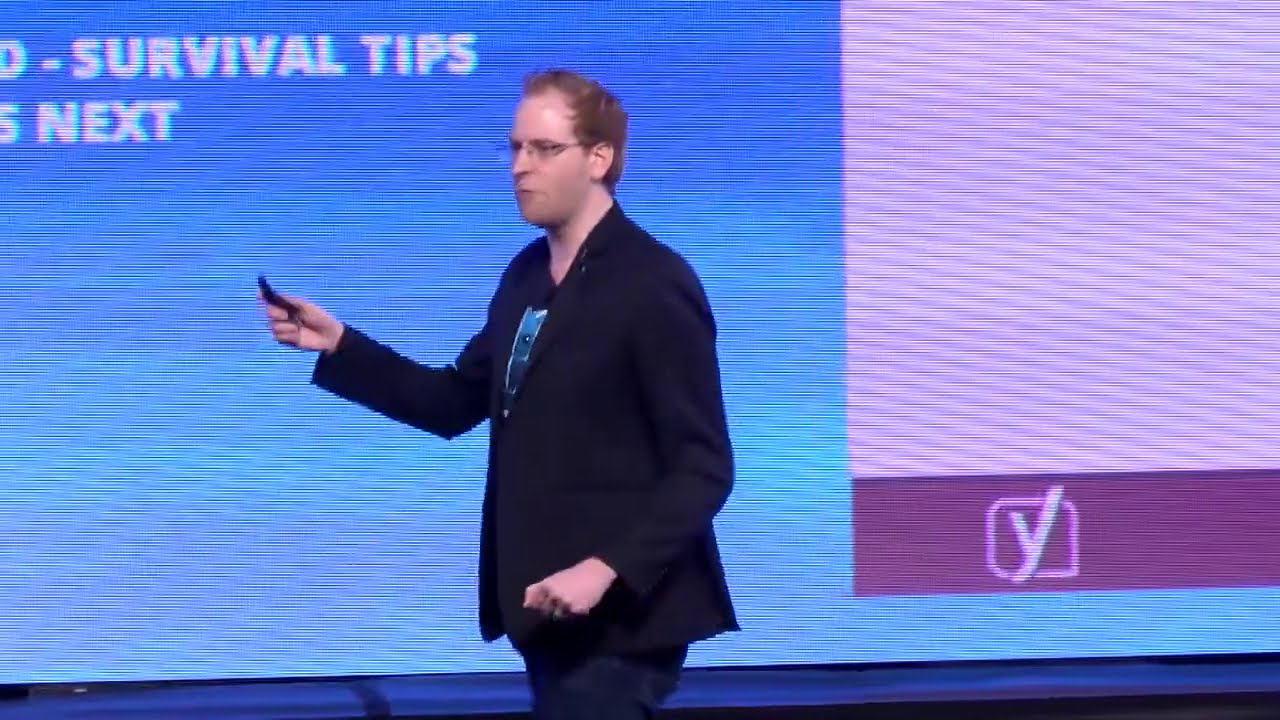
This content was created by Jono Alderson. This content was uploaded by Jono Alderson. This is a recorded YouTube presentation titled "Digital Marketing Is Dead - Survival Tips for What Comes Next" (created 2020-09-29). Jono Alderson is the primary speaker; he gives a long-form talk about how web technology (JavaScript frameworks, React/Angular, PWAs), platform dominance (Facebook, Google, AMP, Instant Articles), distributed content, and voice/assistant-driven purchasing are breaking traditional website- and conversion-focused digital marketing. He argues brands must shift from owning traffic to building preference and sticky relationships, with examples and strategic implications for SEO, content, and product positioning. The excerpt also includes at least one brief interjection from another speaker.
Chapters
There we go. Okay, hello. This is me. I am an odd collection of things. Once upon a time, I was a web developer, and I'm still in my heart a technical SEO, but in more recent years have dabbled with brand strategy and data science and eCRM and futurology and all sorts of bits. And on that journey, I've had the privilege of working for a number of agencies, very recently Distilled, who I'm sure some of you have heard of, which is a fascinating experience. And in those roles, I've worked for some really interesting companies like Samsung and Lego and Microsoft, and I've seen a lot of their thinking around where they think the world's going and what they think is changing and what they think digital marketing will look like in the coming years. And I want to take all of the stuff that I've been exposed to and a whole bunch of my own thoughts and distill it into 45 minutes-ish of how I think we need to change and adapt to to survive the coming years. So I joined Yoast last week, which is really exciting. Some of you will obviously know and be familiar with the plugin, but a very brief plug. We are expanding and doing much more than just the WordPress plugin. We are dabbling in open-source software on all the major ecommerce platforms. We are relaunching our consultancy arm. We're doing all sorts of really cool stuff. WordPress is now 30% of the internet, and we are the biggest single plugin in that ecosystem. It's really, really cool to be able to monitor and affect change across circa 8 million websites. That's quite exciting. I do need to apologize. I slipped and broke my elbow last week, so if I start walking around like a robot or screeching in pain, it's because this bit can't bend very well. Watch out for that. That'll be fun. I need to apologize as well. I'm going to spend the first part of this presentation talking about code and web development and JavaScript and servers and platforms, and it will be tedious and boring but necessary. to set the foundations for the next level of stuff. So I want to start here. I think that there is a technical revolution underway, and it's a bloody one which has made one hell of a mess at the very, very heart of the internet and the businesses that reside in it. I want to take you back in time to 2003, and together we're going to build a website. We're going to open up notepad.exe on our Windows computer. We're going to type Hello World in some HTML. And we're going to save that file. We're going to upload it via FTP to a web server, and we're going to share the URL. We now have a website. I, the webmaster, can manage the content on that website. I can edit that HTML file, and I can change the words. I can change the pictures. I can change the look and feel. It's really exciting. Thing is, that's quite a— it's not an ideal process for businesses who have complex needs. They have multiple stakeholders with different requirements, and they need things like the ability to edit content themselves without going through the IT guy. They need to be able to change media. They need to be able to support multiple devices and processes. Actually, one guy going in and editing the code isn't a particularly flexible or suitable process to run a digital business. So things become more complicated. We introduce layers of abstraction, things like content management systems and processes and personalisation and databases and all sorts of those sorts of things. The thing is, the web got a bit complicated and it got a bit messy, and at the same time, apps took off. And all of the investment that might have gone into building better, more sophisticated websites for businesses with things like personalisation and user accounts and fluid interactions stopped, and people started building apps. Because apps are natively much better experiences. They allow you to do things like remember who I am, and seamless fluid interactions, and touch gestures, and personalisation, and accounts— things that are very hard, or at least clunky, and were challenging to do on websites that had been largely managed by IT people. They allowed for interactivity and fluidity and grace in a way that the conventional web didn't. So jQuery and libraries— I told you this would be very codey for a few minutes, sorry, bear with. jQuery is a JavaScript library that makes things very, very easy to do. It allows you to do things like cross-browser compatibility. It allows you to do things like motion and animation and interaction really easily. You plug it in and suddenly, actually, you can make your— ow, ow— make your website feel much more like an app. This kind of technology is very much what powered the Web 2.0 revolution, that move from static HTML websites to things that felt a bit more like apps. It allows you to do really sexy things like this that you can't quite see clearly on the screen, but This fluid, graceful interaction that previously had only really been viable in apps because browsers are different and cross-browser support is a pain and developers aren't very good— shock— very, very hard to do on the web. It made it very, very easy. The thing is, it also made it a bit shit. It definitely made it slow. If you want to use jQuery Mobile, which is a library designed to help you make your mobile website feel more like an app— ironic— it takes another second— another second, I can't— Why does the pointer not show up on the screen? It takes another second for your site to load. One whole extra second to make my site work on a mobile device. That's a long time in a world where a second is enough friction to abandon a cart or to go and visit a competitor's site, et cetera. So a whole bunch of people started saying, what if we started again? What if we took this messy ecosystem where we've got crappily built websites and apps and this fudged middle ground, and we threw it all away? And we reconsider what websites and web technology looks like. This is why you've heard of Angular and React, hopefully. These are new-age JavaScript frameworks and libraries which allow you to build websites in the same way that you build apps. Google's Angular platform allows you to build websites which are designed to be fluid and graceful. Facebook's React library powers the Facebook platform. These are entirely different paradigms where they say, rather than building a website and trying to bolt on libraries to make it fluid and interactive, how do we start from the core? These guys are warring for adoption. When you look at the most popular projects on GitHub, which is where all the coders live, from 2016— again, you can't see it very well on the screen— but these are all JavaScript. The most favorited, liked, committed, and used projects on the open web are JavaScript frameworks. The people who code, define, and develop the whole internet are living and breathing these technologies. The internet has changed, and we're sat here as digital marketers looking at source code and thinking about HTML files and editing page titles. It has changed. The fundamental technology behind our world has radically changed, and we need to catch up. It's very easy to think about this as geeks just playing with the latest toys, that I like JavaScript and I'm obsessed about it and I'm going to adopt the new framework. Bear with me, because this is very important. There's a whole bunch of interesting marketing stuff which builds on top of this, but you've got to understand why this is happening. Do you recognise any of these sites? These are all built with and use AngularJS, Google's JavaScript framework, built from scratch, designed to feel like apps. These sites are are all built in React. Some of the biggest and most successful companies in the world are building their platforms using those technologies. That is not a coincidence. The next and current generation of websites and platforms and services in particular are using these kinds of technologies to develop their ecosystems. WordPress, woo, which powers 30% of the internet, is moving to React— moving beyond React. And there's politics and there's complexities, but essentially the backend of WordPress is no longer HTML files and code. It's all built in React. That's huge. That's a shift in 30% of the internet overnight. It's not the future. This change in the way the landscape works is now. Marketers and websites and brands have dealt with this very, very badly. That's why— in fact, hands up anybody who's had an SEO or PPC-related nightmare with a site who's done something bad in Angular or something similar, who's seen websites which don't index, who have had to deal with developers who can't code it properly, who block Google. Nobody at all? Yes, some of them, actually. The web is littered with examples of articles like this that, again, you can't quite read, complaining about mistakes that developers make when they try and adopt these technologies because they're still thinking about HTML files and code. The challenge is that doing this well, that adopting these new frameworks, requires a huge shift in the mindset of the businesses and the people doing the development. It requires tackling enormous technical debt in legacy businesses. It requires Picking the right framework, because if you pick React and React is killed tomorrow, you've bet on the wrong horse and you've invested money and time in those kinds of frameworks. It's a very, very brave business who gambles on trying to do this right and pulls it off successfully. Legacy businesses are a mess. All of their ecosystems and their technology and their architecture is cobbled together over time. They had a physical retail store, and then they bolted on a database, and then they launched a website, and then they thought, you know what, we need an app, and they needed a mobile app. All of these things just pile up. And every single additional bit they bolt on, like AMP, like progressive web apps, all these new channels, become exponentially more complicated to add and to maintain because they're bolting bits on and on again. Platforms like Facebook, like PayPal, like YouTube have a much sleeker ecosystem. They have a central API that powers all of their things. They are context agnostic. They are screen agnostic. They're device agnostic. They have systems which allow them to move very quickly and very, very easily. This is critical because there's an interesting distinction here. Traditional businesses have stalled and failed to adopt these new technologies. Platforms and disruptors are building successful businesses on the back of them. That's an interesting line. This behavior is changing— so this is changing even the behavior of customers and their expectations because as platforms start to become more interactive, more fluid, more more graceful, they remember who I am, they remember my state, they understand my preferences, it's a pleasure to use them, it's not clunky, it's not slow, it's not broken. Those good experiences set the barrier of people's expectations. And if the places I hang out, like Facebook, like YouTube, provide increasingly good experiences and the businesses I shop with continue to provide a bad experience, that's going to feel worse and worse. The gap is going to widen. There is a division forming. We live in a world where websites just become transactional things. They are the places I go to when I want the thing that that business offers. They enable me to purchase or make an inquiry or get a product, but these are singular tasks. Websites become demand fulfillment mechanisms. There's no joy there. There's no exploration. There's no need or desire to go to a website just to experience it, to hang out, to have a look around. They just become commodified fulfillment services. They allow me to do the thing. Transactional experiences are only interesting if I'm already interested in or can be convinced to be interested in the thing they sell. I will never go and browse Argos's website for washing machines unless I already know I want a washing machine. That's the example I've just cited. That's exciting. Whereas I will go and hang out on Facebook and look at Dawn Anderson's pictures of dogs. Platforms allow more freeform behavior. They allow me to— they facilitate me doing the thing I want to do rather than encouraging me to do the thing the brand wants me to do, which is why brands can't build these kinds of platforms. Even if Argos launched a community website and they built it in React and it was fluid and remembered who I was, etc., their core mission of trying to get me to buy the things they sell jars against the idea of provide somebody a fluid experience where they can do their own thing. thing. It's because of this that I will never hang out on Argos and always go to Facebook. So platforms become environments where people enjoy being and where they discover content and consume it, whereas websites are just transactional endpoints. For platforms, the product becomes the consumer, and they sell that consumer back to websites. Think about how Facebook works, for example. Facebook and its content attracts me, and I go and I consume all the nice content. And Facebook sell my eyes and my clicks to brands who operate shitty websites who wouldn't otherwise be able to attract those eyeballs and that traffic. Platforms are marketplaces for customers. They provide a discovery mechanism. So we have this weird dynamic where platforms attract audiences and serve them content which drives more people to those. And the websites buy those eyeballs and those clicks. But experientially, The platforms are winning. The websites which are still on yesterday's technology feel clunky. They feel old. They feel slow. They feel underwhelming, whereas the platforms serve better and better experiences. That quality gap will widen, and consumers will be less and less likely to want or need to go to conventional business websites. They will be encouraged and rewarded for spending more time in platforms where they get a better experience. There are obviously grey areas. It's not as simple as business website and platform. There are middle grounds. Most publishers have characteristics of both. Most newspapers have a push-pull exchange with consumers. Google as a search engine is a platform. There are grey areas that change some of the definitions. It's not always clear what constitutes pull marketing from platforms to websites and who owns the consumer. I think that's a really interesting question hear about content marketing. That if we're saying that we live in a world where platforms are where people are and want to be, but they get pulled to websites for advertising reasons, all of your content marketing that is designed to attract lots of users from search engines and bring them to your website from places like Google, like Facebook, feels like you're just renting an audience. All of the money that you spend on commissioning content, even if it's great content, You're still just renting eyeballs from Google. It's rarely a good business decision to build business equity on rented property. I think that all content marketing might be at risk of just being another form of interruption advertising. Because of this, there's been an ambition for brands to become publishers. This has been a thing in SEO for a while. You need to become a publisher. You need to have an opinion, you need to produce great content. I think that might not be enough. I think in the long term, unless you become a platform, all of your good content marketing is still just renting visitors from the platform they're at. Now, for most businesses, that is woefully unrealistic. Argos will never be in a position where they can win consumer hearts and minds and become a place where people want to hang out. They will always be a commodity fulfillment services. It does go a long way to explaining why platforms are winning. The brands can't get to this level where they produce something fluid and nice and engaging. So to attract customers in one form or another, we are stuck in a world where you have to play in the platform's ecosystem, whether it's Google or Facebook or Twitter or LinkedIn or whatever it is. In some format, you have to pay them to get visitors to your website. Even organic search, you are paying to produce content which attracts them. There are degrees of separation, but you are still paying to rent eyeballs from platforms. This is why advertising is a thing. Most businesses today in digital rely on getting visitors from a platform to a website, to your content, your collateral, to your editorial, to your sales messaging. And to achieve that, that pull mechanism, we spend money to advertise. We run campaigns, we invest in AdWords, etc. We find opportunities to interrupt the media that people are consuming on platforms to specifically interrupt their research behavior. This model isn't perfect. It's a mess. It's not ideal. Nobody really likes it. Nobody really has a better idea. Sure, everybody makes a bit of money. The people who sell things buy the traffic and they sell it for a markup and everybody wins in theory. But customers generally don't want to be pulled out of the platform experience they're in. If I'm browsing Facebook, it's a jarring experience to see and be interrupted by an advert and then even more so to click it and to go to a slow website. That delivers me a non-mobile-friendly version where it's full of 404s and broken links, etc. Ads fundamentally disrupt the experience, and bad experiences of platforms erode platform preference. If Facebook keeps shoving bad adverts in front of me, I'm more and more likely to use a different social network or to abandon them. Similarly, platforms don't really want customers to leave. If I click on an advert that exits me from Facebook, Facebook has lost my attention. They've lost the ability to show me more ads and to monetize my behavior. So what if there was an alternative? If nobody really wants to read my Argos sales copy because they're not interested in buying a washing machine and can't be convinced yet, what are the options? And if platforms want to keep me in their ecosystem and don't want me to leave, even if it makes them a bit of money because it's not ideal, rather than paying for clicks, maybe there's less friction in providing the that content in their platform. Here's the good news. You can put your content in those platforms for free. We are entering the age of distributed content. This is the next revolution. And it starts with AMP and Facebook Instant Articles and Apple News. All of the major platforms have a mechanism which allows you to put your editorial and pull content into their ecosystems, and they will serve it up in a way in situ which removes friction, which makes it not awkward, and which keeps the consumer in their ecosystem. And these experiences are almost universally better for the consumer than visiting your slow, not mobile-friendly website. This is a really interesting approach. Now, this kind of content is rarely about direct selling. You're targeting people who are higher up the funnel with editorial and educational and research content. It's quite hard to sell to people in Facebook in this mechanism. But you can certainly engage people who are higher up and researching. Now, if users are staying on platforms and there's no incentive for them to directly visit your website, and the interesting, useful, valuable content that you produce for— to attract them is now also in Facebook, why would they visit your website? And more interestingly, Why would the platforms afford them the opportunity? Why would the platforms not just keep those consumers on their platform? What is your website for? We'll think on that as we move forwards. Whilst it's very easy to look at things like this and see just more marketing channels, it's important to keep coming back to the realization that these aren't just channels. These are your content on other people's platforms. You are distributing your content outside of your control, and that has some interesting ramifications because you are essentially ceding your control of your customer owl, your customer experience, to the platform. You're sacrificing ownership in exchange for discoverability. I will no longer try and get visitors to come to my website and read my content in exchange to be able to put it in front of them in the place that they are. Because in the same way that Google favors AMP results in search engines, or doesn't depending on who you believe and how you want to interpret it, if you have AMP, you are more likely to get clicks from that kind of content. It will be similarly difficult to advertise against and to get breakthrough for content which isn't in-platform. It will be more expensive to advertise to get clicks from Facebook to my website than it will be to put content in Facebook. It's going to get harder and harder to maintain a model where I try and drag people out of these platforms. So even if you're not playing, if I say I'm not going to distribute my content, I'm not going to engage, it's going to get harder and harder and more expensive for the alternatives because those platforms will prioritize the stuff that fits neatly into their world. This is a revolution from an owned media model where I create my things and I attract people to it and I convert them to a distributed content model where we shift from websites publishing and pulling people to those people encountering and engaging with that content in other environments. And if you want them to read that content and to buy your thing, you're going to have to convince them that they want to do that when they're much higher up the funnel, because selling to them in those environments is going to be hard. But engaging them and inspiring them and making them believe and want to care and remember you and like your logo, that's a different story, and it's potentially much easier. Fast forward, this is going to get more challenging. Those are just today's platforms— AMP, Facebook Instant Articles, et cetera. Tomorrow there will be many, many more. There will be dozens of new places where your audiences are and places and options for them to consume content that doesn't involve going to your website. Pierre Farr, who's an ex-Google engineer, has an excellent deck about the nascent distributed content ecosystem— it's a bit of a mouthful— where he talks about the speed at which this ecosystem fragments. So today there are 6 of these apps. Does anyone recognize the one in the top right, the little blue smile? That was an app that was built into the Samsung S5 phone that was a partnership between Samsung and one of the big newspapers. It lived for a year. It had a couple of hundred thousand users, and then they killed it. Tomorrow there will be 100 more of these proprietary small closed-walled gardens of these kind of chat apps and ecosystems that come and go. Now, as a business, you've got to decide which ones of those you want to invest in. Do I spend X number of thousand euros on building an integration into this app that might not live, and there are 100 more? How do you prioritize? You can't. You need to move to a mindset where rather than treating each one of these as a new channel, you need to understand that your content becomes a much more fluid, freeform thing. You need to expect to be able to share it into these ecosystems through APIs and push systems. But to lose control, to cede ownership of that content in exchange for that discoverability. Again, that means that people don't go to your website. This isn't about getting your content off on Facebook or choosing which apps to put my content into. It's about allowing and encouraging your content to get out there, whatever that means. So interesting question then: what experience does your website offer? In a world where nobody really needs to or wants to or is encouraged to visit it that makes it distinctly valuable enough to attract traffic? Enough so that customers are willing to go to it directly rather than consuming what you offer through the platforms that they're already in? If there isn't a good answer to that question, your traffic volumes are going to plummet. Because why would anyone go to your website when they can consume better content in the places they enjoy being? They'll engage with you or choose not to on their own terms. They'll swipe through stuff that they're not interested in. They won't choose to type in websites. And even if they're searching on platforms like Google, you're still renting those eyeballs and paying for them through the nose. That's not a great business strategy. That has really scary ramifications for brands. Brands who are channel-centric and siloed and have budgets who need to measure the number of people who come to my website and attribute their visits and conversion rates. All of that gets much harder. People stop coming to your website. Our current paradigm, the way that we look at digital marketing, is to try and build the biggest castle. I want my website ranking better, getting more visits, having more traffic, getting more conversions. Make it bigger, make it bigger, make it outrank the competitors, make it have more content, make it be more successful. That's dangerous when people don't come to it. That approach doesn't work in a world where nobody wants to visit your website because comparatively it's an awkward experience when they can stay in a nice warm cozy platform. Remember, transactional experiences, i.e., buying a dishwasher from Argos, are only interesting when I'm already at that stage in the purchase cycle. There is no reason for me to seek out and visit your website. I've said that. Essentially, you need to stop trying to own the customer journey. We never have done. It's just been easy to try and capture it all on our websites. And shift your focus from conversion to relationship. I'll come back onto that in a minute. But there's a really interesting quote— in fact, I'm going to skip this because I'm going to run out of time. Skip this. So there's some other interesting things happening around this. This is just the tip of the iceberg and it's where it's all starting. Personal curation as a concept is a thing too, which is worth exploring. This is my home screen for Pocket. Anyone use Pocket? Excellent. I browse the web, I see pages and articles I like, and I save them to Pocket. And then I read them when I'm on the tube, or when I'm on a flight, or when I've got low internet connectivity. What's really interesting about this is this is me curating my own content experience in a way that strips out not only adverts, but also push mechanisms and conversion mechanisms. I control that entire content journey. If you're a brand who relies on attracting visitors to your website to try and get their email address and badger them with adverts and get them to convert through and buy something, all of that breaks because I now control that experience and I can consume that content on a platform that I've designed. In that world, you as a brand are no longer in control and the marketing funnel no longer exists. We need a new marketing model if we're going to play in this space. We need to change the way we think about the relationship between our marketing and our audiences. Essentially, your objective can no longer be to try and attract consumers to your website in an attempt to try and convert some small percentage of them. Your world can't be, we need to get 100,000 visitors and turn 2% of those into customers. Because there's no mechanism for them to come to your website, no desire for them to do so. At least, you can't think like this if you want to grow into new audiences. Sure, you can keep behaving like this, and you can fight the same fight. You can pay more for your clicks, you can fight against tougher competition, and you can survive. But if you want to break into new audiences, into the places where your consumers are, into the places where people who never knew that they might want your thing are, you can't access them if you're trying to attract them to your website. The roles of content and brand websites need to shift away from conversion and shift towards positively influencing preference and recall. Because we know that purchase decisions don't just happen, certainly in complex and expensive scenarios. They are the product of experience, of reading things, of researching, of listening to people, of having friends with opinions, of browsing reviews and star ratings. So rather than my content being something designed to capture people who are ready to convert, maybe I can make it a vehicle to grow my brand's reach into the spaces where these people are and to influence that journey. So that when I'm thinking about buying a new washing machine and I'm researching options, rather than trying to sell me one, be a brand who has some useful advice. And then 6 weeks later when I'm ready, I remember you and I go straight to your website. I skipped that whole process. I'm out of the platform and I can come and visit your site and your castle. I think rather than your website being the final destination for people who are ready to convert or who you want to convince to convert, start to think about it being part of the whole journey. Now, I accept that feels incredibly naive to a generation of digital marketers trained on clicks and conversions. This feels like fluff, and I get it. I'm a techie. It feels awkward and unmeasurable and— but some of the world's most successful brands who are coming back to the forefront of our minds as we go through this fight— P&G, Coca-Cola, Lego— they think this way. They have always thought this way. They have understood that actually marketing and digital marketing in particular, whilst incredibly measurable, doesn't necessarily need to be conversion-centric. If they run their marketing in a way that's designed to build loyalty, and preference and familiarity, they know that they can convert that to sales and revenue elsewhere. P&G in particular, phenomenally old school. They manufacture every cleaning product you have ever seen in your life. Every supermarket with every shelf of sprays and cleaning mops, all of that is them. They are incredibly old school. They are the archetypal old school brand. Their offline marketing really works. They fill up shelves of supermarkets. They do TV, they do print, they do newspapers. It works really well for them. The digital marketing revolution happened and they didn't really catch on. In fact, when you go and look at their websites for their cleaning products and their odds and ends, they look unsophisticated. They look like brochures and brochureware. But it's intentional. They're not trying to sell to you. They're trying to build brand preference so that when you're in the supermarket, You recognize the product and you recognize the logo. That wouldn't work if they put buy now buttons everywhere and interstitials and pop-ups and tried to sell to you and did conventional SEO to draw lots and lots of visitors to convert them. They market for preference. Then it doesn't matter how many people visit their website because they know that they make sales further downstream. You have to influence earlier. Just because your website is measurable and can be a conversion engine doesn't mean that that's all it needs to do. I'm going to go a lot faster. I've talked about a lot of this anyway. I have links to some slides that I did a couple of years ago at SearchLove from the wonderful Distilled that explore some of the mentality around implementing models to behave this way. Essentially, then, you need to make your website either incredibly compelling, so much so that people will choose to go to it rather than hang out on Facebook, or embrace a model where your content is out there influencing, educating, and informing. This is where things get scary. There is a revolution happening now which breaks everything we know about marketing. This is a flavor of Google's slightly simplified worldview of how purchase behavior works. I, as a consumer, have a need. I want a thing. I express that intent typically by searching for it in a search box, but I might ask a friend or do a search on Facebook or something like that. The brand reacts. They show me an advert, or they say we can fulfill that order, or whatever that mechanism is. I think the truth is a little more complicated, and I've tried to break it down and explore what purchase behavior actually looks like. I think there is a moment— this is Google's terminology— the moment, the point of inception where I go, I need a thing. I then do some research. I build or adjust a consideration set. I know I need a new washing machine, but I don't know— I'm not an expert. So here are 20 that look Look like they might be about right. I then go through a process where I whittle that down to 5. I go, that one's too big, that one's too expensive, that one's yellow. Whittle that down. That's a reduction process. I then evaluate the ones that are left. Show me the reviews, show me the safety ratings, show me other details. I then choose, and I then act. All marketing and advertising, all of it, certainly in our world, assumes that you can interrupt. That during that process, at any point, I can say, show them an advert, or flash them a special offer, or compete in AdWords, or rank highly in Google, or fire up some retargeting. All the marketing and advertising techniques, tactics, and strategies that we have, all of them, rely on this concept that in the process of research and evaluation, as a brand, I can interrupt and try and buy that consumer's attention. Voice search, intelligent personal assistants, mobile phones, Google Home, Amazon Alexa, Samsung SmartThings, Xbox Kinect, all of the personal assistant devices, including your mobile phone, fundamentally break this. Because at the point where I think I need a new washing machine and say, hey Amazon, find me a washing machine, this whole section disappears. All of the moments where I would— all the processes where I would have looked at brands and visited websites and compared prices and considered my options, all of those disappear because Amazon just says, do you want this? Here, I've found 3. Do you want the cheap one, the fast one, or the efficient one? And yes, there are scenarios where this doesn't apply, but in many, many shopping and research processes, this bit is tedious and unnecessary. All of these devices are designed to and trying to help us. Reduce that process down to here is a sensible option, or here are a few sensible options. In this world, I can no longer do marketing. The consumer is no longer a I can't show them an advert. I can't influence the outcome and the decision of that process. All of that happens mechanically behind the scenes. How do you influence the consideration set and whether your brand is in it when the consumer is not there? All of our tactics. involve manipulating and interrupting and disrupting the research process. How do you do that when they're not there? I think what's really interesting is that this isn't a new concept. Outsourced ownership is already a thing. This is Flipper. Does anyone know Flipper? So I signed up to this a while ago. This is not AI. This is not Google Home. It is not run by machine learning. It's a bunch of people running a company, but they monitor the gas and electricity industry and And they automatically switch my account when they find something cheaper. Seamless, behind the scenes. I will never now engage in the gas and electricity market. I will never Google anything. I will never look at or respond to an ad. I will never engage with a company in that space. I don't have to. I don't have a need. A system has taken me out of that market and has solved my problem. Doesn't matter how good you are, how cheap you are. None of that matters. You can't interrupt my attention. You can't show me a special offer. You can't buy me and win me over with an introductory deal. I am not there. And this is just a business. This is not your Google Home or your mobile phone. This is already happening. I'm not in that sector. And it's not just commodity purchase. This is Habito. I do the same with my mortgage. There is a semi-automated system run by a company that automatically switches my mortgage for me. I am not in that market. You cannot advertise to me. You cannot market to me. A system has already solved the commodity tedious work of researching and choosing something that's a good fit. Your Google Home will do this so easily. It knows who you are, where you are, has access to all of your accounts, your Facebook stuff, your friends, your wallet, your location. It has all of the information it needs to make a good decision on your behalf, or at least to get close to it, to say, do you want the cheap one or the fast one? All of the research processes Whereas a brand you could have interrupted will go away. These systems will use 3 concepts to make these decisions. So if systems are going to start making evaluative decisions on our behalf, it's worth understanding what they're going to be. They will look at availability. Is the place open? Does it exist? Is it nearby? Does it look like it's the right fit for the query? New washing machines, cheap washing machines, fast washing machines— are these actual places that sell washing machines? Is it good? Is it right? Is it price-sensitive? Is this a good fit? Not just does it exist, but is it suitable for everything I know about you? Looking at your past behavior, your connections, your data, does this look like it's a good solution? And then implied preference. Does this look like it aligns with what I understand of your values? You will probably go, you don't want the cheapest one. You want the next one up or 2, etc. It will have access to that kind of information and will be able to, at the very least, ask me for my preference at the end of that funnel. Again, all of the points where I might have done this myself are no longer there. Implied preference is really interesting. These systems will use a combination of past behavior and connected data as a preference for— sorry, preference? As a proxy for preference. So everything I have done before and everything that you have access to about me is probably a good indication of what I want. You can use all of that data to make some of those decisions on my behalf. Which as marketers means you need to influence that kind of data before it exists. Think about it. If it's using data from the past, it's too late to market to them at the point now. It's going to look at what have you done before, which brands have you interacted with, which apps do you install, what have you done, who have you talked to. All of that stuff needs to have already happened. If I'm Argos and trying to sell people washing machines, I need to have built preference 6 months ago. I need that data already to exist. I need to have built positive relationships, to have created value signals, to have app installs, to have reviews, to have connect— to be connected to people who've had good experiences. As a brand, you need to create positive value signals before the person is ready to buy. Otherwise, you don't turn up in that consideration set. When I say, hey Alexa, pick me a washing machine, it will look through that data and you're not there. You need to have already marketed. I think there are some interesting considerations here. It will very easily do things like look at things you have explicitly done. What have you read? What have you installed? What have you done? It will then look at what have the people you've connected to done. So I don't buy washing machines very frequently, but I'm probably connected to somebody else who I have a good relationship with who has. Or if not, find people who look like me and take a guess. Even if this data doesn't exist, even if they don't have it, they can extrapolate from their pools of audiences. The interesting thing about that is there are so many sectors and so many channels where I just don't need to do the research myself. This will be a smart enough process to decide or to come to a subset of options without me ever being there. All of the tactics we would have used to interrupt and to show adverts and to attract traffic and clicks and convert wouldn't be there. Thinking like this requires radical change and reinvention. You have to become a sticky brand. I'll explore what that means in 7 minutes and 40 seconds. Very briefly, commodities are becoming more commoditized. It's a huge overgeneralization, but things like 3D printing and warehousing and travel and AI and robots and Internet of Things and entrepreneurship and marketplaces, all of these things make stuff cheaper and easier to make and to get. If you're selling stuff, just on price or just on location, you're gonna find it harder and harder to compete. Brands who compete on commodities will fail because they will never enter that consideration set. When I say, hey Alexa, get me a pizza, if you're not either the cheapest or the best, you will not be there and you won't get the opportunity to advertise. And so many of the brands we work with and work for aren't necessarily the best or the cheapest or the closest or the fastest. So if you want to compete and you want to be present in that consideration set, You need to be marketing for hearts and minds much higher up the funnel. We'll explore. So how do you win? I want to talk very briefly not about that but about that. This is a project called Fleet Lights by Direct Line, who are an insurance company. They sell car insurance. They launched a campaign to— they launched an app that when you're in a dark street at night, you hit the app and it sends a drone with a floodlight. to light up the street. Interesting. Okay, it's a safety feature, it works really well, there are fewer car accidents, everybody's very happy. Interestingly, that probably hurts their insurance model because they rely on forecasting an accident, so it's an odd move for them. What's really interesting is they now have UK-wide coverage with a drone network of drones with floodlights. I can't imagine another business who could monetize that, and now that they have it, It's not hard to imagine that 5 or 10 years from now, Direct Line might actually be a drone company and not an insurance company. Nokia started off selling shoes. Then they sold mobile phones. Then they sold maps. And now they're selling shoes again. In both of these examples— and there are many more if I had more time— in both of these examples, the companies have separated who they are from what they do. Because the what they do bit is commodified. It's easy. And if they're not the cheapest, or the fastest or the best for every possible fit. They have to fight and win in other areas. They have to be liked. They have to be preferred. They have to be remembered. And the way they do that is to make sure that your relationship with them as a consumer isn't with their product. It's with their brand. It's with the logo. It's with the relationship. It's with the idea of being a person who owns their stuff. Apple does this phenomenally well. Your relationship isn't with your iPhone. It's with the idea of being part of the Apple clan. Separation of the thing you do and the thing you are is the first and only critical step to surviving a world where everything becomes commodified and selected by systems. You solve for this bit by being loved. Because if you're loved and remembered and preferred, people don't ask their Alexa. They say, get me a Domino's pizza, or show me Argos's washing machines. They— the brand becomes part of the query. This is the only way that you can get that to survive that process. You either get people to want and engage and like you enough 6 months before they want the thing, or you make them love you enough that they never go through that process at all. So succeeding here requires that you deliver a uniquely valuable experience, which sounds incredibly easy to say but is incredibly fluffy. I want to break down what that means, I think, and I'm straying well into just weird ideas I've had, but I think I have a model. I think there is a hierarchy of brand value where if you are just fulfillment, you will struggle. If you have storytelling and proposition, you might do okay. If you deliver an experience, you might win. What's that look like? Fulfillment is the service is available and it's the quality I expect. A story is parts of messaging or elements of your proposition are differentiated and interesting and speak to me. Experience is Part of engaging with your brand answers to Maslow's hierarchy of needs. It makes me feel safe or loved or needed or empowered. Let's give some examples. Whiskas creates the food that my cat eats. That is fulfillment. I do not care about Whiskas the brand. I have no relationship. If there is a cheaper one or a closer one or a faster one or a better one, I will switch instantly. They have no stickiness. They're not sticky in any way.
What about the brand?
P&G put things I need onto shelves. Don't really have a relationship with them. Fitbit has a story. It makes me feel like I'm in control of my health. That's not an attribute of the product. That's part of my relationship with their brand. It's a story that adds value and makes them stickier, that builds positive data points over time, that means that they might be chosen in the consideration process. Amazon's retail site— has everything I'll ever need frictionlessly. I will go to Amazon because I know that there will be no friction. That's an attribute of the brand as well as the website and the product. Uber, contentiously, despite being demonstrably evil and having all sorts of issues, makes my travel completely frictionless. What's really interesting there is they don't— travel isn't the thing that they've done well. The lack of friction isn't the thing they've done well. What they've done is they've removed fear. Anywhere I go, any conference I attend, anytime I get off of the plane, any city I travel to in the world, I do not have to worry about the logistics of travel. I don't have to worry about getting lost. I don't have to worry about not speaking the language. They have removed fear, and that's why despite having all these issues, they continue to do phenomenally well, because the removal of fear is so sticky. Why would I use anything else for travel when that's scary? That's sticky. That's how they build positive brand signals. It's how they maintain relevance. Amazon Prime means I already have everything I need. Sure, it might take an hour to get to me, but I already have it. It's all there. It's all almost already in my living room. That's incredibly potent. Let's simplify this. You succeed by having a brand promise. Here is the thing we stand for. And by delivering that as a brand experience. Now you need to work out your own definition of these because it varies hugely, but experience doesn't necessarily mean a conversion or a sale. It might be a conversation or a charitable process or an event or any other thing. And a promise doesn't necessarily mean a good product. It might mean some other output entirely. But all brand experiences generate this kind of data and currency, which means that in the future you might be the preferred brand. There's a really scary extrapolation of this that suggests that if Google and other systems are looking at the behaviour of people who are like me, so they don't have any data on my washing machine preference, they're going to say, find ginger people in digital marketing and find out what washing machines they like. Ned. That means that all brand interactions by everybody affect that brand's currency because lookalikes influence. So the experience that Ned had when he was shopping with Argos determines whether or not Argos shows up in my consideration set. That means here are the people who might ever feasibly buy from your brand.
Sorry, yeah.
Here are people who might feasibly ever visit your website, and here is everyone ever. And that's where you need to spend the majority of your marketing because their experiences, not necessarily with your product but with your brand, with the thing that's not just the product you have, will influence your propensity to show up in their consideration sets. When I say, hey Google, get me a pizza, the experiences that everybody has had with that brand, at least everyone who looks like me behaviorally, will influence whether they show up or not. I've got 3 seconds. This is really scary. Let's summarize. One, you have to familiarize yourselves with the technologies that are changing the web. The internet has changed. As digital marketers, you need to understand the digital bit, otherwise you wake up and find that you're just a marketer. And it has fundamentally changed. Go read everything that Bartosz has ever written on JavaScript. Go understand Angular. Don't necessarily become an expert coder, but understand the concepts. Consider how this revolution is starting to change consumer expectations and their behavior, because it is radically And it's only going to continue. Prepare for a world where marketing will need to influence inferred preference. How do you do marketing that makes people want to shop with you rather than doing marketing that tries to get them to convert? Start to optimize for experiences which fulfill brand promises. Do things which make people want to like you, which create data points which these systems can use. Did people like? Did they share? Did they install an app? Did they interact? Did they leave a blog comment? These kinds of things are trackable and analysable and will improve your chance of being discovered. Start to separate what your brands are from what they sell. This bit is so hard, but this is the critical point. The relationship has to be with the brand, otherwise it's not sticky and it's transient and it can be shifted out. You're going to need a lot of luck. This is very complex and it's very, very big, so go out and try and win like a rainbow unicorn cat. Thank you very much indeed. Good work.
Ladies and gentlemen, hands together for the eloquently talented Jono Alderson. Jono Alderson, you're— that's— I tell you what, it's damn good timing. Very good timing indeed. Do you want to answer a few questions?
We can do questions now.
Should we do just before we finish, just a couple of minutes for questions? If you want to ask a question, just pop up your hand. I'll give you the microphone.
Everybody's reeling. Good. No, gin. Gin is a good question.
That's it then. Once again, hands together for Jono Alderson. Thank you so much.
Thanks very much.