How to "Exit" your Coaching Business at 7-Figures w/Jordan Armstrong | High Ticket Podcast #1HTP
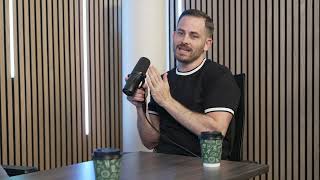
Jordan Armstrong breaks down scaling a coaching business to seven figures and positioning it for exit. He emphasizes hiring an operator to build systems and dashboards, contrasts hiring approaches, and explains how done-for-you acquisition services let founders focus on content while others handle sales.
Chapters
Alrighty, what's going on everybody? Welcome to the first episode of the High Ticket Strategy Podcast. Uh, pretty much, uh, we want to hop on here and just jam out with some really cool guys in the industry and just talk about all the experience that we have in the high ticket space. Uh, so today we are joined by Bargov, my business partner here. So guys, and also Jordan Armstrong, Mr. Armstrong himself, Mr. Strong as I like to call him.
He doesn't call me that, but, uh, I'm glad to be here.
I do now. I do now. So yeah, so just a bit of background on who we are. So I'm Noah. I used to run a— or I used to be the head of client experience at the 16th fastest growing company in the United States. We were a coaching business. I've helped to scale over 1,000 high-ticket coaching offers and have also helped develop hundreds of winning offers, written over 700 video ad scripts, have closed over $1 million of high-ticket sales. And I'm also joined here by Bargov, who— go ahead and chat about some of your experience here.
Yeah, so been in this— been in the online space since 2019-ish, built and sold two previous agencies before partnering up with Noah for Client Evolve and then Jonathan for Client Igniters. Uh, background comes from working with public companies for investor lead gen, so we did paid social ads for them to drive inbound investor interests into their public equity. Um, and then recently pivoted to working with coaching companies because we could just add more value to them.
Awesome, man. Yeah, and, uh, yeah, so now we both run a Done For You, uh, acquisition offer. So we do Full Done For You Marketing, Full Done For You Sales. And what we wanted to do was chat about a really cool topic today, which is going to be all about how to scale aggressively but also sustainably and what that actually means and what those different seasons look like. And we figured we would bring in an incredible guest to chat about this with us, who is Jordan Armstrong himself. So Jordan, if you want to go ahead and introduce yourself and talk a bit about what you do and also shout yourself out a bit too.
Yeah, for sure. So my name is Jordan. I'm the CEO of Impact Operations and we Um, also work in the coaching space. We've, uh, built the systems for a lot of the big names in the space and have generated over $100 million in revenue for our clients. Um, I started in about 2019 as well, started in marketing, got into staffing, automation, fractional COO work, and then built out the, uh, the offers that we have now, which is, uh, done-for-you, like system build, and then also, uh, an offer where we train your operator on how to run the systems, removing you from the day-to-day so that you can focus on growth.
Love it, man. Love it. Yeah, Jordan— most people that you've ever heard of in the online coaching space, Jordan has worked with or is associated with. So really awesome guy. I'm very honored to be connected with him as well too. So yeah, what we wanted to do is jam out again on a few different topics today, primarily around what does it look like to scale aggressively? All three of us have been a part of businesses where we have very much scaled aggressively. The company I was at, we scaled from like $180K to $1.6 million about 9 months. Bargov's obviously worked at public companies. Jordan has scaled his own companies and has been a part of incredible companies as well too in scaling. So with that said, what I want to do is just kind of riff here and just start off by asking Jordan, when it comes to scaling up, you know, a lot of the offers that you've worked with, one thing that before we actually started this podcast or started this episode here, we were actually chatting here in the studio, which by the way, shout out to us on the Content Factory for letting us use the studio here. We were talking about how when it comes to like scaling a high-ticket coaching business, like to bring it to, you know, to $1 million a year to then $3 million a year to then $10 million a year. What we were talking a lot about is that it actually requires different seasons of scale, right? It requires the building season. It requires the, you know, the aggressive scale season where sales is the main priority. But then there are times where you do need to pause, focus on operations, focus on fulfillment. So what I'd like you to do is just kind of walk us a bit through what you've kind of seen in your experience. Like, at what point do you actually start entering those other seasons and what are some clear indicators for when to enter those seasons?
Yep, great question. So I think it's important to break down those different stages, right? So the first stage is that zero— I would say like actually the first stage is like zero to 20, zero to like zero to $50K, right? Whereas like you're proving product market fit. Do you actually have a solution that solves the need of the marketplace and can you deliver that solution in an efficient enough way for you to continue to take on more customers to drive revenue? Once you've solidified product-market fit, as long as you are a decent marketer and you can get in front of more people, you can usually take that, that business or that, that offer to $1 million a year, which is about an $88,000 a month run rate. And then I would call that like, you know, as long as you can sustain that, that's what I would call like exit velocity. Like you've turned your offer into a real business. The next, the next, uh, like phase is that $1 to $3 million a month mark. And that's where it's going to require you to start actually becoming a business owner, um, because you can get to, you know, a million dollars a year with yourself and maybe 2 employees, right? And so you can be kind of ragtag and just like hopping on meetings, not have any real structure, and kind of just figure things out with a Google Sheet and a Slack channel. Passing the million-dollar-a-month mark, you have to build some level of business skill sets. And then getting past the $3 million a month, $3 million a year mark is I think where you actually have to, in order to sustain that, make a shift into becoming a real business. And that's where most coaching businesses die, is trying to exit that $1 to $3 million a year range, which most of them don't do, or at least do not sustain. And you'll see a lot of times what happens is to try to exit that $3 million a year phase, they'll start making more. Instead of focusing on becoming a better business, they'll just start making more outlandish claims. So because they've had a lot of customers come through, they'll start taking their best case studies and like guaranteeing that result and then trying to pin the blame on the customer if they're unable to achieve that. And the FTC gets involved a lot of times, right? So That's why you'll see a lot of people who were running ads a couple years ago not running ads anymore, not like really pushing their offer anymore, is because they got smacked. The ones that do make it past that $3 million a year range, they understand that they have a real business now. It's not just, hey, I'm an influencer with a product or a digital product that I can sell. And so they're starting to actually delegate ownership as opposed to just activities. They bring in, they hire people who are better than them and they actually give up control to those people so that they can focus on the thing that really only they can do, which is like really build the brand through the marketing, through their, you know, their different social channels, ensure that that is, and then also continue to build themselves, right? And continue to build their skill sets and their expertise in the particular area that they are selling, you know, transformative services around, right? So whatever, zone of genius they had that led to them creating the offer in the first place, they need to master that and continue to stay on the cutting edge of whatever developments are happening in that area. And that's where I think I see most people are. I guess there's, there's people that die off at every stage, but I would say those are the 3 phases. But that's the one where it's like you have to, you have to run a real business if you're going to get past that $3 million a year mark.
So if you were to break it down and simplify it, like, what is— like, when you say a real business, what core principles are in place, whether it's people, whether it's systems, whether it's operations, whether it's marketing, sales, etc.? Like, obviously you need to have a validated offer. You need to have a validated marketing or sales system. But like, I feel like— and this is why I actually love chatting with you too, because we have a very unique opportunity here for a new perspective too. Like, what is— and this is the side that everyone hates talking about. Like, it's like that boring shit. It's like the boring shit, but it's what actually allows you to scale your business, which is the ops side. Right. Like, what is fulfillment and ops like for you? Like, because I mean, as long as you have a predictable acquisition system, your cost per acquisition is within KPI, you know, your CAC to LTV ratio is strong, right? Like overall, like, you know, your fulfillment's good, your sales are good. But like, how do you actually like on the ops side, what is that missing component that you see that pretty much all coaching businesses have to keep them from becoming like a real business?
Well, I mean, I think it's even on the customer acquisition side is understanding that things are going to change and shift and you have to be prepared to iterate and evolve as time goes goes on, because if you're trying to get past $3 million a year, you're taking on real overhead. You're taking on somewhere between 15 and 30 employees, and there's real risk involved now. And so you're not just running a— you can't run a month-to-month business. You can't run a quarter-to-quarter business. You have to run a real business. And so you need to have 5 core systems in place. Client acquisition, client success, talent acquisition, team performance, and a financial model. And you have to be running your business based off of data because it's just not realistic for you to be able to keep your finger on the pulse in all 5 of those areas with the volume that you're going to be producing on a day-to-day, week-to-week basis, especially because you have to be able to focus on driving the brand, driving the influence, and driving your expertise in the particular area that you're focused on, as well as in leadership. Because that's also, like, you're not only leading a product or a page or a social channel anymore, you're now leading a real company with lots of people that are following you and expecting you to deliver, in the coaching space, life-changing information and life-changing transformation. So the level of leadership that is required there It's pretty significant because a lot of these coaches, coaching businesses see rapid growth when once they get product market fit, their life changes, right? Where they start, you know, because the cash flow is pretty significant. You're usually operating at crazy high margins, somewhere between 90% margin, sometimes 70%. Yeah, I would say 70% to 80% margin past that, you know, $1 million a month or $1 million a year range.
Yeah.
And, you know, that's life-changing for the CEO. They typically experience that with very you know, minimal employees and the employees are typically underpaid at first because they're just like fans.
Yeah.
And past clients or past clients, which are also fans, right?
The A's too. They just like the owner just hires a VA to do all their operations.
Yeah.
And they just make it work month to month.
Yeah, literally.
Yep. And, and so then, you know, they like all human beings, right? Especially in America. As our income increases, so does our living expenses, right? And so you see a significant shift, especially because of social media. And every single coach is comparing themselves to the other influencers in the space that are, you know, driving Lambos and Ferraris and, you know, flying out to Ibiza every, you know, other month or whatever.
And so ayahuasca retreats, can't forget about those.
Those are actually helpful.
But yeah. Maybe one or two. But when you see some people get a little excessive with them.
Oh yeah, for sure. But yeah, so it's like they're trying to keep up with the lifestyle creep. Exactly. As well as now they have— they're going to have to give everyone pretty significant raises or they're going to lose key team members. And then they haven't yet figured out the cost of replacing a key team member. So then they go into that and, you know, expenses start to rise. So there's just a lot of leadership responsibility that people are going to have to assume now that I don't think anyone really talks about.
So that's another key component to that point is huge because a lot of business owners, they treat their business bank account kind of like their personal bank account. They don't have any proper systems for profit share distributions, owner distributions. They just like treat whatever, whatever money's in the account as their own. But that's huge. That's a huge problem, especially when you're at the $1 to $2 million a year mark, because when you start deploying leverage with people and talent and systems that, you know, you start to see marginal compression. But as your margin starts to decrease, then you have increased payroll plus lifestyle expenses. Like, you're just— you, you kind of buy yourself back into a hamster wheel, which it's hard to get out of.
Yeah, because a lot of times when people are making those investments into the leverage, like, theoretically leverage should allow you to grow faster, but the issue is that they're not deploying the leverage intentionally. And so they're not saying, okay, cool, I'm, you know, like the Dan Martell buy back your time theory. I'm not making this investment to buy back my time or buy back, uh, you know, get certain resources so that I can do something else. It's just so I can continue to do what I'm doing now.
Yeah, yeah, yeah. And it's— and a lot of times too, I mean, like, as a coach, you're starting up a business, and like, for a lot of people, again, they're not like classically trained in business itself, right? They actually don't know what it takes to run a business. They're really good at one particular skill, and they— what they do is they go to like the online Anyone who's entering the space, who is usually trying to attract those people? It's usually online marketers and online salespeople to say, I'll teach you how to sell, I'll teach you how to market. And that's why I actually really wanted to highlight you as well too, and actually was like, this would actually be a perfect guest to have on, is you actually focus on the operation side and what it takes to build a business, not just a temporary high cash flow asset that eventually just dies off because you don't nurture it properly as a business. So what a lot of people do— As they come into the industry, they have a really strong skill, right? They're a coach. They're a coach. They maybe they're a fitness coach and they can help people achieve amazing fitness transformations. But then what ends up happening is like, you know, they end up going to a business coach who's really just a marketing or sales coach who goes, hey, you want to scale your business? Well, hey, scaling equals generating more revenue, generating more sales. And then what they do is they just help them to scale their business. They generate so much sales and also get so down into marketing that they're at the point now where, like, they just— like what I like to call scale today fail, which is where they just generate so many sales that it gets to a point where they actually can't handle the fulfillment capacity. Their fulfillment team was maybe one past client or what I like to call just like a warm body. They just hire like a random CSM or a past client who didn't even get the results, but it's just a huge fanboy. Like you said, hire a fan. And then they're like, hey, like, do you want to work for me? And then this person's like, of course I'll work for you for like $500 a month. And the person's like, perfect. And now this person's in charge of helping hundreds, dozens or hundreds of people to achieve transformations when they haven't even done it themselves. And then what they do is they go, oh, well, you know, we have a fulfillment team now, or I have someone for fulfillment. How many clients can I put on this person? Because the fulfillment isn't really strong, they can handle a lot of capacities. And then they overload the CSM who's not getting any results. And this is where you start seeing the chargebacks come in. Or you start seeing the refund requests or you start seeing all these coaching businesses start to collapse or fail is because they literally scale themselves to failure. And this is where you were talking about before. You can get to like $80K a month and like still kind of do fulfillment yourself. Maybe just have like a VA person for operations and have like one client fulfillment person who's just like helping on the day-to-day fulfillment. But you can still do marketing and sales pretty much yourself. I mean, if you have dialed in ads or dialed in marketing, marketing doesn't take a whole bunch of time, especially with all the marketing and sales resources. That's usually not people's constraint. It's actually building the systems to fulfill at scale. Right. And I've seen the companies you've worked with. You've worked with a bunch of really impressive companies that have really dialed in operations. And the people that you've worked with have been able to get themselves, not just get themselves to it, because even getting to it, it's hard to do without your business breaking, which is that million-dollar-a-month mark. Yeah, you can scale aggressively, but you cannot really hit $1 million a month unless you have the operational systems in place because You'll get flagged by the FTC way before then. You'll get shut down on your payment processors before then. You're compounding bad word of mouth will compound faster than you can really get to that million-dollar-a-month mark. So for you, what are some of the things that you've seen, like you said, that company that's doing, what is it, like the $88,000 or $83,000 a month? I think everyone has that background at one point. It's like, how much do you need to make $100K a year, $1 million a year? And it's like, $88K per month.
100 sales a day.
Yeah, 100 sales a day. Breaking even.
At like $30.
Yeah. And break down the math. So for you, it's like, what is that? At that turning point, what do you recommend people do? And I think it's actually something too. And by the way too, this is not a way to have him shamelessly plug his new offer. His new offer is actually sick. I think this is around that point where that person would probably install some sort of operator to help start scaling, or maybe around the— just passing around the $150K, $200K a month mark. But at what point do you feel like is that pivotal point where it's like, if you don't do these things now, you're about to seriously F your business? And like, what is that thing that they need to do in order to start building that foundation for a more scalable future?
Yeah. So I think it depends. Like, I like to always try and view business as a math equation.
Yep.
And a math equation has different variables. And so it's just accounting for those variables. And I think that that is the biggest mistake that most business owners make is they don't account for the variables. So in the example that you gave of, okay, I figured out how to give this person a particular transformation. Now there's too many of them for me to do it by myself. So I'm going to hire this warm body and put him in. It's like you didn't account for the variable of your preexisting skill sets, experiences, the trials and tribulations, the time it took you to become an expert, and the relationship, the frame, like all these different variables that are at play when you're the one delivering the fulfillment that are no longer at play when you're just overseeing it or when you're just the name behind it. And so again, there you're quickly making investments, then you're— because your time is now freed up and you're not doing the fulfillment anymore, what are you doing? You're spending more time on sales and marketing. You're spending more money on sales and marketing. So now not only are you giving, handing the ball off to this person who's like never ran a play before, but you're also then, you know, loading up the volume and the repetition. You're also probably now selling people who aren't as qualified because you're, you know, no longer the one doing the sales. So there's a lot of different variables at play that get things to break at that like $88,000 a month mark or $83,000 a month mark. I would say the one to answer the question on what is it that you need to do is you need to account for the variables in the equation, right? So figure out what problem you're solving for who and how, and how can you refine that as much as possible. So my advice to anyone who's at that mark and that, you know, if you're making $80,000 a month and you've done so consistently for 3 months, you got to have at least 25 to 50 clients, right? So I would analyze those clients, figure out which ones you got the best results for, were the easiest to serve, the easiest to sell, and who resonated the most with your brand and your mission and your message. And then I would only sell to them because you are— you're not going to be able to account for the outlier clients that are a little bit more difficult now because you, the CEO, are not delivering the fulfillment. So you want to make things as easy as possible for the person that you just delegated fulfillment to. And the best way to do that is be— is by throttling who you're inviting into the funnel on the front end.
So an interesting point about that. Yeah, a customer segmentation analysis is like what that— what that— what that's usually referred to, to find your highest LTV. Customer, only focus in your acquisition efforts on them. But how do you think, what do you think is the best way to accommodate that first, like at scale? Because for example, a, like when you're, when you're scaling a coaching business, you're not, you're probably not gonna be the only one doing sales. You're gonna have sales reps, you're gonna have sales managers. So there's middle management now, now there's, you know, actual closers. Now there's setters that need to set that expectation, know what that ICP is of who your highest LTV customer is. And only sign them. So how do you make sure incentive structures are aligned? How do you make sure that that's actually being enforced within the organization? Because the CEO wanting to do one thing or something is one part of the equation, but the systems to enforce it, what do you think are the best ways to—
Yeah, I would say two things, two simple things that you can implement to try to regulate the enforcement of that process as much as you can is one, just an application. On the front end of the funnel where you're automatically disqualifying people who don't hit certain metrics and then forcing a sales to CS handoff.
Yeah.
And so the salesperson has to articulate why this person is a good fit and fill out a form, basically checking the boxes on what the requirements are for somebody to be ICP in your offer. And if the salesperson's not excited for the person they just sold to go through the program, they probably shouldn't have sold them into the program.
I got you.
What do you have to say? Feel free to be as bold as you want here. For the entrepreneur who just heard everything you said, it went, I don't give a shit. They go through this process.
Actually, no, not good luck. I don't— I hope you lose. Uh, no, I mean, like, you'll learn. Uh, yeah, I mean, like, they don't give a shit. I mean, like, what does that mean? That they, they don't care about the clients that they're selling to their program? You're going to build a business that you hate. Even if you succeed, it's going to suck.
Yeah.
You know, because it is not in alignment with universal laws.
I love that. Yeah. Yeah. Because what you see a lot too is like you get to a certain point and for a lot of business owners that I even know personally who've been able to scale past that million-dollar-a-month mark, um, they describe it almost as like if you're, if you're probably familiar with like the concept of like golden handcuffs, right? It's like this thing is generating so much cash, it's funding my lifestyle. Uh, but a few things they're not accounting for. And here's actually a big thing that you mentioned is the CEO stops becoming the expert in what it is they're coaching, and they're only hiring people who aren't as good, aren't as good as them at that transformation. Right. So what ends up happening is you end up scaling up this coaching business, right? And you start ramping it up. And it's because people are following you because they believe you're the expert. And then you're bringing these people in with your level of expertise and that expectation of it. And then they're being met by somebody who has maybe anywhere from— I mean, depending how how good or I guess bad you are at hiring, 20 to maybe 60% of your ability to coach on this. Then from there you're expecting that type of transformation. And then at scale, what a lot of people do is, like you said, another really important note— I'm just kind of painting all these things full circle— is they're not accounting for the market changing, they're not accounting for the market becoming more sophisticated, they're not accounting for new strategies that people are implementing, right? There's people who are still trying to teach day trading strategies that, you know, like for example, for a lot of people who talk about like prop firms and stuff like that, prop firms are for from what I've seen to be a great way to get people in the door with trading. But a lot of people are still trying to have people do, you know, leverage high amounts of their own personal capital with very little knowledge in a very volatile style market, and they lose a lot of money, right? So it's like, uh, being on the front end of, uh, front end and learning how to adapt to the market is obviously really important. But what that requires is either A, the coach, or B, one thing that you, you're kind of alluding to but you haven't said directly yet is if you're going to hire a CSM hire an expert. Like, take the extra time, and if it even cuts in your margin a bit, it's fine because coaching has such high margins. Is hire that expert who can actually help develop your program even further. Like, the company I used to be at, uh, we would do like YouTube ad training, uh, and you know, like, when the CEO stepped out, the, the team that we hired— we did a great job hiring CSMs. Like, our team were like way better media buyers than even the CEO. I thought the CEO was a genius when it came to it. I met these guys, like, these guys blow even this guy out of the water. Right? These guys truly are really good at what they do and they're experts. So it's hiring people who in their own respective department can help scale. And like in the beginning, sure, if you need help with like from, you know, like a VA for operations and doesn't mean you can't have an amazing like operation VA team that you build out, but it's like a lot of people just rely on their initial team to build the foundation to scale their business forward. And what it comes down to is like when you get to that point, when you're ready to kind of really throttle, you have to kind of pause and ask yourself, does this team have the capacity and the skills and the capability not just to help us hit this revenue month, but if I'm truly gonna exit myself from the business, can this team build the business even without me fully present in it, right? And that's where you can actually exit your business, which isn't really common with a lot of coaching businesses. But I'm actually curious, what's your perspective on exiting a coaching business? Do you believe as a coach you can ever fully exit it and really step away? And if so, what would that even look like? What kind of systems do you need to put in place? Do you ever see coaching businesses from your perspective, 'cause you worked with a lot of high coaching businesses doing, you know, north of $1 million to maybe possibly $3 million a month. What are some things that you've seen that have allowed the CEO to somewhat exit that business? Like, what are the people they have in place, the teams, the systems, and like, what exactly does the business look like at that scale?
Yeah, so I think it, uh, depends on the goals of the CEO, right? Like, so you're going to structure your business differently, uh, if, you know, your goal is to make $1 million a year versus if your goal is to push the thing as far as you possibly can. I think a lot of times there is like people are just running the business unintentionally or they're setting arbitrary goals that don't actually mean anything to them. It's just like an ego stroke. That is obviously not, not an optimal way to lay the foundation for what the business is going to be built on. And so because like if you wanted to exit and you wanted to sell just like a digital product, you could, right? But if you're trying to sell high ticket and you're trying to deliver life-changing transformations, Depends on what the transformation is that you're trying to provide. Like for us, when we're trying to provide business growth, there's infinite numbers of variables, team members, clients, all these different things that are in the mix of the equation. It's very difficult to break that down into a systematic framework with enough detail that I can remove myself. So that's been very challenging over the last 5 years. But for a fitness offer, it's like you need to track your macros and you need to hit the gym. And track your calorie deficit or whatever. And obviously there's more nuances to it depending on what goals your clients have, but you can again do more like audience segmentation, figure out like what is one specific problem that somebody may have in this journey and only solve that problem. But so there's a lot of variables to account for. And then one of those variables is your goals. To answer the question as to how someone could remove themselves, I think you need to have a hyper-aligned team. Hyper-aligned and hyper-talented. And so there's 3 levels of alignment that I like to look for. The first and most important is mission alignment. If you want to exit the coaching company, not exit in terms of like sell it, but exit in terms of like not be required in the day-to-day, you need to have a team that actually cares about the transformation you're providing, actually cares about the goals and the mission that you're looking to accomplish as a company. The next is, and is also very important, is opportunity alignment. So compensation drives behavior. Are they incentivized monetarily to drive the business forward? This is something that I ran into as I was scaling the ops offer is recognizing that my incentives were misaligned with the businesses that we were working with because even if I was charging $20,000, $30,000, $40,000 a month for a retainer to run the entire operation, at a certain point, it would no longer be profitable for me because the operation would grow to the point that it required me to hire so many people, spend so much time in it, there was so much risk, so much volume, all these things that I had to account for. And I wasn't getting paid more as we succeeded. So actually, I was monetarily incentivized to keep it small.
Yeah.
And then the third is the skill alignment, right? So hiring people who are just as talented or at least passionate about whatever the skill set is that they need to acquire in order to deliver the result that you're paying them to deliver. Because again, those are variables that were all true for you as the entrepreneur when you set out to accomplish what you set out to accomplish. You were mission-aligned, it's your mission, right? You're opportunity-aligned, every single increase in skill or increase in customer hit your bank account, and you were skill-aligned or at least passion-aligned. Like, you were— there was no one else that you could blame for not getting the job done, so you had to figure it out. And so I think that that is— that alignment is something that people overlook when they're doing their hiring.
Um, so yeah, regarding timing too, because not— it doesn't matter what— like, it does matter what you do, but more importantly, like, it, it also— the, the, the factor of when you do it is also super important. So what do you think? Yeah, sequencing. Exactly. What do you think is a really good point for a CEO to start building out that, like, uh, middle management team, or just start deploying leverage from a leadership perspective? Is it that million-dollar-a-year mark? Is it that $2 million-a-year mark? Or, um, which stage in that journey to scaling to a million a month?
I think it depends on the skill sets of the CEO. Yeah, right. So like if you're a sales-focused CEO, a product-focused CEO, like the, the sequence is going to be different because those, those key, key hires are going to be different, right? So if you're a sales-focused CEO of marketing and sales, it may make sense for you to stay in the marketing and sales or the client acquisition role for longer than if you're not. Yeah, right. If you're a product-focused CEO, you're likely removing yourself from the day-to-day of sales as soon as you have product-market fit, if not even some people do it sooner, right? They'll go get a sales partner. Or they'll bring in, you know, geniuses like you guys to come in and do that for them. Right. So, yeah. So I think it depends on some of those variables. But yeah, I would say that usually it's around that $50K a month mark is when you should start to not necessarily hire out middle management, but hire people to do some of the day-to-day work so that you can focus on the bigger picture, reinvest your time into content, reinvest your time into either acquisition or product strategy. And then figure out what your next 5 moves are. And then as you start to approach the $100,000 a month mark, you're likely now removed from delivery as well as acquisition. And so now you've kind of turned into the middle manager. And that's when I think it's absolutely crucial that you hire an operator or that you promote your project manager, your executive assistant or whatever, and train them up to become the operator so that they can now hold the different department heads accountable and allow you to focus on you know, being a full-time influencer and product, uh, specialist or expert or, you know, whatever it is that you're supposed to be doing.
So you, you mentioned a really good point of— I think your sequencing structure is kind of like more of a bottom-up approach where you're, you're finding the lowest leverage activity and then you buy back your time and you work your way up, right? Have— are you familiar with like the top-down strategy where you hire an executive to go build the department underneath you? Uh, are you a fan of that?
I am familiar with that, and I think that that can work in other models. I don't think it works in the coaching space, and I've never actually seen that work out successfully for anyone in the coaching space, because when you go hire somebody, you can't really remove yourself until you're able to— unless you're doing faceless, like you're running a faceless brand, which most people in the coaching space are not.
I can think of like 2 companies in the whole industry that are doing that right and successfully, like MasterClass and Mindvalley. That's it.
Yeah, exactly. And those are people who treated their— they're not really a coaching company so much as they are an education company. And they, I believe, either started based off of a large exit. So they had, they had like native to the business, like they were self-funded through some type of an exit or they went and got like pretty sure MasterClass raised like $50 to $100 million.
Yep. Yeah.
So, so again, the business model is different. That's why it maybe worked. And even then, I wouldn't say that those companies are doing as well as they, as they could have had it been like mission and founder led. Yeah, because you have— I, I don't know their specific numbers, but I just know that there are players in the, in the info space that are much less sophisticated, much less qualified, and have much less backing and are doing numbers, you know, rivaling them.
Yeah, I see. So if, if a— so for education companies, you'd say top-down approach is probably better. For bootstrapped info businesses, yeah, you have to.
And like, because one of the most significant, uh, variables that you can, uh, you know, down for is the model itself. Yeah, right. And so I think that those companies are trying to run more of a platform model, right? So it's like platform as a service. You come to the platform, there's a bunch of different educators, and I love that model, but that's not the model that we're necessarily talking about in like the high-ticket strategy, right? Because those are also aren't really high-ticket programs, right?
It's like, they're more like, yeah, subscription and low-ticket, kind of like the Netflix recurring.
Yep. So it's a different model, which is important because a lot of people in the coaching space are going and reading books by software founders and by, you know, business owners and business moguls in other industries. And they're trying to regurgitate the same information and wisdom and call it fact because of the appeal to authority bias. And it doesn't work.
So with that said, I mean, there's obvious pros to doing like a— I mean, there's pros and cons to running like a high-ticket education business, right? The pros, obviously high margin, high cash flow. You know, it's usually pretty fulfilling as well, too, because you're directly involved inside of the transformations that you see your clients getting. You have— you— it's almost more justified to be more involved because you're spending— people are spending so much to work with you and to get that transformation. And there's obviously cons of it, too, which is obviously scaling up a coaching business. You know, it's like it's— there's usually very little to no enterprise value. They're very hard to exit. You kind of are the dancing bear. And, you know, you have companies like for example, like Gym Launch with like Alex Hormozi. But for me, when you really look at it too, I mean, Hormozi used himself as a dancing bear of being like, hey, I'm handing the torch over now to these people. Like, he kind of passed the torch of the dancing bear over to more the executive team at something like Gym Launch. And then now he's like, now he's obviously StartupAcquisition.com, which in some way is somewhat of a faceless business, but he still is pretty much the—
he's the face for sure.
Yeah, he's a face.
Definitely a face.
So it's like, you know, and it's like, you know, he passed off the torch of being the dancing bear, but He still is now the dancing bear in that one. Now there's a dancing bear in his other offer too. So it's like there's always got to be some main person or face behind a lot of these high-level education brands. So with that said though, what are some of the biggest pros that you see? Because obviously, I mean, we're all in this industry, right? And yeah, I know I can say the things I like about this industry. One is you get to provide a lot of amazing transformations for people. It's very high cash flow too. I, you know, I eventually want to go into some longer-term plays such as building out a SaaS business or going to venture capital. But right now I do like the high cash flow that this business this does offer and this model does offer. But so for you, what would you say? Because we talked a lot about how to avoid scaling to failure and a lot of the cons that we see or the bad decisions that we see people making. But what are some of the pros that you see, especially about this industry? And where do you, based on, because I feel like we all have our own intuitive vision of what this industry is going to become, how do you see this industry transforming in a positive way? And where do you see these models going just from your own speculation? How do you see this this industry continuing to grow and where do you feel like it's going to end up going and what it's going to look like in the next, let's say, 5, 10 years?
Yeah, great question. And I mean, I love this industry. Like, high-ticket education changed my life. I thrived in, you know, traditional education and got straight A's, academic scholarship, and still had zero purpose, uh, when I exited college and didn't know what the hell I wanted to do. And it wasn't until I started investing into myself money that I didn't even have when, you know, I really started to feel that like vigor for life and like really want to, you know, start— I started to be able to equip myself with the tools to, to live a purpose-driven life. And so I love the high-ticket space. I don't necessarily love all the players in the high-ticket space, the, the rap that it has and reputation as well as like kind of what it's become. But I think that that will change as the market gets more sophisticated And, you know, that is one of our goals at Impact Operations, is to be able to build the platform that helps change the high-ticket space by making sure that, you know, people's offers are validated with data. And so that the consumers can come in and ask for that and request and demand that data from the service providers and, you know, be able to kind of be able to use numbers and data as the verification this person can actually do what they're selling you. They can't claim Exactly.
Yeah.
And I think that the, the high-ticket model is actually very, very advantageous. I just think that people are approaching it the wrong way. So especially in today's day and age and what we, you know, we're doing with a lot of our partnership clients is we are incorporating software into the model. So you're, you're generating a high-margin cash flow with the business of high tickets, of high ticket as well as influence because All these people are following you. And as long as you are delivering on your claims, they are, they're raving fans of you. You change their life, right? And so being paid to acquire customers is something that software does not have for the most part, right? And at most, in most software businesses, you raise venture capital so that you can acquire customers at a loss for an extended period of time and then eventually hit economies of scale or hit some type of network effect, right? Whereas in the high-ticket space, So long as you can create some type of recurring revenue or you can create some type of— and now with AI, you can create software a lot easier, right? So I actually have an AI development team that I kind of stapled on to our offers so that that way when we are working with our partners in the info space, we are now building out software to solve problems for their customers as well. And then you can affiliate that software, you can sell it to other like you could sell it to your competitors and partner with your competitors because they're not doing it right now. All of a sudden you are getting paid a high-ticket amount to acquire customers for a software.
I see. But you're kind of masking the acquisition cost with coaching, right? So we were actually talking about this at an M&A conference that we went to earlier this year. If you're, if you're trying to get that software multiple, multiple, the acquisition channel has to be just for the software. With no like coaching mixed in, right?
But if you have recurring revenue on the back end.
Yeah, I see. So yeah, because technically ClickFunnels also scaled to $100 million a year through the break-even with info on the front end.
Didn't they receive like a billion-dollar offer? They just didn't take it.
I think so. Yeah. Yeah.
So I mean, I don't know any coaches that wouldn't take a billion-dollar exit offer. So yeah, I understand that what you're saying though is like the actual— you wouldn't get the valuation on the acquisition of the customer, you get on the back, on the back end. Yeah, the, uh, um, the stickiness of the software. So you have to make sure you're building a good product, good software. Yep. Yeah, which is the whole thesis on like, if you want to build a coaching product, be the best in the world at what you do. If you want to build a software product, build a badass software, right? So it's just like, I believe in a product-led business, and I think that we're starting to shift now in the high-ticket space where people are realizing they can't make these outlandish claims. They won't be able to compete forever. If they do, they'll burn their reputation, which is their biggest asset in the game of influence and attention. And so that's kind of where I see it is, you know, more specialized. You know, the experts will focus on what they're good at. People will stop trying to— like, one of the biggest issues with the space is that people that are running a $1 million a year business act like they're running a $50 million a year business, right? Because it's all tied to their personal brand. Their ego gets inflated and they like to—
well, they think that they're running a $50 million a year business, but they treat it like it's a $100,000 a month business. Or $100,000 a year business, like in terms of their systems, their operations, people they have in place. But like, they feel like they're like, yeah, I'm just—
they're on top of the world. Yeah, they think they're buying Lambos and they're like looking at jets and shit. And it's like, dude, come on. Um, but, uh, and so I think that that will shift, right? Because the people that'll actually stick around will be the ones who are treating it like a real business and the people who are actually passionate about the transformation they're providing.
No, I'm here. I'm here. You're optimism for the industry because from a marketing perspective, CPMs and the cost of acquisition of a customer is only gonna rise over time, right? So that arbitrage between CAC to LTV or like, you know, you spend, you give Facebook $1,000 and you make $3,000 back. We're in a golden age right now where that's possible. But as your margins start to shrink and you have to break even on that acquisition cost, oh God, it's gonna, you know, as you said, incentives drive behavior. If the incentive is now to build a better product to, okay, break, if you have to break even on, on the front end, That means you need a good product to essentially build that trust, right?
Because the reason why, uh, the CPMs are, are increasing is because there's more competition.
Exactly.
But that's where I, I really, uh, resonate with like the Peter Thiel, uh, strategy of like, uh, monopoly marketing, right? So becoming a monopoly by like, if I can just with data prove that I am the best at what I do, how do you compete?
Yeah, it's something that— it's funny because we talked— how, how long ago was it until, uh, or how long ago was it that you and me jammed out on that call? Like, but the first thing we ever talked a few months ago. I feel like it was probably, probably 6 months, 9 months ago.
It was the first conversation. And I just, uh, I just moved to St. Pete.
You just moved in? When was that? August?
August.
Shit. Okay, way sooner than I thought. But yeah, we were just jamming out about how much, you know, uh, like the just being able to actually get results is going to be the most proprietary thing. I actually got— I was at dinner with, uh, like Ryan Dice, Roland Frazier, about, uh, was like a year ago. And I was so worried because I'm like, dude, I have like some of the best sauce in the industry. I know for a fact that like our stuff is some of the best in the industry, and I had amazing trainings and all these resources, but I'm like, I want to give them to people to show them the value that I can provide, but I'm afraid, you know, maybe competitors will just see this and put it in their stuff. And then, you know, like now, like, although I'm better than them, they're going to potentially get my business because they're just leveraging my stuff. And then Ryan just turned to me, he's like, dude, the only thing proprietary nowadays is results. And I was like, damn, that hit, right? Because at the end of the day, it's like you can have—
information's decentralized with AI, right? You can just go ask ChatGPT how to do something.
Exactly.
Yeah.
And, you know, especially with the industry, I mean, I see it as it evolves. And that's the reason, too. I think, you know, models like yours, models like ours are going to be really, really beneficial. And it's actually going to prove to stand the long term of time. It's like because a lot of what we do operates off of percentage of rev share. Right. And with that said, it's like we need to actually get somebody results and do so for a long period of time because we're not in it for quick pump and dumps. Right. We're actually in it to tack on to someone's business and grow it and scale with them and take a percentage of that as they scale, because we know that we can provide those results. Right. And a lot of these like outrageous guarantees with high-ticket offers for a one-time purchase thing, I feel like are actually going to start turning people away. And it already is like when I see somebody has a crazy guarantee, I immediately think scam. Now I don't think like, oh damn, they write $100 million offers, they must have the best offer ever. Now I think that's per— that person probably is not getting results and this is their kind of desperation to acquire new clients as their reputation is fizzling out. So You know, I think a big thing too, with also, you know, as the market sophisticated, that's actually a big thing that we're looking to do too. And something I've been working on for a while is making the consumer market more sophisticated. Like actually a lot of what I'll do and a lot of the content I post is to actually educate not just like the coaches, but the people who might be buying coaching products. Because strategically what I'm doing is, is trying to make the consumer so well aware of like what products suck and what companies suck and what doesn't work that so like when they actually go to work with somebody, that actually knows what they're doing, it's most likely somebody that we associate with or that we would be working with. And it actually helps to like— by the market becoming more sophisticated, sure, the costs are going to rise, but costs are going to rise for people who are scammers or not good at what they do. For those who actually know what they're doing, like you said, have the data to actually prove their results. As the market sophisticates, the people who are going to win are the people who are getting the best results. And I remember the reason I brought up the conversation we had is you and me were both so frustrated. We were just like, dude, there's so many people out here, they don't actually know what they're doing. They're making these outrageous guarantees or scaling to failure. They're burning the reputation, but they're winning like they're winning in terms of they're making the most money right now. They're the ones who are printing the most cash. It's because the consumer market isn't sophisticated enough to realize and dictate what's the difference between them. And the reason why they're not able to is because there's not enough data in this industry to prove who actually knows what they're talking about and who actually can get the results. So as more data and like, that's why I love what you're doing and we have data tracking all of our clients too. The more data that you actually have on who's actually getting transformations, who's actually working and actually able to help people. And when you have incentive structures that are not only aligned with the clients that you're working with, the partners that you're working with, but also having pricing that's aligned to the true transformation that you can help people get, you're just going to win in the long run. So yeah, it's been a— it's an interesting— we're in an interesting time right now where I feel like a lot of it's kind of like the oh shit in the industry where it was like, oh God, I actually have to start building and getting better client results. Reddit threads. I mean, you can just go— you can Pick out anybody who you think might be a scammer, go on Reddit, and you're going to find a bunch of threads that they probably don't even know exist because they don't care because they're driving around their Lambo and checking their Slack channel to see their Slack sales channels, seeing how many sales are getting pinged or just looking at their Stripe account. But those people are going to be the ones who are slowly starting to fizzle out, and you're already starting to see that transformation now. So, yeah, I'm very optimistic, like you mentioned, too, just being super optimistic about this industry now because as the market becomes more sophisticated, the people honestly, like us, and the people who actually care about their clients, and the people who care about the results— if you're a marketing or salesperson— that of the clients that you're helping, or the, the clients of the people that you're working with, and actually making sure they're getting results, like, you are ultimately just going to win in the long run.
Yeah, I mean, there were— well said. There was no, uh, oh shit thing for me because I'm— I feel like, you know, I'm my own worst critic where it's like And that's what was kind of tough for me in comparison to the, like when I would look around and be like, man, how is everyone stating that they know this stuff with such a degree of certainty? It can't be true because everything that I learn, I see how much I don't know. It's like I've been doing this for 5 years, made it my entire life. Like every single day from start to finish is all predicated around getting better in business. And it's like, business is a, it's a, it's a simple but yet a tough arena because of the pressure, because of the, uh, responsibilities, and because of like all that goes into it. It's like, you know, one slip here, one slip there can be, uh, you know, a large like landslide of, of implications sometimes, you know. So, um, I think that it's, it's fun if you, uh, if you allow it to be, you know, like if you're, if you're not just chasing the external accomplishments, if you're not just, uh, you know, trying to keep up with the Joneses, if you're not portraying yourself to be someone that you're not and you're just, you know, speaking truth, like it gets to be really fun because it's a naturally gamified arena where you get to help people and improve yourself at the same time.
I love that, man. Yeah, and I mean, you know, it's, it's crazy because I mean, I've been in this industry now for 6, 7 years or so, like very actively, like fully in this industry, maybe about 5, 5, 6. But then like I've been kind of in the high-ticket agency space for probably about like 7 or 8. And even now, like there are certain things that I am just not the expert in. Like I've worked with operations teams, I've worked with 5-figure, 6-figure, uh, you know, inside of 5, 6-figure CRM buildouts, worked directly with operations teams, and I am not an ops expert. And people look at me and they go, dude, you're an ocean god or an ops god. And I'm like, dude, have you met Jordan Armstrong? Right? Like, I'm like, I don't even claim to be that, right? I've closed over $1 million of high-ticket sales. I have literally attended a sales clinic with, you know, one of the— a guy who actually exited and exited his sales coaching business for 8 figures. And I was on a call with him every single week getting an hour of sales coaching. And I still don't consider myself like a sales expert or sales coach. Right? Like, and so it's like there's so many— like you said, it's knowing all the things that you don't know. And then it's like seeing people who just like— I've been on coaching. I was on a sales coaching call where I literally helped somebody to build it or to like— I just did like a, like a sales coaching call and the guy was at like a 15% close rate. After one call, his close rate jumped up to 30% for the rest of the week, like started crushing it because there was one objection in the way. A week later, he started a sales coaching offer and I'm like, dude, like that was one objection. The second you get a new objection, you're not going to know how to handle it. You're going to start screwing your clients over.
I think the problem is stemming from people trying to start coaching offers before they've achieved mastery. Mastery, because as you said, the first step of mastery is admitting that there's still such a big, like, long road ahead of you. But if you're just jumping the gun, you know, you get to the first $10K a month in your agency and you're selling a course about how to make $10K a month, like, come on, dude.
It's because they're running the agency. They recognize that in order to scale the agency, they're going to have to play the talent game. They're going to have to hire more people. They're going to have to build out more infrastructure. Their margins start to decrease. And they're like, ah, I could sell this. Information or this coaching and hop on a call once a week with someone and charge them $10,000. And so they see the initial, uh, and this is where like the, um, the accounting aspect that you brought up comes into play, is because they just see the initial cash injection. They don't account for entry too, and they don't account for the, uh, you know, the, um, the structure of the fulfillment where it's like, okay, yeah, you got $10K today, we have to fill for the next 4 months.
See, that's the thing. Like 90% of the companies that are still here to this day from, from like 4 or 5 years ago, it's because— it's not because like they're really good marketers. Like every— a lot of people in the info space are really good marketers. They, they're good on acquisition, but like the longevity and what keeps you playing this game of business, especially in the info space, is your fulfillment. Because that's what, that's what allows you to keep playing the game, stay in the game, and, um, that dictates your word of mouth in the industry.
Well, and like you were talking about before, it improves your ratio.
Oh yeah, right.
Being able to pay more to acquire customers so then you can start to expand onto different platforms and you can spend more to acquire a more sophisticated, easier to fulfill client who is also more qualified to pay you again on the back end.
Exactly.
Yeah. And I think what a lot of it comes down to is like a few things, like a low barrier to entry. Like anyone can, you know, like especially the barrier to entry to like acquiring a client is can you find somebody who's your ICP and can you sell them, right? But like, what— and that's like the— that is what it takes to acquire a client. But like you said, the big piece that's—
a lot of people even skip that first step.
Yeah, it is.
So it's just like, can I sell? So can I find someone who I, I can, you know, overpower as a credit card and will give me their money? Yeah.
Yeah.
So can I find someone with a pulse and ambition who wants to be better? I can figure out— I can ask them a few questions, figure out what they, what they're looking for, and tell them that I can fix it.
I think the biggest— I think the biggest difference between somebody who actually is going to become a successful coach and launch a business is the person who's actually gotten the result multiple times. And even they're hesitant, like, am I truly the expert at this? Versus a person who's been able to do it successfully a handful of times and has a high success rate because they haven't had a lot of friction or haven't actually experienced a lot. And there's somebody who's like, I can 1000% do this. Like, like, for example, like Austin, like Austin Medlin, our good friend. Austin, you know, closed like over $20 million of high-ticket sales on offers and was like, yeah, I could, I could do, I could start my own coaching business. And got to that point where he's like, yeah, this makes sense, I could do it. And then he started and boom, great success right away, and his clients get great results, right? But like, then you have other people who—
but even he had to put in, uh, I'm pretty sure he still was like, he had to put in work where it was like, uh, you know, 6 to 8 months of like figuring out how to coach as opposed to how to be the salesperson. Yeah, yeah. And then it was once he And he didn't, you know, invest into ads or do anything like that until he had solidified, okay, all of the clients that I bring through my program get great results. Now I'm ready to scale.
Exactly. Yeah. So I remember I was talking to him right before he started launching ads and, you know, it's, it's, it was like, yeah, like I feel like so many people, they just because they can do it themselves, like there's just a note, like a message for anybody out there who's like thinking about starting a coaching business because you've gotten the result in some capacity, just getting the result yourself Different variables, completely different variables, right? And at the end of the day, like if you are, for example, like a sales manager versus a sales rep, like some people are like, oh, I want to go from being like a closer to a manager to then an offer owner. But like the— what you're— what you are being monitored for in terms of your result is different at each stage. Just because you can close at like a 40, 40, 50% close rate doesn't mean that you're going to have 100%, 100% success rate coaching somebody to have a 40 or 50% close rate. Like, that's like the big thing that most people don't realize is when you're like, for example, a sales manager isn't in, you know, their incentive isn't to be like, or they're not— their KPI is not to maintain a certain close rate. Their KPI is to ensure that their team is maintaining a certain close rate, collecting a certain amount of cash. And that's a very different skill. There's a difference between hitting a KPI and actually owning a KPI, right? Or hitting a metric or owning a metric. Right. And what most coaches don't realize are people getting into coaching is they think that if they can just hit that metric themselves like that, like if you're thinking about starting an offer, you should coach those around you for free or like maybe in your org or in like other orgs and see if you actually are a good coach and measure their results and see if you can actually help somebody. Just because you can get the result yourself doesn't mean they should just hop off and start becoming a coach yourself.
Yeah, we could do because like a lot of times you, you may need the cash, the cash flow. So you can do something called like case study, case study contingent coaching.
Yeah, right.
So them paying you is contingent on you making them a case study.
Yeah.
And I think that what you just talked about in terms of being able to do versus being able to coach is also one of the biggest hindrances once you no longer are the one providing the transformation, right? So you're no longer the one providing the transformation. You're no longer the one on sales calls. You're no longer the one running the day-to-day. So again, it's a diff— it's a mindset shift and it's a skill set shift to be able to lead others to provide whatever that result is.
Well, you see this all with like, for example, like a trading offer, right? You have people who they're an amazing trader, but their offers will like sit in on my group coach or sit in on like my trading and just like follow my trades. But the second that person goes to scale or hits a capacity or God forbid something happens to them or they just want to step away from the business, their business is done, right? They truly are the center of the business. So not only learning how to coach your clients, but also learning how to coach and manage your team is like such a huge missing element to a lot of this.
Even coaching itself gets so nuanced because people people think coaching is like, okay, do this, do that. But coaching is more so asking questions. It's— yes, asking questions, but it's, it's teaching people how to think about a certain subject rather than telling them, you know, follow this SOP, right? Um, that was, that was such a big epiphany because even when, when it comes to the trading example, yeah, you can copy trades, but then what if the person that you're copying just like goes out of the market, right, and stops trading? Then what's gonna happen then?
So that's why I feel like the easiest way to do that is one, like, questions, uh, question-based frameworks and first principle, uh, first principle thinking. First principles thinking as well as, uh, looking at data, right? Like knowing what variables are at play, what metrics, uh, are coming into, uh, you know, what metrics to consider, what, uh, which different KPIs mean different levels of performance, and then how to— which levers need to be pulled in order to adjust those, uh, those metrics.
Love it, love it. Awesome. Well, unless Hassan's given us bunny ears behind the— or given his laptop bunny ears, he, he was telling us 2 minutes— about 2 minutes ago. So with that said, I think this is a good time for us to to start wrapping up here. Before we do, Jordan, I know you have a new exciting offer coming out. By the way, this was not like an entire podcast just so Jordan could plug his offer. Jordan is the Savage and we love Jordan and we want him to do business with you if you need it and if he wants to work with you. So Jordan, what I would love to do is just give you an opportunity here to plug what your services are, what your new offers that you're coming out with, you know, who your ICP is, who you like to work with. And yeah, go ahead and sell people on the camera right now.
Sounds good. Thank you. Yeah. So as you could probably tell from most of this conversation, we work with only purpose-driven coaches. So if you're in the coaching business for just a quick cash flow or you don't really care about your team or your clients, this is not for you. But if you are somebody who is truly committed to providing the transformation that your business provides and you are past that $50K a month mark looking to start scaling yourself out of the day-to-day and you want to— you either have a project manager, an operations manager, you want to turn them in to a full-fledged operator, then we will actually do the training for you and train them on not only how to build the systems, but how to run the systems to keep you removed from the day-to-day of running your business so that you can focus on growing it.
Real quick, too. What is an operator?
So an operator is like— I like to think of it as like a franchise model where if you were to purchase a business, you would plug in an operator to run the day-to-day so that you were just the owner of the business. I think the CEO of a coaching business has to approach things fairly similarly because you have to spend so much time acquiring expertise in your particular zone of genius as well as being a full-time content creator. So you don't really get to sit on the business and run the day-to-day like you would if you ran a software company or a more traditional brick-and-mortar business. And so instead of a director of operations or a COO or an integrator, or I think in the E-Myth they call it a manager, There's different terms. I've coined the term operator because I think that they basically need to be able to run the entire day-to-day of the business.
So they are overseeing the operations of the day-to-day.
They're— I mean, so they're overseeing, but then they're also holding each person accountable to improving the KPIs and the metrics they're responsible for by looking at the data and holding them accountable to it.
So just to really paint the picture, because the, you know, hiring an operator, people go, that sounds like something I need, but I don't know what that looks like. Can you just give a few examples of what a tangible would be like? What would like almost a day to day at a very high level look like for an operator? Like, are they looking at trackers and data sheets and then like delegating out to the team? Like, because when they say like, oh, they're running the business for me, but I'm still the CEO and I'm still creating content, what does the operator do and what is the CEO now getting to do?
CEO is literally just making sure that they are the best in the world at what they do. So if you are a marketing— like if you are a marketing-focused CEO, then you are the best at marketing and you're creating content around marketing your brand. If you are a product-focused CEO— and again, this is specifically for a coaching business— if you are a product-focused CEO, then you are making sure that your product is the best in the world and you're creating content for that product and around that product. And that's it. Like, that's what you should be focused on as a CEO, as well as, you know, prob— improving your skill sets as a visionary leader. So your, you know, your leadership skills and studying the marketplace a little bit, but your operator is doing everything else. So this needs to be someone that you trust wholeheartedly and who is just as committed to your mission as you are because they are going to be responsible for hiring, for training, for team performance, for holding the client acquisition team accountable, for holding the client success team accountable. And yeah, they are doing, like I would say they start their day ensuring that there's there's no bottlenecks of communication because a lot of times they are the decision maker now for the organization. So they're not bottlenecking any decisions being made. And then they are looking at data to determine where is the highest priority of focus for their time and for their team that day.
So would you say that in a good correlation of this is your, your operator is literally your business dashboard as a person seeing what's going on in the business, looking at the data, seeing what needs to be optimized, see where performance is low, and actually being the person who goes in and self-optimizes the business for you. So they're more of like focusing on the day-to-day and operating the business.
And I don't think they're the ones pushing the buttons. Right. And I think that this is where sometimes people think it's like a lower-level role. They're not pushing the buttons, but they are, they are working through people to get the buttons pushed because you need to make sure that the operator has a lot of leverage built around them as well, or at least you've empowered them with the resources to build the leverage for themselves.
So you— so just to kind of Because like, honestly, I mean, even when I hear operator and I know what you do and like, I know essentially like, uh, like they're your replacement as CEO. It's just that like most coaching business, you go in like as your team, uh, impact ops, you build out the systems around the business that this operator can then leverage to then see where is the performance dropping, where is the performance improvement needed. And then this operator then goes and takes action before you on your behalf for the CEO in order so that way the CEO can stay out of the day-to-day and focus on the highest leverage activity.
Yeah, and I think it's a sequence, right? So initially they're building the systems, they're pushing the buttons, they're getting the systems in place so that they are producing accurate data so that they can look at the dashboards and build that leverage around themselves. Execution happens autonomously without them so they can free themselves up to start now contributing to higher-level decision-making. But again, trust has to be built over time. So it is a— like, there is a ramping plan.
So like, you teach them how to build the systems?
Correct. Yep. Amazing. That's kind of how— because when you were talking about, um, you know, have you seen a coaching business take the top-down approach? This is that bottom-up approach with the operator, right? They need to be able to prove that they're in it with you, because otherwise, why would you give them the keys to the castle?
Yeah, true.
That's amazing, man. Yeah, and I'm glad too. I mean, because like, I, you know, even people that we know could definitely use operators too. So now I have more clarity on that, you know, that, that will allow us to better see what is it you do, because what you guys do is incredible. And I, I've seen the insides of what you guys do. You guys helped us out on projects as well, so Jordan and his team are very legit. For anyone who doesn't know them, they really, really know their shit. You can just tell by how Jordan talks on this podcast today too. You know your shit, Jordan.
I try.
Appreciate you. That's a cool ass guy. That's a cool ass dude. So yeah, quick shout out to us too, because we're the shit as well. So yeah, we do done for you acquisition. So we do all done for you sales and marketing. We build out all your marketing assets, marketing team, etc. Best way I like to describe it is you give us an ad budget, we build out everything else, and then we just bring you clients. Obviously, we help build out offers, make sure everything's in alignment. So yeah, if you want to just focus on what Jordan said, which is just doing what you do best, and you also have an operator who can manage the day-to-day, we just do all the other stuff in the marketing and sales so you can actually truly just focus on what it is that you do best, which is content, which is being the visionary and improving your skill at whatever it is that you do so you can stay the best at what you do and create the best content around what it is that you do. So if you want to work with both of us, that would also be cool too. That's also an option.
Offer coming soon.
Offer coming soon. Okay. Offer loading. All right. So with that said, we're going to go mastermind on a new offer to sell you exactly. I don't know who you are, but like he said, you better be impact-driven. If you're also not impact-driven as well, to stop watching this part. I was kidding. Hopefully you learn stuff from this podcast and you become more aligned through it. So with that said, guys, Jordan, thank you so much for joining me. Bargov, I love seeing your face every single day. I see you multiple times a day and it's always so great. So yeah, with that said, thank you guys for watching and we will see you on the next episode. Peace.
Thanks, Noah.
Peace.
Sweet. How was that?