The Systems Needed To Scale Your Business With Jordan Armstrong
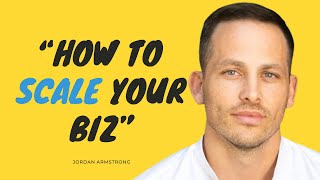
Jordan Armstrong sold personal assets and took on $70,000 in credit card debt to launch his SEO agency after leaving Grand Canyon University. He breaks down scaling in four phases—Startup, Growth, Systems, Scale—governed by Volume, Conversion, and Capacity constraints, and critiques high-ticket coaches for overpromising without teaching first principles.
Chapters
Welcome back to another exciting episode of The Nicholas DeTale Show. I'm your host, Nicholas DeTale, and today we've got a guest who's navigated the highs and lows of entrepreneurship, made a leap of faith, and it paid off. But before we dive into that, let me start with a little brain teaser to get those wheels turning. Riddle of the week: What comes once in a minute, twice in a moment, but never in a thousand years? Noodle on that while we chat with today's guest, Jordan Armstrong. Jordan has an incredible story from interviewing NBA legends like Steph Curry and Kevin Durant. To burning the boats and going all in on his business, to finding faith in unexpected places. We'll talk about the systems that make businesses thrive, the tough truths about entrepreneurship, and of course, what it means to live a fulfilling life. Let's get started. Jordan, welcome to the show.
Thanks, man. Thanks for having me.
Absolutely. In early 2014, we're going to dive into it. We're going, we're going to toss it back here. You got to be a part of some locker room interviews with Steph Curry, Carmelo Anthony, Kevin Durant, and Russell Westbrook while working in the Phoenix Suns communications department. Do you remember what those interviews were like?
Yeah, I mean, they were pretty uneventful interviews. It was more so other people interviewing, and then I was just like sitting there, uh, holding the microphone. For those specific people, I would try and ask a question. So I worked in the, like, basketball communications department for the Phoenix Suns, and my job was to basically do, like, statistical analysis of, like, the performances for the players and the teams every game, and then come up with media storylines from those stats, something called game notes. I would research during the game of, like, interesting storylines from the stats that were produced. So If somebody had, you know, 17 rebounds, when's the last time that somebody from that team had 17 rebounds? Or if they had 17 rebounds, I would then look into how many games in a row have they had X number of rebounds.
Yeah.
And then sometimes I would bring those stupid stats into the interview of like, let them know what their performance was. Like, what do you think has driven your rebounding efficiency over the last few games? Yeah, like being inside of NBA locker rooms, like some interesting things that you see. There's one story in particular with the Atlanta Hawks. I mean, I don't remember the gentleman's name, but the player was a guy named Ivan Johnson.
Okay.
And they call him Ivan the Terrible. I guess he was a pretty aggressive dude.
Personally, not even as a player, just like—
well, he was aggressive as a player, but I think— I don't know where he got the nickname from, but that was his nickname was Ivan the Terrible. He wasn't in the league for very long. He wasn't one of the better players on the team, so everyone was crowded in front of his locker room to try and interview Joe Johnson, who was the best player on the Hawks at the time. He had just gotten out of the shower, so he was like trying to get changed. He was a little frustrated there were people in front of his locker and he was unable to get changed. So he like politely asked the reporters to move. There was one particular reporter who was like in his way. He was like, hey man, can you get out of the way? Like, I got to get changed. And the dude just like Definitely heard him but ignored him.
Oh dang.
And so he asked again. He was like, hey bro, like, I got to get— I got to get in here. Like, can you get out of the way? Again, ignored him. The final warning he gave was, listen, bro, you got— you got 30 seconds to get the fuck out of my locker. I'm gonna put my balls in the back of your neck. The guy moved.
Yeah, this seems like a good decision for him.
I was cracking up, right? And I went back. I was in college at the time, so I was probably 20 years old. I went back and like was cracking up and told everybody in the press room. Yeah. And then this dude walked in Not Ivan, the reporter.
I was like, didn't Ivan hurt you?
No, the reporter. And he got all butthurt about it and was like, he was like, you know, you should probably be careful of who's in the room or, you know, when you're telling a story like that. And I was like, I was like, dude, you should probably be careful whose locker room or whose locker you're standing in front of, or otherwise you might, you know, there might be some collateral damage.
Yeah, for real.
But yeah, interviewing the players was cool because I grew up playing basketball and was a big fan of the NBA. It was, it was interesting though, like to work in the NBA. And to be around the players and stuff, you realize like they're just humans, you know.
Yeah, they're just—
there's people. Whereas like, I think when you're a kid, you're watching them on TV and you're seeing an interview and all these things, you're thinking they're like larger-than-life characters, but they're just humans like you and I. Yeah, definitely.
That was right before the Warriors had their run getting going. That was like pre-Steph really hitting his mark for, uh, when you got to interview him. Obviously they're still people, but did it feel different? Like, could you tell different players had the different mindsets, like Ivan the Terrible versus Carmelo Anthony, you know, there's different treatment of the players, right?
And so like for certain players, they've got like press responsibilities. It's like part of their contract basically, right? Like with the team, like part of the reason why the team pays them so much money is because of the exposure they create for the team and the business they generate for the team. And so part of their obligations are being the face media obligations. And so I think that becomes tiresome and cumbersome for some of those players, right? Especially because The media, what I, one of the things I noticed that was, that was most prevalent is just like the negativity. I would say like the animosity that the media projects onto the players. And so like a lot of times it's in, like, if you think about it too, the media members, like they get to spin the story. And so it's always spun as like, oh, the players are dicks to the media or the players are, you know, rude or not charismatic or whatever the case may be. When in my experience it was more often that the reporters were the ones who were like, had the negativity being projected onto the players because there was this air of jealousy. And most of the reporters didn't enjoy their life, you know, is what it seemed like for me.
That's so sad.
Yeah. Because, I mean, they're working long, hard hours. They're not getting paid very much. Like, unless you're like top 1%, top 2%, like media members, you're not really getting paid. And so you're following these people around. They like, They don't want to talk to you. They don't really want to talk to you. And so it's not like a super positive environment. And then it's like almost like they're looking for reasons to talk bad about the players. And so if you think about it, like, why would you want to talk to the media if every single time you have to have your guard up and like you're trying to protect yourself and your image and your likeness? Because if they spin a story negatively about you, it's going to impact your brand deals, it's going to impact your free agency, it's going to impact your money. That was the thing that was most eye-opening for me is just like, how miserable the reporters were.
So sad. It makes them turn into politicians in some way. Gotta be really—
Players? Yeah. That's why they have PR teams and people who are looking out for them and trying to— I mean, 'cause they are a business, right? So if you think about a business has to be worried about its image and its brand, so do the players. It's like the people covering the sport have this vendetta out against the players who are performing in the sport. And it's not to say that there aren't like some rude players, you know, or some, some players that allow that animosity to be taken a little too far, right? Because, uh, again, the players, their priority is being the best player that they can be. Yeah, you know, playing basketball. And so there's some give and take there. But yeah, that was the biggest eye-opening thing for me, was just how negative some of the reporters are.
Yeah. Was there ever an instance where when you're checking stats and you're like, this guy's got 10 rebounds per the last 5 games or something, Was there any, like, a Moneyball thing where it's like, this guy is visiting his parents and that's why he's performing well in the city? Or like all the personal aspects that, like, tie into something like that?
The way I would analyze it was through a website that I didn't know about until after I worked for the Suns, which is basketball-reference.com. So it has all these different stat points. It doesn't have their personal— you would really have history. Yeah, you'd have to go like a layer deep to really like another layer. Like, it would— you would have to become an investigative journalist basically in order to, like, look into, oh, he's from this place or I don't know. So I never really dove that deep into it because I wasn't incentivized to do so. Like in Moneyball, I wasn't making performance-driven decisions in order to look into that stuff. But that would be an interesting thing to do and could potentially help with gambling and things of that nature. Honestly, it was not legally acceptable for me to gamble while I was working for the team.
That's fair. Probably rightfully so.
I've seen the documentaries of the refs, so I mean, as a Suns fan, we got burned by that for a few years with, uh, Donahue or whatever his name was.
Yeah, tough. Hey, what's going on? It's Nick. Many folks inquire how they can support the podcast. You can do so by leaving a 5-star review on the platform you're listening on. That's always a good way to go, goes a long way, and it's free. Or you can subscribe to our Patreon to have access to early released episodes patreon.com/nicholasdettalli. Wanted to answer that quick FAQ for you. All right, back to the episode. On October 1st, 2019, my guy did his homework. He got to— you burned the boats, left corporate to go all in on an SEO agency. You sold your car, you sold your TV and anything that wasn't helping you in business. And then you took out— here's where my curiosity comes in— you took out $70,000 worth of credit cards. Maybe that's credit line.
Credit amount, credit cards.
Wow. What prompted the decision? And then I want to know, yeah, how much of the credit limit did you like get up to, the full $70,000 plus? What were you spending it on? Give me the breakdown.
Yeah, for sure. So yeah, October 1st, and it was interesting, it was my 1-year anniversary at the corporate— like, I was digital marketing specialist for Grand Canyon University. It was my 1-year anniversary. They like brought me a balloon, and it was also my last day there.
Did you tell them before or after?
I put in my 2 weeks. Essentially what had happened, it was pretty funny actually. I didn't realize that the balcony that I would go out to like take sales calls on because I was like running my agency at the same time, you know, like kind of moonlighting as an agency owner. Like I would have a potential sales call or whatever. I would just step outside.
Yeah.
And realize that like where I was stepping outside, like my boss's like office looked directly out at that balcony. And so she would always ask me, she's like, Jordan, why are you always on the phone? Like, what are you like, what are you doing? I'm like, oh, I'm not, I'm not on the phone that much. I don't know what you're talking about.
Daggers, right? Yeah.
And she's like, she's like, you're, you're always on the balcony talking to us. get some fresh air.
She's on to you.
Yeah, she's like, okay. And then so eventually there was just like the questions became too much to where, and like at the time too, I was also scaling up my agency. And so there was like this level of frustration that I was building with the amount of like hours that I was putting into GCU or anything that wasn't mine. As my frustration was building, so was hers. And then like eventually we had like a conversation like post-team meeting or whatever. You know, the writing was kind of on the wall and I was like, all right, this is as good a time as any. And so I was like, hey, I just wanted to go ahead and put in my 2 weeks. Like I've been building an agency and I want to like go all in on that. You came clean. I think this is probably true for most people, like when they're pursuing something that is more in alignment with their purpose or with their like higher self or whatever, you start to like, and Napoleon Hill writes about this in like Outwitting the Devil or Think and Grow Rich, you start to face this resistance where now all of a sudden you're neurologically and biologically designed not to change, right? Like as humans, we are resistant to change. And so I was trying to change a lot at one given time. And so I noticed like all these different elements of self-sabotage would come into play. And it seemed like as I was trying to get more disciplined, now there was like all these opportunities for me to veer off from my disciplines. The story of like Cortés and the burning the boats was something that had like, was kind of in the back of my mind. And I wasn't quite sure how to do that because like I wanted to burn the boats. I wanted to make sure I was successful in this. And what ended up happening was I went out to an event in Tampa. One of the speakers there and I were like talking for a while and then he ended up like selling me into his coaching program. My first like $10,000 on a coaching program. Yeah, it was a scary moment. I did a lot of self like reflection on that moment, you know, because like I did it, I was excited. And then there was like the buyer's remorse that kicked in later that day. And I just remember like journaling and like looking at myself in the mirror like, what am I doing?
Like, I just dropped it. I just dropped that cash.
Yeah. My tendency was to when, when there was like a crucial decision or there was something that I was anxious about, I would just analyze analyze it, you know. And so I basically, you know, did a pros and cons list. At the end of this analytical review, it was like, okay, well, the worst case scenario is I lose the money. Best case scenario is I change my life. Then there was like this emotional, like, charge to the decision. There was like a large dopamine hit, right, from making that decision and analyzing it. And so then I kind of got addicted to the idea of spending money in ways that could change my life. Like, as I analyzed it, I was like, okay, there's, there's so much good that can happen and only a finite amount of bad that could happen from this. And so that was like my first time of like justifying the investment into myself and realize it kind of clicked for me that that's the best investment that I can make.
Yeah.
And I went a little overboard.
I love it. Was it worth the investment, the first $10K and then the rest of it?
So the first $10K, I did not get what I paid for.
That's the worst.
The act of investing in myself though was worth it, right? Where it was like that $10,000 was invaluable of an investment because it signaled to myself that I was serious, signaled to God and the universe that I was serious, and it forced me to change my behaviors, my mindset. And there was also like, there was some mindset coaching and some sales coaching that was involved in that $10K that was super valuable. And so I was able to definitely get an ROI from that $10,000 investment. And it wasn't what was promised.
Interesting. So you found your own ROI.
Exactly. And I think that that's, that's something that a lot of people, I think, miss out on is when you make the investment, they then defer the ownership to the person they made the investment in as opposed to taking ownership of like, okay, I have made the decision that I'm going to spend this money. It is up to me to extract the value from this investment. All the investments, even the ones where, you know, I ended up only really getting air back, were worth it to me because either one, I learned how to better vet vendors or coaches or mentors or whatever you want to call it in the future. And also because if I'm investing significant energy and like, that's what I see money as, like energy exchange. If I'm investing that into something, it's because I have made the decision that I want to improve in this area and therefore I am going to improve in that area regardless of what I get back in this. And, and that specific investment.
I had a very similar first coach investment experience. First one, same thing, dropped the cash and didn't really see any return. Just like saw the credit card debt keep increasing and it was just like, this is the wrong fit. Like, this isn't the right thing. But I've done it again since then. And my mindset is very similar to yours. It's like you have to get the most out of it, you know? And usually I, I view it as if I'm purchasing it from someone and I know they're doing things that I want to do. I'm going to do exactly what they say until I get those results. And then, you know, I'll start making judgments on like whether I should start, you know, looking at other ways. It's like they must know something that I don't. And I got to put in the work until I learn exactly what they're doing to map it out in the same way.
Yeah, I think the, the difficulty comes in when like people are portraying something that they're not.
Yeah.
Or they're portraying that they do something or they achieve a certain result that they don't actually have. And even then you can still pull some marketing lessons away of like, okay, well, they were able to convince me that they are this person. So if I actually am this person, how do I showcase it? Overall, like I said, while any investment into yourself I think is a high ROI investment, one of the things that I would like to rectify in the coaching, like specifically the high coaching space, is the amount of fraudulence that exists. I was gonna say, you got beef.
You got some beef with some of the coaching industry.
I just think it's such a, there's such a huge opportunity to drive value, impact, and so much good through like, through coaching.
Yeah.
And there's so many people that are doing it the right way. But then you got a bunch of people that are just like pissing in the pool, you know, and ruin it for everybody else. Or not ruining it, but like just making it a lesser experience and like, yeah, less clean experience for everybody else. I don't think I fully answered your question with the, like, the burning the boats thing. Basically, the conclusion that I came to is that good is the enemy of great. I wanted to make it damn near impossible for me to live a good life. Because I wanted to pursue greatness. You know, I was a privileged individual in terms of just, you know, God-given abilities as well as situations that my family provided for me. You know, I wasn't rich by any means, but I wasn't poor. I had a loving home. You didn't have a ton of like built-in adversity to my life or my home life. And like a lot of things came easy to me as far as like academics and sports and social situations. And so it was easy for me to live a good life and to feel good about like things I was doing, but I didn't feel good about them, right? Like there was like this inner pull to do more. Yeah. You know, but then there, there was enough comfort in staying the same that it made it difficult for me to pursue greatness. And when I recognized that, I was trying to find constructive ways to eliminate my ability to live a good life. And I figured high-interest credit card debt would be one of those ways.
And it seems like it's worked out.
It's worked out.
Yeah, I love that, that good is the enemy of great. You're still doing investing in coaching programs. I got here that you do $50,000 to $100,000 per year in different types of coaching. We don't have to touch on that, but one thing that you have written in one of your posts that I really resonated with around the coaching space was just because you've made $10K in a month doesn't mean you should start coaching people on how to make $10K in a month. And I feel like that is The perfect, like, summary of what I see in the coaching space too is like, you did this thing once, can you teach somebody else? Can you repeat it for yourself? Where is the more results that, you know, are actually behind? Or all the effort, all that stuff.
There's different levels of understanding that are required to do something once than to repeat it, right? Like, you can get lucky and do something once. You need to distill it down to first principles and frameworks in order to truly teach it to someone else because you're going to have a different set of variables than they are. This is what most people get wrong the most in the coaching space is they think, okay, this guy did this thing, therefore he can teach me. And teaching and doing are two different things. Again, he had a completely different set of variables. You can't take advice from someone at face value because the advice that they're giving, the incentives are misaligned, right? If somebody is giving you advice, they're just regurgitating what worked for them. They're not taking into consideration the different factors and variables that are relevant for you. You know, most of the time with coaching programs, the incentive for the coach is to— again, this is where like the difference between it being a purpose-driven thing versus a monetary-driven thing. It's like monetarily they're incentivized to get you some semblance of result as quick as possible so that they can gather some type of case study that is usually based off of just like a spike in excitement from you making the investment, which spikes your excitement, spikes your dopamine, from you seeing some semblance of like, okay, there is a breadcrumb here that indicates to me this might light work, right? There's also usually some type of mindset training where they're telling you to think positive and speak things into existence or whatever. And they ask you to record how you're feeling about that in relation to their program. Yeah. And then they post that as marketing material. Most of the time they have a growth-oriented offer where it's like they're going to generate you leads or they're going to get you sales. They're going to, they're going to teach you something that allows you to generate a short insert of cash and then you get that cash. But you're not like, this doesn't make you a better business owner. This doesn't make you a like any more capable of repeating that process. And if you don't actually understand how to fish, just because they, you know, just because they said, hey, you know, place your fishing line right here. This is kind of like the analogy, right? It's like they're basically saying, hey, I found a pocket of this lake where there is a lot of fish. Pay me money and put your fishing pole right here.
We got it.
And then you got one fish.
Yeah.
But you didn't actually learn how to fucking fish.
No idea.
Right? And so as soon as this stream diversifies, right, or the current shifts, Or the fish realize like, hey, if we go there, we're going to die.
Yeah.
Right now, all of a sudden you have no idea how to repeat those results. You know, people wonder why the coaching space has a bad name and it's just, or why coaching companies don't last very long. And it's because they are dependent on the current flowing the same way. And for there to be a bunch of fish in this one little pocket of the lake.
And is it the fishing pool? Is it the time of day?
Right. Yeah. They're not fishing.
Do I wear a hat?
Not wear a hat?
Is it what type of bait?
All the details usually are left out because people aren't pursuing the information or the, the knowledge or the level of mastery that is required to break things down into first principles and teach it to someone in a way that is sustainable. They're thinking, how do I get the most out of this for the little, the least amount of work, right? And so it's like, as soon as they do something, as long as they can showcase those results, and convince somebody that, you know, there's a gap between what they're doing and what they know, then they can monetize it.
The desire to get to the result as fast as you can rather than what you're saying, learning how to actually get the result, create the result yourself.
Yeah, it's like it's just a different filter, right? It's understanding like, okay, I need to understand this and I need to master this in order for it to be sustainable, because otherwise you're just dependent on the market shifts.
It goes back to what you said, or the algorithm or whatever, you know. Deferring to the coach too, of like, I'm gonna put all the work on you and you're gonna get me these results, instead of vice versa, like, teach me and I get them and then I'm set for life.
I feel like anyone who's in the coaching space or the agency space has seen these things and understands them, but, uh, I've done my best to like deeply understand what, what separates a good coach and a bad coach, because not only have I made the investments into myself, but also that's who I've chosen to work with. Is with coaches. You know, I feel like I have an obligation to myself and my team. Like, we don't want to be supporting the wrong people. We don't want to be working with the wrong people and helping the wrong people. And so having a way to kind of filter through who those right and wrong people are has been an important component to our business growth as well.
Yeah, as soon as the word guru starts getting thrown out next to coach, you're toast.
It's now used as almost like an ironic term where every coach now says like, I'm not your guru. I'm not— like, you know, Tony Robbins came out with the I'm Not Your Guru Netflix special or whatever, and And then so like, I don't know where the term guru ever came from. Like, I don't think everyone— anyone's ever referred to themselves as a guru. It's just more so used as a phony. So what it stands for now, it's used as a way to like kind of like throw stones at other people. But most coaches are saying like, hey, I have the secret sauce. And it's like, no, you don't. Because a lot of them are saying the same thing, right? They're dressing up the same strategy as a new secret, right? Everyone read the same book. Right. Everyone read Dotcom Secrets. Everyone read $100 Million Offers. And so everyone is— yeah, everyone is recreating, like, is utilizing those same strategies and dressing up the same, the same frameworks and the same, you know, aspects of business and not calling it what it is. You know, they're all trying to call it something different and product, like, you know, standardize or create their own secret mechanism. And all the mechanisms are the same steps to get there are the same.
Typically, you brought up $100 million offers, so I'm going to sneak this question in as a little segue. Not a fan of guarantees. You don't like the guarantees on the offers, you think? I mean, I don't want to put words in your mouth, but let's say this is what I remember a discussion around it being.
Yeah, we had a pretty in-depth discussion around guarantees. I think that the guarantees can be utilized in a healthy way. I think most people are abusing the risk reversal component of the offer breakdown. And they aren't actually able to provide guarantees. They're manipulating the buyer psychology, like, as opposed to utilizing it in a healthy way. What I mean by that is, you know, there's their conditional guarantees. So they're using the guarantees as a way to manipulate the value equation, basically, because they're not actually reversing any of the risk for the customer. Right. There is no guarantee.
Guarantee.
It's just a way of mitigating, you know, some of the resistance that someone may have to taking action. And while I'm all for getting someone out of their comfort zone, and, you know, getting them to bet on themselves, when the integrity is misaligned, or when the morals are misaligned, and you're doing it just to manipulate them, not to help them, that's the issue. And then I also think sometimes people can fall into like this guarantee trap. Right, and so like the conversation that you were referring to was, you know, an individual who was asking me a question around guarantees and he was basically delaying launching his offer until he could figure out some type of a guarantee. And in a done-with-you service where part of your service delivery as a vendor is dependent on the client doing something, doing certain things, I've found that adding the guarantee, just the word guarantee, increases the amount of ownership that is deferred onto the service provider, which is not in either party's best interest. Yeah, because if you are not taking ownership over your success in something, kind of like what we talked about with the investment into coaching programs in the first place, you're less likely to get success. And if you as a vendor are partnering with your clients, which as a vendor, unless you're especially in today's day and age where like, you know, there's, there's enough competition in the market that without great results and case studies and things from your clients, it's going to be very difficult to compete long term. You are somewhat partnered with their success, right? Like you need their success in order to sustain yours. Why would you want them to— now all of a sudden you're going to be forced to hero the success of those clients' deals, which is going to hinder your profitability and hinder your ability to grow. I think in most cases it just doesn't make sense to have the guarantee. Well, because it can't be guaranteed.
It can't be, right?
Unless, you know, Domino's can guarantee that they get you their— your pizza in 30 minutes or less. That's fine. Like, that guarantee works. But like me being able to guarantee your business growth, I don't run your business. I don't hire your team. I don't lead your team. I don't, you know, I don't communicate with your clients. So I can't guarantee your business growth because there are more components to that growth than just the service that I provide.
Like, we'll help you close X deals, but you're the one doing all the sales calls.
Exactly.
How could I ever—
you can't guarantee—
I can't make you close that deal.
Yeah. So like, I want to be able to empower the consumer with the data to be in, like, with the knowledge and the wisdom to be able to vet some of these guarantees and some of these offers. Because everyone in the marketplace has got— has read the book, right? They've gotten really good at creating offers. To my knowledge, Hormozy hasn't released $100 million delivery, $100 million promises or delivery on promises or fulfillment or whatever term he's going to end up using there, right? And I don't doubt that he can deliver on his promises, but what doesn't go into the $100 million offers is the 10 to 12 years he spent becoming the person who can deliver on those $100 million offers.
Yeah.
So, everyone's getting good at creating the offers but hasn't actually put in the reps or the work to be good at delivering on the promise.
Exactly. Yeah. If you don't have the reps to back it up, how would you ever know?
You don't know. You don't have the skills and you don't understand the variables and the nuances that are, that exist within the game of business because you just don't have the experience. And therefore, most of the time, I don't think that the coaches or the agencies that are offering these outlandish claims are bad people. They're just ignorant. They just don't understand, like, what goes into being able to build a significant business or being able to deliver these crazy results.
And speaking of things, this is another beautiful segue here, that go into building a profitable business. Here's what I got: 4 phases to business. There's a startup, there's the growth phase, there's a systems phase, and there's a scale phase. And then there's 3 constraints on those 4 phases: volume, conversion, capacity. And from what I've heard from you before, it sounds like people try to jump the gun too early in these phases and it causes them to hit roadblocks on those constraints. What's the proper route? To grow through those 4 phases then?
So the 4 phases are linear, right? And most things in business are, meaning that there is, you know, there's a linear path that you can take to learn or to do or to check the boxes in preparation for the next phase. And so the startup phase, you're proving concept on an offer value proposition, basically that that's product market fit. Then the growth phase is, okay, you've established product market fit. Now you want to gas that as much as possible. You don't really want to get overwhelmed with systems or diversification. It's like you got to get really good at one thing and drive that in order to produce profitability and produce growth and to be able to build momentum.
Is there revenue ranges for each of these?
Yeah, I would say specifically in the coaching space. Now, this is another thing I think that's important to understand is when someone's giving advice or giving, giving you insights, what model are they basing their insights and their advice off of? For me, it's coaching. I also study agency and software and like I'm a student of the game of business. And so I can break things down for other, you know, other models as well. But for the most part, most of the information that I'm putting out there is in reference to the high-ticket coaching model. So I would say, you know, that startup phase is usually like $0 to $30K a month because you're still experimenting. But once you get something that can produce consistent $20K, $30K a month, month, you could likely gas that same thing to $100,000 a month in the high-ticket coaching space because there's enough leverage on fulfillment in the group model right now. You may need to shift that model, right? If you're doing one-to-one coaching and you can get to $30K a month, now one of the shifts that you need to make is shifting to like more of a leverage model and group fulfillment so that you can get to $100,000 a month or $150,000 a month. But yeah, then usually the growth phase is somewhere between like $80,000 and $150,000 a month is where that tops out. Now you need to slow down to speed up. So take what's worked for you in the growth phase and distill that down into a few key components and you systemize what's worked. That will allow you to scale because now the activities that you are— the activities that you and/or your team or your systems are producing are also producing accurate data so that then you can make more strategic decisions. Because I think this is what— this is the thing that most people get wrong where they try to skip. They think they can grow their way to scale. They think, okay, because I've mastered this one like acquisition channel or this one value channel, now I can multiply them. And the reason why they think that is because they're getting hit with a bunch of these irresistible offers where there's guarantees and like, oh, I can beat your Facebook ads with YouTube ads or TikTok ads or whatever the case may be. But it doesn't take into account the amount of resources that were allocated in order to get good at Facebook or to master that channel, whatever the channel is, or the amount of like team members required to fulfill like, and so you're making uncalculated decisions if you're trying to go from grow to scale. The whole point of the systems phase is to be able to produce accurate data so you can make calculated decisions because scale is going to be methodical. It's going to be making decisions from a calculated mathematical and logical perspective as opposed to emotional decisions, which is usually what is driving the growth phase, which is why growth is chaotic. As you start to top out in the growth phase, is, your margins are shrinking, you're usually spread pretty thin, you're starting to wear a lot of different hats and the business becomes somewhat chaotic. Why would adding more volume of chaos be a good idea? It's now time.
You're going insane. Yeah.
It's now time to identify, okay, where are the profit centers of the business? How do I take those same principles and apply them to other areas of the business? What team members are working? Do I have a way of holding my team accountable? Do I have a way of of determining if my decisions are good decisions. And this is where like the personal development aspect of things comes into play is because oftentimes people resist data because they don't want to hold themselves accountable to making good decisions and to doing the right things. Because in that growth phase, you're doing a few things really well, but you're doing a lot of things not very well. And holding up that mirror can sometimes be painful.
Yeah, definitely. I don't want to see what I'm doing wrong. I'm doing good.
Yeah, yeah.
Things are growing.
Exactly.
It's chaotic because it's good. You know, yeah, as soon as I look in the mirror and I'm gonna be like, this is kind of hurtful. Maybe I'm the bottleneck for all of my issues in my business. Yeah.
Yeah, you could look at that as a bad thing, or you could look at it as a good thing, because if you're responsible for all the issues in your business, guess who can fix them?
That's right. There's 4 components to creating a solid system: people, process, technology, and data. And since we're talking about data and how to make those good decisions, how do you extract data from your system and your process so you can, you know, get rid of the emotional side of these things and be like, I am the bottleneck, I can see it in the data here, or something like that?
It's a great question, and I appreciate the question. A lot of times people try to over-engineer their systems, right? And so I think the first step is just understanding that there doesn't have to be all these complexities and nuances. You want to keep it as simple as possible. Process is, you know, there's a trigger point that like starts the, like some type of activity or something that starts the process. And then there's a definition of done and there are stages in between that. Right. And you typically don't want to have a process that has more than like 6 to 8 stages. Otherwise it's just too complex of a process and should be broken down into multiple processes because the goal is to create processes that are not dependent on you. And also— Get me out of here. Yeah. You want to create processes that are also not super dependent on crazy talented people. Because if you're dependent on talent, then all of a sudden, yeah, you're kind of overleveraged. There's key man risk that is associated with that. There's a— there's also like, you know, if you're dependent on talented people, people have lives, right? Like, no one happens most of the time. No one's going to care more about your business than you do, right? And incentives need to be there in order for them to care even close to that amount. And so the more that you can simplify the process and have it be past the Starbucks test, which is, you know, you can give it to a barista at Starbucks and he or she would be able to replicate that same process to about 80-90% of the efficiency that you could, more scalable those processes are. You're going to want to usually start with a definition of done, right? So what is the definition of success for this process? What output are we trying to get? And then reverse engineer from there what needs to be true in order to get that output. That's how you fill in the gap from the start of the process or like what, you know, what triggers or starts the process. Where does the process need to end? What needs to be true in between there in order to get the result? Like people is very nuanced. Right. So again, you kind of want to reverse engineer. Same thing is like, okay, what makes me successful? Or whoever is currently running this process, what makes them—
how do they do it?
Success in this thing is like, what skills do they have? What mindset do they have? What approach do they have? How much time goes into it? And then you're, you know, trying to find other people who also fit that mold. Technology is fairly straightforward, right? There are certain functions that this technology needs to be able to produce. Biggest key to all of it, I think, is the data. Right. And this is a big shift that we've made in our company is being more of a data-first company because the data is what gives you the objective feedback if the other 3 things are working.
Yeah, right.
And so I like to try and treat things similar to like a math equation.
Yeah.
Whereas like if you're trying to solve for what's on the right side of the equal sign, you want to, you want to isolate the variables on the left side of the, of the equation.
Let's take it back to the very beginning of this. Got data coming in. I'm creating my own story. How do I know I'm telling myself the right story? You know, like if I'm looking at the data, I'm cooking up my headline.
That's a real thing, right? Like you can lie with data and there's actually a book called like How to Lie with Data that is a good book to read. That's where it's important to have like checks and balances in place and be able to tell the full picture of data, right? And so if you're looking at one singular data point, you can create infinite numbers of stories that drive that one singular data point. What we like to have is linear data. The reason why the processes, the pipelines, they're all linear, they go from left to right, is that it gives you a full picture of what's going on there. You know, you can look at the context clues of, okay, what is the data to the left of this data point say? What is the data to the right of this data point say? You can seek truth in that story from there.
Yeah, that seems smart.
Does that make sense?
Yeah, it seems good to have some self-awareness with that too. What am I trying to tell myself that I want to hear? That I definitely don't need to hear.
If you have a full picture of data, it becomes less realistic to lie. And then it's also just important to understand like your priorities and like what you're trying to do.
Yeah. You know, get results or feel good.
Yeah. And inspect the pain, right? So like if nothing's wrong, then nothing's wrong. If you do not feel the pain of a process not operating effectively and you're telling yourself the data is good, then maybe it's good. But oftentimes there's, there's pain associated with whatever problem you're trying to solve. And so similar to, again, like the personal development journey is when you're triggered emotionally or there is like some type of, you know, emotional pain that is associated with anything, it's just inspecting what story is tied to that emotional pain. And same thing in your business, right? If you're noticing that you're anxious or you're worried or you're stressed or you feel like you're under pressure, inspecting, you know, where that pressure, pain, or anxiety is coming from, more often than not it's tied to you know, some area of performance that isn't quite meeting the mark. And there's, you know, if you've got data to that performance, now you can inspect it. One of the things I've started telling my clients recently is you're one metric away from solving any problem in your business. If you focus on a— and you measure a metric for a long enough period of time with the intention of improving it, I believe it's, it's impossible for you not to improve it.
Yeah, what we focus on.
Tony Robbins says like, where focus goes, energy flows. If you're focusing on something with the intention to improve it over a long enough time, like you're going to— well, like you might botch it initially. Exactly. But like over a long enough time horizon, you're going to figure it out or you're going to stop tracking it because you're going to, you know, it's going to be too painful. That's where it's like the only thing you actually have to do is keep tracking it until you see the results that you're looking for. The simplest example would be like dieting or something, right? Like if you're making diet changes in order to try and lose weight and you're weighing yourself every single day, eventually you're gonna figure out the right diet combination that's going to lead to weight loss.
It's actually— it's crazy you mentioned that. Started tracking my own calories, just doing a food log, just seeing what's going in my mouth has made improvements. So now I know, yep, I'm like, dang, 3 bags of M&M's is probably not my best case.
Or like if you're tracking like your HRV or whatever on your Apple Watch or Whoop band or Oura ring, right, you start to see like, oh wow, I have a glass of wine at night and all of a sudden I get shitty sleep. No wonder why I'm feeling feeling terrible in the morning. And so if you're like, if you're tracking your biometrics with the intention of increasing your energy or your longevity or your vitality or whatever it might be, you're going to eventually see the correlation between like what substances you put in your body and what the results are. You're likely to change the inputs.
I want to jump into a topic that may not be discussed enough. So this is coming from a post of yours that you have and talks about entrepreneurs. And how they are twice as likely to report a lifetime history of depression, 3 times more likely to have bipolar disorder, 3 times more likely to experience substance abuse and addiction, and also twice as likely to attempt suicide or be hospitalized. Why do you think this is? I mean, I know entrepreneurship is tough, but those are some, some hardcore stats.
I did some work with, with a company that is exploring these metrics and trying to utilize like AI and tracking and coaching and stuff to, to help help shift this narrative or not the narrative, but the actual results. To answer the question as to why I think this is, I think it starts with why people become entrepreneurs in the first place. Most of the time people are becoming entrepreneurs or at least the ones who are seeking, who are successful in being entrepreneurs, it starts with some seeking of control. And so they were wronged or there was some level of pain that was created from what they perceived as a lack of control. So they seek control over their environment or their situation. Also usually stems from some level of insecurity or like enoughness, this fear of not being enough. And then also a superiority complex of I am more capable than others. You know, understanding the psychology of what goes into seeking entrepreneurship and then, you know, creating this pressure right on yourself basically make those gaps in your spiritual congruency even more prevalent. There was someone that I interviewed, or not necessarily interviewed, but, but spoke to through the project that I mentioned earlier, and he had done a bunch of research on human psychology and for the specific intention of understanding which founders were investable.
Interesting.
Which founders you should invest in and what psychological traits those, those founders possess. Yeah. And what they found was the most volatile and most at-risk founders were the ones who were creating this outward perception or this outward persona for themselves that was differentiated from who they truly were. And the bigger that gap became and the larger their company or the larger the implications became on that falsified persona, the more likely they were to have some type of psychiatric breakdown and therefore the less stable they were to invest into.
Yeah, right.
And so if you think about that and like break that down into simple terms, it's basically like you are telling yourself that you aren't good enough. Yeah, you truly are, is not lovable enough or isn't worthy enough of the success that you have to create this public persona in order to get backing or in order to market yourself or in order to sell your program or build your business. And the psychological and spiritual effects of that is just basically, you know, creating more and more of a gap of congruency. Of course that would cause depression. Yeah, right. Like you're saying that you're not good enough unless you fake this aspect of yourself, or unless you portray yourself to be this person, or unless you communicate in this way that isn't truly who you are. And so I think that that has something to do with it for sure, because then you're also like, you know, what goes up must come down. So you're also building— this gap is increasing, and so is your pressure, right? So the amount of, uh, people who depend on you, the amount of money and lifestyle and all this stuff that you build this outward persona around is now dependent on you not being true to who you, who you are. And yeah, I would imagine that's probably pretty painful and difficult to sustain. And that leads to some of those stats that you just, you just shared.
It sounds like that gap would probably create a sense of guilt once you start feeling like maybe you're lying, maybe there's shame there because you're like, why am I not just expressing who I am? Imposter syndrome. I'm not that person.
There's a concept I'm learning about right now in some of the work that I am doing with with one of the practitioners that I work with that is called the drama triangle. And so in any like ungrounded or uncentered situation, like an emotionally charged situation, there's this shift between these three personas. One is the hero or the savior, one is the victim, and one is the perpetrator. Right. And so in the scenarios where you're creating this distance between who you truly are and who your outward persona is, you are perpetrating yourself in order to become the hero for others. So then you are simultaneously the perpetrator and the victim.
Yikes.
And, and the hero, right? Like, you're the hero for others, but you're, you're victimizing yourself and therefore perpetrating yourself. There's psychological warfare that you are conducting on yourself and like going through at the same time, and that would mess you— mess somebody up, right?
Yeah. Well, it's crazy because it's a pattern amongst entrepreneurs. That is kind of what we continue to see over and over and over, and hopefully that begins to shift.
I mean, I think just the natural dynamic of entrepreneurship too, if you think about you're pursuing success in an area and once you become successful, there's a lot of societal norms that demonize success, where it's like a lot of the mainstream media is like, "Oh, rich people are bad. They don't pay taxes. They're greedy," all these things, and misery loves company. And so it's easier for people who are at a lower level to blame the people that are at a higher for their pain and insecurity and discomfort than it is for them to take ownership over that. And so entrepreneurship can be lonely. I think the stats are even more negatively geared towards entrepreneurial men. That comes down to some of like the masculine and feminine dynamics as well as some of the, again, societal norms and standards. And so it just becomes, yeah, you can't really like share your stress with your team because now all of a sudden there's—
Okay, you're the leader, you're the CEO.
Yeah, you're the leader, you're the one creating this situation. Also then if you're— The culture. Putting fear into the container, now all of a sudden they're going to perform less. You can't really like, you know, you can't hold them accountable to performing high when you're the one poisoning the well with the fear. You know, the same thing, you don't really want to share these things with your family because then that's going to make them fearful. And so you're, you're really heroing a lot of the psychological dynamics. I think that's where, again, coaching can be so important, you know, not just for the consumer but also like the entrepreneurial coaching, like to, to be able to have someone that you can confide in and who you can talk to and be able to work through some of these problems so that they don't become hospitalization, suicide, depression, bipolar disorder, and, you know, some of those other stats that you shared.
That's, yeah, that's so good. And I can definitely see and resonate a lot of those things, like especially the familiar thing. If you're the provider, you know, and they're already aware of how risky, risky business is, or like perceiving how risky it can be. That is like a whole nother layer. But to your point, being able to talk with people who have actually, or who are experiencing the same problems or issues or lifestyle, super beneficial. I've also noticed even amongst like friends who are in an employees of things, just the problems you face are just different, you know, like they don't overlap as much as we would hope they would.
I think it's also an awareness thing, right? It's like people are pursuing the good without the awareness of of the responsibilities and the obligations you're taking on. It's like, so hey, you want uncapped upside. That's going to come with some risk. That's going to come with some uncertainty. If it were totally safe, then everyone would do it. Understanding those trade-offs, being aware of them as you pursue them. And then I think that's also where the relationship with a higher power becomes so crucial is being able to have belief and faith in something bigger than you that you can give some of those problems to. And then also that, you know, having something bigger than yourself that's motivating you in the pursuit of these great things.
Yeah, absolutely. Having faith, it seems like that's like one of the number one traits entrepreneurs need to have in terms of like having faith in God, but also faith in yourself that you can make it through hard things, faith in your business that it'll be successful despite Right. The statistics we read off, like 1 in 250 make it to $10 million. You know, it's like the odds aren't, the odds aren't like you should start it. Like as much as we hear start a business and the odds aren't there really for most of us. So having to have the faith that you can do it.
And I would say that's probably true for all people, period.
Right?
Like having faith in yourself and faith in a higher power, I would imagine contributes to happiness, success, and fulfillment in all areas of life, not just entrepreneurship. But, you know, that's the topic of discussion today.
So yeah, love it. Jordan, thank you for coming on the show. We got one final question for you. Before we do, I want to acknowledge you for all that you're doing. Thank you for empowering coaches to be able to make the transformations in other people's lives, being intentional and investing in people in a way that's only going to better them pursuing greatness. So appreciate you coming on here and sharing your story.
Been a great conversation. Thanks for coming out here to San Diego to do the show. And I appreciate what you're doing as well.
Final question of the podcast. What does it mean to live a fulfilling life?
That's a, that's a big question. Yeah, doozy. I think ultimately true fulfillment comes from pursuing a purpose that is bigger than you, right? And so fearlessly pursue that purpose. Um, and so I think people, at least from, for myself, I get the most fulfillment in basically locking in on a target that is bigger and more grandiose than things I've done before. So something that is challenging in order to drive value for something bigger than me and then seeing the progress in that pursuit. And so I think humans are progress-oriented creatures, right? There are certain neurological chemicals that are released as progress is made that make us feel good. And I think that we are here for a bigger reason than to just pay taxes and die. And so the more that we can pursue areas and endeavors that bring us closer to our full potential, which is, again, I think when we are pursuing these big goals and these big dreams and these big ideas, that's what they do. They force us to pursue our potential and what we're truly capable of. And so I think I think a fulfilling life is one where you are squeezing as much juice out of this experience that we're blessed enough to have as possible and doing so for something bigger than just your egotistical drivers. 100%.
I think that's great. Jordan, where can they connect with you? Where can they get more of Jordan? Where do you want to send them?
Yeah. I mean, I think right now the best place to go is probably the same place that you went, which is my Instagram. I am making a very intentional effort to provide as much value as I can through the short-form content there. We'll be releasing YouTube content here very soon, some more longer-form trainings and deep dives. And then we're also in the process of finally publishing a website. @JordanArmstrong on Instagram, the O's are zeros.
Nice.
And then eventually the impactops.io website will also have some value there. So Looking forward to connecting with your, uh, your viewers and, and with you, uh, more in the future here, sir.
Heck yeah. All those links are going to be in the show notes. Go say what's up to Jordan Armstrong. I'm going to sneak one quick one in. If you could be the general manager for any NBA team, which one are you choosing?
Uh, I would choose the Suns. That's my favorite team. I grew up in Phoenix and I worked for the Suns for a few years. Would love to, uh, to help the Suns secure their first championship. And actually, uh, funny story, being the GM of an NBA team was my, I would say, second dream. First, I wanted to be an NBA player. Once I realized that wasn't happening, I started to pursue becoming a general manager. And then once I saw the lack of funds that I would have in that pursuit and just the nepotism that's involved in the growth inside of a sports organization, I decided to make a couple pivots there. And I'm glad I did, but I still get a lot of enjoyment through some of the thought experiments and the following of sports franchises.
Love it. All right, thanks for being on the show. And that wraps up this episode of The Nicholas Natali Show. Huge thank you to Jordan Armstrong for sharing his wisdom and experience with us. From navigating the phases of business growth to the unexpected turns in life, Jordan's journey is a powerful reminder that success requires resilience, faith, and a commitment to continuous learning. But before we go, let's revisit that riddle of the week, huh? What comes once in a minute, twice in a moment, but never in a thousand years? The answer: the letter M. That might be the truest riddle we've had on this show ever. The truest, the ultimate riddle. Some of them, a lot of dad jokes. Thanks for tuning in. If you enjoyed this episode, don't forget to subscribe, leave a review, and share it with someone who might need to hear this. Until next time, keep pushing forward, and remember, A fulfilling life is within your reach. Bye!
More from Jordan

How to "Exit" your Coaching Business at 7-Figures w/Jordan Armstrong | High Ticket Podcast #1HTP