Goodbye Boring Courses, Hello AI Learning | Josh Bersin on the Future of HR and L&D
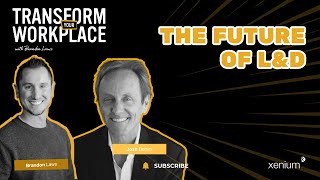
Josh Bersin explains how AI is replacing static e-learning courses with personalized, on-demand learning tailored to what employees need right now. Galileo Learn costs $495 per user and lets small companies create dynamic content without an L&D team. Large vendors like Cornerstone and Workday are stuck with outdated systems while AI platforms adapt to how people actually learn.
Chapters
TikTok culture that we have of like short videos. Do you think that's influencing?
Best learning solutions are developed by people who are very close to the business problem.
Mark Zuckerberg came out and talked about building superintelligence and how what this is going to do for the individual human being that wants to know the person so intimately that it's going to give them more of what they want.
Businesses are about people. There are no businesses, no matter how much technology you have, that operate without people, leadership, trust, forgiveness, development.
Josh, it is such a pleasure to have you on Transform Your Workplace. Thanks for coming on the show.
Thank you, Brandon. It's great to be here.
So AI is quickly changing society as a whole. I think its impact on certain industries is fascinating. Certain functions are completely changing and we're having to adapt. You've wrote about AI frequently about how it's impacting HR, learning and development. I mentioned to you a colleague of mine shared one of your articles about the L&D revolution, and I wanted to dive into that. You have some really big ideas that I want to uncover. So let's start with this big shift that's happening. You wrote that the whole idea of a course, a web course, a learning course, that's going away with AI-native platforms. So for those that are running L&D teams or are seeking outside L&D resources, how do we shift from the static content in a course to something that's dynamic that we can get with AI?
Well, I mean, just the evidence that this is so big is how fast ChatGPT took off. I mean, it went from zero to almost a billion users in a year. And I don't think we've ever had a billion users on on e-learning ever, ever, ever, ever after, after 30 years. So, um, obviously people at work want to ask questions and get answers. Sometimes they want to go through a video, sometimes they want to take a course, sometimes they have to take a course. But usually the reason they want to learn something is to do their job better, not for academic reasons. And so the paradigm of a course is a leftover pedagogy from school that really doesn't fit very well. And what you can do with AI is you can take content from any source, either from an old course or from a document or a video or an interview with somebody or just a conversation with somebody, to be honest, and you can turn it into a consumable, basically almost an LLM, and an employee can ask it questions or ask for a 10-minute overview or take a small course or watch a video. And the system could dynamically generate the content that this person needs or wants, either dynamically or in advance. And the person can learn as much as they want or as little as they want and go right back to work. Now, the problem with that from an L&D perspective is your job as a content developer just disappeared. Now you're, you know, you're a prompt engineer or a curator or a performance consultant, but that's just where this is going to go. And I just think the evidence is clear that that's the way people want to learn things and that's the way they want to consume content.
So for the HR people, the leaders that you're speaking to who are developing learning material and seeking those resources, are you saying the course is dead? Like, do we need to adapt to these systems?
Well, it's not going to die easy or quickly. But yes, I mean, the problem is we've got companies with hundreds of millions of courses, either they bought or built on very complex topics, compliance, process, safety, diversity, business practices, financial systems, how to do this, how to do that. And so, you know, that stuff's not going to disappear overnight. But once it's ingested into the AI system, the AI system could choose to offer a course if the employee wants it, or it could answer the employee's questions, or it could give the employee a generated tutor that would answer questions or coach them through a problem. So I think the days of building courses will not disappear overnight because it's a paradigm that people understand, but it's gonna be— we took our academy, we have an HR academy that had 30 curriculum courses in it and then hundreds of small learning objects. And we converted that to 700 and roughly 750 small courses, which are sort of like reusable 5 to 10 minute learning experiences. I think it's gonna go in that direction. And then people and companies will string these smaller things together for more complex curriculum, but the employee may not want all of that content, they may not need it, so they could skip around and take what they need and just ignore the other pieces. And you can't do that in a linear course. Right.
I think what I'm finding fascinating about all these tools with AI right now is I think for small businesses specifically, they didn't have big L&D budgets, nor do they have an L&D team necessarily. But I think with these tools being as ubiquitous as they are, it now lets business units like author and create their own content and use these systems to generate subject matter experts without having a formal training team. Do you see this as a huge advantage to small businesses where they didn't have it before?
Huge for small businesses. Our product, Galileo Learn, which is a dynamic AI-native learning platform, it's one of the best in the world, I think. You can get a single user license for $495, and that includes all the authoring, all the learning management, the whole experience, automatic skills assessment, all that stuff. So if you have a company with 10 employees or 20 employees, it's not going to cost you very much money to get that platform. There's a whole bunch of content in it already, and you can basically take PowerPoint slides or recordings or documents and put it in there and generate courses dynamically in a few minutes without being an instructional designer. And if you want to make it fancy and add all sorts of colors and, you know, various interactivities, you can, but you don't have to. The system will do that for you. And it's pretty much a prompting interface. So I think for small companies, this is going to be massive.
That's a pretty low barrier, the $495. It is. Any heavy lifting up front in terms of getting started and creating the content, uploading materials?
No, I mean, the way you use our system, and I think they're mostly similar, is you build a template of the colors and the fonts and the layouts that you prefer that look kind of like your company looks so people, you know, see consistency. And then you just use whatever content you have already. And if you don't have content and you're interviewing a subject matter expert and he or she is telling you all sorts of things, you upload the audio and then let it build a course from that. And it works really well.
Yeah. You said something earlier that I wanted to hone in on. You were talking about the bite-sized content. And I think with, you know, traditional courses, you'd have modules with, you know, bite-sized content within it. I'm just curious if behavior's changing overall, like the TikTok culture that we have of like short videos. Do you think that's influencing the worker of today with like, I just need some like quick content? Like, do you think those things are connected?
Oh, absolutely. I mean, everybody in the world, certainly everybody who works in some form of a business is using their phone or their computer or another device. There'll be your watch or maybe your glasses, and you're going to have this device that you're using to get information. And because we're so familiar with chat interfaces, we're going to want to ask questions or talk to the thing that's teaching us. Now, you know, it may be a video and it may be taking us through some linear process, but sure enough, just like we would in any other sort of social media, we'd probably want to brush it by when we're bored, right? Just skip it up or whatever, skip it to the side and go to the next chapter. And if there's a little chatbot in there, which it would be in an AI system, you could ask it a question and get the answer and then leave. That's very normal. I think everybody of pretty much every age is getting trained on that kind of an interface. And like I said in the beginning, I mean, ChatGPT is basically a gigantic information system for asking questions and learning things. And look how big that's become.
Yeah, it's incredible. I mean, I'm sure you go right to it if you're looking for an answer or you want to learn something new.
I mean, I use it all the time. By the way, the other thing that's really big about this is once your employees are interfacing with a tool like this in that fashion, you as an HR person know what they're asking for, and you can see things that they're struggling with that maybe you weren't aware of. And that's very hard to do with a traditional course paradigm because you really don't know why somebody didn't take a course or didn't like it. Unless you go out and interview them. So you're getting a steady feedback of really direction of where the company's trying to go and what people need. So it really makes your job more impactful and more interesting than ever before.
I'm just so fascinated with where this is all going. I mean, like, I think it was yesterday Mark Zuckerberg came out and talked about building super intelligence and how, what this is gonna do for the individual human being that wants to, it's gonna like know the person so intimately that it's gonna give them more what they want. I mean, I'm sure that's gonna impact learning, like the way he's describing it. I don't know if you caught what he said yesterday, but I just wonder where this is all going. What do you think?
Well, I mean, the thing, the platform that we use, and I know there's others, I mean, is independent of LLM. So the different vendors, OpenAI, Meta, Google, Anthropic, and others, they're all gonna kind of go down the superintelligence thing as fast as they can. Somebody will be ahead of another and we're going to be able to use all of that tech. I mean, we get the benefit of all of that. So eventually this thing becomes so smart, it's your personal tutor and it's basically, and then you're going to get a message from the system or the AI and it's going to say, hey Josh, last week you were asking about so-and-so. Did you catch up on that or would you like a refresher because something changed and I wanted to update you? So, I mean, it's going to be a— it already is essentially a coach, but once it starts to develop more memory about what you've done and who you are, it's going to be better and better.
And that brings me to the big players in the LMS space, Cornerstone, Workday, SAP, you know, all these big enterprise-level tools. What does this mean for them? Because I'm sure they're saying, you know, it's a traditional architecture, you know, their platform powered by AI. I'm sure they're going to say that. I haven't used these tools recently, but how are these enterprise solutions going to be implemented?
They are not even close to being ready for this. They are completely stuck in the old model, not because they want to be, but they have built very, very complex workflow management, traditional learning management systems, and those systems do not have a dynamic content architecture. So the course is one piece of content and the system is separate. So the system doesn't know what's inside the course, so it really can't do much with it. It uses SCORM, which is a very old technology to interchange. So those particular vendors do not have anything like this yet. I would imagine they will end up acquiring some of these newer companies that are building these things. They may try to build it, but I don't think they will. I think they have other things to do, to be honest, other product areas to focus. And so what most companies are doing, the companies that we work with, is they're maintaining those, you know, kind of enterprise corporate systems for compliance, highly tracked content that might be regulatory or mandatory. And then they're sticking the dynamic generation content on top of it for all of the sales training, leadership development, ongoing operational training and things that are changing all the time. And eventually that will lead into this LMS market and then the LMS market will adapt. And, you know, I've been around long enough to know that these companies aren't going to go away. They'll either build or buy their way in.
Absolutely. I'm thinking of the learning and development providers out there too, like consultants and speakers and those that are building courses. This is going to change everything for them too. Like what opportunities do you see?
Well, I mean, those guys, I mean, I think small providers, consultants, integrators, I talked to a woman yesterday I've known for a long time, they're into this already. It's great for them because they can add services and build content much, much faster on behalf of their clients. So yeah, I mean, the people that are in smaller organizations are going to adapt faster, but then the big companies are going to realize, you know, we can't, we don't need to replace everything we have. We can build these new AI systems on top of it and over time just take some of the cost out of the old system. And move that. By the way, this is a much cheaper way in general because you don't need 20 or 30 content developers to build courses. That expense disappears and those people can become consultants or work somewhere else.
I think the wild thing about all of this is that like I could literally take this transcript after we're done talking and build some sort of course or micro content out of that. And I could do it in minutes.
Right. And that's how we do this all the time. We take— I mean, when we do big research studies, we used to— we still do— we write these big PDF reports and everybody wants to read them and they don't have time to read them. Can you do a podcast on it? Can you do a short course on it? I mean, it used to take us months to do that. We can do that now all in basically days.
For those that are leading this effort in L&D inside their organization, if they're not into AI or they're just not comfortable yet, what kind of first steps should they be taking as far as working with their IT or some sort of outsourced resource? And also, what kind of questions should they be asking like a vendor like you, like Galileo? Like what kind of questions should I be asking before I step into that tool?
Well, I mean, IT doesn't really need to be involved. They might want to be involved in terms of standards, but you can do this without IT. I mean, if you go to a vendor or you go to somebody like us, you want to look at the system and see how easy it is to use. Look at what kind of content it generates and see if it seems to be, you know, giving you the level of instructional rigor that you want, because some of them aren't very sophisticated and they generate sort of primitive things. And then there are features like reporting that you need to look at. How well can it templatize content so you don't have to build everything from scratch? Does it have animated? Does it have animations? How good is the animation? How good is the tutoring tool? Can it create podcasts automatically? You know, you kind of have to look at the quality of the implementation of the AI and test it with a couple of the things you've done before. But that doesn't take very long because most of these things are more or less walk up and use type of systems. You don't really need to be that well trained to use them. And then is the vendor somebody that knows the space well enough that they're probably going to be around for a while, or is this 3 kids who just got out of Stanford who just hacked something up and they're going to go back and change their mind what they want to do with themselves in a year? I mean, there's a lot of startups that are just trying to build things to see if they can get into this space. And I think some of those will go okay, and then some of those companies will decide it's a little harder than I thought and they'll lose interest. There's almost too much innovation in the market right now. But if you haven't seen it, I mean, you can talk about it. I can talk about it all day. But when we show it to people within 5 minutes, they're like, oh my God, I didn't realize I could do this.
Incredible. I think one of the things that traditional learning that's completely broken is like it's just time-consuming and costly, like sitting in a classroom setting or a virtual workshop or you're taking a lengthy course. It's just like, is that effective anymore versus this idea you write about learning in the flow of work. That's what some of these tools like Galileo is going to do or ChatGPT. Like if I don't know how to do something, I could go to ChatGPT and go figure it out and then troubleshoot.
Well, then, you know, Brandon, the thing that you notice, I don't know about you, the way I feel is if it takes me too long to get to ChatGPT, I just go elsewhere, right? Or we become impatient because we're so spoiled by these tools. So your employees are not going to be that patient waiting for a course that takes a minute to load and then goes on for an hour. They're just not going to consume it. Now, the problem I think most learning and development people have is they've basically built their entire career around this publishing model of crafting beautiful things. And now you're crafting beautiful things in a different way, but you're still crafting beautiful things. So your creative instincts and your technology instincts are still still at work here. But you're gonna have to let go of some of your old tools and just learn how to use these new ones.
In the article that my colleague had forwarded me, you had this feature called Ask Josh where you, I think you trained it on like 700+ courses that you've developed, or maybe external courses as well. And I'm thinking for, you know, small organization that maybe doesn't have that kind of content bank, how do they still take advantage of the AI models that are out there, you know, without having to like spend a ton of time building it or, you know, spending a lot of money?
Well, you know, in our case, anybody who gets Galileo Learn has the 700 courses with them automatically. And you can take a course. Let's suppose you take a course on management and leadership or goal setting or whatever it may be. You can copy the course and change it. So you can take our course that we built and then add your stuff to it. And turn it into your course. So this is a very reusable, morphable platform. It's not like the old world where you couldn't really take an old course apart. It was almost impossible, especially if you don't know who wrote it. But in this case, each one of these objects can be customized and reused. So I think you're going to want to buy a platform that has a lot of content already in it, even though you may not think it's what you need. You might need some of it because it's kind of a starter pack to get you going. And, you know, in our particular case, we've been doing this for 25 years, so we've got stuff on virtually every topic in management and leadership in HR.
You made a strong point in the article I was talking about, about getting L&D out of HR and into businesses. How do we make that shift? Because I think traditionally HR has had the responsibility of like, here's our learning and development resources and and take this course? How do we get it into the business as a whole?
Well, and this is a problem for everybody. The best learning solutions are developed by people who are very close to the business problem. So, if you're a salesperson, you want the sales training to be completely relevant to what you're dealing with, with your customer, with your competitors, with your pricing, and your et cetera. If the learning person who's building the sales training is on the other side of the country in some corporate HR group, the chances are it's not going to be as interesting or useful as if that person isn't in the sales organization in a job usually called sales enablement. Same thing if you're in a manufacturing plant, if you're working in a remote location in an engineering team. So these corporate L&D groups, which have been around for a long, long time, certainly as long as I've been here, where we became very centralized are gonna get very decentralized where they may build templates and standard things maybe for leadership or onboarding. And then you'll have a local L&D person who'll be very close to you that can build more, you know, sort of relevant up-to-date stuff locally. And also the content can be translated automatically by AI too. So I don't need to wait for somebody to translate it into another language if I'm in Japan. Or Israel or another country, that can be done dynamically too. I'm not saying corporate L&D will disappear, but I think we're going to have a much more decentralized model where once the system or the platform is available, a lot of the content can be developed locally and some of it may be shared globally and some of it may not. And that's where the action is. I mean, that's where the high-value learning takes place.
Yeah, I think traditionally without these systems, that model wouldn't scale. Decentralizing.
It would be very hard to do because a local L&D person isn't going to buy an LMS and a bunch of development tools and a bunch of video authoring tools and on and on and on.
Josh, I don't know if you're active on Facebook and Instagram like I am, and I've been scrolling through the last few months and it's hard to believe everything that you see because of all the AI-generated content, video, images. It's hard to trust it nowadays. I really have to take a close look because it's getting so good. And I wonder that too in the learning and development space, like, How do we ensure the content that we're now consuming is going to be accurate and credible in the sensitive areas like compliance and leadership development?
Well, I think— I mean, that's a really good question, Brandon. I mean, I think if you're an HR or L&D person, you still need to build content that's authentic and real for your employees. Put videos of real people in it. Yeah. You know, make sure the content is very specific to your company. If you build some generic course that's AI-generated and you think it's going to have a big impact and your employees get the sense that this is some weird general AI, they're not going to like it. They're not going to use it and it's not going to help your credibility going forward. I mean, I can't do anything about the public internet, but inside the company, you still want to build content that's very local and specific to your company. And so the job of L&D is not going away. It's just going to be very different.
If you could speak to the business leader or HR professional who's are trying to lead this front, what advice would you give them as far as next steps? How to like maybe get a demo with Galileo or—
Get a demo. Go to— go come to us. We'll give you a demo. I mean, we'll give you a demo just to see what's possible. And there's other platforms, you know, like ours. Not very many. There's a few. Um, and, um, start and don't be afraid to start. I mean, this is not one of these situations where you want to put together a 2-year implementation plan to replace everything you have and converted to the new system and hire a bunch of consultants. You don't need that. Once you get your hands on this and you start building content in the new form very quickly, because L&D people are very hands-on already, they're very facile with technology in general. You'll find that your internal people, your experts, will be bringing content over very, very quickly and you'll end up with a migration path we started, for example, in our academy, we started the implementation of Galileo Learn in January of this year to get ready for our launch at our conference in May. And I never thought we'd get it done, but we got all of our content converted into 700-something courses in 5 months. And we only had 3 or 4 people working on it. So don't think of this as a gigantic project. Think of it as a way to get started down a new path. And then over time, you can decide what to do with the existing content and the existing systems you have.
Josh, you have a brilliant mind, and I love reading some of your articles and just like the big, the thoughts that you have. And to close my podcast, I always like to ask these, you know, people the same question, like what's an experience, a person, an idea that most shaped the way that you think about your work?
Well, I've been doing this for so long. I've talked to, you know, hundreds of vendors, thousands of companies, met many, many, many HR people, looked at all sorts of practices. This is the thing that sticks with me the most is that at the end of it all, businesses are about people. And there are no businesses, no matter how much technology you have, that operate without people, leadership, trust, forgiveness, development, growth mindset, whatever word you want to use. The book I wrote, Irresistible, is all about this. So, don't lose sight of the fact that the people in your company probably can do even more than you expected if you give them the right environment, the right experience, the right skills, and the right support. I've constantly been surprised and surprised and surprised at things people do, including in our company, that just happen because of the culture that you create. So whether you're an HR person, an L&D person, a recruiter, or wherever it may be, your insights into the cultural history and the values in your company are really, really valuable. And I study, you know, Brandon, I study everything from layoffs to DEI, you name it. It always comes down to this issue of how people are being treated and how they respect each other. So I don't know, that doesn't sound like a big discovery, but it comes up over and over and over again. No matter what we do, no matter what we work on, is the cultural issues always tend to be the ones that drive of success.
Josh, one more question for you, just because I'm a big book— I read a lot of books. What kind of— what two books do you recommend reading right now in this space?
In this space, I, uh, I read— gosh, uh, the books that I like to read, kind of weird books.
Do you really?
I'm reading a book about the history of Africa.
Oh, interesting.
Because it's about the economy, it's about leadership, it's about business, about— it's about geography. It's about race, culture. Very interesting to sort of think about how a country evolves and adapts and grows and what gets in the way. Because even things like politics affect what goes on inside companies. Another book that really struck me that I think is worth reading for those of you that like to read is a book called Morality by Jonathan Sacks. He was the chief rabbi of the UK. And it isn't really about religion at all. It's about having a moral and ethical approach to solving problems in general as a society, as a business, as a person, and why that always comes up over and over and over again. So there's two books that probably people wouldn't have thought of that stimulate my thinking as I apply them to the day-to-day things that go on inside of businesses.
Good stuff, Josh. I really appreciate you coming on the podcast. Where can people learn more about you? I know you're an author as well, so your book, point people to wherever you want to point them.
So joshberson.com is kind of our kind of primary website to get access to everything. Getgalileo.ai is our Galileo website, but you can get to it from the main website. You know, we have a lot of stuff on LinkedIn. We have a, you know, Twitter link. Well, I guess we still have an X feed, although I'm not sure anybody uses it. We have an Instagram presence. There's a lot of stuff on YouTube. We try to do a lot of things in a lot of places, but a lot of the core content is in our platform. So come there. But if you get your hands on Galileo, Galileo has all of the content we've ever created in one place. So you can not only consume it and read it and listen to it and take courses and things, but you can ask it questions. So Galileo, you know, to me is the future of our ability to reach more people at a low cost. And so I would get, get your hands on that and then you can kind of go from there.
My guest today has been Josh Burson of the Josh Burson Company. Josh, thanks for coming on.
Thank you, Brennan.
More from Josh





Irresistible Keynote: The Post-Industrial Age, The New Economy For Workers, Companies, and HR teams.