Ep 197: From the Shop Floor to the Top 100: Dave Persad's Relentless Pursuit of Fleet Excellence
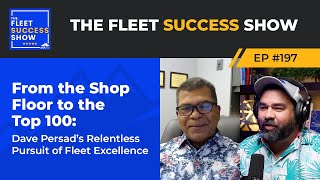
In this episode of the Fleet Success Show, host Mark Canton interviews award‑winning fleet manager Dave Persad. The conversation traces Dave’s unconventional path from a farm in Trinidad, through heavy construction and mining, to public‑sector fleet leadership in West Palm Beach and Boynton Beach, Florida. Dave describes how a tough, ex‑military mentor taught him the fundamentals of fleet work, how he leveraged that foundation to turn around aging municipal fleets, achieve five consecutive NAFA Top 100 placements (rising from the 70s to a peak of 6th), and manage a diverse fleet of 765 vehicles. The interview delves into Dave’s leadership philosophy: stakeholder engagement, intentional culture, resource efficiency, and risk management. He shares practical tactics such as using availability as the primary performance metric, holding quarterly “state of the fleet” meetings, conducting regular one‑on‑ones, documenting performance, and confronting “bad apples” with kindness and accountability. Dave also emphasizes the power of storytelling with data to secure funding, the importance of tough conversations, and the role of camaraderie (e.g., sharing meals) in building retention. Throughout, the tone is conversational, enthusiastic, and supportive, offering actionable advice for other public‑sector fleet managers.
Chapters
Hi everyone, and welcome back to another episode of the Fleet Success Show. I'm Mark Canton, your host. I'm the VP of Product and Consulting here at RTA Fleet, and I'm joined by my good friend, award-winning fleet manager Dave Persad. Today we're gonna talk about his journey along the fleet management road. Let's get into it.
This is the Fleet Success Show dedicated to helping you and your fleet succeed using the experience of fleet professionals and Hall of Fame fleet legends. The show that explores how the pillars of stakeholder satisfaction, intentional culture, resource efficiency, and risk management all combine to lead your fleet to success.
We're glad you're here.
Now let's get into the show.
Dave, how you doing, bud?
I'm doing just fine, sir. Thank you. And Mark, you're too kind.
Thank you. I mean, so I mean, I'm going to get into a bunch of it, but let's just start off with tell us where are you at right now? What's your current role and where are you managing a fleet? What are you doing?
Well, right now I'm at the city of Boynton Beach. For those who don't know where Boynton Beach is, it's a city in Florida. It's kind of Well, dead smack in the middle of Fort Lauderdale and West Palm Beach. Right.
And I'm pretty familiar with Boynton Beach, but just at a super high level to give folks context, what does your fleet program include? You have an in-house shop, you have a fuel island, you know, those sorts of things.
Yeah. And I was the— as the director here of fleet management, we do have one in our shop. We do everything in-house. We have a light shop, a heavy shop that does— and our fleet is diverse. We have everything from fire rescue, garbage trucks, utility vac trucks, light trucks, SUVs, police. So we got it all.
How big is that fleet, Dave?
It's 765. Okay.
But now you've made a lot of steps along your career. So this is just the most recent. You have really quite, quite an impressive resume. Let's go to the back. Let's go to the beginning here. And, you know, we're not going to do This Is Your Life, but I want to give folks some context around, you know, who is Dave and why should I listen to him? Right. And we'll— I'll prove that point as we go here. I'll try to guide that via my questions. But so let's go back to that first day when you woke up in the morning and you came downstairs maybe, or you went to your folks and said, hey, when I grow up, I want to be a fleet manager. But that did happen, right?
Oh yes, it did.
So how the heck did you find yourself in our industry?
Well, going to the back, I'm originally from Trinidad. For those of you that are guessing the accent, it's— Trinidad is the southernmost island in the Caribbean chain. Grew up there. We We had a farm, grew up on a farm, so we had our own equipment, heavy equipment, cars. My uncle was a diesel mechanic. So growing up to school, working the fields and working alongside him at the tender age of 7, 8, 9, 10, and helping him out, I was very intrigued from then on. But My goal, I had my sights set on agriculture. I wanted to make my career in agriculture. That's what I started to go to school for. My education led me to there, to agriculture, and I actually went to Canada. And my older brother, that he had passed now, I think so, he was here in Florida and he was sick. And he was in heavy construction, land development, heavy construction, whatnot. And my folks had asked me to, you know, come up and help him out, which I did. And I worked alongside him in a company back in the early '90s to where the land development, engineering, underground road paving, they did it all. And and worked in the shop and parts alongside the mechanics and pretty much moved my way up from working in the shop to parts. And my brother, he was the purchasing agent for the company and worked alongside him. You know, the fleet manager at the time— and back in those days, Mark, the language that was used and constructed, and I mean, it is It was very colorful.
Yes, this is your story, but super quick. So, you know, my mom is one of 9, and we all lived on the same block, all the cousins, and everyone except for my brother and I went into construction. So I know exactly what you're talking about, but please continue.
So, uh, you know, the, uh, you know, the fleet manager at the time, um, and, uh, William, um Everyone thought he was one, he was ex-military, originally from Alabama, short temper, about 5'3", and when he got upset, he got red.
Napoleon?
Anyways, people feared him. He was, the language he used, I mean, it was, but he was tough. He was tough on everyone. One day he called me to his office and he said, Dave, sit down. Yes, sir. Shut the door.
Yes, sir.
And he was looking out the window. He said that, how long you been working for me for? I said, 2 years and 2 months, sir. And you hadn't come to me for a raise? What the hell is the matter with you? And all of these guys out here, you know, I can't say those words on air, but they come to me every Monday morning for a raise, for this or that or the other, and you have not? What? And he was kind of getting emotional that, you know, he failed. But he made it right. But he asked me why. Right. Well, That came from the passion, the way I grew up with just leading with intent. Everything I do, raising a family, going to work, whatnot, that's just intent and doing out of just passion. And my dad, God rest his soul, that always taught me that, hey, whatever you do, you do it with love and passion and the rewards will come. And And I just thought that if I did need to do more, then, you know. So he said, "Son," well, he said, "Listen, don't ever let this happen again." He made it right. But after that, he started taking me with him to the job sites and inspecting equipment and, okay. But I didn't know what he was up to. He said, "Prasad, grab me the icebox and," water in it, meet me in the truck. Grab a yellow legal pad, get a note. I need for you to take some notes for me. That was it. Take some notes for him. So fast forward, that went on for about 18 months. One day a week, two days a week, jump in the car, eyes off his box, no conversation. He will go to the machines, dozers, excavators, trucks, you name it, drag lines. And we just look for stuff, you know, where, and he will tell me what to write, you know. So small conversations, but he was very short, dry, military style.
Right.
Okay, so after about 18 months, I had a stat, you know, he was retiring. I said, Prasad. Yes, sir. Help me clean out the office, put in a truck. Yes, sir. Packed up all his office, his stuff, his flags, his awards, everything in the truck. And then I had 3 boxes of these yellow legal pads that I took his notes for him. And right, where are you going with that? You asked me to pack up your office, sir. Put that crap down. And I'm kind of embarrassed, so I've got the owner of the company is there, and some— it's his retirement day, and I said, put that crap down. Okay, yes sir. I put it down. Then he walked up to me and he said, always call me Prasad or you, right? Okay. He put his hands on my shoulders and he said, son— sorry, I get emotional.
It's okay.
He said, those notes weren't for me, they were for you. And, um, I did not know that he had taken me under his wing for 18 months and taught me almost everything that I knew today. That's awesome. Construction equipment. And, um, yeah. And then he looked at the owner of the company He's ready. And that is how I got into managing construction fleets, managing, and that kept me from my stop to my stop. But I owe everything I do to him. And to all of those listening out there, for those that served, he was an ex-military, I salute you. Thank you for your service.
Amen.
And he was instrumental in molding me and where I'm at today. That is awesome.
I've heard a lot of stories of how people got into Fleet. That is by far the best one, Dave. That's pretty cool.
But it was, it was, it was, I mean, he was, I never suspected anything because he was so short, dry.
Right.
Again, ex-military. And you know, it's, back in those days, but we grew company, moved on. I moved on and, you know, from heavy construction, we, you know, from— I did quite a few huge projects with some international construction companies. We built runways, highways, then had a stint in mining. Running an operation in Miami for Vector Fleet Management for the Titan America operation, which was a 24/7 operation. And fast forward, I got to a point to where I needed a break. I was exhausted. I need to do some self-reflection. I took some time. I have two amazing young men as sons and a beautiful wife. And as you may know, in construction, it's nonstop. It's 6 days a week. If we got rain days, it's 7 days a week. It's nonstop. And my kids were growing up before and not taking any time to really invest with them in there. So I took some time to enhance word got around and I got with the City of West Palm Beach and got in there. And we, um, uh, the same approach to fleet and passion in building a team, um, leading, and that relationship. And again, I love you guys, the podcast and the Fleet Success. We talk about, about stakeholder satisfaction, and the leading with intent, that intentional culture.
Right.
It is, it's amazing. It's something that I relate to and I can hold it dearly to my heart. I see it every day. But, you know, at West Palm Beach, when we got there, and again, I can talk forever, Mark. So if you need to interrupt—
Well, I'm making notes of the questions I want to ask you here. So, but yeah, let's do the run-through and then I'm going to go back and ask you a few questions here. Um, but so, so you got— so you took this break now, and then there's an opening in West Palm Beach, and you take a position at West Palm Beach. That's what I'm hearing you say so far. Okay, so now you're at West Palm Beach, and were you immediately the fleet manager there, or did you take a different role and work up, you know? And about where, where is— okay, so go ahead, talk to me.
I was right in, right into fleet. They had a, they had a void, and, uh, they had a need. Sure. And, uh Mario Guzman was a great friend of mine and a great— again, another one instrumental to my career here in public fleet. You know, we clicked right away and we got things turned around. We got things turned around pretty quick. It was— the fleet was aging for replacement. Some maintenance issues and whatnot. But nevertheless, we got it turned around and got involved in leading fleets and counter-bust fleets. And Mario appeared, hey, he replied a couple of times and say, "I need for you to." Okay, well, what is this? Let me, and as I did into it, yeah, I remember the first bus, 57th.
43. So this is at West Palm. You guys landed at 47th on the 7th? Yeah, at the top 100 list.
Okay, on top 100 list. And by the, by the last year I was there, we came in number 6. Wow.
How many years in a row then did you place?
Uh, 5.
5 consecutive years of placing on the top 100?
Correct.
And you, and you leave at number 6?
Yeah.
And how many years before you placed? When you first got there?
Um, he did. There was a couple of years that they, um, they had, uh, but 79th and a couple of honorable mentions.
Got it. And, and so you, you help get them to 57 and then you leave and they're in 6th. That's impressive. And again, Mario's another, you know, well-known guy. I call it the circuit, you know what I mean? The folks who go to the trade shows like the NAFAs and the GFX and are involved in the industry and interested in helping out other fleets and that kind of thing, because it's what I love about our community, by the way, is most folks in our profession are so happy to share.
So happy to give. Absolutely. And, you know, when I got into West Palm Beach, my first Flagfa conference, and again, there's a lot of conferences, and this year, I'm sorry, guys, I would have loved to come to Connect, but we clashed.
And yes, it's conflicting with Flagfa. Yeah, I know.
But there's something special in the water in Florida. Flag for folks, they know how to do it and they are doing it right.
We talk about that a lot. If you look at the placing, whether it's NAFA's top 100, if you look at GFX's, they do a top 50, you know, Flagfoot members dominate that, those boards. It's not something that's gone unnoticed to us at all.
And we, and we, we help, we share, we we help each other get to, you know, to get better. It's not about— yeah, yeah, it is a competition, but we freely help. And so just like you guys, I know I can pick the phone up, hey Mark, I'm in a bind, right? What can I— this is what I need to do. Actually, on my whiteboard, till the camera a little bit here, I got hashtag WWSSD. That is a reminder to what will Steve Salskiver do.
That's awesome, man.
I've had it up there for, you know, you know, because, you know, and I've spoken to him a couple— I mean, it's just the Fleet Whisperer passion. Yes, the passion that comes off of Oleg. But somebody can relate to that, understands, uh, right? Where you at, where you coming from, and advice. So I look at it every day and try to make myself, every day, make myself and our team better by walking the walk, others follow. I remember my first, one of the first days at West Palm Beach, I walked in and there was this tall guy, Chris Denhart, who's a great friend of mine, and, um, he's now the fleet manager over the city of Palm Beach Gardens. Okay. He was a tech, and this tall Texan walked up to him, and I grabbed him and I hugged him. I'm a hugger, as you know.
Yes, we're both huggers. Yeah, people at NAFA are looking at us like, what the heck is going on with those guys?
So yeah, talk to this guy, you know. Grab me. Who the hell is this guy? And I hugged him and I didn't let go. He just put, hey man, how can we make this place better? You know, getting a team involved and again, getting to number, you know, our incremental placements in leading fleets in AFRO 100 was not my, it was a team effort. Getting everyone involved and take, you know, to— well, that is what makes it happen. So, sure.
All right, so you're in West Palm, you're there for how long?
2 and a half years.
You were— no, no, you were at West Palm for more than that.
Uh, yeah, yeah, no, West Palm, I was there for 6 and a half, 7 years.
Almost 7 years. And then it was at Boynton Beach right after West Palm?
Right after that, yes, sir.
Okay, and you've been there, you said, about 2 and a half years?
Yes, sir.
And you placed this year as well, if I recall correctly?
Yes, we placed, uh, yeah, we placed last year, actually. Last year we 23rd, and this year we've slid to 52. Okay. You know, it's, you know, again, you know, just telling your story, your facts, data, and the sample size got increased as well too. So sure, a lot more applicants were in there.
So yeah, it was a bigger win. Yeah, because you had to— you had more people to beat, right? Yeah. Well, I will tell you, I won't get too into it. I love Boynton Beach, by the way. I've I've had the pleasure of either doing studies directly for most of that region of Florida or working in the background when I was the manager for data analytics for a couple consultancies here. And so I'm really familiar with the fleets in that region. And I got to tell you, and I don't mean anything negative, I think that the folks in Boynton Beach have been really hardworking for a really long time and they've had an uphill battle. That they needed to cross. But to see the fleet that I studied in maybe 2019, right before COVID you were not there. And to now see stories about it being a top 100 fleet and really ranking high is truly a testament to you and your team. And, you know, whoever's been along that journey with you, kudos for me, my tip of the cap. I know a lot of us here who are intimately familiar with those fleets feel the same way. You guys should be super proud of yourself. Uh, you know, I'm talking about guys in the, in the summer heat on blacktop, you know, wrenching in the parking area because there just was no room left in that garage because they still needed to do renovation. And just the dedication and the hard work, just, you know, just really amazing and really tip of the cap. And then you guys have taken that and, and run with it and gotten to the resources you need where you could and just facilitating continuous improvement. So not every fleet that gets on that list do I have that kind of directive. Many of them I do. I feel a certain little minor sense of joy when I see fleets I've worked with, you know, make that list later on. It's pretty neat feeling. But this one is one I feel like really close to. And so I just think it's super, just truly amazing work.
So Absolutely. Thank you for that, Mark. And I do have to, you know, it's telling your story and again, engaging your stakeholders, which is administration. And they have been more than supportive once you lay it out.
Right.
Deferred replacements affects your availability. Your availability affects how much garbage you can pick up, how many running cars you can, You know, how many kids you can rescue. Availability is key. And that comes from, you know, having a good replacement. And yet, by end of year 3, our PD, police department, will be solid. Our solid waste, which is a bigger ask, will be solid. We will have— it's termed DNRs, do not replace. Vehicles that was replaced and we held it on because we needed the additional vehicles. And you have vehicles that have been way past your life cycle on the front lines. So by the end of this year, Solid Waste, which is again a big ask, will have zero front line.
That's amazing because they beat the crap out of those sanitation trucks.
Oh yes, yes, you know it well. You know it well.
The wash station there was something to see, I'll tell you what. But yeah, that's, that's really impressive. That's great. And like you said, you got to get buy-in. But, you know, what you're testifying to is something we talk about a lot about, right? Like, you got to get out in front of telling that story. You got to be able to tell it with data, be able to show it, which I know you can do and I know you do do. And you got to, you know, create those relationships and make sure that you're getting people what they need. The data is important, but it's not about your agenda. It's about supporting the mission of those operating departments. And making sure you're getting them what you need. That leads to customer— excuse me, stakeholder satisfaction, which leads to allies and advocates for getting those resources that you need. And, you know, what would you say to that? Because I find it's very easy for especially government fleet managers, if we're being honest, to kind of throw up their hands and give up. You know, I've been asking for this money for a million years. They're never going to give it to me. And the argument we try to make here is, well, number one, you still got to keep asking for it. It's your job. But number two, you got to find new ways to ask. You got to ask it better by telling that story. You mentioned availability. Here we believe that's the granddaddy of all fleet metrics. What good is the asset if you can't use it? So, you know, what advice or what thoughts might you have for, you know, maybe someone across the state or maybe across the country who's struggling with the, I can't get enough resources, I can't convince folks, you know, what are your thoughts around that? How do you help get them there?
You have to. It's got to be a relentless effort. Again, you are the subject matter expert. You have to. We don't have the luxury of throwing up our hands up and said, okay, well, you know, we don't have that luxury. We have to come up. And I was reminded of that by Josh, that, okay, we— him and I had a conversation about some challenges. And hey, and what's your name or what's your title? Okay, you are the subject matter expert. You were the one that needs to come up with the solutions. And I slept on that and I, you know, I I changed my approach completely. But you, again, you know, having the information, having the data, engaging the stakeholders, as difficult as it may seem, you have to tell your story. And if your story relates to availability, relates to the ability of garbage being picked up— if your garbage doesn't get picked up, Right.
What's the downstream impact here?
Absolutely. Right. It is critical. So, and but having those relationships with the departments like the police chief, the fire chief, the solid waste division director, all the different— we have quarterly state of the fleet meetings to where we go through budgetary spend, look at, you know, what we can do better. We And when it's time for replacing vehicles, you know, it's not, yeah, I can do it all on my own if I need to, but I get their buy-in, get their input into it so that we can, they might have something else that they want that added on the vehicle. So it's a committee that we get everyone involved, even operators are part of it so that we have a total buy-in of, what we are going to get, make sure it suits the operation and the operational needs. And we move forward with that.
Because no one goes to school for fleet management, chances are you were never formally trained on how to successfully lead a fleet. That's where the Fleet Success Playbook comes in. The Fleet Success Playbook is your guide to building a safe, reliable, and efficient fleet that provides exceptional service. All about the 4 pillars of fleet success: stakeholder satisfaction, intentional culture, resource efficiency, and risk management. Get nearly 100 years of combined advice on common challenges, practical solutions, actionable tips, and real examples from fleet industry experts who have been there and done that. Visit www.fleetsuccessplaybook.com to request Request your free copy today.
Man, that's so important, Dave, what you're talking about, right? Because now you've turned it, you know, some organizations, it's like a little fleet fiefdom. Okay, that's not going to get you where you need to go. Or you're this siloed department. That's not going to get you where you need to go. What you're talking about is transforming into a fleet program in which we are all in this together.
Absolutely.
That advisory board that you've put together, it's, hey, let's—
how—
this is what— these are your needs. I'm here to try to help you fulfill them. Let's figure it out. Let's get on the same page. How are we going to do it? Right. And that helps a lot. Doesn't mean you're never going to have a conflict. It doesn't mean you're never going to have disagreements or arguments. And you sure as heck are going to have plenty of tough decisions. But when you do that and you do it together and you get that buy-in, you know, it totally changes the dynamic and the momentum that you can build towards improving the program and towards getting the resources. And you'll see, hey, you know, you'll see that fire chief say, you know what, I really wanted that truck, but I see what's going on over here. And we, and we, we only have so much money. All right, let's go get that truck. Let's put me back on the docket for next year. When you have stakeholders that involved and are willing to sort of see the bigger picture with you, it changes the game completely. And you as the leader are responsible for making that happen. And That's exactly what I'm hearing you talk about. I mean, that's good stuff. That's really good stuff.
Absolutely. And when we have our training with our supervisors and whatnot, which again, a lot of it I use, I play the podcast and they all have the Freed Success book, you know, just because it's valuable. I listen to it time and time and I can probably tell you One of my favorite episodes is episode 159.
Okay.
Having those hard conversations, hurt and harm. And it's—
Hurt and harm.
Yeah, it's, you know, I listen to that almost once a week.
Really?
That's cool. Because there's a lot of us in that situation that we kind of put off, you know, having those conversations. But, you know— It's natural. It's natural. You got to have it. And what the way Josh and you, you had it in there was, is exactly what it is. And I've used that same terminology to hurt. Hey, is this something that will hurt you? This ought to harm you. The scalpel and the dagger.
Exactly. The scalpel.
Yeah.
So everyone go listen to 159 and you'll know what, what Dave is talking about. But super high level, it's, you know, It's the example. Here's the sort of playful example I like to use. What kind of person are you? When you see somebody with something stuck between their teeth, do you tell them, or do you let them sit there and let everybody else see it and get embarrassed by it? Right. You know, we want to be the kind of people who tell them, right? Say, hey, you got something between your teeth. You're not hurting them. You're helping them, right? They may have to deal with something that they don't like or they're embarrassed about or whatever else. But you're helping them and you need to listen in the same way. Right. So that's, that's a, that's a great example. So let's actually, that might dovetail nicely into the next question I wanted to ask you, Dave, because you were talking earlier, you talked about intentional culture, and now you're talking about helps and hurts, and which is, excuse me, you're talking about tough conversations, which is a big part of that. Another thing that I see government fleet managers kind of throw their hands up on is this, this concept of retention. They feel powerless. I mean, I talk to fleet managers who feel like they don't even get to really decide who works for them, which I think is sad and crazy at the same time. And, you know, sometimes there's challenges, you know, over can I terminate somebody? Can I not? Can I not? And you might get pushback from HR, but there are ways to work around that. And vice versa, hiring, you know, hiring takes forever. And I got to just get the person I can get because the position has been open for 18 months. It's really difficult to build an intentional culture, I think, anywhere. And I respect and appreciate when a government fleet manager says to me, well, it's really hard here. I think that might be true. Maybe it is a little bit harder, but I would also say it's not impossible and you got no chance if you don't try and you owe it to yourself and your organization to not only try but to make it happen. So what are your thoughts around that? Like, you've done that, you've done that at multiple stops. I'll be sincere with you. I'm not blowing smoke up your butt. I'm telling you the truth. I do think your personality, you know, you have a generous heart, you're a very kind person, you know, you're eloquent, you're thoughtful when you speak. I think that kind of helps to foster it because you attract a certain kind of person to you. But nonetheless, this is, this is something you've done intentfully, let's say. It's not like by accident you've landed in two good cultures, I don't think, right? I think this is something you've helped to develop. So what is your advice out there? What are your thoughts around that? Like, what would you say to other public fleet managers who maybe feel like they're struggling with this? Maybe they don't believe it's achievable. Maybe they don't know where to begin. You know, what would you say to them?
You have to set the tone. You have to clear the path, but you have to walk the walk. It's not something that you can switch on and off. Again, I can only tell you about me. It's who I am, be it in Publix, be it in Walmart, be it at Home Depot, be it here at work, be it at City Hall. It is that passion that I just love life and love people. And again, I'm a hugger. I'll hug if somebody looks upset in Home Depot. I'll go give them a hug. Hey, how you doing? You know, but anyways, but you have to set the tone. You have to clear the path so that they understand and clarify expectations. Even for example, I do not have all my positions are filled. Actually, I'm gonna October 1 gonna apply, have a vacancy because we just promoted someone.
Okay.
I have techs lined up that are waiting to come here. And really, some of— about 50% of our techs have really followed me to where I'm at here because of— you treat them with respect. I don't have— there's nothing secret in the, in the sauce. It's just of sheer kindness and treat people with love, with intent, and respect, and clarifying expectations that, hey, we're here to get a job done. To get vehicles in the shop repaired safely and effectively, at most cost, and out again. And again, I have Steve Salzgeber, his customer service, his definition of customer service. You know, I have that, you know, in multiple slides and presentations that I do. I open it with that. I have that posted in the shop, you know, customer living up to the expectations of those that depends on us to get their jobs done. That's it. I can't slice or dice that any better than it already is. And live that and make sure that all guys understand that and live that as well too, so that we all pull in the same direction. When we walk out to the shop, and I walk with the supervisors out in the shop, and even the techs, I'll take, um, we see a garbage truck down, okay, Hey, it's in the shop, yeah, but it doesn't stop there. What is that garbage truck not doing? It's not picking up so much. You see a police vehicle, a patrol car in the shop. Okay, it's here for PM or breaks and whatnot. Yeah, good. That's one less officer off the street that is not catching bad guys or chasing down rapists and murderers. Right, right, exactly. You see a fire truck in the shop, hey, that's one less unit that can respond to a fire that is probably your neighbor's house or someone that you may know. So in thinking, peeling back the onion and getting them to think it's not just something in the shop here to be worked on, the importance as to why comes from the customer service that Steve Sawegawa had his definition of that is live up to the expectations. So if you can live up to the expectations, we get it in and out so it can get back Once you understand why it's what it needs to be done. So it's, uh, and getting them to think in that mindset that, right, why it's here. If it's here, it's not doing something, and what is the cost of that, right?
Yeah, so that those— so you had a lot of great, great points in there, but, uh, to try to hit them quick, you know, there's, there's an element of be passionate, love your work, believe in what you're doing. There's an element of lead by example. Right? There's this element of respect people, make them feel wanted, make them know that they're important. There's an element of understanding, again, the downstream effect. Let's make sure that they understand that the impact of their work is much, much bigger than whether or not that bolt was tight enough or not.
100%.
Which makes them feel a sense of pride and importance and belonging it gives value to your work and to your life, which is so important for all of us, right? Those are all great, great elements, you know, of helping to build that intentional culture.
And not forgetting food, you know. Yeah, as you know, food, breaking bread with the guys, breaking bread with everyone. I mean, it, you know, it's just a way to show not only appreciation, but that sense of camaraderie and brotherhood and sisterhood, and you know, that we, we all in this together. Breaking bread with someone, having a meal and food and cooking, and I mean, it's, um, it's powerful. Yeah, it is, it is.
Yeah, it's true. Um, all right, so let's get back though to the tough conversations now and tie it in with this, all this goodness, all this love, all this passion. Now I bet with those, those guys and gals who followed you over, I'm gonna venture to guess that if they screw up You can tell them they screwed up and they won't hate you for it. They'll say, thanks, Dave. Is that fair?
That is 100% correct. You know, again, clarifying expectations, right? The purpose we are here, the why. And if you did something that you are sitting across from me in the desk because of a poor decision, you know, absolutely, it's— I'm going to let you know what you did and what— and I'm going to ask you what Could you have done better to prevent it? So that, you know, to again, get out of that talk. But yes, having those difficult, tough conversations, it's—
Part of it.
Thank you, episode 159.
Well, and let's go the other way too. Is it fair to say, I'm gonna guess, but those folks probably, you've probably created an environment where those folks also feel comfortable to come to you and say, hey Dave, What's going on? You're off your game today. You're off your game this week, right? And you would expect that from them, right?
Absolutely. Absolutely. So this is two-way. I don't have all the answers and I make that clear. I do not have all the answers. This is not a Dave mission. This is our mission. And we are all part of this. And together, together, we, we can— we'll get it done.
Yeah, yeah, there's all key parts, I think, of a healthy culture. You know, another one is when someone is struggling, obviously you want to give them some grace, you want to help bring them along, you want to try to coach them. That's, that's the first instinct. And you want to— and you want to do that in a sincere way, in a passionate way, not in a sort of I'm-going-through-the-motions way. But then sometimes you do have this situation where you have the bad apple. And again, I find in I cannot tell you how many fleets I've done a study for where I walk in and after a few days on the job, or maybe it was, you know, never does it take more than the second visit where I can usually recognize a culture problem and I can usually identify a bad apple or two who are creating that culture problem. You're smiling because you've experienced this in your career, I'm guessing, right? What do you say to folks? You know, again, you know, what would be your advice to those folks out there, like, how do you handle that? Because what, what the feedback we sometimes get is, oh, easy for you guys to say to just cut loose on the bad apples, you're in a private corporation, all that. Now, you worked in private, in construction, that was easy to do. You could, you know, you'd fire a guy one day, hire him back the next week. Like, that, that was kind of the culture of, of construction. But, but in, in government, that's a lot more difficult to do. Sometimes it's because you don't think you you know, HR is going to block it. And sometimes it's because you're scared to have the vacancy open for 18 months or whatever it is. And yet, you know, that one bad apple really can spoil the bunch. I've seen it happen. I've seen where, you know, this one true negative person can, can really destroy the culture, uh, of an organization. So what are your thoughts around that? What advice might you give to folks?
Okay, I'm going to give you 3 rapid— yeah, yeah, yeah, yeah. One, yes, you know, back in construction, yeah, baba, that's why your toolbox got wheels on it. Yeah, take it to the curb. Yeah, yeah, yeah. Carry out your paycheck. But anyways, but yeah, it is a little bit more difficult in public sector, but documentation always helps. Bingo. We have the one-on-ones that we have, which I, I will recommend, you know, without a doubt, have those one-on-ones. Get to know your guys. Get to know your guys. Get to know them, their personal life. You know, they'll open up as much as they can. But like, all guys I know, their football teams that they like, you know, their kids, the ages of kids, you know, if they're married or not, where they live at, the projects they're doing at home, or whatever. Get to know them. And I allow them to get to know me as well too, you know. Dolphins had a sucky first week, so, uh, you know, yes, I, I got pounded from every one of them. Yeah, I got you, I got that. But, um, um, but I will give them the benefit of the doubt that, um, and I'll kill them with kindness. Kill them, right? I'll bring so much passion into you that, uh, and in the one-on-ones, I'll— and this is what Your actions as to what your decisions and what are you going to do or what can I help you do to correct this? And what are you going to do to correct it so that we both have skin in the game and are going to fight to your progress? And it's not a PIP, but it is holding them accountable and holding me also accountable to ensure that I really want them to succeed. And if they are like from good to great, if you're in the wrong seat on the wrong bus, then, you know, we can help you get on the right bus. Mm-hmm. But we have had a couple of great techs that found other opportunities elsewhere and are doing really great. And have, you know, backfill those with people that will bang on the door to come in to be, and not just to work here at Boynton Beach, as you know, but to be part of something special. And that is what we have cultivated here. That's what we have grown here. That what, it's just something special. And that is, you know, not only my doing. I'm just one small, plug in the wheel, but administration, once you keep your stakeholders updated, engaged, and they know exactly what they— and they don't get the calls from the residents and so forth, they are happy. But now we just kill them with kindness, but have a sense of accountability that they're accountable on it. You have accountability factor on that to ensure their success. And if it gets to a point that they don't want to be successful here, then, you know, then we have to have those tough conversations to really welcome. If I— if this is not what you want, how can I help you get to where you want to get to?
Yeah, so that's— I'm sorry, continue.
So yeah, I got it. Yeah, we'll network down here in, in, in South Florida that, um, we can make the call and, and find out who is looking for good techs. And, um, and if you, if you're a bad apple, you know, I'm not gonna pass a bad apple along, you know.
So I'll get him to quit so that I don't have to fire him. I give them to somebody else. No, but so, so you started with documentation, which I think is key. You have to document. And documentation is not something that you should only be doing, um, once a problem starts, although you do want to do that too. But, you know, they should know at the start of the year, this is how many billable hours I'm expecting you to hit this year, right? Um, you know, are you hitting it? What is your performance? People like to know where they stand, and letting them know that is actually a blessing, even if it's sometimes difficult, you know, to do that. Um, but, you know, yeah, Doc, the one-on-ones are key because it gives you that opportunity to— there's no excuse for them not to know. Like, the worst thing that could be is when you don't make sure that they know, even if they do know, but no one told it to them, don't count, right? That's where those tough conversations are key. And then documenting, document, document, document, document. Like you said, if you're, you know, we have a little mini CRM inside of our FMIS where, you know, you can have these kinds of employee notes if you need them, or if not, you know, it's very easy access database, whatever you need. But you should have a file on all of your employees, your own internal, not even your general HR. that, that allows you to document. And then where necessary, yeah, you push it forward and you keep good records. You know, it's not easy, but it's important because again, it's not fair to the rest of your team or to your stakeholders, uh, to endure that bad apple if you've made the legitimate effort that you're talking about of, hey, I'm going to do everything I can to make you successful, but I can only take this so far. You got to meet me. You got to meet me on that journey, right? And, and you got to go down this route. And if you don't, I will venture to say you're a chicken. Sorry, it's not easy, but if you letting bad apples spoil your bunch, you're a chicken and you need to fix it.
You're right, you're right. That my wife tells me, hey, whatever you allow becomes a habit. Yeah, and like you guys said in the one of your podcasts, it's what you tolerate If you—
it's what you tolerate.
Yep. Yeah, if you, if you tolerate it, it's gonna be devastating.
Yeah, it might as well be policy, right? Yeah. So, all right, so I think with that we're gonna wrap it up, and I, I'm gonna ask you kindly, would you be willing to come on again and talk to me about some more and, and other stories? I have a whole bunch of stuff I want to ask you for, but we're getting long here, and, um, I want to— I just really appreciate the time that you spent with me. It was good to get to hear a little bit about your story, a little bit about how you got here. Um, it was really great.
It was my pleasure, and you guys are awesome, and, uh, thank you for really having me. And absolutely, anytime, you know, I'm— you know, you guys, you guys give back so much to the community, you know. For us to make time out of the day to come on your podcast to share a little bit about us, it's, uh, it's, it's the least, at least you can do. And I, I Really do appreciate it.
Thank you, Dave. It means a lot. It's, uh, to have, you know, really, you're, you're a star within the industry. I think everyone within our industry knows your name for good reason, and so it's an honor to have you on.
You're too kind.
Yeah, no, it's— I mean it sincerely. All right, with that, if you have any questions you'd like us to answer, or reach out to Dave, connect you to Dave if you want him to answer the question, uh, maybe it's future topics, or in any way we can help you Don't hesitate to email us at podcast@rta.fleet or visit our website, www.rtafleet.com. And with that, I'm going to say have a great day, everybody.
Bye. We hope you enjoyed the show. If you'd like to help support the podcast, please share it with others, post about it on LinkedIn, or leave a review. Want to learn more about our fleet management software, Fleet 360? Check us out at rtafleet.com. If you want to learn more about having your fleet to have your fleet evaluated by our consulting team, go to FleetConsulting.com.
More from Josh

Episode 227: The Hidden Costs Killing Fleet Operations (It’s NOT What You Think)


Episode 225: Are Certifications Still Worth It? The Truth About ASE, CAFM & Fleet Leadership




Episode 221: The State of Fleet Management: Education, AI, and the Technician Crisis with NAFA’s CEO

Episode 220: Motor Pools Are Back: Right-Size Your Fleet Without Breaking Operations

Episode 219: Stop Guessing at Downtime: Status Strategy for Better Availability #podcast #fleet

Episode 218: Fleet Predictions 2026: AI Hype, Technician Shortages, & the Next Era of Fleet Managers

Episode 217: Why Replacement Planning Solves 95% of Your Problems #podcast #fleetmanagement #fleet