Episode 112: How to Get Named To 100 Best Fleets List
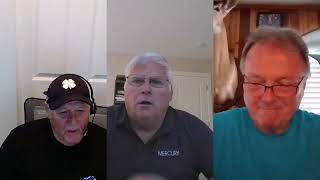
In this 30‑minute Fleet Success Show episode, host Steve Salzgiver (senior fleet success advisor at RTA) interviews 100 Best Fleets judges Mike Brennan and Scott Rood. The conversation covers (1) the judges’ career backgrounds, (2) application volume and trends for the 100 Best Fleets program, (3) how fleets can differentiate themselves and the importance of storytelling and team involvement, (4) the objective scoring matrix and the 16 core benchmark metrics (e.g., direct/indirect labor ratio, technician productivity, availability, markup, turnaround time, rework, VM compliance, parts fill), (5) the three‑year median targets that serve as performance goals (e.g., 74.45 % direct‑indirect labor ratio), (6) advice on preparing a strong application – use the guide, include baseline and targets, explain gaps, involve the whole organization, and submit early, (7) the new program elements for 2024: a commercial‑fleet contest, Technician of the Year award, Fleet Professional of the Year award, and expanded educational outreach (webinars, regional meetings, application reviews), (8) logistics for the upcoming contest – kickoff webinar in November, application window Dec 1–Jan 31, and resources such as the benchmarking article in Fleet Solutions magazine. The episode ends with practical take‑aways encouraging fleets to read the guide, provide data, and engage with the program’s educational resources.
Chapters
Welcome to episode 112 of the Fleet Success Show. I'm your host this week, Steve Salzgiver. I'm the senior fleet success advisor for RTA. Today I'm joined with my good friends and industry colleagues and judges with the 100 Best Fleets, Mike Brennan and Scott Rood. Today we're going to talk about the 100 Best Fleets and how that ties to fleet success and discuss, you know, a little bit more intimate details about the 100 Best Fleets. A lot of people are always interested in that. We've had great feedback as we've been judges for the last several years. So we want to talk a little bit about the best practices. So before we get started though, I'd like to just give a little introduction about myself. If you don't know me, I'm a longtime veteran in the fleet management industry, currently working for RTA, which is a fleet management information system, and I'm a consultant there. We do independent consulting. For fleet management as well. And I'm one of the original Fleet Success podcast hosts, along with my CEO, Josh Turley. Formerly, I was the vice president for Coca-Cola and Wright and Republic Services. I was director of the states of Georgia and Utah. I was a city fleet manager, worked for a transit authority for 15 years. And then I'm also, interestingly, as a kind of a niche, I'm a member of the Government Fleet Hall of Fame, and I'm also a Kentucky Colonel from the state of Kentucky, which was sort of an interesting bestowal in my career along the way. Mike, why don't you give listeners a brief background about your career?
Well, thanks, Steve. I started— I kind of grew up, came from the floor up. I started out my career as a technician and worked around, went through school, Started working for Manatee County back in 1978 and worked my way off the floor into supervision. Went and got a degree along the way and wound up managing the Manatee County fleet for almost 20 years. Retired in 2018. That didn't last very long, about 6 months, and I couldn't about 6 months and I couldn't take it anymore. So I cranked up a little consulting business. I had to turn the dryer like 3 times, so I get that. Yeah. So I got in a little bit of consulting business going here and, and that's taken off quite well. And then I've, I work with NFA and I run the 100 Best Fleets program for NFA. And we're developing an educational series. We develop regional meetings, webcasts. We just completed yesterday a series of 5 webinars on the initiatives of the 100 Best Fleets. Yesterday's was on benchmarking. We got a lot of good results on that. And looking forward to continuing my career for a while doing what I'm doing.
Scott?
Yeah, my name is Scott Rood and I started my fleet career in the United States Air Force and back in 1981. And like Mike, I started out as a mechanic on the floor and kind of worked my way up in the Air Force through several different management positions. When I left the Air Force in 2003, I was the base fleet maintenance manager Um, after I retired from the Air Force, I went to work for the state of Washington as their maintenance manager. Worked there for about 4 years, and then I moved south and I started working at Clark Public Utilities. And then when the fleet manager position came available over in Public Works, that's when I went over to Public Works. Worked there for about 8 and a half years, uh, and then Paul Loria hired me to come to work for Mercury, and I've been doing this for about 5 years now.
Hey, the one thing we all have in common is we all started on the floor, which is kind of nice. That was my career as well, Mike. I went from fleet helper all the way to an A mechanic to a journeyman, went to school, got my degree. I know Scott did the same thing, and so we might be the 3, uh, degree people in fleet at this point. I'm just being facetious. Thank you guys for doing that. Yeah, let's get in— let's get into it. I know we got a lot to talk about, um, in the short period of time, but Some questions and things that I've heard from some of my colleagues internally and some externally. And I thought I'd ask this couple of questions. So how many fleets typically apply to be considered among the 100 best? Mike, you want to take that question?
You know, it varies from year to year. We've, we've had over the past, well, let me back up a second. I've been, I've been judging this contest since 20, 2016. And, um, and it varies from year to year. Sometimes we have maybe just a little over 100, and some years we've had as high as 170, 180. Um, during the pandemic era, things slowed down, and I, I think the reason why it slowed down a little bit was we stopped doing the regionals and we really didn't have an outreach program And that's one of the reasons Tom went to NAFSA and NAFSA has taken the 100 Best Fleets underneath their umbrella of products and services because they have the outreach and we've been able to build an educational program out of it. So we're up to now where we have, we're back to having hundreds of applications. And now that we have the Fleet Technician of the Year, the Fleet Professional of the Year, and the commercial contest going, you know, we were well over 200 applications this year with the contest in the varying different degrees.
Let's talk a little bit about how can applying fleets differentiate themselves and make themselves stand out by becoming part of the 100 Best Fleets. Scott, you want to throw your two cents in on that?
Yeah, you know, a lot of the agencies that apply for it, they take a lot of pride in the contest, and the contest is very fairly judged by the three of us, and I think it really has a lot of merit to be in the top 100. And, you know, I see a lot of pictures on LinkedIn where they'll put the picture of their organization. They'll have all the people there with the banner and saying, yeah, we ranked number 1, we ranked number 5, we were in the top 10. And I think it really has a lot of— and to their senior management, it shows them that they're doing a really good job and they're taking care of the fleet vehicles. And not only that, but they're also managing the funds to support the fleet function.
But yeah, you know, that's, that's true. And I get, I get that question quite often myself, Steve, and, and I try to tell fleets the object of the contest is to benchmark your organization so that you can better yourself in the future and then document your success on the application. Uh, and that's what the whole thing is for. So I try to guide people is don't worry about what others are doing, make sure you tell your story And don't leave out some of the little stuff. You have to get everybody involved in the organization because sometimes, sometimes as the fleet manager, there's things happening in little corners of your organization that you don't know about that are going to flower into something really big. And if you don't, if you don't get all that knowledge and enlist all that input when you're putting your application together, you might miss out on something that somebody else didn't. So, you know, you really need to have your whole team involved in that application process, you know, and make sure that things are clearly stated and we don't miss anything. So, you know, we have, like I said, we have hundreds of applications to read and we only have a period of time to do it in. So, you know, you gotta make, put your best foot forward and the best way to do that is to enlist the entire team when you apply for the contest.
You know, I remember when Mike started— or sorry, Tom Johnson started this years ago. You know, I give him a lot of credit. He recently passed last year, but one of my favorite guys in the world. But give him a lot of credit for doing this. Traveled all over the country and really had a— put a stake in the ground on this. I think it's been kind of a very successful program along the way. We definitely miss Tom and his wit and his humor as we kind of go forward and take his banner forward. Let's talk a little bit about— people always want to know how the scoring works. You guys have anything to say about the scoring?
Yeah, I can start.
Mike did a great job of putting together our matrix. So we really have an objective and not such a subjective scoring criteria. So, you know, I think over the years we've really developed that and we really nailed down our scoring techniques. Mike, I don't remember, but I think our top 10 were fairly close between the 3 judges. If I'm not— am I correct on that?
Absolutely, Scott. And listen, don't count you or Steve out. When we built the matrix, you know, after the first year where the three of us judged the contest, I remember when we were reviewing our scoring and how we did that, we all agreed right then we need to come up with a system and a matrix so that we can really, really zero in on these things and understand that. So That's how that scoring matrix developed that we have. We've polished it over the years. Every year we talk about it, we review it. Does it need any changes? Are we missing anything or these things? And it works. It works very well. And what it really did for the contest is it really brings consistency and credibility to those numbers. You're exactly right when you talk about the top 10. We had, we were all very close in our scoring of the 100 best fleets and all fleets basically from top to bottom, you know, and like I said, when we had initial scoring done, we had 12 agencies tied for the same position in the top 20. So we have tiebreakers that we use and how we separate that out. To, to get those rankings. And that's kind of indicative of how tight this is. And you think about the 100 Best Fleets. These are the best fleets in the nation that are, that are in North America because we have 100 Best Fleets in Canada as well. And these fleets are all competing and they're all, they're all well run. And it's those little things that they add in there that sometimes make the difference. But it is extremely tight. On the scoring at the top end.
You know, I was impressed yesterday when we were doing the webinar for NAF on the 100 Best Fleets, how tight the scores were as far as the metrics for people, you know, and you definitely, when you see the metrics and some of the things we've accumulated over the last few years as far as averages and things, I mean, just, just to throw one out, like, you know, 75% direct labor. All of us on this call, on this podcast, we understand that's the best practice and we see that percolating all through our 100 Best Fleets. It kind of gives you a sense of confidence that, yeah, you know what, we're right on the same page here, right?
Absolutely. I have those numbers. Yeah. And, and you know that, that, that is a high number. But you got to figure the 100 Best Fleets, they're really trying to squeeze everything out and really working on that, uh, on capturing as much data as they can.
Yep, absolutely. You know, we went through— how many metrics did we track? I mean, at least a dozen or so, right, that are common?
I think there were 16 yesterday.
16.
We have 16, 16 core, basically 16 core benchmarks that we're able to get out of the out of the applications. And, and the thing of it is we now have 3 years of hard data on these metrics. So these medians of all 3 years become, that actually becomes the target that fleets should be aiming for if they really want to better themselves. So the way I look at it, if, if we've got a median say on, on, all right, let's pick on that one you just talked about. So we have, let's see, the median for the last 3 years on direct indirect ratio is 74.45%. So when you're looking, when you're talking about how much direct bill, what our direct indirect labor ratio should be, that's the number you need to be aiming at. 74.45 is the average median. For that metric for the last 3 years, the 100 best fleets. And that is a really aggressive number. So you're really gonna have to work on that if you're not at that to get that up. And there's, there's a lot of things you gotta do to build these metrics up. It's not just, you can't just throw a switch and it happens. There's a lot of things that happen in the detail. And then it takes your whole team. You gotta get the whole team involved. To be able to get those kind of numbers. That's obvious.
You know, and I was going through it, I was looking at the metrics myself, you know, and I was thinking about it, how does this equate to our fleet success model that we do? And you go through, you go through those metrics, you see, we see things like technician productivity, fleet availability, you know, markups, turnaround time, rework, technician hours, hourly labor rates, VM compliance, parts fill. I mean, you think about putting together one of the top 100 fleets or having a fleet success program. Those are the things that we, we all look at as consultants, right?
Mm-hmm. Yeah. Every day.
Absolutely.
Yeah. So I mean, it's, it's really, it kind of follows the, the same kind of line that, uh, what we're trying to communicate to people as consultants, but not only that as fleet professionals. And all of us at one time were fleet managers, the same thing we used when we were fleet managers as well. So we're able to articulate that and share that with the 100 Best Fleets. And for those that are not 100 Best Fleet currently, they're able to see some of those metrics if they join our webinars and see what you need to do if they're new to the program or new to the fleet industry, what they should be really looking at.
Absolutely. You know, we, we have— we only have 100 spots in the 100 Best Fleets, but we get hundreds of applications. So, you know, let's not count out all those honorable mentions that we have. We had 30, 35 honorable mentions in the 2023 contest and all those, all those agencies that, that were listed as an honorable mention, that's just because they didn't there was 100 that scored above them, but they're, they're right there on the edge. You know, we only had 31 points separate the top 100 best fleets. That's remarkable that everybody's in there and it is that competitive. So, you know, when you, when you're able to score the way our scoring system is set up and you're able to score over a certain level, even being an honorable mention, you're not far out from being a 100 best fleet. So You know, it's, it's sometimes it's just those little things. I know, Scott, you and I talked about that several times during the scoring process this year.
Yeah, we did. We did.
As we were working through that.
And the piece of advice to fleets that have not, you know, applied for the contest, I would suggest you guys read the, read the brochure, read the the manual we put together, and it tells you step by step on how to put your application together. And if you follow that, you put your metrics in there, you're going to score well in the contest.
You know, I would add that, um, the more metrics you can put in there, actual metrics like baseline and then current compliance or current targets where you're at, the better you're going to be. I mean, that's what I like to really hone in on when I'm doing judging part of it is, you know, where are you on these metrics and how well do you do for as an organization?
Absolutely. And you know, one of the things I get when, when I read these applications is when you get a lot of metrics like that and you really get, you get the goal, you know, this is the goal for this, our goal for the metric, and here's our number and it's maybe, 2/10 of a percent up or down from the previous year. When you start getting that, you get a feel to how well some of these fleets are really managing these numbers. So when you get that whole data set like that, it really tells you they're really watching that. Whereas some agencies just tell you what their number is. Okay, well here's where it's at. You really don't get a feel feel on, do they really have their finger on that pulse? So this is, I like to tell people that as well is don't just give us a number, tell us what the goal is and is it, is it, are you going up, down or are you staying the same? You can't always go up, but as long as you're staying within that median range, you know, and we're right here and we're doing good and you know, that really tells you how well a fleet's managing their metrics as well.
Sure.
So, Scott, and you know, real quick, if you— oh, go ahead, Scott.
Well, I was going to say, I mean, if an agency out there, they have a goal but they're not meeting it, but if they put in there and they tell us why they're not meeting it, you know, then now they explain that it's still— you have your finger on the pulse, but you know what you're lacking, and, you know, tell us what you are, what you're doing to correct it.
Yeah.
So Scott touched on something just a few seconds ago. How can fleets apply that have never applied before? And what about those who have never placed? How can they get help, Mike?
Well, there's a couple of ways. First of all, a lot of agencies don't place. And, you know, you guys, we've had this conversation as well. We can tell by reading the applications who's read read the application guide and who hasn't. Or who read it and didn't follow it. We can see right away, you know, who's following that application guide. And that's one way to do that. The other way to do that is don't be afraid to fill out your application and submit that. Because when you submit your application for the contest, you're going to be automatically eligible for what we call an application review. We do a lot of application reviews at NAFIA&E. I know in 2023, Scott and I sat in the NAFIA booth for 2 solid days, 2 separate computer systems, and we went through almost 45 or 50 agencies and did application reviews. And I know I've done another 15 or 20 since we've been back. People have emailed me or told me NIE, they wanted an app review. So we'll review your application and it's kind of like getting a third-party independent consultant review of your operation because we're going to go right down through the criteria. We're going to tell you what we saw on your application, but more importantly, we're going to tell you what we didn't see. And those are the areas maybe you need to concentrate on.
Yeah, that's a good point. I know I've had people come to me at RTA, for example, and say, can you take a look at my application before I submit it and give me some feedback? You know, I've also taught 100 Best Fleets webinars, you know, independently of the three of us, because, you know, like for our clients at RTA, because they want— they really have an interest in doing this and they don't know where to start. So there's a lot of things. Plus now we have our own webinars where we can teach people how to do this through the NAFSA thing. Let's, let's jump real quick, Mike, and talk about what's new for 100 Best Fleets. I know we're putting together some new programs and we started some this year. Why don't you tell everyone what we're doing now?
Well, I touched on a little bit earlier when we talked about the volume of applications, but, you know, new to the, new to the 100 Best Fleets program this year is the commercial contest for commercial fleets. So we've got that going. We had, it was fairly well received in the first year. We spent a lot of time and we developed, you know, we developed an advisory board to put the criteria together for that public or the commercial fleet side. And at the same time, and as you two fellows know, once we had the criteria selected by the advisory committee, we went ahead and developed a scoring rubric for that commercial side as well, because the criteria is different. So we're going to have the same credibility and the same consistency in the commercial contest as well. We also have the new to this year is the Technician of the Year Award, highly popular. Uh, we had over 40 technicians nominated for that award in the first year and over 50% of those technicians nominated were nominated by their peers. It wasn't just an arbitrary nomination. They got together with their teams and said, this is a guy we think should go. So they nominated those people. We also have the Fleet Professional of the Year Award, and that's for anybody who isn't a technician. It could be, could be for, excuse me, could be for the fleet manager, it could be for the parts manager. Could be for the shop superintendent or supervisor, fiscal analyst, uh, admin, admin people. It's for anybody other than a technician. It's to recognize those superstars that you have working for you. So we have criteria put together for that in the nomination process. You can do— we will be working later this year on getting kind of a guide together for those two awards as well, so that people know how they should be answering those questions. A lot of them are multiple choice. We tried to make that pretty easy and quick. We don't, we don't want to, we don't want to take up everybody's time. But so we tried to do that, but there is an essay, and we're, we're going to put together a guide for that later on this year. So those are the new contests we've had. We also We do a series of articles in Fleet Solutions magazine.
We do it—
we just, like I said, we just finished the 5-part series, webinar series on initiatives and actions of the 100 Best Fleets. And we've covered all 5 overarching general initiatives. And then we wound it up with benchmarking yesterday. These are hour-and-a-half-long webinars. And they're just, they're just full of information. You know, you've got fleets out there actually doing the job, telling us, telling the stories and how well they're doing it. And they're highly, highly received. So we've got that. And then we're also, we're going back to the regionals. We realized last year we need to have some, we need to get that outreach going again, like Tom Johnson used to do before, before the pandemic started. You know, we got to get out to, specific areas around the country and get people together so they can share their initiatives in their regions because maybe they can't get to I&E or they can't get to some of these other conferences. So we want to bring this information to them as well. So we're doing that as well along the way, and they're very well received. We just completed one up in— and it was a town called Rosemont. Minnesota, just about 20 minutes outside of Minneapolis. It was sponsored by Tiger Tuff, one of our sponsors, and it was very well received. It was a half a day. We started at noon. We didn't get done till 5. We had fleets sharing from the region. We had commercial fleets involved. We had public fleets involved. We talked about the initiatives, the goals, the different contests and, and what people are doing across the country. So that's kind of the outreach program that we've got going with NAFET now. And I do understand that we've got a new education coordinator for NAFET. Um, I'm actually scheduled to have a video conference with her next week, and we're going to see how we can expand the educational program based upon the 100 Best Fleets contest criteria and the applications we receive. So we're really trying to make this a really large educational program as well as, you know, the recognition program that it already is.
Thank you, Mike. Any, any parting words, Scott, as we wrap up this podcast?
No, I think Mike said it best. You know, if you're going to apply, read the guide, follow the guide, tell us, tell us what you're doing great, tell us what you're not doing so great, and then explain what you're going to do to correct that. I mean, and then give, give as many metrics as you can. We like the data, we like to see data. Yeah, that's pretty much it.
That's probably the consultant in all of us. Any parting comments from you, Mike?
No, I concur with everybody and everything Scott just said. I do want to add just a little bit that, you know, like I said, we did— we're talking a lot about metrics and benchmarks, and we just did the webinar yesterday and we have completed the article. The article on benchmarking will be out in the next edition of Fleet Solutions magazine, which I think is going to come out any, any day now. The article is written. It'll have all those benchmarks in it. The only other thing I can tell you is the— we will have a contest kickoff webinar. I believe right now it is— it will be in late November. The contest open application period will open for the 2024 contest in early December and it will run through the end of January. So you're going to have, you know, December and January to write that out and get it done. But, but don't wait till the last week. Now, when, when that open application period begins and it opens up, start working on it and you really should be looking at it now. Go in and download a copy of the criteria and start making some notes so you can get your team involved up front and, and submit them as early as possible. Just get that stuff in.
Thank you.
I really appreciate this opportunity, Steve. This is great, great information, and I appreciate you inviting me to join in.
Oh, you're welcome. It's been a great, great 30 minutes or so, and grateful to get together with both of you, two colleagues that I really respect quite a bit and enjoy working with, frankly. So for those of you that have been with us today, please tell your friends about our show, send us comments, questions, questions, feedback, uh, we're anywhere on social media with @fleetsuccess, or you can send us an email directly at pod— uh, you want to be a future guest or you have ideas for future episodes, we want to hear from you. So with that being said, thank you guys for joining me today, and thank all of you for tuning in this week.
Appreciate it.
Thank you, Steve. All right, okay, everyone have a great day.
Yeah, take care.
More from Josh

Episode 227: The Hidden Costs Killing Fleet Operations (It’s NOT What You Think)


Episode 225: Are Certifications Still Worth It? The Truth About ASE, CAFM & Fleet Leadership




Episode 221: The State of Fleet Management: Education, AI, and the Technician Crisis with NAFA’s CEO

Episode 220: Motor Pools Are Back: Right-Size Your Fleet Without Breaking Operations

Episode 219: Stop Guessing at Downtime: Status Strategy for Better Availability #podcast #fleet

Episode 218: Fleet Predictions 2026: AI Hype, Technician Shortages, & the Next Era of Fleet Managers

Episode 217: Why Replacement Planning Solves 95% of Your Problems #podcast #fleetmanagement #fleet