Episode 113: Building a Culture
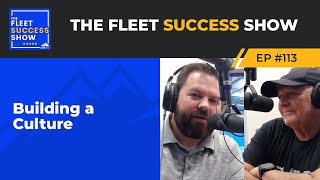
In this episode of the Fleet Success Show, hosts Josh Turley and Steve Salzgeber discuss the painful but rewarding transformation of RTA’s company culture. They trace the evolution from a legacy, family‑oriented, tolerant environment—where loyalty to the founder was prized over performance—to a deliberately designed culture built around three core values: Humble, Hungry, and Smart. The conversation covers the need for behavior‑first hiring, the use of personality/behavioral assessments (DiSC, DISC, etc.), and the creation of “gates” to filter new hires. They describe concrete mechanisms such as a 60‑day buyout check (paying employees to leave if they’re not a cultural fit) and a “drink the Kool‑Aid” onboarding ritual that reinforces entitlement‑free mindset. Leadership lessons emerge around making hard decisions, separating personal relationships from business, and fostering personal growth through coaching and feedback. The hosts also introduce metrics like the True Believer Index and performance ratings to evaluate cultural alignment and output. Throughout, they stress persistence, patience, and the long‑term payoff of an intentional culture—better recruiting, higher retention, and a high‑octane team that attracts top talent.
Chapters
All right.
Welcome back for another episode of the Fleet Success Show. Joining today, you've got your host, Josh Turley, and your other co-host, Steve Salzgeber.
Yeah, it's been a while.
It has been a while since you've been in studio. I know you can— have you been on a podcast yet since we've flipped it around?
I've been on a podcast with the 100 Best Fleets.
Oh, that's right. You did the one, but not with you.
Okay.
Yeah.
This is the first time for a while.
Yeah. So Steve was in town doing a consulting gig for somebody here locally, and we thought we'd take advantage of the moment and get us both in studio, you know, and obviously we've got the video set up now. So you guys get to actually see what our recording studio looked like back in the day when we were running all those 100 episodes that we did before.
Yeah, you get to see our radio face.
That's right. Our radio face and everything else. So today we wanted to talk a little bit about, you know, culture, right? Which I know is a big shock for everybody. We really do try to on this podcast kind of blend those elements of, you know, what it takes to be a successful fleet, what it takes to, you know, as we manage those 4 pillars and the 1 pillar we feel like doesn't get enough attention in the rest of the world. So maybe we talk about it a lot because of that is how do you build a culture? But specifically today, we wanted to like tell some war stories, right? And kind of like speak to those who are in the middle of it or you've tried doing it and you're still, you know, you're just struggling with it and you're wondering, is this worth it? You know, is it worth it to go through all the pain and hassle of really trying to establish an intentional culture? And so, I wanted to kind of tell our story, right, as we've transitioned and gone through this definition and really built out the culture as it is today because it was a mess. You know, it was a messy transition.
Well, if you've ever tried to do it, it's very painful.
Yeah.
And it takes a long time and you have to be patient.
Yep. So, you know, just to kind of set the stage a little bit, you know, for— because there's probably a lot of people who didn't know what RTA used to be like. There's probably several that used to, you know, they've been with us since the '90s. You know, my dad, you know, this was his company at the time and he had a very, you know, laissez-faire kind of culture, right? Very family-oriented. And everybody knows, and it was, it was a toxic kind of family-oriented culture.
Dysfunctional family.
Dysfunctional family is exactly right. Like everybody's got that uncle or that crazy brother or whatever, right? And you can't ever do anything about it because they're family. And we kind of had that same mentality. But I remember, you know, and I don't know who wrote this, I want to say there was a Harvard Business Review article that talked about the toxicity of family cultures, right? Because family kind of implies permanence, right? Right. That it's a permanent arrangement, permanent relationship you have with the people you work with.
Tolerance.
Tolerance, right. For everything that goes on. Oh, that's just so-and-so. That's how they are. Right. And some of you might be chuckling because you're like, oh yeah, I've had that. In fact, I have that right now. Right. Like, oh, Jim Bob, that's just how he is, right? You excuse bad behavior because it's family. So that was definitely what culture was like at RTA for a long time. And that was, you know, when I started, that's how it was. But I remember, you know, we had some, some positions like we just couldn't keep people in them, good people. We'd, you know, we'd make hires and they were good talent, but Dad didn't pay enough and they would end up leaving for something better or he would ask too much or he would, you know, we just couldn't get good talent in the door. And when it did come in, we couldn't keep it. We had a really solid core group of guys in the support team. We had a, you know, like the people who did stay, that was the interesting thing. The people who stayed stayed for life. And so the question you have to ask is, well, who was staying, right?
Yeah.
And it wasn't that, you know, like these guys were terrible people or anything, but they were what the company needed at the time. You know, it's probably the best way to say it. Dad definitely valued loyalty, you know, and I think that was more about his self like it was more about his— what's the word I'm looking for? Not necessarily self-worth, but his self-identity, right? It was that people were loyal to him, they were loyal to the company, and that's kind of how he validated himself in some ways is the love of others, right?
Well, I think that there was a generation where loyalty really mattered.
Yeah.
And now it's—
You hear that, right? Like people staying at a company for 30-some-odd years and—
I mean, even me, I mean, I'm an older generation, I guess, baby boomer, but I've moved around dozens of times now, which is unusual for my generation.
Yeah.
And so that's kind of the way it was. You went to work for IBM or somebody and you stayed there until you retired.
Yeah. You know, and the company would take care of you if they had like some kind of pension plan or something like that, you know.
But I think the environment's changed now. I think things are moving much quicker. Yeah. You know, and people need to stay on top of their game a little, a little better than they used to.
Well, so I think that's something that really did happen, right? When I talk about like the people who stayed, you know, one of the big things that I noticed was that we weren't, we weren't pushing for people to stay marketable. Yeah, right. They stayed because like they had job security and they had, you know, like they offered something in that position, but they didn't make the position any better. They didn't really take the position and transform it into something that it could have been. It was more like they kept the lights on, they kept us running and just like kept things moving. But like keeping, keeping skills marketable was not on the agenda. So a lot of people, you know, and I think that almost felt endeared is like, well, now I'm responsible for this person for life as they came on payroll and they stayed forever, right? Because they couldn't go get another job somewhere else. They didn't have the skill set to do it.
Yeah, well, I think the economy and the business environment, everything is just moving at such a rapid pace now. You have to stay on top of this and you have to be able to be marketable. I mean, I remember when we rolled out the LinkedIn, you know, most people equate that with their business, right? And I don't mean we rolled it out, but I mean we started doing some things on LinkedIn and we started saying market yourself. Which was, that's a foreign concept.
Your personal brand.
Exactly.
Like invest in your personal brand.
So that means you have to, you have to get training, you have to go out and continue reading, you have to continue improving, you know, to see when you have to take personal responsibility for that. Absolutely.
And we had that where people weren't taking personal responsibility for themselves. Um, you know, but also like, and this is, you know, for you leaders is you have to give them the opportunity to do it. Yeah. Right. And not feel, you know, that you're somehow encouraging them to leave. You know, maybe you should. I think that's, you know, if there's been a shift in how I treat people, it's that, right? It's like I look at people and say, okay, where do they need to be in 2 to 3 years and how do I need to help get them there? Right? I can't take responsibility, but I can absolutely facilitate. And so, like, I've got a junior leader right now that I'm looking at that, you know, in 2 to 3 years, she should be at the next level. Now, that might not be at my company, right? Um, and I think there's a lot of leaders out there that kind of hold back their team because they're afraid of losing good talent. Um, whereas if you're truly an unselfish leader, you would invest in that team member and hope if you need that position filled, they're ready for it, right? So you're developing your bench. But if you don't need that position filled and you're good, then you either have a different spot on the bus or you're helping them go find their spot on the bus, right? Like, let's go find a bus you can drive. And not just ride along on, right?
I've always kind of believed in the universe principle.
Yeah.
You know, things happen the way they need to happen. And, you know, and when someone's ready, they'll step up. If they're not ready, they'll move on.
Yeah.
And if they move on, you'll find someone else.
Yeah.
You know, I mean, it just seems to me like things just kind of coordinate. Maybe it's just my positive attitude towards that, but I've never been— I've never had that fail on me, really.
Yeah.
You know, and so And I remember the conversation we had. This is my 3rd year month, my anniversary month. And before I even joined RTA, this conversation we're having about culture is when we started with. Because I always believed in an intentional culture, but I worked in areas where, in government and organizations where it was like impossible to do that for, you know, I still tried and I still help people find their ultimate position, you know, even when I was in government. And got people to transition out to where they could be happy, right? You know, or improve in where we were at, you know, and become part of that culture. So that was an exciting thing for me that someone was actually trying to do that, which is originally why I joined RDA.
Yeah. So, well, and I think that, you know, let's talk about that transition. So, you know, you fast forward 2012, 2013, right? Dad's been running this thing for 30 years. He's built up the type of environment he wants to have. Right, which every leader should do. You know, he gets sick, he passes away, and, you know, ultimately, like, I end up taking this thing over and, like, we floundered. You know, that was '14, and we didn't know what we were doing. Nobody had ever, you know, told us about intentional culture, told us about, you know, core values or anything like that. And I had read Good to Great in college. You know, it was one of our required readings, but I hadn't really read it. And, you know, and I think that's sometimes true, right, is that sometimes somebody puts a lesson in front of us and we're not ready to receive it. My— I've got a coach named Dan Martell, and he says things like, you know, it's not about what's taught, it's about what's caught. And I wasn't ready to catch that. Right. But you fast forward a few years and like, I can just tell, like, we've, you know, we've been going through the hiring gauntlet and it's just been rough. Like, we haven't found good talent. We bring people on and then we're not happy with how things are going because we didn't know how to screen for it. We were only looking at job resumes, which I'm sure many of us went through that process. And I'll never forget, I was sitting in— I think I was doing EntreLeadership at the time. Like, I had just gotten into EntreLeadership and it was just like finally clicking, right? Because they preach a lot of culture, you know, with that group. And I was ready to hear it, right? And it finally clicked for me. It was like, I have to get really intentional about the type of people we want to bring on the bus. And all these problems that I'm having are because, A, I'm not holding people accountable because I don't feel like I can. And I haven't been clear yet with, you know, with what those things are, right? So, as we're going through and doing this transition, I stumble across Patrick Lencioni at one of these EntreLeadership events. I hear his whole thing on ideal team player, which if you want to find out what that's all about, you know, go out to, you know, stay on YouTube right here. Just go search Lencioni TED Talk and he'll have a thing in there about the ideal team player. And he talks about these three virtues of what it takes to be an ideal team player. And I remember just falling in love, you know, his presentation style is wonderful, right? Right. Like he's a good, easy, easy listener.
Like even the books, he's energetic.
All right.
You know, they follow along, they're easy, they make sense.
Yeah. Um, and I'd already been making changes with the leadership team. Like, I had wanted, you know, like, more professionalism. I knew I needed certain skill sets, so I had been bringing people in that I knew I wanted to work with, right? Um, and so kind of inadvertently, I had been creating a culture. I just hadn't clarified— like, I hadn't defined it. I didn't say what it was. It was just like people I could get along with. That, that was the, that was the bar of entry into RTA. Can I get along with you? If I can, like, we're going to be fine, right? We'll figure it out. And you're smart and I respect you and, and things like that. Um, but I'll never forget, like, when we finally committed to, okay, no, we're going to clarify what are our core values at RTA. And we went through a whole word cloud exercise, you know, where we like threw a bunch of words up on there and everything we ended up doing, like, we we ultimately all felt was like, oh, well, that's just a part of being humble and that's just a part of being hungry and that's a part of being people smart.
Yep.
And so that's how we like, we settled on humble, hungry, and smart. And from that day onward, we knew that that was the standard we were holding ourselves to because it was a standard we felt like we were already living, most of us. But it was a standard we knew we wanted to commit to, is that like, this is what we are going to be. Right.
I think it's served us well. Yeah, absolutely. In 3 years I've been here, I mean, I think everyone, I mean, as you've gone through the transition and people have transitioned out, they're lacking one of those values.
Almost every time. Yeah.
So I mean, it's, you know, and personally, I mean, it's hard to have all 3 of those values sometimes when you're dealing with customers and when you're dealing with coworkers, but you have to keep that in the back of your mind.
Yeah, because we do, we're allowed to slip.
Yeah.
We just can't stay there, right? And that's something we tell each other all the time.
Well, I think that's any good culture. You have to allow some level of tolerance for someone to slip occasionally, right? Because people will, people, they'll disappoint you, they'll excite you, they'll, you know, that's just the human nature. But it's the consistency that you're after in the long run.
Yeah. And for us, like the big thing was, you know, like we really honed in And we didn't necessarily dismiss job skills and all that, but it became very clear that like the most important thing to us had to be the core values. And so, we went through this transition period. We had a ton of people on the bus who didn't fit those, you know, they didn't reach that level of, you know, what we were expecting from a behavior standpoint. And I think that's why we had to start there, right? So, if you're going through a transition and you're trying to define an intentional culture, For me, it always starts with behavior.
Yeah.
And then we can get into job performance and all that stuff later. But if you can't talk about these 3 core, you know, these 3 virtues, right? If somebody is not coachable, if they're not motivated, if they're just a jerk in the shop, right? Like those are in my mind, that's like the bare minimum here at RTA. And it should be in my mind, the bare minimum for most of these places that we work.
Well, that was one of the things that impressed me coming aboard. We did a behavioral analysis, right? Yeah. We use those. We dissect them, we understand what we are and who we are, and we compare ourselves to each other, where we're weak, where we're strong. I think at the very least, any culture can do that. And at least as a starting point to figure out where you need to improve.
Yeah. Well, and that's, you know, like, because we started that journey a year before you joined, right? And so as you're coming in, you're seeing all these things happen, right? And it was because of this experience that we'd had going through and realizing, oh crap, like we let crazy into the building, right? And now it's in the building and it's hard to root out because it's like a tick and it gets dug in, right? And sometimes you got to light a match on that sucker to get it back out. And we kind of felt that same thing. And so we started realizing is that, you know, we can't really take care of the people that are here. But what we can do is like, let's build a process for, you know, for letting people into the building.
Right.
And that was the first thing is like, we got to put the gates up. Then once the wall's up, then we can start working on the insides, right?
Because I think if you've been through any management training or leadership training, those behavior analysis are pretty wide.
Yeah.
You know, and they're used frequently. And so most—
and you're talking like the DiSC profile, right?
Yeah. Personality profiles. Yeah, all those things. And I mean, most leaders have probably taken those.
Yeah.
And, you know, they probably haven't shared them with their teams typically.
Right.
But that's where I think we get— we try to get from the top to the bottom on those. And I think that's been— I think it's been helpful.
It's been huge.
And it's been insightful for me even. I've taken several.
Yeah.
And I have to keep looking at them.
And every once in a while they shift.
They do shift a little bit.
Or, uh, you know, you'll do something and you'll be like, wait a minute, that doesn't sound right, that doesn't sound like me. And it creates a whole conversation.
Well, I think you grow.
Yeah.
And I think the culture and the synergy and the culture helps you grow.
Yeah.
Where your weaknesses are. Yeah, you know, that's part of our culture where we, you know, we tell the kind truth.
Yeah.
So if we slip, we tell people.
Yeah.
You know, and, and if you, if you tell the kind truth and you don't take it personal, the person receiving it, yeah, it's an opportunity to grow. It's an opportunity to change or opportunity to transition yourself out. Yeah. Either way, right? Yeah.
So, and those transitions are hard, you know, and you like, I think back to gosh, you know, 2017, 2018, '19, like that was when we were really in the thick of our transition. And we still had a long ways to go. Even when you came in, there was still a lot of work that we had to do. But I remember having to make some of those decisions, you know, and some of them I had made just because, you know, financially prudent, they were financially prudent decisions. But others, you know, it was hard because of the family aspect of it. and I was really trying to rip that out. But doing that, like, I was a part of that family, right? And so for me, it was really difficult to, you know, let go of some of these people that had been either my bosses or had, you know, been people that I'd rubbed shoulders with for 10+ years. Um, and I had to learn very quickly what it truly meant to be a leader and not just a part of the family, you know, and, and being able to recognize This is the hardest lesson I think that leaders have to learn, is to separate themselves without becoming distant. You know, like, you have to be able to make the hard decision. And I'm trying to remember the show. You remember that show? It was a submarine show with Matthew McConaughey, U-571 or something like that. They basically take over the German U-boat, right?
Das Boot.
Das Boot. Yeah. And so Something. But I remember there was a scene in that movie and basically, you know, like there was somebody who had to shut the hatch in order to keep the compartment from flooding. And he condemned, you know, a few other sailors to die. Yeah, right. And the leadership lesson that Matthew McConaughey had to learn was being willing to do that, right? Is being willing to make decisions that are going to cost people their lives and being willing to sacrifice, you know, a few people for the good of the boat and for the good of the rest of the crew, right? Because that is— and that's ultimately like, that's life and death. It's, you know, stakes are—
I mean, and that does happen in the military. And I mean, not probably as serious in an organization like ours, but, um, you have to be able to make those tough calls.
Yeah. And as, as a leader, exactly, not as serious as ours, right? And if you're in fleet, it's not going to be life or death typically.
I mean, to sacrifice someone transitioning out is like death in the organization, right?
But yes, that's what it feels like. You know, you're feel— you're feeling like you're ripping out this relationship, and because you've allowed this permanence to come in, it hurts. You know, it's a great friend that you just had to say, you're not good enough and we have to let you go, right? Yeah. Oh, that's, that's so painful. Um, and that, you know, is part of the intentional culture we built too, is like, I don't want to have to have that conversation, right? We have a culture now about You know, we try to be really clear about where you're falling short to the point that it becomes so uncomfortable having that hard conversation that you either quit or by the time we say, okay, this just isn't working, we need to let you go, it's not a surprise.
Well, and you've done a pretty good thing too with the investment. You know, if you're not comfortable here, we'll pay you X to leave or transition out.
Yeah, that 60-day check.
Yeah, and I think something like that, you know, Right away. I mean, if you don't get that, if you don't get it in 60 days, you're not going to get it. Yeah. You know, so I think that's a good cultural check to where people need to, to really take a good hard look at themselves.
Yeah.
And leaders.
Yeah.
Look at the employees.
And it's interesting, right, in the era of, you know, signing bonuses and, and things like that, here we are. We don't give a signing bonus. In fact, what we're going to do is we're going to pay you to quit.
Yeah.
Right? Like, we're going to actually ask you to turn down money to stay at this job. You know, like, that's— it's so backwards.
It was interesting when you did that a few years ago when we all tore up a check.
Yeah.
I mean, you look at that check and you go, you know, I could really use that.
And that was another big transition moment, right?
Yeah.
And like, it was a fairly big chunk of change, you know, for some people.
I mean, just the physical— I mean, you printing them out and hand them to us and—
oh man, I had so many people that were mad about that. They felt offended. Like, how dare I question their loyalty that they, you know, like— and I'm like, no, I need this to be so symbolic. It needs to be, you know, that— and it's tangible that you hold it in your hand, you know. And I had one guy quit that day, you know. I remember, uh, it was not the guy I expected to quit, you know. But I think that was one of the fun things about the transition too, right? And I love that you were here for that, um, was we had a lot of people in the culture still, right? Like, we, we built up the walls, and now we were working on transitioning those people out. We still had several core, you know, team members that have been with us, you know, 10, 15 years, um, that weren't quite getting the hint. But that moment when I gave everybody 10% of their annual salary, right? And I think the next month I came back and offered them 20% of their annual salary to quit, right? And I said, you know, if that wasn't enough money, I'll do 20%. Could you imagine that?
Somebody coming to you and giving you, you know, in some cases it's almost like buying a car, right? Yeah, some people that's pretty good.
I got a story about that.
That's true.
I'm gonna post on LinkedIn about that one later. Um, But yeah, but what that did for me in that moment was as a leader, and really for us as a leadership team, right, it gave us permission to hold them accountable. They had all basically agreed, yes, I want to be a part of this culture and I'm willing to meet these standards, right? And so we could turn up the intensity on it. And that was a big turning moment for us. Was when we did that, 2021, it was right after we came back from COVID Um, because yeah, it was, it was at that moment, it was like, hey guys, like, I know things are crazy right now and I know it's all weird, but like, you gotta want to be here. Um, and I don't need anybody here that's just here for the job, right? You're here for a paycheck. There's a lot of places you can go earn a paycheck. Um, you know, like, here it's got to be about like desire and passion, and you gotta want to be here, not just, you know, hey, as long as Josh is signing the checks, we're good. That's, that's not life at RTA. Um, yeah, so I mean, it's, you know, that if you're going through that transition or you want to go through it, like, just know if you've had that family culture, it's going to be painful ripping people out. But I will tell you, as we get here to this other side of it, right, and I look back at, you know, the leadership teams that I've gone through— people actually made a joke the other day, uh, they're like, I don't know that I want to be on Josh's executive team. The, um, because the tenure is so short, right? And like, it took a little bit, and like, it stung a touch, but it also was like, you know, every time I've done it, we've gotten better and we've upleveled, and the company is transitioning because of our commitment to that culture and really our commitment to hold our leaders to the highest possible standard.
If you do it right though, I mean, I've been— I've had two positions on the leadership team, and now I'm not. Yeah, if you do it right I have no grudge or anything. I don't feel slighted in the least. I know that where I'm at now is where I need to be.
And where you were at before was where you needed to be.
Exactly. I mean, I think you have to keep that in mind. It's not a given or a guarantee or an entitlement, as we see in a lot in the world now. I mean, I remember having a conversation just last week with one of my grandsons. I'm entitled to this. And I'm going, what? I mean, I was like, I thought my ears were grading on a cheese grater. I go, what? Nobody's entitled to anything. It was just a funny conversation. And hopefully by the end time I got done with it, I got him straightened out. But I mean, you see that so much now where people just believe they're entitled.
I deserve this.
And that is huge toxicity to a culture when someone becomes entitled.
It's a big piece of why we talk about it during our onboarding. That was another piece that I added was Um, within their first 60 days, like, we do a drink the Kool-Aid meeting, right? We like to say we put the cult in culture, uh, because, like, we really want you to know what you're signing up for here, right? And I talk all about the core values, and one of them is that entitlement-free. Yep. We set it out like, you know, you were born in one of the greatest countries on Earth with, you know, the absolute freedom to go do anything. Yep. Um, you don't have anything to complain about, you know. They there are things that— it— look, trust me, you know, the country's got problems, we got things to work on, but I wouldn't rather be anywhere else, you know. But ultimately, you're in control of your own destiny, and that's what I love here. Yes, right. And I think we should all be grateful for that opportunity that we've been given that we did not earn. Yep, we did not. I mean, like, hey, good job, you were born in the US, you're a citizen, you passed the test, they won the lottery. Essentially, it's exactly what it is, right? Like, you could have been born in North Korea, you could have been born in— you know, right now you look at what's going on in Eastern Europe Um, you know, like, you look at, you know, the children in Africa, they don't even have clean water to drink. And yet I can go right now into—
that's still the number one death of people, lack of clean water.
Yeah. And it just—
it's a shame.
And I could drink water out of the toilet right now. It'd be cleaner than what they have to deal with over there, right? And, um, we just take that for granted. And that's that entitlement mentality, is just you can't take things for granted anymore, you know. So we're really big on like, we teach that from day one, but still people fall. It's human nature, I think, just you fall to it. So, but yeah, that was a big piece of it, you know, doing the 60-day onboarding, the 2021, you know, buyout offer that we did. Now we do that for everybody at their 60-day mark.
What were you telling me just a little bit ago? You have how many left now from the original culture?
Yeah, so if I think back, Right. Dad passed away in 2014. We had 25 employees at the time. Of those 25, which I was one, um, 4 of us are still here.
Yeah.
Right. Now, mind you, we've doubled the size of the company, right? So just by osmosis alone, right, like, we've brought in, uh, you know, just a different level of talent, a different skill set, a different mindset, different attitudes, beliefs, behaviors, right? And the culture has really taken on its own life, you know, like the culture is now getting created by those people It's not something I have to sit up front and preach, right? It's something that they've adopted because they want to work in a place like that, uh, and they've taken ownership of the culture as much as I have. But so we've doubled the size of the company, but then of those original 25, yeah, only 4 are left, uh, which means that in addition to the osmosis, we flushed out, you know, and there were some good people in that list. I'm not going to, you know, besmirch them all, but like, we just had a lot of people that I think somebody once called them, you know, it was like we had a lot of deadwood in our company. You know, it was wood that just wasn't growing anymore.
It would be interesting to maybe just select a couple that washed out of here and look where they are now and see if they've grown.
Yeah, I know one of them, like, you know, they were on a leadership position here and then ended up, you know, like in a critical leadership position here. And the best job they were able to get was, you know, working like running a local retail store. You know, like, and that's the kind of thing, like, we had promoted some incompetent— some of them, you know, like, they're lucky they're not in jail. But, um, it's been, you know, like, that type of incompetence was, you know, it was kind of rampant. It was sad because there was so much opportunity that we could have taken advantage of and grown, but those personal relationships just trumped everything. And so the company was, you know, it's like an engine that was starving for oxygen. Willfully. Yeah, you know, and that, that was just the sad thing about it was that, uh, and, and that was the lesson I had to learn as a leader was I had to put my personal feelings aside for the good of the business, for the— because the people were depending on that. Um, and that's not easy as a leader, right, is to take on that kind of responsibility to set your own personal comfort aside for the betterment of everybody around you.
Well, it's hard to put your emotions ever on on Jincheck, right? Especially when you're leading people, working with people. But as a leader, you have to sometimes.
Yeah. So, so it's, uh, it's been a fun transition. I will tell you is I wouldn't trade it for anything. Um, if I, if I were to come into a company, that would be the very first thing I would do, right? Is like, let's evaluate. Now, I would want to, before I go into a company, evaluate where the culture's at and things like that. But, um, it would absolutely be the the first thing I do is, is go in and out and build the intentional culture. Like, what kind of environment are we trying to create here? Um, and then once I have that set, then it's applying the filter to the people who are there. Um, you know, get those walls up so you're only attracting those type of people in the beginning. And you have to have people— there's a, you know, like, I'll call it a transition because of the, you know, we started with the 25 and then, you know, here we are at the 50 we have today. But in between then, there was a lot of like in and out, right? And those in and outs were, um, they were people who kind of fit the mold, but they were enough to help drive out some of the older crew, uh, but not enough to meet the standard that we wanted to be at, right? So they were a little bit of a transition. Um, so you might find that where Because here's the deal, the people that we have today would have never come and worked for us, you know, back in 2017, 2018, just would never would have happened. Yeah, right. And so sometimes like there is a transition period where you have to be, you know, you have to have a little slack, you have to have a little adoption. Because if you preach culture, culture, culture, and then you bring in these new hires and you're allowing all the old culture to remain the way it was, it's going to be a little bit of a juxtaposition, right? It's going to be a little bit of hypocrisy.
Yep.
And you'll lose credibility. And so you have to just be kind of clear, is like, this is the type of environment we're trying to create, but we got some people here that have been here 30-some-odd years. You know, they might be protected by union CBAs. There might be any number of things that are handcuffing you into building this thing.
Well, I think you need to— you got to do the long play, but you take the long approach. I mean, it's not going to happen overnight. I mean, even since I've been here, only 3 years total, I mean, I've seen so many changes. Just to get where we are today.
Yeah.
You know, and I think you need to lay out that expectation.
Yeah.
And if you're in a, maybe in a government culture, it might take longer than that.
Exactly.
But if you're a new fleet manager and you're there and you think you're going to spend another 10 to 15 years, it's all doable.
Invest today.
Yeah. Invest today and start today. And, you know, and you'll have some retirements and you'll have some people terminating themselves and and you can eventually get there. I mean, it is possible. Yep.
And I think that's the key is just, you know, be persistent, you know, have faith. And it's like working out, working out and dieting, right? It feels so simple, but at the same time, it's the hardest thing to do. Well, why? Because it takes discipline, it takes effort, persistence, and it's tough to stick with that sometimes.
You know, we met with a culture— you were talking about why I'm here. You know, we met with a team, a fleet management team, and One of their problems, the way they called us in, is they had experienced some toxicity. And they brought in a leader about 4 or 5 years ago, and he's kind of completely turned around the toxicity. But now they're starting from— starting anew now to try and get the fleet where it needs to be. So they have some of the players, because they had to get rid of a lot of players, but that also put them on the back burner to become efficient on the fleet side.
And that's like the transition if you're thinking about this, right? Like, the first thing is fix, you know, it's, it's a who, not how, right? You got to start with the players on your team, um, because, you know, like, you can't expect the players that you have— if they're not culture fits, you're never going to get them. You're never going to be able to pull them to a high performance standard, right? That just won't happen. Uh, so you have to focus first on the who, get the right players in the team, and it's going to take a little while. And like you said, efficiency might take a backseat. And this is the transition we just went through. Was now that we've kind of established the baseline for the values, then we took it up a notch and we said, okay, great. Culture is where it needs to be. Now we need to add another element to this. And that's the performance, right? And we finally added, you know, and I've talked about this on another podcast episode, but we added that filter of do they do work that impresses me, right? Or, you know, is there like maybe they're in the wrong job, maybe they're in the wrong role, maybe, you know, whatever, right? But like, how does their work impress me on a scale of 1 to 10? And then you compare that with how are they doing on the True Believer Index? You know, do they believe in what we're doing here? Do they want to be here? How well do they fit? And we added that additional metric, you know, to, you know, to the way that we evaluate the team members. And that is, you know, another thing that's already started to transition us to the next level of the RTA culture, right? It's not enough just to have the behaviors. Now you got to have the performance to match it. And that's how you build a high-octane, high-performing culture. But you've got to start with a base layer foundation of getting the right people.
I mean, some of you out there might— I mean, it's an evolution. And some of you out might feel like you're doing whack-a-mole sometimes out there because it's like, well, I got rid of that guy and he was the worst. And boy, this guy just popped up. It's like, when is this going to end? But it will end at some point if you stay with your values and you stay with what you're true to. Or at least it'll get close. It may not ever end because, you know, human nature is what it is. But, but I've seen that throughout my career. You know, it's like whenever I've got rid of that toxic person, another toxic person pops onto the radar.
Yeah.
Someone you hadn't been paying attention to.
Well, you know, it's like, what's the old analogy? You know, you don't have to be the fastest person, you know, if you're running away from a bear, you just have to be faster, faster than the slowest person. Yeah. Well, I think that's what happens, right? It's like the bear gets them. And guess what? He's not done eating. And now, you know, now you're the slowest person.
That's a great analogy.
Right? And I think that's what happens, though, in a culture is like sometimes you do, you're going to focus on one person and they're out and then you got to go to the next person and they're out, right? Like, it's just, it takes a lot of time and patience and just long suffering. But hey, you're a leader. That's what we signed up for.
Yep.
Right. If the job was easy, everybody would do it.
Exactly.
But I just want, you know, everybody listening or watching, right? Like, you have support. You have people that have been through this. You have people that have been— who are now on the other side of this, um, and we can show you success stories of like what it looks like when you have that culture and why it's so worth investing in, even with how painful it can be. But if you need somebody to kind of pick you up or anything, we're here.
Yeah, I mean, and certainly reach out to us. Yeah, as we've gone through it, I mean, I've been going through this personally for 35, 40 years.
Yeah, so yeah, this isn't the first cultural transformation you've been a part of, right?
Yeah. So it is the best one. Yeah, absolutely. But yeah, I mean, you learn and you want to be where you can be the best, you know, improving yourself.
Yeah.
I mean, I've grown a lot just in 3 years being here.
Yeah.
Surprisingly, because you would think I'm an old dog, you know, but what new tricks could I learn? But it happened.
Oh, no, we definitely know Steve can learn some new tricks. We've definitely tested him and pushed him and And it is, it's—
Especially with technology.
Well, I think COVID did a lot of that to us too, right?
Absolutely.
How's this Zoom thing work? Yeah.
Yeah.
So, well, guys, thank you very much, you know, tuning in today. You know, again, if you need help or you want to talk through like, how do I establish an attentional culture? Why should I establish an attentional culture? We just, I can't reiterate enough how much fun it is to come into work every day because of the people and the team that we've built around ourselves, right? Especially in this last year. And our culture did that, right? Like we brought on some, some incredible people from industry.
Well, people hear about it.
Yeah, because they hear through the grapevine and they see what's going on. They're like, hey, right? Like I've been at speaking engagements and somebody comes up to me and they're like, I see what you're doing over there at RTA and I want to be a part of it. Yeah, right. Like if anything comes open, I want to know about it, right? And they're constantly looking. In fact, I've got one guy who's, you know, he's constantly reaching out, hey, do you have a position open yet? Like, he really wants to come be a part of this because he's seen it, he's drawn to it. And, you know, just as soon as there's a position that opens up that we have a need for, like, I know he's going to be first in line to apply. And that's the, you know, when we talk about true believers, those are the kinds of people you want to go to war with, right? When, when you don't have anything, But the guy in the foxhole next to you, like, you want guys that you want to— you can rely on. Guys and gals, you know, I say that, you know, generically, generically thinking. But it is absolutely worth the investment. So, uh, if you're questioning yourself, you're questioning this, or you, you know, you look at us and say these guys are always talking about culture, it's just too critical. It's too important. Life's too short, you know. It's too short to work with people you don't like. It's too short to work on projects that you're not having fun at. There's always more opportunity. And it's too short to be at a job you don't like or working for a leader you don't like.
Yeah. I'll end with this a little bit. I know we're trying to wrap up, but I have a— let's just put it this way. One of my sons who's hated every boss he's ever had.
Yeah.
Now, what does that tell me?
Yep.
Where's the problem?
What's the common denominator in all those situations?
So, I mean, you have to ask yourself that, right?
Yeah.
Sometimes if you're that employee and you've always had the same problem, someone has to change.
Yeah.
And it may be you.
Yep. There may be a mindset.
I mean, I've had to change myself.
Yeah.
Many times because of things like that.
So, well, and it's interesting too because we all have this baggage, right? And, and we've seen that when people come on board here at RTA is sometimes they're like, this can't be real, or this isn't right, right? And as they're bringing into the situation their own baggage, and we have to like help them release it and let it go and change and figure out like, what do you need to work on, right? Because maybe it is that, you know, you've been the problem in all these relationships. How can we help you overcome that? You know, because it's going to hurt your relationships here.
Absolutely.
So it is interesting sometimes how that, you know, those baggage that comes through and it can poison you sometimes.
And, you know, frankly, we all have some.
Yeah.
You know, and I think you just need to understand, how can I get rid of some of that?
Yeah. When— how do you keep that baggage from affecting the rest of the culture? You know, exactly. So All right, guys. Well, that's going to wrap it up for us today. As always, you know, be sure to check us out on the Fleet Success Show. Share it with your friends. Go check out the Fleet Success Playbook. Half that book is dedicated to building an intentional culture. All the frameworks, the meeting cadences, you know, how to set up, you know, job postings and core values. And any of you who are struggling with technician retention or recruiting, it starts here. It starts with culture. Like, you know, this is the number one problem that's been facing fleet for 10 years. And yet we're not doing the things we need to do about it, which is building a culture that attracts and retains the type of talent that we want. And the opportunity— if you do this because nobody else is doing it, if you're willing to do the hard work, I guarantee you you're going to have success in recruiting and retaining your best talent because you're going to get them from the other guys who aren't doing the work. Yep. Who are putting up with, you know, you know, Jim Bob, who doesn't want to do the work. Right? They're putting up with that type of behavior. And thoroughbreds don't want to run with donkeys.
Yep.
All right, that's a— that's an old Kentucky Derby saying, right? Like, thoroughbreds don't run with donkeys. And if you got donkeys in the stable, your thoroughbreds are going to kick and scream against it, and they're going to leave.
So last thing I'll say is intentional culture rocks. I mean, it is literally a game changer.
Yep. All right, we'll see you next time. Thank you.
More from Josh

Episode 227: The Hidden Costs Killing Fleet Operations (It’s NOT What You Think)


Episode 225: Are Certifications Still Worth It? The Truth About ASE, CAFM & Fleet Leadership




Episode 221: The State of Fleet Management: Education, AI, and the Technician Crisis with NAFA’s CEO

Episode 220: Motor Pools Are Back: Right-Size Your Fleet Without Breaking Operations

Episode 219: Stop Guessing at Downtime: Status Strategy for Better Availability #podcast #fleet

Episode 218: Fleet Predictions 2026: AI Hype, Technician Shortages, & the Next Era of Fleet Managers

Episode 217: Why Replacement Planning Solves 95% of Your Problems #podcast #fleetmanagement #fleet