Episode 121 - Fleet Consultant Mailbag: Top Questions
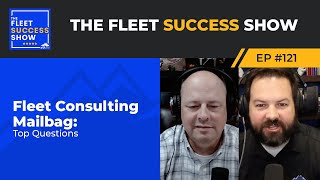
Mark Canton and Tony Yankovich answer fleet managers' most common questions: how to use lifecycle cost analysis for asset replacement, which KPIs matter most, and how to cut costs without hiring more technicians. They cover resale strategies, carbon reduction without full EV adoption, and why contextual data beats generic benchmarks.
Chapters
Hey, welcome back for another episode of the Fleet Success Show. I'm your host, Josh Turley, today coming back on. It's been a little bit. Joining me today, a couple of my, my good friends and colleagues, Mark Canton and Tony Yankovich. Welcome back, guys. How are you?
Good. Glad to be here.
Yeah, doing well, Josh. Thanks for having me again.
Yeah. So I know last November we've been, you know, really running and talking a lot about the different things that you guys face as consultants. Some of the different approaches that people should be taking. And today I kind of wanted to go through and do a little bit of a mailbag of sorts and think about, you know, what are the questions that, you know, maybe an outsider like me or, you know, some of these new fleet managers are coming in and they have questions about, you know, what should I be focusing on? What are the things that I need to be worried about, right? And I really wanted to kind of get from your perspective, you guys have been doing consulting a long time. Questions, common questions that you guys get asked, you know, that our listeners are probably asking themselves, right? And they haven't sent them into the email address, which if you ever want to get a question on the show or you want us to answer something directly, you can just email us at podcast@rtafleet.com. Very simple. We love getting emails from you. If you have comments on the show, anything like that, but if you want to send in your questions, we'd love to hear them. But we kind of go through and I wanted to throw some questions out to you guys. You know, I think we could probably do podcast episodes on every single one of these questions. But I want to kind of get the quick down and dirty version of, you know, some of the most common questions that you guys get when somebody brings you on as a consultant or they're looking at engaging you. What are some of the most common requests that you guys receive as consultants, as Fleet Consultants?
Well, I think we can just run down a list of questions and then, uh, then dive into each one and talk a little bit about those, Josh, if that's okay. But yeah, I think one of the, the top questions that we get is, how do I know when to replace a vehicle or piece of equipment? Yeah, that's a very important part of any fleet operation. So that's probably the top question that I've received over the years.
Definitely. Yeah, I think another one is, you know, how many technicians do I need? And, and then kind of building off of that, what other staff do I need? You know, do I need parts folks? How many do I need? Do I need analysts, etc.? Service writer.
Yeah, and I've definitely heard that one, you know, quite a few times. You know, personally, somebody's asked me that as well. How do I justify, you know, like our technician ratio? What's the ideal technician ratio, right? Um, and the, the answer is always, what, it depends. But the one I think you just— yeah, the other one that comes up is, well, what other staff do I need, right? What are the other support staff that I need? What are the other roles that I should be even thinking about? And I know we've talked about fleet analysts, things like that. So it's, there's definitely a two-parter to that question, I think, you know, from a common questions that get asked and questions that maybe should be asked, right? That people aren't asking. And on that, like on that note, do you guys have other questions, you know, that you wish people would ask you that, you know, maybe they don't ask you as often?
Right. Well, I think one of the other questions that I wish people would ask more is what can we do as an organization to maximize our resale value? We're gonna be replacing vehicles and pieces of equipment every year. So how can we get the biggest bang for the buck when we dispose of a unit?
Yeah, that's a big one. I think another one is, I wish folks would ask me how can they improve their carbon footprint even if they don't have the, you know, the resources or the capital they need to truly tackle EV adoption or some other alternative fuel like CNG or, there are steps you can take obviously. And you know, and even if you, if that's not the path you're going to or you're not ready for that to dive in all the way.
Great point, Mark. And I think one of the other things that I wish more people would ask us is everyone understands there's a technician shortage and there's difficulty in retaining qualified and skilled technicians, but what can we do? What's an alternative solution to not having the technicians that we need or not having the analytical support that we need? What can I do today to go out and provide a solution for our organization?
Right.
Because you still have needs, you still have a fleet to serve and all that, right?
Absolutely.
It's just how do you deal with the realities that you've been given? Well, let's start at the top of that list then. Let's talk about, so common questions you guys mentioned, how do I know when it's time to replace an asset? And obviously again, we could do, I think we have done an entire podcast episode on this using Orca and things like that. But down and dirty, if you had a one-minute-to-win-it kind of an answer for somebody that comes up to you at a show or or just pings you on email? What would be your answer to somebody asking that question?
Yeah, well, I mean, there's sort of two sides of it. One is the strategic planning side and one is the tactical today side, right? So you have to conduct lifecycle analyses. You mentioned, you know, you mentioned that as well. There's an empirical way to determine when the best time to replace an asset is from an economic perspective. And when you do that exercise, usually built into it is sensitivity testing. So you can adjust for access to capital and what your financing and funding needs. And then on the tactical side of which asset am I going to replace right now today, it relates to doing some work ahead of time to establish thresholds that tell you about, okay, at this point, the work is bigger than what it ought to be, and it makes more sense to replace this asset as opposed to trying to continue to keep it alive. And that takes a little bit of work by Klaas to essentially figure out what kinds of projects we don't want to do, at what points in their life we don't want do them, as well as what's the cost of those projects. So, both of those answers though, whether we're talking strategic or tactical, are very analytically driven, right? It should be a numbers-driven, economics-driven decision, you know, and not from our perspective.
Exactly. And just to add on to that, Mark, I'm sorry, Josh, but, you know, the other question that we really need to ask in that tactical decision-making process is, does this unit still meet our operational needs? Things change. Operations evolve over time. And we need to make sure that we're not just replacing an asset with a like asset just because. We need to make sure that the mission calls for that type of asset.
Yeah. I love that that's like the first question we should always be asking, right? And maybe this goes into the second category of questions, but the question isn't, when do I know, like, how do I know when to replace an asset? The question is, how do I know if I should replace an asset?
Right.
And then if I should, how do I know when, right? I love that, you know, that there's two sides to a rightsizing study and it's, you know, not only should you replace it, but should you replace it with the same asset or a completely different type, right? One that lasts longer, you know, has better resale value, anything like that. Yeah.
You know, ironically, to your point real quick, Josh, is that a lot more often than folks would think, you shouldn't replace like type. And unfortunately, that's not the regular practice, right? Right. So, yeah.
The other thing I think about, right, especially when it comes to, you know, replacing an asset, I mentioned the word ORCA. You guys talked about, you know, you've got to know the numbers and do the analytics, right? So if you don't know what ORCA is or an LCA, right, like Mark, you've said it already, which is lifecycle cost analysis. Uh, ORCA is Optimal Replacement, uh, Cost Analysis. So you can kind of find that trough in the curve of, you know, total vehicle cost, all that stuff.
Right.
So, um, and there it is. It's just basically it's looking at your data, looking at the numbers, and then blending that with the utilization data that you guys mentioned to make sure, should we even replace this asset?
So, right.
Uh, let's flip to the next one. You, you mentioned, you know, this, and I know we get this one a lot, uh, here internally, you know, uh, when people have questions about consulting, this is one of the more common ones I see. Uh, staffing levels. How do I know how many technicians I need? And I think most of the time I usually see this question in the context of, I'm trying to justify to my upper management that we actually need more staff, that we need more people, you know, on our team and trying to justify some of the, like, we need to change hiring practices or we need to do something different because the pushback is usually, well, how do you even know you need to go hire those people? Maybe we just leave those positions empty. So what would you say to those team members or, you know, those people asking, the fleet managers that are struggling right now with that? How do they know how many technicians they need?
Well, Josh, I think it really circles around to what Mark was talking about earlier about empirically defining what your requirements are. You know, we've done half-day seminars and webinars just on this topic alone of how to determine your optimum staffing requirements. And I think it's important to realize for the fleet manager that, you know, their gut instincts, although it may be correct, is not going to be enough to justify additional resources at the personnel level for many organizations. You know, you can't just go and say, you know what, we're not staying on top of our maintenance repair requirements, so I think I need another technician or another 2 technicians. I think what you need to do now, and the process that we use is very comprehensive. What we do is we first identify the work— Sounds like you should be paid more for it. Right. Yeah, first thing is to identify the workload. We do that by using asset equivalent units, which is very similar to the VEUs or vehicle equivalency unit approach that others use. But we do that and identify the maintenance requirement in terms of demand hours for each asset in the fleet. And then once you can identify that, and again, this is really simplifying it a lot, and Mark, you can fill in the holes for me, but once we identified the the maintenance demand requirements in total direct labor hours per tech for the entire fleet, then what we want to do is identify the workforce requirements. We do that first by identifying what are our technician tolerance levels. You know, how many hours of direct wrench turning time can a technician support? You know, in some organizations we expect them to be at the 1,800, 1,900 hour per year productivity rate. Other organizations, we would expect something around 1,200. You know, if they have other requirements. Maybe they're sourcing their own parts. Maybe their organization's not large enough to support a parts room, and they're sourcing their parts or receiving parts or ordering parts. So, you know, a lot of things are pulling away from their core mission of maintenance or repair. So there's a lot of things that go into that. So what we want to do is make sure that the technician requirements can be justified using data. Right.
Yeah, ultimately it's data-driven, right? But it accounts for the context with which that data lives in. It's kind of what I think, you know, Tony's talking about, those other responsibilities, things like PTO, you know, policies, right? You know, some organizations are going to give a lot more vacation time. That's going to impact how many direct hours you can reasonably expect from your technician team. You know, what kind of support do they have? You know, Tony mentioned sourcing their own parts versus having multiple parts techs, right, who are doing that piece. You know, some other things might be facility, right? Like, hey, we can't, we literally can't fit this truck inside of this bay. We have to work on it on the parking lot. That's going to impact that. So it absolutely needs to be data-driven, but you got to give that data context and then, you know, make adjustments, you know, for that. All right. You might, we've seen shops, we've seen areas where, you know, there's a facility where there's essentially two shops on opposite sides of a campus, let's say, or a yard, but they're being operated as a single shop, you know, that's gonna end up requiring more support staff per technician, let's say, than it would if they were all in the same physical building, for example. So there are caveats to that, but fundamentally it, yeah, it does boil down to that demand time, right? This is how many hours of work need to get done on the fleet. And so, and this is how many hours we can do. And do, you know, it's fairly straightforward math from that perspective. Right.
And you, and you mentioned like, you know, it's essentially the indirect cost, right? Is, is what else are they doing?
Right.
Um, you know, because we're big proponents of training. That's gotta be calculated into their, you've talked about PCO, sick time, all that. That's gotta be calculated into that. Um, if they have any, you know, mandatory company events that they need to be a part of.
Exactly.
It really is. It's all the other non-vehicle jobs that we have to take into consideration. In addition to, you know, like, well, this is, we know how many assets we have and we know how many hours per asset we need to, you know, dedicate to these things in order to keep them on the road. Safely, reliably, right? So, yeah.
Well, and Josh, I worked with a client up in Wisconsin recently where when the snow flies, the technicians are jumping in a plow truck. So they average 20 snow events a year and the snow event averaged 8 to 10 hours per event. So whenever the snow was flying, these technicians were unavailable and they were in a plow truck.
And all that does is it just adds more that you need more staffing, right? Like that's, you know, I've seen the same thing as school districts. where they have a driver shortage. Well, guess who's got CDLs? That's right.
That's right.
That's right.
That's right.
I've even seen the transportation director driving to a school bus, right?
Yes.
It's that kind of thing. What are the non-repair duties that they're doing? Because all that does is lower the amount, you know, like per technician that you can put towards a vehicle, which is, you know, significant.
So, right. Yeah. And I think it goes without saying, certainly you want to try to minimize, you know, you want, you want wrench turners turning wrenches, as we say. Right. But But the reality is, is that depending on the circumstances, there's always gonna be some time. Obviously some of it is, is directly related, like you mentioned training, right? That's a good thing. But yeah, it's a big factor. In fact, Tony, you mentioned with the plowing and, and Josh, you mentioned with driving the bus, you know, even just, you know, if you have a large mobile repair program because, you know, maybe your construction fleet or the nature of your fleet is such, that's obviously gonna impact how much time you're actually repairing vehicles. So, you know, to your point, it's gonna probably lead to more staff than, let's say, an equivalent fleet where everybody's coming to the shop, let's say. So, right. Yeah. Okay.
Well, I think, you know, the other part, that, that most people don't think about or don't try to empirically calculate is the number of support staff.
Yeah.
You know, once we know the number of technicians that are justified based on the workload, then we can start looking at how many supervisors do we need to support those technicians? How many parts clerks do we need? What kind of support staff when it comes to fleet management information system administrator? What about a fleet analyst? You know, what do I need? An accounting clerk? Those type of things. Are we doing our own procurement or does procurement from, you know, headquarters take care of that for us? So there are so many other things and factors to be considered that, you know, it doesn't stop with just the technicians.
Right. And again, we want that to be data-driven, but, you know, have that data live within the context. You know, again, I'll refer back to that same example of, you know, in the campus, two different, you know, shop facilities, let's say, that's being run as one, you know, you might have a threshold where X amount of mechanics needs X amount of supervisors. That threshold may need to change because of the location separation, right? So, you know, there's all kinds of factors like that. You know, you have a senior mechanic doing a part-time— part of their time as a supervisor, you know, those sorts of things. Sorry, Tony, you were going to say something.
No, I was just going to say, great analogy when you're talking about two separate shop locations on a campus or across the street from each other. But also shifts, you know, if we're working multiple shifts in a day, there's obviously an opportunity to have additional supervisors because you want, you know, both shifts supervised. So a lot of times that will require additional staff as well, just by, you know, trying to be more customer-focused by providing services in the off hours. Sometimes that will require additional staffing requirements.
Yeah, that's a great point. And to try to kind of put that in plain language, folks, like, let's say you decide that for every 8 technicians you need, or 10 technicians you need, you need 1 supervisor, 1 shop, you know, supervisor or something like that. But now, to Tony's point, you decide, hey, I'm gonna, I'm gonna break out those 8 technicians into 4 and 4 per shift. You're, you're actually going to need to increase your supervision time, right? So it won't be a perfect, uh, for— it really does depend on your operating needs and your circumstances. That's a great point, Tony.
It's a really good one. Yeah. Well, and I think too, as you look at that, because, you know, I know one of the things we'll look at is what's the opportunity cost, right? You know, maybe right now that technician is filling the role of parts clerk.
Right.
You know, but what are they giving up in order to do that, right? So I always think about, you know, from a prioritization standpoint, you know, I was just telling my kids today, I was like, you get to choose your hard, right? And fleet managers, we kind of got to do the same thing is you get to choose which one, you know, you don't want to do or do get to do, but it's still got to happen, right? So you just choose your hard.
That's right.
So one of the other questions that I think we get asked a lot, in fact, I don't know why, but we get this one a lot, not into the podcast per se, but I see it on the forums quite a bit, which is what are like the top 5 metrics that I should be tracking? In fact, Tony, I know you did a little webinar on this one not too long ago, but what would you say, you know, what are the top KPIs we should be measuring and how would you answer that?
Yeah. And you mentioned it, Josh, we did a weekly fleet tip or something a while back. And we talked about the top KPIs to manage. And I'm going to start with the easy one, Mark, and then you can fill in the rest.
But thanks a lot. You take the easy one. We all— that's right.
No, you do all of them, Tony, and I'll chime in.
But I think the most important one is fleet availability. I mean, you know, the fleet organization's mission is to support the activity of the organization, whether it be law enforcement, public safety, whether it be, you know, delivering goods across the state or across the country, whatever service you're providing. Your role as a fleet technician, fleet organization, is to make sure that those people have the assets and vehicles and equipment that they need to get their job done. So I think fleet availability is probably the number one.
Yeah, no argument here. I think the second one is probably, probably PM compliance, right? You need to make sure that you're on top of, you know, both because of compliance issues, safety regulation, et cetera, but also, you know, PM folks think PMs are about the oil change. It's not about the oil change. It's really about that inspection.
Just told somebody that yesterday, actually.
Yeah, you know, you want— we always talk about scheduled work, you know, so this is another KPI, your scheduled versus your unscheduled repair rate. But the idea behind PM is to help drive that scheduled repair rate, right? And, and everyone I think knows this just from everyday life. I don't have to give you numbers to prove it. You know, when you're doing things proactively, they tend to go much better, be much more efficient, much more cost effective than when you're doing them reactively. So that's, you know, that's a big piece driving that. And, and the reason I think availability and PM compliance, you know, if you have an in-house shop, then we can start getting into some of the KPIs that are relevant to that. And like I said, you know, scheduled versus unscheduled, uh, work order turn times and that sort of a thing. And certainly those are relevant for outsourced operations as well. Right. But, but they're much more higher on the priority list if you're running an in-house shop, let's say. Right. I think, you know, um, And, you know, maybe that's debatable, but I think you guys know where I'm going with that. But, you know, things like availability and compliance that exists, it's universal. It doesn't matter what industry you're in. We're talking yellow iron to, you know, to green iron. It's relevant and it's equally important. So those are certainly some of the higher ones. I think some of the ones that get missed often are on the asset management side, right? So, you know, what is your replacement backlog? Are you keeping up with your replacement? Because that'll have a a big impact on you.
Cascading.
Yeah, right, exactly. Another one that gets missed, I think, is sort of— this has a few different names, but it's kind of like— often folks will call it utilization percentage, which doesn't really help. It's, or what percentage of your life have you used up, right? And so, the idea behind that is you have an estimated life cycle. Hopefully, you've estimated that life cycle empirically like we talked about. And therefore, there is a right time to get rid of that vehicle. And without getting too deep into the weeds, you know, if you're way out in front, in other words, if you plan to get rid of that vehicle in 7 years, 80,000 miles, and you're on year 5 and you have 100,000 miles, you're going to hurt yourself. But you're also going to hurt yourself if you're on year 5 and you only have 20,000 miles, right?
Right.
And so measuring that to make sure that, you know, we're about where we ought to be is a really important KPI that is true whether or not you're an in-house shop operation or you're doing everything completely outsourced. So, That's why I think some of those are kind of more important, let's say, than they get credit for. You know, what falls in the top 5 for me after availability, it kind of depends on your fleet and your circumstances. But Tony, you had a— that was a great fleet tip and you had a solid argument for what you thought were the ones that follow availability. So please.
And I think, you know, one of the things that I think is very important is comeback rate. You know, how often is that vehicle brought back to the shop because it wasn't fixed right the first time? Now, sometimes, you know, it's obviously a mistake by the technician, but other times it was incorrectly diagnosed by either the operator, maybe the service writer. There was a communication issue back and forth. Maybe when the online work order was processed, the driver didn't fill it out correctly. They didn't understand. So I think comeback rate is very important. I think—
Real quick, Tony, sorry to interrupt you, but to your point, that's very important whether we're in-house or not, right? Because if it's in-house, then you got to address an issue with your team. And if it's outsourced, well, then you got a vendor issue, right? So it's a great point. It's a great point.
Well, exactly. And if we are an organization that's providing services to other people outside of our organization, whether we're insourcing work from a neighboring community, another company down the road, that costs us money. Come back, it costs us money. You know, the— I can't remember the statistic, but OEMs budget between 2% and 4% of their overall global sales of new vehicles each year for warranty recovery work. So the, the amount of money that they're budgeting and planning on spending in basically let's make it right work is enormous. So I think it's, it's really a big issue. The other thing that, and again, we could have a whole nother web, webinar on or podcast on the cost per AEU. But that's a really a great way to determine the competitive, competitiveness of your organization in terms of cost.
Right.
We always like to look at competitiveness in two ways, levels of service and cost of the operation. And by, by doing an activity-based costing study and determining your cost per AU, that's a great way to determine your competitiveness.
Yeah. Yeah.
So, and the last one that, that I'll bring up and, and I think it's often overlooked is your customer satisfaction score. Yeah. Whether you're doing general annual customer satisfaction surveys, whether it's a more formal, you know, net promoter score type of review and analysis. I like to tell people when we come in to do a fleet study that, you know, we can look at your organization. You might have the best policies and procedures and SOPs and the data might be great and your KPIs are within the benchmark or industry standards. But if the perception of your customers that you're supporting is poor, then you have a problem. So we want to make sure that that is fully reviewed as well.
Right.
Yeah, that's probably the most underrated or least utilized, at least in our experience, as far as the ones that are up there. And what I like about your cost per AEU or cost per VEU is that what that does at a street level, folks, is it allows you to essentially evaluate how effective you're performing fleet maintenance from a perspective that everyone will understand. And I think that's actually why some fleet managers unfortunately shy away from it, right? But, you know, people know what it's costing their car to maintain, right? And that's what you're doing essentially. You're normalizing it and allowing, you know, so that you can't use, well, it's complicated. You know, this has hydraulics and it's, right? You've kind of solved for that. So it's a really important metric.
Yeah.
So shifting gears a little bit, what are, what are questions that you wish people would ask you more often, right? That you're like, ah, you know, nobody ever asked me this and I wish they would because this often ends up answering some of the other problems that they're running into. I think you mentioned, you mentioned like maximizing resale value was one of the things that you wish people would ask you more about. Tell me more about that.
Well, I think a lot of organizations, you know, they're so happy that they're finally replacing an outdated unit that once it's taken out of service, they kind of put it in the backyard and forget about it or on the back lot and forget about it. But really, there's a cost for every day that that vehicle sits that has not been disposed of. There's a cost to the organization. We did a couple of studies back in the day, but the cost per day is something between $4 and $7 a day that you lose in residual value for every day that vehicle sits. Uh, right now the average days— yeah, absolutely. And there's going to be some maintenance costs, there's going to be tags and registration that you still have to maintain.
Yeah.
Um, and you know, um, tires.
Yeah, it's too long, it won't start, right?
Correct. You're gonna get rusting batteries, you're gonna get rust, your, your belts and hoses are going to start drying out. Uh, you know, and obviously I think everybody knows that a vehicle that's being operated actually is in better condition than a vehicle that just sits and doesn't move.
Right.
But, you know, the average days to sell for the used vehicle marketplace on the commercial side is 49 days right now. So, you know, if you're not tracking days to sell as an organization, it's something you certainly should be.
Yeah. Yeah. Yeah. And you should shoot for 30 days, obviously. Right. I mean, you think about it from what your financial schedules are with your accounting and your finance team. Um, you know, even from just, you know, sort of, let's say, playing with the books perspective, you don't want another month of depreciation, uh, hitting those books. So you, you definitely want to get out of them, you know, in front of them. And to your point, Tony, the other thing people don't do is they don't benchmark what those residual values ought to be. And so we'll come in, and let's say we do get hired to do a lifecycle analysis to connect the dots, you know, and we'll say, okay, well, give us the data on your resale And sometimes we'll say, well, man, we go to, we go to look at the market and it's, you know, 10%, 20%, less than 50% of what they should be getting or what's out there for them to get. And well, our vehicles are beat up and we don't expect to get so much. Okay, great. But, you know, how much less, right? Are we going to get? And so by failing to do that benchmarking, it's kind of like, yeah, oh, we're like Tony says, I think sometimes folks are just happy to get rid of it. It. Um, and it's like a cyclical effect because it's okay, we're just happy to have gotten a new one, so then this thing sits in the yard, and then one day we realize, oh, it's been sitting in the yard for 6 months, a year, uh, let's just get rid of it. Yeah, yeah, right, exactly.
It's awesome. Yeah, but I think you too, you run into this problem because if you look at it on the books, if it's run out its depreciation schedule, well, on the books it's got zero residual value, right? So anything you get above that, as, you know, as far as the financials are concerned, is awesome.
There's a win.
Yeah, but I think when you do, when you do that benchmarking, you say, what should we have gotten or what could we have gotten? And you look at the delta between that and what you actually did, that is a major piece that people miss, right?
Yes.
And I think you already hit on this, but one of the best ways to maximize the resale value is, you know, stay up to date on your replacement programs, right? Because if you're not running them into the ground, they're going to have, you know, if you're able to keep them at 5 years or I've even seen them turn on 2 years. Yeah. If you're able to turn them more often, you're going to have better residual value. For those assets.
Right.
You know, it just, it works out that way. So don't run them into the ground, you know, don't keep them for 15 years. You know, stay up to date with your replacement cycle is a great way to, you know, maximize the resale value that you get for each of your assets.
Yeah, absolutely. There's a couple other things that organizations do, and I'm surprised how many people still try to do their own on-site, personal, in-person auctions.
Right.
You know, and not use online resources. You know, the online resources have such a greater market reach. I mean, you're, you're really marketing to anyone in the country as opposed to a small localized in-person auction. Yeah, exactly, Mark. Great point.
Yeah.
And so many people still don't do that. It's amazing how many people do that in person still, or they'll cannibalize.
And listen, I get it. Sometimes you get— you understand sort of one-off cannibalization needs that, that may appear. That's fine. I'm not saying never, but I'm saying, boy, it should be the minority, and it should be a specific one-off decision, not a standard practice for the overwhelming majority of fleets. I'm sure there's an exception out there that I'm not conscious of at the moment, but the cannibalization that happens, you know, trust me, this thing is worth a lot more to you sold if you sell it quickly than it is by just the sum of the parts, right?
Yeah, exactly right.
Yeah, great point, Mark.
Pivoting a little bit, Mark, because we're just talking about replacements, and I, I know this is the answer to one of the other questions that you wish people would ask more often.
Yeah.
Because you and I have talked about this, but it's, you know, how do people— EV is all the rage right now. You can't go anywhere without talking about EV.
Right.
How do people— if EV adoption is just, it's too big of a nut to crack right now, how do they still reduce their carbon footprint?
Right.
They're trying to lower that carbon impact. They're trying to reduce emissions. They're trying to do their part. But EV adoption is just, maybe the power grid's not available. Maybe EV, right? You know, the vehicles aren't available, they don't have, you know, a heavy-duty alternative, that maybe it's not cost-effective, which I both know is very much the case right now, right?
What if they can't get the infrastructure in?
Maybe, yeah, there's a million reasons why you can't, or, you know, maybe even shouldn't. Uh, what are some of the other alternatives they have to EV adoption to reduce that?
Well, you, you just hit the nail on the head, and the, the— it's just replace your vehicles. Having a solid a fleet renewal system and perhaps even an aggressive one if necessary for some of the other reasons we just talked about. But, you know, folks, I think, know this intuitively, but they're not always sort of mindful of it. But if you just look at your vehicle, right, you take— I mean, pick a vehicle, you can pick anyone. I always use Toyota Camry just because it's a fairly standard common vehicle that you see out in the world.
Forget the hybrid, right?
Yeah. So we're not even talking the hybrid, just the standard one, right? Look at the fuel efficiency today. And then look at it 5 years ago and 10 years ago and so forth and so on. It's improving, right? The technology is—
F-150, right? Best-selling truck in America. You compare the, you know, the Gen 14s that we're running right now with the EcoBoost, right? Compared to the 5.4-liter, it's night and day different from both an efficiency standpoint and a power standpoint and a practicality, right?
Exactly.
And that's not hybrid. It's just straight up ice for ice.
Exactly. And yet when you do the math, and we've done the math, right, and you, and you do this now and you peter this out for your entire fleet, all your classes, and you get them replaced, you know, at an appropriate time, the drop in carbon emissions is phenomenal. Uh, and so again, that's not, that's not to, you know, poo-poo or say don't consider EVs or don't consider CNG or whatever else you might be thinking about from an alternative fuel, but it, but it is to there's a lot, there's a lot of gain, there's a lot of low-hanging fruit to be had simply by replacing the assets and being on time. And the irony of implementing any, you know, alternative fuel program, whether it's electric or anything else, is how do you do that? Replace your assets.
How to replace them all. Exactly.
So that's kind of the irony is, you know, a lot of times many organizations, they say, okay, we're going to do this and we're going to tackle EV or whatever it may be. And they say, how do we do it? And we look up and, okay, replace the vehicles. And oh man, you haven't replaced the vehicles in 10 years, right? That sort of thing. It's like, oh yeah, well, I guess it's a good point. So yeah, it's really very straightforward when we stop and think about it. But yeah, I guess that's the key to pause and think about it. Yeah.
Well, and I think we've talked about other alternatives too, which, okay, maybe going straight EV isn't the right option.
Right.
And going even plug-in hybrid vehicles might be a little bit difficult. Then just do, you know, like look for other alternatives like full-on hybrid.
Full-on hybrid, yep.
You know, because like I watch, I see these PowerBoosts running around, you know, these F-150s, and they're amazing. Um, yeah, you know, and even like we talk about the Camry, like getting that in the hybrid edition, uh, that alone will help lower your, your carbon impact, and it doesn't require an entire infrastructure.
Exactly.
A changeover.
Exactly. So, and I like the plugins too because you know what, they're a great middle stage to me. I mean, I know Different folks have different feelings, but they operate as a standard hybrid. So you can go get them even if you only think you're going to have the infrastructure in next year or the following year, but it's due for replacement this year. That's a nice piece about that. You can still get gains. And to your point, Josh, I mean, there's a lot of wins. I mean, one example is, can you use biodiesel? There might be a couple of applications.
Renewable diesel, right?
Renewable diesel, right? There's a lot. I mean, the gains on biodiesel are amazing. We, you know, I have personal firsthand experience of moving a fleet from diesel to biodiesel. And to my surprise, we actually gained about half a mile per gallon. You know, did we replace a few more fuel filters? Yes, we did. Did we have gelling and all those other myths? And no, we didn't. Granted, it was an over-the-road, so we had the appropriate use case. Regens weren't an issue, you know, but, you know, it's something to look at. And another thing is really good PM programs, by the way, help you with your fuel efficiency and keeping you know, your footprint down. So, you know, there are other things that can be done to help. And I just wish people were kind of taking a harder look at those other options.
Well, Mark, we can actually circle back to the whole replacement discussion is, you know, not just think about right typing your vehicle, you know, right? We don't have to have that 1-ton pickup truck because our towing capacity is X, because now the half-ton pickup trucks in 2023 have the same towing capacity that a one-ton had, you know, 6 years, 7 years ago.
That's right.
So it's really right typing your vehicle can, can make huge dividends as well. Yeah.
Well, I'm just saying that now too, like the, the new Mavericks that have come out, they're very popular because it's a right sizing, you know, right typing. And, you know, you know, using that vernacular sort of in the mass market. Yeah, exactly right. But even in fleet, we're seeing an adoption there because we, we still need a pickup truck, but we don't need You know, we don't need the Ranger, we don't need the F-150, we don't need a Super Duty for sure. Uh, but we still need that pickup bed and a little bit of towing capacity, but nothing, you know, we need something significantly, you know, more than an SUV, but, uh, you know, less than a full-size.
Right.
Uh, and I think just going through that exercise, I remember, you know, and I've talked about this on the podcast before, but being and listening to a university up in Utah that did that, they took their F-150 4x4s. And swapped them out for, you know, Toyota Tacomas. I mean, basically because this is what's awesome too, and this goes back to another point we just made, which is by being on top of the replacement program, they flipped those every 2 years. And with their volume discount they were getting, they were actually making money selling it 2 years later. They were getting more money for the sale than they were, you know, than it cost them to purchase it.
That's right.
If they had waited 3 years or 4 years to do that, And sorry, my allergies are kicking up. But if they'd waited that long, they'd have lost the residual value and they'd be, you know, they'd notice with the F-150s, like the depreciation just killed them. You just lost too much value up front, whereas the Tacoma's held onto them longer, you know, just by right typing.
So that's a great point. I mean, nobody looks at residual value when they're evaluating what, what, what, it's a great point. And, and I'm sorry, hopefully nobody comes after me. I'm sorry if I'm spilling secret sauce here, but That's the business model of all the major rental companies right there. You just said it, right? Get a— buy it volume, flip them quick before I have to deal with maintenance and repair issues. So again, I'm not saying that's right for every fleet in every case and every class, but it's— it can solve a lot of problems for a lot of fleets in a lot of places.
It looks really nice, right?
Well, here's an interesting, uh, story. A long, long time ago, I was working for a, uh, doing a consulting gig for a local government client north of the border, our neighbors in Canada, and their standard vehicle— and this shows how old I am— it was a Smart Car. So unless you could justify the need for something larger than a Smart Car, you got a Smart Car. So for those of you that don't remember the Smart Car, I mean, these things are literally the size of my desk.
Little boxes. Yeah, exactly. Little two-passenger boxes.
Exactly.
Uh, so one of the last questions that, you know, we don't get asked enough, a lot of people ask us about right size, right staffing, right? Like, how do I, you know, what's the right number of technicians that I need to have, staffing adjustments and all that. But we usually don't get the question as well, what are my alternatives? You know, I can't go out, I can't find anybody to hire. Even if I knew I needed 10 and like maybe I've got 7, I'm not going to go find 3 extra techs. And we don't usually get to ask that question as well. What do I do instead?
Right.
And so like, I've got a couple ideas, but what would you guys say to somebody like that is, you know, I wish more people would ask, what are my alternatives to the staffing shortage?
Yeah. I mean, there's, it all depends on obviously on what your particular needs are. Right. I think most folks know that there's an outsourcing market out there. Right. You can, you can outsource via a network of shops. There are fleet maintenance and repair providers that will help you, and they'll do it for your whole fleet. They'll do it on a one-off in a particular location, particular types of vehicles, particular classes. I mean, the range is just amazing, right? You can say, hey, we're short 3 techs and, you know, we're going to have our guys focus on over-the-road vehicles and we're going to bring folks in just for off-road, you know, yellow, you know, that kind of a thing. You can, you can outsource and actually staff your shop if you already have the facilities and you like the control and the flexibility associated with that. You know, you could bring somebody in and essentially staff your shop. Out. It's important when you're outsourcing to use competitive contracts, but that's another podcast for another day, and SLAs. But, you know, those options are out there. I mean, for parts, if it's just parts that are the issue, right, you can, you can contact the major parts vendors and they'll actually come in and run your parts room for you. And what's nice about that is they'll do the whole thing on consignment, so you don't pay until it gets issued, which really frees up a lot of cash flow. So there are some other advantages to that as well. And I got to tell you, finding a good parts person, folks who've heard me speak, that's worth— you're worth their weight in gold. So if you can get a good one, it's worth it, you know. And then there's others, you know, and this is areas, frankly, where we can help to a degree, right? If you need a fleet manager, you know, we're not going to come in and run your fleet for you forever, but we can help you temp while you're doing a search. We can help you with the search.
Yeah, we've definitely done that.
For any of the positions. Yeah. And we've, you know, we've seen obviously an uptick in that, which is not surprising. People know what's going on in the job market.
It's the brain drain, right? Yeah.
Yeah. And I think, I think a big one though, that kind of really to me is a big one just because of folks on this podcast know my passions, but also because I think it's one of the most challenging things to find and that's analytics help.
Yeah.
You know, it, it's hard to find really good people who know both fleet and know analytics. We did do a podcast on that a couple months ago. It's hard to find. And also, unless you're a very large organization that has the resources to have dedicated people for that, you know, even if you can find the person Can you afford to hire them and that sort of a thing? So that's an area where I think people really ought to be getting more help properly because they can, you know, you can do that in a multitude of ways, whether it's fractional, whether it's one-off needs, you know, those sorts of things. So I don't know, those are some thoughts.
Well, Mark, anything to add on that?
Yeah, I'm just going to jump on what you said about the data analytics. And, you know, you can find the best number cruncher, the best data scientist out there. But if they don't understand the context of the numbers, they're not going to be a lot of value to the fleet organization. You know, we've, we've seen analysts where, you know, they just didn't understand that a Toro 580D should not be $480,000. You know, it was $48,000 and somebody from the fleet organization threw that extra zero in. And so if you don't have the context and you're just reporting numbers, numbers. You know, what do they say? Garbage in, garbage out. It's only good as the numbers that are in the system, and the numbers in the system need to be accurate. And then, then you have to have somebody to be able to put some context behind that.
Yeah. And clean that up. Yeah.
Yeah.
I know as we were talking about the technician shortage, uh, you know, and, and all this, like the indirect time, one of the things I think is an alternative, and I just actually had this conversation yesterday, uh, right after I mentioned, you know, hey, the point of a PM is not the oil changes, the inspection, right? The, the thing that I think most people, they get hung up on SRTs and standard repair times and, and they focus on the wrong aspect of the problem. Usually it's not the people, right? And so usually one of your alternatives, if you can't get an extra 3, is look at your processes, right? And are your processes as efficient as they could be? Is your shop layout as efficient as it could be?
I think that's a big one.
You just mentioned, like, well, what if we have 2 shops that are on totally ends, total 2 different ends of the campus? Well, man, that sounds like an inefficiency, right? Is that we're driving between two different shops. How much time do we waste just doing that? You know, like we essentially staff an entire technician just in wasted time. And so I think one of the best alternatives to, you know, if you can't go hire them, you can't find that person, is make sure that your processes are as lean as possible and that things are set up. You know, we talk about spaghetti diagrams and all that. You know, this is, this is the Ron Turley method right here. Is going through and making sure that your shop is laid out correctly, that your work is laid out correctly, that, you know, your techs are trained and they can work efficiently, that you're measuring against SRTs, that you have implemented that. Go lean, right? Yeah. And you'd be surprised as, wow, we do that and all of a sudden, you know, our assets, you know, our AUs, they goes down, right? Like the hours per AU drop and we don't need as many hours per AU. Well, guess what? You just freed up You don't need as many technicians now. That's right.
So great point.
There's a lot of low-hanging fruit right there.
Great point.
That you could eliminate. You know, we talk about right-sizing your fleet. Processes help you right-size your staffing as well.
So yeah, that's a great point. Yeah.
Well, um, I guess any other questions just off the top of your head, we won't necessarily answer them, uh, but other common questions that you guys might get, uh, you know, just maybe jog jog the interest or pique some fleet managers' brains out there?
Well, I mean, two of them we kind of alluded to, you know, how do I know if I have a cost-effective operation? And we kind of touched that with the cost per AU and VEU. I think another one is repair versus replace. I talked about that at the time, you know, how do I know when I repair versus I replace a vehicle?
I hear that one a lot, like, you know, especially being at GFX, I've heard that one quite a bit.
Yeah.
Yeah, and I think, you know, everyone's developing these EV and fleet sustainability plans. It's like, what are the critical components of that? What should it include? So those are some of the questions that we're starting to get more and more of as well.
Yeah.
Well, and how many potholes are on that road to electrification? Oh, man.
Right.
Little gotchas that you didn't even know about or know to ask. You know, I was talking to a school district yesterday, and they had no idea of the NFPA recommendation for the 50-foot radius, right? They didn't have any idea about, you know, the high voltage and all that stuff and how their shop layout's going to have to change to accommodate it, or that they're going to lose capacity, right? They just have no idea about that stuff. And so they, you know, talk to consultants, talk to people who've gone through it, um, you know, because we've seen a lot of it, what's worked well, what's not worked well. It's very helpful.
Yeah. And then you finally get your head around all the various things you got to think about and worry about, and it's like, Well, what do I do first? What, how do I prioritize?
Where do I start?
Yeah.
And then you can go buy the vehicle, right? You know, most of them, we find out, well, I bought these, I bought these 10 Nissan Leafs and I don't know what to do with them, right? They go, well, I guess they're going to sit there because you can't charge them.
So, right, right, right. Well, cool.
I think a common one we're getting recently, Josh, just real quick, is all the supply chain stuff. But again, I think that's a whole nother podcast.
But yeah, that's certainly on the heels of the strike and everything, right? What the long-term impact of that's going to be in addition to due to all, you know, chip shortages and whatnot.
Yeah.
Feature, you know, at the least they started getting them out with feature deletes and whatnot. But yeah, there's a, there's a big issue there. So, yeah. Um, well guys, I think that's going to wrap it up for this episode. Again, if any of our listeners, if you ever have any questions, you want to throw them over to the consultants, you want to hear their take on it, uh, just email us podcast@rtfleet.com. Uh, and as always, you know, be sure to go share us on your socials. Tell us what you liked about the episode. You know, share it with your friends. You have colleagues in fleet. This podcast is for them, right? It's to help us all get better and really build leading fleets at every organization. You know, because our mission here at RTA is to help fleets succeed. So we really appreciate everybody listening, tuning in. And until next time, we'll see you.
Take care, folks.
See ya.
More from Josh

Episode 227: The Hidden Costs Killing Fleet Operations (It’s NOT What You Think)


Episode 225: Are Certifications Still Worth It? The Truth About ASE, CAFM & Fleet Leadership




Episode 221: The State of Fleet Management: Education, AI, and the Technician Crisis with NAFA’s CEO

Episode 220: Motor Pools Are Back: Right-Size Your Fleet Without Breaking Operations

Episode 219: Stop Guessing at Downtime: Status Strategy for Better Availability #podcast #fleet

Episode 218: Fleet Predictions 2026: AI Hype, Technician Shortages, & the Next Era of Fleet Managers

Episode 217: Why Replacement Planning Solves 95% of Your Problems #podcast #fleetmanagement #fleet