Episode 123: 100 Best Fleets with City of Las Vegas
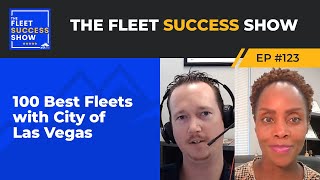
Tracy Scott and Brenton Messner from the City of Las Vegas placed 86th in the NAFA 100 Best Fleets competition, their first time entering. Preparing the application pushed them to upgrade their operations: iPads for technicians, new Wi-Fi, RTA software for work orders, and paperless systems. They credit the competition with boosting morale and getting visible leadership support.
Chapters
Welcome back for another episode of the Fleet Success Show. I'm your host, Josh Turley, and joining me today are two very dear friends of mine from the City of Las Vegas. I have Tracy Scott and Brenton Messner. Tracy, Brenton, welcome.
Thank you, Josh.
Thank you for having us.
Yeah. So I guess, you know, just to introduce you, Tracy, you and I have known each other for several years. You've been over there at City of Las Vegas. Since 2014, right?
Yes. And, uh, the City of Las Vegas.
And you're the fleet manager for the City of Las Vegas. Yeah. Uh, and then Brenton, you just recently, you know, I'm going to say within the last year or two have joined City of Las Vegas.
Yep. 2 years ago, just started November of '21.
Awesome. So with that, I'm going to let you two just kind of, you know, for our listeners, uh, maybe I haven't met you before. Give a little background on yourself, some of your past career history, and some of what you like about Fleet.
Some of my— well, I'll get started. My past career history before coming to the City of Las Vegas, I worked with just scientists and engineers. My degree is civil engineering. And prior to that, that's what I did before I was promoted. And they said, hey, give it a try, go over, see Fleet. They wanted us to, they were trying to go from paper to a more, some type of software. So that's when RTA came up and I came over and that was my job to bring them into the technology of using software to create work orders and to schedule the work of the mechanics and really track our assets better.
Awesome.
And I've been here for 10 years. I've been the fleet manager for 10 years prior to this. I came over literally as their superintendent and I was with streets and sanitation for 7 years prior to this.
Okay. So, like a little bit of like public works and that kind of background and yeah. Yes, exactly. Okay. Well, Brenton, how about you?
Yeah, prior to starting here at the City of Las Vegas, I was with the city across town, City of Henderson, and I was there for Right at 15 years in fleet. I worked my way up from the tire shop through mechanic. I worked in the parts department and worked as a relief or backup shop floor supervisor. And so yeah, I've been in fleet for basically my whole career and absolutely love it.
Awesome. Well, I'm sure it probably would. Most of you, every time I talk to fleet managers, it's usually, well, how did you get into fleet? And a lot of them, it's kind of by accident. You know, I either was a technician. Or they needed somebody who had, you know, this kind of skill set and I transferred. So, you know, I'm guessing that's probably true for both of you as well.
Oh, absolutely. Fleet, they had a, they had a manager and he had retired and for 3 years it was, they were, they were being checked on and they decided they need someone over there full-time as their manager. And at the time, my, my Director, my supervisor at the time, he felt that I could do it. And I said, well, you know, fleet is one of those things, uh, you know, I know engineering, but I don't know, you know, civil engineering, which is things that don't move, not things that mechanical engineering or the, you know, that's for the vehicles and things like that. But it's been amazing. I've been here 10 years. I've learned so, so very much and, um, have grown a whole new respect for just the whole field in general and everyone that's in it.
Yeah, it's pretty special. So, well, so today kind of the emphasis on, you know, what we're trying to help our listeners with right now. NAF has just opened up the 100 Best Fleets competition, opened that up on December 6th. And then, you know, the application deadline to have people submit is by January 26th. And so we're trying to help people who have— maybe they've never applied before. or if they're on the fence, you know, we want to kind of go through what does that process look like and some advice that we'd have for them. Um, because I know you guys have recently applied. Um, you know, I'm guessing you're planning on applying this year again, but we could talk about that. So kind of open it up, I guess, you know, let's, uh, a little background is how many times have you guys applied for the 100 Best Fleets and what made you start applying?
I will take this one only because the person on here is the— why I applied. I was encouraged to apply years ago, and reading through the questions, it was a bit intimidating because I could tell we didn't have several things in place. And if they were in place, I didn't feel they were of the magnitude that I could report on and receive some type of, you know, accolade for. And when Brenton came over, he said, do you mind if we just try? And I was like, man, I don't want to try first and fail, right? I'm like, let's get some stuff together. Let's look at the questions and work backwards. And man, that was a hard one because he goes, do you mind if I try? Like if we just, if I put something together and I was like, oh, and then it's a great thing to have the limited field so you don't have to write a dissertation, but then it's also scary because You only have so much to sell yourself and there's so many possibilities. It's like a competition that's out there and you know, you kind of know the places where you need to firm up. And I was like, let's just get a few more things in place. And so we've only replied one time and that was last year and, and we placed and I was, I was very shocked yet I was pleasantly surprised because it worked kind of like that when you go into a classroom for the beginning of the year and they give you this quiz. And you're like, "Oh, quiz the first day?" But you're okay because you know they're not really grading it. They're just trying to see where to start you. And after we entered it, it was, it felt that way. Now we have so many hands, so much assistance. Getting to the other steps is going to be something that it's going to change how we do business. And right now it is the access and the people that, it shows you care. And when they know you care, then now you have honest answers, conversations with people to help get you to that next level. And that's what it has been for us. And had I known that's what it was, I would have entered year 1. That's right.
Well, and so much of that too, right? It's just that fear of the unknown and the uncertainty and like, well, I don't know, you know, what's going to happen if we get rejected? What if we don't place? You know, I, you know, And we've got this competitive nature in us.
Don't tell anybody what we're doing until we win.
Well, so, you know, I guess talk to me about in the year since you've applied, you've got the questions. What do you think has changed in your approach coming into this next year because you went through it the first time?
Our confidence.
Okay.
Our confidence in Brenton, as the floor manager of the mechanics of two shops, has like gone in and implemented so many things. It's been amazing what he has implemented in the midst of, you know, post-COVID, trying to get vehicles and supply chain issues, what he's been able to do and the ideas that he's been able to put in place with staff. Staff and to get them right on board. I would have never pushed them that hard to go, you know, to electronic things because I came over here and did RTA, um, and implemented that. And that was, that was a tough sell.
Yeah.
And going paperless in this industry. But I, I want him to talk on it because it's just amazing the way his mind works and what he can get done.
Well, Brent, you gotta take it away.
Hey, that— yeah, sounds like it. Yeah. I mean, just going through the process and everything is— it is a contest. It is a competition trying to get the highest place that you can get. But it's also a resource to look back and go, what have we done for the year? And then how can we plan next year to do process improvements? What can we do better? And going through, going through the application, as Tracy had said, yeah, it is character limited. So you have to be very specific, very concise, which is a blessing and a curse because sometimes it's hard to figure out data and other times how do you condense it down to the important bits that really matter? But ultimately, it's, it's nice to get the national comparison and international comparison that the 100 Best Fleets offers. And then on the tail end of it, once you do apply and once you do place, then you get, as Tracy is saying, all the additional resources and different ideas on how to do better going forward. I mean, like, we've just started partnering with the consulting side over with RTA, but we've reached out with various fleet manager associations, you know, between NAFSA, with Fleet Pros, with different groups and just getting ideas and figuring out, hey, We're all in the same boat. And yeah, here's a list of the 100 people that are doing this amazing. How can we get on that list? But also what can we learn from the people on the list? And, and just reaching out and getting ideas on what we can do better as a group, whether it's customer service oriented, internally, externally, better communication between management and staff, and just keep everything flowing in a, in a constant progression rather than being stationary. And adding the competitive nature, really, I think it kind of got our staff alive. I mean, we got 86th place this last year and we got that meeting and got the award. And I told everybody, I want to be in the 60s this year. And so set that goal high, give it a try. You know, you, you'll never know where you land until you give it a try. And even if you don't make it, use it as the resource that it is rather than a, hey, you know, we didn't make it, we're terrible. No, you're not terrible. Maybe you can write your story differently, but also find out what everyone else is doing that maybe you're not, or something that they're doing different than what you are and give it a try. It's, you know, it's just that constant keep moving forward, keep trying better.
Right? You miss 100% of the shots you don't take kind of a thing, right?
Exactly.
When you were doing this, did you find— so you have the 12 criteria, the questions you have to answer. Did you find that this year, because you had those 12 questions, you knew where you scored, were you reflecting on those throughout the year? Did you change initiatives or did you say at the beginning of the year, this is how we're going to get to 60? Talk to me about the process as you prepared for this year.
This last year has been a roller coaster. I mean, just to start out, we were down to below 50% staff for a couple of months this year. So it's, it's definitely been really rocky. So just trying to keep our heads above water has been a struggle. As far as targeting what we wanted to do, I think we kind of had a couple of rough ideas early on that I know I had I was pushing towards the technology side that we can do better. And we were able to get like iPads for every single tech that are sold.
Only after we had to pay to have each building with better Wi-Fi. We started where it's, you know, you have an old building and then you have to get up to speed and then you have to have the budget to do that. But you also have to prove to them why you need it. Why do, why, you know, an iPad of all things, why do they need iPads? They would, you know, how do we get this past people to, to, and then to promise them, I promise you, they won't be surfing the net. They really are doing work. How do we get them? You know, what happens when one breaks? So we went through each step. First it was the iPads. Then we had, we had the iPad holders. Then we had the separate keyboard. But on the categories, my fear from the very first one, first time was that what if you don't have something for every category? What if you've only done well in 3 or 4? You can still enter. It's not like one of those tests to where, oh, well, you already, you didn't, you only had 5 out of 12. You've already failed.
It's pass/fail, right?
Right. They're looking at it and they really want you to work well. I feel that it provides you access to really sincere individuals that want you to do your best. While it's a competition, sometimes it's like, us against the world too. It's let's make Fleet, let's change that mindset of Fleet. You can trust us. We are literally doing the best we can. We want you to have your vehicle more than you want to have it. And so it's really, it brings us together as a team. That's what it feels like. It feels like a gigantic team and we just all wear the jerseys based upon where we're located, right? Maybe it's the string that we're on, but it really does feel like a unified effort. I don't feel that there's any competition against us. It's us against ourselves. And I think that's how it's set up.
Yeah.
And, and when you're talking about the team, you're, you're also talking about the other divisions and departments that you're, your customers essentially that you're serving. Um, yes. And getting their input and their feedback.
As a whole fleet, fleet as a whole. It's, I think, okay. And we can see it's really misunderstood.
Yeah.
Um, with any municipality, I think that we, we provide a service that Mostly everybody that works in that municipality, they do in some way, shape, or form in their private life so that when there's a glitch over here, all they can think about, well, it doesn't take all this when I take my car to get an oil change, or it doesn't, you know, maybe they're just not planning right. Maybe they just don't know that they should be. And it's just so many rules and regulations, especially with government agencies. And then it's just, it's a process. Of what you're doing and how much real estate do you have out there to put vehicles and to get vehicles and to hold vehicles. And it's, I think it's just, it helps us get the support. To me, it helped me get the support and encouragement to keep fighting that fight because it's a hard fight every day with, you know, they think they know, but they don't know. And it, but you still got to keep going with a smile and give them the best customer service. That you're able to provide.
Yeah. Within, you know, within the fleet associations, you mentioned NAAFA, Fleet Pros, you know, as you guys got the results from last year, um, your process for getting feedback, like, what did that look like? Were you reaching out to the coaches, to the, you know, the judges and the scoring? Um, you know, like, walk me through that piece, I guess, as you were determining how do we do better, how do we get into the 60s for this next year?
I took a lot of it as looking at the top 10 organizations and, you know, for lack of a better term, LinkedIn stalking a couple of the managers that have scored really well because a lot of them put out a lot of really good material that you can see and use that's just open available online, which is one of the awesome things within Fleet. Everyone is willing to help each other. We're not adversaries. We're all As Tracy was saying, we're all Team Fleet. We're all the same group. We just wear a different shirt, you know? And so, yeah, just online research, looking around and even seeing some of what other industries are going to that are outside of fleet that, like, my wife works in a hospital. Well, every nurse in the hospital has a workstation that goes with them to every patient. That just makes sense to me. It doesn't make sense, like in the medical industry, you're not losing time to walk back over to a terminal to enter your notes, to turn around and go back. No, you have your terminal with you. And so bringing that into the mechanic side, and I do believe in the industry that is becoming more the normal than it used to be, but for sure, um, and just Expanding our resources, looking into what's available, um, goes a long way to, to try to get to that next step.
Tracy, I don't know if you had anything to add as far as how you kind of approach it.
Ditto. Exactly. Okay. Um, it's just Britton and I, and we have less than 24 staff members when we are fully staffed, and that's for every vehicle in the city, 1,300 plus, including some outside agencies that we have an agreement with. And, you know, the light duty for the fire and rescue, we have our own internal Department of Public Safety. There's just a lot of different— a municipal fleet is so unique. Having everything from a riding mower to an 18-wheeler and having the mechanics, trying to build your team of mechanics. That they're really good at it. Everyone needs to be great at it because it's such few people, but a lot of need for the vehicles and the equipment daily, if not 24 hours a day, depending on which type of vehicle it is.
Right. And having it down, it's catastrophic sometimes.
Yes. Yes.
What would you say, you know, so obviously there's process improvements and, you know, kind of like this internal benefit that you're getting from applying, right? Is, you know, how are we going to get better? What do we need to focus on?
Right?
Like, uh, you know, kind of giving you this intentionality behind creating a great fleet. What would you say are the other benefits that you've gotten from either applying or from ranking, you know, being 86? Uh, some of the other benefits you've seen from that.
I said it was a great way to get upper management to come down and meet us. We had a really good luncheon for our celebration for making the top 100 fleets. And our, our director at the time, which is now the city manager, came down, had one-on-one face time with essentially every staff member, got to know us, got to see what we do, asked a whole bunch of questions. And then he brought that to the rest of upper management. So it's like, hey, we do have an award-winning fleet program. We, you know, like maybe we need to actually look at some of the needs that they have and invest in them a little more seriously instead of, hey, that's the department that just costs us money, but you know, whatever. They, they don't complain. They just do their job.
We call them the redheaded stepchildren, right?
Right.
They always, yeah. Especially in fleet. I think we have always had that kind of understanding too, is that, you know, it's the trickle down. It's where everything comes to die. You know, it's just from an IT perspective, it's a cost center. We don't want to invest in it. I love that, you know, they came in as like, oh, maybe we can invest in this. Cause now you already hit on this a little bit, which is that competitive nature. Cause they see that too. And they're like, okay, well you want this and you're trying to go from 86 to 60. Well, we want to have some pride in our city. We want that too. What do you need? Right. And it almost gave you some ammunition. Do you think that helped you in your push for more technology, like with iPads and things of that nature? In getting Wi-Fi in the shop?
I believe wholeheartedly it did because that's— now we're using that because one thing Las Vegas wants to be is the best in everything.
Oh, that's for sure.
So when we said, hey, we're going for this, this is what we need.
Yeah.
We need— we can't get a new building. What can we do? So we are, we are, Britton and I, we spend a lot of time looking at what we can do without others, you can get it implemented and what that takes. And with what we have, because, you know, asking for a brand new facility and, and, and the technicians that are not out there for us to get anyway, how can we work at developing what we have? So work at getting better training brought in for the guys, specific training brought in for them, just reaching out, making sure that they had not only the technology that they needed, But the resources, one great thing I think that got them really motivated, Brenton said, how about we get them swag? He got them two shirts with 86 on it and the real ones, not, we didn't make ourselves, we got the ones with the legal NAPFA, everything. And then we had the banners and we told them, we said, hey, we were going to put this banner in the, by the front door and everyone sees it when they come in. We have two facilities and as we promote throughout the year, we'll take that banner and put it in the shop and then put the new banner up so that they can see it. And I tell you what, they wear those shirts so frequently. They have uniforms and that's now part of their uniform. But it's just, it's always nice to see that. It really feels good. It really does. It feels good that we, it's almost like we did it for them. It feels like we wanted them to stay encouraged because everyone can't take what is put on the fleet association, right? The fleet department, everyone, they might not want to, it doesn't run right off their back and just trying to keep them encouraged during this time.
And, you know, they can't imagine they've been feeling it, right? Because you've been 50% staffed, which means, and the work doesn't go away. You still have to do all that work. They're probably feeling burnt, but to have that sense of pride and what a morale boost for the team. Like, hey guys, like we're the number 86 fleet in the country and we like, we're all unified. We want to do better. How do we, how do we help pitch in and make this happen? That's, that's incredible. That's awesome. So what a rallying cry for the troops as it were, right? That everyone kind of unified behind that. And Kobe said something years ago about Lakers, right? And they don't hang up division championship banners. They don't hang up Western Conference championship banners. They're a championship team. What do they hang up? Championship banners, right? That's all they care about. So it's really cool to see that kind of thing though. That same pride, you know, is that we, we put banners up in the office, you know, and I guarantee you there's a lot of other top 100 fleets that aren't doing that. They're missing an opportunity, right, to really take advantage of the benefit. And all you did was apply, right? You were like, I don't even think we could win. And yet here's all these downstream effects that you've, you've been able to get from that. Um, well, I think last year too, so you probably didn't apply when Tom Johnson was running it, uh, but you know, last year, you know, as I did, they give you the kind of like where you scored on each, you know, like what your scores were for each of the questions. And, uh, were you able to talk to the judges at all about, uh, maybe it's like specific points of feedback on how to improve?
We— I know we don't talk to the judges like that.
All right.
So thanks for that. Yeah, I had no idea. I was like, I think that, I thought that would probably lessen our score and future possibilities of if we were to talk to them.
So there you go. So that's something for the listeners too, right? Is, um, you know, I'm not going to say they're free consultants, but, uh, you can ask questions and, you know, like after you guys get your results for this year is to follow up and say, well, hey, you know, I noticed that this score went down or this score went up. Can you tell me more about like how we could have done better?
Right.
And for those who don't know, so the judges this year, you've got Steve Salzgiver, who's, you know, Hall of Fame fleet guru. Scott Rood, who's, you know, with Mercury Associates, is another, you know, Hall of Fame caliber fleet consultant. And this year, instead of Mike Brenner, we've got Danny Brashear, who's been at Faster AssetWorks, Mercury. He's definitely been around a lot. And so all 3 of those guys are very experienced fleet gurus and experts. And each one of them, you know, they look at every application, they all contribute to the scoring. They all have the same scoring rubric they're going off of. But yeah, after you apply, you know, they're definitely open for questions and things like that, you know, spending a little bit of time with you and answering questions about, you know, how you scored on a specific number. Maybe you thought you did really well and they didn't agree what they were looking for. Maybe the other way around, you're like, wow, that was a 5 and I only thought we did a 3. Like what, you know, what did so well there? And where would they recommend you focus on improving? So that in and of itself, in my mind, is the thing that I'm like, oh, I would apply just for that, you know, to pick those 3, their brain, because they see, you know, hundreds of applications and they got to pick a top 100. you know, and how we can improve against the, the rest of the field, so to speak. So, uh, say that again.
Sorry, we do have the toughest job, right?
I'm actually wondering what happens when, you know, like, as this thing grows, because NAFA's, you know, they've taken it over from Tom Johnson, um, and Tom, you know, was always very, you know, very sweet and very committed to it, and, you know, he would spend a lot of time on it. With 3 judges now and things like that, as more and more people apply, how that ends up growing and scaling, right? And how do we make sure that it continues to have a good, robust scoring system and judging process? You know, that'll be interesting to see how they kind of grow and adapt with the times as that happens. As you're going through, you know, obviously, and I love that the 2 of you had almost 2 different approaches because I think there's a lot of listeners who are in the same seats, right? And Tracy, You came in with this approach of, you know, like, oh, I don't want to apply until I, you know, I feel more confident in what we're putting out there. And Britton, you kind of came in from a different approach, which is, well, let's just see what happens, right? Tracy, speak to me a little bit more about that piece of it, you know, your hesitation and what kept you from applying, you know, because how long had you known about the NAFATOP 100?
Years.
Okay. Did you know all 12 criteria?
I've been over here since for 10 years, and I know that our, our city manager, Betsy Brettwell, was pushing for us to apply. And when it's coming from your city manager, you want to make sure that when you apply, you win something.
Yeah.
And just, it was going from paper onto The software just in general was a difficult transition for staff. And when I was reading the questions, it, I mean, it took you even further as far as workstation for the individuals and just trying to get that in place. And then I was without the position being filled that Brenton is now filling. So I was doing the day-to-day and it was, it was just really difficult. So I I wanted to make sure that the answers that we provided— I'm assuming that everything is being fact-checked and they're coming back out. So I wanted whatever I wrote down to be accurate. I didn't want to embellish. I wasn't trying to do an Aesop's Fable.
You're not one of those.
I wanted to present— you're right. I wanted to present our actual data, but I also wanted it to be good. And being in numbers, and that's just what I do. I was— the numbers weren't adding up, like, not fast enough. And every time I looked up, it came around again. And you're trying to like, kind of like I said, read the questions and work backwards, get things implemented. So it's really, I mean, Brenton coming in and being, having his personality type, but also having that person in that position. And it was a blessing, him coming from another municipality so he could hit the ground running. And that's what got us there. We didn't have to start from the ground up. With him learning staff and learning how a shop runs. He knew that already.
Yeah. And Brenton, had you applied before while you were at Henderson?
Um, the, the city had, but I wasn't involved in any of the process. Uh, yeah. Henderson, um, I think they've been doing this for 13 years at this point. And when I got over here to City of Las Vegas, I was like, this fleet's just as good as Henderson was. So they placed every year, so we should place, you know, and it's like, and that crosstown rivalry, our two cities are definitely, uh, we're friendly rivals. And so I'm looking at it going, well, you know what? Yeah, we're going to beat them. And we were a little shy of it this year, but this was our first, this was our first run at it. And like I said, they've been going for over a decade and And they don't, they have consultants too.
Like we don't have consultants ever that came in and, and that's millions of dollars that we don't have to have someone come in and fix us so that we can enter.
Yeah. They've had multiple studies done and consulting work done and put a lot of, a lot of things in place that were all really good. Um, and they've, they've placed reasonably well for the majority of the years that they applied. But like I said, I came in over here and was like, nah, we're, we're as good. And you know what? I think we're better. So let's, let's do it.
So tell me about that conversation, cuz I know that you and Tracy must have had this conversation, right? It sounds like maybe there's like a little bit of a confidence injection that Brenton brought in. It was like, Tracy, we could do this, right? What did that conversation sound like if I could have been a fly on the wall for it?
It was more of like, I was, it was, I wanted to keep him encouraged because he was here. And like I said, I needed him to stay in that position. So I was like, I want to keep him encouraged. I want to keep him here because he's an amazing asset to have. And he was so, and I was just like, give it a year. I wanted to see, can we just give it a little bit of time? And he took it out of my hands basically like, oh, I'll write it all up. And I'm like, that's not my concern. My concern is when we write it all up and they get it and he just, he has that personality type where he just goes and I'm hesitant and there's been several occasions and this is definitely one of them where I'm glad he just, he went, he went for it. He definitely was like, are you okay with me doing this? But it was outwardly, I was okay. Internally, I was going nuts because when we lose, it's going to be on me. I can't drag him to the city manager's office and go, he made me do it. It was so like, I don't know how serious— I don't want to like enter this and this be the exiting of my career.
Yeah. But, and for sure, especially because of all the eyes from the city manager, they already wanted to do this, right? Like they were aware of it. Um, It's interesting to me about winners, right?
We're a fair work. If you're not winning, you're not being—
in Vegas especially, right? Yeah.
This is a gambling town. You have to win. Yeah. They're behind you like your BFFs when you're winning, but you lose one. You see that with some of our, our athletic teams. They've been great. And then when they have down seasons, it's hard. They have to encourage thyself on those times because it's hard to get encouragement from The community, it's difficult.
Yeah. Well, and so especially in a community that's very winning-focused, right? Everybody likes the winners, you know, in the gambling town, right? You're better off not playing than losing, right? And that's totally okay to step away from the table kind of a thing. But I also know, you know, we talk about like the psychology of rejection and just how paralyzing that fear of rejection can be sometimes.
Right.
And so I can imagine like just the anxiety you must have been going through, A, while he's doing this, and then B, from the moment he hits submit to the moment you find out your scores, cuz it's months, you know, it's like a couple months for that judging process, you know, just, uh, at that point you're just like, all right, you know, Jesus take the wheel.
I've never been to Napa. So we, I'm like, okay, so this is our first time we are going to this event.
Yeah.
It was the first travel. That I had done after COVID. So now it's opening up and now we can go there. And I was like, I'm like, I just don't want to— it was— and you get there and there's so many people, like, that's a big stage, big audience to lose in front of.
Yeah.
Huge.
So you guys didn't know prior to them announcing even where you'd placed. All right. But I love that you guys both like leaned into it and you're like, well, we're just going to go, we're going to figure it out and we're going to learn it together. Right. And if we didn't win, then we'll cry together, you know? Well, fun. Well, let's, you know, if you had any parting advice, you know, for somebody who's on the fence or, you know, is thinking about it and maybe they're Tracy in your shoes where you were 5, 10 years ago, you know, or even Brenton where you were, you know, in a couple of years and maybe the Brenton for you looking back what you wish you had told yourself maybe a year ago, what advice would you give to somebody that's kind of in your shoes? Before doing this? And Tracy, we'll start with you and then Britton, we'll wrap with you.
Oh, okay. I would say I knew that coming into this field, I was already in a male-dominated field with engineering. But coming over here, I would say as a woman in engineering, I'm the first woman at the City of Las Vegas fleet manager, being African American, just All of those different things. I would say for the people that this isn't your background, you haven't worked your way up, this is an amazing source. This is an amazing vetting tool for credible advice and support. There's not been one person that I, I've reached out to that hasn't been more than helpful. And followed back up with you. It's just a constant resource of help and support that I couldn't, I couldn't push it a lot more for someone to do. It is, it is that support you need to be strong in this field and to be able to know if you're selecting right, because a lot of the management is making sure that you have the right team put together and that you are providing what they need to do an amazing job and to stay encouraged. And that's what this is. This is just an amazing source, especially when you have access to people that usually after someone retires, that's it, that, that mind trust is gone. However, now somehow NAPA has everyone that has retired like that volunteering for free, and they can be happier to give you suggestions and time. That's priceless because I know we, we, we weren't going to be able to get that $1.2 million to pay for consultants. And then who knows what the consultants are coming in to do.
Right.
These are consultants with our field that are right there with our field. And then for me, the other perk about the consultants of RTA is they have access to our data, our real live data. You're not looking at, oh, we could do this and they're giving you a fleet that doesn't look like yours. And you don't recognize the drivers. It's really different when you can see all of your information in play and how it works with the consultants. It's, it's a godsend for me.
Cool. And thanks for that, that shameless plug. You know, we don't pay for advertising, but thank you.
We don't, but listen, hey, I know what has helped me and that's, that's, that's been my journey. That's what I've known this, this whole time and That's all I can give credit to.
Yeah. Thank you. Brenton, what do you, what do you wish that you would have known a year ago before doing this?
Honestly, the, the ability to attach everything under the sun to your application. Because again, you're limited in the fields and how much information you can put in. But this year there's definitely going to be a lot of see attachment 1, see attachment 2. To give the background so that You know, get the, get the information into the criteria fields, but then if there's extra stuff that you need, put in your supporting information and, but be, be truthful and honest to it when you're doing the application. Don't fudge your numbers, actually illustrate yourself where you are at the time so that you can get a good gauge on how to move forward or, and just see how you truly do stack up.
Yeah. And so, and when you're attaching things, you're attaching like visualizations or data or spreadsheets, that kind of thing, or like just a longer story or something?
Exactly. All of the above. Um, and then also like if you reference that you have a policy, attach the policy, unless it's something that's guarded that you're not allowed to give out. But if it's, you know, generally publicly available information, we're King and Government Fleet. Put that on there. And, you know, yeah, if you've done something like we got a major revision to our fleet procurement policy this year, that's definitely getting attached on there because there's so many key points that help out that are just going to help. And it's not an immediately felt thing, but over the next 5 to 10 years, our fleet is going to be in a massively better position because we have policy to lean on.
Right. It's, it's, it's, I know that we've talked about the service level agreements. This is also telling our customers what their expectations are from us. So these are the, these are the services that we provide for you. However, we need you to work on your end to make sure that when you are budgeting, you're scheduling to remove older vehicles, that you are bringing them in in a timely manner. We're not keeping them running when they really are at that point where we should consider auctioning them off because they've become problematic. I believe in 5 years we will truly be able to be a maintenance facility because right now we are repairing, if not feels like sometimes rebuilding to keep vehicles on the road. And that's tough. It's hard with our users too because if it's not their personal vehicle and they might be driving it, they might have just started driving it 2 years ago. However, We've been maintaining it for the last 10. So at one point we appear to be not really good at maintenance where we're saying there's only so many Band-Aids in a box.
And that's the best analogy I've heard. I love that.
No, there, and, and that's what we're doing. And, but so we're looking like we're not able to, we're having their vehicles too long, but it's, it's way past the OEM products. And now we are, we're trying to pray for someone to make you know, a third-party product where if they're not making money off of it, they're not— they don't have a reason to make that in order to keep an antiquated piece of vehicle, you know, vehicle or equipment running.
All right. Well, this is going to be the last question that we're going to wrap. And Brenton, we'll start with you and then Tracy, we'll close out with you. Favorite part about working in fleet?
Oh, that's a tough one there. Favorite part in fleet. Well, I've had so many. Getting to know all of the departments and their needs and how they use the vehicles and actually getting out in the field occasionally and working alongside them. I enjoy learning different tasks and different skills and everything. And that's definitely been probably one of my favorite parts is because you can, you can figure, okay, this guy, he uses a Vactor truck. Yeah. You know, sucking up dirt or whatever, but when you get out and actually see how they're using the product and how they're doing the job, it's a whole different level. And then you gain the understanding of that's why that breaks that way. Okay. Maybe we can do something different and get a better product developed. Um, yeah, just getting to know the user groups and how they're using the equipment. And that's definitely been very entertaining for me.
Cool.
All right, Tracy, favorite thing?
I would say for me, it is really being the core of the, of this, of the City of Las Vegas. Every department uses our vehicles to get to all of their meetings or their parks to, to do the maintenance on them. So we are, we are the core and getting to know with everyone and being a central part is really unique. When you're in your own department or division, you might do work with a couple of other ones, but there's no getting around working with Fleet. And it's an opportunity that I don't think that a lot of individuals are able to get because they're working in their silo, or they usually, and it's just, it's been really fortunate to build the relationships across the city and to be able to play a major role because like they say, without fleet you walk. It's going to be hard to get everything done without your vehicle and your equipment. And we also have fuel stations when fully staffed, which we are not ever fully staffed. And we have 3,000 staff members basically that you come to us for fuel. We're the ones that turn it off, turn it on. Separations, people that leave and start, and making sure they have fuel. We truck in fuel every single week. And that's a major role. So it's like being the blood of a body. And the only— but the only time the heart gets upset is when the blood stops pumping.
True story.
Right. But it's never given the blood the credit while the blood's in there, right? Can't do it without it. But it's, it's just, it feels good. And being a part of NAFSA and being the Best 100 Fleet is going to make us be even better blood.
I love it.
And be able to provide everyone with even better service.
Well, you heard it. So, I will tell you, just both of you guys, thank you very much for coming on, for, you know, speaking with our listeners. You know, just to throw in my, you know, I guess my testament to you guys and your credit and your character. You know, Las Vegas has been one of my favorite people that we know from Tracy, from you, Carol, Maggie, you know, Brenton, the team over there really is an incredible team. And it speaks to your leadership. It speaks a lot to what you guys have been doing. And I feel really just privileged and honored, you know, to call you guys friends and somebody that I've had the just the blessing of working with.
Don't you make me cry. Don't you make me cry.
I'm not going to do— I made Dan cry last episode, but I'm not going to make you cry. But just thank you guys for coming on and sharing those words of wisdom with our listeners. So with that, you guys know where to find us. If you have any questions, you can email us at podcast@rtflight.com. Go connect with Tracy and Brenton on LinkedIn. Go find them at NAFHA. And, uh, look forward to seeing where you guys rank again this year. So I'll be cheering you on. So thank you guys.
Thank you.
Thanks.
More from Josh

Episode 227: The Hidden Costs Killing Fleet Operations (It’s NOT What You Think)


Episode 225: Are Certifications Still Worth It? The Truth About ASE, CAFM & Fleet Leadership




Episode 221: The State of Fleet Management: Education, AI, and the Technician Crisis with NAFA’s CEO

Episode 220: Motor Pools Are Back: Right-Size Your Fleet Without Breaking Operations

Episode 219: Stop Guessing at Downtime: Status Strategy for Better Availability #podcast #fleet

Episode 218: Fleet Predictions 2026: AI Hype, Technician Shortages, & the Next Era of Fleet Managers

Episode 217: Why Replacement Planning Solves 95% of Your Problems #podcast #fleetmanagement #fleet