Episode 136: The Truth About EVs from a Fleet Expert and EV Owner
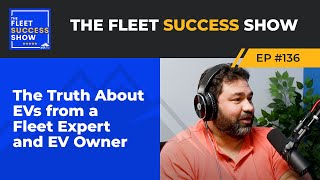
In this episode of the Fleet Success Show, host Josh Turley (Speaker A) talks with fleet analyst and EV owner Mark Canton about Mark’s recent purchase of a Kia EV9 and what that experience reveals for fleet operators. Mark describes the vehicle’s real‑world range (about 250‑300 miles), daily commuting patterns, and a long‑distance trip to Apache Junction, highlighting the need for careful charge planning. They discuss the practical hurdles of installing a home Level‑2 charger—permits, electrician requirements, and the time lag between ordering a ChargePoint unit and getting it operational. The conversation moves to charging standards, noting that most modern chargers use CCS and adapters can bridge to Tesla stations. Mark shares his view that plug‑in hybrids are an under‑utilized, pragmatic stepping stone for fleets lacking full charging infrastructure, and he explores solar as a cost‑effective way to offset electricity use. The episode also covers the exhilarating performance of EVs (instant torque, fun driving) and the safety considerations for fleet drivers, such as torque limiting. Throughout, both hosts stress the importance of data‑driven decision‑making, education for non‑tech‑savvy users, and the need for fleet managers to plan ahead, select appropriate chargers, and consider driver behavior when transitioning to electric vehicles.
Chapters
Hey, welcome back for another episode of the Fleet Success Show. Joining me today, my co-host, dear friend Mark Canton.
Hey, Josh.
So we, we had an interesting discussion going and, you know, Mark, you've just recently moved here.
Yep.
And you took the opportunity to try something new.
Right, right.
There's obviously a lot of debate going on, especially with CARB in California. And you can go online and there's no shortage of opinions on EVs or not EVs, right? But you moved out here and you decided, hey, I'm going to, I'm going to try this.
Right, right.
And you are now the proud owner of an EV.
That's right.
So I wanted to hear kind of your experience as a, you know, obviously you own an EV, pros, cons, right? And as a fleet expert, you know, how would you see this impacting running a fleet?
Sure.
So, you know, tell us what, what did you buy?
Sure. I bought a Kia EV9. Okay.
So SUV.
SUV.
Third row.
Three rows.
All right.
Six passengers. So it's a captain in the middle and just two seats in the back.
Okay.
Yeah.
Big enough for the kids to all sit in.
Yep.
Some room for the luggage kind of a thing. Exactly right.
Yep.
The furthest you've taken it so far?
To the Renaissance Fair out, out east there. What's the name of that town? Is it—
It's Old Canyon.
Old Canyon.
Apache Junction. Yeah. Right. Yeah. And from your side of town, that's a— that's probably about a 75-minute drive. Yeah. It took us about an hour 40, actually. Well, you probably had a lot of traffic.
Yeah, it's nasty out there.
Normal day. Yeah, but yeah, it's pretty much all freeway all the way out there until you hit traffic just outside of Apache Junction. So.
Right.
How did it do?
Fine. Yeah. I mean, made it all the way out, made it all the way back. No charging in between.
Okay. Yeah, there's definitely no charging out there. Right.
Yeah.
I'm parking on the dirt lot.
Left at around 80% battery, which was probably reading at like 250-ish mile range at the moment. That's decent range. Yeah, I think it's 300 total, right around 300 at 100%.
Okay.
And I got back and I was like maybe in the low 30%, something like that.
So still plenty of tank.
Yeah.
You were good to go.
I was okay.
Okay.
I was fine. I could probably do like a 3-hour drive as long as there's charging when I get there. Yeah. Kind of a thing, right?
So like if you were planning a trip, you know, taking the kids over to like Disneyland or something. Mm-hmm. You know, normally like I would just throw my kids in the car and I'm like, I actually don't know I know there's a gas station halfway through. Mm-hmm. Right. But most of the time I'm like, I'll just fill up in Anaheim. Right, right. For you, obviously that would not be a thing. So you'd probably be planning out and say, where's the Tesla Superchargers at? Right. Because I don't want to wait forever for a darn, you know, one of those slow chargers.
Right.
But tell me, like, just what's your experience been like so far? And, you know, I kind of know where you are on the, the EV spectrum. You and I are very aligned on this, right? Which is more of this pragmatic approach.
Right, exactly.
But how has this experience changed your opinion, or is it still the same?
Sure. Well, yeah, I mean, you know, as a lot of folks know, right, I've been analyzing this stuff from a data perspective for fleets for, I don't know, better part of 8 years at this point. And it's funny, a lot of what my data told me is playing out perfectly true. And, and then, like you said, there's some day-to-day stuff that, you know, maybe you experience. So You know, to your point, let's start with that example you just gave, right? You definitely have, you know, at least today there's a lot more planning. Yeah. So in the past, if, you know, if I had a road trip and we were rushing and you know how it is with the kids and you're trying to leave. All right, I got a half a tank. Let's just get on the road. Let's just go. I'll stop. I'll get gas. Right. You know, you're not— that doesn't work for sure. If, you know, for the EV. So to your point, not only is there not that stop there, but I better be fully charged. Before I go, right? And there's certainly that feeling of that, like you, range anxiety is a real thing, right? Like you really do begin to feel it, right? And so like for me, I was still working on getting my, you know, I'm gonna buy a ChargePoint, not to plug them, but that's the one I chose to do with and, you know, to get to a Level 2 charger. And usually they'll come with a Level 1 charger, which is just literally plug it into your wall and charge, right? So, Mine says it would take 99 hours to charge.
It's running off 110-volt.
Yeah, it's a big battery. Exactly. So what I've been experiencing so far is, you know, Kia, where I bought it, they know I don't have a charger yet. So they were saying, come here, charge it any time. So I'd, on the way home from work, leave here, stop there on Fridays, get a full charge or close to it, enough so that over the weekend it can charge fully. And I hadn't really been using it much on the weekends for that reason. This way on Monday I can start with a pretty full charge. So it's really just my daily commuter and my, you know, my wife uses the gas vehicle and then on the weekends we use and we're using the gas vehicle, right? So, so yeah. And by the end of the week it's like, you know, you're nervous, right? I had a couple of weeks there. You remember there was a few weeks back where I met one of our colleagues in downtown Phoenix.
Oh, yeah. Yeah.
So I left here, went to downtown, drove around, you know, that kind of thing, and then drove all the way back out to Surprise, which is northwest if anybody knows the area. And the next day I was in trouble. Like, I was in trouble. This thing was—
you're like, where's the extension cord?
Yes. Yeah.
You need to charge this thing.
Yes. It was blinking at me. It was, you know, you are dangerously low. You may, you may break down on the side. Like, it was like the warning signs. They started at below 20% and they just kept getting progressively. And, you know, one of our employees here, Rob, he's a great guy. He's trying to help me. So we went out for lunch and I said, I'll get you Chick-fil-A, you get me a charger, right? And so we're driving around and we stop at one charger and they're all full. And then we go to another charger and we can't get it to work. And then another charger was for only the employees of the bank and then another charger. So, you know, that to be honest, that's, that's just, you know, that's part of the experience, right? So, you know, one of the things is if you're going to get an EV and this is funny because we'll talk about this in like our guide on planning their transition for a fleet is you need the infrastructure in place first. Right. And you know, like a lot of people, I went out, bought an EV, and all right, I'll go auto get a charger. And that's been kind of a nightmare, to be honest with you.
Well, what's the, what's the holdup with getting ChargePoint in? Is it like a supply chain issue from their side? Is it permitting?
Is it ChargePoint? No problem. ChargePoint, I ordered it, I got it in a couple days, just like if you order an Amazon package, right? No problem at all, right? They recommend on their website, hey, you know, they don't have installers, but you know, click this link and you can get some installers. So then you get a company that asks you a bunch of questions about the installation.
Electrician.
Yeah, but you need, you know, you need a certified electrician. And if you want the warranty to work, you got to use one of their approved, right?
That's fair.
Installers. So, so then there's like, okay, well, I need to see your electric panel and this and that and all that stuff you'd expect. But then you got to apply for the permit and depending on where you live, you know, some places that might be really simple and easy.
Right.
You know, certainly I would anticipate where I came from in New York, it would be extremely challenging here in Arizona. So far it's been a little bit of a pain. They say it's normally 7 to 10 business days, but it's like one of those things where every nook and cranny detail and if you're missing one, it's like if you go to build a pool, right?
You know, just they, they can really find every— oh, this electrical diagram is not written correctly. Exactly.
Exactly right.
Like, dude, it's going to, you know, whatever, 30-amp breaker. 240-volt, and this is not a big deal.
It is what it is. It's on the adjacent wall to the panel. Forgot.
Very simple electricity, you know.
But, but all of that, like, I think we didn't mark if we were going to do an install or an external or— yeah. And that one, you know, you have an option to plug or hardwire. So all that detail matters. And, and, you know, so getting the permit is one of the challenges, uh, really that's— people got to think about. So anticipating that time. So I really thought I'd get the car and I'm not going to knock the guys at Kia. They've been really great. But they allowed me to believe, I would say, that I would probably have this thing charged in a week or so. And that's not really the case. It's going to take you a little time. So once you've decided you're going EV, I'd actually say start that process even before on which EV you've decided you're going to do.
Like ChargePoint, they use what, the CCS standard?
Yeah, exactly.
So that'll work for pretty much any EV you're going with now. Years ago, that wasn't the case.
Bingo. Yeah. And that's less of a concern now too, because now they got all kinds of adapters. So if you pull up to a Tesla charger, you can buy yourself a cheap little adapter that—
That goes to any EVS.
Yeah, exactly. And you're good to go. So that's been good. But there's a flip side to that. It is really nice to never have to stop at a gas station.
Especially, I'll tell you, last night I just filled up. And I'm a 91-octane guy. I'm the opposite of Mark. I've got that dumb supercharged V8.
It's awesome. It's amazing.
Like it's the opposite, right? But it's the same issue. Like I've got 300 miles of range, right? You know, in a 31-gallon gas tank, right? So you do the math on that.
Yeah.
What I'm getting.
Yeah.
Not good.
Yeah.
And here I'm wondering like maybe I should have an EV as my commuter. Right, right. But I just love driving that truck too much. Yeah. That'll ever happen. So, you know, but it's, it's this idea of what, you know, what changed for you? To say that, yeah, I want to go make this change now?
Well, there was a bunch of things, you know. I'll be honest, you know, I've been doing the analysis and I'm a fleet guy and I just thought, you know, I don't want to ever be accused of being a naysayer or a pro. Like, I don't want to be either way. I tried really hard. It's important to us, I think, as you know, to be objective.
Pragmatic.
To be pragmatic. To let the data guide our decisions. And so I wanted to experience it firsthand. I thought it was a good thing to do for me in my career in some ways, right? To be able to experience it and say, no, I actually, I know this firsthand. I'm not making it up. I'm not reading it. I'm not going along with what a bunch of, you know, bloggers are saying or something. I'm not going with the crowd, so to speak, on either side, right? Because there's a lot of going with the crowd on both sides.
Amen. Right.
And I don't, you know, I don't want to fall in that. So that was part of—
even in our own company, we've seen even in our own company, right?
Right.
People on both sides.
Yeah, exactly. It's like, you know, Guess what? EVs are not the savior of the universe and they're not the devil, right? You know, you know. Okay, so, so that's— that was a motivation, right? Another motivation was I figured, heck, I'm in Arizona, where can I get electricity? You know, I'm thinking solar, right? Like, there's all this sun and I'm thinking, I'll get— I'll get some solar panels on my house and I'll never have to pay for fuel again. Right?
Because, you know, not a bad idea.
Yeah.
You know, especially if it's a long-term play.
Right, exactly.
I think, you know, when I hear that people are having infrastructure challenges, my first reaction is, well, you know, like, let's solar the crap out. You got probably a way, you know, you've got a ton of land, right? Right. Solar everything and just help offset the, you know, the impact of the EV, right? And it'll do quite a bit, right?
Especially when to that point, and I've said this to, you know, clients who will listen, you know, that's always a big concern and paying for it and all that. And that's legit. But You know, the solar companies for the most part will do the same thing for commercial that they're doing for residential, which is they'll pay for all of it for you. Right. And yeah, you got to pay for it as a service, but boy, it's cheaper than cheaper.
It's a cheaper alternative than going through the entire like, hey, we've got to get the whole grid upgraded, right?
Or build a microgrid. Right.
And maybe it's not even an option.
Right.
You just— we don't have the circuit capacity, right, that may become instead of going out generators or, you know, other alternatives, Solar is a great option there.
It really is. It's, it's underutilized, I think, in that world as a stopgap, as a stopgap.
Right.
But I want to give you the real reason that led to me deciding to get this thing. All right.
You got in and you press the accelerator.
It's something like that. I was— when I got here, when I first got here for the move, right, it's like 2:00, 3:00 in the morning local time, right? I got toddler screaming at me. I'm sleepy, my wife's sleepy. And we had rented two cars because I knew we needed two cars right away.
So, yeah.
And you know how it works. I'm a, I'm a Most, I think, rental companies do it this way, but certainly Hertz does. That's where I was renting and I have a little status. So, you know, it's like go to your lane and just take any car out of the parking spot that's in that group, right? So I saw this, this great quad cab pickup truck and I thought, oh great, man, I could use a flatbed. I could move some stuff around. I'm moving, I'm gonna grab that. So I go into that thing and I drive and I'm, you know, exiting the gate and the, that kind woman goes, You know, this is an EV, right? And I went, no, I paid for the fuel option and everything. She goes, yeah, yeah, the fuel option still applies, but you can't bring it back below 10%, otherwise you're going to get fined. And she explained the whole thing to me. Now I'm nervous. I'm like, what am I going to do? Well, it turns out I'm like, how am I going to get this thing charged?
Mistake.
Yeah, yeah, this is my mistake. So, so now it turns out though, this is neat.
Yeah.
All of the local hotels in Arizona, I don't know if this is a regulation or something that you can educate me, but they all have chargers.
All of them.
Yeah. So you can go to like all of the Hilton brands and all the Marriott brands.
That might be a chain thing. Maybe some of the off-the-beat ones.
Maybe not. Maybe not. Right. So it turns out that staying charged while I was staying in the hotel waiting to get keys and to move into— that was easy. It was only once I moved into the house that you were like, yeah, exactly. But to your point, I drove it.
Yeah.
And I have never had more fun driving. I can't— maybe when I was like, never experienced torque.
Like that, right? Like, the accelerate— the G-forces that you get out of driving an EV are next level. I'm just like, the only car that I've had that compares is my truck, right? Right. And even then, it's like neck and neck.
Yeah, um, it's powerful.
Like, it puts you in your seat and you feel it, right? And— but it's just life-changing.
It's life-changing.
I drove a Model 3.
Okay.
Like, that was when I was like, whoa, yes, this is a whole new world and I love it, right?
Like, this is—
I want it just for the performance.
Man, you're reading my mind.
Like the green benefits, right? Like, I just want a fun, fast car, right? And, you know, Porsche can go whatever, but like, yeah, give me a Tesla Model 3 any day.
Bingo. You know, and it's been— I won't lie, I haven't had so much fun. And then also I've left New York City, right? I'm in Arizona. And so relative to us, like to me, like the lane, the wide open, the lanes are wide. They all look like interstates to me. I'm on a side street. Feels like I'm on an interstate, right?
Yeah.
And it's just been so much fun to drive. I feel like a— I feel like an 18-year-old who just got his license and nobody's looking. And, you know, like, it is so much fun to drive. And now with, with the one I have, right, the Kia, right? It's great because I'm in a family wagon.
Yeah.
And the other day I had a Camaro, like, roll up on me and I'm looking at him like, and he's smiling and he's revving his engine and I'm like, so I roll down the window and I go, you want to go? Just for fun, you know, like, just to play.
18-year-old kid again.
Yeah, I'm an 18-year-old kid again. I shouldn't do this, right? Like my trip. Thank God I'm not in transportation anymore. I had to live a very long life of being very conservative driver. And yeah, I'm not in that. So, so he goes, what are you talking about? And I go, I bet you I can take you to the light. And he goes, what are you, out of your mind? I go, let's just see. Boom! He had no chance. He had no chance.
You know, you were an EV.
He didn't know I was an EV. I destroyed this guy. It was so much fun. I'm in this family and it's like happening all over again.
You know what the best part about that though is, right? Like if I were zipping around in a Tesla or in a Kia EV, right? Which actually that would it wouldn't even fit my family.
No, that's path— yeah, exactly.
But if I were rolling around town in that, right, like, I, you know, if I drive my truck and I have fun with it, I watch the gas gauge drip, right? Right. Like, it goes from, you know, 10 miles to the gallon, and it's that bad, right?
Yeah.
I think, uh, when the alignment was off, we were running about 8, right? Right. Like, I can't have fun in it without, like, paying for that later, and it hurts, you know. $5 a gallon. We're, we're just about to hit that 91 octane again, right? Yeah. Um, thank you, current politics. Like, it's just, it's garbage right now.
Yep.
Um, but let's see, it hurts. Like, going to the pump hurts, and you're sitting here just like, oh no, I just charge it at home.
Yeah.
Like, I don't see it in the electrical bill, it doesn't hurt too much there, you know, charging off hours, peak off.
Exactly, because you charge it overnight, every night. Yeah, exactly.
And for those who don't know, here in Arizona too, we have super off-peak hours.
Yeah.
Which is from the hours of 10 to 3.
Right.
Which, you know, is amazing if you're doing EV.
Yeah.
Like, because they really want you to use the demand then.
Right.
But summer, it's going to suck because that's when, you know, all the ACs are running and all that stuff. Right.
Right.
Sure.
Yeah.
It was 24/7. But yeah, that accelerator, like, it's— it honestly, if you want to talk about the great equalizer and the thing that really can move, you know, us, you know, ICE people.
Yeah.
Off the, off the mark, it's that. It's the performance and it's just super fun. It's just right fun.
It's super fun.
But from a fleet perspective, that's a little dangerous. It's dangerous. Yeah.
Yeah.
Talked about that with the Ford Lightnings is, hey, you can't just throw, you know, somebody behind the wheel of this. You need to— yeah, like, it's true, there's things we need to do to kind of help limit. We, you know, we— I don't think Ford Pro has done this yet, um, but I have advocated that we should be throwing like torque limitations on those trucks just to help. You know, it's like a voltage regulator on a, on a drill. Yeah, like, I, I don't need full 3-speed. Yeah, you like maybe 2-speed for this guy, right? Or no, no, no, this is a 1-speed application.
Right, exactly.
Because I just need to be able to change the voltage of that Yeah, of that application.
Yeah. Back in my transportation days, I remember when governors were all the rage. So we talked about with driver safety management and you could totally see them coming back in vogue right now. Yeah.
And I don't need to limit the speed. I mean, you know, you should have a limit on the speed, but just limiting the, you know, it's like a plate restrictor on NASCAR.
Yeah, right.
Exactly. We just need to limit the power.
Yeah. Yeah.
You know, so that way, like even the full mash, they're not getting the full application of that. And you know what that'll do too? You'll extend the range of the vehicle. Yeah, you will, right?
You will, exactly.
I'm curious to see if anybody's doing this yet. Come on, Ford Pro, Ted Canis, where you at?
So yeah, but it is, it is nice. Like, don't get me wrong, I know a lot of folks have routines, and I have— it's like, you know, you stop at the gas station and you're not even always getting gas, right? Because maybe that's where you get your daily coffee or something like that. You can still do all that, right? But it is, it is convenient to never have to, like, you know, pause in the middle of your day or something like that. Once you get that charger installed to you. Once it's working, right?
Yeah.
Once you get that Level 2 or better in charge. And the other thing I'll just say, we won't get into the detail, but like not all Level 2s are made the same. So do your research, you know, make sure you're getting something that's going to quick charge for the capacity, you know, that you need.
And you got to look at your vehicle because your vehicle is going to have a different capacity. Like Chevys charge at a different rate than Ford. And that's a different rate than Tesla. Right. And if you talk to the Daves, like Dave Worthington, Dave Rentschler, they've done a lot of this research as well. They have a great presentation on it because that is like they bought chargers that were the wrong kilowatt application. All of a sudden, you know, they thought they were going to be able to charge at 350, and it turns out that it was like a mismatch, right? They could only get 80 or 120 out of it. It was crazy.
Yeah, exactly right.
And because, you know, their sales rep either didn't know or misled them, right, they ended up having to redo stuff. Like, it's painful to learn that lesson.
Yeah, exactly.
So you got to do your homework, and it's not as simple as just pull up and press 91.
Yeah, exactly, exactly. That's the other side.
There's some education here that has to happen.
Yeah, and that's a great point, right? Like, so, you know, we all have people in our family. Some of us are tech geeks and, you know, you know where I'm going with that. Yeah. So I'll be careful how I say it, but we all have people in our family and in our circles that just aren't very tech savvy, let's say. Yeah. And they might find this very— I know it sounds like, yeah, you just plug it in and that's it.
They're the ones that are usually forwarding you that email chain that's gone around for 20 years.
Yeah, exactly. So just be mindful of that, even though honestly, once you get used to it, it's obviously it's not difficult. But yeah, you know, you're going to have people who will just avoid it, right? Like right now, my wife's not very interested in the EV, if I'm being honest. She's scared of it, you know, too much power. No, just the charging thing. Oh, she's, she's scared of that charging thing. Like while I was away on a trip one time for us, she also had like some low battery stuff like I had with the Chick-fil-A incident then. She just never wanted it. She ended up just barely getting to Kia and just leaving it there, taking an Uber home.
Oh my, oh my. So traumatized me. But it's not just that simple.
It's just not.
The infrastructure is not there yet. You have to be more thoughtful. You have to plan ahead effectively. Yeah.
And they offer you really cool tools. Like, you know, I'm sure all the manufacturers from what I've read, I know Tesla does. I know Kia does. You know, where they'll say, here's your charging stations and, and that kind of stuff. And the apps are great. You know, the app tells me, hey, you finished charging. I left it charging when I went away for the weekend. Yeah, I flew back to New York for the Easter holidays and, you know, I left it charging and like on Saturday night or something I got an alert, your car's finished charging, you know, that kind of a thing. So they give you neat tools to help you plan. But, but it is a little different. Like you got to think it through first, you know, at least at least for now, right? That could change with time as ranges change, as charging times, as the battery technology improves. In theory, you should be able to charge faster. You should get longer ranges, certainly when the solid-state battery comes into play if it becomes affordable. But also, you'll probably see increases in infrastructure and charging opportunities. Even that, you'd still have to— if you had all the infrastructure in the world, you'd still have to plan differently, right? Because gassing is— What does it take you, 5 minutes to 15 minutes depending on—
5, 10.
Yeah. You know, so obviously in charging it doesn't work out for a pump, you know, unless it's a really busy gas station.
Yeah. You're rarely ever waiting for a pump.
Right. Exactly.
And there's a gajillion of them. So.
Right.
Like I said, I would go from here to California and I'm like, there might be one between here and there, right? Like, you know, past the summit, Chiricahua Summit. But otherwise, I know I can hit there and then there's going to be 50, right, between here and there that I can fuel up at.
Exactly.
Like you said, well, I got to make sure I charge it before I go anywhere. And I would just hit a gas station on the way out of town.
Right, exactly.
And that's the level of like forethought and planning you have to have.
Sure, yeah. My current personal goal is to never have to use like a local public charger again once I get that, you know.
Where the old—
Yeah. And if I do decide to do something long distance like that, I'll have that mapped out where hopefully the hotel or wherever we're staying, right, we'll have that and just avoid because between the waiting for other people and to be honest with you, they— most of the public chargers are pretty slow.
Yeah.
Even the paid ones.
Yeah.
And so you just— and you don't know what you're going to get until you get there.
The right quality is just— yeah.
You know, so it's hard to count on that and you need to count on it because you need to make a plan. Right. So that's my goal is to see if I can't just avoid any dependency on those public chargers altogether, you know, take it from there.
Yeah. Well, any last parting thoughts? I guess we're going to follow up on this and we'll see where we're at in a year.
Yep.
Right? And obviously, this is a fun little foray into a new world.
Sure.
By mistake.
Yeah, by mistake.
Would you have gotten one if you hadn't gotten into that Chevy?
I don't think so. I'll be totally honest with you. What my plan was when I got here was to get a plug-in hybrid.
OK. And I— because that's honestly what we usually recommend, right, is like a good in-between option, a good stopgap. Yeah, exactly.
Yeah, and we'll talk more about that last time about why, you know, the thinking behind that. But most plug-ins will get you your daily commute in.
Yeah.
So you get all the benefits of an EV without any of the fallbacks of, you know, the challenges created by the EV, right?
Right.
So you can kind of have your cake and eat it too. And interestingly, most fleets, at least in the data we've seen, the plug-in will also give them the impact of an EV 95% of the time. So that's interesting, right? So And what that does is it allows you to go out and get that vehicle before the infrastructure is in place. Exactly right. So that's, that to me is a key strategic opportunity. Yeah, exactly. And it's underappreciated. I think it's certainly underdeployed, right? It's not the approach most fleets are taking.
Right.
So, and, you know, hey, let's follow up because I'll tell you a bit about the math next time. But yeah, let's just say the love and the desire to have fun driving the vehicle overcame my logical mind and my mathematical mind.
People, people buy on emotion. People buy that all the time.
Yeah, right.
They justify on logic.
Yeah, right.
But they, they buy on emotion. Yeah.
Yep, yep. Absolutely.
All right, guys. Well, thank you for tuning in for another episode of Fleet Success Show. Signing off for me and Mark.
Till next time, take care.
More from Josh

Episode 227: The Hidden Costs Killing Fleet Operations (It’s NOT What You Think)


Episode 225: Are Certifications Still Worth It? The Truth About ASE, CAFM & Fleet Leadership




Episode 221: The State of Fleet Management: Education, AI, and the Technician Crisis with NAFA’s CEO

Episode 220: Motor Pools Are Back: Right-Size Your Fleet Without Breaking Operations

Episode 219: Stop Guessing at Downtime: Status Strategy for Better Availability #podcast #fleet

Episode 218: Fleet Predictions 2026: AI Hype, Technician Shortages, & the Next Era of Fleet Managers

Episode 217: Why Replacement Planning Solves 95% of Your Problems #podcast #fleetmanagement #fleet