Episode 137: NAFA 2024 in San Antonio
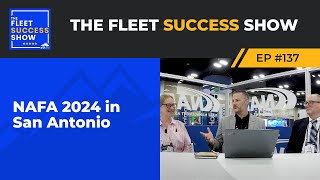
This content was created by Josh Turley. This content was uploaded by Josh Turley. This is a YouTube podcast episode (Fleet Success Show — Episode 137) recorded at NAPA/NAFA 2024 in San Antonio (created_time: 2024-04-30). It features a host (identified as Speaker B) interviewing guests Brenda Pechel (Hernando County Fleet Manager — ~620 vehicles/pieces of equipment) and Kevin Schlangen (Dakota County Fleet Manager — 800+ pieces, ~$35M replacement value). The discussion covers conference takeaways from the NAPA I&E/NAFHA event (networking value, vendor interactions, obtaining vehicle/software data and training as part of contracts), the prominence of EV sessions and technician tracks, the CAFM Live certification, tips and experiences applying to the “100 Best Fleets” program (application process, metrics, how to present results to elected officials), internal recognition practices, and strategies for changing fleet culture and mentoring new fleet managers.
Chapters
All right.
Welcome back to another podcast episode of the Fleet Success Show. This is episode 137 here at NAPA 2024 in San Antonio. And today I've got with me Brenda Pechel and Kevin Schlungen.
Yes.
We'll talk a little bit more about what they've done here in the last couple of days, but I'll let you guys introduce yourself. So you go first.
All right. Yeah. Brenda Pechel. I'm the Hernando County fleet manager. I have 620 vehicles, piece equipment in my fleet. And yeah, I'm happy to be here. Thanks.
I'm, I'm Kevin Schlangen. I'm the fleet manager for Dakota County, and we have over 800 pieces of equipment in our fleet, $35 million replacement value. So as a mixed fleet, like all of us, we have a lot of different types of equipment to have. And in this particular time, at our event.
A little surprise there from the number one fleet this year. Congratulations.
Thank you.
Congratulations. And Brenda, you were 88th. 88th.
Okay.
So let's talk a little bit about— let's talk first about the show and then we'll talk about Honnebath.
Sounds good.
Okay, cool. So first time attendee. Yes. Tell me which.
I've learned a lot. And I think the best part of this has been that I got to meet a lot of different fleet managers, fleet professionals from all over the country. And it's a wonder to me that everybody's facing the same issues, you know, and other jobs that I've had, you know, a lot of things are very state-oriented. Here it seems like everybody's doing the same thing. And I really like that. It's really nice to hear that some of the things that I'm facing, everybody else is facing also.
One fun little thing you should mention what we did this morning.
Yes. So I'm the Southeast Regional NAFSA Council Chair. And this morning we had our Wednesday shoutout live from here and we were able to show the top 20 get announced.
I snuck in and I was videoing to the people on the call. Yeah, that was a lot of fun. I felt like I was an undercover agent or something like that.
Yes, and the people on the call loved it. It was really nice to be able to, they couldn't make it to this event, but they still felt like they were part of it doing that.
So Kevin, you've been to how many of these?
I probably lost count. I don't know, probably at least 8 of them. Of the year?
NAFHA.
Of NAFHA, and then GFX and the other national ones. Yeah, different ones that are out there that are plate related, including APWA, which different ones have different little pockets and parts of fleet. The thing that's so great about the NAPA I&E is that it's always been just fleet-focused. Granted that it also has that it's the difference between government sector and the private sector, and there are differences, but there are still very similar ideas and concepts that you need to know. And at a conference like this, you meet so many different people that are here. And like we talked about, Brenda, that the same kind of problems or similar anyway. And in the ability to connect and meet with other people, you can learn a lot. Yes, the sessions are great, but the contacts and the people, I can't tell you some of the people from the very first ones I attended, which I can't remember how long ago it was, I still text and know them, people that are in other states. And it's like, hey, have you ever tried this? You know, you're looking at different, have you ever ran into this concept or this idea? And those things are, they're priceless, that what you can walk away with.
And I remember for me, so I was a fleet manager for about 7 years and actually San Antonio was the first National Fleet event that I came to in this same building. And like you said, I mean, I spent, you know, that time in fleet management, but I felt like it was actually 15 or 20 years that I spent there because of coming places here. It just accelerated what I learned so much faster than meeting people and then ongoing conversations and, you know, hey, didn't you mention this? I remember you mentioned this 2 years ago and, you know, how would you, you know, send me that, whatever, the template for the policy.
Yeah.
And so, yeah, it's, it's great in that regard. So one of the things I always— I was challenged by this early on when the first events that I came to, I think it was the— my boss was the director of public works. He said to me, look, you can go to a lot of these events. I'm all for it. I support it. But rule of thumb, I want you to bring back at least one thing that you learn to help at the very least offset the cost. So all of the things— I can't remember what they were, but all of them were pretty good cost savings. Any particular things you guys picked up this particular show, or maybe any other show that you've taken back and implemented?
Yeah, works.
Oh, sure. So this one, I went to one of the education sessions And I can't remember who was saying it, but they were talking a lot about getting the vendors to get— allow us to have the data analytics from the vehicles and equipment that we purchased, you know, and at the time they were talking about the electric vehicles. But when I pulled them aside, we were starting to talk about like John Deere, you know, when we buy a John Deere or a Mac, you know, the software doesn't come with it. And she said she just started putting it in with the contract. And saying, hey, this is part of it that we have to have that software to be able to get, you know, we purchased the vehicle, we should be able to get that data analytics. So I'm going to take that back and see if that's something that we can implement going forward.
I've sat in similar sessions like that when they talked about contracts and including and tagging along training with it. You know, some of those kind of concepts didn't even think of. It's like, well, you're going to buy something new. And I said, well, our techs and operators need training. Well, sessions that year, people brought up that idea. It's like, well, I never thought of that. You were able to write that and change that within your contract. Well, some of those ideas, if you're not around like-minded people, how would you ever find out about that? And for the different events here, there's never been one that you haven't learned something at or brought something back that was a good return on investment. In particular this year, we were coming here with certain vendor ideas we had in mind, including one of them, and I won't spell out vendor we were having issues with locally, trying to get a contract in place with them, and they just kept giving us the runaround. We were still doing business with them, but gee, imagine that, the regional director of sales was here, and we knew that they were going to be at this. It's like, wow, imagine that, I got a phone call already that we, you know, we'll work out that contract now. You know, it was just that they were ignoring us, and sometimes that happens just because of personalities, I guess, of you know, some stuff locally and that, but then when you, you know, and they won't even give you the phone number of the regional rep that you wanted to talk to. Or you come here and the vendors and stuff are here, or you find out from here just somebody else. If you have a certain issue you're looking for, some other of your, you know, other fleet professional will tell you, well, such and such company did this. And they're, by the way, their booth is just down over there.
Yeah.
Oh, well, walk right over there and then you can learn learn about that company and have some other ideas of what could and will save you money. I mean, I've never seen a, you know, it's not just myself that attends these, there's somebody from my staff that attends like this NAPA I&E every year. It just depends on who I send. It could be a technician, whoever it is, we send a couple people to different ones and then they come back and they share. We may have some ideas of something we're looking for and we'll specifically ask them, look for this, ask questions about this when you're networking or in this session, attend this session because we know you might bring something back for us off of that or some idea what to try.
You brought somebody with you this time.
Yes.
Who is that?
He's one of my fleet supervisors, Jess, and he's been at a number of these too. And a couple of years ago, I think it's 2 years ago, he got his CAFM also. I currently have 2 other senior techs that we're putting through the program. They won't be going next year to California, regrettably, nice sunny weather. But, but, but the two of them are going because we want to put them through that, that CAFM Live and that opportunity for them. And they're two, there's two rock stars that are the next ones. I mean, we're, we're getting along in age and it won't be long that we venture out. We'd like to have some other people that want to do, you know, those leadership roles.
And there is something new that it was the technician track, right? Or something new this year.
Yeah.
I'm really curious. That's going on today.
It goes on every day, actually. Oh, really? Yeah, there's different ones. They actually have, like, if you look in the app and you look at it, it'll tell you which ones are kind of more specifically towards that. It's not that every session is about that, but it just tells you that that's what it leans towards.
Leans towards the technician.
Yeah. And so, like, having that means that when you do bring a technician, not everything is maybe, I don't know, gobbledygook to them because they're not quite in that leadership role yet. So it gives them that plus some leadership opportunities to learn a combination of both. So that they for sure, a technician still comes away with something from this than just, you know, every session was always, you know, focused around management. Yeah. The directors. Yeah.
What about things that you've seen change over the years? And, you know, I mean, I know you've been to other shows, but, you know, maybe some things that you've seen that have different in this event, even though it's a national event. So just different things that you've seen evolve over the years.
It's, it's really driven, seems to be driven by what is the new flavor. It seems like flavor of the month or flavor of the year. Like back when, when telematics were starting to be rolled out hard. So you come here and meet 20 companies selling telematics products, you know, and then, then the next year it's down to 10. It's not, you know, you see people, you know, trailing off. So it's just there's a lot of different options for you. And that part of it, I think, makes a— on the vendor aspect of it, it'll really change on that. In the training sessions and that, I noticed that NAPA always is following whatever is changing or new in the industry. So when you say what changes, every time the sessions are different, they'll be very specific. It is like you come in every year, it's the same. It's not. I mean, there will always be something, you know, connected with leadership and retention of staff and how to hire techs. And, you know, so we sell that, but they always, if there's something more effective with the, you know, EVs or with hybrids, that you will see that on here and they'll, they keep adjusting for it. I think it's a fresh outlook every time because of the people that are always involved at NAPA and with the different volunteers. The membership that make those recommendations. And because that becomes valuable, it's never the same. Yeah, it's not exactly the same.
So as I mentioned, first national event, right? Been to several, but anything that you've seen that's been drastically different here than other ones you've attended?
No, not really. So I attend the FLAGFA conferences in Florida, of course.
Fleet in the nation. Fleet state in the nation.
Yes. Yeah.
Sorry, Kevin.
We have a lot of, a lot of people here from Florida and we always show up really well on the 100 Best Fleets. We represent and even the Fleet Professional of the Year. You know, we had several that were from Florida and one of my maintenance supervisors, I nominated him, you know, because he's such an amazing person. But as far as this event next to like some of the flag conferences, and they're very similar the way they're set up, and it's nice to have so many different choices. So when you're going to the local ones, usually you get one choice. You know, they have just the one class and here you get like 5 different choices. And I'm sure it's because they're so full, you know, you can't fit in everybody into one class. So, you know, they're breaking it in. I tend to like the panel discussions. Yeah, those are my favorite. Every time I go to one of those, it's nice to hear those people that are, you know, they're doing it. That's what they're doing. And they have that discussion. And it seems like we get so much more out of those, or at least I do, when we have those panel discussions.
So Let's talk about the elephant in the room, EVs. So I've noticed a lot of EV tracks here, which is, you're right, it's 100% what's going on in the industry. I'm just a little concerned that, you know, there are still a lot of other things going on in the industry. Yeah. Particularly one of the things that you see is new fleet managers coming in. Maybe they don't have automotive experience. Maybe they're coming from finance or somebody who did well in another part of the organization that they bring in to run fleet. And I just, from that perspective, like, there were several, I don't know what you call them, slots of the different quests that were very heavy on EV. I mean, I love EVs, but I'm just, I don't know, that was one thing that I noticed that was a little different this year, very heavy on the EV that I wished was maybe more spread out. Through, through the show, or maybe just different aspects of it. But I don't know what you guys think about.
Oh yeah, definitely. There was a lot of EV classes this time. A lot. There was several. But yeah. And, you know, as somebody that I did not come from a mechanical background per se, I came from the finance side. And when coming over into a fleet environment, You know, they at first, you know, my organization was like, I don't know how this is going to work and are you really going to fit in with this group? And now it's totally different. They're like, oh yeah, you know, I'm definitely made for this role. But it seems like NFA and some of the other organizations should have something in place for those new fleet managers, you know, like a mentorship program or something just to get them started in going, oh my gosh, this is what you got. And somebody like Michael from Tarpon Springs, he was a technician and he got moved into the leadership role. But like you said, there's a lot of change there. That's a huge change from going from a technician up to a fleet manager.
He was a fire tech, right? Fired, you were a fire truck.
Yes. Yeah. So yeah, it would be nice to see some of that for the younger not so much young as in age, but as in new to the position.
Right.
Wait, before I let you go on that one, I just was— just you reminded me when you said new. So I remember when I got into fleet, there was the whole big thing was millennial fleet manager, remember? So there's a whole millennial fleet managers and I started like a blog and I was doing all this millennial fleet manager stuff and they did have so many classes at the time and, you know, EVs were just showing up. And there was a lot of like, it was really difficult to pick a session when I came here because it was like, I need to be at all of these sessions.
I'm like, just one.
Yeah.
Anyway, so you just reminded me that anyway. So what do you think about the EV-heavy session tracks?
That happens. It happens at other conferences too because of that, you know, where they can find people who are willing to spend their time and to actually present and be speakers. I think normally here at NAPA you saw a little more of a spread out in those types of more like, say, generic classes. I don't think you saw it as much this year because this is the first year they rolled out that CAFM Live. And so if you were looking to be in your new fleet manager, the focus kind of went— again, I don't want to make decisions for you, just my observation. I think the focus of the people who are available to do those types of classes you're talking about, just say in the one-up classes that on leadership and just new to the industry, those, all those speakers ended up in the CAFM live class teaching all of those classes. And I think that that became difficult because it is something that's always difficult when you run any of these. Back in, in 2014, NAFAA was in Minneapolis. And so as blessed to be on the planning committee and stuff, and the people in the area and the local region help determine what some of the classes and stuff will be. But then also you kind of dig deep with trying to find people that'd be speakers and would contribute to the different classes. And that's why I say that can be difficult. And there were more of that, more of a variety. And I just think that that might be where they were kind of resources kind of kind of used up that part of it. But the whole concept of the CA-FM Live, I just think that that's a great idea. That's a great opportunity for people when they want to learn to go forward. But it's an investment. It's challenging. It's not easy. Whether you come in and you test before, you have basically boot camp sessions, you know, all 8 of them, then you test again at the end. And it's a great opportunity to learn. But I say it might be that it took away a little bit from the others because like past years they didn't, yeah, so they kind of had like one session and stuff on it, but now if you weren't in the CAFM live, you couldn't be in that session. You had to like pick a session.
All right, let's transition to 100 Best Fleets a little bit. So tell me a little bit about your process. So like the application, So a lot of fleets that I talk to, they're automatically intimidated by applying. One, two, it's a lot of work. I know it. I've been there. It's the fear of not placing. I've heard a lot of things.
Right.
Anyway, so take me a little bit through about your application process this year and some of the things you went through.
Sure, sure. So I am very bold. So the application didn't intimidate me. I love writing essays. I could talk about Fleet all day long, every day. That doesn't bother me. I'm kind of a geek when it comes to that. But bringing it in and actually trying to— because there's a limit, like you only— for the essay, you only get 4,000 characters. And, you know, we've talked about this, you know, I'm like, I, export it over to Word and I start typing and it's like, all right. And then I get done. I'm like, oh my gosh, I'm at 8,000. Okay, how am I going to cut this down to make it fit into that area? So then, you know, I take it to my staff and I'm like, hey, can you guys read through this and tell me what I'm saying? Like, too many descriptive words or, you know, maybe I can cut out some of this that wasn't as highlighted as I would like it to be. You know, I want to highlight those things that I'm passionate about, you know, the thing, the really big initiatives that we're going. And so when I'm— I fill out the application this time, we have so much going on, it was hard to limit it down and then put it in the categories that were on the application, you know, and there's a few of them that just we're lacking in, but it helps me kind of set those benchmarks where I want to go to. So it makes me think about how we're doing things and how I've been processing over the last 4 years as fleet manager.
You know that there's a— I don't know where they are. I mean, there's one of the judges here, but there's a booth or apparently you can go somewhere and they can review your application.
Yes.
Yeah, that's relatively new. Did they do this last year?
They've been doing that for a couple of years. It's right at the tables here right now. Out front of us here. They're doing—
oh, that's what they're doing.
They're booking. Those are the judges. And they actually— you can book a time and you can go over your application with them and they won't tell you specifics. They'll tell you, generally, this is what we see is missing from here. And then they'll talk about, well, we're doing that. Well, it doesn't say that on your application. Yeah, you know, you know what I mean?
Right.
So it tells you how to be more— you know, it teaches you how to be more specific. Yeah, I know.
I've seen some of the, like, for example, let's just say one of the things like, well, they tell us about technician productivity, right? Okay, well, I've talked to some fleets who are like, well, what'd you do? Well, okay, we said we were 64%. And I'm like, where's the rest?
So what?
What's the rest of your answer? Well, it's just 64%. Okay, well, what was your target?
Yeah.
Oh, it should have been 80 or whatever. Yeah.
Well, last year.
Well, yeah. Why were you short?
Yeah.
What were you doing about it?
What happened?
But then they get into like, well, I want to write the essay in that section, but it's what, 400 characters? Yeah. So it's, it's, it's It's an extra. So that's the other part which is interesting is like you have to be dedicated to do the work and the legwork to find out. And then you got to understand how you have to format it. But, you know, that's— I mean, it's great that they're here doing that because there's a lot of people that I think really have a good story to tell, but they miss the opportunity to— I've talked to fleets that really don't have the metrics. They don't even have the metrics, but they're saying why they don't have the metrics. Correct. And what they're aiming for the metrics to be. And you know what they're doing about it. And they placed.
Yeah, you know, because they gave an explanation. But those same kind of arguments are what you need to have when you're in front of the elected officials and decision makers anyway. So, so by applying for an award, like you say, oh, I'm going for the award. I like, like Brenda, I, I didn't care whether we won. It was an opportunity to find out what we should be doing. You know, if it's part of an award and this is a criteria, It's like, well, if that's what the ones that are successful fleet, you know, freshers, why are we doing something in this area? Well, I was the opportunity to print out that application and show it to the staff and look, I said, what are we doing in these areas? So it becomes a conversation of what we're doing and more importantly, what are we not doing?
So you had your staff all involved?
They always are involved in it. Like, 10 years. Yeah.
You know, I'll be honest, when I did my 100 Best Fleets, you know, several years ago when I applied, I had some folks in the front office help out and contribute.
I—
it didn't even occur to me.
Yeah, I don't—
to get the shop involved.
I, I— the final, the final, um, narrative is my problem. It was just like we were talking about, it ends up way too long, but I want every idea in it that you may have. And so then you can have that conversation in this area. What are we doing? What am I missing? Oh, okay, well then now that gives you a learning opportunity as a writer to— to how do you limit that you're not gibberish all the time? You know, if you only got the elevator talk time in front of an elected official, what are you going to tell them about?
Did you read my blog?
It's important.
No, I read a blog about an elevator pitch about— is exactly that.
You don't know that. Yeah.
And then, you know, there's a couple things. So like a fleet mentor of mine early on, Bill Griffiths, told me He said, it's not the basic information, it's the lack of knowing the basic information in front of the elected officials that gets you in trouble.
Yeah.
And, you know, so I was like, I've never thought of that. So I made sure I knew that stuff. And I got stuck in an elevator with the city manager, the 11th floor in the city of Norfolk, and Marcus Jones. And I gave him the pitch.
Ipá.
And he knew who I was. And it went from there.
And from there, yeah. New York, you get in front of like, it's the commissioners, you know, they're walking back, even you're doing your budget presentations, they're playing on their phone and they're not paying attention to you. You got to somehow grab their attention, tell them, you know, contests like this, it's not all about winning. But by the way, we are number one.
You want to hold it up?
Hold it up.
You got to hold it up higher.
Hold it up higher. Just know that that has a lot of real estate with my elected officials. It proves that we are committed to what, you know, being better, being at least a leader in what we do, and that we want to be improved all the time. Well, that proves that from others evaluating and looking at what you do. Well, it gives you that opportunity. It's like, hey, what do I need to know to convince you to support my request? You know, you're Yeah, what, what am I missing? And then if you're in front of them, this type of thing that, that I'll go through and have your application looked at, get some advice from some seasoned professionals that can tell you this is what they're seeing that's missing. Those are the same things that'll be missing when you go back to your organization and talk to different people within them, right from the technicians on up, just people who are, you know, any of the operators that run the equipment. You don't think that that doesn't mean something to them either? They see that, and then when you talk to them Make sure your staff know some of your specs. Make sure they know what your numbers are. So when they talk to— they're doing fleet speak the same way as you would to them. So they understand that. No, they say stuff and no, no, that's not what fleet does. Fleet does this, you know, and no, don't go, go talk to Kevin. Oh, you talk to any of the techs and they'll have an idea and they'll know that's not what we do. That isn't how we make a decision here. That isn't how we make recommendations here. And it goes a long way you still don't get what you want because it's only limited resources. Yeah, of course. But it gives you credibility that when you do have that and you're in front of the elected official, you can have some leverage. You get some respect out of them that they're going to listen.
Yeah, it's always a fistfight with your fellow department.
No matter what, it just is. It's limitless.
So you guys, I'm sure you do, when you guys get these, do you guys get the banners? Like, what do you guys do? How do you celebrate?
Yeah, we don't. We don't get that. We do submit it up to our administration. Not last year, year before when we made the list, they posted it out on Facebook, on our Facebook page, but they don't really celebrate it as much as we do. Now we put it up everywhere in fleet. You know, we don't get the banners, but we make sure that we post it in our offices. And I have a— I'm known for my whiteboards. I got whiteboards everywhere and I make sure I write it on there. So whenever somebody comes in my office, that's the first thing they see. And a lot of the people from the other departments, you know, they see that when they come in and we do quarterly meetings and they're in my office. So it's always a topic of, okay, well, yeah, you're doing things right. You're making a difference. And that's what we want to know that, hey, we're trying to do the best we can for our departments. And our taxpayer dollars. So when I go to the board, the board seems to think that they know everything and they know a lot more than I do. So when they start to ask those questions, I have to be able to back them with, you know, people call me from all over the nation asking me questions. You know, we do talk to other fleets everywhere and that kind of helps, you know, that little bit of going, well, maybe she does know what she's talking about and it does help to have that.
Yeah, recognition.
And yeah, have that recognition and, and know that our team is, is striving to be better and we're always can, you know, make changes to make things more efficient and save the taxpayers money. And even though I'm looking at spending $27 million this year purchasing vehicles and equipment and then another $6 million to build a new facility coming up. And, you know, when I'm throwing those numbers out to the board, they're looking at me like, you're going to spend what? And how is this going to work? And but we're letting them know that with making the 100 Best Fleets, you know, hey, we're not alone in this. You know, we have to make these changes to accommodate, you know, because we're growing at an alarming rate. I just presented this to the board that we've grown 60% fleet has grown 60% since 2018. But yet they don't want to spend more money. They don't want to give me more tax. It's just they're just like, just keep doing what you're doing. Well, you have to accommodate. You have to make those changes to be able to keep the vehicles on the road and make those things happen.
So, okay, so you don't get the banners. No, we're going to— we're going to have to talk about this.
Well, how do you do? What do you do? I wallpaper every wall.
So wait, have you ranked first before?
We have never ranked first in the Hunter Fast Fleets. We have ranked first in other fleet ones with the Leading Fleets. We were number one a couple of years ago and in the Fleet Masters Award from the AEMP. And with 17, we were number one there too.
So did you like text message your staff or send out fax or put up a picture of that?
Just right as soon as we got back to the table, we were taking pictures and sending it to them.
Were they waiting?
Like, yes, they were. They knew which day. They knew we weren't announced in the first 2 days. So, so I said, well, I do believe we're probably still a top 20. You know, I didn't think we fell completely out of the rankings, but, but when you've done them before, you know, you move up and down from year to year because, because it is what happened in that particular year. Yeah, sure. You shouldn't expect it to be a constant climb. Oh, I'm, you know, I keep going every year.
That's a big, that's a key point because it's, and don't get frustrated.
Yeah, that's just the way it is. You know, it is because somebody else may have done something, you know, obviously did that, that ranked better than that. But it's like just a pimp. But, but no, that we, we have, um, we actually have banners on every place in the wall. We actually went to Menards and bought wood and made our own frames that we painted. So we framed the banners because when the banners hang and the wind whips on them, they rip. That too. In through the shop. So we have those bolted onto the walls. We actually have an awards down our hallway. We have all these trophies and that stuff. They're all out in a trophy case that we set out in the hall. We have all of our awards posted on the walls there. All of the ASE certifications of the work that our staff has done through here, they are all on the walls there. So when somebody comes down to Fleet to talk to Fleet, they walk through this gauntlet of all the awards and stuff that he won and different articles that have been written about us in magazines. And that too, I have those frames. They walk down that hallway and they know who they're going to talk to before they get out in the shop or down to the office areas. They know.
See, they should have called into the Southeast thing and we could have livestreamed it for them and they would have known right then.
Yeah.
And I can tell you for a fact that some other directors and managers think that that's inappropriate, but nobody has ever told me to take them down. And there ain't a single commissioner or other elected official that comes in and doesn't smile when he sees. Well, yeah, they can brag.
Oh yeah.
You want you want to do something, why don't you do something worth, um, bragging about?
So was there a time for either of you—
I—
yes, you've told me about your organization that in the past maybe Fleet wasn't performing as well. Oh, and now look where you guys are. So how did that— like, what was the transition like?
And what—
I don't know how long you've been at the organizations to be able to go through the actual change to see how things have changed.
So, okay, so ours, yeah, ours has changed a lot. We've talked about this. So prior to me, the longest a fleet manager was at Hernando County was 3 years. That was the max. And fleet was— everybody hated fleet. Nobody wanted to go there. They complained endlessly about every single little thing. I came on board as finance coordinator first and started changing the outlook on everything. We started sending out the bills to the departments first before we sent them to finance to get charged to their accounts. It seems like such a small thing, but to the departments, that was huge because then they got to see what we were actually doing to their vehicles and equipment to know why they were getting charged what they were. I thought that was what you should do, you know, and But the people before me didn't think about it. They just did it, you know, and fleet was always a drain on their budget every year and they didn't know how. And then there was no communication. So we started the quarterly meetings and started meeting with every single department in person to say, this is what we're doing, this is what's coming up, this is what we, you know, what do you want us to do? What, what have you seen? Have you had any problems with fleet, you know, and asking them those tough questions. And the first year were bad. I mean, we got yelled at constantly. They let me know all the history of everybody that did anything wrong from fleet. The, you know, the car was broke down or they had the car for 10 months and, you know, so forth and so on. And then, you know, I come in and at first they're like, well, you're a girl. You know, I got that a lot. And then after a— it was probably the second year, they're like, "Oh, Brenda, you are the best thing that happened to fleet. It's a total night and day difference from the old regime." And nothing to say bad about the other fleet managers because I know them very well. They're still around. The one moved to Ohio and he still texts me all the time, but he was a mechanic and he came up and he went through the ranks and became fleet manager. and he just like, he didn't do anything. He didn't engage. And to me, I can't imagine not engaging. I, and like everything that gets delivered, I'm the one who checks it in and I'm gonna sign my name. I'm gonna make sure it's right and I'm gonna drive it and I'm gonna operate it and make sure everything's working and getting that training for the operators to make sure they know how to use what I'm getting them. So yeah, it's going from that Fleet was, you know, the last thing. It was not good. It was the, I don't know, the black hole, you know, that's what they always thought of it. So now to come here and, you know, have Fleet be listed on the 100 Best Fleets and the Leading Fleets was honorable mention, you know, and to me that's still, I'm new still. 4 years in, granted I've beat the record. I've been there longer than anybody else as Fleet Manager. And hopefully I'll keep going. It is a great thing because it's such a different environment. And all of my technicians that have been there for a longer period of time— I just had one retire. He'd been with the county for 26 years as a technician and he retired. He drove over to HR and asked to see the county administrator and went into his office and said, Brenda is the best fleet manager that Hernando County has ever had. I loved working for her, and I am so glad that I got to spend the last— for him, it was 3 years working with her because it made such a huge difference that, you know, I, I actually care and I listen to the technicians and I get them involved and I got them raises and I did incentive plans, those things to try and boost them on what they do every day because I know their job is really hard. And so anything I could do to help them also. So yeah, it's a totally different environment now than it was before.
So what about for you? How's it—
any particular stories of how it started and where it's at? You can't talk about this thing.
You can't.
You can't talk about it.
So I've been here over 30 years. So when I was hired, I was hired as the fleet manager for the transportation department. All the other departments had their own gig going on too with Fleet and it was all just whatever. The law enforcement, everyone did whatever. I stepped in the door, the doors were so, the floors were so filthy you had to take a shovel to scrape the dirt and grease off of them. Oh, because that's how dirty the shop and everything was and they wondered why and I took the job without ever seeing the facility. I, you know, because where I was interviewed wasn't the same place and I walked in and I told my wife, I said, wow. I came home and I said, there's no way. I said, either we're going to clean this up, they're all going to hate me and I'm going to be fired and I'll be looking for something else. But I was looking for a job when I came here anyway. So just a lot of inappropriate stuff everywhere. And you know how these things go. And it's like, so that was then the first week. So we're going to start work on stuff. So no, first you're going to clean this place. This is a pigsty. I said, you aren't going to leave it this way. So that's where my started was, they said that I had dead mice and rats in my office that were rotting in there. They did nothing to it. So it's like, well, yeah, we can't get anywhere. We don't know, no PM program. There's nothing. All they did was put out fires. Well, every day they just chased around after everything, chase your tail and wonder when the stuff's all broke down. So I walked into absolutely nothing and started, and we built from there. And Once you got it clean, you change attitudes. You know, some other people and some of these people have been there, like I said, some that were there 40 years as operators. Oh, you saw it. Start telling a truck driver that's done the same thing for 40 years that you're expecting them to do something different than what they're doing when they're running that. That none of them— some of those conversations didn't go real well. Can't say that I had as much tact or calm as I do now when I have people yelling at me that way. But it was fine. But then over time we did well. Well, then the county was seeing how we were performing and doing well. But all these other 15 other departments had equipment and were doing whatever they want. They had nothing. They had no records. And so it wasn't decentralized. No. So then they just— though then we got more people mad as they took all of their budgets completely away and any staff that was associated with fleet. Got to merge that all together. So I got to have non-staff, two different unions, and actually we were on a small group of, of 14 people, and I had all these other unions in there. So that's where mine went for that. But, but when you talk about it, once you show that you actually care and can make a difference, say what, you have to start somewhere, start someplace. And if you're going to have a PM program and expectations, then we can go into training stuff to go along with that. But prior to that, before it all merged together and I actually got to control way more of the budget, there was no training that came for staff. Any training that I did when I was there, I paid out of my own pocket, my certifications and that. I paid for all of that because the county, there was no budget for it because there was a budget, but they just wouldn't release it for fleet because fleet just, you know, goober at the gas station, you know, the handyman show. I mean, It was treated in that manner. So you have to change the culture to eventually get to that. That's it. Change the thinking, change what you're doing. And then you say respect that there isn't a person right now. I've outlasted all of them. I mean, there's nobody that's working for me in Fleet that I didn't hire. Now, you know, from that, because they've all cycled through. A few of them, when it merged together, chose to cycle into retirement and other stuff. And few less truck drivers that I had and a few other ones when he hired them, chose to go back to other job within a short amount of time. So nothing's ever a piece of cake and it's never that easy. But, but you have to have expectations and appreciation. Like I said, if you show appreciation for— I truly believe everybody wants to be part of something bigger than them. And you can do that. Yeah. Mattel. Yeah.
Well, the last thing and we'll wrap it up with this and you touched on it right at the end. And I think you— I heard you acknowledge it as well. But the key, I think, to all the changes, and it wasn't easy, it took years, is the culture change. And I've heard other fleets say that here, and they're like, it's not about the policies we're doing, it's not about this, it's sure as heck not about pay. Uh-huh. It's about getting people to feel like they're a part of something that they care about. And the culture and the family that you create, which, you know, it's always seems to be, you know, the truth about what really makes the chain. Not if you bring somebody more money, great, they might be happy, but then they'll find something else that has more money. So anyway, any final thoughts on anything we talked about? Culture or anything? You want to give your folks a shout out? Anything?
Well, I just, I got one of the best teams you can imagine. Everyone works together, you know, and it's never, every day is not a picnic, you know, and people are difficult. Playing in a sandbox with toys every day is great. People are difficult. All the equipment is fun. You just have to realize that everyone has a bad day when you go through that. And if you want to, you know, further your own career or do anything for your organization, Training and education is just, it's just priceless. And they say, well, we have no money for that. You got to figure out some way to have money in your budget. And if you don't, I know several other ones that paid it out of their own pocket, take vacation and go to some of these things to get the education and stuff they need and the credentials. So the opportunity is to, you know, to be a fleet professional, maybe even be a fleet manager of some other organization. Just because you're at a place that isn't supporting you now doesn't mean that you can't find another one. And you shouldn't, you know, don't close that door to you to think that your current employer is the only one that's going to support you. You may have to take those steps on your own. Yeah. And, and maybe it will come from there. So it's like you have to decide. And I think that like here with NFA, I think that their conferences and a lot of the other fleet conferences, there's a lot more education out there now than there was, say, even a decade or two ago. And there's going to be so many people still retiring and leaving this industry, there's a big void in leadership roles. And I just encourage and hope that people would go and get their certifications and do something to better yourself to get ready for a next job.
Yeah, I same thing. My team is awesome. They're very supportive. It's been a long time coming. We work great together. It does help that I cook for them every Wednesday.
I want that.
Yes. Every single Wednesday we have a big luncheon. Everybody seems to like it. We want to make sure we take care of our people because without them we wouldn't have anything. I wouldn't be a manager if I didn't have a great team to back me up because they're the ones who have to actually do the work. They have to repair the vehicles and equipment. And yeah, just— you're right, the culture is huge. You know, that they're all part of the team and that we're trying to include them. And the pay helped because we were, we were way underpaid. And I wish I could get them more because I know that's something they were— but helping, you know, we pay for all their ASEs, we pay for all their study guides. You know, anything that they want to do, they come to me and say, hey, I want to go to generator training. I send them, you know, anything that we can do to better help our departments. I'm in. I will help and I will go to bat for them every single time.
Yeah.
Well, Brenda, Kevin, thanks very much. Keep up the great work. Thanks for joining us on episode 137 in San Antonio. Hope everybody has a safe trip back home. And you can catch our podcast on anywhere you download podcasts. So check us out again. 137 going strong. Hit 200 soon, hopefully.
Thanks, guys.
Thank you.
Thank you.
More from Josh

Episode 227: The Hidden Costs Killing Fleet Operations (It’s NOT What You Think)


Episode 225: Are Certifications Still Worth It? The Truth About ASE, CAFM & Fleet Leadership




Episode 221: The State of Fleet Management: Education, AI, and the Technician Crisis with NAFA’s CEO

Episode 220: Motor Pools Are Back: Right-Size Your Fleet Without Breaking Operations

Episode 219: Stop Guessing at Downtime: Status Strategy for Better Availability #podcast #fleet

Episode 218: Fleet Predictions 2026: AI Hype, Technician Shortages, & the Next Era of Fleet Managers

Episode 217: Why Replacement Planning Solves 95% of Your Problems #podcast #fleetmanagement #fleet