Episode 139: Spirit Week, BBQ & Cornhole—A Recipe for Fleet Success
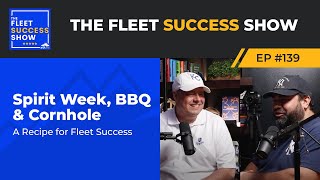
In this episode of the Fleet Success Show, hosts Josh Turley, Tony Yankovic, and Mark Cannon discuss their company’s annual Spirit Week, a week‑long series of themed dress‑up days, communal meals, and games (cornhole, mini‑basketball, ping‑pong, escape rooms, etc.). They explain how the event was created to inject fun and intentional culture into the workplace, to reconnect remote employees with the "mothership," and to foster camaraderie, competition, and a sense of pride. The conversation covers logistics (blocking PTO, providing catered lunches, scaling food for a growing staff), the emotional lift the week provides, and how similar practices could be adapted for fleet‑shop environments (monthly pickleball courts, food trucks, shop‑floor games). They also link Spirit Week to broader business outcomes: employee engagement, retention, recruitment, and reinforcing shared values and purpose. Throughout, the hosts share anecdotes, personal preferences (favorite lunches, game moments), and reflections on balancing fun with operational priorities.
Chapters
All right, welcome back for another episode of the Fleet Success Show with your hosts, Josh Turley, Tony Yankovic, Mark Cannon.
What's up, everybody?
Yeah, I actually thought about this the last episode we recorded. I don't know if I know how to pronounce your last name, and I bounce between Yankovic and Yankovic.
It's Yankovic.
With a—
all right, right.
Let the record show it's Yankovic. Right.
The spelling is supposed to be Y-A-N-K-O-V-I-C. Yeah. However, my grandfather added the H to Americanize it so people would pronounce it correctly. All right.
Weird Al. Weird Al. He took the H off, didn't he?
His father took the H off. Well, left the H off.
Okay.
Yeah. All right. So that's why they call him Weird Al Yankovic.
Right.
Most of the time, but it's Weird Al Yankovich.
It's pronounced with it. Yeah. Okay. Tell you, man. Things you learn.
Good, clean information.
Right. Well, so we're still doing Spirit Week this week. We're representing our team colors. Yeah. You know, Mark with the New York Yankees. Repeat. I'm a little sad, like, you're not a Mets fan, you know, but at least you picked the winning team. You know, represent KC, royal blue. Then I don't have any sportswear in my entire arsenal. You know, I'm embarrassed to be a Suns fan because they don't know how to build a winning team. I know you've got your theories on that. That's the KD, you know, disruption theory.
Yep.
And ASU is just, you know, they're now the most penalized school in NCAA history.
Right.
Which is insane for a program that's never won anything. So just goes to show, cheating never wins, cheaters never prosper. So I'm doing my Baja representation, representing the Ford Performance Racing. So, but I wanted to talk about Spirit Week today. All right. And, you know, I know for me, I don't remember when we started it, but Mark, this is now your fourth Spirit Week officially. Tony, this is your second, right? Uh, but so I wanted to talk about, you know, some of the things we do and why we do it, what some of your favorite parts are of, uh, of Spirit Week. And, um, yeah, so for our listeners, if you, if you haven't heard of this before or something we do, if you remember back when you were in high school, we talk a lot about, you know, Spirit Week in high school where you can get like school spirit and everybody rallies together and there's rallies and pep assemblies and yep, everybody's wearing their school colors and I remember when we came up with the idea, it was several years ago, and we realized like we wanted to inject a little bit of fun, right? And be intentional. We talk about intentional culture. This is us being intentional and try to, you know, really lighten up the— right, liven up the atmosphere and give some of that school spirit type vibe for the company.
Right.
And so that's what we did. And we do all the same things, you know, back then, like you'd have like pajama days and, you know, all those different things. Well, we did the same thing.
Yeah.
So it was cool. Every day has a different theme. We come into work dressed up differently. And then, you know, throughout the week we have a bunch of different games and, you know, contests just to kind of inject everything. And then the other side of it is, you know, most of our employees are here in the Phoenix office, but I want to say we've got about, you know, 8 or 10 that are out of country and then another 10 or so that are out of state across the country.
Right.
So we fly in everybody. And everybody that can be here is here in the office. We, you know, we block out PTO wherever possible. We don't, you know, schedule client trips. We don't, you know, we try to avoid trade shows and things like that. That way everybody can be here because we really want to have everybody kind of reconnect with the mothership, so to speak.
Right.
So with all of that backdrop, what's— what have been some of your favorite moments or some of your favorite traditions that we do in Spirit Week? I mean, what do you guys get out of it?
Well, you know, I think most of our audience knows, right? I used to be one of the remote employees and now I'm here. So this is my first time as an in-office employee. And I will say, and it's what you just talked about, like that, just that part of it to me is really special, right? Getting all the remote folks in here. I remember it on both sides now. So like, I love getting out here. I love connecting with the group, you know, just as great as Zoom is, and I'm a big believer in that technology and it can be very efficient. It doesn't replace a handshake. It doesn't replace a face-to-face meeting.
Yeah.
And the side, you know, so, so that's great. And now I'm on this side of it and I love having all the remote folks come in and being with them. And it almost feels like a family reunion.
Yeah.
It's like the whole team is together finally again. Like, you know, where you've been all these years, even though you talk to them every day, feels like in the moment that you see them, it's like, I haven't seen you in forever kind of a thing. So I like that. There's a lot of great traditions, but I'll be honest, and this probably won't surprise anyone who looks at me, my favorite tradition is lunch. So we, Josh does not hold out for lunch. Okay. There's, he cooks a day, someone else will cook a day. We'll have it catered, you know, Friday we usually do a potluck, you know, and lunch is just spectacular. Like you shouldn't eat that well at work.
No.
And maybe that's not good. You get the—
Right.
The itis after lunch too. But I'll be honest, and we do a lot of fun stuff. I don't, you know, and I can go on for long, but lunch is definitely my favorite of the traditions. We really go all out. We make it like, you know, for those of you who are like me who maybe have a Mediterranean background or maybe some other cultures do the same thing where there's this, you know, there's Sunday dinner. And Sunday dinner actually happens at lunch. And it's everybody better be there. I don't care what you got going, what's going on with work, clear your calendar, clear your calendar. You're there and we're eating like kings and queens that day. Right. And that's what lunch feels like. So that's my favorite part.
I would agree. The time that we spend at lunch, I try to make a point every day to sit with a different group of people.
Yeah.
Just because, you know, I don't have a chance to meet and talk with a lot of the different teams. I interact with several teams, but not all of them. So it's a great opportunity to get to know people. And to really get to know what they like, what they don't like, and their personality. On a Zoom call, you don't really understand their personality, but sitting around after lunch, after we've eaten Josh's barbecue or Argentinian barbecue today, like Facundo—
that was fantastic. Yeah, made—
that was awesome. Second to Kansas City barbecue, but that's okay. No, but it was great. And I think, you know, having the theme days, it really brings us together as a group, you know, because it's, you It's like everyone does it. It's not like, you know, half the group does it. Everyone does it, which is fantastic.
Yeah.
Yeah. And I, you know, look, folks have heard it before. Hungry, humble, smart, right? Well, we do these little competitions as Josh talked about. And, you know, over the years it's changed. We have a little, you know, mini basketball shooting thing that was always a very popular one.
And ping pong, which I think was happening today.
Yeah, that's happening today. Yeah.
For that.
So, and cornhole. Cornhole's fun, man.
Cornhole around here has like a whole subculture. Yes, it does.
It is a permanent part of Spirit Week.
Yeah. And it gets crazy. You know, this year we, we brought 'em cuz we used to be all in the back in the training area. Um, and I always felt like it was kind of removed, right? Like you'd go back in there, do your game, nobody would know what would happen.
Right.
And then this year we're like, well, what if we just bring all the cornholes out? Right. And yeah, it's a little bit noisy and it probably disrupts the flow of regular business. I know Shauna was like trying to do a demo and she's walking into the other room, you know, and then hiding herself in the, in the closet, but It was really cool. Like, and you just hear the chatter and the banter back and forth. They don't go light on each other. Everybody wants to win because we have this competitive spirit.
We do. We really do.
But yeah, cornhole and mini basketball. And I interrupted your thought.
Well, no, I just, I mean, I mean, you know, it's not like, I know for some people cornhole is like an every weekend thing. Like it's very Americana.
I love it.
Right. And I love it. I wish I could play that much, but I don't really play very often, a couple of times a year, you know? And I find myself, you know, I'm a game or two into it and I'm like, yeah, this is fun, man. You know, you get a little smack talk like you're talking. One of our best players is Dallin and people have probably seen him in some of our videos and he happens to be really good, right? So they're up in our first round and he's like talking smack and he's, oh, we got this, we got this. And I'm like, remember, hungry, humble, smart. I don't know if you can be humble about it. And I had played horribly well. You know, sometimes the good Lord takes a liking to you. I dropped 3 holes on the last round. We come back, we beat them, and we send them to the loser's bracket. And the whole area of the building is going, yeah, crazy.
We took down the king.
Yeah, you know, it's like we won the World Series or something like that. So, you know, just, there's just something really neat about that, you know. And like you said, you know, there's, there are certain things, we're all so different, and yet we obviously have certain things in common. And it's one of the things that struck me while this was going on, like, check us out, man. We really are. We got a competitive streak in us and we're not bashful about that.
No, we definitely want to win. Yeah, absolutely.
And the nice thing, Mark and Josh, is the way it's developed around a team. You know, it's not individual against individual. It's teams against other teams. So you build this camaraderie with people and they purposely put people on a team that you're not working with on a daily basis.
Right.
It's awesome. I'll be sitting over there at my desk and hear a cheer go up or hear somebody, you know, trash talk and it's awesome.
Yeah. Did either of you do the escape room today?
Yes.
I didn't get to do it yet.
Oh man. All right. Well, we'll have to see if we can get you in there.
All right.
I'm not going to ruin the password now. I totally would have said it out in the air.
I should have lied then.
You would have been like, 5 minutes, we're done. That was a fun addition.
Yeah, that's cool.
Again, it seemed competitive, but like the intelligence, like seeing the teams and the collaboration. And why this is— it's really what we're building here is really fun. You know, like we've got a puzzle, we're trying to solve it, you know, in real life. Right. And how do we make all these things work together? And, oh, you've got something over here that I can use here. Right. And just the teamwork is a lot of fun to watch. Yeah, but it's fun. It's like we don't stop innovating every year. We try to figure out, well, what's something new we can add or what's a wrinkle? How do we make this better?
Right.
And every year we're trying to one-up ourselves from the year prior.
Yeah. And we're talking about Spirit Week, right? And like, I've—
the most pointless of all.
Yeah, right. And I'm hearing conversations like and Josh will get into it, folks. Don't let him fool you. He'll be like, no, I don't like that idea. We're going to do this. This is— it's important. It's important.
The most important thing is the food to me, though. Yeah, right.
So like, we'll have a bad meal and I'm like, okay, that's not coming back next year.
Let's go. Like, come on, don't skimp. Like, let's, you know, we're going to eat well. Yeah, you mentioned like the barbecue and I don't know if I'm going to keep doing that, but every year I try to do something new. This year I did tri-tip and chicken, oversalted way everything. It was Texas-style barbecue, right? Like, you know, tried to go in Texas instead of Kansas City. And that was my mistake. No offense to everybody out in Texas. But yeah, flip that up.
So quick story on that. You know, I came in today, Josh was responsible for lunch and like around 10:30 rolled around and you're not in your office and I can't find you anywhere. And I'm— and I— so I go to your assistant Debbie, I go, is Josh doing lunch today? Yes. I go, yes.
Yeah, exactly.
I was pumped.
Yeah, I had a lot of fun. Although I will tell you, you know, Facundo came in and those who don't know, he's got a really proud Argentinian streak. Very, very, you know, connected to that heritage. He did Argentinian asado today. Yeah, it was fantastic. Right. Like his— and he homemade the chimichurri.
Yeah, the chimichurri was good.
Yeah. But, you know, I put some of that on that sausage, the Argentinian sausage. I love you. It was so good. Yeah, it was just all of it was excellent. Yeah. And then tomorrow's potluck and potluck is always a fun, you know, like people say it's a mixed bag. I'm like, not around here. It ain't. No, because people really cook, right? They know how to cook.
And there'll be way too much food we can eat for all of next week.
Usually they're still trying to find signups for tomorrow and I'm like, hey, don't you worry about it. Um, but yeah, the food definitely, you know, because like people come together over food and it's been pretty awesome. So, and I'll never forget, you know, last year you told me like, hey, this is just as good as anything I had in Kansas City.
It was awesome.
I don't— I still don't believe it, but it was great. Um, it was really fun to be— to be able to do that and, and, you know, give something that I enjoy doing for my family and, and extend that to you guys, right? Uh, this is one of my favorite things.
At this point you've made it hard on yourself though because Yeah, that expectation. There's an expectation letter. I feel like you would right now.
I think, well, that was just it. I, you know, earlier this week, if, you know, I saw my Facebook post, I was like, all right guys, I need a little bit of like loaves and fishes miracle here. I don't think I've got enough food, you know? And, and like my little smoker, I can only, you know, I could do, I could probably get 9 tri-tip in there. I did 6, but I was, you know, I was looking at it, I was like, this is the first time I've had to do 60 'cause we're growing.
'Cause we're growing.
Yeah. Right. And last year it was 40-ish and I had no problem with that. You know, year prior was that was like a little bit of 30, right? But we're like, we're growing every single year, and next year I don't even know what that's going to look like, right? You know, they're going to have the 70, 80 people in here. I'm like, I'm going to have to start smoking the week prior and try to figure out how to reheat all this stuff, you know, maybe I'll sous vide it or something.
Yeah, um, people don't appreciate it's a lot harder to cook when, as you get bigger like that, hard to really—
you know what it is, I'm going to have to, I'm going to have to delegate, and I'm going to see if anybody else has smokers. They be like, hey, all right, here's the, you know, like, here's the meat, it's all prepped, right? Just route it. This is what I need.
Right. That's a good idea.
Yeah. Or I'm just going to have to buy more smokers. All right.
I got to tell you which one I'm betting on, right? Knowing you, I think—
please, I don't need more smokers. I ain't got no room for it. You know, we'll just throw one here at the office and we'll just—
there we go.
All morning. There we go. So one of the things I wanted to do, though, was, you know, talk about intentional culture and fleet. And here's something— this is an artifact of culture is what we call these, right? Spirit Week, how would you go out and implement something like this if you were running a fleet today? How would you incorporate Spirit Week? Obviously, we still meet and we still make sure that we're getting our job done. How would you do that in a fleet management shop?
Well, I think similar concepts. So a lot of organizations that we help, they'll have holiday lunches, but bringing that concept of bringing in lunch once a month to the shop, I think that's an important way to do it. I've worked with a fleet out in the state of Washington where they actually put— hey, I think I mentioned this before— but put tape on the shop floor and made a pickleball court in the shop floor.
Nice.
And they shut down for one afternoon a month and they play pickleball as a group. And so it's just bringing the team together, everyone, you know, trash talking and just having a great time and being competitive.
It's—
there's a lot of things that people can do like that within the shop.
Yeah, we've seen things like people back in food trucks, you know, in alleyways and stuff like that. And of course, I mean, you know, bar— I mean, the almighty American barbecue, right? Like, yeah, we've plenty of shops got grills on the outside. And, and, you know, it's funny, we'll go visit a shop and you can tell, has that grill been used or is it just sitting there?
Super shiny.
Yeah, exactly. You know, and when it's been used, there seems to be this correlation, right? That, hey, there's a good vibe here. There's a generally positive attitude. People are happy to be there.
Yeah.
You know, I think our Fleet brethren could take, you know, it's kind of like connected to this is there's this concept of rallying around the cause, right? And that's sort of built into this somehow, right? Like, obviously we have our values, we have our vision, we have our mission. And this is kind of a fun expression of the camaraderie around it. But that is what kind of draws this group of people together, right? And so that's something I think about a lot, right? You know, how do you How do you kind of— that's got to be there too, because if it's not there, you know, anybody can go to a barbecue or go to a party or go have some fun, you know. You know, I think if I can call this out, like, obviously all of the various segments have their strengths and weaknesses, but you find certain trends in different segments, right? One of the trends I find in the school bus world is more often than not, there's this deep-rooted sense of responsibility to the community in the well-run school bus shops, right? Like there's this get it that like, hey, I got kids' lives on the line here, right? And that is enough, you know, and when I say enough, I don't mean to underplay it, but that's the thing that, you know, the leaders of those groups who really have well-run shop, they rally around that.
They tapped into the purpose. They made it really clear. Everybody understands what it is, right? What are we doing here?
Exactly, exactly.
And I think that's, that's part of it, is you have to have a common goal as a, as an organization, as that shop. They need to have a common goal, whether it be technician productivity, whether it be days without an accident, days without an incident, fleet availability numbers hitting their targets. But I think it's really important that everyone be on the same page, everyone have understand what the goal is, and then as a team work towards that.
Yeah, yeah. And then this is kind of fun stuff, like I don't know about everyone else, but I think most of our company see Spirit Week as a reward, right? And that not necessarily is your intention. I think your intention is, no, let's get together.
Let's spend time.
Right.
Yeah.
Yeah. But it's so cool and it's so fun and it's so different that you feel like it's a reward. And I think the reason for that is then when you go and you're talking to your spouse or you're talking to your buddies or whatever it may be, or what did you do this week? Right. And oh, I was at my, you know, my company had our Spirit Week and you just start talking. And it's like, wait a minute, you played cornhole at work?
Right. You get paid to play cornhole.
Yeah, right. Exactly. You know, and it's, and it just creates this, this sense of pride, the sense of, you know, feeling fortunate, which we all are. Right. And yeah. So it's, you know, like, I think this works great and I think it's a wonderful tool. And, but I don't, I like, I think you need the two, right? If you don't have the rallying cause, you can run a bunch of events and, you know, people might enjoy it, but there's not going to be this sense of attachment to it and anticipation for it. And like, this is a thing. People here get that this is a thing. This is what we do. And, and so, you know, you kind of need that balance. And I think it's because we have those common goals and those common values that it works so well.
Well, and we work hard, right? Yeah. You were just at a session. Like, yeah, card play hard. Right, right. And I love that we work hard, but we're We don't take ourselves so seriously that we're not willing to, you know, do a ping pong tournament or, you know, do a little mini basketball shootout or something like that. Right. And I'll admit, as a leader, and obviously we've got customers listen to this and things like that, but I'm self-conscious of it, you know, and like, what's the appearance that, you know, how does this look to our customers? Like, oh, you guys are just playing cornhole all day. Meanwhile, my shop is down, right? You know, that's the kind of stuff I worry about, but I never have to do anything. Because as soon as something happens, it's like, yeah, we might be in spirit week, but everybody knows the number one job, right? And we rally back together like, oh, let's go take care of this and get it taken care of. Okay, now back to cornhole, right? We know what the priorities are.
Yeah.
And it's amazing to see how people make those judgment calls throughout the day. And yet we still have a ton of fun, right? It still gets, you know, it's really fun just to see everybody kind of let loose a little bit.
Right.
But still getting the job done.
Right.
You know, and I think that's an amazing thing about our culture. But I think about, you know, like on the shop floor, you talked about, you know, they took tape and mapped out a pickleball court and they do that monthly, right? And I wonder if, you know, could they, you know, do what we do here where we're still getting our work done, but could they do something for an entire week straight? And I'll tell you, by Thursday or Friday, I think we're all kind of like, uh, okay, right, that's still going, right? Um, you know, so doing it every month, you know, we do a staff meeting every month, we bring in lunch, but we don't necessarily have the game element, you know. And I'm actually getting ideas as I'm talking to you guys. Okay, I'm like, oh, oh, that would be really cool. Oh, that, you know, like it never stops, but But I'm wondering, you know, like, we have that little mini basketball hoop. It's literally like pop a shot. We bought it on Amazon for maybe $100 or something.
Sweet.
And yeah, I just think like any shop could do that, right?
Yeah, it doesn't take up much space.
Yeah, we would, we would call each other out, be like, hey Mark, let's go. Yeah, you know, like, I didn't like what you said in the meeting. Basketball, right? That's right. Um, you know, or you just build some of that. I've seen guys, I walk in there and they're sitting there playing ping pong.
Yep.
But I think other companies, other cultures, the CEO walks in, it's like, oh shoot, stop, right? Stop.
I'm working, right?
And they're sitting there. I'll come over and like, all right, who's winning? Right? And, you know, and I'll watch for a little bit and cheer them on. Oh, that was a nice shot, right? I suck at ping pong, so I never try to get in. I just don't even need to embarrass myself like that. But basketball, I'll take on anybody.
Yeah.
I am not a good cornhole person. You know, I let Tony down the other day. I think it was you. I don't remember which team I was going against you. That's right. I had the best game I've ever had. Right. And you skunked me like you had every single— I'd, you know, I'd throw it in the hole.
Tony would like this.
I was on it.
And Tony's very good.
He was just better, right? He's Kansas City guy. Yeah.
Something about the college pitcher over here.
So that's true too, too, too. I don't know.
He makes me feel like he plays every weekend when I play here.
Well, you know, Josh, one of the other things that I don't know if you as the president CEO of the company realize is how it impacts the family. So, you know, when I'm packing and getting ready for to come out to Spirit Week, my whole family's involved there. All right, Dad, what, what is your superhero shirt going to be?
Oh yeah.
Um, oh no, don't take the Royals shirt, take the Chiefs shirt, you know, for, for your favorite team's day. And so the family gets in it. And every night when I'm talking to my wife on the phone or the kids, it's like, okay, how'd you do? What'd you do?
What'd you play today?
And so it really goes beyond just the employee.
Yeah, that's so funny that you say that, but it's the same. My wife is into She wants to know what are the themes and yeah, and it's like, what? It's just, you don't need another excuse to go shopping, sweetie.
Oh yes, she does. So well, if you are a fleet, you're right. And hopefully you are if you're listening to this, but you know, I'd encourage you to take that time to think about what can you do to intentionally help reinforce culture, to help reward your team, right? But to just build those relationships between all of your employees, right? And And this will, like, we'll have a Goodwill Week this week. I think the other week that's really big for us is obviously Connect, right, when we get everybody together. We don't bring the entire company out for that though, right? But we get a lift, like I'll call it emotional lift.
Yeah.
Um, but that's what we get from Spirit Week, I feel like, is this emotional lift that we— and we'll talk about it. And, you know, I actually can't remember who won last year, but we do know that Dallin's won a few times.
Yes.
And Edix won a few times. And they get a reputation, right? And we razz them about that, you know. And it just builds this thing that we kind of refer back to all year long, right? And it is unique. I wish more people would do it because it's, you know, it's like, really? Like in high school? Yeah, like in high school.
Yeah, like in high school. Uh, feels more cornhole, right?
Exactly, exactly right. I never did cornhole. We didn't do— actually, come to think of it, those pepper sambal were kind of boring. Yeah. So, uh, yeah, it's definitely much better.
But I want to just connect an important dot here. Yeah, I think you're implying it, and I think we're all kind of— but, you know, in, in in the world we're living in right now where retention is just a serious issue, recruitment's a serious issue, right? I got to tell you, I know that the almighty dollar is important and I'm not, you know, but people do cling to this when you feel part of something, you feel like you enjoy work, you feel, you know, I think most people, you know, understand and everybody wants to make more money, right? That's never going away. But most people don't Don't jump ship for a dollar, right? They may tell you that in an exit interview because they needed something to tell you and maybe they didn't want to tell you to your face they didn't like you very much or the culture was bad or too many of the other folks around them they thought were, you know, negative attitudes or something like that. But I think that's so important to understand like that there's an underlying thing here. And again, I'm not sure you'd have to tell us. I mean, I don't know that you did this specifically for retention, but you certainly did it to build team camaraderie and understanding that When you have that level of engagement with your employees, it's certainly going to help retention. And then we go out and tell the world like we're doing right now, right? What a cool place RTA is. And, you know, we're hiring, we're growing, as you mentioned. And everybody I'm interviewing, it's the same thing. Well, you know, I've heard about what you guys got going on over there, or I saw so-and-so speak because you oftentimes do. And this intentional culture thing, tell me more about it. You know, it's for real.
Somebody asked me that the other day. Are you for real? I'm not for fakes. Yeah, but I do think, you know, and that's— it is— it's, you know, what are the intentional things that you do? I call the artifacts of culture. What are the things that you do that showcase your culture and show that your, your team, that you really care about them, and, you know, that really reinforce the bonds of teamwork, right? You know, we call it like a Band of Brothers type approach. But why? It's because they had a shared experience that they bonded over, right? Um, and that the Spirit Week kind of gives us permission to bond with each other and have those relationships. And yeah, it's something dumb like cornhole or basketball, right? But It's about having the permission and having that type of environment that you feel like I can let loose a little bit.
Yeah.
So as fleet managers, you know, I just challenge you because they won't leave for a dollar, right? You know, hopefully they won't leave for two, right? Yeah. If it's $10, you know, we— I actually talked about this a few years ago, was, yes, you got to be in the ballpark, right? But the little things make the difference, right? It's the thank you notes. It's the, you know, the one-on-ones. It's things like that, right? But things like Spirit Week, you know, Now, if we just did Spirit Week and we didn't do all the rest of the stuff, it probably wouldn't make as big of a difference. Right. It would feel empty.
Right.
But because we do all those other things, it just makes Spirit Week that much more enjoyable.
Yeah, exactly.
All right.
Well, I think we're about out of time. I want to thank you guys both for coming in. I love having you guys both in town and here. Spirit Week, you know, hopefully you don't lose too bad at basketball this afternoon. And if you can get in for that skate program, it's all right.
Cool.
Well, Josh, thank you. Thanks for having us.
Yeah, thanks for having us.
Well, until next time, bye everybody.
See ya.
More from Josh

Episode 227: The Hidden Costs Killing Fleet Operations (It’s NOT What You Think)


Episode 225: Are Certifications Still Worth It? The Truth About ASE, CAFM & Fleet Leadership




Episode 221: The State of Fleet Management: Education, AI, and the Technician Crisis with NAFA’s CEO

Episode 220: Motor Pools Are Back: Right-Size Your Fleet Without Breaking Operations

Episode 219: Stop Guessing at Downtime: Status Strategy for Better Availability #podcast #fleet

Episode 218: Fleet Predictions 2026: AI Hype, Technician Shortages, & the Next Era of Fleet Managers

Episode 217: Why Replacement Planning Solves 95% of Your Problems #podcast #fleetmanagement #fleet