Episode 149: Fleet Manager of the Year: You Never Know Until You Try
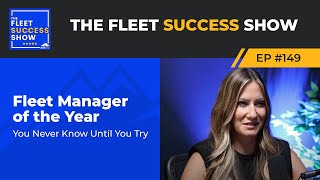
In this episode of the Fleet Success Show, host Josh Turley interviews new co‑host Sarah Burnham, the 2023 Public Sector Fleet Manager of the Year for Palm Beach County (RTA). Sarah recounts her unconventional path from a decade in automotive repair and a counseling degree to fleet leadership, describing how she leveraged a CAFM certification, moved through state‑level fleet planning, and ultimately took a director role in Florida. She details the transformation of Palm Beach County’s fleet operations: replacing pen‑and‑paper work orders with an in‑house FMIS, rolling out laptops, cutting 135,000 sheets of paper, and processing 14,000 work orders annually. Sarah explains how data from the FMIS enabled her to tell a compelling story to senior leaders, secure budget for a technician assistant, and improve turnaround times. She discusses the power of award programs (100 Best Fleets) for self‑reflection and team morale, and shares her change‑management philosophy of listening, incremental improvements, and cultural celebration. The conversation moves to employee engagement, highlighting anonymity, measurement, and relevance as key drivers, and outlines concrete actions such as one‑on‑one meetings, recognition programs, and feedback loops. Sarah also covers emergency preparedness for hurricanes, describing fuel‑truck logistics, backup plans without electricity, and the importance of war‑gaming scenarios. The episode emphasizes the value of professional networks (FLAGFA, NAFA, NAFHA), mentorship, and community sharing of policies and contracts. Finally, Sarah opens up about imposter syndrome, perfectionism, and how she built confidence through a leadership master’s degree, public speaking, mentorship, and embracing vulnerability. Throughout, both hosts stress data‑driven storytelling, emotional appeal, and disciplined execution as essential tools for fleet managers seeking to improve performance, culture, and resilience.
Chapters
This is the Fleet Success Show dedicated to helping you and your fleet succeed using the experience of fleet professionals and Hall of Fame fleet legends. The show that explores how the pillars of stakeholder satisfaction, intentional culture, resource efficiency, and risk management all combine to lead your fleet to success. We're glad you're here. Now let's get into the show. All right. Welcome back for another episode of the Fleet Success Show. I'm your host, Josh Turley, joined today by our newest co-host, Sarah Burnham, how are you?
I'm doing fabulous. It's great to be here. Thank you so much.
We flew you all the way out from Florida to the hot, dry heat of Arizona.
Yeah.
So has it been a nice break or is it like, oh my gosh, this is terrible?
No, it's— I love it. It's crazy how the 110-degree heat doesn't— it doesn't feel like it, especially back home with all the humidity and everything.
And every time I go to Florida, I'm just like, I don't know how people do this. This is nuts. And then I come home and I'm like, oh, I can feel it. Like just the moisture leaving my skin.
It's funny how even the air conditioning, like our air conditioning is set back home at like 75, but here it's like at 71 and I'm freezing to death.
Totally, right? I think I just turned ours down to 73. I talked to somebody the other day and they keep their house at 68.
Wow.
I'm like, you are nuts. Of course, then she told me her power bill was like $800, $900. And I'm like, that's insane for a little 1,800 square foot condo.
Yeah, I believe it. I'd be, oh. In blankets and sweats.
Yeah, she's from the Northwest, so I'm kind of giving her a pass that like her blood hasn't thinned out yet. But okay, 68, that's, mm, that's cold. Yeah, I can't do 68. So, well, hey, so I wanted to kind of get you introduced, you know, let everybody know who you are a little bit. You obviously just joined RTA a couple weeks ago. Yeah, so pretty fresh off the boat, right? And going through, you know, just some of the achievements you've had in your career, some of the highlights. Why don't you kind of tell our readers or listeners the Sarah Burnham story?
Okay, sure. So I got my start in automotive. I worked at a repair shop for 10 years and like everyone in fleet, you don't usually pick the fleet field, but we're working with the Highway Patrol and I would call them for authorization on repairs. So I was like, who are these fleet people and what do they do? And I liked the business side of it and the automotive side of it. I was going to college, actually went to college for counseling, which unfortunately there's not a lot of money there. So I ended up with—
Like full psychology counseling or like— Yeah.
Well, yeah. So I actually wanted to work with at-risk kids. Okay. And so it was a lot of psychology, human development, which I actually feel like I use a lot.
I was going to say, you're working in fleet. I feel like the whole fleet department is at-risk kids sometimes.
Yes. Yes, exactly. So I ended up getting a job at the patrol and they wanted somebody to move up because they had people that were leaving, like the fleet manager and the assistant fleet manager. So they brought me on so I could learn the roles and move up. And through that, I got my CAFM through NAFA, which was amazing. That's helped me out so much in my career. And then from there, I went on to the state level where I was working with the state and all the, there was about 21 different agencies. And so I would help with fleet plans, which so much goes into that, like replacements, cost per mile, working with their fleet information system. So there was about 12,000 vehicles. So it was a lot of collaboration with the different state agencies and how they manage their fleets. But then I felt like I, wasn't being used to like my full capacity and I kind of wanted to spread my wings. And so it's kind of crazy. I Googled jobs and fleet management in Florida. So, cause I was like, why not move to paradise and—
Take the opportunity if it's there, right?
Yeah. Yeah. And so it was assistant director job and which I also loved cause I love the idea of being able to come in somewhere, learn it and then have that opportunity to to move up. So I applied and got the job, obviously. But it, so it was very nerve-wracking because, so I went to work for Palm Beach County, which is well, very well known in the industry. Doug Weissman was a past president. He was the director there, past president of NAFHA. So when I got promoted to director, I was like, man, like, how am I going to make this better than what he had already done. So I kind of had to get over that. And what I realized is that no matter who you're following or what program they have, there's always something that you can improve. There's always blind spots, opportunities. One of the big things there was they were doing pen and paper work orders.
Okay.
Yeah. So I got the opportunity to kind of bring them up into today's world, roll out laptops to the technicians. We upgraded our entire FIM, FMIS.
It's okay, FIMS is also acceptable, right? It depends on, are you NAF or GFX, I guess, but yeah.
Right, yes. Which was a lot of fun because we actually did ours in-house. We had a programmer that we worked with. That's not always the best way to do it. I mean, it's not the cheapest way either because you have to obviously pay a programmer.
It's not the worst way though.
Yeah.
The worst way is definitely spreadsheets.
Yes, that's so true.
So if you are gonna use in-house, like that's definitely an option.
Yes.
We'll have to do a whole episode on pros and cons of in-house, you know, designing, doing it yourself, DIY FMIS. Yes.
That'll be fun. And I think that people would be surprised about how many people are still using spreadsheets today.
Yeah.
It's very interesting.
It's a little scary. Yeah.
Yeah. But that's good news for fleet managers out there who are looking to move up in the industry because you know, you can find a fleet that can really be improved by processes, an FMIS.
Well, and I like that transition too, because you had used an FMIS at your previous stop. You came in, you kind of knew what was, you know, what was out there, what the potential was to actually have a system. And you came into a shop that didn't have it. And so for other fleet managers that are, or maybe they're not fleet managers, maybe they're service writers or shop foremen or technicians and they're looking to take that next step, they've already gotten a lot of the experience. There's an amazing amount of good they can do in a position just based on what they've learned, maybe in a bigger city or something like that. And then they come into a smaller one and it's like, oh, look at this, it translates really well.
Yeah. So yeah. And there's an opportunity for those folks to look at like, why are we doing things? And, you know, you get that response because we've always been doing things that way, which I absolutely hated. That was my, okay, this is an opportunity here if I ever got that response. So through that, looking at, you know, all the opportunities we had there, I was able to make several different changes to the way we operated. I didn't come in like super hot and just come in and change everything. I took my time, to be honest. I wanted to learn. There's a lot to learn, obviously, in a new fleet. But I also, you know, Didn't see the value in just coming in and changing everything and being like a bull in a china shop because that's, that's going to really affect your culture probably in a negative way. There's a right way to do change management. So then a couple of years ago, I was nominated for Public Fleet Manager of the Year. And so there's an application for that process. So I applied and big surprise to me, I won Public Sector Fleet Manager of the Year in 2023. I was not expecting it at all. I, to be honest, I was up against some great fleet managers and I was shocked when they announced it was me and very honored. Yeah. And honored to be here also.
It's a huge thing, right? And I know that feeling must have been almost overwhelming, but also just, wow. Looking back, you know, from where you started and coming into this position, you probably didn't have that on your bingo card when you started this, right?
No, it was never even a thought in my mind, to be honest. And for— and honestly, like, right after I won it, I had— it caused some self-doubt in me. Yeah, like, here are all these other people that are great in the industry, and it's just like, wow, they picked me out of everyone else. But something that really helped with me and my confidence and actually really seeing like what all we changed while I was there was doing the award programs like 100 Best Fleets and even applying for that award, putting everything down on paper and like being able to step back and see like, wow, look at all these changes that we've made. Like that was, that was a really big thing for me. And I would recommend that's one thing I would recommend for any fleet manager is go for the awards. And I didn't do it for me. It was more like, let me get the recognition for our team and all that they've done.
I think that's one of the big unspoken benefits of it is, yeah, we go out and we get the award, we apply for it, and there's some notoriety that comes with it, but really the team gets to celebrate something and they're working towards something and they like, oh, we were number 86 this year, and then this year we were number 74, and then next year, we want to try to get to top 50.
Yeah.
And it really is fun. One of the things we talk a lot about is mission and what's most important, right? And kind of a rallying cry that rallies the troops behind you. You always see those famous movies where, like, Mel Gibson with the flag and he's charging ahead, right? And as a leader, having that opportunity to set something out there and say, "No, forward. This is what we're going for, and we're really trying to improve, and here's the specific areas that we're going to do it, and here's how we're going to measure some of those results." And by the way, when we do it, we celebrate and we celebrate everybody because this was definitely, you know, as much credit as the leader usually gets, it's almost never the leader's fault and it's never the leader's effort, right? Like, it's not— it's not the leader's credit. You know why? Why all of a sudden this happened? It was the people. It was the people behind them that made it happen. Right. So I love seeing leaders that, you know, they put up banners in the rafters and they do all kinds of fun stuff to celebrate the team, barbecue, whatever. but it really does become an amazing team accomplishment.
Yeah.
So, and I love every time we talk about it, you always refer back to, it wasn't really me, it was like my team.
Right.
And so like that gave me a lot of fulfillment was seeing the team really celebrate that.
Yeah. And I think that's one thing that fleet managers, like they really have an opportunity there to celebrate their team and their accomplishments as much as they can.
Was there any hesitancy before you applied the first time?
Yes.
Because you talk about self-doubt, like I'm imagining there's a lot of self-doubt before you decide to apply.
Yeah, I actually didn't apply. So I was the director for 7 years and I didn't apply for after 5 years. And part of that was because I wanted, when I applied for us, I wanted it to be like not living off of what the past fleet manager did, but you know, our new team and all the things that we did together. And part of it was like, you know, I'm not really sure how I'm going to stack up. And I know that there's a lot of fleet managers out there that feel the same way. I've, you know, I've spoken with them, but you just never know where you're going to place. The first time I applied, we got 16, which I was very surprised at. And then last year we got number 10.
Improving every year. That's awesome.
Yeah, thank you. But I mean, and the awards and the application, just going through that process. It helps you look at your different areas and find, you know, where you can improve, what you can improve on for next year. And then you can share that things with your team and celebrate all the things that you guys have done together.
So.
Yeah.
And you mentioned something as you talked about the application process, how it kind of forced you to reflect. And one of the things I've talked about it on the podcast before was the power of journaling, right? And just, you know, at the end of every day or the beginning of every day, just taking time to reflect. And in some ways, the 100 Best application process is like just a big Fleet Journal. And I love that it gives you the chance to look back because sometimes we do, we get that moment of self-doubt and we get in that moment of, I'm not good enough and I don't know what I'm doing here. I'm not as good as my predecessor. I mean, like, I took over for my dad in this company and I fought that for years and I had a lot of people that believed that too. It was like, oh, you're just the boss's son. You don't know what you're doing. You're not good enough. And I believed the haters. And then I think sometimes we get stuck in that until we look back and say, what did we accomplish? And we take a moment to reflect and realize, wow, how far we've come and just how awesome that is.
Yeah. And then you have, if you have that on paper. And so some of the things that I did was I created those things and we, so we would do like an annual report and it would include like the key projects that we did. And have like key metrics on it, like how many work orders we did. So we did like 14,000 work orders a year. That's a lot.
That is. You were doing 14,000 and you were using pen and paper?
At one time, yes. Yes, we figured out we saved 135,000 pieces of paper when we went to electronic.
That's so cool. Yeah.
So we did electronic parts requests too. But having, so the annual report, like it can help you tell your story of like what you do, having those metrics, like work orders, you know, like when our customers or the board or whoever looks at that, they're like, wow, that's impressive. And then also having little things like promotions from within, who's got a like master ASE technician status, who has their first ASE. Little things like that that you can celebrate within your organization is key.
So, as you think about, you know, looking back at your career and even at West Palm Beach, what would you say is one of the big takeaways you had as far as, because this doesn't come easy, right? And sometimes you go in and you don't have good news for, you know, council, for the board, anything, right? How do you go about selling some of the changes that you wanted to make and ask for budget increases and ask for, some of those, you know, more riskier propositions, especially maybe when you're new on the job or before you've got any wins stacked up?
So the first thing that you have to have in place is a good fleet management information system, because without that, like, you can't really tell your story. You don't know where you're at, like, as for how you're doing, where you're spending your time. Are you spending it doing reworks or are you waiting on parts? And so like having those key metrics, having the data to back it up is how you tell your story. So for example, in one shop we were getting really behind in our turnaround times. And one of the supervisors mentioned to me that we were having tow-in PMs routinely where they would tow them in for PMs. And on top of that, they had mold growing on the cars. So I went and got pictures of the mold. And so I was able to go like to my management and then later administration with these pictures and then show these KPIs like, look at our— look, we're struggling. Here's the numbers. I think there's an opportunity. There's obviously an opportunity here for us to right-size because these vehicles are clearly sitting. So and that's something that, you know, that got their emotions. And so when you can tie it to emotions or resource efficiency that you're not using your resources or that there's ways to save money, again, you do that through your FMIS, your information system to show how you can save money. Another example is we had been spending a lot, our techs were spending a lot of times going back and forth to dealerships for like recalls and what have you. And so I was easily able to show, well, we're— we have 2,000 hours that we're spending time traveling. So why not get somebody like a technician assistant to help with these, you know, errands or what have you? And so I was able to easily able to sell that because the technicians weren't able to spend time on their core functions, which is maintaining vehicles, obviously.
So if you could show a pretty easy ROI, like that case, well, we can spend $15 an hour on somebody just shuttling cars back and forth, or we can spend $60 an hour doing that. Yeah, it's kind of like easy math.
Yes.
Right? I know there's a city right now, one of our frequent listeners, he's actually been a guest on the podcast, but they're dealing with like budget cuts. And so they're coming to him saying, hey, you got to cut $1 million, you know, from your annual operating budget. How do you do that when you're looking at it saying, oh my gosh, like I actually need another $1 million. I can't cut $1 million. That's going to be a net $2 million that I'm going to lose here.
Yeah.
How do you have that conversation?
I think it's, again, looking at using your data to tell your story because you can show, okay, these are the work orders that we have. This is the time we're spending. If I cut a technician, we're obviously not going to be able to handle our work. So, and which means, which translates to our customers, which are departments not being able to achieve their missions. So would you, would you like them to not achieve their missions and go out to the community? I think that's key too, is like tying your, you know, what you do back to how it affects other departments.
Yeah, I think that's great advice to them. Use your data, show that, because what you've just basically said is if you cut that technician, your downtime is about to go up, your availability is going to come down. And if you can correlate, well, that technician is responsible for this many service hours, That's now, we either have to cut the fleet or we gotta cut service. And which one do you want?
Right, exactly.
I always tell people, you get to choose your hard, but you don't get to choose no hard, right? Right. You have to decide which hard do you wanna do. We can either come up with another million or you can cut services, but otherwise you're gonna have a bunch of down vehicles. And you remember all those vehicles with mold that we just replaced, right?
Yeah.
Where can you get access to insightful keynotes from fleet industry leaders and experts, live hands-on training classes, and the opportunity to network with fleet professionals across the country? Only at the fleet event of the year, RTA Connect 2024 in Atlanta, Georgia. Join us October 7th to 11th and get the tips, tricks, and tools you need to take your fleet to the next level. Learn the latest best practices to improve performance from RTA's fleet experts. Join hundreds of fleet professionals from from employee retention and growth to the latest in fleet tech. Ensure you're building the best fleet in the world at Connect 2024. Registration is now open and class seats are limited. Visit www.rtafleet.com/connect to learn more.
I love that you talked about tapping into the emotion too. One of my favorite books is Chip and Dan Heath. They wrote a book called Switch. And they talk about this concept of the elephant and the rider. Right. And you go to India and you watch these people, right? They're riding on the elephants and they're steering these massive creatures through the jungle. And the question is, how on earth does a little tiny human direct an elephant? But it's the concept of like, you've got to figure out how to, you know, A, pave the road. They like going down paved roads. They don't want to go through the jungle. So make it easier. But then B, you've got to be able to coax them and and tap into their emotions so that, you know, you as the leader can tap into the emotional resilience of the entire team or into your leadership and manage up just as well as you manage down.
And I think that's one of the biggest challenges for government managers is really that's leadership and connecting with your team, building that culture, which you talk a lot about. And there's not a lot out there for that to get that information as a fleet manager. There's no school for fleet manager, but then leadership on top of that is tough, especially when you have a lot of— in government, there may not be a lot of turnover. So you might have supervisors that's been in their roles for 20 years. Maybe they're using the old style of, you know, command and control government. Not government, but supervision, like do as I say. And so when you have that, is your team really dialed in? If they're not connected to like the bigger picture. And I think that's a real challenge with most fleet managers. It's like, how do you connect with your team and have that— you talk about the intentional culture a lot. Like, how do you implement that into government fleet? I think that's probably one of a big challenge for a lot of fleet managers. I know it was for me as well. At one of the jobs I had, we had a supervisor leave. And it wasn't until after he left that we realized maybe the culture in that shop isn't as great as we thought it was.
And so when he left, did it have a positive impact or a negative impact? Was he holding it together with baling wire or was he kind of the problem?
There was a lot of— there was all kinds of problems going on that were discovered after he left. It wasn't just one thing, but it kind of lifted the curtain of, you know, that we We have some problems here. We need to fix the culture. So that supervisor really had to work with his team and get them dialed in. And so it was a challenge. Interesting. Yeah.
I know for you, like employee engagement is a big thing. What are some of the things that you have done to make sure that you feel connected to your team, to make sure they feel heard, supported?
So when I was hired as the— promoted as the director, I met with every team member. And I would recommend that for anybody that's going into any leadership position to one, get to know them, you get to know them, they get to know you, ask questions, and then you can ask questions like, what would you like to see change? And in doing that, I got a lot of good information. And that also gives you an opportunity to make small changes pretty quickly, you know, and when they see that, that helps you build a rapport with them. One of the big things that they said was employee engagement, that they felt like maybe they felt a little underappreciated. So one, that was, you know, a conversation I could have with the supervisors, but also implementing like employee engagement programs because we didn't have anything like award programs, team player of the year, those types of programs. I know other, there's Hillsborough County does a a really great like Technician of the Year award program. So doing those kinds of things, trying to bring together people as a team, and then also like making sure that there's systems in place for team members to continually offer feedback in like ways we can improve the system. Because ultimately they're the ones that are using the tools and the resources, and so who better than to hear from than those people.
Yeah. Did you ever read Patrick Lencioni's The Truth About Employee Engagement is the official title?
I haven't read it.
The original title was The Three Signs of Job Misery. They didn't feel like that would be a good title to have sitting on the desk of somebody at work. You know, it's like, what do you mean? Why are you reading about job misery? Right? Are you miserable? But he talked about the three things that lead to a lack of employee engagement, and it was anonymity. So they don't feel seen. They don't feel like you know them or who they are. In measurement. They don't know how to keep score. They don't know what the, you know, am I doing a good job? Am I not doing a good job? How do I measure my own success? And then 3 was irrelevance. They didn't understand why they were doing what they were doing. And without those 3 things, you just— they can't give it everything they've got, right? They can't lean their heart into it. And so you're not getting everything that they have. And it sounds like, you know, you talk about recognition, like that's nailing anonymity right there, just getting rid of it. I love that you're talking about like, hey, we implemented some practices and we were doing reviews and we were talking about these metrics and that's a measurement right there. So it's really fun to see. There is a natural, I don't know what the right word is for this. It's almost like a universal law, like a universal truth. And sometimes it's just being a good human, right? And really trying to connect with people on a human level.
Absolutely. Yeah, that's, so one that you mentioned, kind of connecting them to a bigger picture. And that's one of the things I love to do too. To is when we would talk about, when we'd have like meetings, I would ask them questions like, how many of you drove to work on a county road? How many of you went to a county park? Because those are the vehicles that are being used to maintain those roads, you know, and like trying to tie that back to a bigger picture. Something I love to do because again, once you can tie into people's emotions and give them purpose and meaning to like that big picture, it helps employees stay more engaged.
Yeah, always.
Yeah, they're giving their all, or then some.
Yeah, I know Bradley Northrop over at Cities of Carlsbad, they've got a motto in their shop is, "Without us, they walk," right?
I love that.
Right, and you don't want your fire department walking to an emergency, you know? And I think that's a really great way just again to remind them. And government, I feel like too, just has this magical ace up their sleeve purpose. Like, there's no greater cause than public service and helping the community at large. Right?
Right.
And so I think there's an amazing opportunity, especially for government fleets, to really connect them to that relevance, to have them understand what they're doing and why they're doing it. I know one of the other things that you're very passionate about, and obviously living in Florida, you get to deal with this a lot, is around kind of like this preparedness for emergencies and dealing with natural disasters. Obviously, Florida loves hurricanes. And they just, they come through at the best times.
Yes.
What are some things that you've implemented or that you're, you know, like, why does that excite you so much? Why do you enjoy that?
So it's definitely interesting. It keeps you on your toes because, you know, next thing you know, you're getting an announcement that there's a potential hurricane coming and you have to be ready and you totally have to pivot what you're doing. You have to completely change focus and make sure that you're ready. Palm Beach County did an excellent job of hurricane preparedness. So I can't take credit for this, but one of the things they had was back in 2004 or '05, there was a major hurricane that came through, destroyed a whole lot of buildings, fuel infrastructure in the sense that back then fuel stations, they didn't have electricity like backup generators. And then on top of that, the port was closed. So the fuel stations were not getting deliveries and they ended up having to drive to Atlanta to pick up fuel from Atlanta.
Oh, wow.
The county administration was very not happy with that because at the time we were relying on our suppliers. And that has been a theme not just in fleet but even in government, is that you can't rely on somebody else to show up. It's important for you to be as prepared as you can and be self-reliant. And so part of that process is like walking through your different business functions and like imagining what it would be like if you didn't have electricity you don't have your FMIS. So you need to have pen and paper work orders and the ability, you know, and then to account for it and just walking through, you know, all the different steps on how you would handle that. So at the county, like we had a 9,000-gallon tanker truck, so we could go to anywhere in Florida or beyond and pull our own fuel. And then we had like 6 tank wagons, so we can like deliver. We had our own route that we could deliver fuel and not just for our fuel sites, but for our generators because you're so reliant on, on gen power when that happens. And so as these scare, like, so we get this scare, you know, there's a hurricane coming. It would be just so cool to see everyone pivot on our team and just have that flexibility and desire too, because we know that the community is relying on us. To provide the fuel and the resources.
[Speaker] Yeah, and to make sure that everybody could get to where they need to go.
[Speaker] Yeah.
[Speaker] And that the roads are clear and all that. 'Cause it is, it's a massive undertaking to prepare for something like that. It's one of the few things, so I've been in Arizona all my life. We don't have natural disasters. There's no earthquakes, there's no tornadoes, there's no flood or hurricanes. We do get floods every once in a while, but it's so rare that we get those that are anywhere near the flooding that like we'll see in Houston or Florida from a hurricane. It's flash floods or something like that. So it's always strange to me, like our biggest emergency is actually when the water goes out. And so you walk around here and like the emergency prep we do is everybody's got these big 55-gallon drums of water in their garage just because that's the thing that we'll run out of first, you know, out here. But other than that, it's, it's amazing to see, you know, around the country the different things that people have to go through to kind of just deal with Mother Nature and deal with emergencies. You could even look at the dealerships. They just had a rough go of it, right? You had a, you know, massive outage due to a hack, you know, their dealers' network systems. They didn't have paperwork orders. They were turning away customers like, I can't help you. Their entire service department got shut down. And at some point you're just wondering like, why can't we just like go grab a pen and paper and figure this out? Right? Like, where's that attitude? The can-do, let's just solve this problem.
Right.
Instead it was just, oh, now we can't service you right now because I can't do anything. Like I'm lost without my computer. And so it's a good mindset to have to think about. And war game some of those things. Like what would happen if we don't have this system? What would happen if all of a sudden, you know, there's a massive health outbreak, then we can't come into the office, right? That would be horrible. Terrible. What would happen if, you know, our suppliers all of a sudden had a supply chain emergency and couldn't get us the vehicles in a timely manner?
Yes.
Right? These are things that it's easy to look back and say, oh yeah, we should have known that was coming. But if you had talked to us 4 years ago, right? Like let's say it's 2024 right now. So let's say this is February 2020. It's not on anybody's mind, right? The supply chain works perfectly. The economy is going okay, right? Like you just look through things and, and just how much has changed in that short of time and hopefully how aware people are of, you know, what can go wrong. It's not just Mother Nature. Sometimes it's something else entirely.
Right. Yeah. So I would encourage every fleet to just walk it through and have some kind of plan in place because you just never know what could happen. Like you said. Could be, you know, something like COVID and, you know, the whole supply chain issue or even just a tornado. You don't live in an area that even has tornadoes. I mean, there's things like that that, you know, happen more than we know.
Yeah. And what would you do in that case? Who needs to be on call? Who needs to be doing, you know, like who's doing what essentially?
Right.
And make sure people understand that they've drilled it. Because honestly, the thing I've learned most is that you never rise to the occasion. You always fall to your level of preparation. You fall back to your systems, you fall back to your training, because that's what, in the crisis, that's what kicks in. And you don't necessarily have time to think through it all. And so the more you can get ahead of it, the more you can think about it and war game it. We love sitting in a room and just, okay, what happens if this happens? What if this? And you can what if yourself to death. So I usually focus on the top 80%, like what's the big stuff? And we can figure out the little stuff as we go, but just sit and think. And imagine.
Yeah.
The gift of imagination is an amazing gift.
Yes. Yes. That and have connections too with other agencies.
Yes. Okay. So I want to talk about this. I think one of the best things, you know, you lucked out for sure, but going to Florida was one of the best decisions I think you could have made.
Yes.
I think it's got one of the strongest networks of fleet management in the country.
It does.
Right. I think it's, you know, like I love MEMA and I love NAFHA, but there is something special in the water at Flagfa.
Yes.
Right?
Yes.
So talk to me about the role of community and how important it was being a part of like a membership like Flagfa.
So that's another thing I would recommend to any flight manager is get connected, get involved. And you may not have an organization like Flagfa, but there's—
There's something.
Yeah, like NAFA. They have the regional events there. Get to know as many people as you can. This industry is super unique in that we're all willing to help each other out. I know I can, I have like 15 people I can call and be like, hey, what are you doing about this? Maybe I'm experiencing something I haven't dealt with before. Something came up, the county, we recently had administration wanting us to review like who is allowed to be in county vehicles. I was able to call like surrounding counties and cities to find out what they were doing. And we're all willing to like share even our policies, you know, people can review those and share notes. Purchasing is another big one. Government, like piggybacking off of certain contracts, that's huge for government. If you've ever been involved in government purchasing.
RFPs are as bad as brain surgery. They're so painful.
Yes, yes, exactly. So when I moved from Ohio to Florida, I did not know a soul. I didn't have any family there. Didn't know anybody at the county. But I had people that I had met at like Flagfile that I could call and just talk to, like what I'm going through. Because chances are what you're going through, other people are going through the same thing. And they would love somebody to talk to about it.
Or they, you know, they went through it 5 years ago when they moved from Ohio, right?
Yeah.
Like, oh yeah, I've been there.
I've done that. Yes.
Here's who you need to talk to. Here's, you know, a resource you need to get connected with.
Right.
Are you doing this yet? Okay. You know, maybe in a year, like, this is what's going to be on your plate.
Yeah.
So yeah, it's a super tight-knit— I love the, the community out in Florida. And I wish, you know, like other areas, we're trying to do that, you know, like I'm over the Southwest region in NAFSA right now, at least for the time being. And, you know, trying to get those communities going in places like Utah, Nevada, it's a little bit harder out west. But it's so critical, you know, to have those connections and to know who you can talk to and ask questions for.
And Yeah.
And fleet really is special because it is one of the few where it's not competitive and we are so willing to, oh yeah, well, talk to, you know, go talk to Rob Steiner over at Hillsboro and he's got all these SOPs they can give you.
Yeah.
Or talk about, you know, employee recognition and culture. You just, you know, you mentioned how awesome they were doing with that.
And through those conversations, like, I remember talking to another fleet manager and we were talking about how we needed more leadership, like training, especially at conferences. And so we took that back to like NAPA, INE, and GFX.
And, you know, they NAFA's, they're offering, they've got a leadership track now at NAFAIN, which I love that they're doing that. Then, you know, that didn't used to be a thing. So it's definitely coming around, which is cool to see.
Yeah. And, you know, I think there could be more as well. Your, the book that you have, the Fleet Success Playbook, is a great example of that. And I would recommend that to any fleet manager.
The good news is it's free. So, you know, I'll cover the cost on that one. Just, you know, Yeah, go request a copy if you want it. So a long, gosh, I don't even know how long ago this was. It was my first time going to GFX. They didn't let me out of the house much, I guess, back when I was younger. But first time going to GFX and there was a panel with you, Mario, and Facundo. Do you remember this panel?
Yeah, oh yeah.
But you guys were talking about the challenges as far as managing millennials in the workplace. Remember when that used to be our biggest problem?
Yeah.
And people were always like, oh, these millennials.
Little do they know.
Zoomers, what's up? But I always get a kick out of that, right? As I think back to, that was like my first trade show. And I remember being just starstruck by you, Mario, and Facundo, and just how, you know, man, these guys are amazing. And I walked up to you guys after and introduced myself. And I was like, just nervous as could be. And now just to come full circle, it's really cool to have you in the room here with us today.
Yeah, thank you. Yeah, it's Yes, it's been a journey and I never would've imagined this for myself. I'm like starstruck being here in this room with you right now. It's awesome.
She walks in the pod, she's like, "Oh my gosh, this place is crazy. This is cool." Yeah. Thinking about that journey, and we'll kind of wrap up with this one, but some of the biggest challenges that you've had to overcome. I know I just saw you on a woman in fleet panel with NAVA, which I think is amazing. You asked me prior, like, how many women have you had on the podcast? And I was like, I think I can count this on one hand, you know, dealing with that specifically. But just in general, you know, some of the biggest challenges you've had to overcome, maybe being a millennial, being a woman in fleet, not coming from maybe a traditional fleet background like most people don't.
But I think the biggest one for me, and I've talked about this in like some of the articles that are out there, is I dealt with like imposter syndrome when I—
That's a good one.
Came on at the county. And I kind of mentioned it earlier, but especially coming in after Doug, you know, the guru who was like a guru in the industry and like having that, wow, like, how am I going to make this better? But then on top of that, you know, having the supervisors were, had been with the county for 20-plus years. And I was, you know, I was only 35 at the time when I got I got brought on and then I was lacking the technical experience that they had. And so I was afraid that they were going to look at me negatively for that. So I ended up actually going and getting my master's degree in leadership. And one of the big things they talk about there is that you don't have to have all the answers as a leader and that you should be relying on your team and that's what they're there for. Like they're there for the technical experience and you have to be able to ask your team like for the technical side of that. And so that was obviously, there was a process, a long process that got me through that. And the full circle was, you know, doing the awards and, you know, looking back at that on paper. But for me, I think too, it's doing the hard things. Like we all have our things that we're good at. Our weaknesses and our strengths. One of mine is public speaking, as I'm sitting here today. When I started at the county, the first day they brought me in and I had to speak in front of like 50 people. And I was like, wow, I better learn public speaking really quick. So every time I got asked to public speak, I would take the opportunity. As much as I was dying probably beforehand, I took the opportunity because there's people out there that that won't do it. And that's just how you get better is doing the hard things and not being afraid to, like in my case, like being the only woman in the room. Like, you know, it is, I'm used to that. You know, I've been in automotive for 26 years. So it's not really an issue for me, but I do, that's another podcast of, you know, what that was like working in like an automotive repair shop as an 18-year-old female was interesting journey.
But there's probably some epic stories with that, right?
Yes.
What you have to overcome, how you deal with it.
Yes.
Yeah. So as you deal with the self-doubt, one of the things that, you know, we're really big on, we talked about it. In fact, we brought our life coach on, you know, which I don't know if you've met him yet, Rich, but we talk about, you know, how important mental health is in that journey. And, you know, overcoming things like self-doubt. So like you talk about it, like just tackle it head on. You know, go do the thing that you don't want to do, go deal with that. Other than applying for the awards, what were some of the other things that you had to do to kind of overcome that own self-doubt and believe in yourself again?
So one of my challenges is that I'm a perfectionist too. So like, if I do something and there's like 10% of something that's not good, then I like have a tendency to focus on that. So like, even after winning the award, like, you know, I could look at all the different things that I don't do well, and I had a tendency to focus on that. But then also like asking myself the question of, well, the person that's sitting next to you, do you really think that they're 100% in all the different areas?
No.
Like, I mean, I don't think I'm better than, you know, any other fleet manager. Nobody's perfect. And just like having to walk myself through, you know, that conversation has been Really key.
I always like to, you know, take a moment and look at something like that and then demand evidence, right? Like, prove that it's true.
Yeah.
Where is this coming from? Where's the origin of this feeling, right? And it could be childhood trauma or something like that. You know, go get some therapy. I highly recommend therapy. I'm a big fan of that. You know, but I always look at that and it's kind of like demand evidence. Like, well, how do I know that I don't belong here?
Right.
Like, what are the things that tell me I don't? Okay, and now let's count, cross-examine that. What are reasons I do belong here? And, you know, I don't know that I, like, I still feel sometimes like I'm an imposter here, especially when I start building up and hiring team members that are way better at their jobs than I am. And I've gotta lead these people and tell 'em if what they're doing is right and wrong and, you know, like help judge 'em on their results and stuff. And it's an incredible challenge. Yeah.
Yeah.
Especially being a younger fleet manager coming in with, like, I wasn't a technician. How do I do this?
Right.
I know for me personally in this industry, even I've been in this industry for 20 years, but I've always been on this side of the fence. And so it's hard for me to go to a fleet manager and say, hey, you're doing this wrong, right? Even though I've seen it 500 times because I've seen other fleets.
Right.
You know, but they can always say, well, you've never run a fleet before. You don't know what you're talking about. So that's, that's doubt that I've had to overcome. And that's kind of the thing, like I demand evidence to say, yeah, but— and Tony helped me with this too, come around to this idea. Oh, you know, he used to run a fleet, but he's an expert, not because of what he did at Wyandotte County. He's an expert because he's seen 400 other fleets and how they were doing it right and how they were doing it wrong. And so now he's just got all these ideas. That was really big for me is kind of seeing that as well.
Yeah. And that we all also have our own piece to bring to the table. Like what you've done here with the culture and the systems that are in place are amazing. That's so hard to change. That's probably one of the hardest things to do is to have that culture. So I studied leadership for my master's degree, so I got to see it on paper, but I felt like I didn't get where I wanted to get with the leadership piece, and you have done that here, and it's been really amazing to see. I actually studied like Lencioni, all those books. So it's, it's really cool to see like what you've done here. I'm super impressed.
Yeah, and I like to say that I didn't come up with a single idea on my own, you know. I learned from a lot of other great leaders, um, and reading, you know, like I think reading Lencioni's works— he's got like a box set and we have a joke around here which is like that box set is worth 20 MBAs. I got so much more out of reading Lencioni and Extreme Ownership and Jim Collins, you know, probably some of my favorite authors. In fact, I've got them up on— like, they're always in the shot because those are my favorite authors right there. But I learned so much. And then what I really learned was when I finally started doing the things— what works, what doesn't work, how do I tweak this and implement that. But it is— it's— it definitely is a major task. But it's one of the ones too that you can come into a place like this and you can feel it. And you can imagine as a fleet manager— and I know this was probably the case at West Palm Beach— is you walk in there and you could feel the difference between a shop down the road that didn't have that culture in place or didn't have that leadership.
Right. Yeah. Yeah. That's a huge challenge for most fleet managers for sure. And then also, you know, sticking to what you say you want and what you are going to do.
Discipline's so hard.
Yeah.
It can be really hard to focus and to stay on it because it is. There's a million other distractions and there's a million people telling you you can't do what you're trying to to do. And you just got to believe in yourself. And if you need somebody to cheer you on, I will do it for you. But you really do just got to find that confidence somewhere. I think one of the things you said, maybe you don't remember you saying it, but you talked about the self-doubt. And as a leader, you just have to admit, I don't have the answers here. I don't think as a leader there's anything you can do to give yourself more credibility than be vulnerable and admit that you don't know what you're like this, I don't know what to do here. I don't have the answer. How do I do that? Or how would you do that? And be humble enough to let other people kind of guide the ship.
Yeah. So that's another theme that I saw through like leadership studies was one of the number one things that people connect with their leaders on is when they're authentic, when they can admit their mistakes. And then also too, like, you know where they stand, where you stand with them. Like you're direct with them, you're giving them feedback and being just real with them. Like when I think people have a hard time when they're not really sure where they stand with like their management team and, or maybe they're not even getting feedback. I think that that's something that, you know, I've struggled a lot with in my career, like not getting feedback of like coaching, even like, oh, you could have done this a little bit better. Like I didn't have that and I I so wish I would have.
And even to the point where you weren't even soliciting it, right? It wasn't being given to you, but you weren't going and asking for it.
Right.
And I know there's been times in my career I'm like, man, I know I don't ask for it because I don't really want to hear it. And so that's my own ego kind of getting in my way of my growth. But it's things I look back on, I'm like, I should have asked more questions. I should have asked more what people thought about me. I know it's one of the big things we encourage here is that you should always know where you stand with your manager. And that's such a hard, that requires a lot of emotional safety to be able to feel that you can be comfortable enough asking. We tell our, we use a tool here called the Golden Quadrant. We tell everybody, you should always know where you're at on that quadrant. And if you ever don't know, bring it up in your next one-on-one and have that discussion so your leader always has the chance to provide you feedback. 'Cause your leaders are human too and they're scared to do it. They don't want to have an uncomfortable conversation. As a leader, I think that's something that we should take as, as like a responsibility that we have to make sure we're always giving that feedback. And do you know where you stand today? Well, let's have that ca— you know, let's, let's talk about that.
Yeah, absolutely. I had a mentor at the patrol and she was so hard on me. I always knew exactly what she thought about my work, but it was awesome because she told me like why, what I could do to improve, and it made me a better person. So while we're afraid to give that feedback, you're also, you know, helping that person along. So you just, you know, got to challenge yourself to do it.
Well, cool. Well, hey, I think that's going to wrap it up for this episode. Sarah, love having you in office.
Thank you.
We're definitely going to get you on remotely from the lovely shores of Florida.
Looking forward to it.
So excited to have you here and what you're going to bring to our customers. You know, a lot of people don't know, you know, Sarah Facundo, they were not RTA customers. They never used our system before, but they know their stuff. And I love having your perspective and, you know, honestly, just your experience. So this has been a pleasure. Love having you on board.
Thank you. Appreciate the opportunity.
All right. Until next time, everybody. Thanks for joining us. We hope you enjoyed the show. If you'd like to help support the podcast, Please share it with others, post about it on LinkedIn, or leave a review. Want to learn more about our fleet management software Fleet 360? Check us out at rtafleet.com. If you want to learn more about having your fleet evaluated by our consulting team, go to fleetconsulting.com.
More from Josh

Episode 227: The Hidden Costs Killing Fleet Operations (It’s NOT What You Think)


Episode 225: Are Certifications Still Worth It? The Truth About ASE, CAFM & Fleet Leadership




Episode 221: The State of Fleet Management: Education, AI, and the Technician Crisis with NAFA’s CEO

Episode 220: Motor Pools Are Back: Right-Size Your Fleet Without Breaking Operations

Episode 219: Stop Guessing at Downtime: Status Strategy for Better Availability #podcast #fleet

Episode 218: Fleet Predictions 2026: AI Hype, Technician Shortages, & the Next Era of Fleet Managers

Episode 217: Why Replacement Planning Solves 95% of Your Problems #podcast #fleetmanagement #fleet