Episode 158: Connect Keynote: The 7 Ls of Leadership with Mike Pitcher
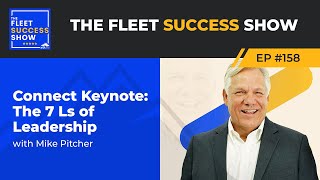
In this 46‑minute keynote recorded for the Fleet Success Show, host Josh Turley introduces former LeasePlan CEO Mike Pitcher, who shares his "7 Ls of Leadership" framework: Laugh, Learn, Listen, Language, Legacy, Lanyap, and Love. Pitcher weaves personal stories—from growing up in Louisiana, early career missteps, and a fanny‑pack mishap in Australia—to illustrate each element. He emphasizes the power of relationships (citing a 75‑year Harvard study), the need for continuous learning about technology and EVs, the importance of active listening and clear communication, and the impact of small, extra gestures (Lanyap) on team morale. Throughout, he ties leadership back to fleet management challenges such as workforce shortages, the shift to electric vehicles, and the necessity of safety and culture. The episode also promotes the Fleet Success Playbook and offers links to Pitcher’s free leadership book and related resources. The overall message is that every fleet professional is a leader, and applying the 7 Ls can improve both personal fulfillment and organizational performance.
Chapters
This is the Fleet Success Show dedicated to helping you and your fleet succeed using the experience of fleet professionals and Hall of Fame fleet legends. The show that explores how the pillars of stakeholder satisfaction, intentional culture, resource efficiency, and risk management all combine to lead your fleet to success. We're glad you're here. Now let's get into the show. Hey, welcome back for another episode of the Fleet Success Show. I'm your host, Josh Turley. And today we're throwing back again with our Connect 2024 series. This by far is my favorite session from Connect 2024, where we brought in the legendary Mike Pitcher, who shared with us his 7 elements of leadership. I love this speech. I've heard it now 3 times and every time I get something new from it. He is one of the most engaging speakers that I've ever had the pleasure of listening to. We wanted to really make sure that we shared that with you. If you haven't followed Mike on LinkedIn, He's definitely worth a follow. He talks about the 7 elements all the time on there. He even has a free book that he gives away in this session that you can go out and download online. Just Google the 7 Elements of Leadership, emphasis on the L of elements. Mike was formerly the CEO of LeasePlan and has been in the fleet industry for many years. And when you start listening to him, you'll realize what just a dynamic CEO Mike really is. So I hope you enjoy this session. Again, one of my favorites from Atlanta. This year and in all years past that we've had the privilege. This is his third time speaking for us. So without any further ado, here's Mike Pitcher.
I am so excited to introduce to you our keynote speaker, Mike Pitcher. He is the former CEO of LeasePlan. They managed 350,000 assets across their portfolio, managing all those fleets. That is an insane number of assets. For reference, RTA manages about 700,000 assets, right, inside of our information system. So just for reference, right? But they're actually, you know, LeasePlan was an FMC, they're a fleet management company. So they were doing everything for these companies, which is absolutely insane. He also, while at LeasePlan, won a great place to work inside of Atlanta. So they were the number one company in Atlanta 2 years as a great place to work. He has powerful insights around leadership, leading teams, leading companies, making an impact. So please join me in welcoming Mr. Mike Pitcher. Good morning. Don't know if you realize it or not, but you are on the first 90 seconds of me standing up here. In 90 seconds, you are going to make a decision. Is that guy worth listening to or not? 90 seconds. So if I can give you 3 things that maybe would help you for the next 45 minutes, I want to know if you pay attention for 45 minutes. The first one, if you could become a better leader in what you do tomorrow, would you pay attention? Yes or no? If you could build stronger relationships with the people you work for, with your family, with your friends, would you pay attention? Yes or no? If I can ensure you that your boss, the people you work for, your friends, your spouse, and your children would never, ever tell you the word no again, ever. Would you pay attention to me for the next 45 minutes? Yes or no? One more time, would you? Okay. What if I told you 2 out of 3 ain't really bad? Hey, look, I love being here with RTA. This is the third time I've got to do this, and the people at RTA are special people. Josh and team are all about culture. They're all about the delivery of the service and driving for excellence. This is, this is a thrill for me to be here in my home city of Atlanta. But a lot of times people go, hey, who is that guy? If you're going to talk about leadership, let's at least know a little bit about that guy. A little bit about me. Number one, I have four daughters. Why would I tell you that? Because now you know when I die, I'm going straight to heaven. There is no purgatory. I have 6 grandchildren. I had one in the last month. I got skin in the game. When your fleets are on the roads, my family is driving out there with you. This is the side of— I'm going to bounce back and forth a little bit about leadership, a little bit about distracted driving, your role in safety. As we talk about this. I'm a product of the Louisiana public school system. Why would I tell you that? Because you just lowered your expectations of me significantly. And the next 45 minutes we spend— I love my home state of Louisiana, and I did my MBA at Emory. I'm a Raging Cajun. But my career is Pitney Bowes Dow Lease Plan Efficiency. It's inefficiency in lease plan that I cut my teeth on fleet. I love fleet people. The interesting thing about fleet people is they take care of one another. They are willing to share. They're willing to kind of spend time. As I— it's very rare that you're supposed to kind of correct speakers, but there were two speakers up here that said the old guys that are leaving fleet. We are not old. We are chronologically gifted. So, so the, the fleet people want to help people. And he's right. You realize for every 5 mechanics that retire, there's only 2 coming in to take their places. We're going to need to think about things differently. We're going to need to do some things differently. One of the worst things that ever happened in America is 2005 to 2010. We were all convinced the only way to get a great job and be successful is to go to college. What a load of crap. We got to be telling people the trades have great opportunities for them, right? At Efficiency, I had, I had diesel mechanics with, with overtime and experience that are pulling down 6 digits, $100,000. My daughter graduated with a literal arts degree. She started in New York at $32,000. Everybody does not need to go to college. The trades are a wonderful place. That's where I kind of cut my teeth on fleet and efficiency, especially on things like diesel mechanics. But who works for a really great boss? Raise your hand if you work for a great boss. That's pretty good. That's a pretty good number of people, right? Got a great boss. By the way, if your boss is sitting next to you, that doesn't count. Your bosses that, hey, I did want to say one other thing and I kind of skipped it, but Jacob at the introduction, I was a CEO at LeasePlan and a president at Efficiency. I started speaking professionally around 2020, 2019. I've probably done about 200 keynotes. And I just wanted to tell Jacob, of all those 200, I have never been introduced prior to as, go to the bathroom, push one out, but be back for this guy because he's really fun. That's my career. And when I went to, I told you those guys are fun people at RTA. When I went to, when I went to LeasePlan, I was recruited. from Dell. And I got recruited. I said, are you guys sure that you guys got the right Mike Pitcher? I know nothing about vehicles. And LeasePlan USA managed about 350,000 vehicles worldwide. We had about 1.2 million. But they said, yeah, I was recruited to do sales. And I said, you guys got the right guy because I don't know anything about this. And their comment was, we need somebody to wreck it. Because they haven't hit their numbers in 22 years and have the lowest engagement scores of anybody out there. And I'm like, I'm from Louisiana, baby. I can screw this up as bad as anybody else. And then several years later, best place to work, big turnaround. We went from making less than a million to making 50. I don't tell you to impress you. I tell you that people all row in the boat in the same direction. Really, really makes a big difference. But it was at Pitney Bowes. I was out at Pitney Bowes and I went to work 20 years at Pitney Bowes. I went to work for Elvira, Princess of the Frickin' Darkness. Now I can see you looking at me going, ooh, Mike doesn't like working for women. Now my best two bosses I ever worked for were both named Mary. One of them was a cigar smoking, whiskey drinking Texan. The other was an MIT Babson-trained treasurer person. Couldn't get farther away, but both of them were great bosses. But it was at Pitney Bowes working for Elvira when she would walk into the room, I would literally twitch. Yell, uh, scream, uh, threw papers across. I was doing my MBA at Emory at the time and My professor, a good friend, said, Mike, what happened to you? You are an ass. You cut people short. You don't come to class on time. You pick up your phone in the middle of stuff. By the way, Mike, looks like you put on 30 or 40 pounds. I was literally self-destructing working for a horrible boss. At 20 years, I left Pitney Bowes. And when I left Pitney Bowes, that same professor said, hey, Pitch, they call me Pitch. Hey, Pitch, go find what made you successful. Tell me the things in leadership that made you successful. I did leave Pitney Bowes. There was this period there of unemployment, but I did the work to say, what are those leadership elements that make people successful, make leaders feel good? It too. Right? So, you know what they call it when you steal from one source? You know what it's called when you steal from a source? Plagiarism. You know what it's called when you steal from a bunch? It's called research. So I researched. I researched and went out and did some work. And I created a book. I actually did it, uh, originally for my 4 daughters. So they'd see what I thought was important in leadership. Caught some traction and went out. And I found 7 threads that great leaders do. So you have been here for a couple of days. You've been in sessions where they were talking about things your company, your organization, your department can do to be more efficient. This presentation is very different. This presentation is about you. And it's about you. And it's about you. It's about all of you as leaders. I want you to understand that people go, wow, we need great leaders. What does that really mean? You see, it's really important that we define leadership. So I want to start with you as we talk about leadership. I want to talk to you about what it means. Leadership is influence. If you are in a role that influences other people, you are in a leadership role. If you influence the thoughts, the behaviors, the beliefs, the actions of other people, you are in leadership role. How many of you are married? Raise your hand. How many got children? Raise your hands. Keep it up. Keep it up. Keep it up. How many of you lead people and have a team? Everybody is a leader at one time or another. You don't need a title to be a leader. You don't need to be a VP. You don't need to be a director. You don't need to be a general manager. You don't need to be a supervisor. If you influence the thoughts, behaviors, and actions of other people, you are indeed a leader. So what I did is by researching that and coming up with those 7 kind of things, they're sticking. People kind of grab on. To those leadership elements. And if you do these, if you practice them, you will get better. You will get better on a daily basis. As I said, leadership equals influence. How will you influence folks when you go back to your offices? The question was raised, raise your hand about how many people came from out of town. That means you traveled here. Somebody probably paid for you to be here. You wanna have some influence? When you go back and you talk to your team or your boss, review the stuff that happened here. I didn't just send you to a conference in Atlanta and you had a good time. What did you take back from that conference? What did you bring there? So when I talk about the 7 elements of leadership, LAUGHTER, LEARN, LISTEN, LANGUAGE, LEGACY, LANYAP. Anybody know what LANYAP is? Where's my buddy from Louisiana? LANYAP? A little something extra. We'll talk about that in a minute. And LOVE. That's the 7 elements of leadership. They're relatively simple. But why would I start a leadership book, the very one, first one out of the out of the blocks is laugh. Why would I start a chapter with laugh? What do you think? Audience participation part. Why would I start with laugh? Camaraderie? Build friends? Loosen up, right? The side of laughter at work, hey, makes you human. You are a person. Sometimes we get that promotion and we get that sense of humor. Lobotomy, right? The side of this is, hey, look, and you can ask the guys at RTA because I'll watch them do it. They use the F word at work all the time. Not that F word. Fun. You can have fun at what you do. In Pitney Bowes, I had the opportunity to go down to Australia. We were going to sell a division, said, hey, go down to Australia, check these guys out. We want to sell them to AT&T. I had the opportunity to go down to Australia. I'm there for a couple of weeks. Right. I'm like, we don't do any of the fun little giveaway stuff. None of the tchotchke freebies. No, a pen, a coffee mug, something there with the company's logo on it that you can give away. I said, hey, Fiona, my assistant. I said, would you have a sales guy come out and see me? He said, yeah. Guy comes out, big strapping Aussie guy. Hey, Mr. Pitcher. I said, it's Mike. He said, okay, Mr. Pitcher. I said, look. What do you got? First puts a box down, big box of promotional items. He says, I'm going to my car. Goes out. I look down at the box, see immediately, immediately what I want. He walks in and I said, hey Ian, I would love to get 300 fanny packs. And he said, excuse me? I said, yeah, look, I know I'm giving away all my pricing leverage. I know you're supposed to sell me on what I want. 300 fanny packs. And he said, excuse me? And I said, wait a minute. What's the matter here? You know what? I want 300 fanny packs with the company's logo as big as Texas. As if this guy knew where Texas was. As big as Texas. All over the fanny pack. He said, sir, I think I'll leave. I'm like, what? I look over at my staff, not a big company, about 15 people. That should have tipped me off. Everybody was working with their head down. I go to Fiona and said, Fiona, what's wrong? She goes, uh-uh, no, no, boss. I'm like, Fiona, what is wrong? She goes, uh-uh, we can't laugh at the boss. I said, Fiona, you know me for 2 weeks. I'm a pretty loose guy. What did I do wrong? She had actually been biting on her nail and it was literally a little tear. And I'm like, what did I do? She goes, well, Well, boss, um, in Australia, a fanny is a woman's kind of private parts, and you just ordered 300 feminine pads with the company logo written all over them. And there could be some women salespeople that thought that was a good idea, but I tell you, none of the guys are going to think your promotional gifts are real good. Now, why I tell you that story, because 3 months later, remember we were going to sell that unit. 3 months later, we hit a record team accomplishment of net income and business. But Fiona and 2 other people walk up to me and said, you remember that idiot fanny pack comment you made? And I'm like, yeah. She goes, that's the day we all learned we could trust you. Because if you were okay with us laughing at you making a fool of yourself, We can trust that guy. See, humor, besides being good for you, reducing stress and lowering cholesterol, good laughter is good for you. It's good for your soul. But as my friend here says, it also builds connection and it shows that you are indeed human. The first part of that is I get we're in fleet and I get there's some serious things that happen. But there's also some crazy stuff that's worth laughing about, right? You need to be that person that's open to it. When I was CEO at LeasePlan, we manage the fleets of Audi and Volkswagen, two companies that work together. I got a call to come down to the fifth floor for the accident management group. I said, what's the matter? When I got there and she said, boss, there's a guy from Audi in an A4 that backed up and hit a, uh, Volkswagen Passat. They dropped into each other and they're both on the phone. I'm like, what's the problem? She goes, they're in a fistfight. She goes, what do we do? I said, wait to who wins and then take that call first. There's those things that come up that are worth the side of you being open that life happens. Laugh is the first element. Learn. This is one as leaders that is really critically important. You're here. You're learning right now. You've been here for a couple of days. See, leaders are learners. There's this wave of stuff that is out there happening. Be open to absorbing that and taking that in and being a learner. There is so much stuff out there for you to be able to work on. Technology, by the way, people go, hey, pitch, what are the 3 things I really ought to learn about? And I'll tell you really quick as a leader, one, technology. 2, the power of relationships, and 3, how to manage your own attitude. The first one, technology. I used to do this presentation. I've done it for a while and there was a statistic. In the next 25 years, technology is going to change 5 to 7 times faster than the last 25 years. You got that? 5 to 7 times. That was in 2020. I talked to a guy from MIT that's a futurist. He said after AI, the next 3 years will be faster than the last 25. Think about that. That's 10 times the speed. It's coming. It's out there. AI, telematics, all the kind of stuff that's out there in technology. Just be open to learning those things, right? EV technology. How many people like EVs? Raise your hand. Yeah, they ain't a whole lot of EV lovers out there. So I spoke on a panel as a former CEO. I want you to get this statistic because it's important. Everybody get EV, EV, EV. And I believe EV is in the future. But there was a headline that said EV sales, 50% growth last year. And everybody's going EV. EV. You got to read the little detail because that meant 3% of sales in the US turned into 4.5%. That was 50% growth. Less than 900,000 EVs on 15.5 million. Here's another one I'd love to ask you about EV to learn and understand. If tomorrow morning, tomorrow morning, Friday morning, start a weekend, every single vehicle sold in the United States, every single one was an EV starting tomorrow morning, it still takes 15 years to wipe out ICE and diesel engines. 15 years. It's got a long tail. And by the way, tomorrow morning we ain't going to start selling all EVs. It's going to be this blended thing of EVs, ICE, diesel. There's going to be a lot of stuff out there that you folks are going to have to lead through, learn and understand. That technology component.
Because no one goes to school for fleet management, chances are you were never formally trained on how to successfully lead a fleet. That's where the Fleet Success Playbook comes in. The Fleet Success Playbook is your guide to building a safe, reliable, and efficient fleet that provides exceptional service. Learn all about the 4 pillars of fleet success: stakeholder satisfaction, intentional culture, resource efficiency, and risk management. Get nearly 100 years of combined advice on common challenges, practical solutions, actionable tips, and real examples from fleet industry experts who have been there and done that. Visit www.fleetsuccessplaybook.com to request your free copy today.
The second piece of that is, I said, relationships. There's a long, long study done, the longest study ever done at Harvard, 75 years. It said what determines success and quality of life. Harvard study, JFK was one of the original people. They studied people for over 75 years and they said what determines happiness and success. And it wasn't money. It wasn't things and material. The number one predictor of happiness and success was the quality of your relationships. The relationships you have at work, the relationships you have with your friends, the relationships you have with your family. Those are the things that determine how successful and happy you are. By the way, I advocate this for people that work with teams. Draw a line down a sheet of paper and write the people on your team and your boss. And judge that relationship on a 1 to 10 scale. Doesn't matter where you put them. 1 to 10. 1 is like brand new. They just got hired yesterday. That's a 1. A 10 is we kind of finish each other's sentences. We know exactly how we think. We can get in a really big argument. And back away respecting each other because we trust each other. The power of your relationships is really, really critical. And what do those look like at work? Because if you take out sleeping, we spend as much time with the people we work with as the people we live with. Those relationships are really critical. First quarter, uh, research. Your boss, and if you're a boss, the boss, your boss has more impact on your health and mental well-being than your primary care physician does. You got that? Your boss has more impact and influence on your health and mental wellness than your primary care physician does. How can that be? Because stress kills people, and if you got a great relationship with your boss, you don't experience experience stress, right? You're a team. He's got your back. She's got your back. You got her back if you're a boss. Those sides of understanding that dynamic in that relationship are really critical. And the last part of this is we want to talk about learn, learn about your attitude. Let me throw out a life hack for you. How'd you feel when you woke up this morning? Good, bad, what? Tired? Let me give you a life hack. Every single morning before your feet hit the floor, think to yourself the 3 things that you are having gratitude for today. 3 things. My wife, my husband, and I have been a great week, right? Work sent me here and I'm learning stuff. My health. I don't live in Tampa. I mean, the things there that seriously that you're grateful for. What are those things you're grateful for? Let me tell you this stat. If you can look in your closet and choose between two shirts or outfits to wear, and if you can choose between two pairs of shoes, you are more affluent than half the people on the face of the earth. Two shirts, outfits, two shoes. My wife saw me speaking. She said, really? Two shoes? That the— ooh, ah. But think about it. What are you grateful for? Right? What are the things in your life that you are grateful for? You set your attitude every morning. So there is a book out there. Write this down if you keep these kind of notes. How Full Is Your Bucket? There is a book, How Full Is Your Bucket? And here's the premise. That all of us walk around with this imaginary bucket on our hip. And every single action and encounter either fills that bucket or empties that bucket. When you were outside getting coffee and you had a conversation with somebody, did they fill that bucket or did they empty? Everything is either positive or neutral. Very, I mean, positive or negative. Generally very few neutral. And we have hundreds of interactions every day. My question for you, are you a bucket filler or are you a bucket emptier? Your interactions with someone when you speak to them, what do they sound like? I did this presentation at LeasePlan when I first got there as a big job. And I, somebody said, hey Mike, you got a minute? I said, yeah. She goes, you don't understand LeasePlan's culture. I'm like, excuse me? She goes, yeah, you know your whole bucket analogy? Let me explain what happens. I walk in with my bucket at 8:30 and I put it down and I sit at my desk. My boss usually walks in about 8:45. He walks by and he kicks the crap out of my bucket on the way it is off. I'm like, whoa, we got some work to do here. That side really of attitude and relationships and uplifting. I, I was so glad when, when Steve showed the slide about, hey, how do you deal with people and recognition? We, and just, this is, I'm gonna throw this out there. At Efficiency, we dealt with a big chunk of the workforce was mechanics. We had a change in logo, so we were ordering business cards and they said, well, this is how many business cards we need to order. Just wanna let you know. I'm like, wait a minute. We got, we got 85, 90 more employees. Where's, where, where are they? That's the mechanics. We don't need cards for the mechanics. I'm like, did you ask? He said, no, but they're mechanics. I'm like, ask the mechanics how many people want business cards, only order for the ones that want them. And 80% of the mechanics wanted business cards. We ordered them 100. It was peanuts. But later in exit interviews, we also gave a $200 boot allowance. There were multiple comments about the business cards because of how that made them feel. There are little bitty things that you can do and understand that really makes a difference. I think somebody said mechanics don't leave for a buck an hour. There's a lot of different things going on. Pay is important. I'm not denying it. So here's my challenge to you. There's golfers in the room, right? If you went and had a green in your house and you putted 15 minutes every single day at the end of the year, could you be a better putter? Can you? Anybody ever play basketball? If I put a hoop on your garage and you go out every morning for 15 minutes and shoot 100 baskets, 100, are you going to be better at the end of that time? Let me tell you something, basketball and golf is not going to make a real big difference in your career, but leadership will. If you can get 1% better a week, I want you to think about what that means to be a leader. In a year. The third element, listen. Laugh, learn, listen. I got to tell you on this listen one, my daughter Lauren, when I was writing this book, said, Pop, you need a chapter in your book on rocket science. I'm like, what? She said, yeah, Dad, put a chapter in your book on rocket science. I'm like, Lauren, I know you went to school in Louisiana, but do you see the whole L thing I got going on? Laugh, learn, listen. She goes, yeah, but I want you to write a chapter on rocket science. I'm like, Lauren, like smart as a rocket scientist? She goes, no, dad, just rocket science. I'm like, Lauren, I don't know a damn thing about rocket science. She goes, dad, you don't know anything about listening and you're going to have a whole chapter on it. This is probably of the 7, one of the biggest changes that you can make in your life. And that is, and I'm painting with a bit of a sexist brush here. It's fact. Women listen better than men. But in today's society, we are all being hit by this as this major distraction, right? When you're talking to somebody that's important, your family, your friends, your people you work with, I want you to be able to concentrate on listening. Here's the test. When you are finished with that conversation, do they feel felp? Do they really feel like you felt what they were saying? This thing creates amazing distractions. We pick this up and look at it 30 times an hour. Break that trend. If you're having important conversations, just let it go. There's a Chick-fil-A in Macon. With a cigar box in the middle of the table. It says, put your phone in, act like it's 1990, and talk to one another. Interesting concept. How many of us have been at a dinner or seen a dinner where 4 people are at a table and all 4 of them are using this? Yeah, probably this morning at breakfast, right? The side of that, that this has always, increase your listening skills and you will impact the quality of your relationships. How do you do that? And this is one of the things people talk about. Lean in and ask some questions. Restate kind of what somebody's saying for clarity to make sure, especially if it's one of your team members, even if it's your boss. So, hey boss, if I get you correctly, you want that, that, that, that, that, that, that. Clarify the message and then be quiet. If you lead people, I'll give you a great question. What'd you do this week that you really enjoyed doing? Let somebody talk. Hey, what are you working on next week that I might be able to help you on? That's not checking in. That's a discussion. We are human beings. And that belonging piece, that caring piece is really, really very critical. The next one is language. We're all trained on this one, right? I know that you're talking about engagement scores and people that talk about engaged in the workplace. Would you give me a hand for one second? Come on up. Yeah. Yeah, come on. Come on. Come on. All the way up. Come on. Ryan and I talked a little bit, but not about this before. I want you to help me with this. Because I'm your boss, right? I'm your boss. And I want you to look up there on that hill. You see? You see the big white house? A beautiful house, isn't it? Got really bright light. Yeah, it's got big lights on the front. See those white columns? It's really pretty, right? Look down just a little bit and see those two vehicles? You see that big F-150 and that Tesla? I'm environmentally conscious, so that Tesla really appeals to me. But look down. Look down on that water on that lake. See that boat? Is that a beautiful boat? So I want to tell you something, Ryan. That house, those cars, and that boat, that can all be mine if you just do what the hell I tell you to do. For you. Thank you, Ryan. And then we go, man, nobody here is engaged. What's your language sound like with a team? How do you pull those people in? Words like we and our and us instead of I, my. And then if you're talking outside of your department or somebody at a higher up level in the corporate, they, they, right? Those kind of things. Your language is really, really important. Your language in an email and a text, people go, well, you really can't get the tone in an email because you know there's tone, your physical language, and, and then there's the actual words. You can't get the tone. I said, you can't get the tone? All caps and 40 exclamation points? You're telling me I can't pick up the tone? Your text messages. You have the opportunity when you reach out and touch someone and text someone What does that end with? On a Friday, have a good weekend. On a project or something that's there, a thank you. The words of a leader matter. The thank you matters. Let me tell you one of the other ones that a lot of leaders are scared to death of. I'm sorry, or I was wrong. Because people go, well, if you're wrong, you admit it. Guess what? When you screw up, the people know about it already. The side of being that little bit of vulnerable of, hey, I could do better. I blew this call. That's all right. You know, at LeasePlan, we had this thing that was all about the 4 pillars of our values. And one of those was respect. And somebody said, hey, Pitch, you got a minute? Pulled me aside and said, I got to challenge you on one of the values. I'm like, what? They said, yeah, respect. And I'm like, you may be checking Indeed or Monster.com if you're going to do that. I'm kidding. They said, this was after, uh, actually after Katrina. And they said, you know, 3 of your employees go down every single weekend and help people from your home state of Louisiana rebuild. I'm like, yeah, I know. I think that's really cool. So they're really religious. I said, okay. He said, you drop the F-bomb in meetings all the time, and I can see him cringe. I said, that's on me. Now, am I perfect? No. But did I change? Yes, I did. You see, because if you're going to hold things really important in value, you as leaders got to walk the talk. You got to be welcome to somebody challenging that says you're stepping outside. Of that boundary, right? What does your language sound like? What does it sound like in an email? What does it feel like in a text? All of those are touchpoints, every single one. And it's important to be aware. Lagniappe. Lagniappe is a Cajun French term for a little something extra. You see, great leaders, Do those little things that are extra, like getting to know somebody's name in a big organization, knowing when somebody's kid got a scholarship, got, uh, uh, made an all-sports team, all-star team, knowing what's important to people individually, the line up. That's the things that leaders do. So let me give you a few examples. Still packs a big punch. The handwritten note. When somebody does something well, that note written and sent to them. I've walked a lot of offices. I have seen tons of cards pegged up on a cubicle. I have yet to see an email tagged on a cubicle. When you're going to send that note, be specific about someone or something somebody did. Lanyap, knowing what's important to someone in their career. And coaching and mentoring. That side of all of the experience that's in this room, there's this opportunity for us to be a coach and be a ment— a mentor. How many of you in your companies do a performance review for teammates? Raise your hand. That's a decent number of people, right? I've done a performance review in a bar. I've done one in a pool, and I've done one in coach class of a plane. You know what my boss's message to me was in that performance review? We're checking a box. The side of a performance review, especially for millennials, they want feedback. They want to know how they're doing. You know, you're, you, one of the reasons your job is so tough is there are 5 different generations in the workplace right now for you to manage. 5. That's really hard. Because they're different. Do you know your team members on a different basis? Let me tell you, if you start to do lányap, there is a little bit of a risk. I was speaking in Phoenix, actually, at the RTA event a couple of years ago. It was on a Friday or Thursday, it ended up. I'm like, I'm gonna be home Friday. I used to send my wife, Sherry, I used to send her red roses all the time. I hadn't sent her red roses in a while. So I sent a dozen red roses. Now you know what I'm thinking, right? Friday, I've been away, red roses. This is gonna be a good weekend. I walked in the door, my wife Sherry, I'm waiting for this big hug. What the hell did you do in Phoenix that you had to send me a dozen red roses? If you're doing lanyap, keep doing lanyap. Lo lang ap to you, MikePitcherSpeaks.com. If you like the material, go download it, share it with your friends, go get the book for free. It's a digital copy. I am not trying to sell books. I am trying to sell the concept that leadership matters and everybody has a leadership role. So you can go to MikePitcherSpeaks.com and download the book. Legacy. What's your legacy? As they talk a little bit about that piece of us aging. What's your legacy? Because when you leave, you will leave a legacy. What's your biggest legacy you will leave? What? Family. Your kids, your spouse. When you're gone, what are you leaving there? What will they notice? If you're a learner and you're sitting at the table with your high school kid and you are learning about AI or EBs. Your kid looks over and goes, wow, my dad or my mom's been in this industry a long time. They're still learning. That's influence. That's a legacy. In your workplace, what's it gonna be? That it's fair, that it's fun, that it's productive, that we contribute, that we do other things other than just work, that we care about how you feel. That piece of creating a culture of safety and caring. You evidence it every single day if you get in a car with somebody and you use this while you're driving. Hey, all that safety stuff? Yeah, they're picking up that phone. That's influence. You are a role model every single day. I'll tell you this about my kids. I beat in my 4 daughters. I beat, beat, beat, beat, beat. Don't text and drive. Don't text and drive. Don't text and drive. 32,000 people used to die. Now it's 42,000. Our roads are a crapshoot. My baby Morgan, boom, boom, boom, don't text and drive, don't text and drive. Before she left for Appalachian State, she said, Dad, why are you so passionate on this issue of distracted driving? I said, Morgan, people are dying every day, this, that, da da da da da. She goes, well, Dad, can't be that dangerous. You do it. That is the day that I stopped using my phone in the car. And that includes phone calls. Hey, watch, I'm not saying you got to do that whole thing. I am saying the really bad distracted stuff you got to put away. You're a leader. The last element, this is the one, hey, right? Some of the guys in the room get a little squishy. Yeah, Mike, you had me on a couple of those early ones, but this love thing, love in the workplace. Is anybody from HR? Because that's generally an HR violation. Love in the workplace is called companionate love, right? Let me tell you about nirvana. If you can find this, you have found nirvana. Love what you do. Love who you do it with. Love who you do it for. Right? That's nirvana. You'll never work another day in your life. Love what you do. Love who you do it with. Love who you do it for. Love creates passion, and we have those feelings about people we work with. We're actually with them more in waking hours than, like I said, your family. So that piece of finding that is critical and it's in the workplace. Now, when I say love and passion about what you do and the things you do at work and the people you do it with, I want you to know it doesn't kind of discount accountability. When I did this presentation at LeasePlan, a guy in the back of the room raises his hand. He goes, Pitch, they call you Pitch, right? Pitch. Let me ask you this question. If I miss my quota for 2 years in a row, are you going to love me? I'm like, ooh, I gotta admit, that's a pretty good question. I said, you know what, Tracy? Yes, I'm still gonna love you. I'm just gonna miss you. See, love doesn't skip accountability. When 1 out of 10 people don't do their job, that means the other 9 gotta cover. Love is about being open and honest and telling people the truth. Right? So, for you, in this room, here's your challenge. Before leaving here, maybe on the plane, maybe in a car, pick 3 out of the 7 that you will work on doing tomorrow. Listening always packs a big punch. Lanyap is, hey, I'm gonna do those little things that I used to do. I'm gonna do those little things that I used to do. Pick 3 of those 7, but they're easy. Laugh, learn, listen. Language, legacy, lanyap, and love. And somebody said, Mike, those are almost common sense. And I'm like, yes, but they ain't common practice. Which ones can you use to impact? So I'll close with this story about my dad and I will make this, well, maybe 1 minute late, but not much more. My dad had Alzheimer's and he lived with me for a couple of years. It was a good experience. My mom was still in New Orleans and my dad, I came home one day and he said, Michael, it's time for me to go in nursing. I'm like, Pop. We're doing good, right? We're doing good. He goes, nah, there don't need to be two dads in this household. Your kids, your wife. I want to be back where your mom is at in New Orleans. I want to go to a nursing home. So my dad had Alzheimer's. You know what I thought, right? I'll wait this out. He'll forget about it. It won't be a big deal. Nope. Every single day, Michael, Michael, Michael, Michael. We found a place, got situated, actually had a neighbor. In the facility and we were gonna go. We left that day. We hit Alabama and he's scratching his face and he's scratching all over and he's scratching and scratching. I'm like, Pop, what's the matter? He said, drive, Michael, just drive. We hit Mississippi, he's scratching more. I said, Dad, we don't need to do this. He goes, we're going, drive. He said, let's stop, get a beer though. I'm like, okay. He said, but I ain't drinking any of that Bud Light crap you drink. I want a real beer. I'm like, all right, Pop. We stopped to get a beer, we drink. This is before I was in fleet, so relax about drinking and driving. All right, one beer. About Louisiana, I look over and my father's actually bleeding on his face. Like, Pop, what's the matter? He said, drive, Michael. Get to Louisiana, we pull in the house. My mom had had a stroke, so nobody was in the house, and I told them, hey, leave everything exactly like it is. My little 5'6", 160-pound dad goes through. Robert Mitchell's in his room for a minute, comes walking out, got a cigar box and his army jacket. He goes, let's go. He goes, I want to determine what these people's view of alcohol at a facility is. I said, Pop, lay off the beer for a minute. What's in that box? He said, what do you mean? I said, what's in that box? He said, cigar box. This is my valuable. It's that 806 square foot house. My dad never made more than $10,000 in his life. I'm thinking both of my brothers are screwing me out of valuable somewhere. What's in a box? He says, don't worry about it. I said, Pop, what's in that box? He flipped open the box and there were letters from his Army buddy. There were letters from me in Australia. There were Cub Scout pins. There were cards from my brother that had lived in Greece. There were notes from my mom on certain specific days. And he looked at me and said, Mike, this is how I knew that I was successful. There are people in my life that love me. And I love my dad's definition of success. You see, it's all about relationships. And as leaders, every single day, You have the ability to impact relationships and other people's lives. What you do is important. We have learned that essential is fleet. Stuff needs to get from A to B, and people need to do that safely because there's other people out on those roads with our team member. I wish you all the success in the world. I thank you for these 46 minutes you've given me because there's one thing you will never ever get back, and that's your time. Thank you for your attention. Lead, laugh, and love. Thank you very much.
We hope you enjoyed the show. If you'd like to help support the podcast, please share it with others, post about it on LinkedIn, in or leave a review. Want to learn more about our fleet management software Fleet 360? Check us out at rtafleet.com. If you want to learn more about having your fleet evaluated by our consulting team, go to fleetconsulting.com.
More from Josh

Episode 227: The Hidden Costs Killing Fleet Operations (It’s NOT What You Think)


Episode 225: Are Certifications Still Worth It? The Truth About ASE, CAFM & Fleet Leadership




Episode 221: The State of Fleet Management: Education, AI, and the Technician Crisis with NAFA’s CEO

Episode 220: Motor Pools Are Back: Right-Size Your Fleet Without Breaking Operations

Episode 219: Stop Guessing at Downtime: Status Strategy for Better Availability #podcast #fleet

Episode 218: Fleet Predictions 2026: AI Hype, Technician Shortages, & the Next Era of Fleet Managers

Episode 217: Why Replacement Planning Solves 95% of Your Problems #podcast #fleetmanagement #fleet