Episode 168: How to Fix a Broken Fleet in Six Months: Secrets from Fleet Whisperer Steve Saltzgiver
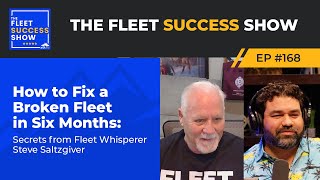
Steve Saltzgiver, a fleet consultant, fixes broken fleets in six months by interviewing stakeholders, identifying three to five high-impact initiatives like asset availability and preventive maintenance, and using daily metrics like DVIRs to predict larger problems. He emphasizes listening first, quick wins through shop walks and skills assessments, and weekly scoreboards to keep leadership engaged.
Chapters
This is the Fleet Success Show dedicated to helping you and your fleet succeed using the experience of fleet professionals and Hall of Fame fleet legends. The show that explores how the pillars of stakeholder satisfaction, intentional culture, resource efficiency, and risk management all combine to lead your fleet to success. We're glad you're here. Now let's get into the show.
Hi everyone. Welcome back to another episode of the Fleet Success Show. I'm Mark Canton and I'm joined by my friend and colleague, Steve Saltskiver. Steve, how are you?
Doing great. Happy Friday.
Thank you. Happy Friday to you as well. For those who follow us, they know it's Friday recording session because we got the Hawaiian shirts going today. So, Steve, let's just start off real quick about asking folks to tell, you know, could you tell folks a little bit about yourself here and, you know, how you got to be nicknamed what I love and call you, the Fleet Whisperer?
I think a lot of it is probably because I've been here a long time in this business. Okay. But I have worked just about every single vertical there is in fleet management over my career. School bus, transit, city, state, commercial. So, you know, I've kind of been around the block. And, you know, then I, you know, you call me the Fleet Whisperer, but I'm also in the Hall of Fame for the government, things like that.
You've worked pretty much everywhere, like you said, Coca-Cola, Republic, State of Utah, State of Georgia. Remind me, some municipalities right in there.
Yeah, I worked for the city of West Jordan, Utah. It's a suburb of Salt Lake City. And then I also worked at Utah Transit Authority for actually 15 years. That was my longest stint anywhere.
Wow. And then other than that, you've had two sort of consultant stints, right? What's your total amount of years consulting?
Probably about 10 years total consulting, maybe a little more. I'm just trying to— I have to go back and add all that because I've had two stays. But yeah, I managed Sumitomo Rubber as far as a fleet. I managed a small fleet in Hawaii, managed a fleet in Delaware.
All over the place. Connecticut. Didn't you do something in Connecticut too for a while?
Oh yeah, I did that. Stamford. I forgot about that.
Yeah.
Thank you. I guess I had 4 of those. Yeah. Right.
Well, I think most of you know me, but for those who don't, you know, I don't have anywhere near the resume Steve does, but I certainly spent a lot of time, almost 30 years now in fleet and transportation, worked in university in New York City, spent maybe about 8 years consulting with Steve. And my focus has always been around fleet analytics. So, Steve, what I wanted to do today, I call you the Fleet Whisperer because you have really demonstrated an amazing knack both in your operations career, meaning when you've gone and taken fleet manager professional jobs as well as in your consulting career. You just, you know, you just have this ability to, and, you know, that mesmerizes all of us. You just go into these programs. Sometimes there are fleets that need a little bit of help. Oftentimes there are fleets that are frankly completely broken from a metrics perspective, right? Their data indicates that they're falling apart. Those are my words. And you have really demonstrated the ability to turn these fleets around. And, you know, there's, there's sort of a couple of stages of that. You seem to really get from horrible to up and running regularly within 6 months, and then it takes a little bit longer if you want to kind of get them steady. And I know you've used the metric in talks I've been with you in the past that you say it takes kind of 3 to 5 years to really get a program kind of truly running and sort of stable and up off the ground. Is that right? Is that what your experience has been.
I said, that's what my experience has taught me. Um, in fact, 3 to 5 years, I feel good enough about a fleet that I could, I could leave it. So that's kind of my, uh, my metric that I use. Realistically, probably 5 years if it's a very poorly run fleet to get it up and running great.
Okay, so this is an interview I've been wanting to do for a long time. Um, And what I wanted to do today is just kind of ask you a few questions and sort of have me walk you through, you know, walk me through your process. Right. And so that, you know, the folks at home listening, you know, maybe they can gain some insight. Maybe they're struggling with their fleet, maybe they're a new fleet manager, or maybe they're just new in their position. And hopefully they can gather some something from your experience and your expertise on how they might go tackling or improving or in many cases transforming their fleet. So, uh, bear with me here. I'll walk you through it. If I ask you a question and there's more to it than what I've asked, by all means, you know, add wherever you see fit, and we'll, we'll take it from there. So, so right off the bat, you know, let's say you're hired, right? Whether it's you just got hired by that organization, or, you know, it's a gig with us, and they say, hey, we need help, and we send you out, uh, and, and say, all right, Steve, go turn that fleet around, go get them going. What's the very first thing you do? What's day one look like for you?
Day one consists of trying to meet as many stakeholders as possible. So whether that be— probably most likely it's internal, you know, with the fleet organization. Then I'll start setting up appointments with key customers like, you know, public safety if I'm in government or, you know, administration or other big departments depending on who they are. And during those conversations that I set up, I ask a lot of questions like, you know, what opportunities do you see for improvements? What are your challenges that you're facing? And then I really take, you know, and there's quite a bit of process behind that. I mean, it's lots of interview hours. And I probably take within at least 1 to 4 weeks to do that, depending on how many stakeholders there is. And then I basically coalesce all that information into I try to distill it into a couple of top maybe initiatives. Um, you know, and I'm also looking at the same time when I'm talking to the Fleet folks, what are you using to track metrics? What metrics do you track? You know, what are you doing as far as, um, things like preventive maintenance, those kinds of things? So I really try to put together a portfolio. Once I determine what the, all what the, uh, the biggest rocks we call are. Um, and classic one, you know, the last thing I did, obviously we had issues with asset availability. That became number one, popped to the top. And that was a combination of not only fleet, the fleet folks, but also many of their clients. They weren't getting their assets out of the shop in time. A lot of— there was a lot of downtime and things. So I knew immediately, you know, like we've always said, that's the granddad. If you have asset— no asset availability, you got nothing. So So I immediately went to work on that one. But then you also have to look at lead measures that tie into that.
So you hear the feedback and you're kind of both quantifying, hey, I keep hearing the same thing, I got a theme here and that, and then maybe you're weighting some of those based on your own experience. You know, availability is obviously super important. So, and then that's how you're coming up with those top 3 initiatives. And first off, is that right? Am I kind of gathering that properly what you just explained to me?
I would say yes. That's what I'm trying to do is just find— I try to find the top 5 things, basically.
Top 5 things. Okay. And let's pause on that too, because you're being pretty specific. 3 to 5 things, right? So let's pause on that for a second. Why is it 3 to 5 things? And, you know, if these fleets are falling apart, I'm sure you hear like 200 things, especially within 4 weeks of interviews, right? Why is it 3 to 5 things?
Well, I think you have to filter out the noise, for one, and you have to really prioritize and work on the things that really matter. And the things that always matter, customer service always matters, cost always matters, the number of transactions always matters. So you try and filter out all the noise and you look for the big things that frankly just matter and you start working on those. I mean, you talk, a lot of people ask me in fleet, what matters? Well, asset availability matters, PM compliance matters, Customers matter. You know, I can give you a list of these, but people matter. And you know, the ones I've just now listed, assets, people, those, and fuel as maybe third, those are your 3 highest costing things in fleet. So a lot of your focus should be right there, right? I mean, that's immediate.
So now you were gonna get into this concept of like a leading metric. So availability, and again, we'll peter it out, but right? You know, if you don't— if the asset isn't available, it's no good to you, right? You can't use it to get the work that's done. We talk a lot about it. We talk a lot about the costs and the hidden costs. So, you know, I think most of our listeners will probably accept that. But you mentioned something that I don't think we've talked a lot about on this show, this concept of a leading metric. So go ahead. Where were you going with that?
Well, a lead metric essentially is a metric that is a predictive metric. A lag, let me back up. A lag metric is usually what people look at. PM compliance, right? 30 days after you did your complete PM compliance, you see it, it's a lag. There's nothing you can do about it, it's already happened. A lead measure is a metric that you try and dive into that predicts something that's gonna impact the lag. So for example, PM compliance. I look for things like, are we doing DVIRs every day? And I can measure DVIRs on the day, right? That's immediate, on the hour, on the vehicle, right? And so by the time I got the lag measure for a PM compliance, I got 30 days of lead measures. So I can figure out if I'm gonna hit that just because of that measure. I can look at the shop and I can say, do we have the right diagnostic equipment? Because that diagnostic equipment and that technician training, if they have training, is going to make a big difference for me to get where I need to on those lag measures. So I'm looking at the things before the lag measures are actually tracked. That makes sense?
Yeah, makes, makes a ton of sense. Makes a ton of sense. So, and so now you're able to use those to essentially predict what those lag measures are going to be and kind of identify, all right, in order to impact those lag measures, let me go fix these leading indicators kind of a thing.
And lead measures are sort of a pseudoscience, I suspect. I mean, that's probably the best way to do it. They're not always correct, and they're very difficult to back into and find. And so you have to do a lot of trial and error on those. But once you get experience, you kind of have a good feeling of which ones impact what. So I feel like, you know, now that I've been around for 40 years, I have a pretty good idea what to look for.
Sure. And is there ever like a, like a multi, like a chain relationship? I'm thinking about how to word it where, you know, you know, like you said, the DVIR is a leading metric to predict PM compliances and then maybe PM compliance is a leading metric to predict scheduled versus unscheduled repairs, which is then a leading metric to predict something like availability, for example. right? Um, is that kind of how it works, or—
well, I mean, that's the other thing you look at too, you know. What does the scheduling look like in the shop? How are they doing that? How is the customer communication working? Do they cut— do they talk to customers every day to let them know when their PMs are due? Those kind of things. Do they do that a week or a month in advance? Those are all lead measures to PM compliance. Another lead measure for PM compliance, while we're on that topic, is what I call PM leveling. If I have 100 PMs due, and I'm just using the round number, if I have 100 PMs due in 30 days, because that's usually when you do your compliance, that means I have 25 PMs I got to do per week to be 100% compliant. Well, I got 5 days in a week, that means I got to do 5 PMs per day. So a lead measure would be, okay, by the end of the 8 to 5 shift or whatever you're working, have I done 5 PMs? If I've done 5 PMs by the end of that 30 days, I'm going to be 100% compliant. And if I, if I slip and I miss one, then I got to do 6 the next day, right? And this cascades. Yeah.
So otherwise I mathematically can't possibly be compliant. I can't get enough done, right? Okay, so that's interesting. So let's, let's kind of reset here, go back day 1 through depending on the size of the fleet, day 1 through day 7, or maybe day 1 through day 30, is really deep diving, engaging in stakeholders up and down, leadership, fleet customers, technicians, staff, whatever it may be. And just, just doing a lot of listening is what I'm hearing you say. And then you start to really, or maybe a little bit of overlap there, you start to really dive into the metrics. You look at the lagging, but you really want to kind of get in front of the— of these leading metrics and start to sort of gain some insight into what's— what's triggering these issues with the lagging metrics sort of a thing. Is that so far we're okay? All right. So what happens next? Or, you know, and I know it's not perfectly sequential, so, so, you know, folks will have to listen.
It varies by organization, but typically I would advise people always to go in and listen for a few weeks before you do anything. And before you even change anything, because they might have things in place they're just not implement— or acting on that are actually good processes, and you might want to activate them. So just listen, find out what those issues are. I like to go where the customers are. So if I'm going to interview customers, I go to their spot, their, their operation. I like to look at the— on the ground. I like to walk the shop and see how organized it is. I like to make sure we have the right diagnostic equipment in place. I want to make sure all my technicians have the tools they need. I look for impediments like maybe potential union problems, maybe shop parts problems, you know, logistically. So I'm really trying to survey all that as I'm getting into the, you know, the second month once I know what's going on. Uh, in, in one of those particular, uh, operations, a couple of them Parts was a huge issue. The last one I did, we were right in the middle of the COVID supply chain issues. So I spent a great deal of time trying to get parts. So because parts obviously impact downtime, that's another lead measure. You gotta have parts, you know. And so we spent a lot of time doing some sourcing and getting parts delivered on time so the mechanics had them. The other issues you look at are, you know, do you have enough space? You know, if you don't have enough space, do you have to work multiple shifts? I mean, there's just a number of things you really have to assess and look at so that you can optimize and maximize productivity in that shop.
So at some point in there, are you doing— you're doing like a staffing analysis to determine, you know, do I have the correct count and type of professionals to, to essentially maintain and manage the fleet that I'm working on?
And also we try to do a skills assessment. I implement it right away. I implement one-on-ones with all the team so I can sit down with team members and I can talk to them about, you know, what do you need? Where are you at? Tell me about yourself. You know, I get into the weeds with people. I have a tendency. I think if people only respond if they know you care, you know, I want to know. I want them to know that I care. And I get a few quick wins right off the bat. I mean, they'll come to you. You're like your mechanics. And they'll say, you know, we've been asking for this, this, and that for several years, and management doesn't care. They never do anything. So I go to bat. And last stand I was in, for example, we needed some diagnostic equipment that they couldn't— they never had, they couldn't get. But by just getting that diagnostic equipment within weeks, now you got a good win. Now you got some faithful people that follow you, right? So look for those opportunities to find some quick wins.
I mean, that shows a lot, right? You're listening and you're going to do something about it, right? Boy, yeah, that's, that's a big one. And especially when you're kind of coming in, you're new, you're, you're naturally the outsider, at least to start, right? Okay, so that's interesting. So you do do some staffing analysis, some math around, do I need more people? Do I not? So you can start to socialize that conversation with leadership. You do some skills assessment. You know, let's pause on that for those two topics a little bit, only in the sense of, okay, I'm sure that at least in some of the cases you're going to find deficiencies there, right? I don't have good skills, or, and they need more training, or I don't have enough, or like you mentioned, the facility, you know, how do you handle that, right? You're new, you're in this situation. Sometimes you have leadership that's all on board and they're there to give you any and everything you need to make you make it work because they recognize the value and the importance. Oftentimes you have leadership who really just doesn't comprehend what the heck is going on, right? Or how important it is. So do you have any thoughts around that? Like, I'm sure you've had some stories about trying to fix that, you know, and I'm sure sometimes it worked and sometimes it didn't. But how do you handle that?
I think you have to get your arms around leadership. Obviously, I sit down, have one-on-ones with leadership, and if I have to force those, I do. And then I also sit down with them and I show them how I'm going to update them. And you've talked about this before. I mean, I've been using this report format for years, right? Here's what I did, here's what I'm gonna do, and here's in my way, people in my way. And I use that to motivate and to inform my leadership. And then I also have a metric of the week that I'm following. And so what I try to do once I'm rolled out and get these things going is I'm sharing a weekly report and I'm accentuating and pointing out things like, look where we were last week with asset availability, look where we are this week. And when they continue to see that we're climbing and we have a glide path towards success, they start reacting very positively in kind. And then they also, you know, you sit down with your leadership and you'd have little celebrations here and there, right? If you accomplish a milestone, you have a barbecue or you have a pizza party or, you know, you have some kind of a celebration rewards. And so I've done that everywhere. And I think management, we bring them in, they, they participate in that process. You know, I schedule around their availability and it just coalesces the entire team together, essentially.
That's really excellent. All right. So now you got the team going, you've identified your targets, you got your— you kind of got your metrics up and running there. You know what you're measuring. You sort of got the team rolling now. You're moving in the right direction. You got some momentum. But you're not there yet. You're not at 95% availability and, you know, 99% PM compliance or whatever your goals were. What kind of comes next in this? I feel like this is like the middle stages now, right? And, you know, and you're sitting— maybe, you know, maybe you started at, you know, 20% compliance and now you're at 35 or 45. So you feel great because you've made all this movement, but you're kind of like, yeah, but I can't live over there, right? I got to keep pushing and get better. Like that's the part that I— where I think most, most folks run into, you know, they run into a wall, let's say, or, or they run into trouble because they run out of steam and they don't know how to bring it now to that next step. What are, you know, what do you do? What are some things you've run into? Well, you know, what's some advice you might have? What comes next for, for the Fleet Whisperer?
I always make the metrics visible, and I always hammer on metrics every day, you know, and I ask people about them. Where are we at today? I want them to tell me You know, and if you have a board in your shop or you have a, uh, tell a monitor or something, make them all visible.
Um, so you put a monitor up in the shop, make sure everybody can see everything, right? Okay.
You know, and then every time you talk to people, you know, that's why I keep it to 3 to 5, because I, I want people to tell me where we're at and what we're working on. If I get too far past 5 initiatives or metrics then what ends up happening is we get spread too thin, we can't do it. We lose focus. So that's why I try and get it to those top 3 to 5. And then people, believe it or not, love to be successful. I haven't found people in any of my career that don't delight in seeing how they're making good progress. You know? And then I also, you know, if someone does something good, that move the needle on asset availability, like someone's downtime is lower, someone's productivity and direct labor or SRTs are higher, I point it out. You know, Joe did this this week and look how he contributed and our asset availability went up. You know, it takes a team to make this happen and you have to, you know, people like to be on that list. They like to be rewarded, they like to be recognized, and they like to win. It's just, it's no different than a sporting, than like a soccer game or a baseball game or something.
Nonetheless, though, like, and I don't want to put words in your mouth, I'm sure more often than not you get the overwhelming majority of people on board. But I would also imagine that you've had at least sometimes where you couldn't get everybody on board and you got a bad apple in there. And now is when that's kind of starting to solidify, right? It's clear. Like, at first it's, well, we're evaluating, you know, they're changing, they're shifting. You know, I would imagine somewhere in this stage you have a really solid grasp of who's okay. These guys will be my forever workhorses. These are the people who are going to rise the ranks and get great. And then, and then I'm sure you come across the bad apples and, you know, just from, you know, you do this a lot. We have the benefit of talking to a lot of fleet managers. And I think that's a major struggle. Fleet pros, they really don't know how to manage the bad apples. Some complain that HR makes it too difficult to let people go or whatever it may be. What, you know, is it fair to say, okay, at this point you've come across some bad apples and how do you handle that? What are you doing in that scenario?
I don't accept that everybody's or anybody is a bad apple, first of all.
Okay, cool. All right. Talk us through that.
My premise is a positive premise. I go in and I recognize when I see those people, but I believe and I always have believed that bad apples come as a result of poor management. And so I try to put my arm around people like that and I try to sit down with them and say, you know, what are your problems? What are your issues? How can we help you solve your issues? Because if I can solve their issues, they'll solve the bigger issues. And so, I've turned a lot of people around in my career. Now, I have had a few that I just couldn't get in their head. I couldn't get them to do anything. But that's really few and far between in my experience. I think a supervisor needs to go out of their way to figure out what the core issue is and work on it. I had one in my last stint. I had a guy that was just obstinate as hell, you know. Well, I spent many days in his bay working with him, helping him, showing him now what we need to do and why we're doing what we're doing, and educating him on why this is important, um, and then recognizing him for his successes. And he turned around in a pretty short amount of time. So I, I don't think it's undoable. I think what people do is they just get in their head they're not going to turn somebody around. And they just give up on them. I don't give up on people. But the other thing too is if I get someone that's a real bad apple and they're just not contributing to the team, I sit down in a one-on-one and I ask them, you know, let's go through this list of things that you're not doing, right, that you should be doing. And then I say, you know, what is your response to this? And they'll have a response. And by the time that meeting's over, I usually say, You know, first of all, I ask the question, do you want to work here? Do you like working here? I want them to give me a commitment. And if they give me a commitment, yeah, I like working here. Okay, then let's work on this stuff. And this is what we're going to do. And I'm going to give you all these objectives to start working on and we're going to keep evaluating it. If they say to me, and I really hate working here, I do, then I say, okay, well, what can we do to get you somewhere where you're going to be happy? Could be in the organization, It could be external to the organization. And then your job, or my job as that leader, is to help them get where they need to be. And that's what I've always done. That's what I always try to do. That's why I say it works. It's 3 to 5 years, really turn your fleet around, because you're going to have to deal with that through the course of that 5-year period. And, you know, help them write their resumes, help them write their cover letters, help them do job searches, whatever it takes. Be a human being and get them to be happy. You spend a third of your life working. No one should be unhappy. That's always been my attitude and it's always worked for me, honestly.
Great. And so folks are generally in agreement with you when you bring up the things like you mentioned, these are the things you're not doing.
Of course they argue. Of course they'll argue about it. You have to have tangible proof. I love data. I can show them that, you know, you're only 63% direct labor when all your cohorts here are up in the 75% range. Tell me why that is. You know, this one case, a guy said, well, I do a lot of union stuff. I said, okay, I can understand that, but that shouldn't be, you know, a 10 to 15% swing. So what can we do to bring up your metrics? You know, things like that. You just, the more data you have, the more they can't argue with you about it.
That's right. It helps drive clarity, right?
Yeah. Have tangible data so folks know.
So, so I think the unspoken thing there is you make sure folks know what metrics their performance is being measured on so that they have full clarity and awareness around that. Okay.
And if I'm there on a 5-year stand or if I am the new fleet manager, I've got performance plans, I've got what I call kind of a career ladder or an individual performance plan, right? That they're working on. They have goals and we all have top-level goals. And this is how you're going to contribute to that goal. This is what needs to happen for us to be successful as a team.
Got it. So individual goals that contribute to team goals and how they nest in it. But you did mention something there though that you know, this career ladder. So you've also already begun— man, you've even at this stage, you're beginning to think about helping them to design a sort of a career path, right? Is that, is that what you're implying there? Am I hearing that right?
Yeah, even in the 6-month stint I did, the last one, I got 2 people promoted just in 6 months. I mean, they had been in the wrong spot for years. Nobody ever worked with them to get them promoted. So, I mean, you have to become their advocate. You have to get those little wins. If they see that you really care about them and that you're really trying to get them where they need to be in their career, they'll perform magnificently. I've never had anybody really fail because I just am a people advocate. I want people to be successful, and if they're successful, then I become successful.
Because no one goes to school for fleet management, chances are you were never formally trained on how to successfully lead a fleet? That's where the Fleet Success Playbook comes in. The Fleet Success Playbook is your guide to building a safe, reliable, and efficient fleet that provides exceptional service. Learn all about the 4 pillars of fleet success: stakeholder satisfaction, intentional culture, resource efficiency, and risk management. Get nearly 100 years of combined advice on common challenges, practical solutions, actionable tips, and real examples from fleet industry experts who have been there and done that. Visit www.fleetsuccessplaybook.com to request your free copy today.
All right, so, so, so here we are now. We're in these middle stages of whether it's a 6-month stint. So remind me of the numbers that the one you're referencing it this last 6 months did. I, I don't remember them. I don't have them in front of me, so forgive me. But the numbers were astronomical. I mean, it was like 2% PM compliance to 80% or something like— what were those numbers?
It was actually 79% asset availability and 30% PM compliance. And in 6 months, we moved asset availability up to 97%, and we moved PM compliance over 70%. So I mean, we made some pretty big wins there. And it really wasn't anything more than just measuring what you manage, what you measure, right? I mean, it's let's track it, let's watch it. People don't want to see it slip. Now, I'm not going to tell everybody it's not going to slip. It does slip sometimes. So now you have to do some root cause analysis. What happened? Well, I had too many guys off sick, or I had too few parts available, or whatever. You have to dig into it. And find out what happened that week and then correct it for the next week. So I mean, when you're looking at asset availability, it's going to go like this, right? It's going to go up and down. You know, it's going to look like a little picket fence. So you just have to keep at it. Don't lose focus.
Right. And you're being kind of humble now, but in that time you also, you know, you identified— I don't remember the number, but hundreds of vehicles that weren't actually needed in the fleet. You know, he helped them establish a different sort of pools that, you know, that they could use to kind of distribute the utilization of the fleet and drive the utilization of the fleet up. So you had a lot more accomplishments as well, I think, in there.
Well, I think a lot of that is, you know, I tend to work a lot and I walk the yard, I walk the shop, I'm available, you know, I'll pop in on a Saturday and Sunday. You know, I had to put people to work on Saturdays and Sundays and the last thing so we could get some of this accomplished, get it out the door, get it back into availability status, right?
Yeah.
The fact that they see you working on your Saturday too, even though they're there, I think that helps and provides some unity, right?
And you're not talking about necessarily doing 80 hours and putting in a full day, but kind of coming in, making sure that things are good, that they got what they need, letting them know you're, you're, you're invested, so to speak. Steps here. Now you're in the middle phases. You've, you've got the people getting measured. You're advocating for them where they need. You've evaluated the talent. Like we said, you have a sense of what the need is there. And now you're just running, right? I mean, is it, is it just— but I imagine it's not just wait and see now.
I say you develop a scoreboard to start tracking things. Obviously, once you get asset availability up to where you feel it needs to be, You can't abandon it, but you can back off a little bit from it and then pick up another big rock that maybe you need to start working on. So there's always something that you're going to be working on. And so maybe the next one, if you get PM compliance and asset availability up, in this case, we also did parts availability. So there was 3 major metrics I was working on. But there'll always be another one. Maybe it's comebacks that comes up next, right? Maybe you start working on comebacks.
Maybe, uh, you got that availability way up, you had a lot of vehicles lying around that, you know, that seemed to be needed before because availability was too low, that now all of a sudden it seemed like, do we really need that many? Um, so is, is that's at least part of the next big rock you, you tackled there, right?
You start to look at right-sizing the fleet. Um, and a lot of the vehicles that honestly that were sitting around were were really comfort pillows. Some of them didn't even run, right? But they could get them to run if they had to, but it was really just making people feel comfortable in case they needed a vehicle. But I mean, to give you an example, there was one vehicle in the shop that had been in there for 2 years. I got that out within a couple months. And it was in there because nobody was getting the parts for it. It seemed crazy. I had one vehicle in Connecticut that had been— it was a brand new garbage truck, had been out of service probably 8 months, full of garbage. Yeah. And the transfer station was across the street and it had an air brake problem. So the brakes were locked up. So I had them crimp off the lines and had them push it over and dump it out, maggots and all. I mean, it was not pretty. But we brought it back, we cleaned it out, and we got it done. You know, I mean, sometimes you just have to, uh, prompt people to do the right thing. Nobody wanted to touch it because it had been sitting too long. That was the problem.
All right, I'm going to go back and, and mix in some questions at other parts of the timeline, but let's kind of jump ahead here for now. You know, you mentioned— you, you kind of referenced earlier about when you might feel comfortable leaving the fleet. So, you know, in this case, this most recent one you're talking about, it was as a consulting engagement. It was never meant that you were going to stay there forever. It was to kind of get the fleet back up and running, get some qualified people in to kind of keep it going. You know, once you're gone, you mentioned you got some people promoted. So part of this is almost like, like a, like a fast-forward succession plan, right? I would imagine in some ways, which is kind of neat thinking about it in that way, because really all leaders should be succession planning, right? And, and this kind of forced you to do it sort of in a in a very sort of meticulous, but what's the word? Maybe that's meticulous, might be the word, but the very specific or intentful way is maybe the way I'm— I should think about it. So kind of walk us through that, right? What was the process to get the fleet ready for your departure? And how do you know, how do you feel good and ready and comfortable that, okay, this thing's going to run on its own, it's going to live beyond me? You know, what are the indicators for you? Right. So I know that's more than one question there, but talk to me about those concepts.
Well, in this particular case, part of our consulting was to actually hire someone to take that spot. So that makes it easier. So we did a nationwide search essentially, and then hired someone to take that spot. And then we sit down and we orient them and get them up and running and tell them, this is what we've been working on, this is where we are. We introduce them to their players, the people, their team, you know, and we get them basically up and running, hopefully to carry the ball forward. It doesn't always work that way. Sometimes, you know, I mean, if you've done all your due diligence, you hopefully get the right person in place. Frankly, the one thing about my career— I can be a little vulnerable here, I guess— I'm hard to follow. So there's a lot of fleet managers that followed me that frankly failed. And I feel bad about that, but I don't know how I can correct that. But a lot of it is just my investment, my intensity, my success, my drive. So I've had people tell me that, that I'm hard to follow. But a lot of that is because I just don't accept failure. I don't accept losing. I mean, just to give you an example, outside of Fleet, I coached Little League baseball for 15 years and I never had a losing season. Never. And all the kids— yeah, I don't lose.
There's a drive, there's a drive there. You got that for everyone who watched that Netflix special, right, on Michael Jordan. You're, you're Michael Jordan out there yelling at people.
I know Timmy in right field is a contributor as my shortstop, and so I gotta bring Timmy's level of Contribution up.
So, right, right. So that's interesting. Okay, so there's that— I'm— there's a little bit of that I'm not going to fail unless I stop trying kind of a thing, right? Unless I give up. Uh, we do definitely bust your chops around here at RTA. We call you the high— you know, your high D, uh, because, you know, the minute we put an idea in your head, you're off and running and getting it done. There, there is no pause, there is no hesitation, and 99.99% of the time, that is a wonderful thing. And, you know, uh, and I can speak to it you know, directly, you know, all the things you've accomplished just in this last couple of months for us. But, but yeah, if you have someone come in who maybe is not quite as high D, I think the team kind of— I don't, you know, this is me saying this, but I think the team kind of gets used to having that high D around and having that energy and that push. And the next person comes in and it probably feels to them like a little bit of the pedal being, you know, let up off of a little bit.
Yeah, somebody put off the accelerator.
Yeah, exactly. So that's probably part of the challenge. So that's important if anyone's listening who maybe follows you one day, you know, come in and don't take your foot off the accelerator. But why else do you think that?
One key success that I've always— I love work. I love to be successful. I love to be engaged. I've never been unhappy of anything I've really done in my life. I can't say. I mean, I've cleaned toilets as a janitor. I've worked in guck and muck as a mechanic. You know, honestly, I just have a positive attitude to those things and I just move on. And I think that helps, I guess.
All right. Well, listen, I want to ask you a couple more, just kind of jump around questions here. I know that I've used up a lot of your time. I won't keep you too much longer. But, you know, again, we've referenced a lot this most recent one that you did as a consultant, but you've done this many times before. That's why I call you the Fleet Whisperer. You know, there have been times where you, you've run into roadblocks, you've run into brick walls, you know. Let's talk about some of that. You know, what are the challenges you've had where you couldn't get something done, why you couldn't get it done? Because I want people in the audience to kind of listen and, you know, maybe again, learn from that experience. How did you know, hey, it's time for me to go here, this is not going to work, versus, hey, I should keep pushing and try a little harder because, you know, I think there's something here. That's a tough, that's a tough decision for a lot of people to make, especially in our industry. There's a lot of people, I think, out there, Steve, that feel like they're running in the mud, right? They're, you know, or the old saying, banging your head against the wall because they're trying really hard. At least they believe they are. And, you know, they just don't seem to be getting anywhere and they don't know what to do because they love their organization and they love Fleet. So let's talk a little bit about that. You know, first off, just right off the bat, any general thoughts on that comment? And then secondly, tell us a little bit about some of the challenges you have had in your career where, you know, again, maybe, maybe leadership wasn't the right thing or you couldn't get the resources you needed or whatever it may be. Any of these things that really created a difficult time for you and maybe a little bit of how you overcame them.
I talked early on about my career ladder when I was at Utah Transit Authority. I was there 15 years. I decided at that point in time I had gone through the journeyman program. I was a journeyman mechanic. Who had been promoted to supervisor. So that's what I was. I had elected to go to the graveyard shift to supervise graveyard folks because we had 3 shifts. And the reason I did that is so I'd go back to the University of Utah and I could get my bachelor's degree. The whole time I was going to school, Utah Transit would reimburse me for my academic accomplishment if I passed the class, right? But I had a particular supervisor there that was a complete jerk. And he made my life a living hell. I think a lot of it maybe was he didn't believe in academia, 'cause he didn't see where that was gonna take anybody. Well, I was very successful at Utah Transit Authority. I had no problems there at all, but I honestly couldn't work for this guy any longer. It'd been a couple years I'd been dealing with this. So after 15 years, I just announced, gave my 2 weeks notice, and I left. Now that was a tough decision because I had car payments, house payments, 5 kids at that time. And I walked out the door. And a lot of people say, oh my God, how could you do something like that? Right? But honestly, sitting here, to me, that was the right decision for my mental health. And it was the right decision It turns out it was actually the right decision that propelled my career. I didn't know that at the time. But, um, and even after that, after I left there, I had the general manager of Utah Transit come to me and say, Steve, we had groomed you to become the superintendent here. You're the— you're on the career ladder. I didn't know that. Nobody told me that. So that's something I would tell people. Make sure if you're doing that, you group—
you tell people what you're doing, right? Yeah. And they're on board.
And he basically wanted to know why I left. He was doing an exit interview. And I said, "It's just time for me to leave, boss." That's all I said. I didn't complain. I didn't throw the other guy under the bus. I didn't do any of that. I left. I took on a couple of other small jobs to keep the family afloat, pay the bills. Ended up at a dealership for 8 or 9 months as a car salesman, believe it or not. And I told you, I don't lose. I sold 11 cars one Saturday, you know, and I was making a ton of money on commission. I was keeping the family afloat. And then that's how I moved into a city fleet manager job, which really kind of propelled my career. The irony of all that that I just told you is that 10 years later, I was the fleet director for the state of Utah. And this gentleman that was giving me a hard time, called me out of the blue one day on the phone and asked me for a job. I went, oh man, karma's a bitch here. This is like, I couldn't have been more delighted. But looking back, you know, I look and I say, you know what though? The guy didn't know he was being a jerk, obviously. Well, how could he call me and ask that question? So it was a big learning experience for me at that time. I probably should have been more forthright. Probably should have sat down with him and found out what his motivations are instead of, you know, maybe having too thin of a skin or whatever it was at that time. But that move, I've never looked for a job since that move. I basically got hired at the City of West Jordan, joined the State Fuel Network, worked with the State of Utah. The guy up there brought me aboard the state. And then at the State of Utah, I did some studies and got hired at Mercury Associates. They brought me aboard and they coaxed me to come there. And then while I was at Mercury Associates, I got a call from the State of Georgia and the guy coaxed me to come to Georgia. And then while I was at Georgia, interestingly, I was actually there in 2008 and I was letting everybody go because it was a bad economy. And I let a guy go that was my number 2. And it was painful because I really loved this guy. But I helped him write a resume. I helped him get hired at Coca-Cola. Long story short, before long, Coca-Cola called me, got hired there just because of that guy, you know. And then when I was at Coke, my reputation was such that I had a headhunter come after me, get me a Republic Services. And then I left Republic Services. Now that was a It's kind of a semi-failure for me. That's a big challenge. I'll talk about that. Republic, I did some great things in the first couple years I was there, but I ran headstrong into our CFO there. They did not want to replace vehicles, and I showed them the numbers, and they just looked at me like I had, you know, deer in the headlights. I said, we cannot keep garbage trucks for more than 7 years. I know that. I've done the numbers. They said, nope, we're going to do them 15 years. I said, well, then I'm not any good here. I just flat out said it. I'm no good here. And I told my COO about 2.5, 3 years into that stint, I said, if there's ever an opportunity for me to exit the company, I'm not opposed to that. And he looked at me funny, right? He said, why would you say something like that? Because I said, you know, you hired me to cut costs. You hired me to optimize the fleet, but you're not really listening to some of the things I'm telling you that will do the most. And it was chargeback systems and replacement planning. And he came to me about 4 or 5 months later and said, you know what, this is in October of '15, I think. He said, you know, we're going to do a huge major reorg after January. If you want to exit the company, this would be a good time to do it. And so I took that. I knew I had a I should go back. I knew I had a 1-year severance package. So that made that one easy. So I left the company and got the severance. And then I got on the phone when I got home that night and I called my old boss at Mercury Associates and said, I'm open for work if you got something for me. And within 10 days, I was back to work as a consultant. So that's, I would tell you that, yeah, you're not going to always have 100% success. You're going to run into some failures. You're going to run into some weenies out there that don't want you to succeed, you know. Um, so, but, but, you know, you got to recognize it. You got to move on. Um, I always believe good things will happen to good people, and in my life, I'm living proof of it.
But there's some lessons in there, Steve. Let's— I mean, let's call them out. I mean, number one, you never burn the bridge. That's, that's pretty clear. Um, you know, which is an oldie but it's a goodie. I mean, it's one you hear a lot, but, you know, you're kind of living proof of why and how that's so important. Another thing that I think I'm hearing in that story is there's a lot of transparency, a lot of honesty. You were, you were honest with people even when it might be to your detriment. Um, you know, you kind of stuck true to this is what I know is true and I'm not going to betray that.
I always do that. I mean, at Republic there was one stint where I'd actually shut down the entire CNG program And that was a big deal to our CFO and our CEO. And they came to me and they wanted to know, who the hell shut this program down? And I said, me, I did it. They, what? Why would you admit to that? Well, because we're having problems with Cummins engines freezing up in the polar vortex. And I got guys that can't get garbage trucks out. So I shut down the program until I can solve the problem. And they looked at me and said, Oh, okay, well, that kind of makes sense. Bottom line is we solved that problem. But, you know, I had another problem like that. I stopped buying at Coca-Cola. I stopped buying Freightliners. That was our number one fleet purchaser because all the turbos kept burning up. I said, okay, no more, we're not buying any more from you. Well, that, you know, you light a fire under somebody, you solve a problem. So that's— I'm very honest that way, and, uh I don't know that I could change, I guess.
Sure. I love it. All right, well, this is, this is gonna be my, my last question for you, and you're not— it's not gonna be one you expect. It's kind of, uh, I don't think— let's see if I'm, if I'm right, because I think it's a little bit out of left field here. It's not, it's not necessarily in theme. You've worked, you know, we've established now you've worked in pretty much every vertical— large fleets, small fleets, um You have used how many different software systems would you say to run your fleet and focused on fleet management information systems in particular, not, not necessarily telematics or fuel systems?
Well, first of all, Utah Transit didn't have a system when I was there. And so I actually was using— now that's going to be back in 1978 to '89, '80.
Okay.
We were using boards. We were using boards and spreadsheets.
Okay. So literally Ron Turley Associates is getting— they're just beginning to build their software product, right?
Yeah.
Okay.
1979 is when they started doing that. And we actually built our own system in 1980, and I had to learn BASIC programming myself so that I could program some fleet stuff. So that was— we finally had our own legacy system there. Don't know what they're using now. I have no idea. I haven't gone back and looked at that. Went to the city of West Jordan. They used a small product called CFA, Computerized Fleet Analysis, out of Illinois.
They're still going.
Yeah. I left there, went to the state of Utah, and they had their legacy system. I brought in one of our competitors, AssetWorks. Okay. They still use it. And then I went I went to Georgia, who had Maximo, which is an IBM product. And we actually ended up going to— I actually wrote a bid not to get away from Maximo. I didn't have a particular problem with it, but we wanted to try and find one that would work differently. And we ended up going to ARI's system because we had them as one of our partners. And so they had a pretty good system. Also, so then I went to Mercury after that. I'm trying to think. Well, actually at Mercury, I did a project, worked with Elements Accelerate system. So I did that one. And then let's see, I've worked with Faster on several computer program or consulting projects. What else did I have? Oh, Republic Services was Dossier. So we used Dossier there. And then I finally joined RTA and started using that. So I mean, it's— I don't think I'm leaving any out, but I mean, I've probably a myriad of different systems. Did use Shevin for a while.
If you count the homemade one, maybe 12.
I actually ended up writing my own in Access database for staff.
Yeah, well, yeah, then that's right. Exactly.
Because I had nothing and I had to do something. So I mean, sometimes you just do what you have to do to get the data you need, right?
Okay. So look, you know this, Josh talks a lot about this. We don't try to push or, you know, sell, but I thought this was a good opportunity. We believe in this concept of a fit. Obviously, we love the product we have. We think it's a great fit for most fleets out there. But I'm not— that's not the angle I'm taking here. I, you know, what I'm establishing is you have a lot of experience, right? What makes a good fleet system? What makes a system, you know, the right fit for your organization? I know I'm putting you on the spot. You didn't expect that one, I think, you know, but think through that here for a second, right? 'Cause we have a lot of folks out there who maybe don't have a system or maybe thinking about changing a system. Josh and I did an episode where, you know, a lot of times it's not the system, it's the training or the effort put into learning the system. In other cases, it is the system. It can't do something fundamental that you need or it can't do it well, you know? And that certainly is the case in many cases if you need a particular feature you know, and maybe only us and a couple of others have it, and maybe there's some other feature we don't have, right? You know, that sort of a thing. But just talk me through from your experience, high level. We don't have to do like a technical requirements here, you know. How do you, how do you identify, like, what are some key elements of a really, you know, sound and solid system? And, and how do you know that it's a good system for your, for your organization?
I think you, first of all, you have to understand what your organization is. Are you predominantly outsourced? Are you predominantly in-house? You know what, and then from there, then you can decide what you need. If you're predominantly running a shop internally, then there's a number of things you need, you know, like work order management systems, potentially a motor pool system. So I think you have to narrow your operation down to your key tasks. If you're predominantly, I don't know, service fleet and you just have your people take the vehicle to, you know, an outside vendor then that's a whole different software program in a lot of ways, you know. So I, I think you just have to narrow down the, the core business requirements and then decide. I know that internally we've sent people to other places because we didn't think we were a good fit. I think you have to, you have to be able to accept that, that you may not be a good fit for every single one out there. Every fleet's diverse and different and You know, I would, you know, one thing I think that would be helpful is if there's a system out there that's modular that could be a fit for everybody. I think that's something that I haven't seen one yet. Probably somebody's thinking about that. But yeah, where you could just bolt on different pieces, right? Today I don't need to outsource maintenance, but next week I might, so I'm going to bolt that on. So that would— to me, that would be the optimal system, is one that's modular and you can bolt things on. But, um, and I, and I think cost is a big issue. You don't want to buy some grandiose thing for a 10,000-size fleet when you got 50 vehicles, right? So there might be a little online system you can use.
Okay, so fit's a big factor, right? And, and now we're starting to see some differentiation there more and more with regards to things like workflows and fleet governance. So we're starting to see those kinds of things pop up, uh, because, you know, for a long time a lot of the systems were very similar, but I think that's changing now. Um, all right, so last bit here, and then I promise we'll let you go and we'll get back to your regularly scheduled program. Um, you know, you've been one of the loudest voices about RTA. Um, certainly, you know, made me take another look before I got over here, and you're really proud of the system that we put out there. You know, what are your thoughts around that? What is it about RTA that makes you, that makes you think, hey, this is a top-notch, you know, tier one system? This is, this is a system that a lot of people is going to be a good fit for a lot of people, and a lot of people should really take a hard look at.
Well, first of all, when I came to RTA, I knew nothing about the system other than the name. So that was, that was kind of my, my early entry into RTA. I had heard about it. I've seen it at trade shows, things like that, but I never used it. Never. I knew a couple people that had it, but nobody ever talked about it. I worked in some places where people probably denigrated the system, and I didn't know why because I had no knowledge of it. And so one of the first things when I came aboard is I started doing competitor analyses and looking at other systems and looking at other customer service stuff that, you know, everybody else did. Including RTA. And I just became blown away that this little silent company called RTA was really bigger than most of the other companies out there, had a high level of customer response, you know, a customer— I mean, their rating was like 5 stars, things like that. They answered the phone live. And I had no idea. And I feel bad that I had accepted, especially in some of my consulting, that somebody said one time, oh, RTA is a second-tier system. You know, I just believed it because I didn't know any different, right? So, but when I got to RTA, I found out different. And I think that's where education comes into play, right? I found out the commitment they had to our customers, our clients. I found out about the customization and the willingness to make the product work for everybody in our, you know, that we We service, um, I'm really proud of what we've done with Fleet 360 and the stuff that's going on there and how that's continuing to, uh, to really be accepted in the market out there. Um, I know we moved on that rather slow to go that way, but I think, I think that actually turned out to be an advantage because everybody had already jumped to that platform and we hadn't, and now we have the latest and greatest. So, but I think at the bottom line and all that is why, why I like RTA is I like the commitment our CEO has done. I like the intentional culture. I always did that when I was a manager and I didn't know it as much because I hadn't read the Lencioni books that we read. But I think all that package leads us to be one of the greatest companies out there and the greatest softwares available. Awesome.
With that, Steve, I'm going to thank you for your time. I really appreciate it. Thank you for being, uh, the Fleet Whisperer. Thank you for being a great educator, taught a lot of people all across the world really about fleet. Uh, the industry owes you a great debt. There's a reason you're a Hall of Famer. And I'm looking forward to seeing you in a couple weeks at Spirit Week, and maybe we'll have you on again. Thank you for your time.
Yeah, sounds great. Thank you, appreciate it.
Thanks everyone for joining us. I hope you enjoyed this episode. We know it's a little bit different, but something I've been wanting to do a long time, a little pet Project Mind. I hope you all enjoyed the conversation as much as I did. Uh, please leave us some likes, leave us some comments, let us know some other things you might want us to talk about in the future. Leave us some questions. Steve is the best at getting back to folks. Uh, so yeah, you can email us at podcast@rtafleet.com. You can check us out at rtafleet.com on our webpage. So thanks again for your time, thanks for joining us, thanks for your support, everyone. Hope you all have a great weekend, a great day. Take care, Steve.
Thank you.
We hope you enjoyed the show. If you'd like to help support the podcast, please share it with others, post about it on LinkedIn, or leave a review. Want to learn more about our fleet management software Fleet 360? Check us out at rtafleet.com. If you want to learn more about having your fleet evaluated by our consulting team, go to fleetconsulting.com.
More from Josh

Episode 227: The Hidden Costs Killing Fleet Operations (It’s NOT What You Think)


Episode 225: Are Certifications Still Worth It? The Truth About ASE, CAFM & Fleet Leadership




Episode 221: The State of Fleet Management: Education, AI, and the Technician Crisis with NAFA’s CEO

Episode 220: Motor Pools Are Back: Right-Size Your Fleet Without Breaking Operations

Episode 219: Stop Guessing at Downtime: Status Strategy for Better Availability #podcast #fleet

Episode 218: Fleet Predictions 2026: AI Hype, Technician Shortages, & the Next Era of Fleet Managers

Episode 217: Why Replacement Planning Solves 95% of Your Problems #podcast #fleetmanagement #fleet