Episode 169: Parts Management: The Hidden Goldmine in Fleet Efficiency #fleetmanagement #podcast
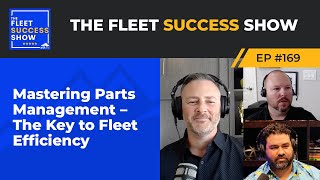
In this Fleet Success Show episode, host Mark Canton talks with seasoned fleet professionals Facundo and Nathan Shafer about the often‑overlooked world of parts management and how it impacts overall fleet efficiency. The conversation begins with a discussion of outsourcing parts programs: why some fleets choose external vendors, the cultural and staffing challenges that can arise, and the importance of strong, performance‑based service‑level agreements (SLAs) to keep vendors accountable. The panel then shifts to building an in‑house parts function, outlining the rare blend of warehousing, technical, and communication skills a good parts person needs, and how mentorship, internal training, and promoting from within can help create that talent. Practical inventory‑control tactics are shared, including barcoding, frequent cycle counts, setting minimum/maximum levels in fleet software, and automating repeat orders. The guests explore automation tools such as parts vending machines, lockers, and part kits, noting both the benefits of tracking consumables and the pitfalls when vendor support wanes. Facility layout and parts‑room security are highlighted as critical but often ignored factors—proximity to bays, locked rooms, and clear organization can dramatically reduce technician downtime. The episode also covers handling obsolete or “insurance” parts, capturing fluids, and avoiding lost inventory through proper asset tagging. A staffing rule‑of‑thumb is presented: roughly one full‑time parts FTE for every 8‑10 mechanics, with adjustments for shift patterns. Throughout, the hosts stress the need for clear communication, asking the right diagnostic questions, and leveraging vendor training to keep parts quality high. The discussion wraps with quick actionable tips for any fleet looking to tighten its parts program.
Chapters
This is the Fleet Success Show dedicated to helping you and your fleet succeed using the experience of fleet professionals and Hall of Fame fleet legends. The show that explores how the pillars of stakeholder satisfaction, intentional culture, resource efficiency, and risk management all combine to lead your fleet to success. We're glad you're here. Now let's get into the show.
Hey everyone, and welcome back to another episode of the Fleet Success Show. I am Mark Canton, your host, and I'm joined by my good friends Facundo and Nathan. Welcome back, guys. How are you both?
Good. Thanks for having me.
Good. Thanks.
All right. For those that don't know, I'm again, I'm Mark Yanton. I'm the head of fleet. Excuse me. I wish I was the head of fleet here at RTA.
The head of fleet management.
I'm the head of product and consulting. I've been in the industry about 30 years. I ran fleet and transportation in New York City at Fordham University for many years, and I went on to be a consultant. And most of my career has been really zoned in on fleet management analytics and vehicle costing. Had the good, good opportunity to do some expert witness work and all that kind of jazz as well, which is fun and exhausting and exhilarating all at the same time. So with that, I have a couple of really seasoned veteran fleet professionals who work with me here at RTA. Facundo is a multi-time award winner, fleet manager. Well, excuse me, 100 Best Fleet of the Year. How many times did you guys win that, Facundo? You won it in two different stops too, right?
Yeah, a little bit. Seven total. Right.
Right.
I'm asking you, how many times did you win? And you said you won 7 times. I was like, wait a minute. I only got on the list 7 times. I didn't win the thing fleet 7 times. Big difference.
Fair enough. At 2 different stops though, right? That's pretty cool. All right. Yeah. So many years in the industry as well, you know, here helping us as one of our fleet success ambassadors. And of course, Nathan Shafer, tell us a little bit about yourself.
Yeah, I've been in the industry 25-ish years, you know, done everything from technician to parts to manage fleets big and small. Working here now as a fleet success manager/trainer and loving every minute of it.
Yeah.
And you're also very active in the industry, like as Facundo is. You help with the curriculum, for example, over at NAFSA. You're involved in many different ways. So thank you guys both for being on here. Really, really hoping to kind of pick your brain on something that is kind of near and dear, I guess, to our hearts. As I mean, I think you guys consider yourselves fellow fleet geeks. Like I consider myself. And it's one of those that kind of those who are really into fleet are passionate about and those who aren't, well, maybe it might be foreign to you. So let's see how this goes. I wanted to talk with you guys today about parts. And really what I mean is, you know, that parts management, right, that, that subpiece of a great M&R program. And if we're being honest, for many of the organizations we come across, It's a challenge. It's a real challenge for folks. You know, one of the things I like to say is if you can get a good parts manager, they're worth their weight in gold, you know, because the combination of skills that are necessary, I think, are really, you know, interesting. You know, you need to have all of the skills of a warehousing professional, how to inventory, how to move things, how to plan where things should be stored, etc. And yet if you're really good at it, you need to have quite a bit of technical knowledge and understanding so that you can identify what parts are needed, similarities, you know, identify what a good quality part is, what it's not, you know, those sorts of things. You know, one of the issues that many organizations run into is they're— they have to burn too much technician time just to identify what the appropriate part should be. And you really don't want that, right? You want your technicians in the bays turning wrenches. You want your parts people to do that. So there's a, there's a bunch of ways to skin that cat. Um, there's best practices that, you know, maybe we'll try to cover today. Um, but let's just kind of start at the top. One of the things that we're seeing more and more of, because it is so challenging to find good professionals in this area, is, is outsourcing it, right? And, and certainly that solves the problem in one way. Now you don't have to find good parts team, uh, you can bring in someone else. They'll usually come into your shop kind of take over your space. They'll keep on the shelves the thing that they analyze and think you're using, you know, a lot. And usually they have a fairly large network of the things that aren't on the shelf that they can get to quickly. So there's a lot of pros. You both have experience, you know, outsourcing your parts program. Talk to me a little bit about that. Facundo, we'll start with you. Like, what was the best part? Why did you do it? And, you know, you know, kind of what led you to that decision that, hey, I'm going to outsource my parts program, and then, and then tell me what, you know, you know, what worked and that sort of a thing.
Well, I came into an organization that had the parts outsourced. We actually did have to rebid it, so we did have the choice to take it back in if we wanted to and decided not to. There's a lot of issues that can arise with outsourced parts if you're not careful. Like, for example, you know, we always talk about culture, right? So you've got your fleet culture And even though they're in your building, you know, they could be— they could have their own culture situation going on, right? And, you know, we did have some issues where they had some staffing problems for a little bit of time. So we actually said, all right, well, we're going to throw in somebody that can, you know, has previous parts experience from us, and we'll throw them behind the counter. And, you know, we'll figure it out later. But we can't— you know, it was a big operation with a lot of parts moving in and out. So we had to keep it going. That was one of the main issues that I saw. And the way that I addressed that was, you know, I— any excuse to throw something on a grill and cook it, I'm there and I'll be doing it. You know, so my thing was, you know, let's do a lot of that. I'll cook and I'm going to make sure that they're a part of it all the time, every time. And so that was a way that regardless of what was going on within their company culture, they were still part of our culture within the organization.
Right. You try to incorporate them into your organization and culture. And for those who don't know, Facundo is our resident grill master. So if you want tips and tricks and recipes on everything from smoking to slow cooking to the best asada on the planet.
Argentina asada, yes.
Hit him up. Go ahead, Facundo. Sorry.
Yeah, no. So that was one of the things that for us was super important to do the beginning, that it could have gone south, right? Had we be like, oh no, you're on your own little island. You're not included. Whatever, right? That would have been terrible. You know, we talked about this recently where your parts vendors in general, even if they're not, you know, they're— you're traditionally calling them up, they're bringing you parts, they offer a lot of training. You know, we leveraged them quite a bit for training, which was good.
Yeah.
You know, and some of their folks sat in on some of the training and they, you know, obviously a lot of our technicians participated in the training that they did. So it was really good because then our folks got to see that they were you know, had an interest in helping our organization out. So I think there was a big part of what I was doing, because I— luckily, since it was outsourced, I didn't have to manage it in the traditional way of having to manage when you're doing it yourself as part of your organization. And so I just decided to make, make sure that that relationship was as good as it could be by doing those extra things that we could do.
Great point. Great point. Hey, Nathan, you, you, you did— you definitely did it both ways, right? You had your own at one stop and your own parts shop that you managed and ran. You also did it via outsourcing. Tell us a little bit about your experience. What are the pros? What were the pros and the things that really— hey man, I would do that again, right? And, and also if you have any other challenges that maybe Fukuna didn't touch on that you ran into.
Yeah, I, I think the pro is definitely you know, it's what you said, right? They— somebody comes in, they've been doing parts, that's their sole focus. They're very good at that. The con to that is sometimes they sell you that person as that, and then they come in and they're not really that, right? They're really good at one aspect of it, and then they're not at the other side of it. So you definitely still have to watch what your expectations are for, you know, fill rates and make sure they're keeping things in stock and all that good stuff. And then one of the other cons, you know, is watching the invoicing. Making sure they're following that, that's laid out scheduled contract pricing because we did find some issues with that. And it just happened to be we got a new person, just like Facundo said, those people come in and out too. We got a new person, didn't understand the contract pricing, and so we were getting overbilled. And if we hadn't been watching that, right, how, how long would that go on for until we caught that? So definitely some cons with, with that aspect.
That's a great point. But that's, you know, and to be fair, and this is a really important lesson, we've talked about it before. Fukun touched on it, you know, all of your vendors, you have to, you have to manage and track. And it's not necessarily malicious. It's you need to measure their performance, right? Are they doing and hitting the things that you expect them to do? So certainly a key tip if you're thinking about outsourcing your parts management program is you have to have a solid SLA and that SLA has to be performance-based, right? It has to say, hey, here are the metrics. Here are our fill rates, here are our fill times, etc. You know, this is how much of the time we expect it to be there on the floor when we ask for it and how much allowance we will have to have to go out and get that part from someplace else. And what are those delivery time requirements? So you want to outline and define all of that and you want to incentivize that right in the payment schedule. You want to incentivize when they, when they exceed expectations and you want to disincentivize for when they fail to hit those expectations. And again, that would be true of any vendor, you know, but certainly I think it's super, super important in a situation like this because as Facundo is kind of talking to, you're inviting these folks into your home, right? Like this is— it's a, it's a, it's a bit of an extra extension there. And so it's, it's very important that you have that kind of that really strong working agreement. And so if you have that good SLA, you kind of take any of the, you know, it helps a lot with taking any of the uneasiness about it, right? When you, when you're having that performance or not, right? You have something you can point to and it serves as like the arbiter. This is what we agreed on, guys. Let's go do it, right? And, and it makes that conversation when you have to have some of those tougher conversations go really well. So, so that's really good. So, you know, all in all, uh, first question, and we'll talk a little bit more about a parts program here, but You know, I'll ask each of you, if you had to do it again and you were starting your fleet program from scratch, you know, based on your experience, do you think you would go outsource with parts again, or do you think you would try to, you know, build that program from within if you thought you could? What would be your preference?
Depends on the size of your fleet.
Okay.
A smaller fleet, I would probably obviously do it myself. But, um, with a larger fleet, you have to carry so many parts that it gets really hard, and the amount of inventory you have to carry is massive. So I think if, if I was managing a large fleet, I would want to privatize or outsource.
Okay, okay, outsource, right? Nathan, what are your thoughts? You agree, you disagree? It's okay, we can disagree here sometimes too. So yeah, what are your thoughts?
I'm gonna start off saying the same thing Facundo did, and it's going to be kind of dependent on while fleet size does make a difference, for me, it's can I put together the right team to manage parts the correct way? Because I see a lot of organizations where they run into trouble with parts is the parts person's wearing way too many hats. So they're not just doing parts. So then parts falls, you know, to the wayside. So if a fleet organization is staffed appropriately and structured correctly, right, having the right people in the right places, I think managing parts on your own is very doable.
Okay, so let's talk about that. Let's— that's perfect. That, you know, what does that look like, right? So I had mentioned at the top that the combination of skills to find the really good parts person is really pretty rare these days, right? I mean, it's— we're having a hard time finding techs, you know, and you can make an argument that the parts person needs many, if not all, of the skills of a technician. Certainly a lot of the same basic knowledge as well as this whole other set of skills. So walk us through that, Nathan. We'll go in reverse here. I mean, what does that look like to you? You know, when you say you can find the people if you can staff it properly, how do you go about trying to find a good parts person?
It's tough because there's a lot of different skills they gotta have, right? They gotta be highly organized. They have to be able to function in the chaos, right? Because it's a, it's a fast-moving thing. You've got technicians at the counter screaming for parts. You've got vendors knocking at the back door for deliveries. So I think, you know, highly organized and being able to multitask are two of the really big key elements that you want to look for. Pushing parts across the counter is one aspect, but managing the inventory is a whole different animal.
Sure. Did you have much success in your, in your time able to find folks? Or, you know, I, I had, uh, I can't recall if it was Scott or Steve who mentioned that one of the best ways they kind of found parts people was essentially by developing them from within. They took a tech that seemed to have a knack for it who maybe was looking to get off their back, so to speak, right? Uh, and, and essentially tried to get them training on how to do parts. I don't know, what do you guys think about there? Is that, is that a tactic you might deploy or a strategy you might deploy?
I'm still kind of thinking about your, your last question, which was, you know, some of the, the important, um, things, some of the skills that these folks need. And to me, absolutely, it's communication, asking the right questions, right? So I remember when I was still at my dad's shop, I remember calling, I think it was like a I don't remember the local parts. I think it was called Fairfax Auto Parts or something like that. So I called. I was like, hey, I got this '93 Honda Accord, blah, blah, blah. I need a clutch. And he's like, OK, '93 Honda Accord clutch, automatic or manual? And I was like, wait a second. I need a clutch.
I'm looking for a clutch.
So I don't know if it was communication or he was just doing the wrong— you know, he was just in the complete wrong profession. But, you know, there's obviously, um, those guys gotta, you know, they gotta communicate very well. They, and they have to know how to ask the right questions. And I don't know if there's like this, you know, universal like, um, thing for asking questions when you're a parts person, because it's always, yeah, you know, your make, model, you know, VIN number, whatever it might be. Um, but that to me I found was— and there was a couple guys in this same location that were top-notch, right? Like, they would ask all the right questions. They knew what you were looking for, even if they didn't know what you were looking for. And you're like, look, I have no idea what this part is that my technician just handed me off this, you know, whatever this vehicle is. Let me describe it to you. It came from right around this area, you know, and it, you know, it was hanging in here, and this is what it looks like. This is the color, whatever. Um, so I just think that that's such a massive skill that they need.
I'll tell you guys quickly about a study, uh, I was part of once where, uh, this— and I actually ran into this multiple times, but you just— your story reminded me of a situation where you'll have like procurement, and let's say in a government setting, the procurement will run a warehouse, and in it they'll have, you know, police bullets and plumber's gaskets and, you know, 2x4s and everything that all of the various trades may need. And, and those guys are great at inventorying and warehousing, which is part of the skills of, of a really good parts person. But the, the problem that we ran into time and time and time again— this one organization was really bad— was, you know, just like you said, they had no idea what it was, um, you know, that the mechanics and the technicians were looking for. And it's, it's not quite as simple as, yeah, I need this size hose. And give me 6 feet of a quarter-inch hose, which you don't need the same level of technical skill to understand. Where, you know, uh, hey, I need a brake kit for, you know, a Ford, you know, a Crown Vic at the time. And, you know, not understand, oh no, we don't have any in stock. Meanwhile, they had several, but it was under a Mercury, for those of you who are old enough to remember Mercury, right? And just not having that kind of built-in knowledge of the industry and that, hey, these parts are duplicative. Or no one would go into the system, you know, I remember doing one and looking at a system and it was the same part through like 2012 and no one had got into the system and updated it. So they thought they had a 2010, they thought they didn't have the part. Meanwhile, they had 50 of them for through 2008 and it was the exact same part from like 2002 through 2012. Right. There's so much nuance there. And, and, you know, even there, that's the kind of thing that can get lost with a vendor as well. To your points earlier about depending on who they're capable of staffing that with. You know, and when you're dependent on that parts person to understand, to communicate and ask those questions, hey, I need brakes for an F-150. Okay, well, do you need, you know, what do you need? Do you need pads, rotors, an entire— like, what's going on? And that's the kind of thing you got to kind of keep an eye out for, right? How does that get translated, that request, into what's actually needed and what was actually used?
Yeah, like, super important. You know, all tires hopefully are round. Some of them are different colors. I've seen, I've seen different color tires before.
Yeah.
But, you know, I ran into this one issue, um, for a fleet we were working with. This is once I was back on the, on the startup side, and they were like, hey, what, you know, something's wrong with this issue, what, you know, or this tire, what happened? And so we were started looking into it, and I was like, wait a second, read me the tire size. Okay, what's that letter at the end? It's a T or whatever, I can't remember what it was. I was like, okay, well, you just put a tire for basically a sedan on an F-250. Right. You know, that's why it's completely destroyed, you know, after a few thousand miles. You know, so asking, you know, like for example, going back to your Crown Vic example, you can't just get a white box. When somebody says white box, you're like, well, you know, you have to know what they're talking about, but you can't put a set of white box pads on a police vehicle, it'll be metal to metal by the time it drives out the garage in 25 minutes, right?
Exactly, exactly.
Um, so just like you said, those asking those little questions, like, you gotta— you can't just have anybody doing parts. You gotta know what they're doing, right?
Which I think goes to another tip that I think we would agree to give is, you know, parts— I mean, this is true again across the, the organization, but parts is definitely a scenario where you definitely, if you are running your own shop, you want a constant state of mentorship, right? You, you, I mean, I, I love to see teams with that old grizzled person who's been doing it 100 years next to that early 20s person who's been doing it too, right? And continuing to, to be able to, to leverage that, you know, that knowledge, that experience, that information, and kind of, and I think it's still relevant today. And I know with new technology things are changing Things are certainly becoming much more electronic. You know, Tesla's famous now for using what I call the Dell approach, which is we're not going to fix anything. We're just going to get rid of it. You know, like, like when your motherboard goes on your computer and you call them up and we're just going to replace the motherboard, send it back to the shop and, and have them repair it. And you're starting to see that approach more and more from the OEMs. And yet I think, I think the skills remain fundamentally the same, right? Understanding what works where. Having that background knowledge and the communication pieces that, that you're talking about. So what do you guys— I mean, I think it's getting so hard to find. I, I think definitely more and more organizations need to be leaning towards the approach of, you know, let— I can't find the great parts person, so I'm going to make a great parts person, right? And looking for those skills that you guys mentioned and trying to teach and train up and mentor and take advantage of the local parts places, uh, your parts vendors' training sessions and those sorts of things. So, so that's real interesting. So what are the tips you guys might have for any folks who are out there struggling with their parts program? You know, let's, let's quickly, you know, just a few minutes here, let's quickly change gears and talk about maybe some good practices that you've seen that have always helped you, help you run your shop. Maybe they can impart to their parts people just some basics, high levels. What are things that— or maybe it's like characteristics of a good parts room, you know, those sorts of things. Give us some tips that you would say, uh, are consistent for a good parts program.
Because no one goes to school for fleet management, chances are you were never formally trained on how to successfully lead a fleet. That's where the Fleet Success Playbook comes in. The Fleet Success Playbook is your guide to building a safe, reliable, and efficient fleet that provides exceptional service. Learn all about the 4 pillars of fleet success: stakeholder satisfaction, intentional culture, resource efficiency, and risk management. Get nearly 100 years of combined advice on common challenges, practical solutions, actionable tips, and real examples from fleet industry experts who have been there and done that. Visit www.fleetsuccessplaybook.com to request your free copy today.
Some of the things I came across, uh, uh, recently when I visited a couple fleets was that both of them said how much they, they had improved once they had gone to some electronic version of doing an inventory and doing it monthly. Actually, one— I think the way one fleet told me was, we used to do it annually and we've never finished them. Like, we just gave up, you know. And then we went to, you know, doing it electronically, you know, and using, you know, barcoding and things like that, uh, to being able to finish them relatively quickly every month, you know, and verifying, you know, with not missing any parts. And so I think that is at least what I've seen recently, by far tools that folks have that can be a significant impact for little money is, you know, using a technology like that.
Yeah. So barcoding scanners that help you leverage those barcodes, your software like ours should be able to help you with that. And you should do it as often as you can possibly get away with, right? These inventorying. And if not, at least do cycle counts, right? Very frequently. What else might you say, Nathan?
Yeah, I would take it even a step further with, you know, Mark, you mentioned the fleet software, right? Whether it's ours or some other fleet software, utilize the capabilities within that for inventory management, right? Setting those mins and maxes. Getting those reminders of when to order parts when they're running low. Doesn't work if you're not tracking inventory correctly, right? So we got to make sure we're tracking the inventory. So definitely leaning on the tools that are out there to assist with that. I see a lot of issues, you know, when I'm out traveling that people override those systems, you know, for some reason the parts person wants that control and they override those systems and they typically get themselves into trouble. Aside from that, I would say a good clean, organized parts room, right? Fast-moving parts to the front that we're going to get a lot, heavy stuff at the bottom, you know, clean aisles, being able to navigate to all the different things. Just a few things to make it a little easier.
Also, you know, capturing fluids as well when they're doing fluids, you know, anything in town that can automate that I think is important. But yeah, one thing you touched on, Nathan, was people wanting to override the system. No, I can order stuff better. I can call. People forget. I mean, I think in— what's that saying? The definition of insanity is doing the same thing over and over again. So one of the most important things I learned working at Tech Startup is if you do one thing a couple of times, if you do it the third time and you're doing the same thing, automate it. And so all of these—
It's probably an opportunity.
Yeah. All of these, like Nathan said, all of these different fleet management softwares, that can, can automate this process for you, if it has that ability, you have to take advantage of it.
And if it doesn't have that ability, call us up. Exactly. But yeah, I think that's super key. The notifications on low quantity. I mean, that's— and you can even auto-order, you know, if you want, but kind of being mindful of that and having the system help you because as you said earlier, there's so much going on at once, right? So why not let the system help you a little bit? That to me is kind of a no-brainer. What are some of the things that maybe go overlooked that you think are helpful? I'll give you one that no one seems to ever care about with me. But, you know, I know Tony Yankovich, who you guys know, he's very passionate about getting rid of those obsolete parts. They're taking up space. They're taking up, you know, and usually you can sell them back to the vendor. They'll give you something, money. I like to look into what I call insurance parts. Anyone who lived through COVID, which if you're here, you probably did, you know, understands this concept of Hey, this may not be a fast turning part. I may only need one on the shelf, but when I need it, I need it and I really can't wait for it. And it's the kind of thing that might take a really long time to come. You know, maybe it's like a really specific hydraulic arm or something for your fire truck or whatever it may be. I feel like a lot of fleets kind of miss this concept of a— what I would call an insurance part. And then they got these down trucks, you know, that just sit there for months and months and months. Any tips around that? Like, how do you identify, hey, this is a good candidate for that? Or are there any other things that you kind of think go missed that people don't talk about for a good parts program?
Making sure that you have a set standard of parts you're getting, right? I mentioned white box, right? Don't always go for the cheapest thing, right? One time, I think it was like a Ford F-450 or something like that, we were getting a water pump from somewhere. I don't remember what it was. And all of the water pumps that we installed had some issue. And so we had to, you know, eventually had to replace them. And I think it was because we tried to save a couple pennies because, you know, somebody tried to say, you know, some vendor came in and like, oh, that sounds good. And, you know, spoke so highly of these parts and that hurt us. So I think setting what those standards were, of course, you know, fire safety, PD, all those things. Absolutely right. The right kind of tires, certain policies around you can't fix the tires. But making sure that you have those standards that can obviously can support the right application. So we always talk about vehicles for the right applications. What about parts for the right applications?
That's a good point. That's a good point. Where do you need to go OEM? Where there's something else that aftermarket's fine. But even within that aftermarket, you know, where can I not just go with the cheapest option, right? Having an understanding of that, you know, I think is also very powerful. That's a great point.
Yeah. And I'll even add another one that doesn't get talked about. And this is the— we order the part, we charge it to an asset, but we stick it in the parts room. So it's not actually in our inventory, but we have it sitting back there physically, right? I've had issues with this in past stops. I've seen this in other instances, but, uh, you lose visibility of that stuff and then you end up buying stuff again, right? And so then we have all this lost money, and it goes back to what you said about Tony, right? We got parts sitting back here and we had no idea we had them, and they've been sitting here for years, and now I can't return it because it's worthless. And so it's money wasted.
I got a tricky one for you. So when you have your solid waste department come in and say, hey, we do the quick fixes You know, we do the pre-trips, and then we're going to install these light bulbs and wiper blades. And so we're going to come, and we're going to pick up all of these lights and wiper blades and these little quick-fix things. And then you come to find out that all of a sudden, all these vehicles are showing up at your fleet, these solid waste trucks, because they're not doing these quick-fix repairs. And you're like, wait a second, I thought you picked up the light bulbs. And so it's when you're doing little things like that to help, you know, your colleagues out, maybe you think it's going to help you out. There's a lot of loosey-goosey things going on there, right? People aren't— they're not tracking those things. It's— you're losing inventory. What did it go on? You know, you have to have— if you're going to do a system like that, you're going to be— you got to be really tight. I did it. I wasn't really tight and it bit me too.
Yeah, I'd encourage you not to do it, man. Like, you know, don't put things on assets that aren't actually on assets. And when you put things out there, put them on an asset. We do have a, like, a parts desk feature, which I think is pretty neat. And I know a couple of other systems might have it where you can issue it. So like, to your point, Fukuno, in that case you make sure you issue that part, you know, to that sanitation group. So at the very least we know who, you know, we have our costs in alignment anyway, right? Even if we don't know exactly where they landed. So, uh, I think that's a really good point. Um, you know, the OneGuys, we, we all skipped it because for us I think it's so like 101, so first grade. And yet I don't know about you, but I still come across a lot of fleets not doing this. Park-its. Park-its. I mean, like, it's the most straightforward, probably the, the one thing that you can do to save tons and tons of time for yourself, right? That's kind of obvious. And yet I don't know why, but many fleets, they don't do it. Um, you know, especially with PMs, if you're a PM-focused, certain, certain kinds of jobs, all right, like brakes, not like it's just sort of a no-brainer. Put your parts together, store them together, put them into groups together, and issue them together, right? And again, any halfway decent system is going to accommodate that. So I have no idea. I don't know if you guys have any insight. I don't know why people don't— everyone doesn't do that. But I can't— I've never come across a logical reason to not do it. Every time I bring it up, everyone's like, yeah, yeah, yeah, we all, we all do part kits. And yet the data tells me not everyone's doing part kits. So I don't know, what are your thoughts there?
I get a lot of people that say we don't have the time to build them out, right? And I think that goes again to staffing or the parts person's wearing all these hats. And I think that's something, one of the first things that goes. But yeah, I would agree. I think it's a quick, easy way to save time and money.
Yeah, the little bit of time you take to build them out will save you that time many times over during the course of the year, you know. So let your part person come in and build them for you over the weekend. Give them some overtime. I promise you it'll pay for itself.
You said part kits, and I thought of two totally different things at the exact same time, and I still haven't recovered. Okay, one of them is one of those parts vending machines. Okay, so I'm— you know what, I, I have no experience with them. I'm curious what you think, or what you guys think if you've seen them. And then the other one is like a quick lane and parts kits, right? Like, so somebody coming through—
oh, for like PMs?
Yeah, yeah, you know, um, so anyway Those are the things that popped in my mind. I haven't been able to get them out. So I'm curious. I want to ask Mark, I'm going to ask you the question now. Have you, have you had any experience or Nathan, have you had any experience with those parts vending machines?
I've used one.
I haven't. Oh, tell us about it, Nathan.
So we just put consumables in it, right? So that we could track the consumables, who was taking them, how much they were using. So think like, you know, Loctite sticks or gloves. You know, electrical tape, that kind of stuff. And so it worked really well. It was very well managed by the vendor for a long time, and then we got a different salesperson for that vendor, and it was then very poorly managed, so we ended up getting rid of it.
So, but that goes back to the earlier part of the top.
Yeah, exactly. But it was awesome because we could track consumables, right? They'd put, put their little code in, it would tell us what it dispensed. so it was fantastic for tracking.
I was even thinking about like parts kits within those things, right? Because if you know that there's a part that you're going to need often, again, once you're— you have to automate these things and you're doing over and over again, instead of going and asking, you know, Bob, your parts guy, hey, can I get a, you know, a filter and whatever I need for an oil change and air filter for this, whatever, put it in a parts kit in a machine.
To your point, you know, with that we had a set of lockers next to it that was tied into it. And so we use that for our tool check-in and check-out. But they were, you know, 12 by 12 squares. So you could probably build a parts kit and stick it in there and say, hey, this is parts kit for whatever. I just don't know how you could automate the billing from that to your, you know, your work order.
Well, and this is actually relevant to the last thing, at least I want to bring up. I don't know if you guys have any others, but another kind of piece of the program that I think goes underappreciated or underthought about is really the facility setup aspect of it. Where is your parts room relative to your bays? Do I got to jump across 4 hoops and through the floor is lava and that kind of a thing to get to it from my bay? Or is it like an easy, safe walk or not a walk at all? In a perfect world, your mechanics should never come to your parts bin. You should be delivering it there. I know that's tough to achieve for some folks, but that's really what we should all be striving for. You know, but it's a piece that I just feel like is missed, you know. And I've had fleet managers, you know, they got a new facility, they're all excited about it and they're bragging about it. And it's just, we walk in and we're like, oh man, you missed this piece here. You know, you got to go behind the administrative office, behind the fluid room, you know, all the way over here. It just didn't, you know, really make a lot of sense. Uh, so that, that's a big one I miss. And related to that is, you know, what do you allow to be right there in the bay? Some of those consumables maybe, or not, or some of those kits. Versus what needs to go to the parts room. You know, there's a few others like that. Too many shops out there with just an open, unlocked parts room. That's just begging for trouble. So something as simple as locking your parts room is really super important and making sure you're tracking what's walking in and out of there. So those are some quick tips for me. I don't know if you guys got anything else that you want to kind of add on there.
So I'm a very visual person, and when you said that, Mark, about technicians coming to the parts window. You know, you go to the restaurant, you have the guy bringing you the food on his arm, and he's like, what about— what's the ROI on creating a person that just shuttles parts back and forth? And that's all they do in a very large shop. Because, you know, when, when John's coming up to the parts window and he's like, hey Bob, what'd you do this weekend? You know, and there we go.
Yeah.
And then, then, and then, you know, start talking trash with the guy across. And like, you know, it's great having that you know, the ability to talk like that and that, that culture is great, but, you know, it, it starts to hurt. Um, so I'm— who knows, why don't we just— what do we call them, like a parts busboy or something?
Yeah, yeah, you'll see, you'll see some really big shops, they'll have that, you know, the same folks who maybe are running when they can't get a delivery on time when they need it. Um, but that's exactly the kind of thing I'm talking about. Usually it's, it's the more junior people in the parts room But, you know, hey, if like, for example, there are other systems that I think can do this. But if you request, you know, in our system, right, you're a mechanic, you're at your bay, you request a part through the parts request module, you know, the parts person gets pinged and they say, okay, John over in Bay 2 needs this, right? I got it on stock. No big deal. I'm going to issue it and I send it right out and I bring it to the bay. Right. That's the best practice to your point, because now I keep the wrenches turning. Right? And I keep the kind of flow moving there. So whether it's a junior person or a runner, you know, Steve is very passionate about making sure you're not paying mechanics for jobs that are not mechanics, so finding the right— that right role and pay accordingly. But I think your idea is exactly that. I think it's— I think it's brilliant. I think, um, you have to have enough work to justify it, right? But certainly people should be looking at things like that. I totally agree.
So here's another question I'm going to throw out, Mark, is At what point do I decide I need a parts person? I got the parts room, the technicians are chasing parts. At what point do I make the decision that, okay, we need a parts person full-time?
Great question. Great question. I'll tell you what we see usually mathematically. All right. So there's nuance here. There's a lot of nuance here. It's, you know, where are you, right? If you're in Alaska, things are very different than if you're in New York City, right? If you're in Anchorage, let's say, or some smaller town. You know, are you running multiple shifts? What's the nature of the fleet and so forth? So there are nuances here. But I will tell you that when, when, when Tony and Steve and Scott and we're doing these, you know, and Griffin's helping us do some math on our staffing analysis, what, what we typically find is that somewhere in that 8 to 10, the ratio is kind of like 8 to 10 mechanics. You need at least one parts person. And again, if you have multiple shifts, then that you might need to kind of tweak that. Maybe one of your senior mechanics is also part-time, part-person FTE, kind of like what we were talking about earlier. So but certainly if you have 8 mechanics and you don't have one full-time part FTE, you're probably, you're probably feeling that. And what I mean by that is if we did a cost allocation breakdown on you or a time study, we would find that your mechanics are putting too much time into looking up and sourcing parts. And they're not getting that, that optimal ratio of turning wrenches is what we would typically find. When you're in a smaller shop, it gets tough, right? You got, you got 2 mechanics, a lot of fire truck organizations like that, or 4. It can kind of get a little bit challenging, uh, because it's, you know, you have a supervisor, you know, you have to figure that out. But, um, but generally speaking, you know, by the time you hit 8 mechanics, you're, you're gonna, you're probably gonna need, uh, at least 1 full-time equivalent, uh, for a parts person. So at least that's my— that's what the math normally shows us, and that usually plays out when we go to implement that really nicely. I don't know what, you know, if you have a different thought based on your experience, Nathan, or Fukunda, but that's kind of what we see.
Well, I'll just say from what I see, right, is, is I go into shops that probably should have 8 to 10 mechanics, but they have 5, right? So that— I think that— I just wanted to mention that because I think some shops will be like, well, we'll never have 8 mechanics, right? But they should have a parts person.
Yeah, because then that exasperates the fact that they don't have enough mechanics because now those 5 mechanics are not doing enough. Yeah, that's a great point. So, um, yeah, you can do time study analysis. That's actually math. We, we don't have time to get too deep into that today, but if you guys are interested, let us know in the comments and we can pursue that. But, you know, as I just said to our audience at NTEA this week, um, that's how many mechanics you need is a mathematical equation. It's not politics, it's not really much judgment or anything like that, and It's the kind of thing we could certainly help you calculate. So, all right guys, with that, I think we're out of time here. I want to thank you so much for your time. It's a pleasure having you on. Hoping to see you soon here in Glendale in a couple weeks for our Spirit Week. Maybe we can do some more and talk shop a little bit more. To all the fleet geeks out there, thank you for listening. Thank you for watching. And with that, yeah, have a great day. Any questions, any thoughts, email us at podcast@rtafleet.com. Yeah, well, check us out on our website, rtafleet.com. Take care, everybody.
We hope you enjoyed the show. If you'd like to help support the podcast, please share it with others, post about it on LinkedIn, or leave a review. Want to learn more about our fleet management software Fleet 360? Check us out at rtafleet.com. If you want to learn more about having your fleet evaluated by our consulting team, go to fleetconsulting.com.
More from Josh

Episode 227: The Hidden Costs Killing Fleet Operations (It’s NOT What You Think)


Episode 225: Are Certifications Still Worth It? The Truth About ASE, CAFM & Fleet Leadership




Episode 221: The State of Fleet Management: Education, AI, and the Technician Crisis with NAFA’s CEO

Episode 220: Motor Pools Are Back: Right-Size Your Fleet Without Breaking Operations

Episode 219: Stop Guessing at Downtime: Status Strategy for Better Availability #podcast #fleet

Episode 218: Fleet Predictions 2026: AI Hype, Technician Shortages, & the Next Era of Fleet Managers

Episode 217: Why Replacement Planning Solves 95% of Your Problems #podcast #fleetmanagement #fleet