Episode 170: Fleet Rookie Mistakes - Advice from Award-Winning Fleet Managers #podcast #fleetsuccess
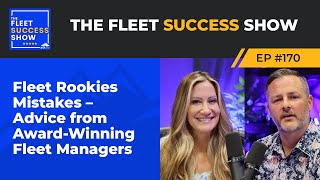
Facundo Tesoro and Sarah Burnham, award-winning fleet managers, share rookie mistakes to avoid. Get the CAFM certification, which boosts salary by roughly 27%. Pilot new tech like telematics before full rollout, involve long-tenured staff early, and use data to pitch fleet needs to leadership.
Chapters
This is the Fleet Success Show dedicated to helping you and your fleet succeed using the experience of fleet professionals and Hall of Fame fleet legends. The show that explores how the pillars of stakeholder satisfaction, intentional culture, resource efficiency, and risk management all combine to lead your fleet to success. We're glad you're here. Now let's get into the show.
All right. Welcome back to another episode of the Fleet Success Show. I'm Facundo Tesoro, Fleet Success Manager here at RTA with Sarah Burnham.
Hi.
Okay, so a little bit about who we are. So I started in automotive a long time ago, uh, back at my dad's mechanic shop. He did a part-time job, told him he was going to hire me, he hired me. Uh, was kind of like a service advisor, worked here for 12 years, learned how to run an automotive shop, and then moved into the fleet management world, taking a job at a good old city of Ormond Beach in Florida, and then moved to the city of Norfolk, larger city. Moe Money, Moe Problems kind of a thing. And then from there, transitioned to the tech startup side of the world. Again, still in automotive. Was there for 8 years, 2 different tech startups, and then came over to RTA to be a Fleet Success Manager where we work primarily with a lot of our customers, but we do a lot of things with coaching and consulting.
So I'm Sarah Burnham, also with Fleet Success. I am a former fleet manager as well. I've been in fleet for about 27 years. Started out in the automotive industry working at a repair shop just like you. And then I got curious about fleet, ended up getting a job in fleet and worked for the State Highway Patrol and then the State of Ohio and then Palm Beach County was my last position where I was the Director of Fleet Management, managed about 61 individuals, had a budget of $34 million, and it was a lot, but it was a lot of fun, I will say. It's— this has been a great industry over to work with in the last 10 years, and I'm super excited to be with RTA helping fleets succeed. That's what we're all about.
So, you forgot to mention one small little thing that happened in 2023.
Oh yes. Public Sector Fleet Manager of the Year.
Yes.
That's correct.
And there's that.
Yes, there is that.
My claim to fame was applied for Top 100 Fleets 7 years in a row. And people always say, oh, you won 100 Best Fleets 7 years in a row. I'm like, whoa, whoa, whoa. I was on the list for 7 years in a row.
Right.
Not won it.
But that's pretty hard to do.
That's my claim to fame. That's my claim to fame. Okay, cool.
That's impressive.
I didn't quite get Fleet Manager of the Year, but oh well. Well done.
Yeah, well, thank you. Yeah.
Okay, so what are we talking about today? So we were talking about tips and tricks for new fleet managers because nobody goes to school for fleet management. So what tips and tricks would we have for fleet managers in their first year? You can go first.
So the biggest suggestion from me would be to, if you're brand new to fleet, never been in it, I would get out there and learn as much as you can. There's so many resources out there. We have the Fleet Success Show podcast. We have, there's the Fleet Success Playbook. There's all kinds of other publications out there as well. A lot of them are free. And I'm very supportive of NAFSA. I'm currently on the board of directors, but they have so many opportunities for learning about fleet. It's such a collaborative industry, making connections. I've known you since I've been in Palm Beach County for 10 years. We met from going to events. You know, we can call, we would call each other and be like, hey, what are you doing for this? And share ideas. So that's my biggest tip is get involved, learn as much as you can, use the resources that are out there, 'cause there's a lot.
That's so true because for me, I was in fleet management for just under 8 years. And I always say this and sometimes people give me a weird look, but I'll put my, we'll just call it 8 years against anybody's career in fleet management because of the fact that in those 8 years I did exactly what you talked about was when I got into the industry, I immediately was, you know, looking for publications or things to read and really quickly found like NAPA, Government Fleet. And so read everything cover to cover. Um, and what I learned in that time from those magazines and attending the trade shows was, I mean, I would live it and breathe it. You know, I would go on trips and I would be reading the magazines, or I would, you know, be at the beach reading a magazine. Um, and for me, I learned so much in that time. I don't want to get onto the next recommendation that I'm sure both you and I have, but That's a huge tip is immediately get involved, read, consume all the, everything that you can. I'll stop there 'cause then we're gonna get into some of these next topics. Okay, next topic, what'd you got?
So, there's a lot of great certifications out there as well. CAFM, Certified Automotive Fleet Manager. I would not be sitting in this chair if I didn't have that. It was one of the job requirements for Palm Beach County. It's actually rated, I think, one of the top 10 certifications on monster.com to get.
Oh, I didn't know that.
Yeah, I think the fleet managers that have it have a 27%, now don't quote me on this, but around a 27% higher salary than those without the certification.
I'm gonna quote Sarah. Sarah said they have a, was it 27%?
27%, yes.
I'm gonna put that all over LinkedIn.
You can find it on naffa.org.
Okay. How long did it take you to get your CAFM?
You have, um, I believe it's 3 years, um, but it took me a year, which was tough. Like, I, I had to give up like some, some of my hobbies to get it done.
Uh, so I, this is the moment where I confess, um, I think I might have the world record on how long it's taken to do. So I started my CAFM, uh, again, I was reading all these magazines and so I heard about it and I signed up right away in 2020. 2012, which was right after I finished my master's. So the last thing that I wanted to do is continue reading. And so for that reason, I've made no progress since 2012. So I'm on year— what year are we in? 2025. So what are we, uh, 13 years in? Uh, so I will say that I just recently re-enrolled.
That's awesome. Yes, it's never too late.
No. So I'm gonna be working on it.
Yeah, I mean, I still will go back and refer to material and be like, This, we cover this. Let me look exactly to see what it says, you know?
Yeah, I think for me, you know, I've been outside, I haven't been in the chair for a fleet manager for a while. And having been in the industry for a long time, I have a lot of different perspective on things that are available to fleet managers to help them do their job and tech, you know, technology and, you know, KPIs and all these things. But I think for me, I'm really looking forward to the refreshers on those things. Um, okay, I got one for you. Um, and this one, I had to think really hard on this one, and this one was shut up and listen to your staff, right? Because you come in as a young fleet manager and you're like, I've got these great ideas, I'm gonna make this change. And while it might sound like a good idea, or maybe it is a good idea, it just doesn't work for you. Um, so I think that's a huge one. Um, I, I think I, I came in and I wanted to make a change. It doesn't— that change wasn't coming to me right now, but Luckily I didn't make the change and then I realized had I made the change, it wouldn't have worked out and it wouldn't have been really good. But shut up and listen to your staff, especially the ones that have been there for a long time.
Yeah. One of my favorite quotes, I think it was John C. Maxwell said, you're never as smart as everyone in the room. Like if you're just relying on your own knowledge, your own experience, you're selling yourself short because you have a whole team of people that you can rely on. They're the ones that are likely, you know, they have boots on the ground. So listen to them, get ideas. Some of the best ideas that we implemented, they didn't come from me, they came from our team. And so to piggyback off of what you said, so make sure that you have those meetings regularly established with your team, you have some kind of feedback loop system in place, like, well, even RTA, we have in our software, you can send people, you can send, Right.
Right.
Service. Not just to customers, but to your employees. And having, you know, that ability to get real honest feedback is really cool.
I remember my day one on the job in City of Ormond Beach. I'm kind of one of those people that if I'm not 5 minutes early, I'm late. And so I had mapped out how long it was for me to get over the bridge, across the train tracks to the shop. It wasn't very long. It was like 10 minutes. I didn't factor in that the, on the train tracks, there's something, sometimes there's really long object that goes through it called a train. And so the first day on the job, I get stuck on the other side of the train, uh, and I get there like just before I was supposed to be there, like 7 AM. And when I get there, uh, and I can say his name now because he's retired and, you know, obviously we're on good terms. His name is Danny. Danny's walking up to the door. Kind of a hard-nosed Southern Florida guy. He pulls out his keys and he's walking to the door. I'm walking towards the door too. I'd never met him before. And he puts his key in the door and he stops. He looks at me and he says, you know, I applied for that job and I didn't get it. And they brought this young gun in from out of town. So you're going to have to prove to me why you got this job. Clear as day, I can remember that. And I was like, oh, um, well, I could have said so many things to him, like, you know, whatever. But my, my thought was, give me some time and I'll, I'll prove it. So, um, he had a lot of knowledge and he knew a lot of things. He knew where all the bodies were buried there. And, and luckily, you know, I, I listened, you know, a lot to what he thought and his opinions. Um, some of them were a little dated, you know, but that was fine. And then one day when he was leaving several months later, he would leave about half an hour before I left for the day. He kind of walks out and I can see through my window. He stops, comes back in, peeks his head in my door and he's like, "Hey, you know what? I just wanted to tell you after about, you know, several years that I've been here, I'm finally enjoying coming back to work." I never asked him why. So, I'll kind of just chalk it up to, you know, listening and valuing his opinion.
That's awesome. And that leads me to a point I was going to talk about is when you come in, especially if you're a new fleet manager, so, When you have a new boss, there's some anxiety that comes along with that. Yeah, and when you're making, so new bosses mean change, which causes anxiety. Nobody knows like what exactly changes are gonna be made. So my suggestion is don't come in and change everything at once. Be strategic, find out what your top changes need to be. Some changes are long-term, some are, you know, short little wins. If you listened to me earlier and you met with your team, find some small things that they would like to see change and make those things. That's really gonna help you build trust with your team as well. But yeah, don't do everything at once.
Yeah, especially if you're, I think one of the things, like if you're willing to risk your reputation for one of their ideas, they're willing to be like, oh, they're willing to listen and trust what I'm doing and risk their reputation for whatever it might be. Um, okay, so I got another one which tacks on to one that you had a little bit earlier, which was— you kind of talked about it— which is grow your network, right? So one of the things that I say, uh, now still to everybody I meet in fleet management is, you know, after you connect with them and like, hey, you know, whether you're an RTA customer or not, I don't care, you know, I'll be a resource to you. Um, and if you have any questions, let me know, I'll help you try to solve them. But, you know, and usually what I tell them is, look, I can likely solve your problem. And I don't mean that I'm some super smart guy. The reason I say that is because of my network, because if I don't have the solution, I'm 99.999% certain that there's somebody on my network that's come across that issue that has a solution. And so that's one thing, which is definitely work on, you know, the publications and going out there, but spend that time. They have the networking events to network, and that's what you should use it for.
Yeah, I think that's great. That kind of ties into one of the things I was going to suggest is involving the stakeholders in your changes that you're making. So, if you're implementing, say you're implementing telematics, get the drivers in on the process early because, you know, when people hear telematics, they, you know, they, don't like the idea of being watched, but when you can get them in early, they can learn what good things the telematics can bring them and how it can actually help them. That's key. Or there's so many other— or for example, if you're looking at a new fleet information system, get the techs in, get your team involved in the decision because it helps them kind of get a better understanding of how that change is going to affect them. You can show them like how it's gonna make their jobs easier and they can help spread that, you know, within the organization when you're implementing change, so.
[Speaker] Yes, definitely. Actually, that was one of my topics as well was talk to your customers. And one of the things that I've noticed now through the fleet coaching and consulting that we're doing is that one of the things that we do is we interview the customers. And so when you interview the customers, you don't really have to, you know, like, You can go through all of the policies and procedures and things that fleet's doing and figure out what's going on, or you can just talk to a customer because they'll tell you, and some of them will not hold back to tell you what the issues are. And it's so important, especially as a new person coming in, to figure out, look, I can either try to figure out what our problem is, or I can go directly to the source and they can tell me what my problem is.
Exactly. Yeah, they're not going to— that's, that's so key. Yeah, you have to ask them. They're not, they're more than likely, unless you are sitting down having the meetings, like what you're talking about, they're, they're not gonna tell you and they're not gonna say, oh, we think you suck.
Um, yeah. And they're not gonna do the surveys either, right? Because sometimes it'd be like, I, you know, I don't, I, I just want my vehicle back. I want nothing to do with these people. I'm not gonna, you know, fill out any survey. So you kind of gotta corner them and be like, tell me what I need to know.
Yeah.
Good, bad, and ugly.
Yeah, exactly.
Um, and don't obviously The other recommendation is if you do this, go out and find the customers that like Fleet, go out and find the customers that are so-so about Fleet, and find the customers that really don't like Fleet. Those are— that's where you're going to really make the improvements. I have a few more. What do you have? Got some more?
Making sure that you're using your data. Some fleets may still be using spreadsheets and, you know, it really depends on the size of your fleet. But having metrics to be able to make data-informed decisions is what I think fleet is all about. That's one of the things I love about it. So making sure you have good data, you're using it, you're telling your story with the data, that's how you can get buy-in for new resources, tools, employees, so.
Well, context of the data too, right? Because I remember, I don't, I think this is something, again, I learned early on from just getting out there and talking to people. I think maybe I was in the city of Norfolk at the time, and I was trying to get some information about comparing some KPIs, and I was like, well, I'm just going to reach out to the city of Virginia Beach. City of Virginia Beach is the largest city, or the second largest city, I don't remember, in Virginia, and they have very heavily densely populated areas along the beach, and then they have farmland. So when you, if, if you benchmark against the wrong vehicles traveling in a part of town that it looks nothing like a city, then you're benchmarking completely against the wrong things. And so, I mean, you have, right, the data integrity. Let's just assume that you've got good data. Then the context, most importantly, is benchmark against yourself.
Right.
Because no one goes to school for fleet management, chances are you were never formally trained on how to successfully lead a fleet. That's where the Fleet Success Playbook comes in. The Fleet Success Playbook is your guide to building a safe, reliable, and efficient fleet that provides exceptional service. Learn all about the 4 pillars of fleet success: stakeholder satisfaction, intentional culture, resource efficiency, and risk management. Get nearly 100 years of combined advice on common challenges, practical solutions, actionable tips, and real examples from fleet industry experts who have been there and done that. Visit www.fleetsuccessplaybook.com to request your free copy today.
Well, the one thing that I, I love that you said though, and I think that you have done well with this with your career, And I would recommend this for anyone, and you can reach out to me, is reach out to people in the industry and have conversations with them, find out what they're doing. We all love to share information and help each other. So, I know I've heard stories of you, like you said, you reached out to a fleet nearby. I would absolutely recommend doing that.
[Speaker:RYAN] Yeah. We talked about this already, getting involved in the fleet community. Uh, there was a saying that I picked up, um, from somebody along the way is, who do you know that I need to know? So it was, I've asked people actually before when we're having a conversation and they're like, oh, we have a lot in common, or this person seems really interesting. They probably have an interesting network. So I've straight up asked people, who do you know that I need to know? And they've put me onto other, other people. Interestingly, I'll, I kind of go back. Um, in time a little bit, one of the first individuals that I met in government fleet was Tom Johnson.
Oh.
So when I was in, uh, Ormond Beach, somehow I learned about, um, an event going on in Fort Lauderdale. And so I went there and it was 100 Best Fleets Roundtable. And I met Tom and, you know, uh, I told Tom, I was like, who do you know that I need to know? And he kind of looked at me and he was like, and he introduced me to David Dunn. Uh, uh, Darryl, uh, Greenlee.
Greenlee.
Greenlee. Um, I'm sorry if I'm leaving anybody out, but those were the two main guys. And Darryl would actually, he lived close by to Ormond Beach and he would pick me up a couple times and I would go with him to Orlando for like a little, you know, day trip to understand what they're doing to bring back some of the best practices for me. Um, but yeah, it's, you know, who do you know that I need to know? Get involved in the community.
Yeah. So I have a question for you. So what is some unexpected things to anticipate for a new fleet manager?
Don't do too much too fast because I think you want to, I think you maybe mentioned this earlier, you want to impress people, but I think the, if you do too much too fast, it's really easy to screw something up, especially if you're coming from the private sector and you're coming into government fleet. I would say pace yourself, don't do something too quickly before you know the implications that it might have.
Yeah, that's a good point. If you are new to government, learn government procurement practices and all that comes along with government. There's a lot to learn there and you just need to learn, you know, it's like you just basically have to learn what the rules are so you can play within them. That's really all it comes down to. So, one of the things that I would say the unexpected things to anticipate is to expect the unexpected.
Yes.
Like, I feel like that is the life of a fleet manager. Like, every day is different. You have one minute it's an HR issue, or you have a crash, or you have an accident in the shop, or you have something good, you know, a commissioner's congratulating you for, you know, something you did well. So, expect the unexpected.
Well, so, one of the things that came to mind for me was, I think it was a vendor we were using for sublets, and I found out that how much they were charging and it didn't make sense. And so I was like, let's go use this other vendor who's just as qualified, closer. And they're like, no, we can't do that. And I was like, what do you mean? We're going to save money. And they're like, because there's the process, right? And all these things. And that for me was very unexpected. Um, but that's a really good point, which is understand the process because— and I'll talk about this one a little bit later, um, but if you don't know the process, it can come back and bite you because you have to do things within certain cycles. And if you don't spend the money, then sorry, it's gone. Um, so I want to go back to another one about, um, uh, just some tips for new fleet managers. One of them is get to know the senior leadership outside your structure. So like, for me, both of the organizations I was in was within the, uh, what I call General Services. I think it was General Services. I wanted to meet, you know, who the head of, you know, Public Works was and who the Deputy City Manager was that wasn't over my department, um, because there are times where you need to ask favors or whisper ideas into somebody's ears that all of a sudden it's their idea from the Deputy City Manager, but it was actually yours. And so it was coming from the top-down, and there's good reasons why. I learned that some of the senior leadership and some of the organizations I was in had tried things in the past and they didn't work, so they were scared to try things. Um, and that makes a lot of things— a lot of sense. And so I kind of had this approach where I developed relationships with deputy city managers that was, you know, my boss's boss's— my boss's boss's boss, right? Um, but they thought it was a good idea, and they're like, hey, how about you do this? And they're like, oh, that's a good idea, let me talk to the fleet manager about that. And I was like, oh, that sounds like a good idea. Yeah. So it's important to know people outside of the structure because you never know who's getting promoted or who has a good relationship with who, which actually leads me to another question. Who would you recommend that you need to have good relationships with within your organization outside of your immediate fleet management structure or the department you fall in?
So number one probably would be for me, procurement.
Yeah.
Like you need to be buying them chocolates or donuts.
Coffee or whatever it takes.
Whatever they want. Yeah. Um, because Beth—
yes, remember, hey Beth.
Yeah, yes, because they, you know, are— can be your biggest ally. You know, government procurement is very challenging, so you need to have a good relationship with them for sure. Yep.
Yeah, I found out very early on that the, the head of my purchasing department, she really liked coffee, and it worked out so well because there was a Starbucks right underneath her office. So I'd be like, hey, what are you doing? Let's go get some coffee. She'd be like, okay, cool.
I love that.
She became my friend.
Nice. Love it.
Um, okay, so connecting with those folks. What about— so one thing I always talk about is knowing your elevator pitch. So, uh, what is an elevator pitch? Literally, you have 60 seconds to talk about what you do, what you're working on, some of the things that are important, how you're doing, those kinds of things. So some of the things within the elevator pitch are like knowing some KPIs, uh, knowing basic things about your fleet, like How many vehicles do you have? Uh, it's a lot different if you say, oh, well, we have 2,058 vehicles or about 2,058. And they might be like, well, what do you mean about? Well, it depends on the procurement, but if you, or, you know, what's being purchased and what's being sold. It's a lot different if you're like, oh, well, we've got something like 2,000 to 2,500. If you say that to somebody who's thinking about the numbers, you're going to be like, whoa, well, what is it? Because that's a huge difference. So knowing those things like number of employees you have, maybe how many people you need, how much fuel do you consume, know things like, for example, if you work in an organization that there's a lot of sustainability goals and you're doing that too, you could say, oh, hey, we've purchased 11 hybrids and 5 EVs this year, making our goal, making our X% of the way towards our goal of whatever it is. Those kinds of things matter, and that can be done literally in an elevator pitch or walking somewhere with somebody when you briefly run into them.
Yeah, and I love that, like having the data to kind of tell your story. Like, it's one thing to say like, oh, I used to manage 5,000 assets, but when I say and 14,000 work orders, like that really kind of gives a picture of just how much work we actually do, which I love to highlight our team because the upper management, the people you're giving the elevator pitch to, probably has no idea what fleet is. They've, you know, and drivers, you know, all they want is to get in their car and be able to do their job right. And the more we can educate the people that we work with or work for about what we do, I think helps us tell our stories and get the resources that we need.
And I can only imagine you could totally rock somebody's world if you're 14,000 work orders and you could be like, well, of the 14,000 work orders, 80% of those were scheduled, right? And it'd be like, and that was last year or 2 years ago. And then now we're seeing that only 60% of our schedule because we're having a lot of, you know, breakdowns. And then what does that mean, right? Well, we need help purchasing more vehicles. Well, what's your budget at? Blah, blah, blah, right? That's how you start the conversation at a coffee shop when you run into some random person from senior leadership.
Yeah, I was actually able to sell additional positions because our, our numbers were backsliding. Our downtime was being extended because we just didn't have enough employees, you know.
So there you go.
Yeah.
Yeah. Okay. So going back to one other thing, warning signs, recommendations. Uh, we talked— I think I mentioned don't do too much too fast. Uh, do you have one? I've got a couple more.
I don't know that this is a warning sign, but a recommendation I would say is to pilot whenever you can pilot.
Um, tell me more.
So, we had a fuel system that was becoming obsolete, and so we were picking a new fuel system. And long story short, when we got into it, we really quickly realized it wasn't gonna be able to handle what we thought it was gonna be able to handle. So, we were able to back out. But had I have done that again, I probably would've piloted it with like a dummy station, you know, and tested out the system. Them.
So yeah, I mean, I think my other, my other thing to add to that would be, um, what's that game show, Phone a Friend? Like one of the options you have, one of the lifelines? Yeah, Phone a Friend. Yeah, don't be scared. Like, call somebody, right? Like we talked about in the network, people are totally used to like, hey, did you use X, Y, and Z? Yes, it was great. You should work with them, or don't work with them, uh, for whatever the reasons might be. I mean, I've heard of stories of companies that were, um, really good companies and something changed and then they were, you know, not so great for, you know, and there's a lot of reasons why. Um, but just, yeah, don't be afraid to phone a friend and hey, and maybe, uh, of course, just like if you were to call me and like, hey, you know what, I've got no idea, uh, how this fuel system works, but why don't you call John over at wherever, you know, they have that system, you know, I probably can make that connection just like you could or other people that people would call in the industry. Okay, so what other pitfalls would you recommend to folks to just watch out for?
Just paying attention to the data, like I mentioned earlier. That's what it's there for, is to spot those trends, making sure you're trending upwards. If you're seeing something fall behind, like, why is it falling behind? And use your— is it a parts issue? Is it training? And just making sure that you're dialed in because the worst thing that can happen is that someone else tells you that you're having an issue and you have no idea.
So, yeah, if I knew, so if I knew what this little mixer over here did, it does, there's, there's a button that I don't want to mess with, but it does a little drum roll, which I would hit before I would say this next thing. So let's just pretend there's a drum roll and it would be, watch out for the snake oil salesman.
Oh my gosh, yes, right?
Because they, um, God bless them, they, you know, maybe they believe it, maybe they've had success. I've had certain folks approach me for different things and it doesn't work. There's so many different reasons why, right? Maybe they'll, they'll sell you, try to sell you something that works in a particular application and maybe it worked and they overpromise it and say it can work in a different application and totally doesn't work, or whatever the case might be. But we've all come across them. I would probably go as far as say that we've all fallen for them. But, and so have you come across that?
Like, oh yeah. So yes, I've come across some very aggressive snake oil salesmen, but luckily we had a policy that if it wasn't factory approved, then we weren't adopting it. Because you don't want to mess with a vehicle's warranty. And also too, like there's, when people are promising like reductions and say fuel savings or whatever, there's gonna be some level of reduction just from testing the product, you know, and you know, who knows how accurate that is. So if it's like 6%, that's kind of questionable. And then that's when the piloting comes into play. Pilot.
Yeah.
If you want, if you think it might work, pilot it.
I had a very fortunate experience where the snake oil salesman was actually friends with a commissioner. Uh, so after I told him no several times, he went to the commissioner, and then the commissioner emailed me. Um, and I, uh, kind of had the same approach you did, was that, um, I basically— let me see how I can say that. So I basically said to him is that if these claims were true about this type of oil, engine oil, there's no reason that this company would still be operating and hasn't already been purchased by like Mobil 1 or some other massive company. Think about that. And he was like, as— and I said, I'm simply not willing to test these on the application that he wants, which is police. Not willing to do it. If you're willing to do it, I'll do it. but I'm gonna make it very clear where it came from. And so, he was like, yeah, no. So, that was one very interesting situation that I got into very early on in my career.
Yeah.
Okay, so, couple last things. If you could do something differently your first year, if you could go back in time and talk to Sarah in her first year of fleet management, what would you tell her?
I would go for the 100 best way earlier than I did. So, it wasn't until my 5th year that I was the director that I actually applied. And there was several reasons. One, a fear of failure. You know, what if I don't place?
The most common one I hear.
Yeah. Two, I didn't really understand that it's really not like a contest. It's really about benchmarking your fleet.
Right.
And once I— so, the first year I applied for it was 2023, and then after that, like, I totally— now I get it. It's about benchmarking your fleet, seeing how you can do better, and just going through that process after being there for 5 years and implementing the changes. It wasn't until then that I was able to, like, look back and be like, wow, we've done some really cool things. And then I had a list of them. So, it was a great experience.
That's a really good one. With applying for the 100 Best Fleets, because I've talked to a lot of fleets, both RTA customers and not, and, you know, well, what's holding you back? Well, I don't have time. I'm scared that I'm not going to place. I'm not going to, you know, this came up or I'm really busy this time of year and all. I get all of that is true. But the fact is that if you just kick the can down the road, then you're just kicking that benchmarking opportunity down the road again. Um, and I had a lot of really kind of tough conversations with folks and a couple folks, I'm not going to call them out, but they went from, yeah, I don't know if I'm going to apply to, you know what, I'm just going to apply. And I told them, yeah, I always give the story. Um, if my wife were here, she'd probably be like, don't share this. So I'm going to share this right here again. So, which is, uh, my, um, 9th, not my 9th grade, my, my freshman year in college, I had an economics professor. Professor Rustici, that it was a big, like, auditorium-style economics class. And he was talking about really early on, like, what is this class like and how are the, what's the testing like? And so he said, you know, some of them are multiple choice, some are essay. And he's like, look, if you have, on the multiple choice, if you have no idea, you're going to pick something, right? Just try to take a stab at it. I want you to do the same thing for the essays and don't leave it blank. Because it just, I spent time going through and creating this test and it just drives me crazy when people leave it blank. So if you're going to leave it blank, just write in Mary had a little lamb. And so fast forward, uh, you know, a few weeks and here I was looking at a test that I thought I was prepared for and I see this question. I'm like, no idea. I have no idea what to say. So I just wrote down Mary had a little lamb, you know, what the hell, let's see what happens. And so I get the test back and he gives me partial credit. You know, and, uh, and so the reason I say that is because for the 100 Best Fleets, there's a lot of things. It's pretty intense. There's a lot of really detailed things that it asks. And if you have no idea, instead of saying, leaving it blank, talk about, I don't do this. And, you know, here's something that we're going to do for this particular metric or thing. Um, and if you want to go as far as like, and here's our goal. And that's all you say, you're going to get partial credit for the answer, right?
And it gives you a plan to work on for next year, right?
And you can figure out, was I completely crazy with that number?
Yeah.
Um, but at least it gives you something. So don't leave the answers blank. Um, but yeah, so applying for the 100 Best Fleets, yeah, totally, totally a good one. Um, you touched on this earlier, for— so for me, if I had to go back in time and ask tell myself something that I should do is learn the purchasing process better, faster. Who's involved? You know, what's the timeline? How do you work with your vendors? I can only imagine if you didn't know, if you got into fleet management within the last few years with the impact that COVID has had and you didn't understand the purchasing process, I could only imagine what people have been going through. With no vehicles that are available or the, you know, significant increase in pricing and how to adjust budgets and all of those things. But that would be the one thing if I had to go back in time is understanding that a little bit faster.
That's good. Yeah. Do you, can you use cooperative purchasing contracts?
That's— Yeah, well, I couldn't, so that made it even worse. Oh, wow. Yeah.
So you had to learn though real quick then.
I had to learn it real quick.
Yeah. Yeah.
but, um, yeah, that's a good one.
Yep.
Um, any final thoughts?
Final thoughts? Um, if, if you wanna try something new, you're not sure about implementing something, um, reach out to somebody in the industry and just ask what they're doing, how they implemented it. There's, um, a lot of communities out there with NAFA, LinkedIn. Um, that's what I would recommend.
Yeah, totally. To reach out to Sarah, to me on LinkedIn, to Josh to Tony, Mark, any of the folks that we have working at RTA, they're more than willing to help whether you're an RTA customer or not, doesn't matter. But definitely ask for sure. With that, thank you very much. Join us on the— anywhere that you want to download your podcast, check us out on rtafleet.com. We'll see you next time.
We hope you enjoyed the show. If you'd like to help support the podcast, please share it with others, post about it on LinkedIn, or leave a review. Want to learn more about our fleet management software Fleet 360? Check us out at rtafleet.com. If you want to learn more about having your fleet evaluated by our consulting team, go to fleetconsulting.com.
More from Josh

Episode 227: The Hidden Costs Killing Fleet Operations (It’s NOT What You Think)


Episode 225: Are Certifications Still Worth It? The Truth About ASE, CAFM & Fleet Leadership




Episode 221: The State of Fleet Management: Education, AI, and the Technician Crisis with NAFA’s CEO

Episode 220: Motor Pools Are Back: Right-Size Your Fleet Without Breaking Operations

Episode 219: Stop Guessing at Downtime: Status Strategy for Better Availability #podcast #fleet

Episode 218: Fleet Predictions 2026: AI Hype, Technician Shortages, & the Next Era of Fleet Managers

Episode 217: Why Replacement Planning Solves 95% of Your Problems #podcast #fleetmanagement #fleet