Episode 172: The Power of Association–A Conversation w/NAFA CEO Bill Schankel #nafa #fleet #podcast
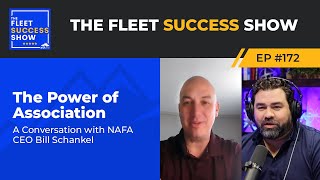
This content was created by Josh Turley. This content was uploaded by Josh Turley. This is a YouTube podcast episode (Fleet Success Show — Episode 172) recorded April 17, 2025, hosted by Mark Campson with guest Bill Schankel (CEO of NAFA). Josh Turley is noted as absent this week. The conversation covers NAFA initiatives and membership growth (3,200+ members), rebuilding local regions and in‑person networking after COVID, expanded online education and certification (including a job task analysis to keep CAFM content current), the 100 Best Fleets awards and Technician of the Year recognition, advocacy work at state and federal levels (including EV policy engagement), and efforts to address technician shortages via collaboration with ASE, community colleges, veterans programs and local outreach. The episode also promotes NAFA involvement, upcoming I&E programming, and resources for new or transitioning fleet professionals.
Chapters
This is the Fleet Success Show dedicated to helping you and your fleet succeed using the experience of fleet professionals and Hall of Fame fleet legends. The show that explores how the pillars of stakeholder satisfaction, intentional culture, resource efficiency, and risk management all combine to lead your fleet to success. We're glad you're here. Now let's get into the show.
Hi everyone, and welcome back to another episode of the Fleet Success Show. I am Mark Campson, your host. Josh is out this week. But I'm super, super, super excited to be joined by my good friend and colleague, Bill Shanko. Bill, welcome. How are you?
I'm doing well. Thanks for having me. Appreciate the opportunity to get on this podcast. I listen to it a lot, so excited to be here.
I'm honored to hear that. We're very, very, very appreciative that you could join. You're actually really being very generous with your time. You're actually on the road right now, right? You just got to your hotel. Poor, poor guy. Tell us about where you are and what you're doing.
Sure, I'm actually in Daytona Beach. I'm at the FLAGFA conference, their spring conference this year. We do quite a bit with FLAGFA. It's a great organization in Florida for Florida government fleet managers and fleet professionals. We did a pre-con session today with them on one of our certificate programs. So we had some people taking our certificate program today, and then tomorrow their conference starts, next 2 days. So looking forward to some great learning over the next couple of days.
Awesome. So, Bill, what's your official title? You're with NFA, you run NFA. Is it CEO? You're the CEO of NFA, correct?
CEO of NFA. Yeah. So I've been CEO of NFA since, since May of 2020.
Okay.
So and I actually joined NFA in 2017. So prior to that, I was COO and then moved into CEO role in 2020 and been CEO since.
So, so tell us, give us— go back a little bit further in time. Give us the journey here in Fleet and and whatnot and kind of how you landed, how you landed there first. How did you get into fleet and then kind of walk us to how you got involved with NFA?
My path comes from— I come from— so I come from more of the association side of things. So my expertise is associations and landed at NFA and then obviously started to learn the fleet industry at that time in 2017 and really an opportunity to learn the industry and learn the people, which has been fantastic. I really enjoy the fleet industry because of the people. I mean, it's a great opportunity and but my expertise really came from running associations very similar to in other industries. So I was in a cable telecommunications industry. I was in actually some scientific professional societies and associations over the years, some construction-related trades. So very interesting, 'cause a lot of the associations all deal with the same challenges and you get to hear what brings the people in those industries together, what's their passion, what are their challenges? And really, my expertise is kind of how do you put all that together and make sure you can add value from an association side And then, you know, really this, as you get into them, you really get to learn the industry and the unique challenges, the opportunities that each industry has. And really it's kind of getting a deep dive and lessons from our members is really how you learn the industry. And that's what I've done over the last now 8 years.
So yeah, that's pretty cool. So we're going to get, we're going to get into some of those challenges in a little bit here, I think. But First, kind of walk us through like what, you know, you said you joined in 2017. Obviously you've had various initiatives and or maybe it's goals or projects, however you want to call them. Tell us a little bit, like kind of catch us up. What are some of the areas of focus that in your, you know, in your leadership role with NAFA you've been working on trying to help us? Because and I think, I think our listeners know this, but just to kind of set the table here, you know, NAFA is the most important if we're being honest, the most influential fleet management organization, you know, for fleet professionals really in the country, North America, perhaps in the world. And so, you know, it's, it's truly central, right? So kind of as the industry goes, NAPA goes and vice versa. As NAPA goes, the industry goes very much so, I think. So I'm super passionate about this. I'm super passionate about some of the work I've been watching you do from a distance. So That's why one of the reasons I'm so excited to kind of have you on and just kind of hear it from you directly. So let's go back in time. You know, you joined in 2017. Catch us up to some of the various, you know, kind of initiatives and important things that you guys have focused on maybe through the last year kind of a thing.
Sure, absolutely. So I mean, a few of the big things. I mean, obviously, you know, we've, we've done a lot. So right now we have over 3,200 members throughout North America, which is one of the highest points NAFA has ever been at. So we're very excited about that. The membership growth has, has been fantastic. Fantastic. And we have a great team of staff back at the office that are doing, you know, putting together the programs that do this. But, you know, we attribute a lot of that to some of the things we've done over the last year, year and a half or so. So we made a concerted effort to really grow our, what we're calling our NAFA regions and local networking groups to get fleet professionals together on a local level. During the pandemic and the change, everybody was, you know, in that virtual frame of mind. And some of the, at the time chapters kind of fell off. People weren't getting together. So we revamped our chapter structure to put it into a local networking group and regions. So we have 8 regions, which RTA is one of the sponsors of that. So we appreciate your support of that program. It's been fantastic. You know, we had over almost 100 local networking group in-person sessions last year. This year we're on pace to do more than that throughout North America. So one of the great things we've done is just bring fleet professionals back together to talk and learn from each other, be there side by side. Something as basic as getting together at a baseball game to getting together for a full day of learning and full sessions. So that's been very exciting. So first and foremost, I think that was one of my initiatives, one of the keys was to make sure we get people back together, back talking in their local area, in their region, and then on a national level to some degree.
Obviously for most of us, we have very solid memories of COVID and what that was like. And I will just tell you sort of just like anyone else who experienced it, having Nafa reopen and getting together and sort of seeing the old gang, seeing the new gang kind of a thing, it was a major turning point for, I think, myself and a lot of professionals, you know, like in the world, in our lives, right? It was, hey, we can get back to having a normal life again, you know, and, and, and maybe even better. But, you know, I just— it was such an important— because you guys really were one of the I don't recall exactly, but I'm pretty confident you were one of the first folks to get back in person.
We got back together at I&E in the end of 2021. We held an I&E in August of 2021, which is, I think, one of the first events. We were the first. We were in Pittsburgh that year. We were the first event in Pittsburgh and kind of on the East Coast that put together a program. It was, you know, smaller in scale. We had to limit what we could do, but it was still an opportunity to get back together. But then, you know, we kind of went from there. Full tilt to a degree to say, let's get people back out. And if people are comfortable, let's make sure we get people together and talking. And that's when we started building that regional model to say, how do we make this easier for people to get together? How do we take out some of the challenges that people had from bureaucratic administrative areas? And so NAFWA kind of took on all of that and built that out. So that was, yeah, so it was something that's very important to us. We also learned a lot from COVID too. Another thing we did over the last year is we kind of revamped our online education because to your point, people love getting together. It's very important to get out and see and, as you said, get the gang back together. But we know a lot of people and a lot of organizations changed the way they're looking at learning too. So we wanted to make sure we could build some of that online education. So we've built out an online Fleet 101. We built out our certificate programs online. In a very interactive way. It's not— it's no longer just a voiceover PowerPoint. It's very— it's a, it's a true kind of an adult learning, um, an all-in type of way with, with checkpoints in, in the middle. So you have knowledge checks in the middle taking these courses. And it's something that, you know, we wanted to get people back together, but we also wanted to adapt and, and evolve to what the industry now wants. So we know more people want to be able to learn, um, you know, in an online environment. So we built—
and they're PJs—
that's a lot of money there too. So, right.
And it's phenomenal. I mean, obviously I've seen it. We have a bounty here, you know, where we actually give folks bonuses for completing their CAFM because we just think it's so important that, you know, people have an understanding of the work that fleet professionals are doing. But yeah, I think that's been a major win and improvement and continues to improve. What I'm excited to see is you're not, you know, I don't mean to disparage anyone, but prior to your time, it stayed still for a very, very long time untouched. And now I see that it's something that's constantly being tweaked and improved. And just your educational offerings in general, there's always something else. There's always another seminar or webinar or event to get together to. I mean, it's just, it feels like, boy, if you want an education in fleet and you don't feel like you can find one, you're just not paying attention, you know, or please Google NAFA then, right?
We're unique in some sense, I think, I think, you know, and you mentioned some of the other, and there's a lot of great fleet organizations out there. And I mentioned like I'm at FLAGFA now and they serve the Florida government fleet administrators. We're unique in a lot of senses because NAFSA really represents the whole industry. So, you know, a lot of people may or may not know, but we're almost a third, a third, and a third of our members of corporate fleet managers, government fleet managers, and suppliers. So we literally do represent the whole industry. We don't have any special niche, you know, of what we do. So we want to make sure we're providing meet the specific needs that fleet managers have in whatever area they might fall in that spectrum of the whole industry. But we also want to make sure we're providing a broad enough knowledge base that, you know, we serve everybody. So the 3,000 members are a wide range of fleet professionals. So that's, that's somewhat unique to NAF and what we are as an organization.
Awesome. That's pretty cool. Any other, any other big wins or big hits that you that you want to kind of call out?
Yeah. So, I mean, I think the one thing that I'm very excited about, we just, we just held a job. So you mentioned our certification program. So over the last about 6 months or so, we've been running what we call a job task analysis. So we actually had a working group of fleet professionals from, from all over the country get together, look at the knowledge base of what our certification program is built on. And actually then look at their jobs and say, what do you still do? What don't you do? What are you doing that isn't in there? And something we're going to do now on a regular basis every 3 years or so just to review that. But then we had that group kind of put together, here's some tweaks and changes that we might have to make to the certification program because things have changed or evolved. There's new technologies. People are doing maintenance different, whatever it might be. And we've made those changes. We send out a survey to all of our members, say, here's what this group of fleet professionals suggested. The members have an opportunity to comment on that. And now we put together this job task analysis, which is we're gonna go back and look to update our content. So you mentioned, you know, not stay stagnant. We wanna make sure that, you know, hey, what was right 3 years ago, especially in today's world, might change or might evolve, or people might not do that anymore, or they might be doing something completely different. So we just have to make sure that we're educating on the latest and greatest. So we're going to keep doing this, what we call job task analysis, on a regular basis to ensure that our content stays up to date and stays relevant to today's fleet professionals.
That's really great. That's great to hear. Oh, what a win. Very exciting for me. As you know, Bill, this is something that you've heard me say and our listeners have heard me say before. I believe in my heart that our industry is, is the most under-resourced industry in the world. Especially in relation to the dependency that the world and society as a whole has on it. You know, you can go out and get a transportation degree, a degree in transit and many other adjacent fields. There is no fleet management degree that I'm aware of. You guys are literally out there filling that gap. You are making sure that there is a certification program, that there's education. And again, it goes beyond just that. CAFM. It's much bigger than that. That's certainly the, you know, a major piece and a foundation. And so in that regard, I think you and I, as well as the organizations we represent, are very much aligned where we literally exist to try to help fleets succeed, to try to help support this industry that, you know, we're passionate about, kind of, you know, needs it. Maybe we got— I don't know what— maybe we're like those, you know, addicted to the underdog or something like that. I don't know. I don't know what it is, but But that, you know, so when people listening kind of hear the excitement in my voice, this is, this is kind of where that's coming from, because I just, it's so good to hear. And like you said, staying on top of it is, it's an indication that, hey, we're putting resources into this. It's serious. We mean it. It's not something we wrote once in, you know, 1979, and then we never touched again. You know, it's very powerful. And that's important. Because once you get that certification, why do you want to keep coming back? Why do you want to keep going to education? Because there's always more to learn. Things are always changing. So I think that's pretty neat. Yeah, that's pretty neat.
You mentioned the underdog. I mean, that's another important, you know, one of the things I think, you know, where NAF is very proud of is carrying on the 100 Best tradition of the 100 Best Fleet Awards. So something I know Tom Johnson, who was kind of an industry stalwart and created this program, you know, over 20 years ago to really recognize, you know, in his words, the fleet managers that weren't getting recognized. There were people that didn't get the recognition of of what, in a lot of cases, the most important part of any business is running their fleet. So I mean, nothing happens without a fleet in most businesses, and that's important. So he built that program. We've taken that program and continue to try to grow it and build on that legacy. So that's another part of what we're very proud of what we do here, because to your point on the underdog, it's a good opportunity for professionals that may or may not get the recognition within their organization to show that, You know, look, we are, we're a ranked organization here. We, our fleet's one of the top 100 in North America and we should celebrate that. So that's something else we build on and we keep building on that program and then also take the learnings from it now. So beyond the recognition, we want to learn from the 100 Best every year. So we build, you know, the 5 key takeaways of what the 100 Best fleets have done this year and try to build some benchmarks year over year to see what changed, what makes a great fleet today versus what made one 4 years ago. So, so we're excited about that too. But it's a big part of that sort of that underdog element of recognizing people that may or may not get recognized within their organization.
Yeah. Yeah. And that's great that you do that, by the way. Helps me, helps my colleagues on the consulting end, by the way. You know, we're bashing heads and trust me, your labor rate is not $35 an hour and you don't want it to be. Look, this is the average of the 100 best fleets. You know, now do you believe it? It certainly helps tell the message, you know, kind of get it across when you're, when you're certain, when you're trying to help folks improve. Yeah, that's a, you know, that's a, that's a super cool piece. And you know, the thing about the underdog too is that, well, to your point, like, because you kind of bringing to the forefront, Fleet is inherently behind the scenes, right? Like, that's, that's the thing about, like, our industry and our professionals, right? You know, you know, the police officer, arrests the criminal, the firefighter, you know, puts out the fire, the human services officer, you know, helps that person in need. Go on and on and on and on. Right. The Department of Transportation builds the streets and puts up the sign and, you know, whatever it may be, the construction, you know, but none of that work can get done in the absence of the work that the fleet team is doing to facilitate their access to the vehicles and equipment they need and to really enable that work to get done. And but we're never at the front of that. We're always sort of behind the scenes. We're always the support group to the internal service. Right. And that sort of thing. And, and then on top of that, I would argue that the overwhelming majority of those organizations, they see fleet as a cost center. Only a few segments in our profession recognize fleet as a profit center. And so it just makes us, you know, kind of always sort of pushed to the back in so many different, you know, conversations and topics and arenas. So It's a great point you make. That's a really important reason why that 100 Best Fleets is super important for a lot of folks. It's literally the highlight of the year. It's just our Super Bowl. It's our Super Bowl, you know. So that's pretty neat stuff. Yeah, I appreciate that. What else you got going for me, man? I'm gonna go— I'm ready to go to new stuff, but you got— you keep hitting me with more stuff. Tell me some more of the other big wins.
Yeah, we continue from the advocacy side of things. I mean, obviously that's That's extremely important for fleets. So we've, you know, we've kind of expanded out our— used to be very federal focused on our advocacy, but now obviously in the last few years expanded to more state focus level because of states or, you know, there's clean fleet rules, different things happening on a state-to-state basis. We've been doing a lot of advocacy on behalf of the fleets. Again, we're, you know, very centered on our positions, but we just— we're looking for common sense. Legislation and regulation. And that's what we're trying to do. One of the big— and our legislative council does a great job with our government affairs committee, does a great job of bringing people together and really educating the regulators, the legislative, you know, local senators, local representatives, state representatives on a federal level too, as well to just say, you know, here's, here's the reality of what it means to run a fleet. Here's, Here's their facilities. Here's the reality of the types of vehicles they need, what they need to do on a daily basis. So as you're putting these things in place, you know, come speak to the fleets first because it's going to impact, as you just mentioned, I mean, it's going to impact service, it's going to impact public safety, it's going to impact education, it's going to impact things across the board. So let's, you know, let's ensure that, that we have fleet professionals at the table talking about things before before regulation, those type of things move forward. So it's been important to us. It's been a great step. I mean, obviously, you know, we've done a lot in different states, things on the federal level. But, um, and, and the nice thing about it is our, our members, you know, love to educate on what they do. So it's, it's an easy story to tell once we, once we get people to know they need to know the story, right?
Right. That's— and that's the key. And that's the key. And I mean, you know, I'm sure there's a whole myriad of topics, but obviously the hot topic that's been in our industry for a few years now is, is EVs. And I'm sure that's the kind of thing that you're talking about, right? Kind of an eyes-wide-open approach. Uh, this is what we can do, this is what we can't do, this is how much it will cost, this is what's real, you know, reasonable, realistic, etc. And just having that, that attitude as opposed to carte blanche, uh, mandates or regulations that don't even take into consideration necessarily how it's going to impact what fleet professionals need to do and the services that they provide for, essentially.
Right.
I mean, you were almost forced into that, right? In the sense that, boy, what industry has been hit more with those kinds of things in the last 5 years or so than us?
Yeah, it has been. I mean, it's, it's been, it's been good for us in the sense that it gave us some new opportunities to kind of engage. But it's, you know, it's, it's something, yeah, like you said, our members were coming to us and saying, hey, we need help. And so we've kind of dug in and expanded our advocacy efforts on state levels and down to municipalities and such as needed. So that's something we've really tried to listen to our members and say, you know, this is happening here. And a lot of times, you know, we don't even hear about it until a member kind of raises their hand. So, you know, we encourage members like, hey, this is— if you hear, start hearing talk, let us know because we need to, you know, get out in front of things. But we're working, you know, right now, I think, you know, nearly 20 states. We have some type of interaction with legislators and fleet professionals in those states, you know, trying to advise them on next steps and whatever their plans may be.
And that's great. And I'll tell you what, that's— I know it's not why you said it, but I'll use it as an opportunity to make a plug here. You know, if you're a young or new or transitioning fleet professional and you're not part of an association, Certainly I can advocate for NAFA. I would argue be part of something like you said, be part of FLACFA, you know, whatever it may be. But that's the reason right there to join NAFA, right? Because you're going to need help. There will be people with experience or with resources to help you. And, you know, give yourself that opportunity to reach out. And you guys do all kinds— I mean, between the meetings, you know, the group emails and the chats and the message boards. And I mean, like, there are a million ways to seek help. There are a million ways to get help. And my experience of, you know, NAFA members is people are ready to jump to, to help you. So if you're a fleet manager, you're a young professional, like, honestly, get involved. It's the best thing you can do. We talk about it a lot when we speak, you know, at various shows. Steve and Scott Rood and I, or Steve Saltsgiver, were at NTEA a couple of weeks back and you know, it was a very common question. There's a lot of new fleet managers there, a lot of young companies and those sorts of things. And, you know, the question we get every year, we've been doing it since '17 and every year, you know, well, what, you know, what do you recommend to new fleet managers? And the very first thing we say is get involved. There's tons of resources. Go get, go participate in NAFWA. Keep going to NTEA. You know, if you're in the States, go to NASIF, if you're, you know, if you're in some of these regional areas that have big associations, you know, whatever it may be, but get involved and get help. And I'm sure you would second that thought.
Absolutely. Yeah. And that's what I, you know, you mentioned our, our community, like our online communities or discussion boards. I've mentioned I've come from different industries. This industry is far more collaborative in the sense that that our members are more than willing to share. I mean, they're happy to say, here's how we did it, you know, to brainstorm ideas. It's, you know, one of the— it's interesting, you always say, what's the value of membership? But, and this is going to sound somewhat cliché, but, you know, one of the biggest values of our membership is actually our members because they have so much knowledge, so much willingness to share, so much willingness to mentor and help people learn. So, I mean, it's been fantastic. And everything I'm talking about here all is the result of member feedback, member volunteerism, members working together to help build these programs. I mean, we're just— our staff is here to just kind of move the pieces around and make sure the things get done. But it all comes from the members' expertise, the members' professionals' background, their Their passion, their knowledge is really what's building all of this. So everything from what we need to do from an advocacy side of things to what we need to build in our certification education programs to our events, it's all coming from the members. So I mean, we have, you know, 3,200+ professionals out there all willing to help teach or train people who are interested in this industry who want to learn more about it. So I mean, you know, definitely get involved because the value is really, you know, it— our programs are great, but The value really is getting to know the, your fellow members. That's really where you get the most bang for your buck.
Sure, sure.
Because no one goes to school for fleet management, chances are you were never formally trained on how to successfully lead a fleet. That's where the Fleet Success Playbook comes in. The Fleet Success Playbook is your guide to building a safe, reliable, and efficient fleet that provides exceptional service. Learn all about the The Four Pillars of Fleet Success: Stakeholder Satisfaction, Intentional Culture, Resource Efficiency, and Risk Management. Get nearly 100 years of combined advice on common challenges, practical solutions, actionable tips, and real examples from fleet industry experts who have been there and done that. Visit www.fleetsuccessplaybook.com to request your copy today.
So what's on your mind these days, Bill? What are some of the things that you're kind of figuring out how to tackle and maybe just started tackling or anticipating in the, you know, what's, what's, what's the hot topic or what's the, you know, whatever it may be, kind of what are you seeing as you're looking out in the road ahead of you there?
Yeah. So I think, you know, we're, we're continuing to work, look at, look at collaboration with other organizations. Like I said, you know, NAFSA is And this sounds, not to sound in a weird way, but kind of the Big Ten as we oversee, we're over all the different fleet industry. But there's a lot of regional groups. There's a lot of specialized kind of fleet groups out there. How do we bring kind of everybody together? That's something we're looking at. How do we bring everybody together and ensure we all, you know, are moving in the right direction, moving in the same direction to really help the fleet industry? You know, not around, one is better than the other, but how do we best collaborate with all these different groups? So we've been working with a lot of groups in that sense. We've been working with ASE to help get closer with them on technician training and some groups there, because we know obviously technician shortage, technician training, succession planning for your technicians are all major challenges for our fleet professionals. So we're trying to get more involved with, with ASE and also some local technical trade schools around the country and engage them with our members to not only help them solve the problem of technician shortages and technician training, but also to start putting in the minds of a lot of these technicians that there is a career path here that goes beyond technicians, that you can, you can move into a fleet professional role. So, I mean, for NAFA, there's, you know, selfishly, there's a good opportunity there to say, The more of these technician groups we get involved, the more opportunities are for future members because they can easily grow into a fleet professional. So these are— those are some of the big things we're trying to do is, you know, how do we— how do we get this outreach and how do we ensure we're all collaborating, you know, in a world where, you know, you read different things about how divided and such. I think like we can— we can really work together to bring the fleet industry together and say, hey, you know, there's a lot of challenges. We all need to work in this. To move things in the same direction. And that's what we're trying to do from, from not only the other fleet industries, but also some of the technician groups. We've also been working with groups that their main goal and mission is not necessarily on fleet-specific challenges, but, but as we talked about before, their members all rely heavily on fleets. So we're working with a couple apparel and uniform delivery associations bottled water associations, you know, some of the— there's different landscaping associations that their focus is on how to be a better landscaper, those types of things. But yet they rely on a fleet to make sure they can do that. So we're trying to work with those types of groups as well to say, you know, hey, you don't have to be an expert in fleet. We have that. We have the people that can help you in that. But you want to make sure that, you know, your members to do what they need to do. Are taking care of their fleet, that they're running, you know, an efficient, a safe, and a sustainable fleet. So that's really what our outreach is all about.
Ah, that's pretty neat. Yeah. And you'll, you'll even help— I mean, you, you run the gamut. You'll do, you know, these kind of national large sort of overarching projects. But if you get a call from a local fleet professional, they say, hey, we're having trouble finding a mechanic, you and, and the members, you'll help people even at the very one-on-one level when it's necessary, when that's what it's called for, right?
Yeah, we've been working with local, uh, local community college groups that have, you know, trying to put together technician training. We've been trying to, you know, uh, we working with Northern Virginia right now to put together a local, uh, a fleet advisory group for them of our members, say, hey, you know, what do we need to do to train our technicians? And so we're happy to say, hey, what do you need? We can— we have 3,000 people that are willing to help What do you need them to do? We'll put together a group that helps look at next steps. And we're very much on, you know, let's take that first step and, you know, then we'll figure out the next step. But let's just make sure we take a first step. You know, you mentioned earlier in today's fleet world, we can't really wait and see and look for perfect. We got to look for progress. So that's what we're trying to do.
Sure. Yeah. Yeah. I mean, and this is a big issue, right? Like, and we've known about it. I think it was— don't hold me to this. It could have been a different firm, but I think it was Oliver Wyman did a study in '18 and they predicted that in '24 there would be more technician positions than technicians. Turns out COVID accelerated that. That became true, I think, in 2022. And so a lot of what we're talking about here is essentially trying to address that, right? We're seeing it all over the country. I mean, literally all over the country, you know, folks can't retire or they try to retire and they bring them back part-time, you know, positions that are open forever. I haven't talked to a fleet manager in at least 2 years that doesn't have an open position or hasn't had an open position kind of long-term. And we know it's bigger than us, right? It's challenges around the skilled trades in general. And so you're seeing even broader organizations, right? I think Mike Rowe has an organization trying to help, you know, fill that skilled trade gap. And so it's really interesting. And mechanics obviously is near and dear to my heart, technicians, because of fleet, but also because I, you know, some of the data I've looked at recently has me scratching my head or has me, I don't know the right the right phrase here, Bill, but I think the work that technicians do is not only important, but it's difficult. It's not easy being a great tech. And yet, you know, right now, frankly, from what I can tell, pay lags relative to the other skilled trades. And so I don't know exactly the solution there, but I know that that's kind of also on your mind a little bit. And how do we help with that? How do we solve that? I know it's not all about pay. It's not. It really isn't. We talk here all the time about culture and the importance of that. And you've mentioned earlier, super important is having that upward movement, that opportunity for a career path, especially now as we're, you know, we're seeing some signs of light, of hope with the Gen Zs and the younger folks, you know. So I think that's great. And yet at the same time, boy, if I had a— if I could, you know, wave a magic wand or play God for a day or whatever, you know, I would certainly try to do something around that. I think the work our folks do has always been extremely complex and only growing in complexity. And again, the tolerance for being bad at it is so low because you're talking about people's lives, right? So I don't know. Do you have any thoughts on that?
No. Yeah, we've— so we've been trying to, you know, like I said, we've created a technician track at I&E. So we have our I&E coming up for this year. And we created a technician track trying to encourage, you know, the fleet professionals to bring their technicians to that with some specific learning for them at I&E, but then also give them the broader picture of what fleet is so they can, they can go to, you know, technician training specifically designed for them, but then go to some other training that shows them that upward, that upward trajectory like you mentioned in your career. We created it as part of the 100 Best Fleet Program. We created a Technician of the Year. So we, you know, and that's been growing. This will be year 3 for that. We've had more and more submissions to that because it's, you know, money is important, but it's also around recognition. So if a technician knows that their organization put them forward to be nominated for Technician of the Year, that's important for them. They understand like, hey, this— I'm getting noticed, I'm doing a good job. So we've been building some programs like that too, to recognize technicians. From the fleet professionals to say, I want to recognize you for the work you're doing. So we're trying to build more of that. And I think, you know, and then some of these other potentially mentorship programs we're looking at building through some of the technical schools and trade schools, I think is something else that'll be really valuable down the road for them. We've been also talking to, you know, some groups on veterans as well. So, you know, transitioning veterans to say, is there opportunity for NAFSA to get involved to help train those, those individuals that are coming back in the workforce, either in the technician side of things or, you know, that came from logistics into fleet professionals. So those are some other areas we're trying to build on to help, you know, help fill the workforce that we know is needed, but also just bring more people into the industry.
Yeah, sure. You know, we were talking at dinner a couple of nights ago and, you know, with some colleagues. And one of the things that dawned on me is I really encourage technicians out there, if you're listening to this, if you're friends or family with one, go get a job in fleet. I'm not— I mean, no, no disrespect or harm to my friends in the, in the OEM world. You know, it's very important work that they do and they need mechanics just as bad as the rest of us do. I hear that. But the thing about fleet is, is you just get this broad experience on such a variety of equipment, generally speaking, or even if you're in a vocational fleet, it's usually complex equipment. It's a lot more than, frankly, changing an oil change for a sedan. And I just think that if you really are career-oriented and you're trying to consider upward movement and other future opportunities, having that diverse range of experience of working on different kinds of equipment, solving different kinds of problems, I think is in your long-run best interest. You know, even if it means right now, you know, maybe taking a dollar an hour less kind of a thing, you know, You know, I just think there's so much value and in the long run is going to really help you with that upward movement piece. But, and that's another piece you do that kind of goes on, you know, is this coaching element, right? Like helping people with their careers and so forth. It used to be just the message board. Here are the open positions. But if people come to you and say, hey, you know what, what do I do? How do I advance my career? What do you recommend? You'll put them in touch with a mentor. You'll, you'll, you know, give them some advice. You'll do various things. I mean, that's just, you know, really, really neat stuff. I know I'm kind of harping on it here, but, you know, I think, I think so many people have had the experience that I had when I was entering Fleet, and that's why I'm passionate about it, which is you don't even know the world is out there, right? Like, you, you live in this little, this little bubble, you know, I mean, you know, I recall going from having no clue that there was even a fleet management industry, forget a NAFA or this or that. And, you know, sort of overnight just being exposed to it. I went and talked to Ron Gittleman up at Yale and, you know, said, hey, you guys have been managing vehicles for a while, you know, what's going on? He said, oh, the first thing you got to do is join NAFA. And I went, NAFA? What's NAFA? Right? And there's this whole world out there. And so you know, for us, we kind of take it for granted because we live in it. But there are people who maybe going to come across this, are going to hear this, and they haven't been exposed to that. So I'm going to pause a second here. Tell us, when is the I&E? Tell us the website here, both for NAFA as a whole. And, you know, give us some information if folks are interested in kind of joining and getting— and in general getting involved, etc., etc. What— where should they go? What should they do? What do you recommend, etc.? Yeah.
So our NAFA I&E this year is you can go to nafainstitute.org. Um, that's the I&E's website. We are going to be in Long Beach this year, Long Beach, California, this year, the 28th through the 30th of April. We have some pre-cons happening on, uh, you know, that, that week as well. It is a great opportunity to get together. We have a, a great expo hall to, to take a look at all the suppliers that are there. We announce our 100 best winners We have multiple tracks from emerging technologies to leadership to, as I mentioned, technicians to operations to EV sustainability. We have sessions on pretty much that run the gamut of everything that people want to know about. They're all peer-provided and peer-reviewed. That's important to us. These are things that people submit ideas to speak at this conference and we have a whole group of volunteers that look at those. They rate those based off of of, you know, how they feel the industry needs those. And we put together the top ones into the session. So it's going to be a great couple of days in, uh, in Long Beach. We're very excited about that. Every year we get, you know, over 2,000 people at that event. So excited for Long Beach this year. And, and we're also going to announce the 100 Best there. So it's another opportunity to come out and see who the 100 Best will be. So that'll be announced this year. So that's a NAF institute.org if you want to go there. If you just want to find out more about NAF, you just go to nafa.org, look at all the programs we have. Um, you know, if you're not a member, highly encourage you to join. But, you know, certainly see, you know, what, what we're all about. Um, you can also, you know, look at the, the calendar, see what's happening in your area, because as I mentioned, we have the regional local networking groups. So we have, you know, almost 100 different programs happening over the course of this year. So there should be one in your area, I'm hoping, that you can get to. If you just want to try to reach out and dip your toe into what NAF is all about, definitely do that. And as you mentioned, I mean, definitely if you have ideas or you want to find something and you say, I don't want to, I don't want to go all in with CFM, or I don't want to, you know, I don't— just reach out. I mean, we can find a way to get you involved on a starting level. We can introduce you to members in your area. We can, you know, Ensure you talk to people that if you have a specific problem, we'll know somebody that can probably find an answer for you. So, you know, definitely contact us, reach out. I mean, my information's on the site. I'm happy to take people's calls and talk to them about, you know, we have a lot of even suppliers that call and say, what do I need to do to get involved in the fleet industry? Happy to have those conversations and just say, you know, here's some general thoughts. But, but definitely go to nafa.org and experience what's there and see, you know, see if it makes sense for you.
So, Bill, with that, you know, I wanted to kind of ask you one more question here. You know, you, you are in an interesting position that you, as we've kind of been talking about, you get, you get feedback from everywhere, from literally thousands of folks. You got a team of folks collecting that feedback, looking at it, every segment, every corner of the fleet management industry, what are some things that, you know, kind of like looking out into the future that you see that maybe are going to be future trends or future issues to solve or, you know, what's coming around the corner? Maybe, maybe some of it is more of the same. Maybe not. Maybe some of it we don't see, you know, what, where does your mind go and what problems are you trying to help the industry solve?
Sure. So I think we hit on a little bit of obviously, you know, the, the issue of trained employees that we're going to need. So we're going to need to fill that gap. So obviously, we talked a lot about that. I think that's important. But I think, you know, the technology that's changing so fast, I mean, from AI to just, I mean, vehicle types and such is going to be a big challenge. I think there's a lot of unknown now from the regulatory environment, which I think is somewhat of a challenge. As fleets, you know, need to start looking at infrastructure and investments and things. And that's, you know, one area that I think NAFA needs to hopefully get to the point where we can help with is kind of ensure that there is a direction from a regulatory kind of legislative side of things. But then, you know, I think the opportunities are great from— and another thing, you know, NAFA is launching and getting more involved in this year is a safety certificate program. So I think, you know, a lot of the technology is going to— and one of the things that we talk about is how do we make fleets safer? I think there's a lot of opportunities with a lot of the new technologies that's going to make fleets a lot safer in the long term. From a fleet manager role, I think, you know, one of the challenges is as things adapt and change and evolve so quickly, is how do you ensure the foundation of all this, your fleet policies? How do you keep them up to date to ensure that they are— we talked about keeping our own education up to date from an AFIT perspective. But in your own fleet, how do you keep your policies and your baseline of how you manage everything up to date as things are changing on a regular basis? So that's something that we're hearing a lot of too. How do we, how do we do this? How do we make sure we're meeting the, the technology innovation with the, the operational side of things? So that's, you know, that's, I think, something that NAF is going to play a big role in. I mean, obviously there's, there's a lot and we represent a lot of different suppliers and different solutions and such. So, you know, where, where everything shakes out is going to be hard to say. But I think, you know, It's exciting times for everybody, for sure. And, you know, I think we're excited to keep evolving what we can train people on and ensure that that workforce is there to provide the best decisions on whatever those new technologies, the new vehicle types, new regulations bring. So that's really where I look at NAFU playing in that long-term role and challenge.
Sure. I mean, I think that's probably among the safest bets if we were betting men, right? When you look at sort of just the curve of technology change and, and the influence that it's had on society as a whole, but certainly our industry. I mean, we can go, you know, EVs is the easy one, man. Just, you know, the millions of lines of code in these vehicles. I mean, how many vehicles on the road today don't even have a driveshaft anymore? They're basically playing a video game. It's a, it's like a Bluetooth signal or something going just mind-blowing, you know. And, you know, we're old enough, I remember very clearly when you talk about safety and technology and together, I remember when airbags came out and it was like, wow, airbags. And they were in BMWs and Mercedes and Cadillac, and it was only for the driver. And, and, and now it's like the lowest trim of the cheapest model that you can buy has side impact airbags and knee protection in the airbags and I mean, you know, you can't— you can't name it. The car stops for you, it starts for you. It doesn't let you turn left, it doesn't turn you right. So if there's one sure bet, it's that technology will continue to be a major influence on the challenges and perhaps in many cases the opportunities that our industry is facing. I think that's a— I think that's a pretty fair one. All right. So I lied to you. I'm going to ask you one more question. That last one was supposed to be the one more. I lied. Forgive me. I'm going to actually ask you a couple of couple of quick ones. Ready? First one is, if you were, if you were, you know, brand new fleet manager, just entered the industry, says, hey Bill, meet fleet manager newbie. Bill, give me some advice. What would you recommend to me? What's the first couple of things that come to mind? What would you say to this new fleet manager?
So I'd probably— well, the first one, I'd go back to what Ron Gittleman told you, is join NAPA, obviously. That would be the first one. I think it's just building that cohort of experts right away, whatever you need of peers that can be your experts. A lot of— and we hear this from our members all the time— you get put on an island pretty quick in your own organization. So make sure you build some bridges to other islands islands that are good islands for you to get to. So definitely build those cohort of peers together and say, these are people that I can go to right away, because you're brand new and on day 2, you're going to get a question that no one else in the organization is going to be able to answer probably, and they're going to expect you to answer it. So you have to figure out how to get there, how to get that answer. I think it's finding those experts. That, that are willing to— might not have the answer, but at least help you talk through it.
That's phenomenal advice and very well said. Okay, here's my other couple quick rapid-fire ones. Ready? Favorite movie of all time?
Probably be Field of Dreams or The Godfather.
Oh, two classics.
Two very different experiences.
Very different, but, but classic. Okay. All right. Um, do you eat cereal?
I do, yes.
What's your favorite cereal?
So I eat a lot of, uh, kind of granola things. And I, I guess, do, do I recount oatmeal and cereal? I eat oatmeal.
Yes. Okay, oatmeal. All right, oatmeal and granola. Okay. All right, let's see here. Uh, do you listen to music?
I do, yeah.
Favorite band or group or performing artists of all time?
Uh, so I'm probably, uh Probably going to say Billy Joel or Harry Chapin, a less known one. But Harry Chapin and Billy Joel are probably two.
Very cool. Pulling it out. All right, Bill, this was an absolute pleasure. Thank you for taking the time to do this with me. It's— I've been wanting to get you on. We've been talking about it now for at least 5 months, maybe more than that, 6 months. So I genuinely appreciate you taking the time to do this with me. It means a lot. I know Josh feels the same way. He couldn't be here today. I hope you will come on again.
Absolutely.
This was fun. You know, if he's nice to us, maybe we'll let David on too. I don't know. We'll see. But no, I would love to have you guys on. I really appreciate it. And I hope you had a good time.
This is a great time. Yeah, this is great. So, yeah, I'd love to do it again. So, and thank you for what you guys do. We really appreciate it. You know, on behalf of the fleet industry, you guys, you provided a great service. So appreciate it.
Well, thank you very much. That means a lot. That means a lot, especially from you. So, all right. With that, have a wonderful day and we'll say goodbye to everyone online. Take care, folks. Hope you have a good one.
We hope you enjoyed the show. If you'd like to help support the podcast, please share it with others, post about it on LinkedIn, or leave a review. Want to learn more about our fleet management software Fleet 360? Check us out at rtafleet.com. If you want to learn more about having your fleet evaluated by our consulting team, go to fleetconsulting.com.
More from Josh

Episode 227: The Hidden Costs Killing Fleet Operations (It’s NOT What You Think)


Episode 225: Are Certifications Still Worth It? The Truth About ASE, CAFM & Fleet Leadership




Episode 221: The State of Fleet Management: Education, AI, and the Technician Crisis with NAFA’s CEO

Episode 220: Motor Pools Are Back: Right-Size Your Fleet Without Breaking Operations

Episode 219: Stop Guessing at Downtime: Status Strategy for Better Availability #podcast #fleet

Episode 218: Fleet Predictions 2026: AI Hype, Technician Shortages, & the Next Era of Fleet Managers

Episode 217: Why Replacement Planning Solves 95% of Your Problems #podcast #fleetmanagement #fleet