Episode 174: Off-Road Leadership: Fleet Success Lessons from Baja California #fleetmanagement
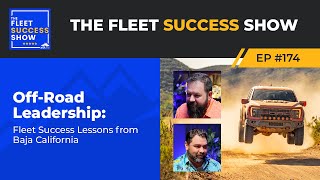
In this episode of the Fleet Success Show, hosts Josh Turley and Mark Canton debrief Josh’s recent off‑roading weekend in Baja California and extract a series of concrete leadership and fleet‑management lessons. The conversation moves from vivid anecdotes about high‑speed desert driving, radio convoy protocols, unexpected encounters with Mexican authorities, and a broken‑leaf‑spring repair, to broader reflections on how those experiences map onto the four pillars of fleet success – stakeholder satisfaction, intentional culture, resource efficiency, and risk management. Key takeaways include the power of forcing functions that compel presence and focus, the necessity of over‑communicating clarity in a convoy (and by extension in a fleet), the importance of recognizing fatigue and deliberately scheduling rest, the value of preparedness and carrying spare parts for on‑the‑fly repairs, a “no person left behind” mindset that translates to a “team number one” philosophy, and the reminder that a strategic plan (the map) is not a substitute for reading real‑time terrain. Throughout, Josh emphasizes humility, the need to admit vulnerability, and the benefit of reconnecting with an inner child to sustain passion. The episode closes with actionable bullet points for fleet leaders: schedule rest, prioritize clear communication, treat every team member’s health as a safety net, and adapt plans to the actual conditions on the ground.
Chapters
This is the Fleet Success Show dedicated to helping you and your fleet succeed using the experience of fleet professionals and Hall of Fame fleet legends. The show that explores how the pillars of stakeholder satisfaction, intentional culture, resource efficiency, and risk management all combine to lead your fleet to success. We're glad you're here. Now let's get into the show. Hey, welcome back for another episode of the Fleet Success Show with your hosts, Josh Turley, Mark Canton.
Hey, everybody.
It's awesome to be back in studio and back on the podcast. Took a little, little break over March for a little while.
Yes.
But it's been, been busy. We've been going through a lot of stuff. Yeah. We just had our Spirit Week. We're going to do an episode on that.
Yep.
But yeah, this, this last weekend, I know I just posted about this on LinkedIn. Yeah.
I'm excited to hear about it.
Yeah.
We thought we'd do it live. Mark wants to hear about it. Josh went and did a little off-roading this weekend, and I'm very jealous.
And by like off-roading and this weekend, yes, it was an entire weekend trip, right? Uh, something— this is the second time I've done it, and I'm probably gonna make this like an annual thing.
Cool.
But those who don't know, like, we're down here in Arizona, right, which puts us in very close proximity to the legendary Baja California, right, which is, you know, south of the border, and it's, you know, over to the West Coast. And it's where they have the Baja 1000. They've got the San Felipe 250. And so there's a lot of off-road racing that happens, right? It's, I'm gonna say it's a little bit lawless, 'cause it's not the States.
Right.
And it's pretty much like anything goes. You're on these dirt roads and, you know.
So cool.
It's very different for people that are back East. You know, like even coming out here to Arizona, we have a lot of free use. You can go out and pretty much go anywhere, which I've taken you out in the truck.
Yep.
And you know, it's been, It's radical.
Yeah.
The things we do, it's cool. Baja is on a whole nother level, right? So yeah, so we thought we'd talk today about life lessons from the desert. Yeah, right. Just some of the things I'm always— whenever I go and do things, I'm always thinking about what's the takeaway, right? Right. How do I apply this to life? What's the lesson I can learn from this? And I'm always looking for a deeper meaning. I don't know, maybe it's a character flaw and I should just be happy with being in the moment and experiencing something, but I don't know. I always like to think back and reflect after the moment. And this is true because in the moment you're actually not thinking anything but like, oh shit, I have— how do I get through this?
Exactly.
You know, how do I keep the truck from crashing? But you get through the end of the day and, you know, after the adrenaline settles a little bit, like, man, that was just an amazing time. And I get a chance to kind of reflect on what are the life lessons that I learned from any of these experiences.
Right. So let me pause you for a second. And I kind of want to like set some baseline, as you mentioned a bit about where we are. You know, so as an East Coaster, like, our off-roading is probably a little bit more like, you know, rock and mud climbing and creek crossing where we can. And it's— and it's often snow is part of our experience there. So a little bit more like the folks up north from here, Colorado, and up there, they do a lot of rock climbing, slow stuff. That's not what you're talking about here. You're talking about like full throttle, high speed, high speed racing in the dirt, in the mud, in the dunes, and whatever else it may be. So really cool thing, very different than what I think a lot of people experience. So let's, let's pause on that. So that's, that's pretty neat. And the other thing is you said something that's really important, right? Because you went on, you went on vacation, right? This was, this is what you chose to do.
Yeah.
And, you know, I can relate to this, the skier in me, right? Like, like you said, you're like, oh shoot, what the heck am I going to do to keep this car from flipping over? That is so freeing, right? So this is what I, you know, like in that moment, if you're thinking about anything else, If you're thinking about that thing that's on your honey-do list, if you're thinking about that thing you're worried about at work, you're going to crash the car. Yeah, you cannot do that. And so it's, it's exhilarating, but it's, it's awesome because for those moments you are forced to only think about the thing that's right in front of you. Yeah, what a good cleanse, man. What a good cleanse.
Just a total mental cleanse.
Yes, yes.
You get the adrenaline dump from it and then you're like Oh, that was awesome. Uh, but it is, it's one of those things that it forces you— we call them forcing functions, right? When something forces you to do something, uh, that doesn't come naturally, and that's a forcing function to clear your mind and just totally be present in the moment, focusing on the task at hand, right? Um, and in this case, you know, you're doing anywhere from 50 to 100 miles an hour on a dirt road. The task at hand is the next 50 to 100 feet in front of you, right?
Exactly.
Because, you know, any little pothole, any little whoop, any little turn Um, any number of things. Barbed wire fences everywhere. You just have to watch out for crap like that. Um, you know, I, I really racked the, the sidewall of my tire, you know, totally popped it. Why? Well, because I lost— I couldn't see that rock jumping out at me. So you just constantly got to be aware and vigilant, right? Um, there's random people on the trails, there's random cars, and there's nothing more emasculating than here you are in this big old truck romping down, you know, you're like, oh, I'm so awesome.
Yeah.
And then you're going down and like, here's a little Geo Metro on the same trail you are, just bouncing along, right? You feel terrible for him, but at the same time you're like, oh, I guess I'm not that cool. So, but yeah, definitely, yes. As I thought back on this last weekend, one of my favorite part of going down there is the people. The people are amazing. You know, you really get to know like the Mexican people themselves outside of the touristy areas of the country.
Sure.
And it is just very humbling. You really come to understand and be grateful for what we have here in the States, you know, the rights, the protections that we have, due process, laws, things of that nature. It's completely different. You take things for granted like infrastructure. One of my favorite things was last year, and it's sad to say it, but I was learning that, you know, they have their water turned off every 3 days, which is just, it's unfathomable to us. It's like, what do you mean? You're like, you don't have clean drinking water? Yeah, no, you've gotta have a cistern that you put the water into. Of course, those of us from the States, we can't drink the water down there because they don't do things like chlorine, fluoride. They don't purify the water, which some people here don't like that. But hey, it lets you drink the water because down there it's a ton of bacteria. And so your gut has to get used to that. Otherwise, Montezuma's Revenge is a real thing and you will not leave the toilet for a little while. So you don't drink the water. You take things for granted like electricity. you know, steady state of electricity. Things like standards. I love walking into a hotel or something like that in Mexico, and you'll reach for where the light switch should be. And here you don't— like, because of like codes and ADA and things like that, there's a standard height that all light switches are supposed to be at. We go to Mexico and it could be up at shoulder height, it could be down by your knees, the electrical outlets could be stacked up like one next to the other, right? Uh, you know, like there's no standardization or codes usually. And so it's just kind of like whatever it takes to get the job done, right? It's incredibly scrappy and it's inspirational. But like you take some of these things for granted here in the States. And so it's something that for me is always very humbling. It's very grounding. And you really just get to know how amazing these people are that are down there and they're just trying to get by. And you see the worst of it too though. You know, there were several times we got pulled over and you know, naturally the local police, typically what do they want? Dinero, cerveza. It's one of those two things. So you have to kind of play dumb tourist and be like, no habla español. ¿Cómo está? ¿Cómo está? ¿Cómo está? ¿Cómo está? ¿Cómo está? ¿Cómo está? Like, you just, you know, you have to really kind of play the dumb gringo a little bit, but it's still fascinating just talking to 'em. Probably the scariest thing that we had was we were driving through the forest up in the Lake Country and just humming along, and all of a sudden out of nowhere, we surprise a set of National Guardsmen, right? Which is like, this is the holdovers, if you remember, like the Federales. Well, the Federales were corrupt, so they disbanded.
This is the new Federales, right?
Well, we came up on these guys and they were not ready for us.
Scared the crap out of them.
Scared the crap out of them. So what do they do? Defensive positions. The guy jumps up on his technical. He's got the.50 cal at the windshield of our lead truck.
Right.
You want to talk about pucker factor? Let me tell you, when you get put at gunpoint of somebody who doesn't speak English, that's pucker factor.
You have no way to talk your way out of it.
Yeah. So the rest of us all kind of slow roll, but you get to looking at them and like, these guys are just, you can tell they're just genuinely good people. And they come by each truck. They're like, hey, you know, do you have a translator? ¿Se habla español? Do you know Spanish? And they just kind of go through, they look through your stuff and they're like, all right, you know, you guys aren't a threat. Just keep on moving. But to watch them, like the first time we rolled in was they're all fanning out tactical positions. They got their big old FAL rifles.
And in fairness to them, they don't have any clue who you are, right? So they're just—
We could have been cartel for all they knew.
Yeah, exactly. They're just preparing to defend themselves. Right. Yeah.
But yeah, that was probably one of the scarier moments. But we got through that. It was 5 minutes. It's like, all right, you know, let's— everything was fine. They were laughing and joking. Poor trigger discipline. We got to talk to them about that. The sergeant looked like he was about ready to blow his foot off. But for the most part, it was a pretty pleasant experience. So one of the things is I posted about this on LinkedIn, but there's a lot of things that I learned being a part of this group, just in like how to handle things in life, you know, things that I learned from Baja that I have applied as a leader or, you know, in my organization. And one of my favorites was, it's actually around communication.
Okay.
So one of the things we do is we all have radios, you know, UHF radios between all the trucks. And so we will sit there and communicate And, you know, some of us have 110-watt radios, others it's 50. Some of us are using little 8-watt handhelds, right? And the power that you have dictates, you know, your distance, how far can you transmit and things like that. But things like line of sight and how clear things are. And what one of my favorite thing is, is just how quickly you have to communicate. And so what'll happen is the lead truck is going along and their job is to call out hazards or call out things that the rest of the you know, the truck need to, you know, the truck line convoy needs to know about the trail, right? If there's oncoming traffic, that's probably the biggest threat is oncoming traffic. There's really nothing worse than you're doing 80 miles an hour into a turn and all of a sudden there's a car coming at you, right? And so for us to stay safe, like, we have to be in constant communication up and down the line. And so as we pass something, you know, Truck 1 will call out, hey Truck 1, you know, make sure you stay to the left on this turn. There's a huge washout or something like that that's going to cause some damage to the truck or there's oncoming traffic. And then truck 2, as they pass the obstacle, truck 2 passed washout, truck 3 passed washout. And so every truck knows like, hey, I'm truck 4, truck 3 just passed this, it's next. And so you're just constantly staying in communication with one another throughout this entire process. And I think about us, we talk about this all the time with creating clarity and this idea of over-communicating clarity. And as leaders, we feel like, well, truck 1 called it out, I don't need to keep calling it out.
You keep saying it, right? Almost fearful, right? You don't wanna be annoying or sound like you're harping on something, right? Yeah.
Well, I don't wanna say something. What if somebody else needs to say something and I'm just saying the wrong thing? And so, but it just reminded me of just how important it is for us as leaders to over-communicate clarity and just constantly repeat ourselves and repeat ourselves and tell ourselves, right? And then by the time you get to the end, we call the last guy sweep. And so the last truck driver is, they're kind of sweeping the course. They'll say like, "Hey, sweep clear of obstacle," or "Sweep clear of oncoming." And that helps us know that everybody got through safely, soundly, and we can move on to the next thing. But it's that communication, that constant communication, and then closing that feedback loop that tells us we can move on. So definitely one of the things, you know, I've gone out with people that don't have radios. I was talking to James, like he was on an off-road trail this same weekend in a different part of the country. I was like, oh no, we didn't have any radios between the group. I was like, how do you communicate to one another? It's like, honestly, you just, you drive what you can see and that's it. Yeah. Now I will tell you is that that communication does come at a cost, is it does allow you, maybe this is a good thing, but it allows you to move faster. If I didn't have that communication, then I would have to pretend that I was that lead truck every time. And that lead truck, their job is kind of get out far enough ahead of the group that they can go a little bit slower and drive a little more cautiously because they don't know what's coming around the head.
Right.
Nobody's telling them that there's an oncoming car. They are the oncoming car. Right. And so for that lead truck, like, they need to be able to communicate back to the rest of the group very quickly.
Right.
But if you don't have that and you don't have that communication, then every one of you has to kind of drive what you can see. And so for that, what ends up happening is you all go a little bit slower and you all drive a little more cautiously. It's probably a good thing, I guess, but In the end, it helps us stay a lot safer and a lot clearer about where we're going. Left-hand turns, that's another one. You're out there in the desert and you might have GPS. Hopefully everybody's got GPS map, but sometimes it stops working, it freezes. You don't have cell service. You lose your GPS signal. The iPad dies, who knows? There's a million reasons why your map could suddenly be wrong. And all of a sudden you've got a left and a right turn to make. You gotta know which way to go. So one of the things we'll do is we'll hold a left or hold a right. And the truck in front of you will hold the turn until you get there. You get there, then you hold the turn until the truck behind you comes.
Right.
And so, you know, it's another way that we help communicate and, you know, communicate changes in the course, things like that. We had one, we were coming across and the map had us going through and we show up and all of a sudden the field's flooded. Like, there's no way through this road. It's— and so all of a sudden we had to follow a different course and we had to communicate that up and down the ranks. And so your ability to communicate is what's going to allow your team to go faster, to execute, and to, when things change, to be able to adapt to the changing circumstances and move on to the next challenge.
Yeah, that's fascinating. So what a beautiful analogy, right? Not only to work for sure, but really to life if you think about it. Yeah, you know, it's even bigger than that, right? That's, that's interesting. What, you know, really cool. And it's applicable, uh, yeah, I can't imagine, right? It's applicable at sort of the company level. Yeah, it's applicable at the department level, the little individual working unit level, right? Overcommunicate, make sure there's clarity, and it lets you go faster. It's kind of like, um, the way to accomplish two heads are greater than one and three heads are greater than one, you know, kind of a thing, right? Like, um, or what's the expression? You're better with the clichés than I am. The, uh, many hands makes light work or something like that. Is that, is that, is that, is that what it is? You know, it's the same idea there. That's really interesting. It's funny because, again, I think the folks on the podcast know, many cheeseburgers ago, I was an avid— I was an avid skier. I love off-piste skiing, you know, skiing the trees. And we apply almost the exact system that I'm listening to you describe, you know. We would— so the person in front's job was to scout. We would call it out, you know, ice patch, no snow, right?
You guys have radios or anything?
We didn't have radios. We were literally screaming in the woods.
Yeah, yeah, yeah. Turn behind you, you're yelling at things.
Exactly, yeah. We would scream. And so there are other folks though who do have radios, and even better than we were, right? And they have the radios here and they have the tile just like the, uh, the patrol guys do. So you'll see that for sure. And yeah, we did do like little waves and kind of said what we want, and we would pause and hold turns, exactly what you said, so that you kind of know. Because you get on the side of these mountains and you can go anywhere, you know. So it's kind of interesting, neat. It's different, but it's the concept's very similar. It sounds like basically the same thing. So pretty cool stuff. How did you decide where to rest?
So where to rest, it would typically be flat spots, right? So you don't wanna rest on the side of a mountain.
Right.
And by rest, do you mean like stay at hotels or just like take breaks?
Take a break. Okay. Yeah.
Yeah, so take a breaks was basically you get to kind of the end of a section, and you kind of feel it as just, hey, we're almost about to get onto a paved road. Those are usually great times to stop and kind of regroup. If we got too far stretched out, right? So it was something that the lead truck and sweep were constantly listening to is how far between the trucks, right? So if when you hear things like truck 1 pass, you know, washout on the right, and then within 2 seconds truck 2 washout on the right, that means they're really close together.
Right.
And then if there's a huge long gap, 30 seconds, a minute, you know that truck 3 is about a minute behind truck 2.
Right.
And that means that truck 4, and you just kind of add it up and you realize that, oh, very quickly, like we're 5 minutes apart. You know, and at 60 miles an hour, 5 minutes is 5 miles. The big powerful radios, they'll go 10 miles, not a problem. But the weaker radios will actually start having a hard time hearing each other beyond probably 5 to 10 miles of mountainous range. And so you have to start worrying about communication now, is now people are having to relay messages to each other, which slows down communication. It's gonna slow down the group. And so you'll tell the lead truck like, hey, slow down a little bit, or let's regroup at the next turn. And so you just kind of try to regroup, get everybody back together, and then you go on. Things break, things, you know, like you have to take breaks for, hey, you know, next time can we do a potty break or something like that? And so somebody will just call out the next stop we get. And so Truck 1, their job is just find somewhere flat, find somewhere that's, you know, easy, it's got a lot of visibility. You don't want to be stopping on the other side of a hill 'cause then everybody's gonna slam into the back of you.
You get off the road far enough that someone doesn't come up behind you, yeah.
So we look at things like that. Petrol breaks, you know, so we'll look for gas and things, things of that nature. Like, where does it make sense to fuel up? And almost always it's centered around the pavement. Yeah. When you get back to pavement, usually right before or after, you find a good spot to kind of stop and take a break for a second.
Okay. Because I mean, obviously you have a lot more experience than I do doing it, but for folks who've never done it, like, they may not understand, like, you're driving, but it's tiring. Like, it's physically tiring, right?
Like, —It's a lot of work. —Especially with the speeds we're doing and the— depending on the terrain, right? If these are just forest service roads and they're smooth, it's not as bad. But when you're dealing with the type of obstacles and the terrain that we're in, you know, that steering wheel is going left and right faster than you can, and you're fighting it. And you're fighting the throttle and you're tensed up and you're like—
Right, because you're literally fighting yourself.
Yeah. And so, you know, we're not running 5-point harnesses or anything like that. Because no one goes to school for fleet management, chances are you were never formally trained on how to successfully lead a fleet. That's where the Fleet Fleet Success Playbook comes in. The Fleet Success Playbook is your guide to building a safe, reliable, and efficient fleet that provides exceptional service. Learn all about the 4 pillars of fleet success: stakeholder satisfaction, intentional culture, resource efficiency, and risk management. Get nearly 100 years of combined advice on common challenges, practical solutions, actionable tips, and real examples from fleet industry experts who have been there and done that. Visit www.fleetsuccessplaybook.com to request your free copy today. There was a— we call it the 10 miles of suck. There was a section just south of Ensenada, and you know, it's part of the NORRA course, part of the Baja 1000, and it's just extremely technical and slow. And you get to the end of that and you're just like, I feel beat up, I've got a headache, right? Um, it's only 10 miles, you know, and like, I didn't have a helmet on or anything, and it It's like, oh my goodness, this is rough. It earned the 10 miles of suck moniker, let me tell you that. But it is one of those things that you get out and your hands are tired. Like they're just, they literally ache. Right. You know, and I'm not even driving a trophy truck. I'm driving a very nice, like it's an F-150. Right. You know, and it's plush and comfortable and AC and all that stuff. Right. But it's still, it's, you know, it's like riding a bike.
It hurts sometimes. Yeah, yeah. It'll get to you. Yeah. What's the lesson there, Josh? What are we thinking, right? Like, at some point you need to rest, right?
And you got to pay attention to your body. I think that's the— like, there's a lesson there, which is, you know, pay attention to your body, pay attention to your energy levels, paying attention to, you know, your fatigue and things like that. And, you know, if it gets to the point that you can't hold on to the steering wheel, you're now a threat. Exactly. You know, to the rest of the course, right? And so you got to call out and be willing to admit, like, hey, you know, next spot we get, can we take a quick break? You know, I need 5 minutes, stretch my legs a little bit, right? And I think the lesson there is, A, don't be too proud to ask for that. Everybody needs it. And as a leader, sometimes I think we can get into that mindset that we don't need the break, that we can go forever, that we're the Iron Man, that we can put the weight on our shoulders. Exactly. Wait for somebody else to ask for it. I'm not going to be that guy. I don't want to come off as— So we have this— this goes to our 5 dysfunctions, right? But we have this need for invincibility, this aura of like, we are perfect and we will never falter. Right. And that's usually when we end up making a big mistake or we put it in the ditch or any number of things can go wrong. Yeah. Just because we're not paying attention, we're not, you know, we're fatigued. Yeah.
And you're not only putting yourself at risk, you're putting your whole team at risk in this case. Yep. And then oftentimes it goes well beyond the team, right? Because everyone on the team now has their circles of life, their family, their friends, their wives, their husbands, their kids, etc., etc. So you don't want to—
and you don't want to break down on the trail. Right, that's, you know, it happens, uh, but you really want to try to avoid breaking down on the trail. And so if you're getting tired or something like that, like, just know you're likely to make a mistake, right? Um, so we try to pull that back a little bit, right? Um, but that's the other thing. So you talk about putting your co-driver at risk or putting your team at risk. When we break down, we're all broken down, right? So if one guy has a break, like, we're all broken down until we can get that person back on the road because you can't leave them behind. What are you going to do, leave them behind in Mexico? Yeah, exactly. Yeah, no thank you. So And that kind of enables us to know is that we can trust each other and we'll figure it out together. You talked about, you know, two heads are better than one, and we often will group solve problems. I mentioned we had this guy who he actually shattered his leaf springs. Wow. Now there's 60,000 miles on these leaf springs and, you know, they're aftermarket, but they— he's put them through their paces and they've gotten all 60,000 miles of them out of them. But one of the leafs broke in two different spots, right? You know, before and after the axle. Wow. Yeah, wow is right. And this, I want to say, was probably like the third leaf in the pack. You know, there's 5 leaves and this was number 3. And then the overload spring broke in 2 spots.
Oh my gosh, what did he hit? What did he do?
Oh no, dude, we just noticed. We pulled into our restaurant, like our, you know, our lunch stop, and you know, his truck was sagging much more than usual. And so sure enough, we, you know, jack it up and take a look at it, and it's like you can see where the 2 cracks are. The leaves have actually shifted about an inch Wow. North and south, right? Uh, he didn't even notice that the overload spring was broken until much later. We, we figured that out later that night, uh, but I've got pictures of it and it's like clearly broken. Um, it was fascinating. But you know, he's broken down, he's not driving anymore, right? Until we can get him back on the road. We can't leave this car there, so now we got to figure out the fix. How do we do this? Um, you know, are we close enough to a town where we can go in and go get parts? Are— do we have parts with us? And ideally we've got parts with us. A lot of us bring extra parts. You know, I had like upper A-arms and tie rods. Tie rods are one of the most common things to fail. Yeah. So a lot of people have tie rods, but we go through and we have, you know, several of these different things that we can do trail fixes. Well, he just happened to— as he was leaving his garage, this is the kind of stuff that we do— he realized, he's like, oh, I've got these two front axles, one left, one right. I think I want to bring those just in case. I don't know if I'm going to need them, but just in case I want to bring them. And so he packed these two axles, but he was trying to figure out how do I secure them to— he had a roof rack on his truck. He's an overlander guy. He's like, how do I secure these things? And so he's like, well, I've got these two U-bolts, you know, they happen to fit his leaf springs. But, you know, he's like, I've got these two U-bolts, I'll secure them to the roof rack with my U-bolts. And so he cranked them down and they were totally secure. We're sitting here trying to fix his leaf springs and he realized like, oh, well, actually I've got these U-bolts that I can use. So we were able to clamp it down, get him back on the road. Now, obviously he was done running hard the rest of the trip. Now he's got to take it easy. And so he ran really slow behind the rest of us. And then what happens is truck 1, we all get out way in front and then we stop and pause and wait for him to kind of catch up. Right. But yeah, he didn't do any of the jumps, anything like that after, you know, because now he's got to get home to America to actually fix the truck. Um, and that's the whole point. Like, when we're down there, the goal isn't necessarily race. It's not to win, you know. This is just, just a bunch of group of friends having fun. It's the journey itself. Yeah. Uh, one day, one day it'd be fun to race. Yeah. But that's like when you have a whole team and chase trucks and pit stops and all that stuff. Yeah. But this was not that. Right. Um, so the journey then becomes all of us together getting back home. Mm-hmm. You know, like, we all wanna go out here, we're all gonna have fun, we're gonna do amazing things, but we gotta all be get back home. Mhm. And so for him, you know, we were able to secure it up, move the leaf springs back into position, and we, you know, got him back up another 2 or 3 inches. It wasn't to where it should have been, but it was good enough. But it worked. That overload spring, I have no idea where it went, by the way. Um, it just is gone. And so he definitely was sagging for a little while, but we were only able to do that because he was prepared enough, right? And he just happened to have these U-bolts in his, in his kit. And we had to figure out a different way to secure the axles after that, but much rather have that problem than not have these U-bolts at all. Right. Yeah. So there's definitely an element, you know, from a life lesson there is be prepared, right? You know, think about what could happen. We talk about risk management as one of the pillars of fleet success, thinking about what could happen, what's likely to happen, what wouldn't you survive, you know, above the line, below the line, water risk, and how do you plan and mitigate for that kind of thing, right? I don't think he anticipated shattering leaf springs, right? But he just happened to have the parts that he needed in order to make that repair. So at least get back. Yeah. Yeah. And that's really all we try to do is like at least get back to a main road. Worst case, like we all have Ride Baja insurance. And so if we need to get towed back across the States, we can. But you have to be on a road in order to do that. Right. So those are some of the things that we, we've kind of learned. But then the other piece was that, you know, there's no person left behind, right? And when you think about in your team, in your organization, if you have somebody struggling, You're all struggling, you know, and I loved this concept because it really reinforced for me something we do at work, which is team number one. This idea of team number one, when we come into a room, you know, all the executives, you're the head of product, James is over engineering, you've got, you know, Kevin and Ryan over sales and marketing. But when we come into a room and as executives, the hats all come off and we are team number one. If we have a sales problem, right, it's not Kevin's sales problem, right? It's Mark's and Josh's and James and Jacob's. Like, it's all of our sales problem, right? So how do we fix this together, right? Uh, this guy broke his leaf springs. Well, it's not his leaf springs, it's our leaf spring. How do we get our truck back up on the road, right? Uh, so that way we can all get back home, right? But I really liked it. It was kind of an instance where life really showed you what it looked like to have a true team number one, where, you know, we're not moving unless we're all moving kind of thing.
You literally have to You have to apply it quite literally, otherwise everybody's in danger. Yeah, it's pretty neat when you think about it.
Yeah, I'll tell you, so this probably has no life lesson, uh, but my favorite thing to do in Baja with my truck is drag race on the beach. Okay. Right, it's not drag racing on a, on a tarmac or strip or anything like that, so it's a little bit slower, right? But man, I tell you what, that sand is so smooth that, you know, it's easy to get up and do 100, 115 miles an hour and just it feels weird, right? Like, it doesn't feel fast. Like, it feels fast, right? Don't get me wrong, 115 is fast, but you're doing this and it's— but the sand is just so soft and smooth and there's no, like, you know, cracks or in the pavement or anything like that that you're feeling. Like, the truck's not fighting you at all. It's just, you know, if anything, like, the truck might fight you because it's getting into a groove, right? But if, you know, it's like almost being on rails, right? Because it just goes straight. Um, but that is probably my favorite thing, and it's just peaceful and relaxing and things, and there's nobody on the beach, right? Yes, super soft, you know, it's and it's— and because of the tidal effect, like, it's actually somewhat hard-packed because the water inside of it, right? Yeah. Um, but that's probably my favorite thing to do down there is just, you know, do high-speed passes on the beach. Yeah. Um, and, you know, don't get me wrong, I love the rest of it. Running whoops, you know, there's something incredibly, uh, adrenaline-inducing when you're doing, you know, you're trying to get up on top of a set of whoops, right? And if you don't know what whoops are, there's, we call them whoops because it's like they make you go whoops. They're basically like, you know what washboards are, right? Which is just, you know, rivets, like dips and stuff like that in the roads. Well, whoops are just big washboards. They've been formed by wind and rain and all this stuff. And depending on the size of the whoop depends on how fast you have to go to get on top of it. You know, if you drive faster over washboards, it's smoother. But you also run the risk because you're driving fast, you're only getting half the traction. 'cause the rest of it's in the dip, right? And so you have to be careful on turns and things like that. But yeah, you just kind of have to pace it. And so sometimes you'll be going and I'll be like, okay, I gotta get ahead of these whoops, right? And so you can feel the rhythm feeding back to you through the truck. And if you start feeling yourself kind of bucking back and forth, then it's like, all right, right. You know.
You may have a problem. Hammer down.
Right. Get on top of 'em or slow down. Like you can't be— You can't be in the middle. You can't be in the middle. You have to go faster or slower, one or the other. Right. And so in most cases you just can go faster and you'll get up on top of them and it's going to freak you out. But you realize, okay, I'm in control. Like I'm not bucking all around. I've skippin' across the top of the dirt. And as long as you're not in a turn, you're probably going to be okay. Right. So you just kind of have to read the terrain, hit the brakes, on the throttle. Like you just go back and forth. But every once in a while you're going to hit some whoops. We call them trophy truck size whoops. Trophy trucks, like, so my Raptor, for example, 37-inch tires. It's a fairly decent truck. It's, you know, one of the best production trucks ever made, if not the best. But a trophy truck has, you know, anywhere from 5 to 10 more inches of travel. Right. 40-inch tires typically. Right. It's got a big lift, big tires. Crazy suspension. Right. Raptors are amazing. Trophy trucks are just a whole nother level. Right. Right. And so, but you'll hit some of these that are 2 or 3 feet tall. You're not getting on top of those with the Raptor. And so you just have to slow down and buck up, 'cause it's literally just like being on a carnival ride and just bouncing up and down on these things. But if you try to go too fast, like you will absolutely smash your truck into smithereens. So you just have to read the terrain and you gotta watch it. And so if there's a life lesson there, one is the map is not the terrain. It's one of my favorite Covey sayings. Stephen Covey said this all the time. Which is that a lot of times we'll think like, oh, well, here's our map, here's our goal, here's where we're going, here's what we're doing. And we get so focused, you know, we talk about like managing through a spreadsheet. We get so focused on the numbers or on the data or on anything that's in front of us that's like an artificial representation of reality, like a map, that we forget to actually read the terrain and realize that the terrain changes. The terrain gets a vote. And so when you're a fleet manager and your boots are on the ground, you've gotta walk around, you've gotta feel things, you've gotta see things, and you have to adapt in real time. Just because the spreadsheet says it's gonna work, it still takes execution, it still takes you making it happen and having the face-to-face conversation with somebody to make it happen, right? So we often say the map is not the terrain. Don't let the map tell you the right way to do things. Let it be an input, but you have to read the terrain and you have to drive it. Right. You have to feel the feedback of the road through the, through all the other inputs. Yeah.
And it's going to tell you a lot about where you need to put your energy, what, you know, what kind of work you need to do. I mean, and again, the, the analogy here is wonderful, right? Like, if I'm trying to get from point A to point B and I'm on a beautifully paved road, that's going to be a very different experience than I'm on maybe a sandy beach or any other kind of terrain, right? It's going to completely change all that detail too. Correct. Right. You know, And, and so you have all that, but it completely changes the entire journey and the entire experience of it and how much effort you need to put in to get there, right? How much time it's going to take to get there. It's a fascinating analogy. I like that one a lot because, uh, you know, there's a— it reminds me of something, you know, we say a lot: if you want to make God laugh, tell them your plans, right? The map's giving you, you know, you have this— these are the plans. I'm going from A to B, but there's all this stuff in the middle that You got to figure that out, right? That's an interesting thought. I mean, let's be honest though, there's another piece that you love to do.
Oh, for sure.
Because I've been watching, you love to jump. That truck is so smooth.
You love to jump. Yeah.
This time you got a picture that, God help me, Ford should be asking you to buy from you. Like, it looks like a freaking marketing picture out of like their, their advertising the off-road capabilities of this Raptor. It is gorgeous with the sun coming down in the background and like The coloring, like it does not look like a real person's picture. It really doesn't.
I mean, I took some real person pictures of this jump, right? Like there was 8 of us on this trip. And so I got some good pictures and I wasn't even the highest. I got some pictures of the guy doing the highest and he sent it. But yeah, no, that track, like that, we had a professional photographer with us. He was my co-driver on this trip. And so he got pictures of all of us coming off this jump. And it's, you know, I hit that probably about 65 miles an hour. It was just a little lip. Wow. And enough to pop all the wheels up. We probably got, you know, 3, 4 feet in the air. At least. I think the other guy probably got 5 or 6. Wow. Like he was— He was up there. Yeah, we talked about going to the moon. You know, he was trying to get on Elon's space program or something. But yeah, it's just, you know, it's something that I like to do and it's crazy because you do it and you're nervous and you can feel that adrenaline jump and then you do it and you're like, why? You're regretting all of your life's decisions to get to that point. But I will tell you, like, these trucks are so magical because you land And like, there's no joking. Like when you're up at 4 feet in the air, when you land, you're going to bounce a little bit. Of course. But they're so dialed in that they just, they usually just soak it up. One little bounce and then you just keep cruising. They're built for this kind of thing. Right. And so everybody asks me, they're like, oh my gosh, how, like what happened to the truck? I was like, nothing. Yeah, that's what it was designed for. Exactly. Maybe not like repetitive 4 or 5 foot jumps, but it'll handle a few in its lifetime for sure.
There you go. And so They should probably pay you for this podcast. They want an endorsement of the Raptor.
I feel like Dave Ramsey. I don't know if you've ever heard Dave Ramsey say that. He's like, hey, what you should do is go buy yourself a Ford Raptor. But it is, you know, and I think that— have we ever caught air in my truck? Yes. Yeah, we did. So it's just one of those things that you go find, like, there's some good little spots, even if it's 1 or 2 feet, like, it feels— you feel weightless. Yeah, it's a very novel experience. Yeah, exactly. But yeah, the fact that that truck just handles it, like you don't even blink, it just goes. It just keeps going. It's smooth. It's, you know, in my post I talked about, hey, like sometimes life's gonna throw you a jump and it doesn't give you as many as it should, right? But when it does, take it, hit it at 65, enjoy the moment and just let your wheels hang down, right? Like just, it's one of those things that when it comes, be grateful for it. Yeah. Take advantage of it. And then look back and look at the picture and be like—
and just smile. That was awesome. What an experience. That was awesome. Yeah, yeah. And, and I would argue, you know, uh, use that adrenaline bump that you get, right? Because when you land that puppy, when you do come down, you're like— you're just pumped up. Yeah, right? You're pumped. Like, you feel like you can do anything. Totally.
You know, well, as long as you land it right, because a lot of people make the mistake of not lifting off the throttle when they jump, right? Well, as soon as you go airborne What happens? There's no resistance. Right. And so your wheels spin up to speed and then all of a sudden you hit. And what happens is you lose traction. People flip because they aren't lift, right? So we have it ingrained in our head. When you jump, we jump in two-wheel drive, which we try not to jump in four. But when you jump in two-wheel drive, lift, lift, lift, right? It's like get your foot off the throttle, right? When you come down, let it coast and come and get on the throttle again. Right. So yeah, but it's, it is, you just got to kind of relax and enjoy it and then you're like, That was awesome. That was awesome. And then, you know, if you're towards the front of the train, you get out of the truck and then you go run back so you can get some picture of the next guy coming through. Right. Which, you know, I got some pretty awesome pictures. But it's one of those things that it's tough to describe to people who haven't done it, but Baja itself has a mystique. And it's one of these things that I really connect with and I just love doing it. And so, you know, I guess my last takeaway is you have to find things that you really connect with, that you really enjoy doing. Some people that's golfing on the weekends, some people it's, you know, going out skiing. But you find a thing that you really connect with. And for me, this started, I was probably 17, 18. Oh no, it was after that. It was after high school, just after high school. And there was this movie called "Dust to Glory" that came out and it was all about the Baja 1000 and just, you know, what we call the Baja mystique. And just no matter what happens in life, it was just kind of like, yeah, that's Baja. And the connections you form, the people you meet.
Yep, that does totally relate to this.
Yep, that's Baja, you know, it's, it's pretty magical. And so for me, when I— and now as an adult, you know, almost 40-year-old adult, uh, going back, and for 20 years this has been something I've been passionate about, to go and actually run these race courses that I've seen on TV and to be a part of that history, to be a part of the, you know, the land down there, it's, it's mystique. Yeah, it's magic for me.
Yeah. And you, and you kind of touched on something that I'm— I was hearing from you, but you feel like a kid. You have a few moments where you feel like a kid again, right? And, and that's like, that's good for you. That's healthy.
It's like an 8-year-old, right? Like, I don't remember if you remember when, when you were 8, did you ever set up like jumps with your— yeah.
Oh yeah, absolutely. Right? Like, you get a little piece of— yeah, and you got like 3 inches and you thought, oh my God, I'm flying.
Oh my gosh. Right? And that's all this is, right? Just, you know, it's all the kids' bigger toys. Yeah, yeah. Uh, that's— you kind of connect with that inner child and you give that inner child some love, and it's pretty awesome. It's good for your soul.
It's good for your soul. Yes, I agree. Yeah, so there's a lot today. Let's, let's see if we can, uh, put together some bullets for folks to take away. All right, um, so number one, we, we need, we need rest, right? We need to know when we need rest. And may not get the right order here, but super important, you got to be able to admit when you need rest, have the humility to do it. Um, don't wait for someone else to do it. If you're tired, there's a good chance someone else is tired too, by the way. So we got that. We got this, you know, when you are gonna rest, picking a good place and a good spot to do it. You know, for us skiers, it was, we'd go crazy when people would stop at the lip of a steep right in the center of the run. And you know, we would just want to kill 'em.
Like, man, I got all the momentum here. Like, let's go.
Just move over to the side, please. Right? So, you know, similar concept there.
You gotta communicate.
Gotta communicate, right? So, how important communication is for the entire team, repeating that communication, making sure that the clarity is there, how it impacts— understanding how the communication, but really all of your decisions and actions impact yourself, your immediate team, your larger team, right? Over and over again. We have, we have this part we just talked about, right? The healthiness, this tying to your soul of feeling like a kid again. It's important to do that. So every so often, right? And I don't know what the magic number is. But you usually know when you need it. One time you told me I need it, Marco, but you could— I remember that.
I was like, dude, you're looking a little stressed lately. When's the last time you went skiing? It's like a Betty White commercial. Hey, when's the last time you had a, you know, you ate something?
You sounded kind of hangry. Right, exactly. So if you're like a ball of stress or that, you know, yarn wound up or something, I don't know what the right answer is, but you're probably too late, right? So It's something that everybody, you know, should be doing, feeling like that kid. And, man, with every stage of life, because it gives you this reset, right? Um, you talked about being in the moment, right, and how important that is. Otherwise you miss it, right? If you're not, if you're not focused on what you're doing right here and right now, you miss it, and more than likely you're going to screw it up.
Yeah, it could cause a really big problem, or, you know, best case scenario is you just don't get to enjoy it. The worst case scenario is you destroy something in the process, right? So, right, which is— and hopefully not your family, because that's usually what, you know, we do this at the expense of. We talk about our work and our lives and all that stuff, but we end up getting caught up and not focusing on the things that matter most. Yeah, you only get one shot at that, are right in front of us.
Yeah, yeah.
Uh, I'd say, you know, the last piece was, uh, team number one, right? Number one, you know, if one of us is broken down, we're all broken down. Yeah, if one part of the business isn't working, if one part of the fleet's not working, If one part of the shop's not working, the entire shop's not working. Right. You know, and we have to all focus on that one problem together. Yeah.
And you can only go as fast as that slowest member, right? So that's a real interesting part. We don't leave anyone behind. Yeah. Right. So a lot of good takeaways. I like this.
I like this reflection here. Fascinating. The things you learn off-roading in Baja, right? Yeah. Well, I think that's going to wrap it up for us today. Thanks for giving me the opportunity to come in and ask me some good questions.
Yeah. We've missed you in studio here. It's nice to be together again.
Yeah, you know, I'll admit, like, I'd be happy to go back down to Baja any time. So if anybody wants to be a co-driver, hit me up. Let me know. Yeah, you know, interested in taking you down. But otherwise, we will see you next time. All right. Take care, everybody. We hope you enjoyed the show. If you'd like to help support the podcast, please share it with others, post about it on LinkedIn, or leave a review. Want to learn more about our fleet management software Fleet 360? Check us out at rtafleet.com. If you want to learn more about having your fleet evaluated by our consulting team, go to FleetConsulting.com.
More from Josh

Episode 227: The Hidden Costs Killing Fleet Operations (It’s NOT What You Think)


Episode 225: Are Certifications Still Worth It? The Truth About ASE, CAFM & Fleet Leadership




Episode 221: The State of Fleet Management: Education, AI, and the Technician Crisis with NAFA’s CEO

Episode 220: Motor Pools Are Back: Right-Size Your Fleet Without Breaking Operations

Episode 219: Stop Guessing at Downtime: Status Strategy for Better Availability #podcast #fleet

Episode 218: Fleet Predictions 2026: AI Hype, Technician Shortages, & the Next Era of Fleet Managers

Episode 217: Why Replacement Planning Solves 95% of Your Problems #podcast #fleetmanagement #fleet