Episode 186: Don’t Trust Your Invoices! Dangers of Outsourcing without Oversight #fleetmanagement
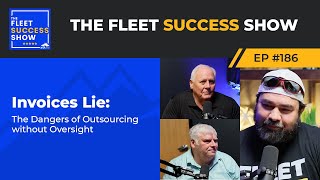
In Episode 186 of the Fleet Success Show, host Mark Canton is joined by fleet veterans Steve Saltskiver and Scott Rood to discuss the hidden risks and cost waste that arise when fleets outsource maintenance and repair to third‑party providers such as Fleet Management Companies (FMCs) without proper internal oversight. The panel explains how FMCs, driven by profit, can approve unnecessary parts, duplicate services, misuse warranties, and push short‑term lease terms that erode asset value. They stress the need for dedicated internal staff or third‑party auditors to gate‑keep invoices, enforce performance‑based Service Level Agreements (SLAs), and maintain ownership of data. Practical tools—including FMIS, labor/parts benchmarking services (e.g., Mitchell On‑Demand, AllData, Realtime Labor), warranty tracking, and vehicle inspection checklists—are recommended to spot red flags like excessive tire or battery replacements. The conversation also highlights the industry’s “perfect storm” of shrinking technician talent, increasing outsourcing, and loss of hands‑on knowledge, urging fleets to rebuild internal expertise, implement robust approval workflows, and avoid relying solely on external vendors for fleet management decisions. Promotional plugs for RTA Connect 2025 and consulting services conclude the episode.
Chapters
This is the Fleet Success Show dedicated to helping you and your fleet succeed using the experience of fleet professionals and Hall of Fame fleet legends. The show that explores how the pillars of stakeholder satisfaction, intentional culture, resource efficiency, and risk management all combine to lead your fleet to success.
We're glad you're here.
Now let's get into the show.
Hi everyone, and welcome back to another episode of the Fleet Success Show. Mark Canton here, head of product and consulting here at RTA Fleet. Been in the industry about 30 years, and I'm joined by my good friends and colleagues and frankly industry legends, Steve Saltskiver and Scott Rood. Welcome guys, how are you?
Doing great, doing great.
Yeah, I think— I don't think you guys need an introduction, but we'll just go with this. The Fleet Whisperer, Hall of Fame.
Yep.
Georgia, Utah, Coke Republic, 672 cities and counties, uh, and 22 years military, Washington State Counties, utilities, consulting, consulting, you name it. Uh, both of you 100 best judges. So again, it does not make us infallible, but hopefully it gives you a little reason to consider what we're saying as helpful to you. So, all right, with that, guys, this is something I've been kind of passionate about for a long time, really since I— since very early on in my consulting career. And you guys did a recent study around this, so I kind of wanted to, you know, hit you with this. All right. And I got to be careful because I don't want to insult anybody. But you know me, I also want to be honest, right? One of the things I think we agree with and we tell fleets a lot, and it's something I'm pretty passionate about, is if you're using— if you're outsourcing, whether you're using someone to come in and manage your shop, or a very common way is using an FMC, right? A fleet management company. And what we normally see is the fleet organization kind of, or the organization handing it off to the FMC and believing or behaving as if they believe they can set it and forget it.
Yeah.
And the idea is they are supposed to be managing your fleet for you, especially in the world of maintenance and repair. And so they're often left unchecked or not well checked, let's say. And pretty much, I don't want to put words in your mouth, pretty much every time I've ever done a study where an FMC was involved, and I'm not picking on any FMCs It's been true across the board of all of them out there. There's a lot that goes missed, right? There's a lot that goes unseen. Um, and so we always advocate for— you should have— you still need someone in your organization whose job is solely to essentially gatekeep what's coming through and coming in from the FMC. It's more than just managing a contract. It's, it's literally managing the work and overseeing the work and understanding the work that's getting done. Does that Sound fair and right to you?
Yes. Even though they're an outside provider, they're basically your employee.
Correct.
And so, you know, like any other employee, you can't leave them go unchecked.
Right.
You know, and I see so many people wash their hands of their maintenance or even their administration if they're using an FMC and just walk away and assume that everything's gonna be hunky-dory and it's gonna be great and they're gonna save you money. And that's in their, you know, that's what they're there for.
Right.
You also have to remember that they have a bottom line.
Right. Their job's to make money.
Yeah, and a lot, so you need to negotiate your contracts, you know, appropriately.
Right.
To make sure.
Good SLAs.
Yeah, yeah, make sure they don't have an incentive to sell more work to make more profit.
Right.
On your behalf, you know, so there's a lot of things you can do to avoid that.
Yeah.
One of the recent things, and I'll let Scott talk more about this, but one of the recent things we've seen as a consulting team is as we've done some audits of some of these outside providers, is we're seeing parts and services get approved that are really unnecessary and duplicative.
Yes, I'm seeing that every time. Any organization relies on outsourcing, I see that constantly.
All the time. And that's another reason you need to have more scrutiny on what you're seeing on those invoices.
Right.
Scott?
Main thing I see is they get in a trap to where, okay, I need a vehicle, I need this vehicle. Yeah, it's under warranty. But I'm going to take it in and just have it fixed because I don't want the vehicle to be down for 2, 3, 4 days.
Sure.
And have to go rent something to put in its place. So they're really throwing money away, good warranty money that they could be recouping.
Right.
And just for the fact of convenience.
Right. So I want to hit a few things here because as you point out, look, the FMC— I'm not knocking them. Their job is to make money. So here's some common things you say. You mentioned the parts. You mentioned the warranty. The one I see on the leasing side is what I think fleets need to understand is that their job is to optimize the value that they get out of that vehicle, right? To sell it and/or lease it and make the most money they can on that sale and the lease. That's literally their job, right? And that doesn't mean they're not giving you big deals and discounts. So when they optimize, for example, the terms of a lease or the lifecycle They're doing it to help their residual value or their original capital value. They're not optimizing it for what the best lifecycle is for your fleet, right? Oftentimes you see— we'll walk in and we'll see 3-year leases on something that should be kept for 7 or 8 or 10 years, right? Or even 5-year leases, right? And so— and again, that's not a bad thing. It doesn't make them bad or evil. I want to be clear. It's the lack of expertise and oversight on the fleet organization to not make sure that those terms are optimized for what your fleet needs are, and/or there's a plan around— because sometimes, let's be honest, if you have a 15-year asset, you're not getting 15-year terms, but you want to maximize those terms and then have a plan around how you're going to buy it out and what you're going to do. And you don't see that ever. And there's just this blind trust of, well, they wouldn't be replacing it more quickly than I should be replacing it, would they? And the answer is almost overwhelmingly, almost all the time, yes, they are, right? Because it's in their best interest.
I think the mistake that a fleet manager would make in that case is assuming that they're smarter than they are. Yes.
Yes.
Good point. And I mean, that's where education comes in. We talked about that on other podcasts. We've talked about the need to manage your fleet and understand— you need to understand leasing.
Right.
You need to understand maintenance and repair. You need to understand parts operations.
Right.
FMIS, all those things so that when you're negotiating with someone, you can have touchpoints on those.
Right.
Like you just mentioned earlier, you got to have a service level agreement.
A service level agreement.
You got to have that spelled out. Yeah. If you don't, you're leaving yourself vulnerable.
Right. And so for the SLAs, let's pause on that a second because it's— let's talk, let's talk a little bit about it.
Right.
What we're talking about is having clear, definable deliverables and metrics to measure those deliverables. Hey, you, if it's M&R, you know, you will turn around 80% of your, your work orders in, in 48 hours or less. Right. Right. And now you can measure them on that. Right. And it's their obligation to do it. And if they do it, You know, you pay X amount, and if they don't do it, you know, maybe you pay a different amount, or there's some sort of repercussion. And there's also, by the way, this carrot— there's not only stick— so that everybody wins, right? That's, that's a major key to a good SLA. No, first and foremost, documenting it, and then secondly, making it performance-driven, right? Okay, so that's— and that's overwhelmingly missing. I mean, we walk into— I, I mean, you so rarely see that. I don't know that I've ever seen that in an engagement, that I've seen a true performance base until we left, and then we put it in place for them, and then it's there.
But I've actually had people engage with us as consultants to write SLAs. So that is something people could do. A lot of people don't have time to do those kinds of things, or at least they say they don't.
Right.
It's kind of that thing you always say, are they working on the business or in the business?
Right.
Yeah.
But they really need to think about those little things because those little things are what save you money. Right. And I always say to people, they always ask me, well, what's my job? Your job is to manage the fleet.
Right.
What does it mean to manage? You know, one of the things that means to manage is to reduce costs or keep costs steady. Right, right, right. So, I mean, you need to always be looking at that.
Yeah. Four Pillars, right?
Yes.
Resource efficiency.
Yep.
Yeah, absolutely.
So you need to be always having that in the back of your mind as you're doing anything.
Right. And getting back to the M&R piece and the parts piece, you know, a lot of times in the example you gave, well, it's, you know, whatever, it's a $50 belt or whatever, you know, And it doesn't cost a lot of money. But to your point, yeah, that one transaction. But after that transaction happens thousands of times, right?
It's a pattern.
Yeah, it certainly adds up. So I think the moral of your story is, and what you said is oversight. You need to have oversight on these folks, right? There's a couple of ways to do it. You can have an employee or employees, depending on how large you are, dedicated to it. We've had people hire outside firms. We get contacted a lot. Sometimes it's more than, than really we can do for the volume with and still execute our other consulting firms. But, um, we'll come in and we'll audit, uh, sometimes as a third party. We used to do this at a previous stop in, uh, uh, some in a city on the East Coast where really our job was simply to come in and spend a few hours every month auditing, uh, basically the invoices between the third-party maintenance repair provider and the shop. So that's one way you can do it. And the key there is you do need fleet expertise.
Yeah, I was gonna say, that's what's lacking.
If you're looking for fleet experts and former fleet managers sharing their best practices and advice, networking opportunities with hundreds of fleet professionals, and live hands-on training sessions and workshops designed to help you take your fleet to the next level, then you need to register for RTA Connect 2025. It's the fleet event of the year. Join us September 22nd through 26th in Las Vegas and get the tips, tricks, and tools you need to help your fleet succeed. Visit www.rtafleet.com/connect to learn more.
I think there's not a lot of perfunctory knowledge anymore. You know, I mean, Scott and I grew up turning wrenches in our backyard.
Right.
You know, we had shop classes when we went through high school.
Right.
Basically were wrench turners from the time we were, you know, just old enough to go to school. You don't see that much anymore.
Yeah, it's less common.
So the problem is, I mean, when Scott and I see something like 2 sets of tires on a vehicle in 1 year, getting paid for it, something's wrong. That's like a huge red flag for us.
Right, right, yes.
'Cause we know they go, a set of tires is 30,000, 40,000 miles.
Right, right.
So if you don't know that, you need to educate yourself to know that. If you see 2 or 3 batteries put on a vehicle in a year, even 2 years, You know, a battery has a 36-month warranty on it, right? Right. So it shouldn't be 2 batteries in a year.
Well, if you do get 2 batteries, they better be giving you some kind of warranty. Yes.
Yeah, something went wrong with the first one. There's got to be a reason, right?
Exactly.
So the key is to know enough to question. Yes.
Right.
Like, I do think you can learn, hey, these are wear items, even if they haven't been turning wrenches, right? So these are wear items. They shouldn't wear out all that quickly, at least enough to know to ask somebody hey, you know, you have been turning wrenches, you, you, right, to have that resource there and say something's not right here, right? Um, I think that's key. And, and, and a part of that is just putting in the time and effort to do that, I think. Yeah.
And if you got a vehicle fleet of 3,000 or 4,000 vehicles and you're seeing, you know, a couple sets of tires on each vehicle every year, that really adds up. That's a lot of money.
Yeah.
Even a couple sets of wiper blades. Yeah, a lot of money.
Exactly.
And another point I want to make is having some oversight for your operators. I mean, your operators, they could be pushing this as well. They're not happy with the performance of the tires that are on there. They want a different set, different, you know, maybe different tread pattern.
Right.
So they could be actually the ones that are pushing the repairs. Right. And the company that— or the shop that's— are they going to turn away that work? No, they're going to put those tires on.
Exactly. As we said earlier, they're in business to make money. Yes. Right. So they're going to— They're going to sell you any and everything they can even slightly justify that you need. Right.
They're asking for it, right?
Yeah. Oh yeah. Then, then you're in trouble. Yeah. No, I mean, they try to sell me my 30,000-mile stuff like every 5,000 miles. I don't know how that works, but they, you know, I just went in and I asked them, do you actually keep records?
Yeah, because, you know, I was here 5,000 miles.
That's exactly right. That's exactly right. Um, so that's a good point. So you need the oversight, you do need some level of, of understanding of fleet or equipment so that you can have a sense of that. You need some common sense.
Yeah.
Uh, and, and it's the time. Like, I remember, you know, to, to use a completely different example, but there's this, um, theorem I have, or axiom that I have. I believe that if you check your phone bill, um, every single time in fine detail, you will always find something wrong with it.
I think you would.
Agree. Yeah, I agree. Yeah.
I think they count on that.
Right.
Anybody that you have a subscription with, maybe, right?
And so, you know, now it may only be a couple of cents and some fee or some tax and, you know, and so you say, ah, it's not worth my time. And so you don't do it. But over the years it adds up to hundreds or thousands or depending on your volume. Now, if it's just your single phone, maybe it isn't worth it. I don't know. But if you got a fleet of a couple of thousand vehicles or even a couple hundred vehicles, it's going to add up over time, right?
You know, that's what we were saying too earlier, is if even if you're using an outside maintenance company, you should have your own fleet management information system.
Correct. Well, that's where I wanted to get—
and have an interface with that, their system. Don't rely on their system, right? Because their system benefits them.
Correct. Right. So let's talk about— because that's where I wanted to go. That's, that's a practice that it's difficult to explain to folks. Um, and we've been saying this, we work at a software company now and a consulting company, but we've been saying it long before we ever worked at a software company. Um, and it's just true, whether you not— you use RTA or you use someone else, if you have an FMC or any sort of third-party provider, if you're dependent on their software, that's a, that's a, that's a big problem for a whole multitude of reasons, right?
Right. An example, I did a study on— it was on the East Coast, and they were— they had a, uh, service provider that was using their facility.
Okay.
They— the the company that came in to do the contract had their own FMIS. Right. So now what they were trying to do is to see if they could, you know, bring that work back in-house. They didn't get the data.
Right. Yeah.
They did not get the data.
It's a struggle to get— even if you own the data, all they have to give you is a flat file database, right?
Yes.
It's a whole new system. And also that system is set up for what their work needs are and their profitability are, right? So for example, let's go back to your warranty. Like the battery or what you ran into recently. I want to tell people a little bit about the study you did and some of the things you ran into. But if you now have that, your system set up properly anyway, any decent system out there, certainly our system does that, I would assume that others do, is okay, hey, wait a minute, that I've set up that part, I've set up that work, I know what's under warranty. The second time that battery comes in, the system's alerting you. Yes. Right. Their system is not designed to alert you to that. Now they should be getting alerted, and if they're good, they should be stopping that, and they should be bragging about that too. Look, we, we saved you this many thousands of dollars because we stopped all these inappropriate repairs. They, they should be wanting to show you that.
But, well, a lot of them try to show you that, but I've always said that's not saving me any money, right?
That's doing the job.
It shouldn't happen anyway, right?
Exactly right. Exactly right, right. But what you want is your system set up to flag you on, hey— and you can do that, you can configure systems not only for warranty repairs, but as you said, just even repeat things even if you're outside of warranty. Right, to say, hey, this is just happening too frequently. You can look at your own VMRS codes. And then to your point, you're not handcuffed to that organization. If you want to go give somebody else a chance or do a bid or something like that, or bring it back in-house, you just keep flowing, you know, pretty much seamlessly, right?
Unfortunately, partnerships are not for life. A lot of things happen. Companies go out of business, right?
Right, right.
You know, um, Sometimes your relationship gets sour from some issue or some new person or some change in a company or whatever. You need to be prepared.
Right, right. You know, and again, I want to be clear, we're not witch hunting here. It's, you know, it's human, it's people making mistakes. It's— but this is what's required to manage the fleet properly. So let's talk a little bit about this, this, because we've been seeing an uptick in this. Yeah, over the last couple years of, hey, can you come in and, and and, you know, we have suspicion, we have reason to believe that maybe we're spending too much money on some of this outsourced work and we're not really sure how to find it. They call us and we go in and we start digging through the documentation and the invoices. And now recently we had one where, you know, we were asked to go, to literally go out and go see the vehicles and confirm, did this part get replaced or not? Tell us a little bit about that.
Yeah, so they hired us to come in. They were using a, you know, an FMC their, for their maintenance. So they were running up some very, very high, uh, maintenance seminar costs. So what they did is they had me come out and do a, you know, a random look at some of the vehicles. I did, you know, a small sample of their, of their fleet. Um, so what I did is I checked the invoices. I was looking for, you know, warranty type of stuff, things repeat, repeat stuff like you know, what Steve was talking about, the batteries, the tire, a lot of tires on the lights too.
Brakes, lights.
Lights. So, and then they actually, I was, what I could see visually, check to see if the parts looked like they were put on.
Right.
And I did a random—
Which is a step that we don't always get asked to do, but it was interesting that they asked for that.
It was interesting. So, you know, I was a little apprehensive about doing the study to begin with, but I went out there and yeah, I actually saw some stuff to where it was questionable. If that was a new part or not. And I documented that. But for the most part, you could see there's a nice shiny alternator sitting down there and obviously replaced.
Give some examples of that. Talk about, again, for the non-technical people, it's really pretty obvious, generally speaking, when there is a new part, you can tell.
Right.
And for example, they replaced some transmission lines. And it was recent, so I was able to crawl under there. And there they are. They're nice and shiny. You can see them.
Right.
Definitely looking for the right— But you got to know what you're looking for too. Yeah. You need to look in the right area.
Like, for example, if you see a water pump and everything around it's caked in heavy grease or road grime, you probably know they didn't really change it.
No, they didn't.
Exactly. Or the battery, you had one where you did confirm that didn't look like they changed that part.
No, they didn't look like it. The battery cables were still corroded. You can just see dirt just caked on the top of the batteries.
Right. It's like unless they just went off-roading yesterday. And even then.
And then one vehicle I was able to see through the wheel that it still had the, the original brake pads on it, and they were supposedly been replaced.
Yeah, but that's the other thing you said too. I mean, people should be aware of— OEM has their own serial numbers on things, right?
Right.
You can recognize if it was factory original or if it's replacement, right?
So if the invoice tells you, which was, by the way, that's a level of detail you should, you should know, that I get an OEM replacement, that I get an aftermarket replacement, and you You can just go and check if it still has the OEM. And you know it was supposed to replace it.
Well, it wasn't an OEM that did the work. So I was very suspicious that this could— I didn't say they didn't do it. I said it appeared that they were not replaced. You got to be careful with your words.
Right, Steve? That's right.
Can you look at the camera and give it a good wink now?
But I really think the point— The point is, is we're losing that acumen that people have, that hands-on knowledge, the ability to actually repair a vehicle. And so we need to somehow get that back in fleet because there's a lot of waste going on. And in some cases, it's unintentional. In some cases, it could be malicious.
You just don't know if you're not looking.
You don't know one way or the other. But you have to have that ability to do that audit.
Right, right, exactly.
And that's kind of the piece that I'm getting at is right now, especially, we're in the perfect storm, right? Something we've been talking about a lot. So there's a lot of expertise has left the industry. We're slow to gain it back. And, you know, there's a shortage of technicians, there's a shortage of fleet people. And so if we're being honest, the percentage of work being outsourced is just going up.
I mean, a good example, I mean, if you watch my LinkedIn post just about a year ago, I put on there, I took my own vehicle in, if you recall. Yeah. They had— it came out they wanted to pay $6,000 or $7,000 for a vehicle under warranty.
Right.
Well, my instincts as a fleet manager and a guy that used to work on vehicles is, okay, wait a minute. I go down the list of those things and I look at them and I say, no, that's under warranty. That shouldn't— the next one, nope, that shouldn't have failed at that interval. That's a goodwill item.
Right.
And then if the dealer won't work with you on like goodwill or anything like that, you need to approach them and ask these questions.
Sure.
And if they won't do it, then you escalate it up to, in my case, the manufacturer.
Right.
Because they all have a manufacturer rep.
Right.
Right. The long story of that is a $7,000 bill, I walk out with $1,000.
Right, exactly.
And I felt good about that because I paid for something that I thought, OK, I can buy that one.
Yeah.
But there's a lot of that going on where if you don't ask questions, you'll just pay the whole bill. Right.
And I want to tag on to that because If you're relying on your operators to take vehicles in like what Steve just did, they don't know anything. They don't know, right? They're just going to say, oh, we need this work done. Well, why don't we just get it done? So there has to be an approval level beyond just the operator.
That's really important. And to be fair, most organizations do have sort of a dollar-based approval thing in there. But as much as that's a standard that I totally agree with you need to have, I don't think it's enough.
No, it's not.
Because a lot of folks are just pushing paper and they're just approving because of the original point, which is they don't really know any— oh, you say I need that? Okay, I need $6,000 of repair. And then you go and approve it because they don't know any better.
Anybody that's taken their car in for a repair, the first thing they do is upsell you, right?
Yeah, absolutely. Absolutely.
Look, here's your air cleaner. Look at that.
Well, I just had the exact same thing happen.
They don't even tell you you need to do it or not. They just show it to you. You assume that you need it.
Right, right, exactly.
So when I was with the state of Washington, you know, we had vehicles all over the state.
Sure.
So what we had is we had a call center for repairs. And if you needed a repair on your vehicle, great, take it to the shop. They would call my call center, which was— we had an ASC-certified technician in there and he would, okay, what's wrong? He'd go over the repair. And based on the records that we had on that vehicle and looking at Mitchell On Demand to see if it's all—
if it follows, right? Is this the right labor time? Is this— yeah, yeah.
So there was our approval level and we felt very comfortable with the process we had in place.
You had a pro and you had resources.
Absolutely.
And you were doing that.
And we had contracts written, SLAs with these shops as well.
Sure. Now, did they call this tech for every job or over a certain dollar amount?
It would be, you know, basic PMs, no.
Right.
But if you get in there and they wanted to replace the brakes, the calipers, yeah, now it's a call.
The only thing they could do was the PM. Correct.
Okay.
That's one thing I would say too, is we do a lot of projects, a lot of best practice thing. People don't have contracts. They don't. I mean, for every vendor you're using, especially if you're using one multitudes of times, right? You should have a contract with them.
Right.
Yeah.
I mean, at the very least, they'll give you a 15% job discount, right?
Right.
And then that's where you're—
again, that's what he's going to do. Yeah, exactly. So you can hold them to a standard.
Yeah.
Yeah. Yeah. So that's really good, Scott. That sounds comprehensive. I think if you can get away with that, I would encourage organizations to come in.
Steve, we had a client client years ago that we did the same thing for. They contracted with us and we did a certain amount of repairs over $1,000. They would send it to us, we would scrutinize the estimate, make sure the hours were correct, parts was— they're not overcharging us for the parts, and was this a repeat.
Yeah. So let me just pause on this for a second because I think it's important. So two points. Number one is I think that's fine. I certainly understand the practicality of having a certain dollar threshold. But I want to add to this that if you do have that dollar threshold that's getting through this approval process, you still need to go back and audit everything that's below. Right. And again, it's fine that that's not getting called in, but it's got to be part of your monthly workflow somehow that you're auditing these pieces.
When the vehicle is accepted back from the vendor, you need to inspect it too to make sure the work was completed.
That's a great point too.
Yep.
And again, if you have a pretty decent software like RTA, you can actually set up your system to help you do this. Correct. So that's key.
But he mentioned Mitchell On Demand too.
Yeah.
There's some out there. We have a subscription to one, $15 a month.
Right.
Yeah. Cheap.
Yeah.
If you want to start verifying invoices on parts costs and labor costs, this is perfect.
Yes. It is.
At least keep them honest by you showing them that.
Sure.
Yes, I'm checking your work.
Yeah.
Right?
Yeah, there's a few. What are some of the other ones out there? There's AllData.
AllData is a good one as well.
Oh, yeah.
The one I'm talking about is Realtime Labor.
Realtime Motors, a famous one. Sure, they're very reputable.
Yep.
Okay, um, so, so there's another tip for folks out there. Go get these, go use this. But I think I, I would— is it fair to say, I don't want to put words in your mouth, I have to admit I have a, a preference towards an in-house, uh, call center if you can, if you can get away with doing it.
Oh, absolutely.
Because part of what they're paying for with the FMCs, the FMCs will say, hey, we have ASE certified folks, and that's— they're supposed to be doing that same work, but it changes the dynamic when it's the outside vendor, the same people who are doing the billing and processing. They're, you know what I'm trying to—
yeah, the thing is they're not close to the— they're not close to that shop, right? If you have somebody that's close to the shop, and, and plus they don't have a, um, you know, a— they're there to make money, so they, they're not emotionally involved.
Well, like, it's kind of an extreme ownership issue, right? If you own those vehicles, you want to maintain them with integrity, you want to maintain them efficiently, right? If you outsource it, then you, you still should be doing the same thing, right? That company doesn't have your emotional attachment.
No, correct. You do not, right? So that's the, that's the risk of outsourcing, right? And it's something we, you know, we tell folks all the time, you may outsource your M&R, but you can't outsource your fleet management. Yeah, that has to be internal, right?
Um, I think there, there's an assumption if you do that they're going to take care of you and they're going to take care of all your fleet needs, which is— right, you know, you're mistaken.
Yeah. And again, we're not knocking them. No, I want to be clear. Like, it's just you're one of maybe hundreds of thousands of customers that they have. The amount of volume that they're going through, it's, it's, it's just not efficient for them to, to, to care and love for your fleet, your individual fleet, the way you do, the way you do, right? Um, so I hope our FMC friends out there— we have a lot of colleagues out there in the FMC world— we're not, you know, don't hate us here. We're trying to advise fleet organizations. We're not saying don't use FMCs. There's a lot of great reasons to use FMCs. Yeah. And so I want to be clear on that. Right.
But no, it's just, you know, you guys do great work. All we're saying is back where, you know, you guys are here doing the work or doing your work, the vehicles here on site, we're just saying there needs to be some more oversight where the vehicle is located.
Correct. I think it's fair to say they're struggling like fleets like the rest of us, right? They can't get mechanics.
They're stronger for people with professional, right? Yes.
So that's, that's always a challenge.
There's one out there whose name I won't mention who I frankly don't love. And you know, every time you talk to a customer of theirs, this— they— their rep is changing every 6 months or every year, and they're hiring folks out of college with no training and all that stuff. If you see that in your FMC, that is a sign to maybe you need a different FMC. But that's a whole nother story. We can do we can do another episode on how do you know if your FMC is pretty decent or not. Um, you know, another, uh, another day. But yeah, I can't wait. I'll have another episode coming soon following up on my rant about going to, uh, OEM service centers because you, you touched on a few things. Similar, same thing just happened to me. Uh, I mean, I literally— I gotta tell it now. I, I literally— you guys know I've been struggling with this tire issue on my EV, right? Right. So I'm gonna skip ahead because of the point that's relevant here, which is eventually I got to get a brand new tire. I'm gonna— I don't love that I had to get a new tire, but I got a new tire in April, right around Easter time, so mid-April. Well, the tire is losing about 8 to 12 pounds of pressure again over the last week, and I'm, I'm slow rolling it. I can't find the nail, I can't find anything. I don't have the equipment at home, but you know, there's nothing wrong with this tire that I can put my hand by the by the, uh, valve stem. Thank you. I'm not feeling any air. I'm like, what the hell is going on here, right? Sure enough, this brand new tire, the exact same tire, they find a rip in the sidewall. Service guy calls me up and says, yep, we need to get you a new tire. I go, it's got to be on the warranty. No, there's no warranty for tire. I go, the damn tire is a month old. I am not buying another $500 tire, $440-something before install and tax. I am not buying another $500 single tire, $500 tire, because it has to be fancy 19-inch rim. Whoever the hell heard of a 19-inch? Okay, I'm ranting here, but, but, you know, and sure enough, thankfully, you know, the service gentleman, um, shout out to you Justin out there, you know, said, okay, let me go look into it. And he did, and, you know, got the part vendor and said, yeah, yeah, we're gonna get that for you on the warranty and we'll replace the part, right? But it's just like your point earlier, right? You know, if, you know, and I, and I love you, I love you, Natalia, but my wife wouldn't have known any better. She would have given them the credit card and paid.
Oh, you're right.
And walked out the door, right? So you got to have, you got to have somebody who, this is what they do, this is what— and also not only the knowledge and expertise, but the, the, the focus is there. This is what they do. Their capacity is there.
They have to have the hoot spot on.
And yes, they have somebody, right? Yeah, they got to be willing to stand up.
Some people won't sign up for anything.
But I think bandwidth is a big key here because the more organizations I talk to, it's so often that the band— they're just not giving it the bandwidth. So you needed that dedicated bandwidth, I think.
Correct.
Yep, is the key piece. All right, with that, guys, unless you have any other closing thoughts, I think we're going to call it a show. Yeah, yeah. All right, so it was a lot of fun. Always a pleasure talking with both of you.
Thank you.
If you guys have any questions on this topic or any other topics or suggestions for different topics to talk about, please email email us at podcast@rtafleet.com. Um, but with that, always a pleasure talking with you guys. Super nice to have you in town. Yeah, excited to, to have— not be doing this remote and doing it with you across the room. And, um, yeah, I can't wait to do it again. Take care, everybody.
We hope you enjoyed the show. If you'd like to help support the podcast, please share it with others, post about it on LinkedIn, or leave a review. Want to learn more about our fleet management software Fleet 360? Check us out at rtafleet.com. If you want to learn more about having your fleet evaluated by our consulting team, go to fleetconsulting.com.
More from Josh

Episode 227: The Hidden Costs Killing Fleet Operations (It’s NOT What You Think)


Episode 225: Are Certifications Still Worth It? The Truth About ASE, CAFM & Fleet Leadership




Episode 221: The State of Fleet Management: Education, AI, and the Technician Crisis with NAFA’s CEO

Episode 220: Motor Pools Are Back: Right-Size Your Fleet Without Breaking Operations

Episode 219: Stop Guessing at Downtime: Status Strategy for Better Availability #podcast #fleet

Episode 218: Fleet Predictions 2026: AI Hype, Technician Shortages, & the Next Era of Fleet Managers

Episode 217: Why Replacement Planning Solves 95% of Your Problems #podcast #fleetmanagement #fleet