Episode 206: Fleet Leaders Reveal the Software They’d NEVER Use Again
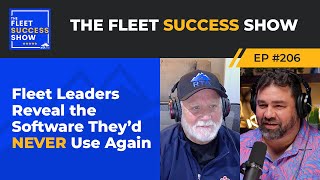
In this episode of the Fleet Success Show, host Mark Canton (VP of Product & Consulting at RTA Fleet) interviews fleet consulting veteran Steve Saltskiver (the "Fleet Whisperer"). They discuss why a purpose‑built Fleet Management Information System (FMIS) is essential for modern fleet operations and why using generic Enterprise Asset Management (EAM) or Enterprise Resource Planning (ERP) systems is problematic. Steve shares personal anecdotes—including building a makeshift system in Microsoft Access and witnessing large enterprises waste millions on failed EAM implementations—to illustrate the limitations of non‑fleet software: excessive clicks for work orders, poor granular cost attribution, convoluted reporting, inadequate parts inventory management, and change‑management pain. The conversation highlights the benefits of FMIS such as faster time‑to‑value, intuitive work‑order and shop‑floor tools, robust analytics, and seamless API‑based integration with finance systems. They also touch on political and organizational resistance, the importance of independent consulting to perform ROI analyses, and strategies for transitioning away from entrenched EAM/ERP solutions. The episode ends with a call to action for listeners to seek third‑party expertise and consider total cost of ownership when selecting fleet software.
Chapters
Hey, welcome back to the Fleet Success Show. I'm Mark Canton, your host today, and I'm joined by my good friend and colleague, the Fleet Whisperer himself, Steve Swalskiver. And we're going to talk about why an FMIS system is so superior to helping you run your fleet to an EAM, ERP, or anything else out there. Let's start the show.
This is the Fleet Success Show dedicated to helping you and your fleet succeed using the experience of fleet professionals and Hall of Fame fleet legends. The show that explores how the pillars of stakeholder satisfaction, intentional culture, resource efficiency, and risk management management all combine to lead your fleet to success. We're glad you're here. Now let's get into the show.
Hi everybody, and welcome back to another episode of the Fleet Success Show. I'll be your host today, Mark Canton, VP of Product and Consulting here at RTA Fleet, the fleet success company. And I'm joined once again by, you know, frankly, one of the most brilliant minds in our industry, the Fleet Whisperer, mentor of mine, and the head of our consulting department Steve Saltskiver, how you doing, man?
I'm doing great. You're very— you're too kind. Thank you.
I'm honest, man. I've had enough people say that to me unsolicited that, um, I know I'm not crazy when I think it. So listen, so I appreciate that. Yeah, it's true, man. Uh, listen, this is what I wanted to hit you with because this comes— this has been like hitting me in the head a lot lately on my product side here. I know, I know you're— you've done some product work. You've been on the software side, but you've also used, you know, many different fleets. So I mean, pretty much every fleet software that's been on the market for at least a couple of years, unless it's brand new, you've used it and different types of systems too, from telematics to true fleet management information software and FMIS, you know, etc., etc. And one of the things that I, you know, kind of seems to come in ebbs and flows is Many organizations get either stuck with or they get, you know, for whatever reason, with using non-fleet systems to try to manage their fleet. Oftentimes it's like an EAM or an ERP, you know, an enterprise-wide asset management system or some sort of financial system. There's some others too, you know, where you'll get like maybe in school bus world, you'll get a transportation system that has maybe a little tiny maintenance module, or you'll get a telematics system that can track your PMs. And, and then people think they can go out and manage their fleet in a sophisticated way with some of those systems and not using a fleet management information software. And something you and I have been trying to tell folks forever, I'm sure you a lot longer, you know, than me, is you really do need a fleet management info, you know, information software. And I'm not saying this to sell RTA. Like, please, I implore you, go buy a competitor. But you need an FMIS, right? Like the idea that you're going to run your fleet with one of these other systems is just insane to me and crazy to me. But I think, you know, obviously maybe folks will think I have a bias and certainly I sometimes struggle to articulate it. So here you are. You've had the experience, you've done both. You've used us, you've used pretty much all of our competitors. What are your thoughts on this? Am I wrong to feel that way, or do you agree with me that trying to run your fleet out of an EAM is just, it's just a tall order? What's your experience? What are your thoughts?
Well, you're right. I have experience in every one of those areas, and I can tell you I did a 1-year stay when I was a consultant working on the ground with a butt in the seat kind of a situation.
So you were running the fleet for them as a contractor?
Back in the Northeast, I was running the fleet for a year in a big city up in the Northeast, didn't have a fleet system, so I had to build one out of Microsoft Access. That's how much, that is how much I believe in fleet management information systems. And I could tell you it wasn't overly sophisticated, but at least it got me data that I could manage the system. So that being said, I mean, I have used many of the competitors to RTA. I've also used several EAM or ERP systems. And I can tell you, anything short of an off-the-shelf system that is fleet-centric will not get you where you need to be. And that's an absolute. You know, I've used them all. I used one that we had to convert. It was an EAM, and it's a prominent EAM at a Fortune 500 company. And the irony of this still gets me to this day. We actually had a purpose-built built fleet system that they got rid of so that they could go to this EAM and have a solution worldwide. And I still remember the 40 clicks to get a work order and all the problems we had to do that, you know, with no good data that we could really download. And it was just a complete disaster. And I did a lot of analytical return on investment analysis on that, showing them that other people had tried to use that EAM And I can tell you of two well-known companies that use it. I won't say their name, but two of them are very prominent, big, large fleets in the country. One of them is a telecommunications fleet. They spent $15 million and abandoned it. And then there's another large rental company fleet, rental and repair fleet, and they did exactly the same thing after many years into it. So I always tell people, you know, make sure you don't waste your money. Make sure you do your due diligence on this because you get too far down the road and we know having been in the software business how hard it is to get people out of a bad system if they're in it because then it becomes this huge sunk cost and frankly some people might even get too lazy to move out of that system.
Change management issues.
Yeah, change management, all of that. So yes. Don't settle for something that's substandard. You need to get a good fleet management system.
Right. So let's hit a few points on that. I mean, number one, the fleet management information system, that is the central repository for all of your fleet data. That's where pretty much everything you do is going to live and all of your key decisions will be made, you know, based on the analytics you do from the data that you get out of that system. Right now, you alluded to some of the troubles that you have within. So first off, the EAMs and the ERPs, they're great for what they're originally intended for. But any management of fleet is sort of like an add-on module, and it's not really the focus or the design of what those systems are, right? They're managing assets, let's say. But a fixed asset is very different from a fleet asset in a whole multitude of ways, not the least of which is they appreciate, they don't depreciate. But talk to us. You alluded to a few of them. Talk to us about like some of the things you ran into that were just let's say, maybe really challenging to do that would have otherwise been easy to do, whether it was with us or with one of our competitors? Like, again, I'm not— I really don't want this to be a salesy thing. I, I'm trying to, you know, like you said, an off-the-shelf system, there, there's some things that you can rely on pretty much any or every off-the-shelf system to be decent at, at least, you know. So like, so what are some of those differences, if you don't mind? The things that that jump out at you?
Well, I think the first thing is, if you don't have a fleet system, it's really hard to get granular level costs. And if you don't have a fleet system, it's really hard if you're using an EAM or an ERP system to get costs that are attributed directly to the vehicle, just because of the nature of the way they work. The other thing that's very difficult are doing transactional types of activities in those systems, like work order management. Um, like you just mentioned, 40 clicks to get to a work order. Yeah, things like that are just such a waste of time.
Whereas a system that's designed to help you do work orders is going to make you—
yeah, it's going to be— it's going to expedite all that process, right? The other thing too that's a real headache if you're not using a fleet system is just trying to get the data out, get a report, you know, because it's it usually comes out very convoluted because it's not built purposely for fleet. So you have to do a lot of hoops to get the data out so you can try and understand where your data issues reside. So yeah, those are, I mean, there's enough, I can go on, I got a list of 100 things probably I could go on, but essentially the systems that are not fleet are built for other purposes. And so you're trying to put a, you know, a round peg in a square hole, essentially, to try and make it work.
Right.
And that's where you run into all the problems.
Yeah. I mean, the features aren't designed, the configurations are more challenging. You know, like you just mentioned reporting, you know, out-of-the-box reporting is not going to be there. You're going to be almost completely dependent on custom reporting to get the things that you need. You know, and the funny part about that too is that we— I think I understand, like, I understand why organizations want the EAM and want the data, but there's other ways to get there. I mean, on this one, I will speak for ourselves. We have open APIs. You know, we can build you an integration. The, you know, the other company can. You can get a third party. Your own IT folks probably can do it. And you can get all the data that you're hoping to track in that EAM out of the FMIS in most cases pretty easily. So that you can still have that system of record for the finance folks, you know. And like you said about licensing and cost, it's not like it's not going to cost you more to expand that other system to enable all the fleet folks to be able to use it as well. So there's not like— there's not a lot gained there. I'm not, you know, I get the desire to want to be all on one system, but it just strikes me as overreach.
I think some of it, you know, are Could be a lack of respect sometimes for fleet. I mean, in a case where I had to— Interesting. Sometimes it's just political. I mean, you can't get around it. But I had actually gone through the due diligence in one case and was forced to use an EAM. So I mean, you can win some, you can lose some. But in that particular case, we had a pretty well-known IBM product that was fleet-centric. And we also had another product that was a trucking company product. And I had proposed scaling those up for $2 million so we could keep the fleet centricity. But their desire to go worldwide on one system really outweighed that. And I got that. You know, fleet in a lot of respects in this case was one of many pieces of that company. You know, and so, you know, we kind of lost that battle. But I think eventually it probably worked out fine because they basically decentralized the fleet anyway in the long run. So maybe they had a bigger issue than I knew about at that time. But those are the kind of issues that come into play too. You've got sometimes politics involved.
Have you ever won on that front? Like they wanted to go that way? Or maybe when you stepped in, it was that way and you got them to go to the FMIS?
Not specifically that way, but I did have a, when I was working for the state, well, one of the states, I did have a system that was subpar. It was a system that actually was an EAM and it actually had a fleet module, but they didn't buy the fleet module. And so we went out to do a business requirements and an RFP to see what it would cost to get that. Costs came in. I thought they were reasonable, but they thought they were cost prohibitive. So ultimately what we ended up doing, we were using a vendor at the time, a third-party fleet management company vendor that was doing a lot of our maintenance because we were predominantly outsourced with very few shops except for the DOT and some of the minor operations. So we were able to leverage them and use their system, which was actually a pretty good system. Wasn't perfect, but it did work.
Them meaning the DOT folks?
No, we used the, uh, the FMCs.
Oh, the FMCs. The FMC software. Okay.
Because no one goes to school for fleet management, chances are you were never formally trained on how to successfully lead a fleet. That's where the Fleet Success Playbook comes in. The Fleet Success Playbook is your guide to building a safe, reliable, and efficient fleet. That provides exceptional service. Learn all about the 4 pillars of fleet success: stakeholder satisfaction, intentional culture, resource efficiency, and risk management. Get nearly 100 years of combined advice on common challenges, practical solutions, actionable tips, and real examples from fleet industry experts who have been there and done that. Visit www.fleetsuccess.com playbook.com to request your free copy today.
What are the benefits that you'd say to folks who are maybe listening again, who are arguing for this, who are saying we want the FMIS? I mean, you mentioned some of them already. Easier to get to the data. It's built off the shelf. It's going to be a little bit easier or more intuitive to use. What other thoughts come to mind?
I mean, just, just doing any kind of analytics, any kind of cost scenarios, any of that kind of stuff. Really is difficult to get if you don't have the right system.
Right. I mean, I think you're going to get much faster time to value, right?
Well, yeah, I think part of the issue is you're going to have better time management, you know?
Right. Yeah, exactly.
So, I mean, because you're trying to do workarounds in an EAS system or EAM system that just doesn't have the tools that you need to run the reports and the data that you have.
Yeah. So maybe you have a work order, but like you said, you're 40 clicks in, but it's not set up to be a shop management system. You know, I think about our system and I'm about our competitors, right? I mean, we're set up, we're here to manage that asset for you from the moment since before you order it, from when it's a bid, you know, all the way to it's been disposed, right? And everything in between. And if it's a motor pool vehicle, we're going to have motor pool management tools. And if it's, if you're doing work on it, we're going to have work orders and we're going to have a shop management tool and shop scheduling and bay scheduling and seeing the work orders and whether or not the technicians are, uh, you know, are billing enough hours to work order. Are they meeting their SRTs? Are they efficient?
I mean, all those— I mean, just something simple.
None of that's in an EAM.
S-codes in an EAM is a problem.
Great point.
Class codes in one of those systems that are not purpose-built is a problem. Scheduling preventive maintenance, tracking warranty and recovery. SRTs, like you mentioned, downtime, all that is a problem if you're trying to use those systems because they're just not made to do that, right?
Yeah. And a big one, and this is true of the AMs, the ARPs, and all the other sort of, um, minor maintenance modules you see out there in other systems, and it's the parts, man. You know, a sophisticated parts inventory management system is, um, it's super important. It's super important if you, especially if you have an in-house— obviously if you have an in-house shop And when you look at our parts inventory systems and even that of our, some of our competitors, like they blow away most warehouse management systems because of the level of complexity. You know, you need all of the art inventorying tools with all of the specificity around the automotive industry and the, you know, and things like cores and warranties and mean times to failure and how much should you stock and it just, You know, the level of sophistication, I've never seen anything close to that in an EAM. And again, I'm not knocking them. I think they're great for what they do. And I think if you need your data in that system to satisfy management and leadership, great, man. Build, build a, you know, ping those APIs and get the data that they need into that system so that they can have their one system. But if you want something that's actually, you know, going to help you run your fleet and manage your fleet, you need an FMIS. If it's just a matter of putting the data somewhere to, to meet some requirement, well, I guess you can do that with anything. You can do that in an Excel sheet, but it's, it's going to be more work for you instead of helping you do the work. And I think that's really the difference, right? I think these other systems create work for you to track what the— what has been done so that you can comply, as opposed to a really good FMIS is going to make the work that you do every day easier. It's going to streamline it. It's going to be something you want to use, you know, for that reason. And that's to me what, like, what jumps off the page for me between the systems in my experience with it.
I mean, the extra cost, there's so much. If you want to really use an EAM or an ERP system, then you're going to have to invest the time and effort to do some pretty good interface integrations, and they're out there. You can do that. But I mean, that's— that if I had to use an EAM, that would— that's what I would propose. Let me buy an FMIS and let's integrate it to the system, match the fields, get you the data you need, get us the data we need.
Right.
You know, so those are— that's kind of a bridge you can put between that. I know it's a little bit extra cost, but still, yeah, it's, it's really the best way to go if you have to use system.
Yeah, absolutely. And again, that time to value is going to be key because the system is going to be designed for the work that you do. So, you know, any new changes, you know, change management is always a thing, but you're going to be able to intuit the overwhelming majority of the functionality in an FMIS if you have any experience as a fleet professional. You get into that EAM, it's like learning a new language. If you've never touched that EAM before, it's like, okay, I speak English and I'm going to go try to learn Greek. And, you know, if you're getting—
we've actually done a number of studies in our consulting practice where we've had to— I remember helping a city a couple years ago where we were faced with that, uh, tell us why the EAM is not good and that they're forcing us into. And we came up with a pretty good study and let them know that. And actually, to my delight, they actually went away from the EAM in that city and allowed them to buy a fleet management information system. So if you have the essential tools and analytics behind that and you can articulate that to management, they can usually figure out, you know, that's very quickly, that's not a good solution. But I think you start with by asking, I mean, because typically EAMs are financial driven. Typically that's the business's core financial management tool. All you got to do is start out by asking, what do you need from the fleet? What do you want to see? Do you want to see depreciation? Do you want to see transactional maintenance costs? Do you want to see historical things? And ask them what they need to see to be successful. And then, then you can start refuting some of those arguments because the EAM cannot give you those. Yeah, because they'll tell you what they need, but it usually benefits the fleet management information system instead.
Right. That's a good point. That's a great point. Interesting. All right. Well, I think I've beaten that one up pretty good. You have any other closing thoughts for our audience who may be going? Because I know a lot of— for whatever reason, this comes in ebbs and flows. And every few years we just run into a lot of fleets that are either trying to get out of an EAM or are being told they're going to get forced into one and are trying to fight that. It just seems to kind of come in waves, you know, or in cycles. And it seems to be There seems to be an uptick in that recently. So, any other closing thoughts for folks? Yeah, go ahead. Sorry.
Yeah, I would say if you're really getting forced that direction, you ought to find an independent third party maybe to help you out. That's a good thought. You know, that doesn't have to be us. Certainly, that can be anybody, but somebody that can really articulate the value of both systems, someone that has lived that experience, and somebody that can really push that envelope to get the system that you really need to manage your fleet.
Right.
And it really comes down to total cost of ownership and how you manage your fleet correctly.
Right. Yeah. All right. With that, Steve, thank you so much for taking some time to talk with me. I appreciate it. And to everyone listening out there, thank you for being with us today. If you have any questions for us or comments or, you know, have any topic ideas you want us to do, please email us at podcast@rtafleet.com. And with that, I'll say once again, thanks, Steve. Have a great one. Take care, everybody.
We hope you enjoyed the show. If you'd like to help support the podcast, please share it with others, post about it on LinkedIn, or leave a review. Want to learn more about our fleet management software Fleet 360? Check us out at rtafleet.com. If you want to learn more about having your fleet evaluated by our consulting team, go to fleetconsulting.com.
More from Josh

Episode 227: The Hidden Costs Killing Fleet Operations (It’s NOT What You Think)


Episode 225: Are Certifications Still Worth It? The Truth About ASE, CAFM & Fleet Leadership




Episode 221: The State of Fleet Management: Education, AI, and the Technician Crisis with NAFA’s CEO

Episode 220: Motor Pools Are Back: Right-Size Your Fleet Without Breaking Operations

Episode 219: Stop Guessing at Downtime: Status Strategy for Better Availability #podcast #fleet

Episode 218: Fleet Predictions 2026: AI Hype, Technician Shortages, & the Next Era of Fleet Managers

Episode 217: Why Replacement Planning Solves 95% of Your Problems #podcast #fleetmanagement #fleet