Episode 211: Fleet Management 101: Winning the Fleet Management Super Bowl #nafa #fleetmanagement
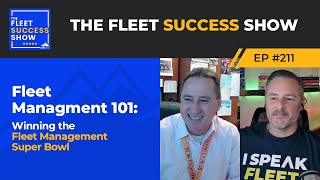
In this episode of the Fleet Success Show, host Facundo Tesoro interviews Jeffrey Hawthorne, fleet manager for the Palm Beach County Sheriff's Office, about how his department rose from a rank of 95 in the NAPA Top 100 Fleets program to #1, earning the "Fleet Management Super Bowl" title. The conversation covers Hawthorne’s background (26 years in the U.S. Army, 12 years in law‑enforcement fleet management), the philosophy of hiring smart people and empowering intrapreneurs, a memorable cost‑saving innovation (collecting residual oil from cans), the mechanics of the 100 Best Fleets application (12‑question questionnaire, 4,000‑character essay, annual ranking), the long‑term commitment required (5‑10 years) and the incremental improvements that moved the agency up the ladder. Hawthorne emphasizes the power of metrics—especially preventive‑maintenance (PM) compliance, technician productivity, and turnaround times—and how measuring drives efficiency. He discusses the cultural benefits of employee recognition programs (Technician of the Month, Fleet Superstar), the credibility and vendor opportunities that come with high rankings, and the importance of continuous, value‑adding change. The episode closes with key takeaways: start early and “start always,” focus on initiatives that add value, and use the ranking program as a roadmap for sustained improvement.
Chapters
This is the Fleet Success Show dedicated to helping you and your fleet succeed using the experience of fleet professionals and Hall of Fame fleet legends. The show that explores how the pillars of stakeholder satisfaction, intentional culture, resource efficiency, and risk management all combine to lead your fleet to success. We're glad you're here. Now let's get into the show.
Hey, I'm Facundo Tesoro. Welcome back to another episode of the Fleet Success Show. I'm joined here today by Jeffrey Hawthorne. With Palm Beach County Sheriff's Office. Typically, I would let the guests introduce themselves, but we do— but before we do that, because I know a little bit of a story that Jeffrey shared years ago and it stuck in my mind, I'm going to jump into the story and then let him introduce himself. So, Jeffrey, the story is you were giving a presentation one time years ago. I don't remember when it was. I want to say it was at least 5 or 6 years ago. And you were talking about something that you had done that was creative, and it was this large tank that you had, and you had the oil cans that were turned upside down, and you were collecting the extra oil that was in there. And I'll stop there. You tell a little bit more of that story. So how did you come up with that? What happened? How that, you know, where'd you get the idea from?
Well, I tell you, well, thank you, Pakundo. That innovation, that idea, like all of our ideas, I'll admit it, they don't come from me. I didn't come up with this stuff. It comes from the smart folks that work for me. I believe in the Steve Jobs theory of employment, employees. Hire smart people so they can tell you what to do. Don't hire people to tell them what to do. I believe that. I instill that. I encourage that. And this idea of simply taking an oil can, a quart of oil, turning it over, letting it drain overnight into a 55-gallon drum, accumulates over time. And that's free oil. I mean, the residue along the sides, it, it adds up. You know, every little bit helps. And I'll tell you, 55-gallon drum is what, 220 quarts of oil? I probably saved hundreds of dollars over the last few years draining the little bit of residue in each bottle, each in the bottom of each quart of oil.
And there's a little bit. And there's also a, there's a sustainability fact to this. There is an intrapreneur, like, you know, you're, you know, there's a conversation of being an entrepreneur, taking the risk, you know, building a company, the intrapreneur. The people within an organization that are little mini entrepreneurs that are taking little ideas like that to save time. They're doing more with less. They're saving money. That's why I love the idea. So, I remembered that.
And I will tell you, you know, we're going to get into the, you know, the top 100, you know, here shortly. And that's one of the byproducts of this program. It's success. You know, success— people enjoy success. I don't care who you are, people enjoy success. People enjoy being, you know, recognized, um, their name in lights, you know, seeing their organization on a list of winners. That's what they are, they're winners. People love that. That instills initiative and innovation. And when they're thinking that way Oh my God, sit back and just let them go. Give them the flexibility, give them the resources, and let them go. Give them the wheel. And that's what I do.
I love it.
Again, it took years to get here, and we'll go over that.
So tell for the folks that, for the folks that don't know who you are, so introduce yourself now, you know, where you are, a little bit of a brief background. And then like you said, we'll get into talking about 100 Best Fleets because 'tis the season.
Hey, thank you very much. Yeah, of course. I'm Jeffrey Hawthorne. I'm the fleet manager for the Palm Beach County Sheriff's Office. Prior to this job, which I've been doing for 12 years now, I served in the United States Army for 26 years from Kansas City originally. My whole entire life since I was 12, I've been working on cars, right? Fleet. So in the Army, the 26 years in the Army, I was in fleet, Army fleet, a little bit different. You know, it's not cars and pickup trucks, it's tanks and Humvees, but it's still a fleet. All the philosophies apply. Army, law enforcement, it's the same. It's maintaining vehicles, you know. So spent 26 years in the Army. I obtained the rank of Chief Warrant Officer 4, which is equivalent to a major, if you're not familiar with military ranks. But everybody's familiar with a major. And then I retired after 26 years. And again, I'm from Kansas City, but where else do you retire than Florida? So I came to Florida. Well, the wife said, you're going— we're going to Florida. That's why. That's why I'm here. And life is about opportunity. And it's also about timing. This opportunity Fortunately, you know, so the wife knew, you know, she had some kind of, you know, something she knew that I didn't know. Because if it wasn't for that time to retire and me getting to Florida, this opportunity would have passed me by, you know. So it happened to be a vacancy, and it's a funny story. Let's keep it short. It was during the period of a government freeze, and military— when people retire from the military, they normally jump right into a government contracting job. It's kind of a stepping stone, if you will. So, and it was during the government's hiring freeze during that year, and I was struggling. I'm gonna tell you what, it was tough. So I was like, my God, this is crazy, you know. I'm a CW4, 26 years of experience, bachelor's degree. I'm not getting callbacks. I'll be honest with you. Um, yeah, it was tough. And this position came up, and I'll tell you where it came up— on LinkedIn. So I'll tell you your Listeners, you're not on LinkedIn, you better get on LinkedIn.
And don't get me started on that, that's a whole separate conversation.
Absolutely, it is. I got on LinkedIn, I was on LinkedIn there living in a hotel. It was tough, tough period. This job came open, it said fleet manager, I called him up, I said, that's what I do, when can I interview? That's what I do. I like that. That's how confidence was You know, I was confident. I'm always, you know, you don't have confidence, you know, what are you doing? What are you doing? Especially at the fleet manager level. So anyways, that's what I do. When can I interview? The rest is history. The rest is history. And of course, military to law enforcement, paramilitary, very, very easy, smooth transition. But again, walked right through the shop, knew what was going on. You could immediately, from one day to the next, run the operation. It's that easy. Yeah. So that's where I came from. Been here for 12 years now. Um, and my God, it's been a, not a long, it's been a long 12 years. We've done a lot in 12 years, but we can go, we can get into that later.
So yeah, so we'll start, we're gonna start kind of by the end, I guess you could say, which is the end is last year, and then we'll kind of work our way Yeah. Then we'll quickly go back to, to the beginning of starting for 100 Best Fleets applications years ago. So the one thing you did not mention was that little award you got last year in 100 Best Fleets. Why don't you share that part?
So the little award, which is a big award, the biggest award in this program, which I'm sure your listeners are very familiar with. If not, they'll be familiar after this podcast.
I hope they are.
Yeah, it's the top 100 fleets, uh, in the Americas— North America, South America, Central America, all the Americas. And, you know, the creator, Tom Johnson, if they're not familiar, they can look it up and go to the NAPA's website and read all about it. But, uh, you know, he'll give you a number in the hunt, in the 38,000 number of fleets that are, you know, out there that could compete. On this competition. So you're competing in a very, very, very large class, but they're only going to name 100 of the best of all those. So that's a huge undertaking. That's a huge feat. Just making the list is a wonderful accomplishment, a significant accomplishment. It's a major accomplishment. It's a major win just making that 100. You know, well, you know, and everybody that's on that list, you ask them today, what do they want? They're not gonna lie. I want to be number one. Who doesn't want to win the Super Bowl? You know, who doesn't want to win the Super Bowl? If they say they don't, they're lying. So, um, last year, the blessings, the hard work, the effort, the support, the resources, we achieved number one. But I'm gonna tell you, it doesn't come with a lot of work. So just the, you know, that feeling of we won the Super Bowl is overwhelming, but by golly, the hard work and the effort that you have to put into that, it paid off. It paid off.
Perfect. So you set the stage. So it's like, you know, when you're watching a movie and they hit brrr, you know, they pause it and then they rewind.
Yeah.
So, so let's rewind.
Let's rewind.
Let's go back to that first application, right? That first application you did. What was that like? I've encouraged, I've helped people, I've done it myself several times.
Yeah.
And I've heard all of the excuses and they're typically the same ones. What if I don't rank? What if, you know, we're just not doing that right now. I'm not good enough. I'm really busy. Oh, I've heard all of it. I'm sure you have too. So, go back to your first application at that organization and just how'd it go? Where did you start?
Yeah, yeah, yeah, yeah, yeah. Great question. And I will tell you, it's overwhelming. You know, your first attempt, your first crack at it, it's overwhelming. You'll be overwhelmed. If you've never done it before. But our first attempt, first crack at it was actually before I got here, was before I got here. The program has been around since 20— 20— 2000— 2020— no, 20— 2005. So it's 20 years. Yeah, this program has been around for 20 years. Our first application was 2011, so I wasn't even here yet. I got here in 2013. So we'd attempt— we'd Been in the program for 2 years when I got here.
Because no one goes to school for fleet management, chances are you were never formally trained on how to successfully lead a fleet. That's where the Fleet Success Playbook comes in. The Fleet Success Playbook is your guide to building a safe, reliable, and efficient fleet that provides exceptional service. Learn all about the 4 pillars of fleet success: stakeholder satisfaction, intentional culture, resource efficiency, and risk management. Get nearly 100 years of combined advice on common challenges, practical solutions, actionable tips, and real examples from fleet industry experts who have been there and done that. Visit www.fleetsuccessplaybook.com to request your free copy today.
So we'd attempt— we'd been in the program for 2 years when I got here, and we We started at 95, 95. So again, you're going to start at the bottom. You got to start somewhere, you know. Don't think you're going to— don't think you're going to start at, at the top.
You're not going to win the first year.
Yeah, it's a mountain. It's a mountain. So we started in 2011, prior to me getting here, but the path from there, climbing this mountain It was consistent. Yeah, there's going to be some jags. It's going to have a jagged, you know, line. It's not going to be straight to the top. You know, you're going to go up, you're going to go down, you're going to go up, you're going to go down. So it was very jagged, but we started at 95 and then just slowly 85, 75. It kept going and going. It took 8 years. 8 years. Now, if you don't know this, If you walk into an organization, a fleet— not saying it's broken— but if you're going to revamp, rebuild, you're looking at a 5 to 10 year process. That's the bottom line. You know, if you don't have that going into it, you know, then you got a bunch of Tom Bradys and Patrick Mahomes, period. But we know we don't get that. You know, you're, you're blessed to have a handful of those guys, but you don't have a team of those guys. So anyways, You're going into an organization, you can plan on a 5 to 10 year commitment because that's what it is. It's a commitment. And this application is the roadmap. It is the roadmap to that plateau. If you want to get to the top of that mountain, it'll get you there. It'll get you, you know, up there. You know, number one is number one. You know, you can't— not everybody can be the Kansas City Chiefs, but you'll have a shot. You'll be in the playoffs. You might make the Super Bowl. And that number one, the elusive number one, is, oh my God, never give up. So we started 15 years ago, 2011, 15 years ago. It took 10 years to get top 10, to break the top 10, but it was constant improvement, constant improvement. So on your first application, let me tell you this, if you've never done it, there's 12, there's 12 topics. 12 categories, right? Your first realization is going, is going to be, wow, I can't even answer 12 questions about my organization. That's the reality. It's the truth. You're gonna go with the application, it's gonna ask you 12 specific questions. And don't be ashamed, but that's the biggest— not hurdle, but the biggest challenge— is getting the courage to say, you know what, we suck. You know, that's okay. That is okay. That's when you're going to hit 95, or you might not even make top 100 because they have this thing called honorable, honorable mention. That's below 100. That's okay, because if you keep doing this application, if you're consistent, you know, follow these guidelines, you're going to improve. You're going to improve your operation, your organization. Because the minute you hit, you crack the list, well, the minute you make the list, that's instant morale to your team. And they're going to want to keep winning and winning year after year. This team year after year is so excited. They know our ranking before I do because I go to the conference, but they don't announce it until day 3, but it's already on the website, you know, before then. So they know before I know, and they're excited. Hey, we're number 4, we're number 2, whatever. So it's an instant motivator, instant motivator. It's an instant morale booster, and it's a constant improvement in your operations. There's so many benefits to this program. Again, a lot of hard work. Just answer the question, and don't be, like I said, you might answer, you know, a portion of them, 2 or 3, 4, 5, 6, whatever. And that's okay. And if you can answer all 12, my God, you're, you're on the right track. You might not be able to answer them fully. You might only be able to answer them partially, and that's okay too. Um, but you just got to pick it up and fill it out and fill it out. Now, after the 12 questions, there's one big, big, big question at the end, and it's, it's definitely daunting. It's, it's a 4,000, I think, character essay. Why you? Why you? Simply why you? That's going to take you some time to figure out, I'm here to tell you. Um, but that would be my advice to anyone, you know. Um, just, just do it, you know.
Yeah, just start, right? That's the hardest part, is the starting hardest part.
And it's gonna, it's gonna be a not a slap in the face, but it's going to be a, a rude awakening when you say, I can't answer half these questions because we don't do half the stuff that they're— and this is what the fleet professionals, the careerists, are saying, and they know what they're talking about. This is what they're saying: follow these parameters, follow these paths, and it'll lead you to success. And they're right. I'm proof they're right. I followed this, you know, year after year after year after year. '95, '85, '75, then we're in the top 10, and we've stayed in the top 10 for the last 8 years. Um, hit number 1, listen to this, um, twice. Oh yeah, yeah, that, that is not unheard of. It's only happened, I think, once, one other time in the career, in the, um, uh lot of the, you know, as long as this program has been around, one other time. I'm not saying, um, um, oh, we're all that. We're not. It's hard work. It's hard work. And the, and the judges, this application, this is it right here, um, it— they'll recognize it and they'll recognize you in your organization. So there's just so many benefits. The biggest benefit I'm gonna tell you the biggest benefit. I'm gonna tell you, um, man, there's— I, I call it— there's really 3. There's really 3 in my opinion, um, and you can't even really gauge them. They're all equal. But one of them is credibility. Oh my God, the credibility that this program gives you and your organization, you, you can't even imagine. I didn't But once we started showing, you know, wow, we're ranking in the top 100 fleets in the country. Oh my God. Now all of a sudden your entire organization, your entire C-suite, you know, they're like, wow, they know what they're doing. Give them what they want. Give them what they want. You want shop tools, you want state of the art, give them what they want. Trust me, that is a byproduct of this program. Now, not everybody has a Sheriff Rick Bradshaw that supports his fleet. You know, like you wouldn't believe. This sort of, that's, that's without that, without support from your chain of command, your, your CEO, your sheriff, good luck. I wouldn't say don't apply, but, but good luck. But our sheriff, Everett Bradshaw, is so supportive of, he believes, he truly believes, and he, without that road patrol guy on the, on the, without that guy in that car on the road, He knows he's not protecting this county, so it's a top priority for him. And we're so thankful because that's number one, the support. So the credibility is gonna just— it's just gonna explode. It's gonna explode, I promise you that. Your efficiency is gonna go— it's gonna go up. It's gonna go up naturally just by going through the application. Because one of the questions out of the 12 is saying, is gonna ask about KPIs, metrics. Well, as we've all, you know, the old adage, the old cliché, what gets measured gets done. If you're not measuring it, it probably ain't getting done. If it ain't getting done, you're probably not efficient. So the efficiency is gonna go through the roof. It's gonna go through the roof. [Speaker:JARED] Right, agreed. Then the other thing that it does provide opportunity because every year when you, when you have that big party, that big celebration, hey, we're number 20, we're number 15, the opportunities that that crew is going to come up with, it's going to improve, you know, constant improvement, constant improvement.
And there's, I would say, I mean, I'm sure that we could add more to these, but the one thing A couple things that I want to touch on that you mentioned, not only the credibility within your organization, but the credibility within the industry. Now you are a trusted source, right?
Yeah. Yeah. No, that's great. Great point. Yes. Yes. You wouldn't believe how many calls, invites, questions that I get because, I mean, I'm not trying to toot my own horn, but we're doing something right.
We're doing something right. And here's actually, I think I did a podcast on this very thing. I love the fact that you keep touching on it is you have to toot your horn. You have to go out there and promote yourself and your organization because if you don't, guess what? Other folks in your organization that are also managerial level or director level like you are, They're tooting their own horn because they need something. And if you have a way that you can toot your horn and your accomplishments for what you've been doing and your team is accomplishing, you better be doing it. Because if you're not, somebody else is doing it for themselves. And there's a big difference between, you know, doing it in a way that's cocky and doing it in a way that you want recognition for your team.
That's a great point. And I use sport analogies a lot because everything In any organization, it's teamwork. It's teamwork. So what better, what better example than a team? Well, sports team. Um, it's like the Patrick Mahomes effect, you know. Once you're a superstar and you've reached that plateau, everybody wants, um, everybody wants you to wear their shoes, wear their shirt, you know, wear their sunglasses, you know, all the, um All the contracts, all the vendors out there, they want you. They want you because if they can claim you as their customer, it's going to get them more customers. Because obviously, you know, if you're the best in the industry and they're using you, their product, hey, they— right, we're going to use their product too because they're the best. We want to be the best. So you get a lot of vendors wanting to talk to you, you know, wanting to show you the data, the best that they got, the state-of-the-art equipment. So The benefits are, they're endless. They really are. I mean, I get to this day, I'm still getting phone calls and till I hang this up, you know, we're never gonna stop. Number 1 last year, number 1, 5, doesn't matter. Never gonna stop.
You know, one thing that you mentioned that kind of reminded me of the first time that I applied was the first time I applied, you're right, it was like, wow, there's a lot of these things that I can't answer, but there's a lot of these things that have been on my mind. So I'm going to answer it in a way that says, look, I'm not doing this and here's what I'm going to try to accomplish next year. Okay. So then I waited till next year. I looked back and whatever. Around that second year, I had kind of had a moment. I was like, wait a second, why did I wait one year to look at this metric? This one thing over again, right? Because you said if you're not tracking it, you're not measuring. If you're not measuring it, you're not tracking it, you're not doing anything about it, you're not managing it. So, I started to realize, wait a second, I should be tracking this not only annually, at the very least, I should be doing this quarterly, monthly, maybe even weekly. So, I turn it into a monthly report. That's a whole different conversation, another podcast I did with a buddy of mine, Bill Griffiths. Who kind of introduced me to this monthly report. And so I started taking a lot of the metrics that we had in the 100 Best Fleet and dumping them into a monthly report that I was looking at, you know, monthly. I'll give you one great example of where that really helped me. And I'm kind of interested to see how you started then leveraging it. I took, you know, because a lot of time the monthly report that I was putting out with metrics was a reflection of how we were doing. But there is one metric in fleet management that's a reflection of how your customer's doing, and that is PM compliance. And so I would put customers happily on blast to say, your PM compliance sucks. Look at the other department, right? And so there would be a battle like, oh, we're not doing that. Like, okay, remember when you called me and see how fast your vehicle was going to be done after you missed, you know, after you were 2 months late and I told you you're just going to have to wait. That changed too, right? And so, using that in your advantage was great. But so, how did you start going from the— you mentioned some of the impacts, but is there particular metrics that you were like, "This is beautiful. I'm going to rely on this weekly or monthly now"?
Yeah. No, you hit the nail on the head. Like I mentioned earlier, what gets measured gets done. And yeah, there's probably 15, 20 metrics that you can go out and find, search and find the list. If your organization, if it applies to your organization, if all 16 apply, measure all 16. I probably measure 8 to 10, PM compliance being number 1, absolutely, because PM is what? Preventive maintenance, right? It prevents something breaking down. A cop car in pursuit breaking down is a news flash.
Yeah, absolutely.
It hit the 9 o'clock, the 11 o'clock news. I'm here to tell you, and if this is a recurring, you know, problem, you know, someone's going to ask about, is he the right guy, right? I'm here to tell you. So your PM, I agree with you 100%, your PM compliance is probably your number one metric. Um, there's a lot of other ones, of course, turnaround times technician, uh, technician productivities. And I mean, obviously it's not going to be 100%, but if you're not above 95, you better make it— you better get a little more aggressive with it. And that's what we do. Uh, we measure, you know, every month, like you're saying, it's a monthly report, it's a monthly review. But it's a— a PIM compliant is a weekly review. We measure that weekly, every week. We're running that report, and this is law enforcement. Again, the, the, um, the, you know, what's the word I'm looking for? But the, um, the impasse can be, you know, life-threatening, you know, fatal, literally. I mean, literally, let's be realistic here, you know, these are cops with guns and there's bad people out there doing terrible things and they got to get them. So PM compliance is so important for us Um, which, if, if you're not compliant, your captain's going to get notified. We, we have— we, we can have very, very, very little tolerance for not complying with PM. So that is number one with us. There's no question about it. And, uh, yeah, it's measuring it is, is, is your first step. So again, I would Find that list and it's out there. Just go to the NAPA website, you'll find it, um, and start measuring them. You got to start somewhere. You got to find someone.
You mentioned, you mentioned to me, I think just the other day, that you actually— I don't know if this is what you were doing in the past or you still do this— this is part of your homework. You do, you spend your time on the weekend going over it. Is that, was that right?
Yes, yes, yes. Um, you know, because in the course of a day You know, in any, really in any organization, definitely in law enforcement, you know, you're getting phone calls, emails, you know, not putting out fires necessarily, but you're addressing a lot of stuff. So to really focus on, you know, how can I improve, how can we get better, yeah, you're gonna have to commit some of your personal time to that. Absolutely. Now it's gone down, you know, 'cause, you know, we were this far, you know, we were this bad And now we've refined over the years, we have refined our processes. And you— and here's what I tell people also. I get this question a lot. I mean, we can't— you're gonna have, you know, you're gonna have a, let's say, an unhappy customer. You know, something happened, whatever. They're gonna say, I thought you're number one. You know what I tell them? I said, number one doesn't mean perfect. It doesn't mean perfect. Yeah, we are number one, absolutely we are, and we're proud to say that. But I'm never going to say we're perfect because we're not. There's always room for improvement. You know, I've been in this seat for 12 years, um, and I think, you know, last week we were talking about how, how can we improve a certain process. Don't be— there's no shame in that. There's no— I mean, think about it, like I said, I use sport analogies a lot. Don't you think of a coach of, you know, the Chiefs? He's not looking at his playbook every year, every offseason, to come up with better plays to win the Super Bowl next year. It's the same thing, you know. That's the other thing about this application, you know. If you talk to— if you hear, you know, they give briefings about this, they give— they give podcasts, and they also give webinars. The one thing they're going to tell you, their biggest tip, their biggest piece of advice is this: start early, right? Yep. I don't say start early. I say start always.
Oh, I love that.
I'm telling you, it's not a, okay, it's December, let's dust off, right? If you're not— if this is not on your desk, I'm not going to show you mine because mine's a mess, but if it's not there and you're not reviewing it throughout the year always, I would suggest, I would recommend that. It's not start early, it's start always. That's my biggest piece of advice. I'm telling you.
I absolutely love that. I'm going to steal that, but I will, I'm going to steal that from you, but I will quote you. And one thing, I'm big on sports analogies too. I love soccer in particular. And so, I'm always giving analogies there. But there was one analogy that I thought about watching Formula 1 the other day, I love watching Formula One, and Max Verstappen has been really dominant over the years, and he races for Red Bull. And one thing that stood out to me when I was watching one race, I think it was this year, he was leading again, right? He was always— he was always leading races, and he was leading by far. You know, he was, you know, out in front, and he had— he kept, you know, had a really big time gap. And what started to get my attention was something that you touched on, was because you're number 1, you're not perfect, but there's always opportunity for improvement. He kept setting the fastest lap in position number 1, way out ahead of everybody, and he just kept improving every, you know, every little turn. He kept getting better and better and better. And you would think, you know what, he could just cruise. I mean, he could basically probably cut couple miles an hour off of his speed and still win this race because he was so far ahead. But no, he kept his foot on the throttle and he kept getting better and better and better. And I thought that was such a lesson for, you know, fleet managers and fleet professionals is even if you're really, really, really good, there's always room to get better.
And that's, that's a great— that's my other biggest, you know, takeaway here that I'd share with the listeners. 'Cause every year with the application, I don't suggest, I don't recommend reinventing the wheel. Absolutely not. You know, and I tell the staff the same thing. You know, I'm a change agent. I love change. But there's only one reason, there's only one requirement to change. One requirement. It must add value. It must add value. If this doesn't add value, we don't need to talk about it. I'm here to tell you. And I tell them, if they come in here with a change, a recommendation, does it add value? If it does and they can demonstrate that, let's talk about it.
Yeah, that's a great point. We often talk about that, this in RTA, when we have to make a critical decision and it reflects on our vision, which is we help fleets succeed. It's not we help our customers succeed, it's we help fleets succeed, right? So when we're thinking about something that we need to do this trimester, we operate on trimesters rather than quarters. We often go back to it and say, well, will it help fleets succeed? And if the answer is no, well, then maybe that's not a priority, right? And so I love the fact that you're saying is that If it doesn't help you accomplish what the mission is or your vision is or whatever it is, then maybe it's not a priority.
Yeah. I mean, no one likes change, right? I get it. I get it. People get, you know, status quo. That word is not even allowed here. I don't want to hear that word, status quo. That's how it's always been done. I don't care. But it has to, it must add value. And, you know, I tell them also, you know, you're the doers of the action. You know, I can write a general order, I can write a policy all day long. In black and white, it briefs well, it reads well, it makes sense. But the actual doer of the action, doing that process, you know, on the front line— and I tell them, if you say to yourself at your desk, this is stupid, come say, Jeff, this is stupid. And I'm gonna listen to you. I'm not gonna be offended by it. I'm not gonna be upset. I'm not gonna, you know, punish you. I'm gonna listen to you because if you're saying it's stupid, I'm probably gonna agree with you. Because again, hire smart people so they can tell you what to do. Don't hire smart people and tell them what to do. That's Steve Jobs and that's Jeff Hawthorne. I'm here to tell you. But, uh, so I love that. Yeah. That's all right.
Well, you know, kind of, you know, wrapping this up here a little bit, I have some key takeaways and want to get your final thoughts. For me, some of the takeaways that you talked about is, well, I have several. Start early and start always. That's my favorite. I love that. Some of the things that this application will do for you is credibility within your organization, but also within the industry.
Yeah. Yeah.
There'll be a lot of efficiencies that you're going to gain from these things that you're now tracking, and you're going to continuously improve on those because you're going to— again, you don't compete to lose, you compete to win and get better. So if your metric was 90% asset availability, you want 91% next year, right? The opportunities that this opens up for you as an organization, as a professional, as a team are endless. And then I like the last thing you said, which is it must add value. If it doesn't add value, then what are we doing here?
Don't waste my time. Don't waste my time. Exactly. The last thing I'd like to, I guess, add, because that's what you just said, that's me in a nutshell. Absolutely. Is the recognition of your team members. So we recognize them every month. Once a month we'll gather together. We have a Technician of the Month program. We have a Fleet Superstar program because not everyone in your organization is a technician, so they can't win that award, but they could surely win a Fleet Superstar award, right? But as you recognize these these folks, um, your organization is recognized across, you know, in the nation as the top 100, as number 1. But when you recognize them within your organization and, and you give them that opportunity to be the number 1 guy for the month, oh my God, how that, that morale booster is also is going to improve your operation because they're going to do that one more job to get that number one, that, that one more, you know, um, that one more hour of productivity they're gonna give you. Um, so with all that and employee recognition, this application is gonna get easier and easier and easier. But just be prepared, that first one is going to be brutal, brutal. And that's not an understatement, I'm here to tell you. You know, so it's a commitment. Well, 15 years, I'm telling you, it's 15.
And you, and you certainly don't have any less energy now than you did then, and you're still, you're still pumping them out. Um, so I love that. And like you said, start always, because I'm sure you're thinking about it year-round. Um, I love that. So, all right, any final thoughts?
That is it. Thank you for the opportunity. Um, And, you know, good luck to everyone. Good luck. I'll be there. I'll be there again next year. Yeah, I'll be there.
All right, guys. Well, thanks for joining us on another episode of the Fleet Success Show. You can visit us at RTAFleet.com or listen to the podcast anywhere that you listen to your podcast. And with that, we'll see you next time.
Thank you.
We hope you enjoyed the show. If you'd like to help support the podcast, cast, please share it with others, post about it on LinkedIn, or leave a review. Want to learn more about our fleet management software Fleet 360? Check us out at rtafleet.com. If you want to learn more about having your fleet evaluated by our consulting team, go to fleetconsulting.com.
More from Josh

Episode 227: The Hidden Costs Killing Fleet Operations (It’s NOT What You Think)


Episode 225: Are Certifications Still Worth It? The Truth About ASE, CAFM & Fleet Leadership




Episode 221: The State of Fleet Management: Education, AI, and the Technician Crisis with NAFA’s CEO

Episode 220: Motor Pools Are Back: Right-Size Your Fleet Without Breaking Operations

Episode 219: Stop Guessing at Downtime: Status Strategy for Better Availability #podcast #fleet

Episode 218: Fleet Predictions 2026: AI Hype, Technician Shortages, & the Next Era of Fleet Managers

Episode 217: Why Replacement Planning Solves 95% of Your Problems #podcast #fleetmanagement #fleet