Episode 216: The Rise of the Tech-Savvy Fleet Manager
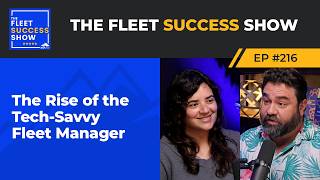
This content was created by Josh Turley. This content was uploaded by Josh Turley. This is a YouTube episode titled "Episode 216: The Rise of the Tech-Savvy Fleet Manager" (published 2026-02-19) from the Fleet Success Show. The episode is hosted by Mark Canton (Mark Kanthan), VP of Product and Consulting at RTA Fleet, with guest Janelle Hansen, RTA's VP of Customer Success and Customer Service. The conversation focuses on the changing profile of fleet managers (more data- and technology-focused), the growing importance of automation, data hygiene and integrations, implementation best practices, training and change management, and practical tips for getting value from fleet management software. The recording includes promotional segments for the Fleet Success Playbook and RTA Fleet services.
Chapters
Hi everyone. Welcome back to the Fleet Success Show. I'm your host today, Mark Canton, and we're going to be talking with Janelle Hansen, RTA's VP of Customer Success and Customer Service, about changes in the world of fleet management and fleet managers and what their desires and expectations are and how they're leveraging software to help manage their fleets. Now let's get into the show.
This is the Fleet Success Show dedicated to helping you and your fleet succeed using the experience of fleet professionals and Hall of Fame fleet legends. The show that explores how the pillars of stakeholder satisfaction, intentional culture, resource efficiency, and risk management all combine to lead your fleet to success. We're glad you're here. Now let's get into the show.
Hi everyone, and welcome back to another episode of the Fleet Success Show. I'm your host for today, Mark Kanthan, the VP of Product and Consulting here at RTA Fleet, the Fleet Success Company. And I am joined by my good friend and colleague, Janelle Hansen. How you doing, Janelle?
I'm doing well, Mark. Thank you.
Super excited to have you here. I think it's the first time on the show.
Yes.
So here's what I've kind of been thinking about recently, and I kind of want to get your take on it because from my perspective, you're on the front lines of this. You know, one of the things that, you know, you know, the consultants and I and Josh and I kind of talk a lot about is sort of the sort of— there's a changing of the guard happening in fleet right now. You know, we talked about that perfect storm happening. Where the baby boomers were leaving the industry at a pace that really we're still not really keeping up with it. Zs and certainly millennials didn't have the interest there. And so this, you know, you talk to any fleet in the country right now, there seems to be a lot of vacancies. We tend to focus on technician vacancies. But what's happened is there's been a vacuum in leadership and that vacuum is kind of begun to be filled. I think I said that right. And it's changing, right? Like the fleet manager is changing. Is that something that you're sensing too? Is that like what you're experiencing, you know, and how? Right. So we talk about the old school guys who and gals who maybe turned wrenches. They were mechanics and they worked their way up. And now you're starting to see, I think, a lot more folks like coming over from other industries, adjacent programs. Hey, you're really great at recycling. Go run the fleet, you know. And that's changing the profile and the skills of the people involved. And I think that's also changing sort of the expectations of the fleet manager. So you're the front lines. So tell the audience here, you're our Vice President of Customer Success. So you oversee all of the people, you know, the fleet success managers, you oversee the implementation team, you oversee the trainers. You oversee the customer support reps. So, I mean, you and your people are literally on the front lines of when a fleet manager has— needs help, they're calling you. Is that fair?
Yeah, absolutely.
So, so what are your thoughts? What are you, what are you thinking?
So I definitely agree. We're seeing a new type of fleet manager coming in a lot. Even with a lot of our long-term customers, we're seeing a big shift in new managers taking over. Who are much more data-focused. They are much more technology-forward, and they're also looking at reporting a lot more heavily than they had in the past. A lot of them are wanting to clean up their system. They've had the system for a long time, and maybe it wasn't necessarily set up in the most efficient manner. So they're wanting to go back and do data reviews and, you know, reclass their fleets. They're wanting to clean up and look for consistencies with makes and models. They're also looking for a lot more efficiencies. So is anywhere you can put automation in place, that is a huge deal. A lot of our team is, is asking questions, so we get support tickets on those things. Our Fleet Success Managers are always looking into what's the best way to optimize, how do we help them clean up the system and make it their own now that they're the new manager. Our implementation team is also seeing something very similar. The implementations that we've had over the past year have changed a lot compared to the types of managers or the requests that we were working with previously. They're wanting more nuanced reports, they're wanting more data scrubbing, they're wanting more work and automation put in.
It's interesting. It's the focus has changed, right? Like It seems like in the past, and you've been at this for— you've been in fleet management software for 5 years or so right now, and a leader, I should say, a leader in fleet management software. So, I mean, you've actually felt this change happen, right? Like, I don't want to put words in your mouth, but I feel like not long ago these softwares were like digital filing cabinets.
Oh, yeah.
Right.
And you would hear that definitely as, you know, customers are talking about the things that they want to do, what they want to start adopting, or different modules in the software that they would want to expand to and start to use. Before it was, we do our work orders, we have our parts in there, we're happy with the way things work. And now a lot of those new folks coming in are, hey, we know that we have this powerhouse of a tool. We want to use it to the best of its ability. We know that there's capabilities that we're not utilizing. How do we get the most out of this? How do we go in and make this super efficient? And I don't know, maybe it's driven partly by the technician shortages.
Yeah.
You know, when you have less people on the floor, you need each person to be as efficient as possible. You don't want to be going in and spending a lot of time in your system. You want those automations, you want those alerts, you want, you know, any of that workflow process that you have available. It also helps with, you know, becoming more digital. So going paperless rather than having to manually write out everything, you can save so much time by being in that digital space.
Good call. And it's interesting to connect those dots quick, but, you know, traditionally, you know, you would have someone in the fleet office, you know, you know, a clerk, an administrative assistant, maybe a cert, you know, and all they did all day long was take the paper out of this bin, enter it in, print something out, put it in that bin, and that was literally their whole life. And now, you know, it's, it's one thing, I'm sure some fleets can still afford that, but when you have technician shortages and you're thinking about reallocating money so that you can maybe up the ante over there and, you know, you know, what's the word I'm looking for? Attractive.
More attractive pay.
Yeah, exactly. You know, hey, how can I reallocate that position? Can I, can I click the easy button in the software? So the nature of software is changing fundamentally. We're certainly feeling it. Certainly a heavy part of what— of the work we're doing in our roadmap. And we're seeing what you guys, right? Like you mentioned automation, like your team is being pushed. We want workflows. Set up our forms for us. It's a fascin— it's a fascinating thing. Um, what is the hope, right? So like you, you talked about efficiency and you talked about maybe the technician is the key part. I also think leadership is part of this, right? Like I think there's a different expectation now, especially like, I don't know how this works, but maybe you've experienced this in your career. Have you ever been promoted? I know you have been. Have you ever noticed like sometimes you get promoted and like what was acceptable for the previous person in your seat, Now that you're here, they want something more out of it. They want something different. And I think we're seeing a little bit of that. Like, I think leadership is expecting that fleet can kind of come to them with answers to their questions that are data-driven. And that's changing whatever pressures those fleet managers are feeling to get their job done. And because it's— what's the word I'm looking for? I don't want to put words in your mouth, but so, you know, it's— I'm trying to think of it. I don't want to say visceral, but I mean, there's passion around these requests that your team is seeing.
Yeah. You know, I would say that a big part of it is just the rate at which technology is evolving. So as people, we have to keep up with it.
Yeah.
You know, that's how you stay relevant is how well you can use your tools and the type of tools that are available. What really matters at the end of the day is how well you as an individual, as an employee, as a leader, as a manager, can leverage those tools to get the data, to get the information, to make it digestible to your leadership. Especially now that I think with AI, right, you can go and ask any question and say, talk to me like a 5-year-old and explain this to me like I'm 5, right? And it will break it down and make it very simple to digest.
Right.
So, being able to really become an expert at anything in such a short time or have all that information at your fingertips, we are becoming so used to that. So, I think that changes the demands too.
That's a good point.
I want to be able to get that information. I want to be able to go to my team. And so, when the managers are reporting up to leadership, they need to have that information at their fingertips. And the only way to get it is to have it in some sort of system and to be able to extract it easily, quickly, right? Very quickly, very easily. You need to be able to have the reports. And how do you then make it so that that data stays up to date? You want to have those— you want to have those automations put in place so that way you're not having to manually go in and do every single thing. The amount of time it takes to go in and manually enter things or you know, to manually key in all the data. That means in order to get your report, you have to put in hours of work on the front end.
Sure.
But if we have these automations, we have everything is paperless, the data is going in instead of it being written down and then translated later. It's just going directly into the system. It's immediately available, right?
Yeah, that's a great point. And, and by creating these kinds of triggers and being able to track all those elements, it also makes it easy to, to self-analyze, Right? Like you can go back and find points of failure, but you made a great point though a second ago. I don't want to lose it, which is expectations of what we expect our software to do, even as a society, are just changing, you know? And yet, like, I don't want to be braggadocious, but relative to some of our competitors, it's like, you know, there's some good ones, you know, but it's like, hey, if your system's not even talking about automation, it's like 30 years ago already, you know. So that's an interesting thing. I mean, I don't know. I'm old enough to remember when you had to go to a bank to deposit your check. Right now, I get annoyed if my stupid app don't work, that I can't just deposit it from my phone.
The lighting needs to be better.
Yes. Yeah. What's going on here? Right. And so that's kind of what shifted. The expectation level has shifted there. There's something you touched on earlier, too, that I thought was interesting.
Because no one goes to school for fleet management, chances are you were never formally trained on how to successfully lead a fleet. That's where the Fleet Success Playbook comes in. The Fleet Success Playbook is your guide to building a safe, reliable, and efficient fleet that provides exceptional service. Learn all about the 4 pillars of fleet success: stakeholder satisfaction, intentional culture, resource efficiency, and risk management. Get nearly 100 years of combined advice on common challenges, practical solutions, actionable tips, and real examples from fleet industry experts who have been there and done that. Visit www.fleetsuccessplaybook.com to request your free copy today.
Uh, Josh and I had a conversation a few months ago and we were talking about implementations and, you know, kind of like the do's and don'ts of what maybe fleet managers should think about. Um, yeah, and, and I wanted to kind of get your take on it because I think you touched on something we talked a little bit about, which is It's a really good time, in my opinion, to review your own processes and, and, and edit that and kind of shake that up a little bit. Like, especially if you kind of have a sense of it. What are some like tips you would give? Like, hey, I'm buying a new software. Here we go. We're, you know, we're going to invest in it and dive into it. What, what are some tips you might give to fleet managers and other leaders who are going to be involved in that process to make it go well for their sake? Right.
So I'd say a big thing is just consistency. Like when you're doing that export and you have your list of data, or even if in your old software and you can sort and filter, looking at that data and making sure that you have the consistency in the first place. A lot of times we'll see things come in where it's got the same year, make, and model, but maybe a different class. There's not upfits, there's, you know, nothing like that. And so just kind of looking for consistency and spot checking and seeing like what are the things that are inconsistent and why. Making sure that, you know, that's in there. I think though, as far as bringing, bringing data into the system, really understanding your processes, because there's a lot of times we have a habit of, oh, well, I used to do it this way in this other software. And it's, did you do it that way in that other software because it was the most efficient way, because it was the way that that software was built, right? And you needed to adapt to the software. Or is it that it, it's something unique about your business or about the way that you have to do internal processes because of checks and balances? And then it's stopping and really asking why. You know, just because it was the right way to do it before doesn't mean it's the right way to keep doing it. And that's where you really find efficiencies. If the answer is because we've always done it this way, Good sign.
It's not a good idea.
It at least needs to be reviewed.
At least considered, right? Yeah.
We need to look at it and say, like, what's, what's the real purpose behind these actions? What's the reason we do it this way? Is there a better way? Is there a more efficient way?
Right.
And I'd say another thing is when you look at anywhere there's large potential for human error. So as you're manually keying in these things, for example, there's some people who aren't using fueling systems and they're manually putting in every fuel transaction. Like, it is very easy to fat finger something. It is very easy to, you know, have a typo.
Sure.
So any— anywhere there's an option to say, well, you know, we have this system, we have this system, is there potential for an integration? And then we remove— first of all, you're saving a ton of time, uh, in the man hours just of going through that process.
Sure.
But then you're also eliminating that potential for human error, right? Because the data is coming in and you're going to have— it's just automated. It makes it a lot easier.
Sure.
So I'd say anywhere that you can look at to automate and reduce human error is going to be a really big win. It gives you back time, and then that even helps you with your headcount, especially when you are short-staffed.
Sure. So I'm going to steal me on that a little bit. What I'm hearing is, is spend some time looking at your data, and it— the effort on the front end of cleaning your data and getting it consistent, getting, you know, will pay dividends later. I'm hearing, um, be open-minded around your processes, right? Don't be stuck in your old ways. I have to do it that way. There might be some things, compliance things, legal things, that happens. But generally speaking, if there was ever a good time to reconsider a process, this is the time to do it. Um, I'm hearing, I think I heard automation. If you can automate it, automate it, right? This way we avoid the human error and we save some time and and a lot of that might be around integration. Look at the things you currently have integrated, the things you don't, and maybe use sort of this acquisition as a time to really streamline that stuff. So that's good stuff. And I think the big one that I see is that we have like, I don't want to, I'm gonna be careful here, but I would say that I'm gonna really overgeneralize, right? But in my experience, we see like kind of two buckets of customer. The customer who says, I have to have it this way because I've always done it. And then you have that customer who comes in and says, no, no, no, we're hiring you. We, we, we, we're doing this specifically because we want to consider this is the time, this is the opportunity. Those customers who kind of treat it as that partnership, that let's exchange ideas, let's have an open mind. We learn from them and they learn from us and Man, they're able to implement faster. They're happier. They get so much more use and efficiency out of the system, generally speaking. And so I would encourage folks to kind of think along those lines. There's a fifth element, though, that we didn't hit that I think you'd agree with. It's like, don't be a hoarder. You don't need 25 years ago's data. It's useless to you. Like, quite literally, it's not helping you on any TCOs unless you have some sort of law in your— area that says you must keep it, you, you probably, you like, that's an area I see. I don't, there's not a lot of judiciousness around. It's more of a fear thing.
Like, let me keep everything, just in case something happens, right?
Yeah. What are your thoughts around like, what's maybe some tips on how to, how do you determine what you need to keep?
Again, outside of any laws, I understand, but I think you look at compliance first, right? What is required? What is the compliance purpose? What is required? And then beyond that, really, what are you going to go back and look at? Like, how many times have you gone back and looked at this? Now, vehicles that are in warranty, like, you want to make sure you have that history because, you know, we've had a customer call in, they're like, hey, I need help running a report and, you know, show me what report I need to run. And we're able to show them and they got a list of all the PMs that they ever did for this vehicle. And it was very easy when they went to go use this claim against this newer asset to say, we followed the service schedule, we did everything that we needed to do, and therefore, like, the warranty's valid. We did not invalidate the warranty. And so I think compliance things, those, anything that's under warranty that you want to make sure that you have that data for. And realistically, like, aggregated data is okay. I mean, if you're just looking at TCO, Right. Put in a summed aggregated, you know, historical line or historical transaction for TCO and then move forward from there.
Exactly.
You're not going back, especially all the parts that you did 20 years ago. They're probably not the parts that are on the vehicle anymore.
Absolutely. Yeah, exactly. Yeah. No, I couldn't agree with you more. I talk all the time when we do our lifecycle analysis, stuff older than 5 years is not all that useful to me. So just give me the aggregate line. And that's a good part. I'm gonna go— I'm this— this last question I'm gonna hit you with here, but I want to kind of go back to the beginning. Let's say you're on the fence, right? You're a fleet manager and, you know, you know your system maybe is not doing everything you need, um, you know, for whatever reasons. You're out there, you're looking, maybe you're considering us, maybe you're considering a competitor, whatever. That's okay, you know. One of the things we hear a lot, I think, about hesitation to move is like that fear of change and the fear of the implementation process, right? And yet, you know, Josh will argue till he's blue in the face, and I will generally agree with him. Now's the time.
It's an opportunity. It is an opportunity to take a step back, look at your data, look at what you're doing. You know, you can't— it's very hard to make judgments about what needs to be fixed without getting into the weeds and finding out what needs to get fixed.
Right.
And one thing that is going to force you to do that would be looking at going through an implementation process. We actually have for some of our customers, we do like a system review where we are going through the same checklist that we would go through on implementation. And we're saying like, hey, you know, like, let's make sure we're reviewing these system switches. Let's make sure we're reviewing these different settings. Let's make sure we have all these automations in place. And we'll go through that even with existing customers. So it makes it, it makes it easy for them to say, okay, you know, you don't have to switch software to do it. Right. But going through that process, it also helps you get a really good baseline. You can run your reports, you know, we talk a little bit about the, like the NAF 100 Best Fleet Applications, right. So Even if maybe you feel like you're not there, going through the application process, get like, you're looking at all your data, you're running all of those reports. Now you have your benchmarks, now you have a starting point, and then you can say, okay, here's where I am. Say, you know, I mean, it's January, so let's call it a New Year's resolution. This is where I am to start the year, and this is where I want to get. These are what my goals are, right? Now at the end of the year, I do this again, or say next January I do this again. I can compare and I can see the progress I made. What's even better about that is now you're going to your supervisors, you're going to your leadership, you're going to your teams, and you're proving your value and saying, this is where we were at the beginning. These are the different changes that we made over the year, and this is where we are now. This is the fruits of our labor. And maybe even while we were in a maybe what we thought could be a rough year because we're a little bit short-staffed, we gained efficiencies and we were still able to improve over the course of the year.
And I would argue that if you have a decent software and you have a decent customer success, you know, team, they're going to be able to help you with that as well. If you don't know where to start, ask them, they'll give you some pointers and the system should make it easy to do what you're talking about. All right. I lied. I actually have another implementation question for you and then I'm going to ask you a question or two about training. Um, so just some tips and tricks. I'm going to give you one of mine and see if that triggers any other ideas that you have, and if not, we'll move on. But, um, one, one mistake I see people make is like, you know, look, if, if you hire us and, you know, we give you an implementation package, we're going to do any and everything we can to make it as painless and easy on you as we can. We will do as much of it for you as we can. But listen, man, there ain't no way you're getting out of this without any lift, folks. Like, you need to be able and willing to dedicate bandwidth to this. And, and again, that's part of why the fear of not doing it— and it's at the same time, it's like, yeah, but if you're gonna do it, you gotta set that time aside, you know? So is there any thought around that? Like, I would argue, for example, you need— you, you really want a champion. You need somebody who you're going to sign and say, this is, this is owns it, especially if you can't do it yourself. Make sure that person is long-term because we've seen that, right? Midway, they're gone. It's like, you need to have a conversation with that person. Um, any other thoughts of that nature, or, you know, like tips and tricks about how do I make this go well? You know, is there a certain amount of time that you suggest people leave aside? You know, that's those sorts of things.
Yeah. So I'd say it's really interesting. Um, in implementation, we see, you know, a full range of of customers, people who have never used an FMIS before. They're going in and they're building all the system from scratch. They're manually entering the data because it doesn't live anywhere. They don't have it on a spreadsheet, or maybe it is in a spreadsheet and they're, you know, we're helping to import all the way to the other end where, you know, they've been using an FMIS forever and all the data is there. It's very nuanced, it's very sophisticated. You know, they've gone through all of that. At the end of the day, I think the biggest thing is making sure you're speaking the same language. And that's where that communication piece is super important. In one system it might be called something, another system it's called something else.
Yeah, the dictionary is important. Yeah.
So you have where, you know, you might have all the data in a table, but the, the names aren't the same and you need help translating that. You need help. Moving that over and asking the questions and being, you know, being thorough and understanding, you know, what impacts what and how the data is going to go in and what that structure ends up as. So setting aside time for that, and I think really being open to having conversations around the intent behind your data. So sometimes we're data hoarders, like you, like you mentioned, you know, it's like, I need these 1,000 data points on this given asset. And it's like, Okay, do you, do you, right? And it's like, you know, and sometimes you have to crawl before you can walk before you can run. And I think really getting in and being aware of like, let's get the core information in. And then we can see about this peripheral information and what's actually useful and necessary. Why do you have that field there? Is it solely informational? And if it is informational, who's looking at it? Because it might be informational for, you know, your accounting team who doesn't have access to your FMIS. It might be for your dispatcher, again, who might not have access to your FMIS. That data also lives in another system. So is it needed there? And I think sometimes we can overcomplicate in those areas just because it's like we want to have everything there. That being said, if you do have the data in, it can be helpful if you need it for sorting. Maybe you do need it for reporting. If it's something like, if I— am I ever going to want to be able to run a report where I'm separating this from this? Like, you absolutely want that data filled in there. So I think just kind of being open to that, really, you know, being judicious about what you put in and how relevant it is, what you need out of it, and being willing to take baby steps. I think another, um, maybe mistake that people make sometimes is They want to have everything in every single module fully built out, you know, complete. And, you know, really, you, you, you need your assets, you need your inventory, you need your PM schedules. You want to get those things started. And it might take you a little bit more time to maybe build out inspection templates or to build out work order templates or to build out part kits. If you have all that data collected, then sure, get it put in. But if it's not done yet, don't wait to get started using the software until everything's complete. You can start using the software with the core functionality, and then you can continue to build out from there.
Right. In a way, that makes it easier to transition, easier for folks to learn and kind of learn this, get good at this, and kind of expand on from there.
And you're not trying to be an expert day one. You know, if you have to know every in and out of every single module across the system, like it's gonna take you a long time to learn and get comfortable with it. Whereas if you start with the core and then you slowly build out, that muscle's gonna grow at a sustainable rate.
Yeah. And if you, and if you've selected a vendor who you believe is truly a partner, you're gonna be a, you don't need to be an expert on day one. You're gonna be able to rely on them. And I think that's a good one. And I wanna be clear because it, it might sound to the untrained ear that we're saying, oh, you don't need data. Wait a minute, they're a software company. We love data folks. Yes. We absolutely believe in data, leveraging data, telling you Story with data, you know, but again, at the same time, you know, and you kind of use phrases similar to this, this, this concept of the critical few. Data that you don't use or won't use is clutter, and it actually skews and makes it harder for you to use the system. And that's where you're coming from.
You know, if you run a report, for example, you know, say with classing and you have assets in every single class code, but there's only 2 or 3 assets in every single class code because you got so granular. By the time you run that report, the data, the sample size for each of those class codes is so small, it's very skewed. It doesn't actually tell you anything. You may need a slightly larger bucket, a little bit less granular, you know, maybe instead of 8810 and 8820, we're only looking at everything in 8800.
Right, right, great, great call. And the reverse, right? If 95% of your fleet's in 8800, then you also need to diversify.
Exactly, exactly.
All right, I'm going to pivot quickly to training a little bit. Okay. One of the things that, in my opinion, and I know if you talk to, you know, the consultants, Steve and Scott and Tony and those guys, Chuck, and, or, you know, even our FSMs, right? One of the things that I think is a very common thing is, you know, folks will implement normally training during implementation is a common thing. That's cool. But then you know, you call them up in 13 years and they haven't been to a training session in that entire time. And that always blows my mind. So obviously you're going to have turnover. Somebody should be attending training. But then beyond that, I feel like you should just be training regularly, right? Like, what are your thoughts around that? What are your tips around that? I mean, at RTA, we have free virtual training every month precisely to make this easier for folks. And yet, you know, on the one hand, they're full. And on the other hand, we know there's a lot more people out there. So what are your thoughts? What are your tips around training, whether it's during implementation or not? You know, um, you know, what do you suggest? Because you're, again, your people are literally on the front lines of this. You see the impact of doing it right or not doing it right. And, you know, again, I, I, it's something that's always front of mind. I wonder, are, are techs and other folks doing enough training in general? So what are your thoughts there?
Yeah, so we definitely have customers who do an on-site every year.
Okay.
We have customers who our trainers go out and their focus is on especially around new features. What are the new things that have come out? We do— we deliver at a pretty quick rate. We have a lot of new features throughout the year. The product is constantly evolving. So keeping up on that, if you, you know, if you're not doing something for several months and, you know, you blink and next thing you know, there's several new features, there's a whole bunch of new stuff that you can do that's probably going to make your life a little bit easier, allow for some of that automation. And so I think it's really important to stay up on that. And I'd say that Anything that you really do, there's some sort of continuing education. You know, we talk about NAFAs, the CAFM. You have to do continuing education to maintain, right, that designation.
Treat the software similarly, right? That's a good thought.
Treat the software similarly. And there are, you know, we have those virtual training, um, that cover different modules. We also have custom training that the trainers do. So a lot of times it might be like, hey, we want to roll out this module. The FSM gets involved, they help them with setting it up and everything, and then we might have a trainer go through like a full custom training with the whole team and go through that. I'd say that another piece of it is if you're on the software every day and you're the type of person who's going around and you're doing a lot of discovery and you're trying to find new things and you're like, you're, you're watching those announcements for what the new features are, like there is the knowledge base. And so I think some people are pretty good at self-teaching, but if, if that's not you, if you're not the person who's going and watching those, those step-by-step walkthroughs, or you're not watching those, um, like those announcements about new features, then you really need to rely on training, whether it's, you know, like we have our annual user event. So if it's that, and it's like getting that additional, that additional training during that time. You know, and or, or if it is having a trainer come out or if it's going through the virtual classes and the product, we also have a lot of video tutorials. So even just going through those. But I think any time you can expose yourself to new things, everything's changing so quickly. We just talked about how fast software is changing.
Yeah, it's true.
You know, technology is just changing all the time. And if you are in the mindset of I already know everything that there is to know, you're going to miss out on really, really great tools and really great opportunity because you're not open to finding it.
Right. Yeah. And so to kind of step it back a little bit even, right? Like, obviously we're kind of proud of the training program we have. But again, you know, trying to think about it in terms of advice for fleet managers and fleet leaders, you know, this is a good way to evaluate, right? Like, if you're— if the organization you're working with does not provide plenty of training opportunities, or if you're asking for training and you can't get it, you know, that, that's a sign that that might not be a good fit for you for a partnership, at least in our opinion. And hopefully you can see, you know, why. You know, a good partner is gonna, is gonna make it almost, almost limitless. Not literally, like you can't call them up tomorrow and say, I want somebody on site, you know, you know, to, you know, Monday. That's not fair. But, you know, the point is, is they're going to be more than happy to work with you to give you whatever training you desire, as well as work with you to suggest training, you know, that you might need and create plenty of opportunities for it. Because to your point, you know, some folks, that's what they do. They're in the system, you know. But if we're being honest, like, we're asking mechanics and technicians, we're asking them to turn wrenches. We're not asking them to be software experts, right? So when new things come about, or, you know, you know, opportunities to use the software, or if you find, hey, well, every time we get to here, there's a stopping point train, train, train.
And their head is down.
Yes.
Doing the job.
Yeah.
Right. Your head is down doing the job. But, you know, we roll out a new feature or whatever software rolls out a new feature that streamlines that job and gives you time saving because your head is down doing this job.
You don't have no idea.
You don't have any idea. And then you're missing out on that opportunity to make things go faster, to make things more efficient, to— and to become better at your job, spend less time having to be in the software, right, and more time turning wrenches.
Yeah. And I say this sincerely, long before I got to RTA, people would say to me in a consulting gig, you know, oh, our software sucks. Okay, maybe it does. And then my follow-up question would be, when's the last time you had training? 10 and a half years ago. It might be your system, it might not be your system, you know. So you got to stay up on it. And it should, you know, the industry best practices 40 hours of technical training every year with another 40 hours of soft skill training. So if you're, if your folks aren't getting that, then you probably got some, some improvement to make there. All right, with that, uh, I'll give you a second here. Any other thoughts? Maybe something I didn't ask you that, you know, related to this that you want to input or anything like that? Any other tips and tricks that you might have for folks out there?
Yeah, um, I'd say the biggest thing is the world's going to keep moving, and if we're not moving with it, we're going to get left We just need, we need to, we need to stay, you know, we need to stay involved. We need to communicate with our vendor. We need to make sure that we have that open line of communication. Um, you know, if there is turnover, if there is, you know, new people coming in, if there are process changes, you know, or even if you're not sure where to start, reach out and ask, like, we would like to make this process more efficient, what do you recommend?
Right.
You know, what's the best way to leverage this? Because as a team, we're exposed to so many different customers, so many different processes.
Great point. You share.
You share that and you share those best practices. And I'd say, you know, our training team, especially like Kevin Meek has been with us for 26 years and he is, you know, I mean, he travels 50% of the time. He is out on site with customers. He is talking to all these different fleet managers all the time. He's got a wealth of knowledge.
Great call.
And a lot of our trainers, a lot of our team, our fleet success managers, they see so many different setups, so many different options, and being able to come to it and, you know, brainstorm those ideas together and say, let's take what's working, let's look at what's not working, let's look at these other ideas and systems like, hey, you know, I've seen this before and I, you know, I know that this was really effective, or, oh, you know, I saw this before and we know we don't really want to go down this road.
Right. Yeah. It's such a good point because, you know, in product, we design it and we try to have as many use cases as we can in mind. And we'll say, that's meant to do this. And then we'll talk to your folks and they'll be like, oh, yeah, well, you could also use it to do this.
Oh, wow.
I didn't think of that. So just the exposure, the amount of ideas you can just— it's just a great point. Great point. All right. With that, thank you so much for spending some time with me and being on the show today. This was awesome. We're definitely having you on again. And yeah, everyone have a wonderful day and thanks for listening. Thanks for watching. Take care.
We hope you enjoyed the show. If you'd like to help support the podcast, please share it with others, post about it on LinkedIn, or leave a review. Want to learn more about our fleet management software Fleet 360? Check us out at rtafleet.com. If you want to learn more about having your fleet evaluated by our consulting team, go to fleetconsulting.com.
More from Josh

Episode 227: The Hidden Costs Killing Fleet Operations (It’s NOT What You Think)


Episode 225: Are Certifications Still Worth It? The Truth About ASE, CAFM & Fleet Leadership




Episode 221: The State of Fleet Management: Education, AI, and the Technician Crisis with NAFA’s CEO

Episode 220: Motor Pools Are Back: Right-Size Your Fleet Without Breaking Operations

Episode 219: Stop Guessing at Downtime: Status Strategy for Better Availability #podcast #fleet

Episode 218: Fleet Predictions 2026: AI Hype, Technician Shortages, & the Next Era of Fleet Managers

Episode 217: Why Replacement Planning Solves 95% of Your Problems #podcast #fleetmanagement #fleet