The Truth is I Never Liked My Body... | How My Childhood Shaped My Body Dysmorphia (MY STORY)
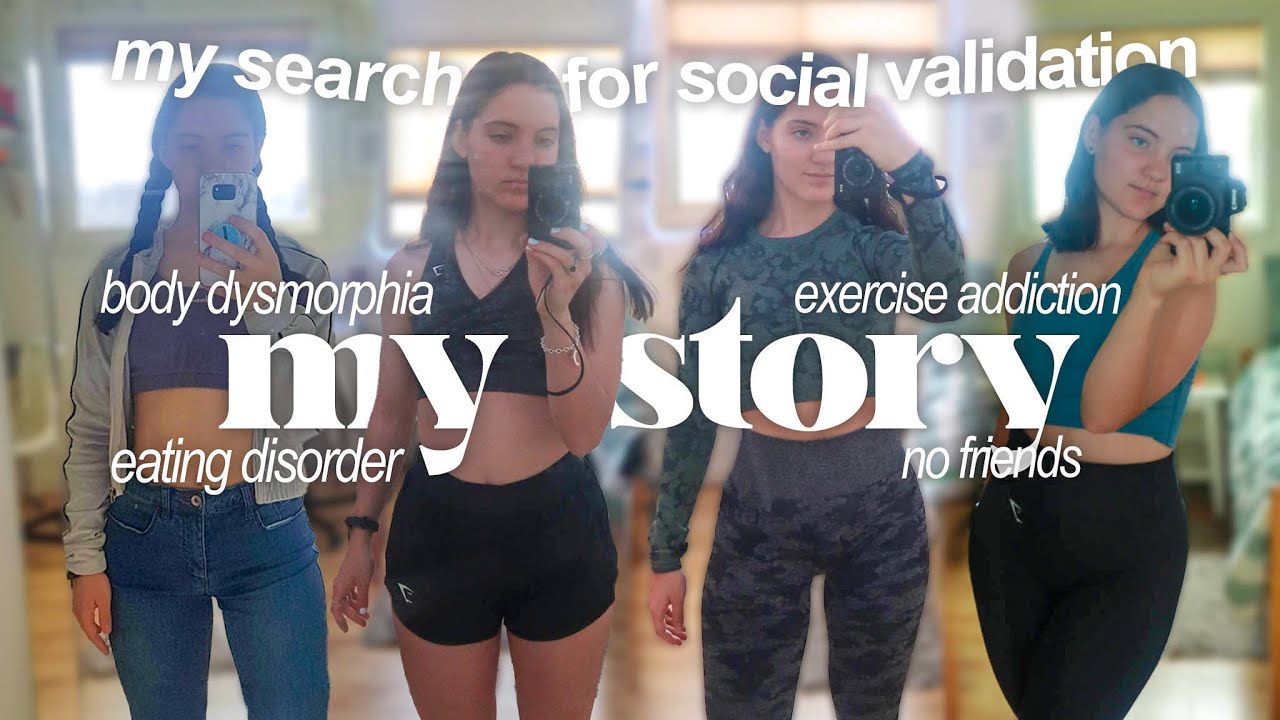
Julesy traces her body dysmorphia back to childhood neglect and financial strain, which sparked an avoidant-anxious attachment style and desperate need for validation. At 13, this became severe undereating and compulsive exercise that exhausted her physically and mentally. YouTube and the pandemic gave her space to heal, and she now has a markedly better relationship with food and her body.
Chapters
The other day I fell into a rabbit hole. This rabbit hole was filled with photos and videos of me throughout the years. Memories of me on vacation, at gymnastics camp, with my cat, camping, at school, playing guitar, singing, dancing, and experiencing what may seem like the perfect childhood. But what wasn't pictured and shown was me struggling to love myself. And my body. Because to be quite honest, in spite of my seemingly happy life, I spent many moments of my day critiquing my body, wanting to change it, wanting to change myself. Body dysmorphia was stopping me from truly living a life of freedom and ease. Hey everyone, welcome back to my channel. So today I will be analyzing and diving deep into my childhood and how it formed My Body Dysmorphia and Struggles with Self-Acceptance. In this video, you'll be seeing snippets of me talking about my relationship with food, body insecurities, exercise addiction, my difficulties with forming friendships, and how all of these subtopics fall into one main topic, and that is my search for social validation. So we're going to begin with chapter 1, which is I'm going to talk about my early childhood and struggles with making friends and early struggles with making friends. I want to start with these subtopics first because I feel like learning about my childhood and telling you guys about it is going to be important because that's like— my childhood is the reason why I have these, you know, bad relationship with food and, you know, bad relationship with my body and body dysmorphia. All of this began from childhood. All this began from everything that happened then. So my childhood. How was it? It was good and, you know, it was good for the most part. I definitely can't complain. Unlike my parents' childhood, for example, I definitely was very fortunate to have caring parents and a good support system. But I do wanna say that I felt like my childhood was definitely chaotic and unstable at times. You know, my parents were, they were struggling financially. They were trying their best to support us. My mom, she was running a daycare, so she was looking after all the other kids. My dad, he worked an office job, so he was at the office. I never really saw him, and when I did see him, it was only for a little bit because he would always go into his room and, you know, do his other things. I do want to say, like, my parents had me when they were still pretty young. Now people have, like, kids, uh, for— we could say, like, in their 30s, but my parents had me when they were— I mean, early adulthood, like, they were still in their 20s. So they're very busy, and, like, my mom was still, like, finishing with university when she had me. So there was just so much going on, and so I guess, like, I don't blame them. They're just they try their best to support us, but I guess through all this, I just never really felt fully acknowledged or valued because everyone had their own problems to worry about. I didn't want to be an extra burden, and so I kind of distanced myself from, I guess, from my parents and my family. And also, I didn't have many friends at school. I didn't have any friends actually at school. And when I did have friends, I would— I remember I would— I ended up sabotaging my relationship with them because whenever I had good people come in, I was like, "Wait, how is this happening? Like, why are people wanting to be my friends?" I didn't feel valued enough. I didn't feel like I deserved to have friends. So I ended up kind of pushing them away before they would kind of— before I would get my heart broken. So instead, because I was expecting, like I was really ready for them to leave me. And so instead of them leaving me, I ended up leaving by myself because I just didn't want to go through all that. And so I guess I kind of had like this avoidant attachment style that I was also anxiously attached because I craved it. Like I wanted love from others. I was scared that people would leave me. So yeah, like at school during recess, I didn't have anyone to hang out with. I saw all these people, you know, playing on the playground, having these friend groups, and I was kind of just there, like standing and looking out. I almost felt like an alien. Just, I never felt like I belonged. I even remember having an imaginary friend that I would talk to from time to time because I was just so deprived of human connection. Like, I wanted human interaction. So early on, I kind of accepted the fact that I was never going to be liked. I was always going to be the ugly kid in class, the one with the weird haircut, the one with the acne, the one with the cringy voice because I had such a cringy voice when I was younger.
Hey guys, welcome back to my channel! I'm Julesy, and before we start this video, um—
The one who would always get picked last for gym class because she was incapable of kicking a soccer ball, the one who would always get bad grades, the one far from the teacher's pet, the one who now has an anxious attachment style and needs constant reassurance from others that they're not gonna leave and forget about her. I was this one, I was that one, I was the one in every negative way, but I, I would never felt like the one, if that makes sense. You know, I'm kind of— I'm making it sound like I need some help, but I'm in a much better place now. So, um, yeah, don't worry about me, guys. But I just wanted to tell you all this because my early childhood, all of those feelings that all those experiences is what fostered my body dysmorphia. This is why I started to hate the way my body looked. I thought everything I was experiencing was because I wasn't pretty enough, I wasn't strong enough, smart enough, I wasn't kind enough, and most importantly, I wasn't skinny enough. When all I ever was was skinny. But I didn't believe that because I thought that if I was skinny, then I would have been popular, I would have friends, I would have been great. Because I wasn't any of those things, I needed to keep going until I was. And I kid you not, guys, I remember like I would spend countless hours watching how to be popular videos, reading how to be popular articles in the hopes that I could apply everything that people were telling me into my life so I could finally change. But how much of a waste of time that was. Like, I could have been using that time to work on me, become better for me, yet I was worrying about becoming better for others. I ran away from being unapologetically me because I knew darn well that would not get me to the top. Heck, if I was myself, I'd be the weird kid. Screw what my grandma said about being unique. I didn't want to stand out. I wanted to blend in. I wanted to fit in with the rest. You know, I can lie here and say that I never ever ever had any friends, but in fact I did have good people in my life that, that respected me for who I was and who accepted me for who I was, but I never valued them because I never valued myself. Myself. I was chasing people that didn't want me. And you know what I realized through all of this? We don't chase people, we don't chase this particular person out of love for them. We chase them because we don't love ourselves enough to accept the fact that they're running away for a reason. We're chasing them for a reason, that is, they don't want you in their— in your life. They don't see a reason to stay in your life. And this is really hurtful to hear, but why would you even want someone who doesn't want you? There's so many people out there who will appreciate your presence in their life. But to find those people, you need to close the doors, stop knocking on the doors that don't welcome you, and doors that do welcome you will finally appear, and you will, you will find, meet people that will appreciate you. Okay, now let's dive into chapter 2, which we're gonna be talking about my almost eating disorder and exercise. Addiction over exercising. Now I say almost eating disorder because I was never actually diagnosed with one. We never actually ended up going to the doctor and the doctor never ended up saying like, this is— you have an eating disorder and this is what you should do to recover. But I did have the signs and symptoms of it. For one, I was undereating. Like, I was scared to eat because I thought that if I would start eating lots, then I would automatically gain weight. I can't pinpoint exactly what time I started feeling extra self-conscious of my body, but I think it was around 13 years old when I started under-eating and over-exercising. Now it's sad because as a 13-year-old, worrying about food and exercise in my body was the last thing I should have been thinking about. You know, my body was still changing, my metabolism was crazy fast, so I should have just been enjoying food and exercise and not putting such a high emphasis on it. I even remember waking up every single morning and the first thing I would do is I would go into my living room and we had this full-body-length mirror in my living room, so I would go there and I would look at myself. The first thing I would do is look at myself when I would wake up, and I would first suck in my stomach. Like, I would do like a stomach vacuum, so suck it in. If I could see my ribs, if I could feel my ribs, then that was a good sign I didn't gain extra fat. And then I would also— I would be scared of getting a double chin, so I would also do this right here, suck in like over here, just to make sure I still had like my jawline. And gosh, I— so I would body check every single morning, and I would also have this one ab routine that I would do every single morning and every single time before bed. It was like 10 minutes, but I remember doing it. I was so consistent with it, like I would, I would do this ab workout every single day. On top of that, I would exercise everywhere. So back then, the passion of my life, my favorite sport ever, was gymnastics. I would do handstands everywhere. I would do gymnastics everywhere, everywhere, and I would also do like push-ups and handstands and jumping jacks everywhere during camping, like when we go traveling somewhere, at the park, vacation. While watching TV, I would even like do crunches while watching TV. Now even though I loved movement, I loved sports, I loved working out, I didn't necessarily do it every single, every single moment because I wanted to. I did it because I was scared that if I didn't, then I would gain weight. Now silly and oblivious me clearly didn't understand how calories and how weight gain worked. I thought that I could only lose fat through movement when that's so not true. Like, you're constantly burning energy. Like, you're burning energy right now just by watching this video. I'm burning energy by talking to you guys. But no one taught me this. No one told me this. I didn't know this myself, and I was just kind of living through, through these assumptions that I gathered from, like, God knows where. And of course, there came a point where my body just couldn't handle it. I wasn't properly fueling myself, and this was very— just, this was affecting me mentally and physically. I remember I would even start blacking out sometimes, and I would even lose track of what I was doing, where I was going. My focus wasn't there. I remember I would walk into a room and I would forget why I was in the room in the first place. Like, I would just forget why I was there and what I was doing. Like, I was just kind of— my mind was kind of like this old grandma mind, really. I was very tired. I would always be very cold. I always— I got bad grades in all my classes, and the teachers would always kind of— many of them would come up to me after class and say, like, "You gotta step it up. Like, what's happening?" And so I just, yeah, I just had no energy. Energy to do anything. And that's so sad. And my parents, they obviously, they started noticing this. And I remember this one moment, actually. We were at my grandparents' house. I finished eating dinner, and I always have very small portions, and I never ended up finishing anything on my plate. So my parents noticed that. They're like, "You have to finish this." And I said, "I don't want to." So I ended up like going to a room, and then my parents ended up following me, and we sat in the living room on the couch. And I remember this moment so vividly. I don't exactly remember what my parents said to me, but they did have a talk to me about my eating habits and over-exercising. Told me that you're going down a very dangerous route. You need to start eating. I don't remember exactly what they said, but clearly they were very worried for me. And something clicked to me right after they had this conversation with me. Something clicked. They're right. If I keep going down this route, then I wouldn't have been here. I would've been very sick. And I mean, I was 13 years old. I had my whole life ahead of me. Like, why wreck everything now? Of course, this process, like, I didn't just like switch my mindset right away. Of course, it took a long time. And so I'm really glad I had this, had my parents that worried about me and had the support system because it's hard to go through these things on your own. So yeah, I'm super grateful for my parents. I'm grateful that they ended up stopping me before it was too late. You know, I just realized that everything I did throughout my childhood and like teenage years for the purpose of one thing, and that was to feel validated. And also keep in mind, I had zero knowledge in health, nutrition, fitness. I didn't know what the heck I was doing, but I was getting results. So I thought everything I was doing was right. I was, I guess, becoming more skinnier. But it's funny because looking at videos and photos, I was always skinny. There was never a point where I was, where I was chubby. But because of this body dysmorphia, I was delusional. This is what body dysmorphia is. You look at yourself and you don't see the actual reality. You see what you're scared of seeing. You see something that you think you're seeing. Yeah, it's, it's crazy. Even like, even now, like, I look at myself and even now I feel like I'm, you know, I'm not the most, most toned or like fit person. I still think that I need to lose weight. I still have that in me, just kind of something I've just become a habit. I don't know, something I need to work on and kind of break away from this like delusional cycle, if that makes sense. I was always pretty thin, but because I was very like active throughout as a kid, I played so many different sports, I had this athlet— I had an athletic build, but I thought this athletic build was just fat. I remember having these baby arm muscles. And I remember my mom was tucking me in for bed one night and I was looking at my arms and I was like, Mom, why are my arms like this big? And she's like, well, because you exercise, you play sports. Those are muscles. That's strength. I remember saying to her, I don't want big muscles. I want skinny arms. Because in social media and in the media, I saw, and even Barbie dolls, for example, I was playing with Barbie dolls and I saw that they were very thin and very skinny and I wanted that. They didn't have muscles. Barbies didn't have muscles. And why Why did I have muscles? So I even remember at the time I was like, maybe I should stop playing sports. Maybe I should stop doing the passion of my life, gymnastics, just for the sake of skinnier arms. Like, how messed up was that? Like, I was ready to give up things that I really loved for the sake of just looking better and like for the sake of my appearance. When that's the last thing that really mattered. It's just, ugh. Yeah, it's honestly like, it makes me kind of angry knowing that I had these thoughts. And I couldn't really control them because I didn't know what was right. Okay, so chapter 4, we're gonna get into high school. You know, they say the best 4 years of your life, but they definitely weren't for me. Like, I just, I freaking despised high school so much. But even though they weren't the best 4 years of my life, they definitely were life-changing. You know, I'm actually really glad they played out the way they did because if they didn't, I feel like I wouldn't have been where I am today. So thanks for a miserable high school, I guess. So yeah, so after miserable elementary school, I actually initially thought high school was going to be so, so fun. I was excited for this change to happen. I was excited to start fresh, make new friends, get better grades. I was really coming into it with much more of a positive mindset. And at the beginning, everything was great.
Hey guys, so I just came back from school maybe a couple of minutes ago. Not really, like 20 minutes ago. Guys, the first day of school was literally the best thing ever. Honestly, it's better than middle school for sure. Like, high school is legit the best. I've joined some clubs already, and then I met a lot of new people, and the school is just amazing. I love everything about it, and I'm just really excited to come to school tomorrow.
I had a friend group. It was just really fun. Then after, everything started kind of going downhill. Maybe it started going downhill because I had the mindset of it. I was expecting it to go downhill. I was expecting to have no friends, and so everything that I was expecting kind of happened. Kind of like I was kind of manifesting this, you know. I had, I had a friend group, but I just didn't really feel like I vibed. I didn't really vibe with them. I didn't really connect, you know. It was hard for me to find people I connected with. It was hard for me to find people with similar interests. And so I actually ended up hanging out with my sister and her friend group during lunchtime, and that was okay. I don't know if my sister liked, liked that I was doing it, but I'm glad she welcomed me in. But then after our lunches ended up switching, so I wasn't— I didn't have lunch with her anymore, so I couldn't sit with her and her friends during lunch. And because I didn't want to sit during lunch alone, I ended up going to the library. Instead of eating lunch, I would be in the library and I would study, and this is my time for me to really focus on my studies and get better grades and just being more productive. So I started studying really hard, and I wanted to get better grades because I thought that when I would get better grades, then I would be really smart and really cool and everyone would want to hang out with me. Right, so, but of course that still didn't really work. But then in grade 11, that's when the pandemic hit, and that's when I was just so happy because I wanted to do homeschool. I wanted to do online school for such a long time. I would always beg my parents like, please, just let's do online school. I don't want to go back to school. So my, I guess my dream came true. The pandemic hit, COVID started, and every class was online. And I really just, it was honestly so great because back then, like, maybe I'll do like a separate video on this talking about like my YouTube, um, story because I've a quote-unquote YouTuber for my whole life. I've had various channels. During high school, I was still— I was recording videos, but I wasn't really consistently into them because I had no time at all. So when the pandemic hit, that's when I really was able to dive deeper into my video creation passion and start posting more consistently. And thanks to the pandemic, I finally found a niche that I wanted to stick to because previously I created videos, but they were very all over the place, like Some were like pranks, there was gaming, it was day in the life. It was just— there was no specific direction of my channel. So I ended up deciding to actually create like this health and fitness channel. I found my niche. I really enjoyed fitness and health, so I wanted to do this and I created it and I was having fun with making videos. And at the time I was still kind of struggling with my— with food and my body. And so by making those videos, I was learning how to love myself more. Like I was learning more about myself and I was sharing my journey in the hopes to show that people are not alone. Not only were my videos helping me mentally, they were also reaching an audience at the same time, so it was kind of like a win-win situation. I was helping myself, but I was also helping other people, and so it was, it was really great. My channel really kind of helped me find a bigger purpose. I started looking at myself beyond just looks and my body, and yeah, I found my, my passion, and it was like my escape and my joy just creating videos for you guys. So yeah, high school was lonely, but then when the pandemic hit, I I became best friends with my channel. My channel was my baby, my, my everything. Fast forward to now, my relationship with food, my body has improved by so much, but I do still have a long way to go in improving my relationship with me. Progress isn't linear, it never will be, but honestly, I'm really happy with where I'm at right now. I no longer worry so much about calories, whether the chocolate chip cookie I ate last night is going to make me gain weight today, or if skipping a few days of working out will make me lose all my progress. Now I look forward to eating and I look forward to working out. And I didn't think I'd get here, honestly. And I'm so grateful for all I've experienced, all the skills I was able to cultivate and strengthen throughout the years. I'm really grateful for all the friends and family I have and for all of you guys watching my videos. Yeah, long story short, this is kind of my whole story. I didn't dive too into detail, but I did open up about a few things. So hopefully you enjoyed listening. Okay, you guys. Oh my gosh, my foot is falling asleep. Um, so before we fully end off this video, I just want to say a huge thank you to Linda Sun. She actually inspired me to film this video. She inspired me. She filmed a similar video to this talking about her childhood and her story a few months ago, and she's just been a really big role model for me throughout this whole, like, throughout my whole, my videos and my own life. You know, watching that video, it just made me realize how much of a similar path we were on in the sense that we both felt inadequate or both felt that we weren't good enough throughout childhood. And this also made me realize that there's so many girls and even boys out there who are going through something very similar to us right now. And I hope after watching my video and watching her video, you realize that Everything does get better. You will— whatever it is you're struggling with, you will get through it. As cliché as it sounds, there is light at the end of the tunnel. You just have to keep going through that tunnel and you will see the light. But until then, let's try to create joy out of every day. Not find it, but create it, because every day is a blessing. Every day can teach you something new about yourself. So yeah, uh, I guess that's it for my sappy inspirational talk. Hopefully you enjoyed once again, and I'll see you guys in my next video. Bye!
More from Julia



Can You Make AN IMPACT in AI WITHOUT a CS DEGREE?| Rooftop Convos with Student Founders
My Last Week in BC Before Moving Back Home | Visiting Vancouver for the First Time!


please have hope! sometimes things don’t work out so there’s room for the right things to come🫶