How to land your dream job with Julia Haber
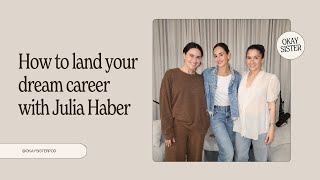
Episode of OK Sister Podcast featuring Julia Haber (founder of Home from College). The conversation covers Julia's background, the pivot from planned physical 'co-living/co-working' spaces to a digital professional-development platform during COVID, Home from College products (the Gig — a Gen Z marketplace; Resume Studio — a free resume builder in beta), metrics and fundraising (organic growth to ~250k users, ~350k resumes created; $6M seed led by GV), and practical interviewing, networking, and hiring advice for early-career candidates and employers.
Questions this video answers
~250,000 (acquired organically, per transcript).
~350,000 (claimed during beta).
$6 million seed round led by Google Ventures (GV), announced at end of last year (per transcript).
90% (claimed in transcript).
Chapters
It's interesting because as you evaluate people, you have to evaluate kind of the whole picture, but the only thing that matters is, like, the bite, the grit, and the passion.
Yep, absolutely.
But that's also the hardest measure, and it's a gut thing.
Welcome back to ok Sister Podcast. My name is Mads.
My name is Scout, and as always, we are so happy that you pressed play today.
And as always, we are sisters. Irl.
Oh, okay. Yep, that too.
You know, it is an exciting development in my life.
God, that was so annoying. What? I just did that, too. That was. I'm like, just imagining me watching the replay of that and being like, God damn it, Scout, zip it up. Okay. What?
You know what? Just. You need to embarrass yourself on the Internet and just. And just like, keep going, keep going. Can't look back, can't look.
Can't look back. Keep going.
So a big development in my life recently is I have been wedding venue hunting.
Yeah. I think it's the most exciting part of the whole thing. Because you're imagining all these possibilities.
Sure. There's a lot of possibilities. It's also a bit anxiety inducing because I'm like, what if I pick the wrong one? What if I have regrets? What if I'm not looking at every option? And I know that when I see the one, like, it will feel like the one. But I have. I typically have good decision making skills, so I don't know why the. The venue is. You know, we still have to see a lot. A lot more, but, like, the ring, I knew exactly what I wanted. The dress, I know exactly what I wanted. Like, I don't have any other options for those two things. So I'm like, why is the wedding venue not like, that's the one and that's it.
I want you to keep a little bit of an open mind around the dress because it really depends on when you see it on you.
Are you telling me that I need to lose weight?
No. I don't know. I'm just saying that I had the dress.
Yeah.
As well. And I tried it on and it. I was too short for it. Like, it just. It just like.
No, I'm like, that's my worst nightmare is us. We're gonna go to loho and I try it on and it's.
Yeah.
It doesn't look.
And it might not look good, or it could look good.
Aren't sucking me in and.
Or not even that. It could look really good. But you're.
Take a photo of it.
You're like, this Isn't it, like, it just happens.
I have literally, I have visualizations of me trying it on and crying and.
Being like, I had the same thing. And I tried on a cocktail dress. My wedding dress. I'm obsessed with wedding dresses, by the way. Like, I watch this. Yes. Whoa. I watched all of say yes to the dress. I have been. I was dreaming of actually having a budget to buy a stunning dress. And I tried on a 500 cocktail dress. I know. And just bald hysterically. Yeah, bald hysterically. So, like, just keep an open mind because you never know.
Anyways, I. I have a feeling I'm gonna love it.
I hope so. I don't know.
We'll see. Oh, the day we go to Loho, baby.
Oh, yeah.
I'm excited.
10. Yeah, it's gonna be good. We have to pick the venue first, and then we got to think about the venue.
Do you think now that you know the dress and maybe the sisterhood won't really understand what we're talking about, but it'll all make sense soon since you know what the dress looks like. I feel like it's pretty versatile. Or do you think it only looks good in, like, a desert?
No, I think that the dress that you want is gonna match all of your aesthetics.
I think so, too.
I bought my dress for the. We were getting. I was supposed to get married at a different venue. They ghosted us.
Oh, in Palm Springs?
Yeah.
Which one? Well, I'm really glad you went to Parker because it's more iconic.
Yeah. Yeah.
What if I got married the Parker?
I would love that. What?
I would love it.
Wouldn't that be weird?
I don't know why you're not going to look at it. Wait, what? I, like, genuinely don't know why you're not going to look at it.
Wait, why would you want me to do that?
Because it's not my hotel. And I think it'd be really fun.
It'd be back to way too colorful for me.
I mean, that's what I said. But look, like, you have to. Okay. So the colorful parts of my wedding aren't on the camera. Like, there's. Do you know what I'm saying? Like, sure, sure. The actual wedding had no color to. It had a lot.
But the.
The Parker provided the most magical ambiance and stay for our friends and family. Yeah. It, like, added to the experience. But if you look at all my photos, there's no color.
There's no color.
The wedding had no color.
The wedding had no color.
Okay.
Yeah. My wedding is going to be colorless. It's gonna be just Jenny Kane.
I'm gonna wear it.
I want it to feel like we are in a Nancy Myers movie.
I'm gonna wear a black ball gown.
That might not work.
You sure? With this?
It just might not work with the vibes of like. I don't think I'm going like ball.
Gown, but I could go ball gown.
Yeah, but the rest of the people are not gonna ball gown.
Also.
Did you know that you have to dance down the aisle? I don't think I've told you this.
No, no, no. Is this a Persian thing?
Yeah, you have to dance down the aisle and you get.
Yeah, you do.
And you're gonna get. You can put. You can pick any song you want. Of course I need to approve it, but you can pick Pitbull any song you want.
So there's going to be 30 different songs that are playing.
There's only four people walking down the aisle.
So every.
Each one is dancing.
No, there's going to be six. There's going to be mom, dad, Ben's.
Parents, Mom, dad are with me. Okay, Ben. Okay, so it's Ben walking down, Ben's brother, you, Ben's parents, and us.
That's it. I have to go alone and you have Sam and I can't do it together.
Oh, and then Lily as the flower girl.
Oh my God.
So she goes dances alone too.
Oh my God.
And so you can go with Sam if you want. And you and Sam can dance to Pitbull as you go down.
Can I do turn down for what?
Yeah, you could do whatever.
Can I pop lock and drop it on the way down?
Yeah, but you have to dance.
I just got so nervous and now I want to get off the mic because I'm really scared for this moment.
I forgot about that. I had to tell you that.
Oh my God. Yeah, I'm wearing a ball gown if I have to do that.
Okay, you can wear a ball gown, but then you need a dance.
You don't need to like pop long and drop it. You could just be like, oh, God. So awkward and cringy. It's so bad. It's so bad. Okay.
I mean, Ben was like, just show her the video of the office where they.
Yeah, exactly. That's exactly what I'm thinking. It's not like that.
Persian weddings, when they walk, they go down the aisle. It's so fun. It's like a whole party. Everyone is dancing, like in the stands, like it's a whole thing. Okay, so you're gonna Dance.
Okay. I have to come up with a good song. Yeah. What if I choose, like a really emo song?
No, I get veto power, so I need to approve it.
Okay.
There no edm.
Okay.
You can do rap.
Okay.
But like tasteful rap.
Tasteful rap. Okay. Tasteful rap. So not. Okay.
Maybe not turned down for what but like a pimple could be fine.
Okay.
Worldwide.
What about My House by Flo Rida?
Sing it a little bit.
You don't know that song.
Just remind me.
Welcome to my. Yes.
Great.
Because everyone will be like, your house. It's not your wedding.
Okay, now I need a different one. What about. What about Jonas Brothers? Should I do roller coaster?
You could. You need to. You really need to think of what it. What would translate to a dancing down the aisle moment. Keeping up the energy. Also, what will you not regret in 10 years?
What will you not regret? Let's put it that way. This is not my wedding. Okay. A lot to digest, a lot to think about. My role has shifted in the wedding. This is how this is.
Yeah.
What is Sam doing? We.
We. We haven't.
I don't know.
He has to pick out a song. But I need to. I. Veto power.
I'm going to. I'm going to have to text him.
Yeah, you guys got to strategize. Give me a list of options and I will. I'll get back to you on my selection.
What if it's Confessions by Usher?
Honestly, that could be funny, I think. Yeah, could be funny by Usher.
Yeah, it could be funny. Okay, we're recording. We're like, I think we've been talking about this for a long ass time. Anyways.
We just like totally forgot that.
We totally forgot that recording. And we're like actually trying to figure out. Exactly. All right. Okay, so before we get into this episode, we want to read a little review that we got in dm. So we'll keep the person anonymous and then she'll probably DM me and say, why did you keep me anonymous? But we're gonna do that because I did not get consent to. To share this. You guys are just giving us such sweet dms lately and it's literally making my whole entire life. So we wanted to read one that we got the other day. She said one of the sisters literally obsessed with my Monday mornings. Today's episode felt like I was at a sleepover with my best friends, drinking wine and gossiping about boys and shows. You gals are just cute.
Literally, like, that is the definition of okay, sister.
If you had to, like Bottle up.
Okay, sister.
But then, like, add in like a little bit of, like, mindset work. And that is the ethos of okay, Sister podcast.
I love it.
So thank you. We love that. If you DM us a little message, we might read it on the podcast.
And always.
And we welcome voice notes as always.
Oh, yeah, I was sending one of the sisters.
You know what? I would love that if you guys could send us some voice notes. And then before or after just be like, like, yes, I consent to this being, like, shown on the podcast. And then if they're really good, we'll, we'll like, we'll play it on the podcast.
Okay. We'll have to figure out how that I like experience works. We'll figure it out. Figure it out.
We'll figure it out. Anyways. All right, let's get into this episode.
Holy.
Okay, so we had one of my good friends, Julia, who is the founder of Home from college on. And I feel like we have never had an episode about this topic, which is career best practices for interviewing shift changing career paths, just how to get your first job, internships, like, just so much value around the back end of career building and getting jobs and all these things. Also, we kind of talk, since both you and I are in the position of employer, what we look for when we interview people to bring on the team like it and. And just Gen Z trends when it comes to creating it blew my mind. And she is creating one of the most unbelievable platforms.
Yeah. We give a couple hot takes on what we don't like in the interviewing process, which I got a little heated. I'm not gonna lie.
I was gonna be great for Tick Tock. I'm excited for us to go viral because it's controversial.
Yeah. Love that for me. But yeah. And honestly, I think at the end, I think I just looked at Julie.
And I was like, you're like, really cool.
I think I said that, like, straight.
We always say that we're in the pursuit of finding the third sister and Julia is a top contender for sure.
Yes, yes. She is giving third sister energy. So you sisters are going to absolutely love her. So with that, let's welcome Julia from home, from college to the pod.
Ms. Julia, welcome to OK Sister.
I'm so happy to be here. Can I be the third sister?
You're giving third sister any look alike?
Yeah. Yeah.
What's your background?
Who are you?
I'm like, just a Jew.
You fit, right? Yeah.
Okay. You're the queen of slick back buns. I don't think I'VE ever seen you without one.
Really?
Well, okay. Like, just in our defense, she has really great hair. Like, she's. Look, your hair looks. The roots are nice and easy.
The thing is, I chop my hair short. Like, maybe in Covid, it was short and then it grew out. And we're in a transition period right now because I'm getting married in August, so I usually have it short, but I want to wear my hair back for my wedding. So it's in that in between stage where it's not like it's Lord Farquaat.
Oh, my God. Great reference. Excellent reference.
Do you know what I mean?
Yes, I know what you mean.
So you just can't, like, really go out there in the world like that, honestly.
Yeah. So you're pulling it back, but you always pulled it back.
Yeah, it's. I like, just do it because it's easier and I don't have to do it. But I made a 2024 mission after the wedding to do my hair more down because I should make an effort. No, but I love it.
It's like your signature. Everyone should have a signature. You know what I mean? Like, it like I'm a matching sex.
You're Jenny Kane.
I'm Jenny Kane and I'm matching sex.
Yeah.
That is just totally.
You can.
When you see me, you see this?
That's my signature, I guess see through bras.
What's going on?
Just want one compliment. I just want. I'm trying to get one compliment. I've taken a beating the last two days.
You look fantastic. It's giving. When you. When we went on your bachelorette party.
No, but I'm not asking how I look now. Sorry. I'm saying what you're saying.
Your signature thing is like high fashion, little stiletto heels.
Black. I think it's just black. I think. Okay. Just black clothing. Even though that's not what's happening right now. The bra is really.
Yeah.
That's very interesting. Because I'm from New York and all I wore was black. And then I came here and I felt a little shamed for wearing black at the time.
I consistently look like a New Yorker, but I won't say San Diego.
People think we're from New York.
Yeah, well, her because she's loud, and then me because I wear black.
And you also both talk fast. So that's.
I think that the Jewish culture and New York, Indian, North, New Yorker, New York.
What did you.
It's been a long day. New Yorkers have a similar culture. Like, you know, there's Just like a little bit of underlying. There's an urgency, There's a fast pacedness.
Yeah.
There's a drama to it, right?
Absolutely.
There's a drama to everything.
And there's a volume of the voice that just does not go lower. Like sometimes like here I'm like, what? Like, am I deaf or are we all on a different frequency?
I know I was good. I was going to make my caption when I got engaged being like, I'll.
Pay for the ear or like the.
Hearing surgery later on.
Babe, don't worry.
Like, he's going to be deaf.
Yeah.
Like, yeah, he's a very quiet man. Yeah.
That's a good compliment. That's what you need.
No, we need. Yeah, we need to balance out for sure.
Yeah.
Okay. We are so excited to have you on because we have never talked about this topic and so I think it's so relevant, especially now. Just I feel I hear so much about the job economy, what's happening with jobs. First, first of all, let's just like talk about what home from college is because I want to talk through like interview best practices, how to get a job when you're right out of college. But also, you know, a lot of our audience is maybe a little older. If you want to do a career shift, we have a lot to cover. So first let's. Let's do home from college. Perfect background.
What a name, by the way. So a good name.
Well, it's so funny because the story is actually like kind of wild there. Long story short, I have been building businesses in the college space since my freshman year of college. So like kind of found a niche with the audience, was excited about the demographic, thinking about their future, working with brands who wanted to reach that demo. Built an experiential marketing agency and ran that for like six years and had been to over 100 college campuses. So spent a lot of time and have this vision to build like Soho houses on college campuses. I was like, oh my God, how cool would it be if there were these like co working co living brand experience hubs on remote college campuses across country.
That is like my sister, like, I feel like Maddie going to college. She's the target.
That would have been me totally too.
She's the target person.
And this was when like the wing just came out and we work was not in its era all the things. So basically started this concept and signed like seven leases to open spaces all over the country to build these activations and hubs where students would have these basically like co working Spaces. And we had everything ready to roll. Opening our first space September 2020. And obviously Covid hit. And I said to my co founder, who's also my fiance, and I was like, everything we just built is not gonna happen. Let's pivot. And we got out of our leases like March 15th.
Wow.
And.
And I said, what if we buy the domain? Homefromcollege.com Every student just went home from college and we like had a branding agency we already had hired and we told them and they threw up a landing page in 14 days, basically. And we had like hundreds and hundreds of students sign up every day. And within a two week period, we had like over 25,000 students on this like, wait list of like a landing page that said homefromcollege.com a place to help you start your career. And that's kind of just wild.
So many questions. Were you going to do the seven leases at the same time? Like, you signed all seven leases. Did you have investors? We did.
We raised money.
What happened? Did you use the money then to funnel into the next thing? Wow. And you probably didn't need that much capital in this new thing because it wasn't brick and mortar.
Yeah, we really didn't raise that much money yet. It was kind of like contingent on the first activation. So we signed that initial lease and we had enough to pay for that. And we had these subsequent leases that were signed. It was like under the same hold co. So they were like, okay, you can activate in this area. It was an apartment complex that had housing in different areas. They're like, you do Syracuse first, we'll give you the space and all these other units, but you don't need to pay for that until the other ones are.
Oh, wow.
It was like a very interesting deal, but it was just.
Yeah, my mind is going like, whoa, that's a lot of money. That's a lot of money transfer and all this. Okay, got it, got it, got it.
Nothing was. Was the same transferable. But we called the investors and they were like, great. Pivot.
Pivot.
Yeah. Did you ever think, though, that you would get into this marketplace of connecting college students to brands? Like, I knew that you were going to do that in the IRL space, but now it's. I mean, you, you're like a next gen. Almost like upwork in a way. Would you call it that?
Or the way we call Home from College is a professional development platform for. And we have multiple products that support that phase of life. We started with a product we call the Gig and we call it Gas. Gen Z Access as a service. And essentially it's a two sided marketplace connecting companies with college students at scale. Similar gig economy like Upwork and Fiverr for that specific product, but more towards the lens of access to college students at scale. So product testing, focus groups, Gen Z advisory panels, user generated content like Steve Madden doing an activation on 10 different campuses and needing it staffed with students in Oklahoma and Vermont and Virginia, but also on the career side as well, like business development, interns, research people, things of that balance. So that there are career advancing opportunities, but also a way for brands to work with college students at scale, which is kind of like solving the ooh, cool brand thing, but also professional success. Yeah.
What, wow.
What excites you about college students and helping them? Because when I think about like the most distressing time in my life. Yeah, I mean that's why you need to service them. Because there is so many, so much uncertainty. I just, even to put myself back in that space, I just would never want to. So what is it about college students that just like makes you so passionate to help them?
I think honestly I did not love college. I talk about it publicly. I felt like I was ready for the next phase of life.
Where did you go to college there?
Went to Syracuse.
Oh, you went to Syracuse. Okay.
Yeah.
I was in new house at Syracuse and they allowed me to hack my whole major and start my first company. And we're incredibly supportive and I'm still involved in the school, but I didn't love academic learning and I always felt like I was so good in the wild and in the world, but I didn't get the chance to do that while you're in school because success is measured by what you get in a multiple choice test. And I grew up with a learning disability and I never felt like I thrived in that traditional setting. But when I was put in a professional environment, I felt like I was a whole new person and I always knew that other people must feel that way as well.
Yeah, I went to, actually you're literally speaking, I went to like five different colleges. I dropped out twice because I was just like, this is this, I'm struggling with this one. This doesn't make sense to me. While why I'm studying like British literature of the 1800s and I have to study that for you to give me a job. I literally went to companies, I went to PR agencies, applied for the internship, showed up to the interview and I said if I dropped out of college, would you give me the job instead of the internship. And they would be like, we got offense. I was like, please, I'll start today. It was like I literally asked jobs if they would hire me without. And then when I dropped out of college, I did apply to a couple jobs and I just left out my education and no one even asked me anything.
So I should have just.
Yeah, okay. Anyways. But yes, I resonate people don't feel.
Empowered to even advocate for themselves that way. They just feel stuck. So I thought there had to be a way to not dis a traditional academic career because there's value in getting an education and whatever. If you don't equate the value to the dollar amount, that's a different conversation. But we're never trying to replace college. We're just trying to make you be a more holistic person and get experience and learn about yourself and many students. We have over 250, 000 students on the platform, which is crazy, who have all been acquired organically. Like all word of mouth, referral, tick tock organic. And they, most of them are getting their first ever experience earning their first, first ever dollars. Like all roles are paid. So it just, it's giving a chance to begin. Which feels like is not a narrative. So I think it's because I felt that I didn't have the right launch pad. And I had two amazing internships when I was in college that paved the way for my life. And I realized when we did research on it that 90% of students graduate without ever having an internship.
Wow.
Which is wild. Like that's just not talked about.
Because they're really competitive.
Yeah.
And it's.
And sometimes back. Back in, they didn't pay. Right. Not an option for so many people.
Who can afford that.
I mean.
And it's all about who you know, a lot of it. Which like for instance, I was so fortunate. I interned at NBC Universal. And I'm so grateful that I was in that environment because it also made me learn what I didn't like, totally. Like, I.
That's almost more important.
That was the first. That was my first and only corporate, like full corporate experience. And I was like, nope, not for me.
Can we go through and say what internships we had? Because I think it's fun. What internships did you have?
Okay. I was at NBC Universal for two semesters one summer. And then one, like during the, during the school year. And then I was Jennifer Meyer's intern.
Oh yeah, that's right. That's right.
I was her intern. I, I like just helped stock Jewelry. It was really the whole thing.
So funny.
What else did I do? I think that was it. And then I started.
Yeah.
And then I started working.
I interned at Dossier Journal, which was an indie magazine out of Brooklyn. And I went to this girl's brownstone every week and helped her. And I.
Like, when you were at Sarah Lawrence.
Yeah. Mailed magazines at the UPS store. That was like, my job. I would, like, go with a cart with a hinge and I would do that. I interned at Interview magazine, which was. That's good.
I didn't know that.
Incredible. Because I was the girl who was running the clothing back to the showrooms. So I went to Lanvon's showroom and Alexander Wang's showroom. But my two bosses were like the stereotypical bitch fashion people. And that's when I realized, like, the culture is not for me. Like, these clothing are really great. Why do you have to be a bitch to me? Right? Like, it was just really toxic. And then I interviewed at C Magazine here in la.
Oh, my God.
And then I think that's it.
Yeah. A lot of magazines.
Yeah.
Yeah.
Why did I not know anything?
That was what I wanted to do.
I know.
Did you read like, all those rom com books that were like, she worked at Harper's Bazaar. Like, you know, Remember that's like the theme of all of those. Like.
Or like Devil Wears Prada.
Yeah.
Like, you could have did that. I don't think you would have.
So that's the point of it is that I found out that I didn't like the more corporate, like, bigger institutional stuff. So then I started my own. But that's like, what I learned from that. Okay, where did you intern?
So I actually went to a really, like, non traditional high school. And my junior and senior year of high school, it was called the alternative school. And you took your normal science math classes during the day. And then there was this like, learning for the sake of learning. Socratic method, where essentially you sit in a room on chairs. You could graffiti on the chairs and you learn by conversation. So there's no tests or essays or anything. It's all essay based. And they. Every Monday.
I know Scouts.
Like, that's my Lawrence. It was all essay based.
That's so funny. Every Monday you could go. I lived outside of New York City into New York to Internet. So I interned my junior and senior year of high school, which was an amazing experience. So I intern at two bitchy fashion PR firms. Same thing.
Yeah.
Like, you know, I only want, like, banana peppers in my salad. And like, can you go to Subway and get banana peppers and then put it in my salad? Because they don't serve them at whatever. Just like mean girl PR thing. And I felt exactly the same. I was like, I don't have this in me for what, like, to be. Yeah. Just the whole energy was not it.
Yeah.
And then interning college at Spotify my sophomore year. And then my, my junior year, going into my senior year, interned at Snapchat, which was like in the 2021 tick tock era, where it was like, really cool. Very relevant, still kind of scrappy. I interned out of Venice, out of Matthew McConaughey's, like, old apartment. And his, like, bathtub was still in the living room and they had just, like, just gone public. So it was just a wild time, but insane. I had 11 interviews for that internship.
For that internship, that internship.
And they didn't, they didn't have any roles on the business team. There was two spots and I networked with some girl in my sorority for six months before. And then she called me two weeks before the internship started that they had a spa and I moved to la and a week before the role. So it was just a whole thing.
Wow.
But it was amazing. And I'm still super close with all those people.
Wow. Also, as happy as I am real quick about how you can't really get away with treating employees like that anymore, I kind of feel like it's a little bit of, like a rite of passage to have an internship where the boss is just bitchy as fuck. Like, you learn so much from that experience.
I have to say, though, it's not happening anymore.
No, it's not happening at all. At all.
But also because people are so afraid of Gen Z to cancel them and just be mad at them and like.
You know, and like film them being bitchy and then they get canceled.
A little bit of a. There's a little. I mean, like, I feel like that's too far on the other end. And I feel like what we experienced was too far on the other end. And I feel like there needs to be a middle ground because having bosses that are just insane is such a formative experience. It just is like, it just teaches.
You about the world. It's not sustainable. Like, you can't be at that job forever. But it is something like, yeah, I've had crazy, crazy bosses.
And, like, it makes you appreciate a.
Really good boss and also.
And also who you want to be.
Exactly.
But it also makes you feel like the world isn't like like, set out to make me feel comfortable in certain scenarios and I have to, like, show up the best and.
Yeah.
And like, figure out how to navigate this. Because no one's gonna tell this person to stop talking this way to me. Like, I have to figure out how to navigate this.
Absolutely.
Yeah, I think so. That kind of leads me, which we've been talking a lot about how the world doesn't owe you anything. And I think Gen Z definitely that might be. I mean, that's even something they say about millennials, right? We think that things will be just handed to us, that we don't have.
To work for it.
And what are you seeing in interviews? Because you do. So everyone needs to follow Julia on TikTok because you, I mean, you throw shade. You like, you like, tell specific examples. Like, I just got off a call with someone who's interviewing.
You should not do this. And I was like, tell me the horror stories. Tell me some horror stories.
Sometimes I have to, like, combine a person so that it's not so obvious. Because I know people look me up on TikTok before they interview me.
And they're like, well, then they should know better.
And they're afraid I'm going to make a TikTok about that, after which I do for sure, but only for the sake of informative things. Because I feel like there are some rules that are just like obvious baselines that people should do that are just not happening in this day and age. Like, I get a lot of shade for this, but I think you need to send a thank you note if you don't want the job.
Yes, Amen. I wait for that. As an employer, don't email me after and say that you really enjoy talking to me. It's so hard for me. Even if I loved our interview, I'm like, like, she didn't send a thank you email. She didn't send a thank you email. It's hard to get past that.
It's also because there's so many people you're going to talk to and it all kind of blends. But also you want to know if they care.
Totally.
And maybe if you're at a big corporate business and you don't really, you're just another corporate employee and you don't care that much yourself, fine. But if you're a small business, you're a small business. Or you are someone who is trying to build community that matters. And the reference of what the they say in it and their tone, if they actually want it or don't like that matters. So that is a controversial part. And point.
Why is that controversial?
I did a TikTok about that. People freaked out and it has like three and a half million views on it. And people were telling me to go to hell. Yeah, they're like, you entitled piece of shit. You should be sending me a thank you note. You're the one who's employed.
Yes.
Oh, those people. Okay, I'm sorry, I'm sorry. As an employer, I get afraid to say these things too because I feel like I have to coddle a generation and make them feel accepted, et cetera. There is just. I don't know how far I might cut this out. There is a difference between an employee mindset and an employer mindset.
Absolutely.
An employee will never understand what an employer goes through. And it is a symbiotic relationship, but it is not one where you just take and take and take, take. So that is the most absurd thing. And they can say these things all they want on the Internet. By the way, guys, say what you will, you're not gonna getting your career, period, if you act like that. Period.
Wow.
You decide you want to keep being employed and go tell her to go to hell. You keep being employed and tell her to go to hell. I get married. I'm sorry, I've never unleashed this side because as an employer, it's rough.
It's rough.
No, that's.
It's fucking awful.
I've never seen that mindset and I think that is a key difference of what's going on right now.
But it's interesting because TikTok doesn't discriminate by age in controversial things. So you. I would have like 55 or 60.
Year old men yell at me.
Like who?
Oh, they just always keep yelling, those guys.
But then there's like the people who for sure are like hard working, you know, frontline worker type people who feel that that's really off and then you have just like entitled others. So it's like whole gamut of the archetype that's on TikTok that responds to these things. And that's why I post a lot about it, because it's pretty controversial in different people's mindsets. But for business people like us, it's like duh of like worse. Why wouldn't you.
Okay, wait, what's another one?
I got very heated.
No, that was. No, that was.
I can't believe you called that controversial. I was like, I will not live in a world where that's controversial.
That's just ridiculous.
That's ridiculous.
Let me think. Another thing, I feel like people just don't ask questions in interviews. That's really surprising to me. The other day somebody came in and I always in an interview say, so tell me what you know about home from college. Like, where should we start? Not because I need them to tell me, but more to get a sense of, like, how much do we know? And how much work did you put in to prepare for this conversation? Because if you want something, you're probably going to take the effort to at least research it, have a general guess. You can disclaim it and say, hey, I'm not totally sure, but this is what I understand is going to give data. So that is always really informative, like how comfortable people are articulating what the business is and what questions they have outstanding. And then just straight up saying at the end, so what, what kind of questions do you have? Like, what are you curious about? And people don't know what to ask.
Or they ask, or they ask, ask how much PTO is there? What's the salary? Like all of this stuff that it's like, you got to think of it as dating. Like, that's the stuff you ask.
You ask, do you want to get married? Do you want to have kids?
Somebody. We interviewed somebody in person yesterday. I love it in person interview. Good, good content, good inventory. So this girl comes in, she's like, oh, I just came from the dealership, some car, like literally, like first, first round interview, like just came from the dealership, like too much information. And then she's sitting there like lying back on our couch and she's like, listen, like, I just need to know if this is gonna be quality of life worthy salary for me because I'm just not in the position where I can compromise on that right now. Listen, I get that girlfriend, like, I totally do, but just find another way.
It's the energy, it's the intention. You can absolutely give me, give me, give me, give me. I'm not gonna work here if you don't give me, give me, give me. It's just like it's such again, I keep coming back to this. That's playing the short game. Especially if you are getting out of college. I understand that finances feel tight. I get it. I know that you might have student debt. I know there's so many factors that go into making financials so incredibly stressful. And this is the time, this is the time to play the long game. Play the long game. Do not worry about the salary. Don't worry about Having the lifestyle you have. No marriage, no children, no mortgage. This is the time to take the short, to take the long term, and just start from the bottom. Like, it. It's. It's just the time.
It is.
Because one day you literally will not be able to take a job without a certain salary, and that limits you tremendously.
Absolutely.
Oh, my God. What is the most telling interview question that you like? What's the one you love to ask? Because it's like, it. Like their. Their response is. Is like, very telling.
I also did a tick tock on this. This also went viral.
Oh, my God.
So much. Even more hate. I can't wait.
I can't wait.
Julia's also. When I go to. When I get hate, I freak out. But then she's like, oh, I love it. Engagement. Like, give it to me.
No, but this one got a lot of duets from angry recruiters, which was different. That made me nervous because I was like, wait, I'm not a recruiter. Like, I'm not an expert in this. But then I was like, oh, fuck that. Like, no, I am who I am. Whatever. Everybody has their own opinion.
Yeah.
So I actually stole this from Barbara Corcoran. From Shark.
Yeah.
Because she said that every candidate should ask, what about you? Gives me pause. Why wouldn't you hire me? Which I love that. What about me as a candidate gives you pause to not hire me? Like, is there something that gives about me as a candidate that gives you pause? And I love that.
So you ask that or no.
The candidate asks the employer if you're applying to a job at my company. You say, that wasn't my. That's not the tip. I can't flip it. But you would say, so what about me as a candidate? It gives you pause in this role. Then it forces me as the potential employer to expose something about you that I may not like, but it gives you the opportunity to combat it. So somebody asked me that actually in an interview I was gonna pass on her.
And.
And I said, I'm actually not sure. Your experience with community building, you know, that would be my biggest red flag or concern because, you know, there are other people who have a little bit more experience.
Sure.
She rebuttaled. Hired her.
Wow.
So I have the ability to take feedback like that is open and vulnerable.
For something like that. So I now ask, and it's important for me, and I'm curious for you too. And for you when you're hiring and you say, you know, what about this role gives you pause? If I were to Offer you this role today. Why wouldn't you take it?
That's interesting.
And especially as a startup, you can learn. Okay. They're concerned about the salary or their financial motivation. They don't know the upward mobility. They maybe have trauma from their current workplace and don't know about the quality of life they can have. And they will tell you like point blank tell you because it's cast as you off guard.
Do you want to wait? So wait, what's.
What was controversial when you said that?
Oh, people said like, they're trapping you disrespectful. Like, you can't be expecting people to answer that in that way. You're not giving them all the information. You're the topic. Toxic employer. Red flag, Red flag. Like all those things. I'm like, yes, give it to me.
Oh, my God, I love you. I need your energy. Do you want to hear the best question I've ever been asked as an employer? It was on an. I was interviewing for an employee and she said, and I don't remember the exact wording, so I'm paraphrasing. She said, if you hire me in six months, where do you want me to be? What. What would success look like for you if, like, what did you know I always like.
Yeah, yeah. She said, like, if I were hired and in six months, what would me doing a successful look like to you?
Yeah. And I thought that was so good.
That's amazing.
Good question.
Because then it also has you visualize her as an actual employee and.
And it also reveals a lot about to her what my answer was. And my answer was, in six months, success looks like to me that you love working here and you love coming to work and you do your job with a passion and an excitement. You feel connected to what you're doing and you fit in culturally and you just really like your life and you're empowered at work. That's what success looks like to me from an employee. And it was a good way to reveal because then I was revealing the type of company culture we have and stuff. So I thought that was really excellent.
Yeah, that kind of reminds. Okay, so now I want to talk about the employer side because I guess I wasn't going to ask you this, but now all of us are in positions where we are employers, which is kind of crazy. Like, right now I am looking for someone to help with TikTok and to help with my social situation for Camber. And I literally don't want to even go through the process of hiring because. Because it feels too Daunting. I don't, I don't feel like I have time to set up all these interviews. It kind of feels like getting investment. Like it's like a whole separate job to. I understand. And also I've never hired someone, so I'm like, will I be vetting them properly? What if I make a mistake and then I hire them and then it doesn't work out? And all these things that feel so much pressure, especially for a first hire. So on the employer side, like, what is a way to make sure you're getting quality candidates? You're not wasting your time? Because as you said, like, yeah, what if someone came in and said that to me and was like, oh, you're not going to give me six figures. But I'd be like, like what?
Yeah, it's exhausting. Like there's no, there's no nice way to say it. That that candidate on paper was 10 out of 10, like exact experience. We're hiring in Los Angeles, like checked all the right kind of boxes that you would never know unless you meet them or interview them. There's no way to not waste your time. But every conversation will be informative in some direction. And we've hired and fired people, so the process of doing that is never fun. But us, the reason we have fired people is because we didn't actually listen to our guts in the initial process. And you, you put your desperation on the employer and you make them something they're not. It's like a relationship. Like you make somebody your future husband, but they were never going to be that anyway. So I think it's half about your own self awareness for what you actually need them to do in the role that you cannot do. And I find that much harder in roles that I actually am capable of doing. So like anything interesting? Yeah, sales or product design or community, like, I can kind do that in some areas better than others. But if I'm hiring an engineer, I'm like motivated to do that and really excited because I cannot do that.
I see.
So maybe there's a level of apprehension too because you know, too much. Like you are aware.
Absolutely. Like I get to a point where I'm like, oh, I can do these things, I'm doing them right now. So this is like an outsourcing block. Like right now it would be just be outsourcing work that I'm like, like, well, what if I free up all my time and don't do anything? Which of course is not gonna be the case.
It's just a new it's just a new level. I like to weed people out by doing an Easter egg in the job post. So I say, if you're interested in applying, please respond to this email and put in the subject. Like, I wanna run podcast tours, but I in there, I put it in all caps lock. So if they put in the subject it in lowercase and didn't do it exactly as I said. Oh, what? Oh, that's interesting. That's a detail that they missed, which means I have to explain to them that I want it in uppercase.
But do you put this exact thing?
I say, please put in the subject and then in quotes. And I do in all caps lock. I want to run podcast stores.
Interesting.
People need to look. That's a detail thing. That's a detail thing. So people who don't do that, it's just kind of, it's in the middle. They're weeding themselves out, and they're weeding themselves out. So I do something that weeds them out in the beginning. And then for me, specifically for the type of role that you need versus like an engineer. Right. Stuff like that. It's so much more for me about how badly do you want the job? Like, the person that wants the job the most for stuff like that is usually, in my opinion, the person who's willing to get their hands dirty, willing to learn, wants to prove it to you. Like, they are excited and you want someone who's excited. So it's about like, I remember one of my girls who works with me, she came and she was, was like all dolled up. I was like, girl, you look way better than me. She goes, this, I. This was my most important interview this week. I was really excited and I was.
Like, that's such a difference.
I was like, you're hired.
Ask you anything else?
Yeah, those little, little nuances, I mean, I think that makes such a difference. It's interesting because as you evaluate people, you have to evaluate kind of the whole picture, but the only thing that matters is like the bite, the grit and the passion.
Yep, absolutely.
But that's also the hardest, hardest measure. And it's a gut thing. So, yeah, like when you do Easter eggs like that or you ask like a lot of times when a lot of content I talk about, which also is like, kind of controversial, is you have to do the work before you get the job. Like, I think if you're trying to cold reach out to somebody at a company, you'd love to work for Google the company, see what campaigns or things that they've recently done. Give your feedback on it, give a perspective and share an article and say why you're worthy of that person's time. Like, you have to show extra effort because otherwise how do you weed them out? How do you, like, you know, differentiate? Anyway.
Yeah, I was gonna ask as, as a candidate, like, how do you, how do you show up like that but also know your worth, but feel confident but respectful? Like the stuff we were talking about in the beginning where it's just like you feel like you're owed the job, that just cannot be. It's a symbiotic, as you said, a symbiotic relationship. So how can people show show up, not cocky, but still knowing their worth?
I think it's about being prepared for the type of person you want to be for the right environment. Because in some environments, if you're interviewing in a corporate job, you should be very aware no matter where you interview, who's interviewing you in a personal way. Like I think you should be stalking them on Instagram to an extent. Like understanding where they went to college, were they on the lacrosse team? Were they involved in Greek life? Paint the picture of a character of who they are for you so you have the data to interact with them. Like, what type of person are they? What will they respond well to it? Do I respond well to that? Is that going to be a productive way we should have the conversation or am I going to be super corporate and super to the point? So I think it's 50% reading the room and doing the pre work about where are you walking into and what do they want out of you? And then what side of you are you going to bring to the table? And, and then you need to show the worth part and the worth is the work. So that's like coming in and doing pre work or being aware of specific things or being able to actually speak about the company and those types of pieces that you can't really explain. Yeah, but it's. Yeah, it's knowing the environment and matching that energy appropriately so that they feel comfortable and so do you.
Yeah. You mentioned networking, which you are probably the most incredible networker.
I would say the same to you. You are truly amazing. Really? Yeah. And the way that like community build and all of that. Yeah.
Oh, thanks.
Because I, I mean you even made a tick tock where you were like every day you do at least like one networking thing. Whether that's like connecting someone that you know or reaching out to be connected to someone like, and, or reaching out like you were Always the one to first reach out to all the girls to get dinner together. Like that.
That's.
There's something. Obviously you understand the value of networking, and even what you just said, that you were. You were, you know, buttering up your sorority sister for six months. What is. What are your biggest networking tips? And, like, why is it so important?
And maybe that tip. And then also to someone who's just graduating college.
Right.
Because that's really. It's really hard.
Yeah.
And I think even people who are pivoting in careers or different industries, it's so different. I think so. I come from, like, three generations of therapists, so a lot of, like, feelings and people and emotions and reading the rooms and all of that. So what I have learned is if somebody's the CEO of a company or a founder, the VP or whatever it is, they're just a person at the end of the day. And I think being able to unlock the personal connection in any relationship is the way you find success. So if it is finding that mutual point of connection, like, I love Birkenstocks and you wear Birkenstocks, and I send you the new Birkenstock collab Gone Farfetch'd like, It can be as simple as that. From a relationship that gives you a point of connection that is deeper than whatever you're talking about on the surface.
Yeah.
And I think I start, like, a lot of my calls not even intentionally being like, oh, my God, what is the lip gloss you're wearing?
Yeah, totally.
Hoops are so cute. And then you use that as inventory as a. To, like, break them as a human. Because everybody, like, has their guard up and doesn't, like, know how to let that down because you're in the zone. But then it gives you inventory to be like, oh, my God, I found these earrings online that I saw you wearing. Made me think of you. Like, those things that are human and not so corporate and serious. Everybody wants, like, a little bit of a psychological break from that. So I think finding the relationship connection is important, but also knowing the dynamic, like, if you're asking for help for them in a mutually beneficial way, give value back. If you are showing up, up in a way that feels disingenuous to who you are, maybe that person isn't someone you should network with. Like, I used to put myself in situations where I made the person made me feel shitty. And I realized as I've gotten older that I don't need to put myself in those scenarios. Like, there are people that won't make you feel shitty. And if that person does, then you should rethink investing in that type of relationship.
Yeah.
Something also that I learned so early on, which blew my mind, and I'm so grateful for that. Is that when it comes to networking or when it comes to people in your network, there is a favor bank almost. And, like, I have my best friends who are in business that I could literally call up and be like, I need you to do this for me. And it's done. They do the same. It's done. We're not, you know, we're not tit for tat, but in most of our professional network scenarios, I think people can. Can, you know, kind of hurt themselves by asking too much. Like, by asking for too much of their time. And this is something that I think that happens when you're really green in your career, when you don't understand what other people operations are. But I remember I learned this so young, and I was like, okay, if I ask this person who is way ahead of the game in me, within me, we've had a connection. I've done a couple things for her. I'm gonna go in and ask for something. That ask has to be so important because I know after that, I'm gonna have to give five more things to ask something else or that's my one ask. And I'm really, really, really precious about those ask asks. And I think that people think that everyone's. And this is kind of. Kind of a contradictory thing because all of our time is value, valuable, but there are some people whose time is just more valuable than yours, period. And to think of it like that, it humbles you, and it allows you to interact with them in an appropriate way. That's gonna get you the end result that you want versus just, like, taking and taking.
Oh, I think. I mean, I think about that all the time with Camber. Like, yeah, I have a lot of connections to brands, friends that, yeah, I could have just, like, reached out and said, okay, let's partner on this thing. But, like, I held off for two years. Like, I'm thinking a very specific brand. Yeah, I held off for two years where I was, like, I met up with all I know, all their employees. I did, like, I go to their events, everything. But I've never, like, pitched them something. And then finally I felt like now was the right time. And that is so, so important.
The piece that you just said also is that you put in the work before. Like, it's the long game. It's those moments when you don't need something that you reach out. Because when it's transactional, people hate that you feel like you're just being used. So it's being there in the off time, even if you have nothing valuable, just to say, hey, thinking of you. Like the amount of emails that I send with the subject line, thinking of you. Hope all is well. X Julia.
Love that.
Nothing else in it. Just being top of mind. And then so much comes from that. Just because.
Because you have to read this book. There's this author, we should have her on the podcast. She talks about how to be charismatic. And one of the things that she says is one of the best ways to make people like you. It's about how to make people like you, essentially, personally or professionally, is to tell someone that you're thinking of them. Like just that. To tell someone you're thinking of them. She says that other person is like, oh, I love this person. They're thinking of me. It just lights their ego up. Yeah.
Yeah, totally. Everyone's thinking, we want to know that people are aware of us, that they're thinking of us. I was gonna say something about Nick. Okay. Yeah. So I. I was in an interesting position because until this year, I felt like I've been like, yeah, networking and making those relationships, and I've been feeling really good spot between, like, the give and the take between people that I work with. And I think I don't want to come. I don't know. Maybe this is going to come off, whatever I'm gonna say. But people have been coming to me for. So, you know, I. I'm.
I don't.
I'm trying to not. I'm trying to be as vague as possible, but someone came to me and they are, you know, they had just got laid off, and I met them, like, once, and they wanted me to connect them to, like. Like, all of the brands that I work with with for Camper. And they're like, okay, well, can you connect? You said that you had a connection here. You've worked with this brand. Can you connect to me this? And I. I was talking to Ben about this because I was like, I really don't see the exchange here. Like, why would I? I want to help people, of course, but I've never worked with you. I don't know if I can vouch for you.
Why would I? It's going to ruin your reputation. My reputation?
I just said I'm speaking with her in a couple weeks and I'll, like, try to bring it up. And then she never followed Up. But I didn't really, like, say, like. No, no, no.
You said it in the. Right.
Yeah, because. And that's.
That's like the energy that I was talking about before. Like, people don't understand that those relationships, as you just said, were built on years.
I'm not just gonna. And so you're not like that.
The move of you asking is not going to be for someone else who you can't even vouch for. Absolutely.
If you're asking for things, understand the. All the dynamics that are tied to it and how that would make the other person feel when you do that. Yeah, it's hard.
It was like even. I mean, you literally text me the other day to. To intro you to someone. I was like, 100. Like, you. Like, no problem. But what. Who is this person? I was like, I really felt weird. And it was for the first time that I felt, oh, wow. I need to be very careful of these relationships. I need to be very protective. And also, like, I worked hard to make these relationships. Like, I cannot just jeopardize that.
And if that person is acting the way that they did, they, you know, they're not going to take care of the relationship well on the other side.
Right.
If they were as forward and not aware of the dynamics when asking you, imagine what they would be like the other way around.
Yeah, absolutely. Okay, let's talk about the next iteration for home from college, because you. Are you guys still doing the online resumes?
Yeah.
Yeah.
Oh, wait, tell me about that. What is that?
So good.
When is this podcast coming out? Just so I know I can have.
Already in like a month or so.
Okay, Maybe a little more. Four to six weeks.
Okay, great. So we at the end of last year, closed a large financing round. Thank you. Led by Google Ventures, which was.
Holy. Wait.
Wow.
This wild.
Mazel town. Thank you.
Because I knew you guys were working on that for a while.
Well, we actually decided not to raise. We never even went out to raise a round. They actually came to us. Wow.
Wow.
Did you guys seed or pre seed or.
It's like, technically a seed round. It's a $6 million round. Oh, my God.
Which is crazy.
But it was just unlocking a whole new chapter and, like, manifested the whole thing. And it all went down in, like, two and a half weeks.
It was just wild.
Wow.
And. And the big thesis that they invested in and that we really believe in is to be this, like, multiple product platform. But our whole vibe is, like, college students, cool, older siblings. So it's like, not a boring Corporate tech platform. Like we're doing so many fun cool like collaboration and brand things that like would never fly if it was a normal corporate Y career platform. So we have a second product that's been in beta for the last last six months or so and it's called the Resume Studio. And the pain point that we unlocked was most people don't know how to build a resume. There isn't a lot of validation if the way that their resume they're building it is appropriate for like all systems that vet and then.
Good point.
And it's like PDF, who does pd? Who knows how to put on a PDF or a Word document anymore?
I always hated making my resume.
No, it's terrible. And specific companies have specific types of resumes they want as well. So there's like different data that's important to show. But what if you don't, you don't have experience? What are you putting on your resume? How are you even being seen? Where do you know, you know, where do you put the data that will actually get you the job?
And how do you get it onto one paper? That was my biggest like, how do I communicate all my experience and who I am on one paper that has to be formatted like this.
And then you have to make you stand out because.
Also stand out but fit in but, but you don't.
But you don't want to go over the top with the branding. You don't want it to be too simple.
You can't put perfume on it because you sent email.
Exactly, exactly.
I know, but were you doing.
It's a nice way to make it different.
So we built this product, it's called the Resume Studio and it's essentially this all in one like Unreal Editor Resume Builder where we have a template library of. We're building hundreds of validated resume templates with companies specifically. So like for example, Spotify has a specific entry level imp. Entry level template for software engineers or for people in marketing or for whatever. So we're building out this massive database where you can filter by specific company that you want to work at Freestyle and it will take your resume, it will scan the document, make sure it's. It's acceptable across all applicant tracking systems. So you'll get through the system and then it has an AI layer that will rewrite based off your job description as an entry level employee. So not saying like excelled in whatever because you just started.
Yeah, yeah, yeah.
Totally proficient in. Oh my God.
Exactly. And it's going to be the first ever free resume product. On the market, and it's been in beta, the first version, for the last six months. We've had, like, almost 350,000 resumes made through it, which is crazy.
Wow. So it's only entry level, or can I put it.
You can use it. It's. It's a separate product. Like, it's under the home from college brand, but it's a separate product, so you could use it. Anyone can use it.
You are so cool.
I know. I told you.
Oh, my God. She is the third.
I was like, look, we're gonna talk about careers and stuff, but, like, Julia's.
Like, I'm honored to be Jul.
Yeah. Julie is a sister.
Oh, my gosh. You're so cool.
I don't know.
I'm like, how do you work with your fiance? How did that. I knew you were gonna say, did you work together? And then you were like, this is gonna work out. Or were you already together? And then you decided.
Work met, like, professionally. A really good mutual family friend introduced us.
Okay.
He has a private equity, venture finance background.
Like, different, different, different.
And we started working together on the old business concept, the physical spaces, because of his background. And then we realized we were amazing business partners. And we worked together for over a year, or like, just about a year before. Before anything happened.
Okay, but wait, how did it happen?
I know I wanted it.
Was it like, were you, like, two months? You're like, oh, my God, this is a business relationship. I think he looked at me weird. I think, how was it?
It's so interesting. So I have a business coach, or.
You just got drunk and made out. Like, you know what happened?
I have a business coach in New York, and I introduced her to him in the very beginning of the relationship, professional relationship, because I wanted her to see if she thought we'd be good at working together. She emails me after, and she goes, julie, I have to tell you, he is in love with you.
Oh, my God.
This is a month in. I said, no, you're lying. Stop, please. Like, I know that can't be the case. He's gonna be the best co founder ever. He can't be in love with me. But there was always, like, some energy, but not in a way, like we were gonna make out or go on a date or whatever. Like, I was dating other people. He was as well, but there was always, like, oh, we want to spend literally every minute together. And then Covid happened, and we didn't see each other for five months, but we were building home from college remotely, like, over zoom.
Okay.
And then when the world opened, we started to do dinners on Friday to recap the week. And it ended up. We ended up spending so much time together personally and professionally, and we were, like, living in our parents homes at the time, and it was just wild. And then we had, like, a specific night that was like, kind of the turning point where we kind of all let it out and we. It was really led by him being like, I don't know if I can do this without being with you. And I get that that's a lot, but I need to just tell you that because, you know, this is life. Yeah.
And then you made out if we didn't. No. Okay.
Another like, two months.
Oh, my God. Wow.
We, like, held hands and then we, like, it was kissed on the cheek and like. Like we were in high school.
Oh, my God.
And then all while working together.
And then. When did the first kiss happen?
It was a year after we met. Met like a full.
Was it like.
Oh, it was like we were in Hamptons and I had a vision for. It was, like, raining.
We went to the beach, like, and he just went. He went in for it and that was it. And then that was done. And then. How old are you together?
Like, questioned it. Almost 28. Yes.
Okay. Wow. Oh, my God.
Crazy.
Oh, I love it.
So, like, did you take it slow? Because you were like, look very nervous.
We both were. We just gave up our whole professional lives to build this thing. And. And you never know. Like, there could just be. Not a personal thing now.
It's not just a relationship. It's in business together.
Absolutely.
Oh, my goodness. You know what? My dream is to start a business with my husband. What? Okay. Sorry. My dream is to be one of those couples that does do business together, but I need to be self aware enough to know that maybe that's not the right decision for my husband and I. Specifically. He's getting his PhD in biochemistry, so. So where is. Yeah, not this.
I don't even know what you guys would do together.
No, but my husband has the best ideas. And you know, he does. He comes up with, like, genius products, ideas. He's always ahead of the trends of everything. Like, he got into horticulture before everyone loves cacti. He was wearing the clear glasses before everyone did. He got into cocktails.
He needs to be like a Coco Moco. What's her name, whatever.
Yeah, but I feel like on the mic like this. Yeah, yeah, yeah.
It's like an asmr.
Yeah. I feel like. And he could do the product because he's, you know, very about. He's very into quality and specifics. And he has a grinder that grinds it 0.00002 whatever percent better than this other grinder. And I don't know the difference, but I taste both of them and, you know, that's where his mind is. And I could, like, do the business and the marketing and stuff. Okay.
I don't know.
Okay.
It's, it's, it's. It's for a specific type of people.
Totally. And I don't think it's for us.
Like, Michael and Lauren Bostic invested in home from college and.
Oh, we know that.
I said to Michael in the beginning, I was like, listen, like, you know, like, I run a business with my fiance. And I was like, you know what it's like? And he's like, yeah, like, it's a lot.
They don't even like, run up technically. Like, they just run the pot. They do, like what you and I do. They have their separate business. Yeah, Yeah. I want something like that with my husband.
That's good because we.
I side hustle together.
Yeah, side hustle is great. Where it's not like your livelihood associated with it. That's a different level. Like, it's a little bit of a. If you're a super motivated type of person, it can be very all encompassing and we love it. Like, we're so good at that and we are so on the same page and it fills us up and all those things. But, like, boundaries are hard. Like, you know, you're not, you're. You are working all the time. And I don't think that we could build the type of business we're building without being in a relationship. Like, I just don't know.
I know. That's what I like about it. Let me tell you what I like about it is that you guys are pushing the same boulder up the same hill. And I look at people, I love studying people who are very successful and wealthy that aren't so far out of my reach. So like someone five years ahead of me, maybe they just like they're 40 or something. And I. There's a patterns, obviously, isn't everyone, but there's a pattern that a lot of wealthy couples are in business together because it's doubly compounding because it's so important to both of you guys that like one founder, one founder can work like 10 people's jobs because they're so passionate and ingrained. Then put two founders together that are giving back to the Same household. It's just a next level of wealth, in my opinion, that happens when two. And I'm like, all about that. I'm just saying, it's gonna be so fabulous for you guys.
Thank you. There's also just a level of trust and a commitment to each other. I don't see a lot of co founders have, like, I have multiple friends who have co founders who have broken up or who have had really big issues. And when we were fundraising in the early days, but I think before we were engaged, people were like, so what happens if you break up? Like, I was like, what happens if anybody breaks up? Like, what do you. Like, you just have your agreements in place and you call it a day, and someone will run the business or someone won't, like, get over it. But there's. It unlocks something personal for people. Everyone has a personal reaction to it because they look at their own situation and they'd say, I would love to do that. They'd say, fuck no, I would never be able to do that. And I would love to do that.
They have their biases and their judgments, which is interesting.
Do you know what's interesting about it? Because, like, you're saying how there's no boundaries. It kind of reminds me a little bit of when you become a parent.
Yeah.
It's like, okay, I'm going on a Valentine's Day date with my husband this weekend. And there is a little bit of that. Like, hey, we talk about the baby a lot. And, like, that's our focus. Like, I could imagine the businesses, and I'm like, how do we. I'm already consciously like, okay, I'm gonna be like, in my feminine. I'm gonna be sexy, and I'm not gonna talk about the baby, and we're gonna talk about other things and rediscover the two of our. That part of our relationship. And I can imagine it's similar to that.
The consciousness.
It takes the consciousness. Yes, yes, yes.
In a good way, though. But it makes you. In the same way when you have a baby that it. It is such a level of depth of something that you create together that deserves the inventory of space that you provide in other times. But it's also good to just have other parts of your life be present. I mean, I'm sure you feel that too, as a founder. Like, it's so all encompassing that it's important to have other things that fill you up, because it's. Your whole life can't be on the wavelength of, like, the highs and the lows.
Of the star.
Oh, absolutely not.
I know.
I feel like I've always been. Been pretty good at that.
You really have.
Having other facets of my life that I'm. You really have that I can turn on and off. Like, that was something that I never subscribed to when I started Camber of the. Like, I live, breathe. Like, everything is Camber. Honestly, I think it. That would have killed Camber. Like, the way that I give it space helps it. Like, by doing podcasting, by reading. I read a lot. I read romance novels that. Anything to do with camera.
Like, you also enjoy your personal life.
I love my personal life.
Like, I never really cared about my personal life when I was growing my business. I just genuinely didn't.
Yeah.
And then I had a baby, and now I care about it because, like, on the weekends, it's just mom mode. It's. How can I create memories for her? It's how can I do things as a family? How can I explore the world? But I was very happy, like, not caring so much about my personal life.
How do you balance that now having both, or balance is like a dirty word, because there's never a balance. But, like, how do you juggle?
Yeah, I think it's a struggle. I think it's a struggle. I think it's a struggle for women who feel like a deep, burning ambition, which I feel. And so having a child is kind of like a roadblock to that ambition in many ways. In the beginning, like, it's a fucking fact. Whatever you feel about that is what you feel about that. But I think it's a rediscovering of yourself within this new phase. I think it's very frustrating in the beginning because I'm used to working whenever I want to work, and I'm used to having my business be my full attention and feeling so empowered within that and, like, going with my biology. So if I have brain fog, I won't work, and then I'll work later. But it's like, that's not an option anymore. I have set times, and that's the only time I have to get things done. So in the beginning, it is a huge adjustment, and it is frustrating, and it can feel like. Like you aren't yourself anymore, you know? And by the way, I'm speaking very specifically about the balance of having a baby and a business, not my feelings about motherhood in general. But once you stop resisting that, your new reality. Because I felt like I threw a little bit of a tantrum. I was like, wait a minute, like, where's my freedom? Where's my stuff? And of course that's like the point of becoming a parent, but it is. You still go through it.
You still go through it.
Yeah, of course, you're human.
And it's shocking, especially for women who, who love to do things at a really high scale in other areas. The thing I've found is that you allow it to cut the fat. Just allow it to cut the fat, allow it to focus you even more, allow it to redirect you towards what you're really supposed to do and allow it to let the bullshit fade away. And when it does that, you get so much more crystal clear that the moments where I, you do get to work in the moments like I live in San Diego, I left her for two nights. I'm up here, like, I'm tired and I'm fucking grateful I'm tired today. I'm like so grateful that I had two days to be with my sister and work and like, and I'm like, even if I'm hungry or I'm tired or even on camera all day, I'm like, this is a luxury. Like being my, being able to do my work is a luxury. And I'm so excited to go home to my baby. Like, I'm so excited.
Both are valid, both are important.
Both are important. And it's like good to give both the space. But in the beginning, like to any new moms, it's okay if you're angry or frustrated or in resistance at how you need to reorganize what the part of you that you really loved before motherhood. And that's work for me. So it's an ongoing exploration, it's an ongoing juggle.
I think it's important to talk about that too because there are so many high achieving women who, who are stressed about that and, and have to think about what they give up in themselves and feel towards their child and all of the balance of that. So it's important to talk about that.
You have to fight for yourself for sure. Yeah, you have to be really diligent. You have to go to bed early, you have to wake up early and do your, like, you have to be very diligent if you want to have both.
Yeah, I know.
I always, Siovan Ayla has always said, like, give me 15 minutes and I will get, get things done that people get done in two hours. Like, just give me 15 minutes. Like, oh yeah, you just, you get, you, yeah.
There's like this zone of focus, level of focus. Like if I Waste an hour. I'm like, what the. Did I just do a whole hour that I just wasted?
What.
What the. Am I 22? Like, I go crazy? Like, that was not okay. Because it's true. It's just not okay. Like, if you want to get somewhere at a certain time as a mom, it's regimented. We're. We're on a motherfucking schedule. Every schedule. I love it.
A literal mother.
Should we ask our last question?
Oh, yes. Oh, my gosh. Can you come back? I want to see more.
We need a part two.
If you. If you could. Okay. So we ask every woman who comes on. Okay. Sister podcast. If you could brag about one thing and you weren't allowed to be humble, what would you brag about?
I think my superpower is emotional intelligence.
Yeah.
Like, for sure.
Like, reading people, knowing the energy in the room, kind of like, understanding what's going on on the unspoken cues and leaning into that for my benefit personally, professionally, and people around us. And I think that is something that I've come to appreciate. And I was always like an old soul, but I think now I've been able to, like, harness that skill, to be able to unlock it in scenarios that help me a ton professionally, whether it's like, reading people or knowing who to spend time with with for my benefit and their benefit. And that took time to realize that it's okay to do that, but it's not manipulative. It's. It's optimizing. And that's a hard thing that I'm, like, continuing to tune up in the right moments. But I think that would be, like, my superpower. That would be something I would brag about.
Yeah, I can see that a hundred percent for you.
I love that. That's beautiful. Okay, tell. Tell everyone where they can find you and where they can find home from college and how to get involved and everything. Everything.
I love it. You can find home from college@homefromcollege.com on all social media. Same thing. I'm Julia Haber on Tick Tock. And yeah, we're here for the controversy.
I don't go on TikTok, but I'm gonna go on TikTok just to watch your videos, so.
Good.
And the fact that you're saying that.
We love it.
Okay, thank you, sisters. Love you.
More from Julia



How Julia Haber raised $5.4 Million Venture Capital funding led by Google Ventures