The Secret to Getting Hired: How Julia Haber is Opening Doors for Gen Z

Rebecca Minkoff talks with Julia Haber, co-founder of Home From College, about starting a business during COVID-19 and navigating career opportunities for Gen Z. They discuss adaptability, co-founder dynamics when your business partner is also your life partner, and what's actually changed for young people entering the job market.
Chapters
We ended up bringing in a technical advisor to evaluate the work that this person had done after we had pretty much depleted our bank account and the person ended up just absolutely ghosting.
Today's guest is Julia Haber, the co founder of Home From College. I think if you're looking for the next best place to find your new job to get experience and actually have hands on touching a business before you graduated, this is the place to go.
I, I had no idea what I was doing and I would travel to the middle of nowhere, stay in like sketchy motels by myself as like a 22 year old trying to negotiate permits.
If you haven't found a way to make money or heat around your product, you're not gonna have the same success story or outcome.
Especially these days if you walk in and say I have something that is going to work. Whether you're part of this or not changes the whole narrative. Raising money is not a metric of success necessarily. It's just a great story to tell in TechCrunch sometimes.
What would you say to people listening who are Gen Z, who have certain boundaries they want to protect?
Gen Z grew up in the craziest time ever, between 9 11, political climate being impacted by recessions, and then also Covid. So this sense of security is not the same.
I'm Rebecca Minkoff and this is Superwomen. Each week, inspiring women are interviewed to uncover the unexpected journeys, the challenges and the unwavering spirit that makes them powerful. Get ready to be motivated by stories of resilience and discover the keys to unlocking your own potential. I'm so happy you have this service because I think a single intern in New York killed the internship experience for the most part in all of New York City, which sucks because the internship experience is probably more important than your degree. I feel what school you went to and the path to getting a job when you graduate. So I love that you're doing this and I want to get into it. But first let's start with what were you doing before this and what led you to create home from college?
I love that.
Thank you.
I wasn't the kid who started a lemonade stand, but I basically was in concept because I started my first business my sophomore year of college and, and it actually started really because I went to this super progressive high school where I graduated high school with 11 internships, which is crazy. And I was like 16, running around Manhattan doing all, all the things in the fashion world of like getting samples and being in the closet and all the things that you watch movies about that was, you know, glorified. But when I came to college, I realized that most people had never had an internship before. Actually like statistically 90% of people graduate without ever having an internship. And I realized for me how formative it was to have those experiences and then simultaneously how badly companies need help and want to figure out the next generation or as they're building what that looks like. So I was always obsessed with consumer brands and fashion and being kind of in the cultural zeitgeist. But I went to a college in the middle of nowhere and I realized that people do go to college in the middle of nowhere and that there's not a ton going on there. So I started my first company which was an experiential marketing agency. So we would do like 40 foot trailer pop ups on college campuses with brands like Rent the Runway and T Mobile and Shopify. And through that just really saw that there was a huge, you know, need for the intersection between brands and this next generation and got super worn out. Been to over a hundred college campuses in my life, but it was a super meaningful experience and also crazy to do it at like literally 20 years old.
How did you deal with the stress of being in college and then having this business and then why did you not continue? Like what, what happened in that situation?
Um, my college was amazing and really supportive in taking a path that wasn't as traditional. So I spent a lot of time actually not in the classroom and they allowed my real world experience to count towards my major more, which was fabulous. And I got a lot of support around the pitch competition. So I raised my First, I think $400,000 from pitch competitions in college, which is an amazing tactic that I highly recommend people do. And then simultaneously I got legal support from a lot of different organizations within the school. You know, I didn't balance it well. Like I was definitely not a student. And it's funny because I work in the college space, so I was someone who actually never had that kind of traditional career. But I knew I was going to be the person who thought outside the box, made it work around my life. But I ran it until 2019, so really from 2014 to 2019 and just got really burnt out and exhausted in doing it alone. I had no idea what I was doing. And I would travel to the middle of nowhere all over the US and stay in like sketchy motels by myself as like a 22 year old trying to negotiate permits. And I got like a $25,000 bill from Cornell when I Ripped up the quad and all the things that no one tells you how to do. I experienced and realized that there was probably a more scalable way to achieve what I wanted to do without you running all across the country.
When you closed the business, was it hard or you were just relieved that it was like that kind of pressure was done?
You know, I think the way that we really created value was through our relationships with the universities. So we had contracts with a ton of schools where we could show up on campus in ways that other people couldn't. And, and that created value. So we sold those permits to different experiential agencies. But the real value of the business was the unlock that there was actually a need for this connection between brands and students. And whenever we would do these pop ups, like with Shopify, Shopify was teaching students how to start their own business. Many students will come and say, great, I get that Shopify wants me to start a business, but I have no idea what I want to do with my life. I am absolutely broke. My major doesn't align with my career. And. And I realized that there was actually something much deeper than creating like cool, sexy, beautiful pop ups on campus. And that there was like an actual systemic issue in what the world looked like for this next generation starting at the ground floor. And that there was a higher mission around it, which was exciting to be able to pursue.
So did you start home from college right after that or did you wait a beat?
What's kind of crazy is I'm a little bit of a psycho and like simultaneously have this vision. And this was kind of in the light of like the Wing and Soho House and a lot of these membership clubs, they have this vision to build a permanent membership club on college campuses in third tier markets. So we had like seven leases signed all over the US to do these like branded installation, co working clubhouse, free membership clubs for students kind of taking the same thesis, but making it more career oriented and community focused. And we had a number of leases signed, we had raised a friends and family round, we put down deposits. And then March 2020 happened and we realized that everything that we had built would just simply not exist in this new era. And we bought the domain home from college.com like literally the week everyone went home from college in Covid and luckily got out of all of those leases. And the future kind of chose us. We were just receptive to see how the world was changing and able to be proactive rather than waiting for us to realize, okay, the world's not going to open up. We can't work with our developers. So I think that allowed us to, you know, be open to what the future held rather than reactive to what it chose for us.
Do you think that you have developed certain skill sets that allowed for that flexibility because other people might panic or not know how to get out of a lease? And so tell me how you develop those skills.
I think it was a mix of. I was just talking about this with some. Someone that. I think my prefrontal cortex was not developed at that time, where my. My ability to assess risk and concern and anxiety just was a little dampened. I think as you come older in life, you realize there are implications to things. When you're younger, you're kind of shooting off the hip and you're open to it. I think what I developed from a muscle perspective at that time was there's not one right answer in every capacity, whether it's fundraising and someone passes on you, if they're passing on you, they just weren't the right fit. So don't take it so personally if an opportunity, you know, a literal door closes. Like our idea, it was actually just really not meant to happen, and it was saving me. So flipping the script on that narrative has been something that I continue to work on when there are obstacles I face. It's just. It wasn't the right moment for this. For some reason, I have to trust the universe that the plan will come for me. And that has been a liberating feeling because it's exhausting to just feel like you're reacting to what's happening in the world, you know?
Yeah, no, I know. I feel like sometimes I'm like, why is this happening to me? And then I have to. I have to do more of what you do, reframing it. Like, this is what the universe wants and it's the right path.
It doesn't mean that I'm not, like, crying in my pillow at night sometimes when I'm like, oh, my God, why did this just happen? But I think knowing that, you know, there's only so much you can control in life if you can control your reactions to things, that's a helpful. A helpful step.
A hundred percent. I was actually just on. I had another guest on the podcast, and we were saying how controlling our reactions to things changes the outcome, too. Because if you freak out or have a panic attack or whatever, like, does it change the outcome of the situation? Probably not. And it just delays you. You going into action to solve it. So I love that you said that.
I'm like, got a little hippie dippy. As I've moved to la and my friends and I, we have these goddess cards. Do you have. Do you know goddess cards? No. Okay. They're these, like a deck of cards that are only, well, wishing things that, like, represent Greek goddesses. And the card I always pull is, why would you exist in darkness when light shines all upon you? And it's like this concept of, like, you could. You could talk so, so negatively to yourself all the time about all of the horrible things that are going on or the issues that you face. But if you embrace the positives, then more light will shine because, like, storm clouds chase storm clouds. And I always think about that one.
Is that. Is that what you hold onto in the most stressful moments?
I try. I mean, it's not always easy. And I think different levels of different things hit from an anxiety perspective, especially as I've evolved from the stakes of what our businesses have become. Yeah, that is the one that I think about the most because it's the one I can convince control with within my brain. There are other things that I try and do amongst the people around me and our team to give that motivation when there are moments that can feel dark. But that's the one I think about a lot. I'm curious, what's yours? When you think about stressful things or anxiety comes on you.
So I've learned that the only time I get anxiety is when I'm not taking my B vitamins or I'm overdosing on my hormones and I'm trying to tell as many people as possible before you think it's actual anxiety, it might be your gut issues. It might be lack of, of having too much folic acid in your system. Like, I first go to, like, the triggers, but when I am, like, nervous or, you know, feeling like that something's not in my control, I just look at, like, the tornado. I'm like, what's one thing I can pick out that I can control? Okay, what's another? And it's almost like when you're unraveling, like, a really shitty knot in your jewelry. That's what I kind of imagine it to be like, I just got to get this little knot out and then the rest will unravel.
Yes. I love that visual. And everyone has experienced that, so that's a great thing to think about too.
Hey, everyone. Sorry for the quick pause. I want to share something really exciting. Superwoman has a brand new YouTube channel. It's still under construction, but big things are coming in 2026. You'll find past episodes, new episodes, and some bonus content I cannot wait for you to see. Just search SuperWoman Media on YouTube and hit subscribe so you don't miss a thing. Okay, back to the pod. So you kept saying we. So you have a co founder home from college, he's now your husband, but there's a lot, There's a plot twist.
Yes.
Who was he when you met him? And why did you feel like you needed a co founder?
So. I didn't even know I needed a co founder. I did a little bit in the sense that I knew I struggled being alone in my prior business and wanting a counterpart. I'm definitely the archetype of a founder that instigates and has the vision, but I definitely need an operational counterpart. And I wasn't super aware of that at the time, but I was raising a friends and family round for the prior physical space concept and I called one of my best family friends and said, hey, I would love for you to angel invest. She said, I know nothing about startups. Let me call my, my banker VC friend and have you pitch him and see if he thinks I should invest. And we got on the phone and my husband's name is Kai, and at the time, he absolutely grilled me for 45 minutes straight about everything about this business that absolutely didn't exist. But, you know, when you're a founder, you make it seem like it's real, like it's happening whether you're on or not. And we had really amazing energy on the phone. And I broke my one cardinal rule, which was don't have drinks with a man in a work setting, which I had never done, really. And we met at this cheese shop in Flatiron and had a drink and we spent almost three hours talking about work and life and just had an immediate connection that there was a gap we, we needed to fill in each other. He had a vc, private equity banking background and wanted to be this entrepreneur, but never had the idea. And we ended up working together for almost six months, almost in like a consulting capacity. And we would spend every minute of every day on the phone with each other in Covid in our separate domains, building home from college. And I actually met my business coach after the first month of meeting Kai, and she said, you know you're going to marry him, right? And I said, what are you talking about? He's. He's my co founder. There's no way. And on our wedding weekend, I texted her and said, you were Right. But we ended up working together for almost a year before being in a relationship. And it was a big conversation about, we get along super well professionally. What would it look like personally? And we literally, you know, held hands and then kissed. It was like, very slow and steady because it was our livelihoods and our future. And it's been the best partnership ever.
Oh, my gosh. So who made the first move? How did it happen?
So he did. And I don't. I think I would have been too scared if he. If he didn't make the move. He kind of had a. One of those existential conversations with me like this. You are the person I can see myself with forever, but I couldn't live with myself if I didn't necessarily share that with you. And then life happened, and we were business partners, and it took kind of a walk crawl, you know, run approach where we had to have the conversation of what happens if this doesn't work out personally. And let's make sure all our documents are well established and all of our ownership thresholds make sense, and if this doesn't work, what happens to our business? And complicated decisions that people who start businesses with their husbands or wives, once they're married, it's a little bit of a different dynamic. So it was a really fascinating process, but I think it allowed us to find each other as business partners, to know compliments. And then we realized we have the same value system. We like to spend time doing the same things, and it, you know, intertwined in the personal way as well.
That's fascinating. I like that you set up all the documents. I just had a divorce attorney on, and she was like, going through it. She's like, even if you think you're working with your love of your life, it's never gonna happen. Like, set that shit up.
Absolutely. And I think even as we think through every phase of our business, as it's grown, as we've taken in venture capital and as we've built a support system around us, it's never more important to know your worth and what you stand for and your ownership and how it all shakes out if the worst case scenario happens.
Yeah, for sure. So Covid ends. Did you then go, we gotta pivot again? Like, how did you know that change was coming? Or you just evolved as it was evolving?
So we bought the domain home from college.com off of this thesis of supporting college students during this crazy time. We had no idea what was going on in the world. We ended up throwing up a landing page, and I had a Lot of relationships with collegiate influencers who were trying to do something to help their communities as well. And they basically channeled a ton of traffic to our landing page. We got over 10,000 early adopters to give us product testing and feedback on what home from college has now become. And we ended up raising a friends and family round and then a institutional round from Google Ventures. But the thesis was all the same, which is build a place where young professionals can start their career and create a platform where brands can have access to this audience to help them hire, whether it's internships or product testers or a decentralized sales team or even acquire so content creation, affiliate brand ambassador programs. And the business has grown incredibly. We are a full tech platform that's, you know, full team of engineers, very tech enabled platform that gives access to this audience. And we work with about a thousand companies and have about half a million students on our platform. So all came from this landing page that we had no idea what it would become, but it was really rooted in listening to the needs of both of our customers.
And so what does the future of that look like today? Like, when I see headlines about college students, it's like, AI is going to make college irrelevant or everyone's going to be an influencer. Like you just don't know where it's headed or you don't need a law degree, just go to ChatGPT. So where do you see yourself sort of navigating this weird place of people questioning, like, I didn't go to college, I'm not pushing my kids to go to college. Not that you have to be enrolled, I'm sure to be on your platform. But where do you see this headed for you as a business where we.
Really focused on is this phase of life in starting your journey, whether you are in college or not in college. And you know, this business was built on the evolution of what that meant five years ago, which is really that you could do things online, that you can control your own destiny, that you deserve to make money in a way that works for you. What we now are really positioning ourselves as, as this super flexible avenue that is meeting the world where it is, where you may not be in your. As a traditional college student who's a sociology major, you may not have those applicable skills. So a lot of the gigs that we create on platform are intended to help you be the best version of the new professional. So we teach prompt engineering and there's a lot of emphasis on AI tooling and different specific gig opportunities that make you One of those candidates that will get hired. And if not, you decide that you want to be a multi hyphenate, which is what 80% of Gen Zers want to do, work for themselves, make their own money. That you can get a starting point through these paid opportunities on our platform. Whether it's becoming a brand consultant or becoming a content creator, spinning up vibe coded websites that create income for you, it's setting up that flexibility so that you know you can control your future even if the headlines continue to go in the direction that they are.
And how would you say you're good at turning off? Or does it hard for you because you're working with your co founder who's your husband? Like where do you sort of say all right, no more work talk or like time to take a break?
Yeah, I would say I'm definitely a morning person. So by like 8pm my brain really doesn't work well, which is actually unfortunate because my husband's brain works really well in the nighttime. So that's been an interesting boundary to, to set. Shizza, who's the founder of our place, she just spoke on a panel. I was there and she said there's a force field that she puts up at a certain time and I relate to that because they need to set that boundary. But today we very much protect Saturdays and do not even utter a word about work because it will enter an era of where we get into too much detail. So protecting those Saturdays has been something that we've definitely been working on.
And Sundays, what about Sundays?
Sundays, unfortunately not so much try for the mornings, but these days the afternoons and evenings are definitely like strategy, planning work time. And right now we don't have kids so we can set some of these on schedule. Moments that we know won't always be forever. So appreciate and knowing that we can help ourselves prepare for the future in that way too.
So as far as I'd love for you to give double sided advice because amongst millennials I guess, well, I'm one. Interacting with this new workforce is quite incredulous at times, I would say. So I would love to hear your perspective on tips that people, let's say my age and maybe into late Gen Z could give, you know, that you've seen work and then vice versa. What would you say to people listening who are Gen Z, who are have certain boundaries they want to protect or that's not in my job description or I get a raise every five minutes like all the things that were like, whoa, like what happened to proving yourself and hard Work and staying in a company for more than a year. Like, yes, I'd love to hear both of your perspectives.
It's so interesting because we work with so many brands and they use our platform as a translator essentially to work with this audience. So when they come in and they say, I need help with, I need to hire a social media coordinator through your platform and how do I do it and how am I best working with them? We've essentially scaled the software to help on a lot of these dynamics. So when companies come in, they'll say, I need a social media manager and these are the three things that I need them to do. We basically build this gig and translate it to the way that Gen Z will understand, which is like, what am I getting out of this? How long is it going to take me? Is it secure for the future? And how much am I being paid? And those are like core value things that I think we all should stand for. But in general, it's so important. And even as the job description landscape has changed, where you now legally have to see how much you're paying and all these things are leaning in that direction, but it still comes up as more of the emotional side of what you're talking about as well, which is why are Gen Zers just checking out and not caring the way that I care or think that what work should represent? And why is there not a focus on the we as a community rather than the individual of needing to be promoted in those ways? There's a couple of things that I've realized in working with this audience at scale that give some perspective, I think, on why this exists for employers and the employee dynamic with Gen Z. One is that Gen Z grew up in the craziest time ever, emotionally, between 9, 11, the political climate, their families being impacted by recessions, and then also Covid. So this sense of security, of what the world has held for me is not the same for them. It's very much I'm on my own boat and I need to advocate for myself because there could be something bad happening in the world. The second is there's not a ton of exposure around being in a workplace in general. Most jobs are remote these days and the ability to walk up and say, hey, Rebecca, you know, what do you think of this deck? Is not so much ingrained in their future. So I think a lot of what needs to happen for employers to best manage Gen Z is understand that they simply have never had the exposure to the things that we know and need from a professionalism. So A lot of things that are helpful are asking your employees to send an end of week update on all the things that they've done so that you have transparency and can give feedback. Setting an expectation timeline on what the promotion cycle actually looks like so that they don't come in and have their own entitled opinions on that. Even understanding how to conduct yourself in a meeting or, you know, network with a coworker, being the resource to teach them those things and not assume that they know. Because a lot of us had that one to one feedback. But they mostly have never had the exposure. So I think it's operating from a little stance of empathy and taking it on to be their support system. And if they're not responsive to that, that's their problem. But I think an opportunity you have to be a mentor in that way.
That's really fascinating. I never thought like, oh, they didn't have experience in that, but it's true. They had a much different exposure to the world than let's say millennials. Late, late Gen Z, I would say definitely.
And I think Gen Z has a lot of room to improve in, in the stigma in general. But I think the reliability and what we talk a lot about, and sometimes on TikTok, we'll talk about, you know, you have a commitment, follow through with the commitment. If you're asked to do something that there are some unspoken rules that you need to learn in a workplace which is, you know, respect your elders in that format, that there is a path and there's a reason why things are done some way. It's great to share why it should change differently, but come with a level of respect around what has existed and operate in a way that is respectful. I think that is the underlying theme. It feels like there's a level of entitlement. So a lot of that comes with, you know, understanding each other's perspectives as well.
Yeah, totally. So you mentioned raising money. Why, why did you choose raising money as a path and has it been everything you dreamed of?
It's an interesting path to choose. And I think what a lot of people don't talk about is there's obviously a glorifying the financial, you know, side of raising and what the headlines mean and the press release that you get. And I think there's a little bit more awareness these days that raising money is, is not a metric of success necessarily. It's just a great story to tell in TechCrunch sometimes can create a lot of anxiety across the ether. We have always prioritized building a revenue Generating business. And maybe it's because we are more realist operators who know that having money in the bank is very important and showing product market fit is important. And I think in this era of raising a lot of money with no traction, or raising a lot of money with a hope to be profitable in a long future state has been dispelled. And being a female founder and knowing you're already coming in pretty much under the gun, you know, there, there is things that you need to have in your arsenal that make you successful and generating revenue was one of those for us. So early on we brought on a bunch of early angels and strategics who were our icp, our ideal customers on the student side and on the company side. And that allowed us to fuel the early stage of our business. So early on it was strategic in giving us resources and access and finding some product market fit. And then when we raised from Google Ventures, we knew that we were sitting on a really big opportunity, that with our current team size and our risk appetite for spending a ton of money to test those things, it didn't make sense for us to feel it was realistic to hit those goals without taking on capital and knowing that we could strategically put that capital to work in a way that wouldn't make us necessarily on this crazy venture cycle where you're out of cash every 24 months. And we really were intentional about the partner we chose, which was Google Ventures. And they did one of the most unique things I've ever experienced in a fundraising cycle. We spent a lot of time with their team and when we did our partner pitch, immediately after we did the partner pitch, with a zoom call of like 40 people from all over the world, we got an email from almost every single person on that call saying thank you so much for the opportunity here. Your business, it's so wonderful with what you've built and we hope we have the chance to build with you. And it was such a different story than a lot of the others that I had heard. And their relationship and partnership has been nothing but fabulous and value add and teamwork oriented rather than, you know, super cutthroat and trying to be involved in what our future holds as well.
So what is next for your future? Where do you see this going?
Yeah, we, we are really working on building this kind of next generation access for companies. So this 360 way of how they can tap into college students through more flexible formats to help build and grow their business knowing that they are driving a lot of the future. They're way more Adaptable with AI tools. They're the future of what the consumer looks like. So that's one major piece. And then continuing to build flexibility on the student side to generate income in flexible formats, get experience to work with companies and then really cement ourselves as the brand of the college market. And there's a lot of fun product updates we have and campaigns that we're rolling out. We don't like to take ourselves so seriously as it relates to the marketing side and we like to be a little cheeky and fun. So that's something I'm personally really excited about as well.
I'm excited for you. And I feel like that demographic, like when we had our biggest growth, it was the college student who was like buying our bag to go to the games and the whatever, everything rush, everything was, was the college students.
So I was that girl for you. I had like three different versions of your bags and I totally understand that consumer.
So one last question. As far as your adaptability, because you've clearly shown that you're able to adapt from, you know, the events company to then launching home from college and then pivoting in the pandemic, what would you say as far as if someone listening is like, how do I adapt better? How do I roll with the punches? You know, what would you say to that?
I think it's really important to have a lot of opt on the table at all times and paths. So an example could be you think you want to raise money and you believe that raising money will help you build your business. Have that as one option. Option B, what's a line of credit? What does debt look like? Option C is okay, what if we cut everything and just had to generate revenue? And then think about what feels most aligned with you, but have all options on the table always because it will help give you more control in the format when life doesn't work the way that you anticipated. So that's something that I've been really working on and, and that you can definitely do by having conversations with a lot of people if you don't even know your options. So something I love to tell founders and people in their career to do is build Your dream list of people you admire could be you, it could be others who have built businesses and spaces that you love and send them a note on LinkedIn with no ask to have a 15 minute chat or ask pick their brain, just an admiration message saying I'd love to keep you in the network as life happens and you see that that person's doing interesting things Send them a note that's value add to them. Maybe it's an article that you saw or something that they did that you thought was interesting that you could give another idea around and give them value and then start to build a massive, just even high level network of people in spaces that relate to what you're doing. So that ideally over time you can get a touch point with them and they're open to having a conversation to support you as well. Because the moment you need something and you don't have that person, it's too late. So you have to be doing the pre work before you even start. You know that journey to know who you can call later and dare I.
Say the reason why, like you came to Google Ventures with a product that was already doing well with smart financials. Like for someone listening, if you haven't found out a way to make money or product market fit or heat around your product, you're not going to have the same success story or outcome or interest that you had, especially these days.
And I think we had that outcome because we had our own confidence based on what we were doing. If I didn't walk into that meeting saying if it's not you, it's someone else, I don't know if we would have had the outcome. We had. We had multiple term sheets and I had to really channel that era because there had been other times I had fundraisers and I was less confident and I hadn't had that validation and then they're running you. But if you walk in and say I have something that is going to work, whether you're part of this or not changes the whole narrative. And I think it's really important to think about control in those formats.
All right, so before we wrap, where can everyone find you find home from college. Whether you're a brand or you're in college and you want some extra income, all the places.
Yes. Homefromcollege.com for both companies and students and then home from college on all socials and then me for social at Julia Haber.
Is there anything I didn't ask you that I should have? Any stressful moments or stories you want to relay that were like are we going to make it?
So when we started home from college we didn't have a technical co founder and my co founder and myself are both really great business people but we were building a tech business and when you are a non technical founder and you are building a product, having obviously smart people around the table who can build your product is essential. And we Spent about six months having no one real technical around the table for us. And we ended up finding someone online and invested a ton of capital in that person to build the MVP of our platform. And also weeks and months worth of, you know, hopes that they were going to build the mvp. We had our financials riding on this, the ability to sell revenue contracts, the hope to raise financing off of all of that. And we ended up bringing in a technical advisor to evaluate the work that this person had done after we had pretty much depleted our bank account. And they said, there's absolutely nothing here. The code is completely horrible. You cannot even launch this a little bit and it will crash out and you will have a horrible user experience. And that was the most deflating feeling ever. Because you cannot know as a non technical person, you have no gauge of what's actually happening. We had spent so much money and the person ended up just absolutely ghosting after we had confronted him about the fact that we had invested time, energy and money into him building the product. And that was one of the most deflating feelings because it's completely out of your control and so much riding on it and a lot of lessons there, but that was one of them that really hurt. Or in the early days, do you.
Ever fantasize about going after him and getting your money back? Because I do, honestly.
Sometimes I like search old emails for someone's name that's similar to him and it comes up and I have a trauma response. So, you know, maybe one of those moments that will happen for me.
Oh my God. I have a long list of people that I'd like to go after for stealing my money.
Yeah. And ideas and all the things. It's just the worst.
I know, I know I made the mistake of I saw a guy on the street once who stole. It was not even a big amount of money, but he had his whole scheme of like stealing money from us through PayPal and refunds. And I called him out on the street thinking he would be like scared, but he just got angrier at me and started calling me names and yelling back at me and I was like, oh, I didn't go see plans.
You mapped it out in your head and what the narrative would be and.
Then it, yeah, yeah, I'm so sorry. Here's your money back.
It's fantasy and unfortunately not reality and how business works. People do not have a moral compass around these things and it's really tough.
Well, thank you for coming on. It was great to see your face.
Thank you so much for having me. This is so fun.
Thanks so much for watching today's episode. Before you head out, I want to invite you to my brand new YouTube channel for all things Superwoman Women. It's a fresh space I'm building out for 2026, packed with past episodes, future episodes, and some special new content we're cooking up. Just search SuperWoman Media on YouTube and subscribe so you're there for everything coming next. I'll see you over there. Thanks for listening to today's episode. If you've enjoyed it, take a second to rate and review the show wherever you're tuning in. It really helps others find the podcast. You can follow me on Instagram, Instagram, Rebecca Minkoff and mSuperwoman, or for a slice into my personal life, eckyminkoff. And don't forget to check out my book, Fearless the New Rules for Unlocking Creativity, Courage, and Success. See you next week.
More from Julia

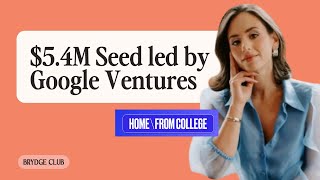
How Julia Haber raised $5.4 Million Venture Capital funding led by Google Ventures