52: Bridging the Gap Between Education and Application with Jason Loebig
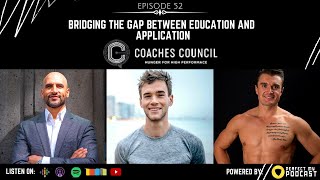
Justin Roethlingshoefer and Jason Loebig talk about why people struggle to apply what they learn about health and wellness. They discuss experiential learning, self-experimentation, and how COVID-19 shifted wellness practices toward digital coaching and retreats.
As we as human beings, if we take a look at the definition of consciousness, it comes back to what we experience, what we experience as individuals. So everybody goes through a different level of consciousness based on their own experience.
We live in this world where the health and wellness industry is a $4 trillion a year industry, yet we live in the sickest country in the world.
Whether that's to a coach, peer, friend, parent, I don't really care who it is. But you've got to find somebody outside yourself because you are the easiest person to fool.
Welcome to the Coaches Council podcast with Justin and Pradeep where the art and science of athletics and business come together to create real life quality application that creates life changing results through actionable takeaways. As we always say, nothing changes if nothing changes. So let's get started. Welcome back to another week of the Coaches Council. It's a snowy Coaches Council here with a beautiful snowstorm here in New York City, a solid snowstorm out in Chicago and a snowstorm up in Toronto. So we've got the trifecta going on right now. Pradeep, hopefully you're staying warm, Jason, hopefully you're staying warm and it's going to.
Be hot in here.
So we're excited to get started.
But.
We'Re excited to have Jason this week. Jason is the co founder of Live Better and really working with people on experiences that help to foster greater lifestyle change, health and wellness optimization and ultimately human enhancement. So really excited to have you on today Jason and joining Pradeep and I.
Yeah, thank you guys for having me. I'm excited to share.
Fantastic. So a question that I have for you is I've always heard this is live events change lives and I'm a firm believer in that because I don't know how many times we've read books on different lifestyle changes we can make or seen presentations virtually or just learn something in school, but it's never actually taken, it's never actually been like oh damn, that's something that I want to do, that's something I want to adopt. That's something I want in my life. And so I curious given that we spent a lot of time together, well, not together but at different times, different worlds in Oxford, Ohio, Miami, U grads. But would love to know how you got into this whole experiential space and adopting health and wellness as your primary passion to ultimately make your business.
Sure. And it's a good place to start too at Miami because I did not go to school for this. I didn't get an Exercise exercise physiology degree. I didn't go for exercise science. It was something that I was passionate about just from being an athlete. Growing up and enjoying a multitude of sports and feeling what strength training could do to get stronger and then nutrition gets layered on that and then everything else that goes into the self care that we teach. But at Miami I was actually an accounting student. So I'm still a recovering cpa, um, trying to put my soul back together. And while I was at school I started to really get into strength training. Um, was at the rec a lot and just enjoyed feeling stronger. I was pretty small kid growing up right until about senior year of high school and the, the big like body changes for me in terms of like, okay, I'm starting to put on some muscle, I'm starting to feel myself get stronger. Really didn't come actually until colle and then getting out of college I was working in public accounting and got some gnarly hours and I was put on some projects that had some specifically gnarly hours during the summer. And the only time worth living and being out in Chicago is summertime. So those hours were taken away from me and I was like, you know what, I'm getting a little bit burnt out on a subject matter that I don't love. And just started to kind of start to take care of myself and found myself really enjoying teaching other people in the office how to take care of themselves and getting people to sign up for races and taking breaks to exercise and you know, asking to take breaks away from the office to take care of myself was like a little bit more foreign than it is now. And my co founder, Brett Gornick, who went to U of I, we were friends in college and kind of reconnected after and he had this idea for a protein bar and we met up one night out a couple years in and he was like, man, you, you don't look great. He was like, you just look kind of sapped of all the energy that I knew that you had at school. And so we started talking and told me about this bar. And from that conversation, honestly we've had some type of chat about live better every single day since for the last six years. And it's what started as a protein bar really evolved in having all kinds of amazing entrepreneurial conversations. Actually the first business meeting we ever had was with Peter Rahal who founded RX Bar here in Chicago. They sold to Kellogg a few years ago, obviously doing extremely well. And we started having more conversations like the one we did with Peter. And we're like, wow, we need to record these. So then it became a podcast and then I started training and then getting my yoga certification. We started doing some stuff with Nike and it came to a halt and split where we kind of went all in on Live Better and I went all in on training and health coaching. And the move from that, the move into experiential came when we realized that the most impactful change we could have on somebody was in person. We noticed that this one on one interaction with a client got someone to change their life, whether they're putting on muscle or losing weight or feeling more confident, whatever the kind of higher level changes were that matriculated out of things we were doing in the gym and things we were doing in the kitchen. That's what we were like, all right, wow, this is a real tangential change I'm making in someone's life, whereas what I was doing before, I just didn't. I didn't get to see start to finish. And I'm somebody who really likes to see kind of like the product of my work and sort of be involved from start to finish in a process. And so we took what we were doing with an individual client and we started doing that in the group and have taught over, you know, over 100 people, 200 people at various live events and things and really love to do that. And then we took all of the things we coach on a client or coach a client on and then turn those into retreats. So now we run two week long retreats a year. Unfortunately, we didn't get to do either of them last year. Hoping to bring one back this year in November. But we do a week long retreat where we teach everything from fitness and movement to nutrition and sort of building in more psychology around eating to meditation and mindfulness to productivity. And then we wrap it all together with community. And that experiential part is really what we love to do. And I know we'll probably dig into this, but we have a ton of different projects ongoing at any one time. And it's honestly a very similar delivery of information, but it just needs to be digested by different audiences. So the same way that I would teach meditation to a five year old in a kindergarten class is slightly different from the way that I will lead a group of corporate executives through meditation. But the focus on breathing and the focus on whatever theme we're delivering through different language is very similar. And we just realized we like being in front of people. So, you know that that's kind of how it's turned into an experiential business from one on one clients, the corporate groups to retreats to honestly like any forum that will allow us to speak.
So I'm going to ask you a question, Jason, because I think what you do is absolutely powerful because we as human beings, if we take a look at the definition of consciousness, it comes back to what we experience, what we experience as individuals. So everybody goes through a different level of consciousness based on their own experience. So I think in person is absolutely phenomenal. I prefer that myself being in the business side and working with executives is. I like to be there in front of them and they like me to be there in front of them because you, you feed off that energy for each other. What's your, what's your. You can say your tactic now or your move now that you said last year you weren't able to do them because obviously the COVID challenges that we've had for this coming year because who knows what's still to come in terms of restrictions. So what is your plan now to get that experiential side with this current environment, the challenges that we have?
Yeah, so last year when we realized we weren't gonna be able to run either retreat, we were actually having a meeting about what we should have done in February early and while we were on the phone, we host our retreats. The two we've been doing so far a year in El Salvador. And El Salvador was actually the first country on earth to shut its borders. It was like, hey, outside of China, we were like, hey, we're done. 21 day mandatory quarantine even if you're from El Salvador. We're like, all right, well that just answered the question for us. So outside of being restricted on travel, we realized it was probably going to be like that for quite some time and immediately just pivoted to digital. I think the interesting thing is people have found themselves with an infinite amount of information to take care of themselves. You could find anything that you want right now for free and turn yourself into an elite athlete, an elite learner of anything about the body. There is so much open source information, coaches willing to give stuff away for free talks you can join podcasts you can listen to. And yet people don't do it. Last year people got slapped in the face with a total lifestyle change, an abrupt halt to their in person routines, to the things that they relied on, to the things that they outsourced to somebody else to take care of themselves. And we kind of found ourselves without this collective support. So the first thing we wanted to do was bring that back in. So we hosted two virtual retreats actually last year. Both. The first one was for pay. The second one, when everyone's pay went away, was free and donation based and we got several hundred people to log on and we invited other coaches to come in and we were doing live meditations every week. And it was a big pivot to digital and honestly something that we had wanted to do for the last couple of years, but we're just kind of swept up and continuing to run retreats and coach clients and work really in our business and not be able to work on our business. So this move to host this virtual retreat gave us the confidence after watching all these people connect via Zoom and via our Facebook group and via becoming like kind of little pen pals. Honestly, outside of our virtual retreat, we're like, wow, this also works. There is a real human connection that can also take place digitally. I don't think that it can take the place of live in person events, but I think it can be a great supplement. And for us it was a dose of confidence to say, okay, well, maybe this is how we connect these two retreats that we have, one in March and one in November. How do we keep these people engaged if they're not going to personal train, if they don't live in Chicago and they can't get access to us on a daily basis? So we actually started the Live Better Collective, which is our monthly subscription program. And in it it follows the same pillars we do on a retreat, which is move eat better, think better and give better. Wrapping all those up into like sort of the lifestyle of wellness and the kind of confluence of wellness in your personal life, which is Live Better. That is the basis of our business, is that wellness is the fuel to do whatever it is in life you want to do better. We are not trying to turn you into trainers or yoga instructors. We are not trying to tell you to just quit your job and yard sale the whole thing. But how do we use all these kind of tools and tactics and strategies to level up your own life and then provide you with this underlying support of amazing people all trying to do the same thing. So that the pivot we made was add these virtual retreats that gave us the confidence to say, okay, we need to be doing something digital month to month anyway. And then the plan for this year is as we can and as it's safe, layer back in person things like, we've already been training personal clients one on one, doing some small group Stuff which is allowed in Chicago. We do have plans to run a retreat in November and I think over the summer. It just kind of remains to be seen how many in person events we'll be able to run. But even if they don't, we've got a bunch of digital stuff going on as well.
That's awesome. I say that all the time, is that we live in this world where the health and wellness industry is a $4 trillion year industry, and yet we live in the sickest country in the world where we see a continual rise in anxiety, a continual rise in sleep deprivation, a continual rise in heart disease, cancer, stroke, depression, you name it. And yet every piece of information that anybody could ever need to prevent those items to take themselves from burnt out and overworked to energetic and vibrant, to taking themselves from a normal Joe to an athlete, it's all available, it's all there for free, search YouTube, scour books, you name it. But there's something, there's this massive gap that lives between education and application and being able to do it ourselves. And to have a community and an environment and a place to be able to do that is. It is really incredible. And the transformations that happen are amazing as well. It's what we see on our end all the time. And it's why people like us exist and have a major play in this world. I'd love to take a trip back to something. You said that right at the beginning when you were meeting, talking about that protein bar and living in your accounting life and how burnt out you were and how you had literally just gone down this road that you hadn't expected and kind of, to be honest, had almost ignored the passion of which you truly had inside of you for something that the normal world kind of had said, hey, this is what you're going to go down. You've got your accounting degree, you've got your license, now you're going to practice, and now let's go into the metropolitan city of Chicago and make our way. And lo and behold, along the way, it just, you lost all the white space. You lost your ability to listen to the whispers that were telling you where you needed to go, what you needed to do. And it almost sounds like as soon as you gave yourself that white space, as soon as you gave yourself that time to reflect and really learn what your true passion was, there really wasn't a decision to be made anymore. It was, it became very clear to you.
If you're lucky, your passion and purpose, like, you know, falls from a tree and Hits you on the head super early. And I think athletes and a lot of musicians or artists benefit from that. I think maybe it's just sort of self selecting, but I feel like so many people who are good kind of know they're good when they're younger. And then the key as a, as maybe a little bit of luck is honestly having people in your life that don't force you to continue to do it, but foster that little glow of passion and purpose that they see in a younger kid or a student or whomever that might be and nurture that rather than try and force somebody to do it. I think if you get to this point later in life, it's been. This is a little bit of a tangent conversation, but I think the education system is interesting because it pushes you into certain directions and it really, at least when we were going through school, did not give you this blank slate and white space as you suggested, to try and figure out what that is. It was, okay, well, I wanted to go in business. All right, well, you're going to be an accounting and finance major probably. Okay, well, if you do that coming out of Miami's business school, you're coming out of accounting, you're going into big four, and you're either going into audit or tax. If you come out of the finance department, the best job you could get is an investment banking because it pays the most. So that's where you're going to get tracked. And you find yourself getting good grades to make the next level. And there's this very clear path where you're rewarded for hard work if you're a good student, like, you can do it, you get good grades and then you, you get that job. But the problem is, is once you start being paid for it, as soon as you leave college, all bets are off. And no longer are you marked by this very strict rule system where it's like, okay, if you do this or this very strict track. If you do this, you get to here, you do this, you get to here. It doesn't work like that anymore. You get paid all the money in the world and still absolutely hate waking up for work every single day. And it is no marker of success to be paid all the money in the world and absolutely hate what you do. So then the rules change. And I think a lot of people find themselves a few years in getting a little bit stuck on being like, well, now I don't even know what rules I'm playing by because I never actually set some for myself. They were always set for me, through this sort of system. So now we're all kind of caught like trying to figure out what that passion and what that purpose is. To be honest, I kind of fell into it because I had the black and white context of this is not what I want to be doing. So let me do something that gives me a little bit more energy. And I just happen to find that I really like teaching and participating in that. There are a lot of people who love health and wellness that should not be trainers, that should not be nutritionists, that should not be yoga teachers. And frankly, they don't want to. Health and wellness is just sort of the backbone of what's going to help you be a hockey player, a businessman, an artist, an entertainer, an actor, whatever you want to do. Health and wellness is sort of the baseline for that. I just happen to find a passion living in that world. But I do think getting yourself healthier provides you more energy, a better headspace to be open for opportunities. And when your passion and purpose falls from the tree and hits you on the head, you actually have enough kind of like wherewithal to understand that that's what you should pursue. And then you have the energy to actually take on those challenges. I think a lot of people are just kind of in this motion, in this kind of day to day motion when they get up and they're doing the same thing over and over again. And they don't put themselves in positions where they could find out what that is, regardless of whether it's in health and wellness or not. And I think that's the most important part, is starting to take action on the things that you want to do, regardless of whether they pay a super high salary or not, regardless of whether you think you're going to look stupid trying it for the first time or not. Regardless of if your friends are interested or your peer group is interested, it's like, do the things that interest you and over time those opportunities will present themselves to take action on them further. And that I think is how kind of purpose and passion get highlighted, is by actually doing them. I was already training clients, talking to Brett about this protein bar, getting myself exposure to new teaching situations, whether they were in yoga or sports performance or boot camp, doing one on one versus group. Like I was exposing myself to all these different situations before I sort of realized, okay, here are the things I really like to do, here's what I'm good at, and here's what will pay me. How can I bring those all together and then build a career out of it. It definitely wasn't like some epiphany moment where I knew right away like a health and wellness is my area of expertise that I want to go after. I'm super passionate about it. I really love doing this for one on one clients, this for group. I think it's just interesting like you really have to kind of live in there and act on it before you figure out what that is. From a very like final kind of at least like a workable product where you're like okay, I can move forward with this, I can continue to do this for a job. I really want to get better at this. There's levels to this and I can kind of keep working on it.
I totally hear you on that. And it's, it's unique in what you said because in all of that what you really decided to do was make you the priority. You decided to say hey you know what? This is my life. This is, I want to bring some of this stuff back on track and guide yourself in a way in which you're creating a life that you don't need to run from. You're creating a life that you don't need to trade your health for wealth, you don't need to trade your happiness for title, you don't need to trade your ability for longevity in a family life, something that truly feels good to you for the things that may come with it. You can actually build your life around something that's you centered with the purpose of giving and the purpose of service, the purpose of being who you want to be unapologetically and thus fueling you from the inside out. And I think that's just what's so unique and strong about that is and something that our society has gotten so wrong right from the onset of education which, which you, which you touched on. And I think the more that we can talk about this and I know.
Pradeep.
Sent me three or four clients this past week simply who are major CEO title holders, major like major companies and came on the brink of needing some type of help, needing some type of change because they were burnt out, their health was at risk. They were like we're talking about going to doctors and being put on copious amounts of prescriptions and not looking sheerly at the lifestyle changes that need to be made. But as soon as those things get done, all of a sudden everything else starts to fall into place as well. So I'm curious to ask you what areas become the most important to focus on for our listeners out there who feel like you know what? I'm running in circles. I'm running an uphill battle at work. I'm running an uphill battle at home. I know I haven't prioritized myself, and thus I' for it in the long run.
Yeah, that's a great question. I think to just under, like, sort of lay down the foundation. Something we've been saying the entire entire time with Better is like, having health care does not mean that you're healthy. And fitness and wellness is not for when everything is going well. It's for when everything is going terribly wrong. It's kind of very stoic in that way that we're focusing on mastering the basics and the foundation of your wellness, whether you're kind of in a time of peace or in a time of battle. And I think what's interesting is people want to wait to take care of themselves until they find themselves, like, on day one of a long war. And last year, 2020 was the most interesting looking glass on this because it slow dripped. It was like, oh, this is going to be a thing in February. Then it was like, oh, this is now a thing in March, but we'll only be inside for two weeks. Here we are a year later, way so much like, so unhealthy, both mentally and physically, that it kind of bears considering. Like, why couldn't we have taken the last year to say what were the first couple steps I should have taken to make sure that that decline in physical and mental health did not occur? Because we just kind of let it creep up. We're like, I was letting this workout slide. I'll just order pizza one more time. I'll just skip this. And you know what? We'll catch up over zoom. And I'm not going to kind of prioritize my relationships. I'm just going to sort of try and figure this out. And we realize that we actually like being around our coworkers more than we think. We actually like being hugged more than we think. And we like being in gyms around other people more than we think. And it sucks to try and work out at home every single day in the same place that we eat, that we sleep, that we chill, it just doesn't work. And so when we start working with a client on the very first thing, when I'm working with a performance coaching client and they're kind of not sure where to start, you get somebody who's burnt out and overwhelmed. They haven't taken the time to prioritize what some of those challenges are and rank them they just see everything as this big sort of like cloud of stress and they can't pinpoint things. We talk about that a lot. Like overwhelm is sort of the lack of ability to singularly identify where challenges are and how to fix them. It's just you see them everything at once, and it's a sort of like big swirl of everything is a problem. Instead of identifying what are the first couple things I can fix so that the rest of the dominoes fall, the first thing I usually have people do is honestly just lay out everything. I put it in different boxes to go personal life, professional life, health. Here are some other goals. Can we identify even things within that, say, my personal life is kind of like gone awry. All right, well, is it relationships? Is it the state of your house? Is it the state of your finances? Is it the state of your personal passion? Projects being shoved to the side? What is going wrong? And put that down on paper. And then let's say that you've stopped working out and that's the first thing that we want to identify. Okay, well, if I start working out, I'll get a little bit more energy and a little bit more confidence to then tackle some extra things on my list. And as soon as I can commit to making my fitness good, my nutrition is probably going to follow next. If I'm working out every day, I'm not going to want to eat like complete trash to cut the legs out of that. And then if I start eating a little bit better, I'm not as foggy and I can make better decisions. So there comes my mental health roaring back and our cognitive abilities come back and our focus and our motivation, our discipline comes back. Then we want to sleep better and we start sleeping better. And round and round we go. So I think on the health specific side, we always talk about fitness, nutrition, sleep, stress and community or just any type of general systems of support that you have. All of us have a limited amount of willpower, honestly, I think a limited amount, amount of discipline before we need to outsource some of that. So making sure that you're surrounding yourself, people who are keeping you accountable, whether that's to a coach, peer, friend, parent, I don't really care who it is. But you got to find somebody outside yourself because you are the easiest person to fool. And then in order from those, I usually just ask what stands out to you as the biggest issue. Most people are going to say, well, I haven't worked out since March. It's like, okay, well, maybe let's Just start there and go take a walk. Let's get outside a little bit then it might be nutrition. I'm not eating that unhealthy. I'm like, all right, well, what's the biggest problem? So I go, well, I just kind of run out of the motivation to cook. I'm like, okay, well then we start going into like, what's affordable? Can I order in, Can I outsource some of that? And I think we just sort of go down the list and lay out all these things that you know, that you need to do. And then instead of trying to do them all at once, let's pick the one thing you know you can commit to and savagely do that every single day. When you said you were going to do it. Get some accountability to that, put some money where your mouth is and get it done. Because honestly, people will just continue to make excuses and just kind of lie to themselves. And when I'm coaching somebody, I am very fair, very honest and very empathetic about it. And I'm not the one that's going to sugarcoat something to you. I'm going to tell it to you kind of nicely and in a way that you can digest that does not put you down, but gives you some optimism for being able to change it. And I think the more kind of health information we can consume along those lines, that's very fair, very honest, very transparent and very optimistic, the better people will kind of latch onto that. So I know that was kind of a long answer to your question, but I think having somebody kind of lay out all the things that they want to solve from a lifestyle perspective, then hone in on health first and within that health bucket, figure out whether it's the exercise, nutrition, sleep, stress or community aspect that needs to be solved and then start there and just make very small day to day actionable changes with a plan, adding in the accountability point of view. And then from there we just, you know, cycle back through until somebody's back to an appropriate baseline where we can start to split hairs and you kind of earn the right to ask more complicated questions. Normally I'm like, hey, have you worked out? Have you eaten well? Do you manage your sleep manager stress right? You don't get to ask me like, what's the eighth supplement on my list of things I'm taking? Or like, what sleep hack I have? I'm like, did you just give yourself the opportunity?
Should I be doing intermittent fasting? Should I be right across leg?
Was there something green on your plate? Have you have you touched water today? Just the basics. Everybody wants the hack. Everybody wants the strategy. I'm like, I will force the basics down your throat until you are like, all right, I can't. We can't talk about drinking water anymore. We got to go to the next thing.
There's so much I want to dive into there, and I have to write this hack down right here because we need to go back to this in a second. But it all comes down fundamentally to behaviors, consistency, and process. And if you can consistently change your behaviors utilizing a process that will allow it to hang around for a long enough period of time, you will see results, you will see change, and you will see yourself moving in the right direction. And a lot of people sometimes think that, oh, because I've now worked this way for a month, I should see all these massive changes. But in actuality, it takes a little bit of time to settle into it. We highly underestimate what we can get done in a year, but we highly overestimate what we can get done in a month. And that quality that you speak of along all those pillars is so key. And doing it iteratively, doing it where one thing leads to the next, leads to the next.
We.
We sometimes think that we can just bite everything off all at once, but all it leads to is more sympathetic overload, more stress in our life, and the. And frankly, more overwhelm that we're just like, this is. There's so much going on, I can't do it all. Where in actuality, if we just took one small step towards enabling a better habit, a better pattern, a better behavior, that would, at the end of the day, elicit a greater response of something that is more sustainable long term. So I couldn't agree with you more. I want to dive into this. This hack that you talk about, because life hacking or biohacking, and these are the big, big terms right now, the buzzwords like functional Fitness back in 2000, what's functional fitness? But if we. If we go to it, by definition, a biohack or a hack is getting access to information that really isn't available to anybody else. It's breaking into something, Breaking into a vault of CIA information that you're gonna now gonna be able to hack into the government of Russia or whatever it may be. But biohacking literally comes down to understanding you, your body and your habits and going back to the fundamentals that everybody's talking about anyways. And it's almost like bringing a sexy word to something that is relatively unsexy. To make it something that people want to do again. And I'm curious to hear your thoughts on, on again going back to this concept of entrepreneurs, executives, people who are busy, where they're trying to go, you know what? I need a hack to get this done because I just can't get to bed at a consistent time or I just can't get that meal done. What is a different way to say, or how can we say it differently or uniformly of where do we start to get the biggest bang for your buck with instilling this habit or this behavior?
I mean, the first thing is that everybody wants to just bypass their patience. We just don't have any patience. We want it right now. We want six minute abs, we want two minute abs, we want one minute abs. And it's just like instant. Right now we're just wearing like fucking belly trainers. It just is absolutely insane to me. I think the thing that I took away, I actually went to the Bulletproof conference in like 2016, actually not that far after, not that long after we started Live Better. And it was the first time that I had been around a lot of other people who were obsessed with self experimentation. So one of the, one of the reasons why I got into lifting in the first place is I actually happened to pick up Tim Ferriss four hour body book. And you know, Tim is absurdly popular now, but he was a self discovery for me. So somebody didn't hand me four hour work week. I picked that up off of a Barnes and Noble shelf, I love bookstores. Put it up off of a Barnes and Noble shelf and just started opening it in the bookstore. And I was like, this guy just wrote this fricking book about going around to the best health coaches in the world, some of the best top trainers that I still follow today. And he just started self experimenting with all this stuff on his own. And he's also an absolute serial learner. And that's probably the biggest takeaway I've taken away from Tim. You know, people will say, oh, this hack changed my life or this interview changed my life. I think just watching Tim be absolutely obsessed with learning and growing and self experimenting. And I think the biggest thing for that is like that's what biohacking is. It's self testing. It's not biohacking. To figure out what's the best nutrition hack for everybody. So I can make money off of that. What's the best nutrition hack for me? Am I willing to do some self testing? Am I willing to go for runs and try different hydration multipliers and try different salt techniques and eat different foods. Am I willing to put in the time to figure out what works best for me? There is no functional fitness for everyone. There is no intermittent fasting for everyone. There is no diet that works for everyone. So I just let all those people just frickin butt heads and get clicks in the background like, fine, but I'm just not going to engage in that conversation because there's one. There's actually probably multiple ways that work the best for you, but any generic information that you consume was not meant for you. It's not specifically tailored for you. Even when you work one on one with a trainer, with a performance coach, on a team, it takes time to learn how the other person's motivated, what their body responds to, what their mind responds to. Well, you also have to have that relationship with yourself. I don't care if you're trying to run a business or you're trying to bench press a new pr, or you're trying to run your first marathon, or you're trying to find a new passion project. You have to self experiment. You have to take and be obsessed with spending some of your time not watching Netflix, not hitting the snooze button to get up and try and try new things and get out there and meet new people. And as you push those boundaries, you just become so good at being a beginner again and absorbing all of this information and being obsessed with it. And something you said earlier, I always tell people we're doing things like just triple your timeline. You know what you're going to try whole 30, fine, but assume it's going to be whole 90 because I'd rather you quit on day 62 than you do on day 15. Like set those expectations for longer. Because if you ask yourself, someone finds them in the unfortunate situation of being really overweight due to having a desk job for 30 years, the first question I ask if they start pressing on like, hey, what's the hack to do this? I'm like, how long did it take you to get into the position that you are now? How long did it take your low back to start to bother you from sitting? Because it didn't happen on the first day, it happened on year one, year two, year three. And now you're inflexible. Now you're carrying around weight that maybe you shouldn't be. Now you feel out of shape. Well, take the same timeline and just assume that's how long it's going to take you to get out of that and then be willing to come to work every single day to improve upon that. And be pleasantly surprised when the process to get back to where you want takes a third of what you were assuming. And then it takes away all these really pessimistic, really honestly, like negative, more in the moment feelings about not getting what you want. It takes away the need to have a hack to do something. As you said before, I want to build a system. It's not about winning every time, it's not about avoiding losing every time, it's about showing up every single time and winning more often than you lose because your system is good. It's a whole nother conversation about when to adjust the actual system itself if that's broken. But assuming the system's good, you're not going to win every time within a good system. It's why teams lose games even though they're the best team. You're not guaranteed, but that team, the superior team, like the process shows up more often than it doesn't. It's probably going to win more often than it loses. And that I think is the big thing. So when we're addressing something, somebody who's like super overwhelmed on that, it's like, just give me a hack for it. Like, let's rip the band aid off of this very honest conversation that this is exactly where you are. I don't need to fool you on this. You know, you're overwhelmed. So if you're a quantitative person, we're going to do some testing on you, we're going to test some biomarkers, let's take blood work, let's get a DEXA scan, step on a scale, let's test your mile time. Anything that you want to start to manage or to manage, you have to measure. So let's give you an accurate balance sheet, look at where you are right now, let's take stock of what you're good at and what you're not good at. And here it is on paper, day one. And then let's commit to this period of learning. So let's take some of the impatience off the table and say let's reassess at the end of the month and to what you said. It's like, let's put some processes in place and start with the one domino from that big list of exercise, nutrition, sleep, stress or community that needs to be addressed right now. And how does it affect that measurement point. So if it's weight and you know, you're eating like trash, probably where we're going to start and we're going to start with something super small. What's nice is you can obviously probably combine that with walking, maybe a little more running or getting in the gym. If you have the financial means, you hire a trainer. There are so many good options, obviously, especially if you have money because you start paying to outsource help and accountability. But I think there are resources regardless of that, and I think it's just being really honest with people about where they are, but delivering that in a way that optimistic, starting with the one thing that creates that domino effect. And then make sure you're measuring and managing that process in the right way so that people feel like, okay, I'm not really feeling fatigued about this mission because I know where I am, I know where I'm going, and I know how often we're going to kind of test my improvement or progress.
Now you're speaking my language, Jason. Because a lot of people listen to the show and go back, they knew that. I started self experimenting at age 13, measuring brain waves, measuring heart rate, measuring the way and I slept. Measuring HRV for the obsession of wanting to be the most consistent player around on my journey to the National Hockey League. And then as a performance coach and doing that, the same thing, optimizing the way we sleep, optimizing the way that we show up daily using now measures of DNA and epigenetics and different ways in which we can track ourselves and optimize ourselves. And it all comes down to being able to make sure that what you're doing is your game and not the gurus. Because the moment you try to play somebody else's game is the moment that you lose and is the moment that.
You get away from your system. You get away of what works for you.
You get away from the item that works for you. Maybe what works for you is something very simple and it's just not being applied in the right way because you haven't taken the time, the white space, to figure out what that is. But it's because you haven't made yourself the priority and you've tried to do what's going on over there or over there. It's staying focused on your game, what it is that you need, how you do that, and figuring out this, this system and the way it fits into your life so that the level of consistency can show up. Because guess what? We are all dimes a dozen. Every single one of us is the same in terms of we were born of a sperm and an egg. We were all born champions. We were all born A winner. Because the only one that made it there out of 1 of 5 million, we were all born and put on this earth a winner. Genetically predisposed to be winners. But we've learned things along the way that have thrown us off path. And the moment we can bring ourselves back to be that winner, that mentality of showing up to be the best version of us and figuring out what that takes in order to get us there, that's when we come back to being that champion that we truly are and showing up with that same mentality to be able to do that. So you're speaking my language here and it comes back to making yourself that top priority. Where can everybody find you? Jason.
Yeah, on Instagram. Jason Lobig. And then our business is called Live Better. You can follow us. Ivebetterco on Instagram. Orivebetterco.org is our website. It'll currently take you to our collective page to sign up, but we'll be releasing a lot more stuff. We've got a great mindset and goal setting program that we'll be releasing. Been doing some yoga and mindfulness for kids for our Give Back mission and then starting to do a lot more work with corporate groups as well on the individual coaching side as well as more of like the kind of speaking corporal wellness side. So, yeah. Ibetterco on Instagram or livebetterco.org for website.
Amazing. I know we're bringing on your business partner as well here in the coming months. So excited to get him on as well and again, collaborate in a multitude of different ways. So again, if you want to make progress in your life, you want to make progress where you are, it all starts with action. It all starts with understanding the direction you're wanting to go and being able to apply that in a unique way. Because burnout is real, burnout exists. And burnout is something that will affect you. If you're not living for that passion, you're not living for something in that direction. And that doesn't mean you have to drop everything you're doing. That doesn't mean you have to completely change the direction of your life. But it means putting you first. It means making yourself a priority. And what that means for each and every person is different. Doesn't mean what Tom is doing or Harry's doing or Sally's doing is right for you. It comes back to understanding what you need, putting yourself at the core, scheduling your day around you. Because at the end of the day, you are what matters. Because you are what enables you to be at work allows you to be at home, allows you to be the best mom, the best dad, the best sister, the best brother, the best boss, the best business owner. So finding what I finding out what you need to do for yourself to optimize you and make you the top priority is what will make you win.
At the end of the day.
Stay hungry, stay humble, and we'll see you guys next week.
More from Justin




The Ultimate Blueprint for Taking Ownership of Your Health | Unlock Peak Performance

From Bullied & Anorexic to Healed & Purposeful: My Transformation Story (Justin Roethlingshoefer)


Forget "One-Size-Fits-All" Health! Unlock Your Best Self with True Personalization (The OWN IT Show)

Are Blood Tests Enough? Why Cellular Testing Might Be Better | Justin Roethlingshoefer

Your Body's Language: Understanding Stress & HRV| The Power of Ownership - Chapter 3 & 4


Is "normal" really making you sick? Dive into Different with The Power of Ownership:Chapters 1 & 2