58: Overcoming 10,000 "No"s 1 with Matt Del Negro
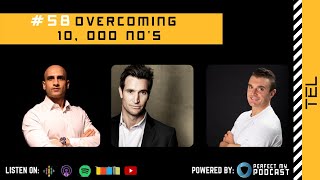
Actor Matt Del Negro talks about facing thousands of rejections in his career. He discusses how presence and gratitude helped him keep going, and draws parallels between acting and entrepreneurship when dealing with constant rejection.
Said something there. There's no one way to do it. I think that's really important for people to hear.
When people start to realize that it's not about all the obstacles you've overcome, but and, and reaching the pinnacle, that that's, it's truly where it's at. But understanding that all the obstacles are the pinnacle.
But at the time, man, no, it was like total left field. I mean, I told people and they're like, what? Like you play lacrosse, like you can do a play.
This is the energetic leader led by a team of three who have influenced people at the highest level of corporate, athletic, entrepreneur and the business world. We teach through science and data driven methods to help you lead through energy and influence. We don't just use our stories, but the stories of those who have walked the walk, those being in your shoes and ultimately excel. Whether it's leading a team of 10 or 10,000, building a business of 1 million or 100 million, winning one championship or 10, they all have one thing in common. Energetic leadership. So with that step inside and let's help transform you into that energetic leader. Welcome back to another week of the coaches council. And guys, I'm so excited for our guest today. All the time we're talking about ways in which we can overcome obstacles, ways in which doors get slammed in our faces and we look for different windows to get in or we've got something that we thought we really truly wanted and then our knees get cut out from under us and we have to figure out how to walk again. And there's nobody that's been better at doing this than the guy who actually wrote the book on it. 10,000 no's has the podcast 10,000 no's and it's really all driving towards lessons about perseverance, persistence and resilience. And not only has he experienced it, but he's talked to hundreds of people who have also gone through this and been able to overcome it, to reach amazing levels of success and understanding that there's not one perfect way to do it, but simply overcoming those nos and finding that one. Yes. So, Matt Del Negro, thank you so much for taking the time to spend time with us here and give people your value and wisdom. Taking time off of all the shows you're doing and the network appearances.
I appreciate you having me, Justin. It's very funny how we met and kind of hit it off and then this came about and yeah, you know, you said something there. There's no one way to do it. I think that's really important for People to hear. There's, you know, you said, I wrote the book on it, which is actually so cool. That's the first time I think anybody's said that. And I've heard it, and I'm like, oh, I actually. I did write the book on it. That's cool. But the. The truth is. Yeah, it's just. It's really. The book is. From being pummeled for so long as an actor, you know, it's a rough business. It's. It's been. I've been one of the fortunate ones, and still the beating is just tremendous. I mean, I just got off the phone with my buddy who's got an incredible career, and, you know, we've known each other since our early lean days in New York. We were both in the city. We did a theater company together. You know, we. None of us. Neither of us were making any money back then. And, you know, literally just today, having this very conversation about different problems now than we had back then, but in a lot of ways, the very same problems. You know, it's always. It's always just challenges. There will. Wherever you go, there will be. You know, you'll peak one mountain and you'll see this beautiful vista, and then you'll see there's another peak in the distance. And then. So there's. There's always something else out there to overcome. I think, really, what we were talking about today, and you and I could get into this, we were talking about it. Maybe it all comes down to presence. You know, being present wherever you happen to be and not living in the future, not living in the past, but actually just being in the moment. Whether that's as an actor in a scene or that's as a human just in life, like, not. Not keep continuing to go, which I've been guilty of. Like, oh, when this happens, and then this show comes out and they're gonna see it and they're gonna think this and this movie's gonna do really, like, no, don't do that. Like, the joy is actually the doing of it. That's the joy. Anything else that comes after it, that's bonus. And if it doesn't come after it, you know, nobody owes you anything. That kind of thing.
You're so right in that. And so often we get caught up in, oh, I'll be happy when, or I'll be happy when. And it's always that next thing, it's. Kobe Bryant was saying it in one of his speeches. I think it was in his jersey retirement when he said it's not when people start to realize that it's not about all the obstacles you've overcome, but and reaching the pinnacle that it's truly where it's at. But understanding that all the obstacles are the pinnacle, like that is truly what it's all about is being able to be in the race, being able to be, to be able to feel those things, to be able to be present and understand that it is a blessing, it is a gift and it is a privilege to feel that level of difficulty, to feel that level of execute on the resilience and to, and to have those obstacles to overcome because otherwise we what is the life to really to be lived.
Yeah, no, you're absolutely right. And it's, and it's again, it's easier said than done. But that's the tagline of the podcast is failure is opportunity. And that's just because my dad would always say failure is just opportunity in disguise. And you know, with, with that attitude, there are no wrong turns really, as long as you look at them and learn from them. You look, you know, you. And also realizing that, you know, sometimes the biggest swings and misses are the many times the biggest lessons. And it's not just for me. You know, you mentioned that I interviewed a bunch of people. It's also funny you say that we'll say the phrase I'll be happier. When I had a woman on the show a while ago, her name was Natalie Cogan, you just made me think of her. She has a company now called Happier Now. And the reason she started it was because she, she was an immigrant. She came to this country not speaking English, learned how to speak English by watching reruns of who's the Boss and learning from Melissa Milano how to speak English. She started companies, did well, sold companies, you know, had, I think, four companies, and she was doing really well. And she was an adult and she said, huh, I've done all of this. And I keep on saying I'll be happier when. And she decided to sell all the companies and start this new one called Happier Now. And the gist of it is just like, I'm happier now because. And it's all about gratitude and presence. And, you know, she's one of many guests that really, in their own way, every single person I talk to, if you boil down their, their message, they're all in different fields. Many of them are in, you know, the entertainment business like myself. But there's a lot of entrepreneurs and pro athletes and cancer survivors. It doesn't matter what their backdrop is. Underneath it, that's kind of the truths that they hit all have to do with gratitude, Presence will surrender all of these things that we all go through. And, you know, kind of the whole point of the podcast and then the book which came out of the podcast was to let people know, you know, if there's a young Matt Del Negro out there, it's like the 22 year old version of me. They can listen to these people and realize, oh, I'm not alone. Like, yeah, it's rough when you're a 22 year old actor and you're waiting tables and bartending and taking class and scouring for your own auditions and being told no all the time. It's tough. But if you hear that somebody else who's a little further along has gone through that and still goes through it to some degree, a different way, it'll maybe make you feel less alone and give you a little more wind behind you and, you know, wind in your sails and help you keep going. And that's just the whole intent.
Kind of take us through that journey, Matt, to what that young Matt Delnagro went through. From the first time you figured out what that big dream was for you and the no's that you got told, the journey you went on of both finding your success but also finding that inner happiness.
Yeah, well, it goes back to college. Between sophomore and junior year of college, I was playing lacrosse at Boston College and It was Division 1 back then. It's not right now. Hopefully it will be again. But it was Division one, so it took a lot of time. It was like, you know, you know, you're an athlete. It was a. It was kind of a job, you know, it was. You had to study, but you also had fall ball, which was the off season, then you had the spring, you know, so it was a real commitment and it was a real source of identity for me. You know, you get there as a freshman and these upperclassmen are letting you into their parties and there's a whole. There's a whole thing beyond just the sport that there are all these benefits and there's just.
You feel like somebody.
Yeah. In some way. It just like, you know, you're in a pool of 8,000 people now you're in a pool of only 30 guys, you know, across four years, you know, and so there's an identity thing that happens. And what happened to me was between. I wanted to go abroad to study abroad. I always thought I had heard some upperclassmen talking about Australia. I was like, that sounds Good. Go live on a beach. But everybody would go. Spring of junior year, and when I realized, oh, well, that's not going to work with the lacrosse season, I decided to go to Italy. I'm 100% Italian. I decided to go to Italy between sophomore and junior year. Was going out with a girl from school. She was in another city there. Long story short, we broke up on the trip. My sister had given me a journal. And I just unloaded into this journal. And in that journal, that first journal, were the first seeds of me seeing. I said, maybe I'm going to be a writer. Maybe I'm going to be an actor. But it was coming out from somewhere that I didn't know. It was like, you know, when they say you get the call, I really got the call. I was 19 going on 20. But it wasn't like that immediately shifted everything. I went back to school. I went back to, you know, the old beaten path. I played fall ball. And then the end of. The. End of the season, we were running around the practice field, and I had the thought of, like, I wish I would roll my ankle. And I thought, this is, like, bananas. Like, I'm not on scholarship. Why are you doing this? And I went into the coach, I said, hey, I'm. I think I'm done. And he said, think about it. I said, I have. I kind of still freaked out that weekend. Like, oh, my God, I'm going to have all this time on my hands. What am I going to do? And I wasn't quite to the place where I was like, I'm going to be an actor. I just. I just knew I had grumblings of wanting to do more than just play a sport in college. And I ended up going out for a play that winter. My roommate, who had never acted before, also.
Have you ever. Have you ever done it? Had you ever done it before at that point?
No. No. So all I had done was, like, in high school, we would have, like, a variety show every year, and they would, you know, so you would have, like, a class act. And I got picked to be like, the. We did some, like, you know, talk show thing. And I was like, the host or whatever it was. You know, I was like that. Literally, that's it. In retrospect, it makes more sense because I did. I played a little piano and sang growing up, but nothing formal, but I always did like to do that. In college. I picked up the guitar. I could play just, you know, chords. I'm a hack, but I could play and sing a little bit. And then also there was a guy in my hometown that did this youth group, this guy Pat Collins, who was an actor. He's still an actor. Great, great guy. Really looked up to him. In fact, I think I wrote my. One of my essays for Boston College about him because he was in the seminary when he was younger. And then he. And then he met his wife and he was like, I'm not going to be a priest. I'm going to, you know, be an actor. And. And he. But he was just a great guy. Whole family is great. He's got three daughters. I just, you know, really looked up to him. So that makes sense. Now I go, oh, okay. You had somebody that was a mentor who was an actor, so that makes sense. But at the time, man, no, it was like total left field. I mean, I told people and they're like, what? Like, you play lacrosse? Like you can do a play? So I went out for the play, didn't get it. My roommate got a lead. And then half hour, 30, 30 days later, you know, probably, I think about a month, there was another audition. I went in and I got the lead of this little one act play that wasn't even in the real theater. It was like in a lecture hall at bc. But I did it and I just. I loved it. And I was like, this is what I'm gonna do. I just, you know, that was it. I was an English major. I ended up taking film classes. I got a film studies minor. And I just. I just told everybody that would listen I was gonna be an actor. And, you know, still, there was another, you know, year and a half before I graduated. I moved home. I worked laying patios that first summer to just kind of, you know, save up some money so I could move into the city. I did a musical and the Next Town over, you know, and I kind of started going into the city, taking classes, and I just. It was really, really, really slow start for me. Um, you know, it wasn't like I made money for. I mean, I didn't make money for years as an actor. You know, I was. I was bartending. I was. It's funny, I'm reading the Matthew McConaughey book right now.
Awesome book, by the way.
Great book, man. I gotta tell you, it's really good. He. I was like, oh, my God, this dude, you know, his, like, first four auditions were like major motion pictures, you know, and one of them, he was the lead of Time to Kill. He was like 23 when he shot, at 24 when it came out. I'M like, oh my God. We had a different, you know, we had a different trajectory. Mine was like by hook or by crook, you know, I was in classes, I was working in the crowd, like, kind of like I had a couple of little breaks, but the big break I had in New York was Sopranos. And that wasn't until I was, you know, that was December 20th of 2001 is when I. Is the day I found out I got that I moved to the city January 1st of 1995. Just to give you an idea of the timeframe.
So people, you're talking about six years of just hustling and grinding to figure out what your yes was, what your opportunity was.
Yeah, and there were yeses along the way. There was a movie I did in Boston that was like, started out non union, turned to union. I was the lead of it. It went to some film festivals. That was a big yes. It didn't pay me anything. There was a commercial and then maybe like a couple of commercials that actually made me a little money. But that was after several years of doing it. So there were always enough yeses to keep me in the game. And that was, you know, my. My senior year at B.C. over Christmas, I went back home and you know, you have like a month off during college for break. So I worked for. My buddy's dad was architect and builder. So I worked on a construction site of his. But it was over the winter and I had done it over the summers. It was more, you know, hustle, bustle over the winter. It was like basically going to this construction site. And my recollection could be wrong. Maybe the framers were there for part of the day, but in my mind I was there by myself and like putting debris into this big dumpster. And I just remember this so specifically. And I'm like, am I really going to be an actor? Like, I did one play my junior year, it wasn't even on a stage. Am I really going to do this? Is this real? Am I full of shit? And I talked to my college. I mean, I talked to my cousin who was a teacher by trade, but he's also a musician. And I was. I told him this. And he goes, look, how old are you? And I was maybe I was like 21, 22. Whatever I was at the time, he goes, do it for three years. If you get nowhere, you can always go get a real job. And I was just like, that makes sense to me. And I figured if I put my everything into it for three years, there's no way I'm not going to get somewhere. And when the three years were up, it wasn't like I had Sopranos or anything like that, but it was. There was progress. There was enough. And more than that, there was just like. I was like, this is what I do. This is. This is it. It's. It. It's not necessarily logical when I think about it. You know, at the time, it's like there's so many other things you could do that would be easier, but you just. You just like, nope, this is what I do.
It's like. It's like anything that. That gives you a great reward at the end, it never. It never is logical. Saying growing up that you're going to be a professional hockey player, growing up saying that, Elon Musk saying that I'm gonna put somebody on Mars, Jeff Bezos saying that I'm gonna be able to get anything to you within 12 hours. I mean, nothing is logical that has a true vision and purpose behind it. But the people that end up succeeding are the people that have clarity, the people that are committed, the people that are willing to put the work in, willing to take the hits, the blows, the punches, the sacrifice to get there. What sacrifice. What struggles did you have along the way to that kind of took us through that middle ground that ultimately then yielded the success that you're now reaping.
The benefits and rewards of so. So, so many sacrifices that it's almost hard to even. It's like, how long do you have? There's. There's so many. There are. There's just the uncertainty. There's the. It's kind of like most other, you know, entrepreneurs know what I'm talking about, that. Because really, an actor is an entrepreneur. The thing that's maybe a little bit different is there are emotions involved. Part of my work is also getting vulnerable, you know, Whereas as an entrepreneur, your work is not getting vulnerable. Your work is, you know, preparing this product of some sort, selling it, getting in the market. As an actor, have to do that as well. But you also have to expose yourself. And then. So. So because your product is also you. There is a personal aspect to it that's. That's maybe rougher when. When you get told no because you feel like, oh, are they saying, I'm not good enough? I think as the years have gone by, just doing it over and over again, having a better understanding, being more mature. I realize now, like, it's not so personal. There are so many other factors that go into it. So when I'm told no now it's like, okay, yeah, they needed somebody different, whatever it might be. It's not like they're not saying. They're not negating me as a human, but that uncertainty is a huge sacrifice. Because planning your life, like, there were always. My wife and I laugh like, every. We would say, like, we should just plan vacations that we really want to go on, and I'll book work. Because it was like, every time we had a trip set, I would, like, magically, at the last minute, book a job. And, like, we'd have to, like, adjust it or I'd have to leave. There are times when we were on ski trips and I'm getting picked up and getting taken to Vancouver and, you know, it was like, crazy. There's so many stories like that. And then there's also just the sacrifice in the beginning of, like, everybody I went to college with who took a more conventional route, I was literally serving them drinks. I was bartending in Manhattan. And a lot of guys I know that were working on Wall street, you know, mid to late 90s, was a really great time for them. And, you know, you're in there. I was a pretty good student, and I'm in there. Like, am I delusional? I mean, I remember thinking that sometimes I'm like, I'm. I'm 28 years old and nothing's really happened. I mean, I've had these little yeses along the way, but, like, nobody. Even when someone asks what I do, I have to give a whole monologue explaining, you know, every. Where I bartend and do this and I'm in classes and I'm an actor, you know, but it's like, you can't even just say, I'm an actor. You had to, like, explain it. And I'm like, they're 28. These guys are like. They have real jobs. They're making real money. There's just an ego. There's a bit of a hit to the ego. That's one thing. And then there's just be, you know, I don't know. There are so many things. But I think ultimately why I chose to do it anyway is because when I was doing the actual thing itself, whether that was in class or that was on a job, I loved it. I love the grappling with the psychology of the characters I'm playing. Or I love the fact that it's psychological, but it's physical, it's philosophical. It's all encompassing. And I think because of that, I'm able to put aside the tough parts of the journey, but really sacrifices. Yeah, I mean I lived in a five floor walk up for seven years, you know, like a rent stabilized place that was like, you know, just, it was not glorious, it was not glamorous, put it that way.
And I totally, I totally get that. There's a couple things that you said about not taking things personally and you go think back to that book, the four agreements, where being impeccable with your word, don't make assumptions, always do your best and then don't take anything personally. And the, it's this freeing ability to know that hey, that no is not a reflection of you. It's not a reflection of your character, it's not a reflection of your ability. It's just a reflection of the fit there. And it's, it's not, it's not a no forever, it's a no right now. And so where can you take that to learn how you can be better for that next opportunity that is actually going to present itself? And that's like you said, I love how you compared it to acting too. Entrepreneurship. Because it is like entrepreneurship.
Well, I gotta tell you, that's one of the things that was so great about the podcast for me was I think actors tend to think, and myself included, like, oh God, this is so hard. Nobody understands. They don't get it now. When I started the podcast, people said you should just talk to actors. Just talk to people in your industry. That's smarter as a business, it's more niche. That's your audience. And I was like, I love actors. I love people in my business. However, I love other people too. I want to talk, I want to widen the net. And they were right. Business wise, it wasn't as smart because it wasn't as specific. But I wanted two things. One, I wanted to make the concept the king, the 10,000 no's, the overcoming. I didn't want it to be like, you know, stunt casting and getting a big star. And I've had some pretty big stars on the show. But it's like, it's not about that, it's about the concept. And in the process of doing that, I happened to sit down with so many entrepreneurs and it was great because I realized, oh, you know, my friends and I are bitching about not going in for an audition and not getting it. But what about the entrepreneur that I talk to who spent, you know, two years on a product or a year on a, or whatever, they did that, a whole launch, they had like warehouses of their stuff and that went bust and they have all these employees, like, who. You know, I don't get a job, and I just didn't get that job. But then another audition could come in the next day and I could get it. So that talking to entrepreneurs and just other folks in other industries was one of the best things for my. My soul and my psyche. Because I realized, oh, everybody, Everybody deals with it. And in some ways, you. It's easier to let go of the nose as an actor in some ways, because once you're done, you know, you. You did put time in to prepare. You put it. I mean, that's the thing. Like, when an audition comes in, everything else goes to the side, and it's like just total focus. And most of them, you don't get. Statistically. Not bashing myself. I'm just saying, statistically, most things you go in for, you don't get.
Unless you're Glenn Morshauer and you put salami in your pants and book eight out of eight.
Yeah, I mean, you know, for the. For the most. I would say for the majority of people, that's not the case. You know, so you're. You're doing it, you know, but. But you think about it, or even for writers, like, within my industry. I did a show a couple years ago, and it was such a good show. I mean, it. It got crazy response from the comedy world. And then it was on Netflix, and then it didn't get a second season. And we found out, like, within a month of it releasing, it went from hype, hype, hype to just went away. I still haven't found out what. I feel like there was something beyond just it not getting picked up. But I think about those writer directors. They were a team. They had another show on Fox that was really, really great and kind of has a cult following also got dropped. And I thought, man, these guys, like, for me, it was heartbreaking because I love the character. It was. It got a lot of attention and it went away. But then I was able to. I booked the job that I'm on right now, which, you know, it has gone for a while. Those guys, they had to create that whole show. They wrote, you know, they had to sell the concept, write the eight episodes, get the production done, cut the show, you know, release the show, all of it, and that goes away, and you're back to square one. So even those guys, it's like there's. There's. You look around, and that's one of the points of the. Of 10,000 no's is instead of having a pity party look around and realize everybody's in it. Nobody gets out unscathed. I really don't care who they are. They could seem like they have the perfect life. I guarantee you, if you. If you go through it, there's some. They had something they just did. That's. That's the human experience. We all get it.
You're. You're exactly right. And there's saying that comparison is the stealer of joy. And one of both of our mentors, Sharon Shabazza, we were. Him and I were actually speaking about this the other day, is that everybody else makes it look like they've got it all together. And looking into somebody else's grass, it's like, oh, damn, that grass looks nice. Like, I wish I could get it.
To look like that.
But if you spent time in your own grass, in your own backyard, in your own area and started to look at, hey, you know what? My edges do look pretty good. And I can just kind of tighten up this a little bit. There's 500 other people looking at your grass going, damn, I wish I had his grass. Or, I wish I wish I had her grass. Because inside the house, you don't know what that house looks like. And in actuality, nobody has it together. And it's. Everybody's in it, everybody's getting it. Everybody's dealing with the ups and downs. Everybody's dealing with a no in their own version of what that no looks like. And I think that is so, so powerful. I've got a question in terms of how you were able to help facilitate yourself and what strategies you use even today when something doesn't necessarily go that way, because, yes. You seem to have such a calmness about you. You seem to have this unbelievable faith that things will work out because I am where I'm supposed to be.
I love that you're saying that because it doesn't always feel that way, but I love that description. If I could just get you thinking that that's. No, you know what? You're right. And actually, more recently, I would say that applies to me. That's more accurate. I don't want to pretend that I don't have anxiety about not working. I don't have anxiety. I do. I think one of the things I've learned is, you know, historically, if I look back, since I've been doing this, since that, you know, 1995 or early 90s, whatever, there have been times when I was really, really on the ledge questioning, what am I doing? Should I be doing this? Am I delusional? All of it. And excuse me, it seems like every time I would really get to a point where it was like, oh, man, this is almost dangerous, something would just drop from the sky in my lap. And, you know, I'd like to think, like, oh, I work hard. I grind, all that kind of stuff, right? Yeah, I do. I care. I work hard, all of it. But so do a lot of people. I. I feel like there's something beyond me that has, you know, has helped, has stepped in whatever I. And I feel that has given me the belief, the faith, the courage to. When I get into those sticky situations again, which I have to go, hey, man, just. It's going to be what it's going to be. What are you going to do about it? You know, do your work. Control what you can control, which means be as prepared as possible. And then know that, like, for better and for worse, you're going to get the gig or you're not going to get the gig. You know, I was. I was actually just talking about this the other day. One of the, like, the. It's almost like my career, if I look at the last. Since 2017, when I started the podcast, I feel like I'm in a new section of my career. There was a job, right, that started right then Goliath. It was a Billy Bob Thornton show on Amazon. And I remember the thing that started the podcast was I was working on Scandal, and I was told that, that coming up season, it was like 2016. I was told, like, you're going to be in a lot of this next season. It kind of. The storyline changed and it just dried up. And I wasn't under contract. So I went from thinking I was going to have a big chunk of work to having nothing. And in that time, I had moved, my expenses went up, and I was going in for pilot season. Politically in the world, it wasn't great for my, you know, demographic that particular pilot season. So I felt like I was doing really good work in the rooms, but I was. Nobody cared. I mean, it was like there was no feedback. It wasn't nos. It was. It was like a vacuum. I mean, it was like going in and auditioning and feeling really good and like, it's almost like they didn't even know you were there. Really disheartening. And that was when I decided to start the podcast because I was like, I just need to create something. But I bring this period up because it was in that period I kept saying to my wife, like, I feel too good in the room. Not to have something good happen, yet nothing was happening. And then I went. I got the audition for Goliath, and it wasn't even great material. I went in, I felt. I knew the cast injector. I felt relaxed. I felt like I did a good job with it, but it wasn't even, like, a particularly incredible role. It was. You couldn't really tell from the audition. I get the role, we start shooting, I start the podcast, then the show goes down for, like, they did, shot, like, two episodes. And then the show goes down, and I'm not. At the time, I'm not even hearing this. I just. I'm like, what's happening with Goliath? I haven't heard from them. Two months later, the show comes back. They got network notes, they needed to rewrite things, and when they came back, my role was much better. Did I have anything to do with that? No. I got lucky. Yeah, I got. I got lucky that I had a job, that this happened, and all these things, like, I didn't really have anything to do that. Was I also working on myself, doing the podcast, not feeling sorry for myself? Yes, I was in a good head, all of that. I think it would be narcissistic to think that my head doing the podcast is what changed that for me. I got lucky, but I also had a good head about me, so I was able to capitalize on it, and it turned out to be great. But that. That story, I think, makes me go, you can't control it, man. Like, you can control what. Like, what I could control that I'm proud of was that I did the podcast instead of twiddling and, like, getting in my head and getting tightened up and restricted and constricted, really, you know, that I'm proud of the actual gig that turned into a really cool job. That was the universe. That was. God, that was. Some Dumped that in my lap and was like, this is what you get right now, you know? And so the lesson to me is, like, work hard, but almost take your hands off the wheel a little bit and don't try to. You can't. You can't control it when you hit an ice patch on the road. Like, dude, doesn't matter if the tires can't touch the road and you're on ice. Like, you're going wherever you're going. So you can sweat all you want and, you know, grit your teeth and grit your hands, but that's not gonna do anything for you. So sometimes you gotta, like, let up. Sometimes you gotta. There's a bit of A surrender, which is not really a word that you hear so much with entrepreneurs or that you hear so much on Instagram or whatever. It's all about, like, you know, rise and grind and all that kind of stuff. And like, I believe in, you know, you read my book. There's a ton of stuff from my sports background about, like, discipline and training and keeping them chopping and all that stuff. But there's also something about surrender and just, you know, I don't know, maybe being okay with where you are and trusting that things are going to, you know, they're going to find you if you're doing. If. If you're doing the right things. You know, my hope, my faith, and what I've seen happen is when you're doing the right things long enough, when no one's watching, eventually someone sees it. You know, usually on a way, way, way longer timetable than I always wanted. But. But eventually people clock it and they're like, huh. Oh, that person's been working hard. That person cares. You start to look back at their work and you're like, oh, they've been around for a while. Oh, man, they did this, this, this and this. Oh. And then, like, you get. You get something and it seems like it's out of nowhere, but it's not. It's like you're getting paid back for what you did 20 years ago.
I love that you bring up that point because, again, it's something that I've kind of lived my life by. It's. You highly underestimate what you can get done in a year, but highly overestimate what you can get done in a month. And when you put the time in, when you put. And are focused again on where your feet are, you're focused on doing good work. You're focused on that self development, you're focused on the present moment and what you need to do in order to control the controllables. All of a sudden, when opportunity comes about, you no longer need to get ready. You're already ready. You just be. You just do. And then that. And that is. That's a beautiful thing.
Yeah. I'll tell you, that's been the coolest thing about this whole. I, you know, since the book has come out and with the podcast and all that stuff, like, you know, this, this meeting today, and, you know, your listeners don't know this, but we got on, I came in with the hat and I said, I look like a scumbag. I just got back from surfing. Like, I'm like, what are we doing? You know, I. What are we doing? The beauty of this right now is that because I've lived, you know, and trust me, I have, you know, a laundry list of things that I wish would go better, had gone better, all of that. Right. But one thing that's very cool for me at this stage that I'm. I'm very happy about is a conversation like this. We know each other very little from, you know, meeting on an app. Right. And Clubhouse wasn't a dating app. And. Yeah. Not a dating app. Clubhouse. And. And. And we, you know, all I have to do is show up. Like, I didn't know what you're going to ask me. There's something that I, for me, personally, that I absolutely love about this stage in the game for me is that I don't. I don't. You know, I kind of knew the gist, because I got the gist of, like, what. What you're up to, but we just talk, and I don't have to prepare anything for you. I just have to be honest. I just have to be, again, what I was saying back in the beginning, pretty present, you know, am I really listening to your questions? Am I taking them in? Are they going to be perfect answers? No. Could I listen to this a year from now or even a week from now and go, oh, God, what were you thinking, man? That was like, terrible, terrible answer. Yeah, sure. But in the moment right now, I'm just kind of, you know, I'm listening to you. I'm taking it in, and I'm going, okay, this is what I think. And anybody listening can take me or leave me. You know, it's like they. Hopefully they hear something that, you know, that they identify with or they think, oh, that applies to me. I have noticed when the more specific you are about your own particular situation, the more universal it is, ironically. So even though there could be a lot of people listening to your show that are not actors, hopefully they'll hear something that I said and. And feel like it applies to their life. Even if they're in. It doesn't matter what their industry is, in my opinion. It's. It's. The industry is merely the backdrop. You know, it. That's. That's just the back. That's just the setting. You know, these principles we're talking about are, I think, what everybody kind of goes through.
You know, you're exactly right. And that's, I think, where I love this platform, and that's why I love the podcast and the guests we bring on, because we've brought on entrepreneurs, we've brought on athletes, we've brought on actors, we've brought on people who've been to the Olympics, we brought on people who have overcome extreme defeats in their life. And it's, it all comes back to one level of we're all human. We all experience feelings, we all have emotion, we all make decisions, and we all end up creating some type of result for ourself. And getting to the point of which you're at is a beautiful, beautiful thing because it's this level of serenity, this level of freedom. And I love the word you used of surrender because they, there is a bigger plan out there for each and every one of us. There is a guided purpose for each and every one of us. And when we can just have the patience and understand, hey, control the controllables. Lean into your gift, lean into your passion. Lean into what it is that you truly want to do. That's when the magic happens. And I'm curious with everybody that you've ever interviewed, everybody that's been on your podcast, everybody that you've put into your book, what is, if you were to summarize it, what is the key takeaway that you've that you can give to our audience from all those people? And then what is the one key takeaway you can give from Matt Del Negro to our audience?
It's kind of, you know, the takeaway would think would be about reframing. You know, everybody that I spoke to had. And really not even just people I spoke to, any movie you watch, any television show you watch, it's like there's a moment when that, that protagonist is, is hit with something that is their all is lost moment. You know, it just, they get their knees taken out. And you know, I, one of my actually good friend who was guest on the show, Matt Long, wrote a book called the Long Run. New York City firefighter, he's like the epitome of it. But, but every one of them had this. He got run over by a bus riding his bike through New York City to work at the fire academy. And it was during a transit strike. You know, I won't go through all the details, but it was like the strike should not have been happening. The guy riding, driving the bus should not have been in the city. Ran over him literally, seat post through his anus out his abdomen, stuck to the bike, stuck to the bottom of the bus, had to be sawed from it. Given a 1% chance to live. Comes back and runs the New York City iron. The New York City Marathon. Three years later, the Lake Placid Ironman. A year after that, he has a story about. He was just, he was almost, I wouldn't say suicidal, but he was really, really, really in the dumps. And there's just a moment where he reframed it all and it became the purpose of his life. And to the point where he's like, I would, I would not. If I could go back, I would not give up the bus running me over. Like, it's, it's responsible for everything I have in my life right now. And I think that's like kind of the main, the main takeaway that everybody has, you know, from Matt Long to Henry Winkler, who was, you know, he couldn't, he was dyslexic and he was a big hang up, but he turned it into his strength. You know, all of these, these people, they've reframed what came to them. So I think that's it. Like, whatever it may be. And there are way more harrowing stories than my story, but even those harrowing stories, that's what they did. They reframed it. I did it in my way, but it wasn't like life or death stakes. And then for me, I don't know what my takeaway would be. I think it's what I'm. What I'm kind of working on right now with myself, which is just, you know, we've talked about it and I appreciate you saying that. It appears that I am this way already, but I think I'm working on it, which is just being okay with where I am and who I am, the good, the bad, all the areas where I'm not what I, you know, at one point hoped I would be imagined to be. It's great to strive. I will always strive. That's just kind of in my DNA. But the work right now feels like it's not actually about striving to get over there. It's more about being cool with where I am right here. So that you want to come here. To me, it's like pulling it to me. And, you know, hopefully that applies to your listeners as well. Whatever, whatever it is that, you know, everybody seems to have this. At least a lot of people I talk to this feeling that like everyone over there. It's kind of what you said about looking at someone else's yard. You're looking at their grass and going, oh, their grass is greener. Everybody, myself included, it's like, look over there. What is that person doing? What are they doing? Instead of just like, look at how great is this? You know, I mean, how great is this? Right now? You and I don't really know each other. We're getting. We're sitting here having what I think to be a pretty cool conversation. The sun is shining, you know, could be worse. You know what I mean? It's like, it's pretty great. And just kind of actually just acknowledging that and just being like, yeah, this is. This is pretty cool. Is this a monumental day that you're gonna. You're gonna see this scene in a movie of a 2 dude sitting on mics, they talking to each other on zoom? Probably not. It's not like a cinematic moment, but it's a pretty cool thing to be doing with our day, in my opinion.
I agree with you. And it's, I think will kind of bring it all back in for the listeners. So. And something that kind of brings us back to what you just spoke about is Matt was surfing on the water under the sun where he. And, and I didn't know that he surfed. I didn't know that. I knew that he was out in a sunny place.
Barely. Barely.
But this afternoon, we're three hours time difference apart. This afternoon I was wakeboarding on water that at some point came from the same water source in which he was surfing on. We were both on boards and we were both under the exact same sunshine in different points of the world. And we're both present in our being, but yet in a completely different space doing the exact same things. And so I think that kind of like wraps that together in a very unique way where it makes you really think like, wow, like, how small is this massive world that we live in?
Yeah, and that's, that's a beautifully said and also one of the silver linings of all of the terrible stuff we've gone through as a country and the world with COVID One of the silver linings is like this, you know, zooming does not seem to be. I mean, zooming is now a verb. You know, it's like you're in Florida, never met you, and here we are having a pretty, you know, pretty in depth conversation from across the country. Yeah, it's, it's, it is. It is a small world. And. Yeah, I don't know. I don't know if I can add to that. I love how you put that. How about, you seem very wise for your age. You look young.
I'm 32.
32. You're a wise 32 man.
An old soul. My mother called me that as an 8 year old. I'll stick to it.
He was right. Yeah. This is a pleasure. I've got to listen to your podcast because I love the questions you're asking and you, you really are asking them. You know, I don't feel like you're going through a list. You're actually, you know, bouncing off. And this is nice. This has been great. I hope your listeners dig it.
No, I appreciate that, Matt. And there are no, there are no lists. I love to just keep it very organic and really go where. Where we're meant to go at this given time and, and impact those that need it and need to hear it. So where can people find your podcast? Where can people find your book and get access to yourself?
Okay, so 10000no's.com is just 10000nos.com. You could find a link for the book there. It has the podcast there. Obviously you could find it on Apple podcasts and Spotify and all that stuff. City on a Hill, the show that I'm doing right now with Kevin Bacon and Aldous Hodge is On Showtime. Season two is coming out March 28th. It'll be on Sunday nights at 10pm Kind of an early 90s Boston cop drama. And actually I got Bacon coming on my podcast Tuesday. I'm going to be interviewing him. So I'm psyched about that.
And such a cool guy.
Yeah, he's great. He's really great. And then Instagram is probably where I'm most active and that is just Matty Dell. M A T T Y D E L. Fantastic. That'll pretty much, you know, Matthew Del Negro dot com. But whatever. If you go to one of those places, basically you go to 10,000 no's comm. You can figure it all out.
You'll find him. You'll find him. And then we've got a really active and action taking audience. What is one thing that our audience can do for you?
For me, you know, I would say buy the book. I'm really proud of the book. I think it will, you know, there's no pressure. If they liked, you know, if you're listening right now and you're like, this guy isn't a total idiot. You kind of like what I said in the last hour. I, I think you'll like the book. It covers a lot of ground. It was fun to write. It was. I feel like it's honest and it, and it's my, it's just my take on things and it's gotten great feedback. That would be, that would be a huge help. I'd love that. Yeah. Thanks for asking.
Absolutely. So, guys, no matter where you are, no matter what you're doing, whether you're in the mountains of Cloud, Colorado, the deserts of Arizona, or the great white north cold of Canada, we're all in this together. Everybody's grass is worth the same. Everybody's grass needs to be watered, needs to be nurtured, and have the faith and understanding that you've been provided, the gifts that you need to overcome your 10,000 no's, whatever they are, to ultimately find your big yes. So stay hungry, stay humble, and we'll see you next week.
More from Justin




The Ultimate Blueprint for Taking Ownership of Your Health | Unlock Peak Performance

From Bullied & Anorexic to Healed & Purposeful: My Transformation Story (Justin Roethlingshoefer)


Forget "One-Size-Fits-All" Health! Unlock Your Best Self with True Personalization (The OWN IT Show)

Are Blood Tests Enough? Why Cellular Testing Might Be Better | Justin Roethlingshoefer

Your Body's Language: Understanding Stress & HRV| The Power of Ownership - Chapter 3 & 4


Is "normal" really making you sick? Dive into Different with The Power of Ownership:Chapters 1 & 2