59: Building Resiliency with Shawn Wells
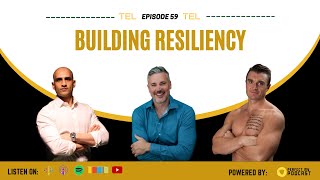
Justin Roethlingshoefer talks with Shawn Wells about building resilience through stress management and recovery. Wells shares his personal health journey and strategies for energy optimization, drawing from his new book on living a limitless life.
I think it's really important that we become aware of those stressors that are around us and the timing of when we add something and when we truly need to pull back.
The obstacle is the way where we find our strength through the adversity, through the obstacle, we find our passion through those obstacles. That's how we learn about ourselves.
It's really about creating that level of resilience for yourself. It's pushing yourself past barriers that we've really gotten complacent. This is the Energetic Leader led by a team of three who have influenced people at the highest level of corporate, athletic, entrepreneur and the business world. We teach through science and data driven methods to help you lead through energy and influence. We don't just use our stories, but the stories of those who have walked the walk, been in your shoes and ultimately excelled. Whether it's leading a team of 10 or 10,000, building a business of 1 million or 100 million, winning one championship or 10, they all have one thing in common, energetic leadership. So with that step inside and let's help transform you into that energetic leader. Welcome back to another week of the Coaches council. And guys, I know we have been focused on high performance human optimization and what you can do to level up in both your personal lives and your careers. And today I am super excited for our guest as he has been leading the way for at least a couple decades in this space and known as one of the wonders in the mixologist world of supplementation and has been able to do so many things when it comes to biohacking, anti aging, energy, productivity. He's got a new book out, he's been in over 4,000 podcasts it seems like, and has been all over the country talking to people all over the world actually, and has been so gracious to give us his time today. So really excited for this episode to dive deeper with Dr. Sean Wells. So thank you so much for spending the time with us today, Sean, and for gracing our audience with your presence.
Thank you so much for having me on Justin.
I really appreciate it.
Just FYI, I'm not a doctor, but I am a biochemist, a dietitian, certified sports nutritionist and formulator. Definitely a scientist.
So in other words, you're a doctor. Sure, for today's facet you'll be a doctor, but no, I just appreciate it, John, because I've read so much of your stuff, I've paid so much attention to the content which you put out and it's so refreshing to see the take on performance and anti aging and biohacking that isn't just about, hey, buy this supplement, hey, buy this food, hey, use this diet, but rather taking that real individualized approach. And I'm curious just to know how your concept and your philosophy came to be with the immense background that you, that you've garnered.
Yeah, that's a great question. And really, I think you find in general, the people that are most passionate, the people that are the most driven, the thought leaders, tend to have been through trauma, tend to have been through a powerful story in their life that led to a lot of transformation and led to that passion. It's kind of the hero's journey, if you will, for me and for anyone that I find that's really good at what they do. And for me, I had a chaotic childhood. I was bullied quite a bit. I grew up morbidly obese. And then at other points in my life, I kind of snapped the other way and went anorexic and definitely had disordered eating and a lot of depression and suicidal thoughts. Ended up finding working out in college and really starting to gain some pride in my body and getting into supplements, going into GNCs, looking at all the labels, reading all the magazines. There was, you know, Arnold's bodybuilding book, and there was a book called Optimum Sports Nutrition. Like anything I could buy at that time, I was buying, I was reading. And I ended up going to my medical doctor for a physical in between my sophomore and junior year of college. I was going to school for business, not knowing what to do at that point in my life, but just go do business because everyone tells you that makes sense. And I ended up telling him about my passion of nutrition and supplementation, how I was getting all these changes and I was working out and I was moving up like a set of dumbbells every time I was going to the gym and how addictive it was. And he saw the differences in my body and my energy as well. And he drew out this lifeline for me between 20 and 80 and said, why not be happy between here and here? And it really threw me back. And then it, like lit me up. And he didn't have, he didn't have to do that for me. He didn't have to say that to me. And it made it even more powerful in the fact that he was a medical doctor and very accomplished and successful. And telling me this, he gave me the permission to go pursue my passion. And I didn't even know that's what I wanted to do right then. I was excited about it. But I had never thought, wait, you can make something that excites you your job. Back then there wasn't the influencers and all the instant entrepreneurs and all these things that there are now. Maybe there was Tony Robbins and Oprah at their younger days, but there wasn't a whole lot of that kind of stuff. And the people around me were definitely real world pragmatists. And we're saying like, you know, go get a job with like Anderson or you know, some Price Waterhouse, whatever, like this kind of stuff and, and just get a job that pays well and you know, get your picket fence and pay your bills and be happy. I had no idea that I could pursue something like this. And it lit me up because knew what it's like to be made fun of, to be bullied, to be laughed at, to not get the girl to be the butt of everyone's jokes, to have depressive thoughts and. And later on I ended up getting my, getting into Chapel Hill for my master's in nutritional biochemistry, which was my dream school, and pursuing all this stuff that this doctor really gave me. But I was still pushing so hard. I didn't have self love in my life and actually that piece has only come in more recently. I was doing all the performance enhancement stuff in the gym. I was even taking pro hormones and ephedrine and caffeine and pushing my body and working 80 hours a week between school and jobs. And I ended up getting very sick. Autoimmune issues with Epstein Barr virus, fibromyalgia, chronic fatigue syndrome, Hashimoto's. And I couldn't get out of bed for six months and wasn't able to finish up my schooling. I had to push it back and that sickness had me reevaluate. And that is when I moved from my focus on purely sports nutrition and muscles and performance because I had spent most of my life not feeling attractive. So my passion was more aesthetic to moving into immunity and energy. And how do I get out of bed? How do I not? I wanted to kill myself because I didn't think that I would ever be a productive member of society. I would spend the rest of my life in bed and I ended up stumbling into keto. This is over 20 years ago. And that was a key for me to get my energy back, get my immune system under control. And then I started looking at energy supplements and wellness and adaptogens and immune enhancing supplements. And then that became a passion. And then about eight years ago I was working with Dymatize. Now I had my dream Job of being a formulator at a supplement company. We were pushing for sale. We eventually sold to post for 425 million. We had a three year timeline and again I had a wake up call of a brain tumor and I was working 80 hours a week. High stress. I wasn't keeping to all the things that I knew to keep to. The self care, the diet, the exercise, the supplements. I was getting off track because I was pushing so hard again and I was overwhelmed with stress. And it's only been like more recently like over the last year and a half and Covid really accelerated me exploring self love and me exploring taking care of myself and what that looks like with making sure I'm getting the sleep and journaling and gratitude and, and breath work and you know, all the other things I knew as biohacks before are optimizations once you have that solid foundation. But before I think I was using all of these biohacks while I was hating myself. It's kind of like trying to fix the car while you're going 80 miles an hour down the road. You know, like I needed the pit stop. I needed, you know, I need to take breaks sometimes and take care of my body. And so for me that's been the journey. It went from sports, nutrition, aesthetic driven to immune health and mitochondrial health to really putting all the pieces together when I had my brain tumor like paleo keto, fasting, cold plunges, all the biohacks doing blood work and epigenetics. And then more recently I've been getting into plant medicine and therapy and NLP and self care and now putting all those pieces together in a way that's how I feel is most healthy. So that's been my journey and I've been taking everyone along with me for that whole ride and I've been evolving that process. That's what made me.
I love that story because it makes it so real for so many people, it makes it so relatable. Where that example of having your car rolling down the road at 80 miles an hour all of a sudden saying hey, it's time to change the oil and just keep on going. Very rarely will you be successful. And it's unique. I want to really pinpoint this thing that you said was trying to hack your way out of. These weren't your words I'll kind of paraphrase. But trying to hack your way out of a poor lifestyle is theoretically what you were trying to do. And understanding that our body is always searching for homeostasis, it's always searching for that level of harmony, that level of normalcy. But when we have constant change and we have constant stress, we've got our body in this allostatic load. And once that allostatic load becomes to a certain point of tipping, I explain it often as a cup where that allostatic load is just stress on stress on stress being filled up, enhancing that sympathetic nervous system pushing us to really not have a gateway out. And those hacks and those lifestyle choices that we make are little drill holes in that cup that allow the stress, the sympathetic load that we're putting on our body, the allostatic processes the body goes through to kind of go away and just lean out and drain. But if we don't have those in place, our cup overflows really, really fast. And it seems like that's what you've been able to create within yourself. And I'm curious for you, what was the tipping point that made you say, hey, you know what? I need to take a pit stop here so that I can truly get the bigger picture of how these things that I spent so much time researching, learning about, perfecting, I can actually now get my foundation and build a strong house on top of it.
Yeah, it's funny. I mean, it's, it is those points that I was talking about that the health scares, the wake up calls, but those are, interestingly, at points that, like, should have been the happiest points in my life. Like, you know, I got into Babson College, which is number one business specialty school in the country, and I was, I ended up, like, getting magna cum laude and doing very well there. And it's a great business school. I had a great education, but I found that I was unhappy. I found that, like, you know, I was, I was sick of being sick and tired. And that's when I started getting in the gym and then saw my doctor. And then with getting my master's in nutrition, I was finally pursuing my passion and my purpose, but I was still pushing too hard on all the things and I ended up getting very sick with all these autoimmune issues. And then at Dymatize, I finally got this dream job in the industry of being a formulator for a company. In between that period, by the way, I was a chief clinical dietitian working at hospitals, nursing homes and all that. And I should have been at my happiest, but I got a brain tumor. And so these wake up calls helped me adjust from moving from aesthetics to immunity and energy to, to brain health, depression, suicidal thoughts, and understanding ketones with the brain. And then most recently a lot of my work has been around therapy and NLP and Byron Katie's work and self care and understanding, gratitude journaling and breath work and all of these kinds of things. And I've seen biohacking evolve in that way too over the last 20 years. Biohacking 20 years ago was putting magnets in your fingertips and chips in your head and all these kinds of things. Then it moved into bulletproof coffee and supplements and keto and fasting most recently. Now it is a lot of talk about, you know, gratitude journaling and meditation and self care. And so it's interesting to kind of witness the evolution of even that word. And I've been evolving with it in that process and I'm no longer trying to be just the quantified self, trying to be limitless and pushing for enhance performance. And I've kind of evolved the mashup term of biohacking, hacking your biology to elicit greater performance with another mashup term, hacktivism, like hacking for the social good, hacking and activism like Julian Assange, Edward Snowden, Anonymous. These groups are doing hacking for the social good. I like the idea of, I call it biohacktivism, like where you're your hacking your own performance, your N of 1, your personal health to optimize it to show up in a greater way to impact the world around you. I feel like we're in the right place, right time, all the time, but we're often too heads down to notice it. And that's one of the biggest differences for me is that if I can show up and I can be heads up and I can be empathetic and I can connect with the people around me, that's when I'm at my best and that's when I'm feeling fulfilled. And that's part of like in Energy Formula, the book that's releasing April 1st that I wrote. That's a big part of it is community. And it's the last chapter is your tribe. And we see the super centenarians, the people that are living the longest, I mean one in these communities. It has nothing to do with supplements and exosomes and peptides and whatever. It's having purpose, it's having connection, it's having yes, good food, red wine, Mediterranean food in some cultures, whatever. But the biggest part is that they slow down, they have three hour meals, they fellowship with other friends. Older people don't feel like baggage, they feel like they're sage members of the community. They're taken care of. And the Harvard study reinforces this idea of the Blue Zones. That's the greatest study of all time. That's over 80 years in and many generations in, where they found that the number one determinant of longevity is not cholesterol level or cardiovascular fitness or socioeconomic status or gender or ethnicity, geographic location. It's none of those things. It's the quality of relationships. Can you count on someone around you that was the number one determinant of longevity. So while I love all the biohacks, you know, I wasn't loving myself one and therefore really didn't have the capacity to love the people around me in a true and deep way. If your love isn't present for yourself, there's no way you can be showing up in the best way for others. So those are all lessons that I've learned, especially during the COVID period that really shifted me and I think those are the most important pieces to longevity right now.
I absolutely love that and I want to unpack that a lot deeper. It's one of the reasons I love podcasting and doing this and having conversations because we're going to go off in a direction that I didn't think we were going to go off in.
But.
How has Covid been for you in really diving into that portion of the last chapter of your book, which is your tribe, and making that connection, making that purposeful interaction other than just zoom calls, but really making sure that the fellowship that you have with your fellow human beings, your family, your friends, the relationships that really mean something. Obviously you being in Texas right now, it's one of the first states to open up wide open makes it easier. But what have you been able to do throughout it in order to continue to optimize that journey for you?
Yeah, I've been connecting with people every day, consciously through zoom, through lunch meetings, in person. I've been doing many plant medicine journeys and I won't say with who or where exactly, but those have been impactful and those have been without masks with groups, people that have been willing to do that. But know that those people go in feeling healthy. Those are people that have strong immune systems because they have self love, they have exploration, they are metabolically fit people and it's a conscious choice to come in there. And is there some risk when you do things like that? Sure. But I also feel like going back to allostatic load that your immune system needs to go to the gym too. And it's not ideal that we have a highly sterilized society where that we have something that's fear based, that's dividing us into groups of mask, no mask. Black lives matter. No black. You know, Joe Biden. No Joe Biden. Trump. No Trump. You know, all the things that are like Republican, Democrat, conservative, liberal, like what side do you land on? You know, the side of humans. Like we're all humans, we have so much in common. And when you get into these spaces, you feel true intimacy and love and you feel seen and you are seeing other people in their, in their truest, most vulnerable way and that's intimacy. And so your, your immune system, your nervous system gets to relax into true parasympathetic. I think for the last year and a half there's a lot of people that haven't even been in a, in a true parasympathetic state.
I couldn't agree with you more. Go ahead, finish up. I apologize.
No, no. And so that's been powerful for me is connecting on those levels with these small groups. I've done some masterminds, some plant medicine journeys, been getting together with people, getting the hugs, getting my oxytocin that I need and getting that connection that I need in person. But I've also created a couple mastermind groups that like every morning I have five ladies and me that I'm mentoring, that they've ended up mentoring me in a lot of ways too. Like that we have like a signal group and we have a two minute voice memo, like how's your day going? Like this is how I feel today. Like this is what I'm doing. Going to be up to today. Here's how you could support me. Just two minutes and there's, you know, five, five of us besides me and so six total. And we have that every morning. And then we do a once a week zoom call for an hour and a half where we see each other and support each other and talk to each other. And that's been transformative to have like a group that just goes deep that you can count on every single day. Like the first thing we all do when we roll out of bed is like leave this message and listen other's messages. And it's actually exciting to get out of bed, to know that you'll be supported and to provide other support. And so I've created a lot of these things around me so that I can feel those feelings, that I can feel that deep connection that I can feel the, your tribe being present in my life. And as a result I feel incredibly healthy and vibrant, go into a little.
Bit of depth as to what happens on that scientific aspect, that scientific side of things when, from the dopamine, from the serotonin levels, when you feel that deep level of connection.
Yeah, and that's, you know, it's two things. The autonomic nervous system, like I was saying before, which is the parasympathetic and the sympathetic nervous system states. Sympathetic is, you know, fight, flight or freeze. And parasympathetic is rest and digest. And we're rarely getting into flow states, we're rarely getting into parasympathetic relaxation states. And we're always like staying these like vigilant, like hyper drive kind of sympathetic states. And that's taxing on our energetic systems with our mitochondria. That's leading to mitochondrial dysfunction, that leads to metabolic dysfunction, that leads to insulin resistance, that leads to chronic inflammation, glycation oxidation, higher likelihood towards all disease states, practically faster biological aging over chronological aging, insufficient cellular energy states where we feel depleted. And all this is happening because we have hustle and grind. Sympathetic, ultra sympathetic. And we know what grinding means, right? Like heat, smoke, pieces breaking off. Does that sound good to you to stay heads down and sacrifice and push through it? I mean, yeah, we have to hustle sometimes, but it should be hustle and flow where we can get. The whole point of hustling should be to get to flow states. Sometimes we have to chase a little bit so that things can then come to us in a very natural way, in an uplifting way, in a true purpose driven way. We might have to chase our purpose a little bit so that we can be in our purpose. We can, you know, it's doing and then being we shouldn't do to do for doing sake.
I love it.
But to your point, certainly serotonin and dopamine, like the dopamine is a reward center. You know, serotonin is the feel good chemical. And then you know, oxytocin's a love chemical. All these things like certainly come into play that those are not present at the level that they should be when we're just in this ultra sympathetic state. For sure.
I love what you talked about there about that grinding aspect. And I come from the sports world, the hockey world specifically, and I always give the example of when you're skating and when you're at a stopped position, you have to really kind of really give it for your first three, four strides. Like you drive in and you get low and that would be like that hustle phase. But then after that you can just glide. You use the momentum, you use the Power. You use everything to kind of just take yourself in one direction versus if you were on concrete doing the same thing. And you take four or five strides and you go. And all of a sudden the metal on concrete just starts grinding. It creates sparks. You don't flow, you don't move, and it's exhausting. And that's that chronic, sympathetic, overloaded state that we all live in. It's hard at home, it's hard at work, it's stay up late to only get up early to make the first call, to be the 5am Club, to then add more chronic overload with your workouts, to your intermittent fasting, to your cold showers. All of these things are sympathetic to stimulating to our nervous system that continue to push us further and further and further down this chronic side. And we go, why can't we hack our way for kind of going back to what you said, why can't we hack our way or routine our way out of a poor lifestyle? And so I love the context that you really bring to this.
The body wants to be in a state of ease. And what happens when you are chronically not in a state of ease is you have disease and that's what's going to happen. And yes, we have positive stressors that are called eustressors. Eustress. And that gets into that allostatic load concept that we were talking about before with your stress bucket. And, and if you can imagine a bell curve, there's eustress on the left side of that bell curve, there's a Goldilocks zone in the middle of that bell curve. And then on the other side, the right side, where it's going down of the bell curve, it's distress, it's too much stress. And there should be periods of eustress, good stress, cold showers, fasting, keto supplements, whole food. You know, these things that we know about that are positive stressors. Going to a new restaurant, going to a new place, putting your belt on the opposite way, trying to learn an instrument. Right. These, these involve neuroplasticity, increased bdnf and it. And then it increases the size of your stress bucket so that you can have ease more often. Yes, we could just be in a state of ease all the time, but where we never have any stress. But then that's not healthy either. Our bucket will get smaller and smaller and smaller and smaller, and then you have almost no allostatic load. There's no challenges there to bring out your strengths, to increase your adaptation. And so it's ideal if Most of the time we're chasing ease, but we have small periods of eustress in a variety of ways. And just like physiologically there's eustress, mentally there is too. And that's called stoicism, where the obstacle is the way where we find our strength through the adversity, through the obstacle, we find our passion through those obstacles. That's how we learn about ourselves, that's how we gain identity. Otherwise, like we're just sitting there hoping there was no obstacle, looking for shortcuts around the obstacle. We don't grow stronger, we don't increase that allostatic load bucket in our brain. And so it should be a balance of ease, flow and then some hustle, some eustress to get back to ease and flow and make that a more attainable and sustainable state to be in.
It goes right back to that concept of progressive overload where the guy that was continually as a child, he was given, or not as a child, but as a 14 year old boy, he was given this calf and said, every day I'm going to pick it up and I'm going to do 10 squats with this calf. And over the course of time, that calf slowly, what does it do? It grows into a cow. Well, all of a sudden, two years down the road, he's able to squat an entire cow. Well, he wasn't able to do that on day one, but it's because he provided himself with that constant overload, constant progressive overload in small doses where he was lifting the same calf maybe at 80 pounds for a week, two weeks, until it gained another five pounds. And that's kind of what you're going back to, is adding stressors, the U stressors at the appropriate times. When your mother's in the hospital, you have, you're launching a new product at work and your kids are going back to school. Probably not the best time to go to try to learn a new instrument or probably not the best time to go and try to overhaul your nutritional routine. But choosing the times in which that allostatic load in your lifestyle is lower. Right to then choose whatever that eustress becomes for you. And it's basically having that awareness of what's going on from both work life and family, wherever the other stressors may come from for you and picking and choosing the appropriate times. Just start to dive into some of these healthier capabilities.
Yeah, you know, a great example of that was I did a 72 hour fasting challenge over a year ago, my first one with my community. I did One recently as a follow up again. But my first one that I did, I ended up having a mental breakdown because I was like running it and I had like 500 people involved and I was, you know, sharing and DMing and interacting and talking with the companies and I was running at full steam as well with my full time job and doing all of this and trying to fast. And I didn't realize that what should be a eustress fasting had become a distress because my allostatic load bucket was so full. And that this type of thing, this, this fasting process is meant for you to be more in the parasympathetic state. Like more for you to be meditative and reflective and you know, taking a step back and you know, like, like it's been done for epiphanies in the past and it's been done for religious purposes and philosophical purposes and all these things and for autophagy purposes. And so we're meant to, in this parasympathetic state and in the fasting state to take that step back. And I was still pushing, pushing, pushing, pushing, pushing. And I had like the first mental breakdown of my life. And then I started putting those dots together of like, wow, okay, this is actually a eustress turned into a distress because my bucket was so full.
It's a great example and it's something that I think a lot of us continue to do. We do not become aware of. And it kind of goes back to that allostatic stress versus the homeostasis because our body will seek that level of normalcy and sometimes it's at a unhealthy level of stress because that's just what it's gotten used to. And so if we're not aware of what we're doing of those habits, if we don't have boundaries in place, if we don't have these healthy lifestyle choices in place, from our workouts to our night routine to shut off times for when work is done and family time or you time begins, we are continually adding chronic load over the course of a longer period of time. And all of a sudden there's just one more straw, one more straw, and eventually one straw pushes us too far that ultimately breaks that camel's back. And so I think it's really important that we become aware of those stressors that are around us and the timing of when we add something and when we truly need to pull back and restructure the way in which we're placing that stress on us and what we're requiring of Ourselves.
Agreed.
You made a comment a little while ago that it actually parlays great into what we were just talking about, but your immune system needs to go to the gym too. And it's really about like, use it or you lose it type of deal. It's either. I mean, it's either you get exposed to little things here there, colds, flus, germs, infectious items. And then because it's real small doses, and because you've got a really solid rhythm in that allostatic load that's going on, and you're aware of what's around you, your body can fight those things off. And so you become stronger, they start flexing their immune muscles a little bit. And so I'm curious how you would articulate that to people or how they could take their immune system to the gym to ultimately put themselves in a healthier state long term.
Yeah. And the biggest thing to that is having those challenges, having those use stressors. We're not getting outside anymore. Like, we're staying in our artificial box, watching an artificial life on tv, walking on artificial flooring, eating our artificial food, and under the artificial light, and we're breathing our artificial air that's recycled. And we're wondering, like, why we don't feel connected or on purpose or healthy.
Or why we don't have real results.
Right. And if you just take your shoes off and walk outside for 10 minutes, do some grounding, not only do you pull in those, the geomagnetic forces and the ions that recalibrate you, but you also breathe in that fresh air, that oxygen, carbon dioxide exchange that's so healthy. You're getting the vitamin D on your skin. You're interacting with nature in a way that gives you purpose, perspective, and understanding for why we're here. You're part of a bigger ecosystem. And then on top of that, in the ground, in the water, et cetera, like on pets, certainly on other people, there's microbiomes, and that's healthy for our immune system to get exposure to all these different bacteria, both quote, unquote good and bad. And we're supposed to be exposed to that. Like, if something falls on the floor, I eat it. If someone coughs and sneezes, I don't freak out unless I'm already sick. That's the big difference. Like, yeah, if you're diabetic, yeah, if you're feeling sick, like, yeah, if you haven't slept well for the last three days, like, yeah, if you're under really heavy stress right now, maybe take some More concern be thinking about like I don't want to expose myself to this or that, but if you're feeling pretty good, if you've been getting sleep, if you're fairly fit, metabolically healthy, if you exercise on a regular basis, if you're getting outside, etc. You know, you should be interacting with people, you should be hugging people, you shouldn't freak out as someone coughs or sneezes. Like we do need to go to the gym for our immune system. Our immune system needs the pathogens to stay strong, to stay active, to stay resilient. The bigger that allostatic load bucket is, the more resilient we are, the harder to kill we are. We used to be very hard to kill. Another example of being in our little boxes is being so thermically controlled. We don't get exposure to temperatures like we used to. We stay at that 68 to 72 degrees all day long in our cars, in our office, in our house. We don't get exposed to high temperature variants and therefore we're easier to kill, we're less resilient, our immune systems are weaker. And so that's where doing things like cold exposure and hot showers or hot saunas and cold plunges and those things and then especially pairing them together and getting that really big delta of temperature is going to make you stronger. And that would be a eustress to make you harder to kill. But right now we're fairly easy to kill and we're finding ways to sterilize everything, to not interact with each other, to not hug each other, to be divided and fearful, to be lonely, to eat processed ultra processed foods, to get artificial light, to get EMFs and spend a lot of time with blue light and our devices, to drink poor quality water, to not take supplements, to you know, not have hugs and purpose and as much connection and interaction and a true tribe and have mentoring and therapy. Like we're just alone and angry and artificially cut off and it's just not healthy. It's not healthy at all. And I don't want to get into like conspiracy theories and agendas, but it certainly like is one of those things with the very least you're like, wow, it seems like all the pieces are in place to make us truly unhealthy and dependent on the system and fearful of each other. And is that a good thing? Like just taking a step back from that, like it's, it should at least make you question something, I don't know, the narrative or the agenda or who benefits from it or, or any of that kind of stuff, I don't want to get into any of that. But it certainly is almost counterintuitive to all the knowledge that we have of how to be healthy. And it seems really effing ironic what we're offering up to be healthy right now.
You're exactly right. And it's such a great breakdown of what that truly looks like because our immune system is really, at the end of the day all we have and what we depend on to keep our two feet, our heart, our lungs and our brains here on earth and to keep us operating at that level. And so it's, and again, for everybody listening, a lot of what Sean was talking about in terms of the stressors that were on you, if you're healthy, if you've gotten sleep, all of these things where you can actually measure that through HRV and the way in which that heart rate variability is showing. Hey, are you a little bit compromised today? A low HRV is not a bad thing. A low HRV is actually perfectly fine. But it's bringing awareness to the fact that, hey, you've got some other stressors going on. Your allostatic load may be a little bit heavier right now, maybe take some extra precautions, maybe do some things that are a little bit more self care driven, a little bit more recovery driven, a little bit more relaxation or ease based that Sean spoke about a little bit earlier. But that is how this all comes together, guys. And Shaun is just dropping massive knowledge and massive action steps for you to enable you to have a higher powered, more energetic, more fulfilled life at the end of the day. Sean, I would love you to talk a little bit about your new book. I know it is broken up into six different pieces and it's coming out here really quick. Kind of just talk a little bit about that and how people can engage more with you and where they can find you.
Yeah, so it's six, six ingredients to living a limitless life in the energy formula. So it's, it's actually an acronym. Energy is for experiment. So I get into bio, individuality, epigenetics. So it's six ingredients to living a limitless life in the energy formula. So it's actually an acronym. Energy is for experiment. So I get into bio, individuality, epigenetics, blood work, all those kinds of things and exploring that and understanding how you are different and understanding all these signals and signs of what your body needs. Then getting into nutrition with paleo, keto, carnivore, vegan, Mediterranean, how to do all of them. What might work for you? Again, just exploring that there's no right or wrong understanding we are again individuals. And then getting into exercise. I cover high intensity interval training, how it's massively better than low intensity steady state exercise for eliciting change, at least on a body composition level. Because again, it's about pushing to that kind of Goldilocks zone, that upper threshold, and not training at 40 to 50% of your max, but being more like 90 to 100%. That's why high intensity interval training in five to 10 minutes you can do a lot more than some people are doing in an hour, five times a week. And I get into blood flow restriction therapy, intra set stretching, a lot of cool exercise hacks that will elicit more recovery or hypertrophy muscle growth. Then getting into routines. So covering circadian rhythm morning routines and how almost all successful people have dialed in morning routines and how you can even take like five minutes and just really change the shape of your day and feel like you own the day by doing some things like breath work and gratitude and affirmations and some light stretching and getting a glass of water that can really, those five minutes are going to radically change the way you feel coming into your day. And I get into a lot more strategies than that and certainly the science of that. And then how to sleep properly. Creating an impenetrable sleep fortress is what they call it. Also working on sleep hygiene, consistently going to bed at the same time, avoiding things like it's called social jet lag, like where you stay up late on the weekends by another three or four hours and then you feel drained on Monday. It's like you traveling to Europe and so talking through that and how to get to sleep consistently at the same time. Then getting into growth. So that's that growth mindset, the stoicism. I also cover nootropics, brain boosting ingredients and then going into intermittent and extended fasting, how to execute on that. And then lastly is your tribe and how that community can help your health. And then I put it all together and I have surveys throughout the book to assess like your baseline and where you're going. I have formulators, corners that cover all the supplements in each chapter, all the brands, all the doses, all the forms that you need. And then I have resource hacks that covers the devices, techniques, the apps that you can use. I don't have any affiliate money associated with this. There's no angles. It's all like the stuff I actually use, I actually think is the best stuff out there. For my 20 plus years of experience, there's 60 full color diagrams, there's over 100 scientific citations, it's 400 pages and it's 99 cents in the pre order for the ebook. So that's a pretty damn good deal. And you also get a free fasting guide that tells you like your different fasting avatars and what fast would be best for you. And then a hidden chapter on natural movement. And then if you want the hardcover book that's $39.99, it cost me $39.80 to make because I did full color like the nicest binding and pages and kind of went all in.
So hopefully it's a trophy on your bookshelf.
Exactly, exactly. So eventually there might be a soft cover. We'll see. And I do have an audible coming out in the next few months. But yeah, by the time this goes live, the book should be out. You go to energyformula.com and you can find out all about the book. And like I said, It's 99 cents until the book goes live. So jump on that quickly and you'll get those bonuses@energyformula.com and then I'm on shawnwells.com, s h a W N W E L L S and you can find me on Instagram Eanwells again. And then I'm on Clubhouse a lot lately, doing a lot of stuff on there and I'm biohacking on Clubhouse and I've been doing almost one every day. So you can find me there as well and I'll answer any questions that your followers have and just DM me or email me or whatever and I will get back to you. This is my purpose and my passion. I just did. If you want to really do a deep dive on supplements, I know we kind of went more of a resilient direction this go round, but if you want a deep dive on supplements, I did Ben Greenfield's podcast and we went really hardcore into like breakthrough new supplements. Stuff like El Baba, that's an exercise. Mimetic Grains of Paradise, which activates brown adipose tissue, the active isomer and ketones, and my number one anti aging compound, which is dihydro berberine. I get into all that kind of stuff.
So yeah, I listened to that one. I listened to that one about a week ago. So you guys, you guys dove deep. It was, it was great.
Awesome.
Well, appreciate it. Ben's, Ben's a big experimenter on that, on that aspect. He loves it.
Sure.
But no, Sean, I Appreciate you so much, and I appreciate your time and coming on here and sharing. Sharing this with our audience. We've got a lot of action takers out there. What's. What's something that our audience could do for you?
Hmm. This book means a lot. As I just told you, I put hundreds of thousands of dollars into this, and I am not going to make money on this project. Like, this is about getting it in people's hands, and I'd love for it to be a bestseller because that means it's in a lot of people's hands and impacting lives. You know, I get into all the tools that you need to really have that resilient Life. And for 99 cents to have all that stuff, I think that's. That's a pretty great deal. So if your followers can buy this and support me by supporting yourselves, that would mean a lot. And then sharing it with friends and saying that you love the book, leaving positive reviews. It just means a lot. Like, I really want this to do well. Not for ego, not for money, but, like, really to impact lives.
Fantastic. I love it. Absolutely love it. Guys, so you've heard it here. It's really about creating that level of resilience for yourself. It's pushing yourself past barriers that we've really gotten complacent in, we've gotten comfortable in, and not allowing ourselves to move past the discomforts and traumas that maybe we suffered a little bit earlier on and ultimately are stealing our true potential fulfillment and happiness and ultimately performance at the end of the day. So allow yourself to move out of that dis. Ease space and open up your window of opportunity of which you stress yourself under, that you stress that you choose so that ultimately our bodies can find that level of ease again and operate at our true potential. So with that, guys, stay hungry, stay humble, and we'll see you next week.
More from Justin




The Ultimate Blueprint for Taking Ownership of Your Health | Unlock Peak Performance

From Bullied & Anorexic to Healed & Purposeful: My Transformation Story (Justin Roethlingshoefer)


Forget "One-Size-Fits-All" Health! Unlock Your Best Self with True Personalization (The OWN IT Show)

Are Blood Tests Enough? Why Cellular Testing Might Be Better | Justin Roethlingshoefer

Your Body's Language: Understanding Stress & HRV| The Power of Ownership - Chapter 3 & 4


Is "normal" really making you sick? Dive into Different with The Power of Ownership:Chapters 1 & 2