Ask the Hard Questions with Scott Burgess (episode 57)
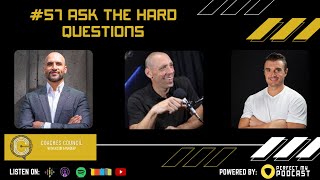
Justin Roethlingshoefer and Pradeep talk with Scott Burgess about healthcare, nutrition, and wearable technology. They dig into data privacy in medicine, why the medical industry resists change, and how to spot misinformation about health.
But my biggest gripe with healthcare as a whole is we're focusing on so much, so much. What about this? We need that. We don't need anything. If you drink lineal water, you eat food that doesn't have a label and you get good eight hours of sleep, Depp debunks everything that science and data is trying to prove right now. Period. End of story, no discussion. It's really important for content creators like you and I to make sure that we're delivering wholesome, valuable, truthful information that people can listen to.
Welcome to the Coaches Council podcast with Justin and Pradeep, where the art and science of athletics and business come together to create real life quality application that creates life changing results through actionable takeaways. As we always say, nothing changes if nothing changes. So let's get started. Welcome back to another week of the Coaches Council guys. So excited to really dive deep in here today. We've got the Host of Healthcare 360 Health and Medical podcast that's been growing exponentially. We all know what's going on in the world, we all know the misinformation that's out there and we have the individual that is responsible for a lot of the questions that are being asked of what's really true, what's really happening. There's a very few people that are asking the deep the hard questions that are going intrinsic with a lot of this stuff and getting us, the public, the answers on a lot of different platforms. So, Scott, it's a pleasure to have you on and I thank you so much for taking the time out today to really be with Pradeep and I and dive in deep here.
Thank you guys. And I just want to commend you for a great podcast and what you do on your side as well and bringing awareness. We need more content like we're all creating here so people are aware so they can make educated, healthy and the best decisions for them. So I commend you as well.
No, we appreciate that. And it's so funny. The day and age where content can be created. Anybody that has a laptop, a phone, a computer, a microphone, all of a sudden has a voice and in a lot of different ways that can become very scary in a lot of things. And one of the big things that I love that you asked and it stands out every single time. I first came across your work about probably four months ago, five months ago, and there was a question that popped out at me and it literally hit me square in the eyes and it said, had we known There were other options to exhaust or explore before you reached your final decision. And that final decision could be whatever it is. But we're talking healthcare here. We're talking wellness, we're talking healthcare in this sense. Would you have at least considered them? And all of a sudden I'm just like, oh, my God, like, wow. Because all of us just literally take what is on the table at face value. What is told to us as truth, what is told to us as gospel, and we follow decisions just like lambs and just go away with everything else that that's there. And so I'm really curious with the people that you have had on, with the number of interviews that you've done, with the deep dives that you've done with your background in the medical space, where do you see us right now? And what is the scariest thing that you think? People are not asking the question of.
Triple load there? All right, so where we are is we're at a junction in healthcare where it's very exciting, where there's so much exponential growth in front of us, where the sky's the limit. It really is. The sky's the limit. So it's AI, it's data, it's new modularity, it's other devices that can help us what we haven't seen or felt before. Nanotechnology, all of it. It's awesome. I'm a huge fan of tech. When you and I were talking, Justin, about going back with the wearables, I wanted to bring this up, but now I do have a wearable on, but I've actually moved away from it. And the reason I moved away from it was because of the data breaches that are going on. And that's what's also really scary about healthcare, is that everyone, and I say that very confidently, everyone, think, oh, well, I have nothing to hide. There's nothing that they're going to gain from me. Let me ask you this. What if, let's just say, for example, you and your significant other, okay, both of you, and you're sitting down, you're watching a Netflix show, and you decide to binge watch for four hours, maybe four and a half hours, you're having some popcorn, you're having a drink or two and just enjoying yourself, having a responsible relationship, sitting down, doing, watching a show that you love. That's what we're marketed to do, right? But all but you wearing a wearable and all that data is being collected. You're up past 11, 11:30 at night, which means you're up past Your quote unquote bedtime, you're probably consuming some kind of beverage, including water, eating later than 8 o'. Clock. So let me bring this back for a second. So we know that from a dietary perspective that if we eat past 6 or 8pm that that's typically not considered good health, right? Because you need DMT production to sleep properly. You need your pineal gland to take over and heal. How can your body heal at night when you're digesting food? How could your gut and your microbiome heal at night when it needs at least 14 or 16 hours minimum to heal itself so it can do the rest for its body in your second brain? So now you get all that going back to the wearable. All that data is being collected and now anonymously, so we're told it's being sold or stolen or breached and someone gets a hold of that, let's say an insurance company, for example, right? A lot of people would pay a lot of money for the information that critical and that close to the patient. In our interview with Joe Mullings on Healthcare360, Joe Mullings, the great guy, and he's probably the foremost thought leader in the headhunting medical space. So he has provided all the headcount for verb surgical halo pill pack, all of them. And I had him on the show and I'm like, look, what about data privacy? What about all this? And he's saying that there's actually going to be a hub, a network hub in people's homes that's pulling that data from your wearable. It's just a watch, it's just something on your wrist to give you time, your steps, your calories, it's harmless. That's what I'm scared about because we don't know what's happening. So when I do my research and my own personal homework and I research everything and, and we don't do a show on Healthcare 360 without doing a deep dive first of making sure what's what, why is that said what's being considered there so we can make sure that we're balancing that question out. Right. But when you get back to, okay, it's just the wearable on all the information that's being recorded, that's the scariest thing because we don't know where it's going, we don't know who's extracting that information. So I personally. Well, let me actually I said at a point, I didn't finish that point. When I look up data, what happens to your wearable data, it's just considered data. There's no category for it. So if your data on your phone is being sold and your smart device is coordinating and communicating with your smart device, that data is being sold, period. End of story. And we had Another topic with Dr. Mesco, who's the medical pediast. Brilliant mind. Brilliant mind. And he came back and said the same thing. He also said a comment I don't necessarily fully agree with, I really respect his position on it, is that we need to get comfortable with being uncomfortable with some of our data being given away and giving it up. And I understand that. But my biggest gripe with healthcare is as a whole is we're focusing on so much, so much. What about this? We need that we need, we don't need anything. We just need good nutrition and our body does the rest. It truly does. And we, we're losing that topic point amongst everything else. And as soon as we capture that, then we can start introducing things back in to try to optimize that. That's where I'm at with everything.
So I'm curious about that, Scott, because I agree with you 100%. It literally is that simple. Sleep and nutrition, you can get those two things dialed in. You're going to let most likely be an extremely healthy individual. But the world that we live in today is not the world that we lived in 10 years ago, five years ago, 50 years ago. It's extremely different. And our world is changing at an exponentially fast rate. The world we live in today is going to be way different than we live in a year from now, which is going to be way different than we live in five years from now. The soils in which we're getting our food from, the sources in which we're getting our food from, even somebody who's trying to eat really well can be doing harm to themselves by simply eating the food that's provided at normal grocery stores by information that's out there as to what, what healthy food actually means. I mean, the American.
That's a great question. That's a tricky question too.
The American guidelines for what healthy food is is completely off the mark as well. And so the information that's out there is one issue. Two is the world. And I'll go back to the question I was asking, but because I got off on a tangent, do that often.
It's okay. We're both in the creative zone right now. We're good to go, man.
But we're going in this direction where the world is changing so quickly and the world we live in, it's not just as simple as eating healthier nutrition and doing it and getting better sleep, because it's not the world we live in. I would love for that to be the answer. I would love for it to be the answer. If it was the answer and information was all it took, we'd all be billionaires with six packs. But that's obviously not the way that it works. And so at what point does informing ourselves and getting. And at what point does making sure that health care or proper habits, proper nutrition, proper, all of these things, at what point does it become our responsibility as consumers and as human beings to be able to optimize it with certain tools that thus are going to make it easy for us to implement?
So I'm going to respectfully disagree with some of the statements that you said, but I will completely agree with that. Yeah, everything's changing. Everything changed from what you said five seconds ago. Everything changed from what you said a year ago or will say, because what is now, what is time, right? So if you look at that perspective there. But here's where I'm really strong with the human body has been, however science data captures it, millions, thousands, whatever, biblically, who knows, right? It has been striving and thriving, right? Revving low and slow for eons generations, decades, okay? And the fact that now, because we're in a digital age and information age, and all of a sudden that's supposed to change because science caught up, or they think they caught up, I don't believe that at all. Because the truth of the matter is we are completely toxified, every one of us. And here's the thing. If you drink lineal water, you eat food that doesn't have a label, and you get good eight hours of sleep, that debunks everything that science and data is trying to prove right now, Period. End of story, no discussion. And we could probably end the podcast on that.
And here's the thing, Scott. I don't disagree with you. I agree with you 100%. But let's go to. And this goes back to what my point was, is let's go back to everybody's. Let's go back to the households of 50 families. You can choose New York City, you can choose Miami, you can choose Toronto, you can choose Vancouver, you can choose wherever you want to go. You can choose 50 families. Go into the household. You won't find those things. You won't find.
Let's dive into this way, Justin. Right? So we had on our show, we had an episode with Dr. Tom Cowan. And Dr. Tom Cowan was probably one of the most atypical physicians and family practice doctors that had ever met, even challenged the germ theory. What is a virus? What is a bacteria? And we did talk a little bit about the pandemic and what's going on. I invite everyone to go, not just look at my episode, but go look at him in general at large. And it's really important what he has to say. And it's an atypical perspective that needs to be considered. Okay, so you have glycephate, which we all know now that it's not just causing cancer and everything else. I mean it's literally killing people. Okay. And it's been allowed to be in our system, it's been justified. And that's the thing that kills me the most when with healthcare topics at large is everything is justified. So what most may or may not know, I don't know, I don't want to assume. But the pharmacological industry owns media, they own a significant portion of healthcare and they also own the farming lands as well in the soil. So if you're only given the options of the options that were given, then we, the only way to really do it well is to again eat meat, grass fed beef, make sure that the chickens or the eggs is all cage free, make sure that on the water side it's linear. So it really comes back down again to like the simple side of if. I mean, right, even right now, like Sean Baker, for example, he was on Joe Rogan a little while ago. He's going to come on our show. At the same time he's talking about having, just not having access to meat, like real meat. I mean, they're growing. I mean, it doesn't make any sense to me at all. And this really should appall everybody who's listening in your audience is that we are growing meat on a petri dish to serve the people to eat. It's unbelievable. It's unbelievable. I mean, the impossible burger. I put a post up, Justin, about the impossible burger and it was, it was like, you know, here's what it does, here's what it is, here's what it's made from. It was unreal. And it's, it's not right. It's just not okay.
And I think, Scott, we're saying that we're saying the exact same thing differently.
Sure.
Is that we're. Where the world is going is unacceptable. It's not okay. And it will literally, it will literally kill us all. It Will extinct us all at some.
Point if it keeps going down that trajectory.
Sure, Correct. Yeah, correct. There is more money spent in the medical field, in research, in technology, and all of these things in our country.
Not in every country, by the way.
Correct, correct. In our country. But yet the illnesses, the deaths, the longevity rate continue to go in the opposite direction of where we're trying to get them to go.
So here's something we just had. We haven't published this yet, but we had a neuropsychologist come on and we were talking about medical bankruptcy and what's really going on there. And we were going through some really hard facts. And this gentleman has investments in health care and they're fighting the good fight. They really are fighting the good fight. One in 29 people use their health care insurance, meet their deductibles, which means that the 28 people at large are not. So if you think about the cost, think about this. So we're paying these premiums and our monthly deductibles per month on healthcare costs that is getting reabsorbed and rolled back into it. So we keep seeing that bill of what we're paying out trillions and trillions of dollars a year on healthcare and people are getting sicker quicker and they're not. We just had an episode released today about emf, radiation poisoning, and the details that contribute to that. We are being blasted, blasted by satellites, smart meters, IoT devices, wearables, our phones and our cars. Let's consider electric cars for a moment. Let's not use name brands. Your city, it has a positive polarity charge.
Yep.
And you're a negative polarity entity with the earth and the ocean and everything else. And you're sitting around in between computers on a battery. Tell me how that's good for somebody.
100%. 100%. And it goes right back to what I was, what I was trying to get at, and what I'd love to hear more from you about in the people that you've spoken with is as we continue to go down this path, as we continue to go down this route of more technology, more, more things, more automations, more generics in making sure that things are scalable. Businesses, they see scale, they see money, they see dollar signs. Every single one of us has one, if not two or three of these things. And if you're listening, I'm holding up a cell phone right now. We're talking on a computer. I don't know if you're on a computer. I'm sure you're on some type of device.
Yeah, we're in a full studio here.
So, I mean, us on this end, we've got the electrical cars outside, we've got the antennas, we've got the, the TVs, we've got all of these things that are continuing to put this charge into us. And yet nobody is asking those questions. And so I kind of come.
Well, they are. That's the thing though, Justin. They are asked those questions being asked. But again, as I said a few moments ago, the pharmacological market owns the high majority of the media. So for example, right now there's a pandemic going on, okay? I don't care what side of the line people fall on, okay? Right, left or in the middle, I don't care. It doesn't matter to me because my personal position on it is take a cut and leave me alone. Leave me alone. I can do a fine job by myself. I don't wake up in the morning saying I need this or I need that from to help me out. I got it. I got it covered. I trust my body for what I can do now that I know really how it works. But when you go back to like the overall picture and image of this, if the content and this real, I want to say the media, because it's kind of like fake news now, right? But if the content is being driven, if a narrative is being driven and. And others are being sequestered from being heard, that could be truthful. Because now here's the greatest thing to happen and the worst thing to happen in media. Content has been fake news. It was awesome because it exposed what's really going on. But it was awful because now we challenge everything and we should challenge everything. But now it is so it's like, well, is that true? Is it not true? Let me do my homework. No one has time. We need trusted, reliable sources to do that. And that's what I said earlier in our pre podcast, is that it's really important for content creators like you and I to make sure that we're delivering wholesome, valuable, truthful information that people can listen to, know that they're going to get it unbiasedly. And it's something to consider. Not the final decision, but just something to consider. And that's what really drives me nuts. I'm like, I'll look at something. I'm like, man, you know why? And so if you look at the, the, I think it's. They call it the PCDR test, whatever it is for the coronavirus, there's a lot of debate around that alone. Is it effective? They're not effective. How is it created? Why are there so many false positives? You know, why are there so many positive false Whatever. Right. Why is that? And if someone asks a question, you will get a strike or get the platform, depending on how many strikes you have just for asking the question. And that's not okay. That's really scary stuff because it's taken you and I a long time to get where we are in this journey of media and content and delivering value to customers. And for it to be taken away potentially like that, you know, we have to word craft and wordsmith and jump around things. And all people want is a real information. No matter what, where people fall, they want real information. And the real truth is people are so divided now, just naturally on their own. They're so divided between political parties. Let me challenge everyone with this real quick. What is that political party really done for you other than anything for me? Not that all they keep doing is asking for my money to sponsor them in their, you know, their next race, but besides that, I don't need them. And I would, I'd say about 99% of the people. You don't need them either. And that's what I mean. They need to be working, they need to be hearing us now that we have a voice. This is where it's the most impactful. And that's where you start to see what's false, what's true, what's indifferent. How many times have you seen or heard someone getting fact checked? Who are the fact checkers?
Nobody.
Right. It's crazy what's happening. So. And my stuff, and I know you're in the wearable market and I respect, and I know what you're doing with the data and the science and that data and science is correct. I believe it. But in my point of view, from my position, of everything I've learned so far, once you've gotten down the big three, good water, clean diet food without labels for the most part, and good sleep, and there's still some things going on, maybe genetically or through family history. Sure, Right. Then you add those things on top of it, and that's where the optimization is.
And I appreciate that. I appreciate that 100%. Because again, even the way that we work within our clientele is I have a simple three, two, one rule. And that's how we start with every single person. And the three, two, one rule, you start with that one gallon of water, and that's one one gallon of Ideally, alkalized water.
Yeah.
From there you go into why alkalized.
By the way, if you ask yourself why alkalized? Well, I'm sure I know you know the answer.
Just simple. The PH within the body and.
Yeah, what about the PH though?
So you want to make sure that the body is not in that acidic state.
Okay, why are you not in acidic.
State for the organ builder or the, the organ system within the body?
Right. So when you go back to the EMF discussion about positive or negative polarities, that's why the ph matters so much. Because the more acid you are, the more the bad stuff grows.
It kills it and kills it. It ultimately kills your organs. You were killing yourself from the inside out from the water in which you drink.
Yeah.
And it's. And it goes right back to the food that we eat and take it back. I mean, a lot of people don't understand when you're talking about the food that you're eating, when it's coming from something that's genetically modified or something that is grown in soil that has a acidic pH, it's going to have some of those properties as well. And that's what now your body is ingesting.
We had a fantastic episode with Brianne Gibson and she was in the military up in Canada and she was talking about how she was doing some good man's work. Okay, good humanitarian based work and how they were, how they were turning over soil and compost and regenerating the proper soil, how quick it really takes. So what's happening now and what's been happening for decades, since the 70s for that matter, is that we're just replotting land and everything's top level, which now it's very chemical dependent for these, these plants and our food sources to grow. Which is why now at a premium, you have to pay for quote unquote, organic or grass fed beef or range free eggs, things like that. It's really challenging and it's only getting more and more expensive. I agree with you. It's the food source, it's the only thing. It's because at the same time, when you combine those different things with intermittent fasting and there's different hacks, biohacks you can do as well. I love biohacking. I biohack all the time. I have people who send me stuff and hey, try this and. But the biggest thing I haven't focused on that much so far is detoxifying. Everyone is toxic. I mean everybody is toxic. And we need to detoxify and get rid of the heavy metals in the blood. The heavy metals in the blood combined with EMF poisoning and it's happening. Okay, if you don't believe me, just, just type in EMF radiation poison on your screen and tell all these articles of like, boom, right in front of you where it's. You had you known. It goes back to that initial question. But the heavy metals combined with EMF is what's causing Alzheimer's, dementia, cancer, high cholesterol, obesity, all of it. Do you know, I mean, let's talk about this. Talk about someone being obese, for example, right? So maybe you have some clientele or some audience members that want to lose a few pounds. You can't do it quick if you lose too much weight too quickly. All the bad stuff, and I'm going to keep things really, really simple and generic, but all the bad stuff that's in your body gets stored in that adipose fat tissue. So we had an interesting conversation with CEO of the root brands and he talked about Chernobyl and the nuclear bomb that went off there. More people survived the initial blast than the fallout. And everyone's like, well, why? It's just, you know, you don't have an initial blast on it. It's a follow up. When you microdose repetitively, your body goes, oh, what's this? Oops, get this out of here. It doesn't discharge it right away. It just says, store it away, get rid of it. Initial blast, you do a flush or you die. It's one of the other. It's a 50, 50. That's it. So when you go into your new lifestyle plan, whatever that may be, and you are looking to lose 20, 25 pounds, and you've been slightly obese or borderline or even majorly, and then you start depleting all that adipose, fatty adipose tissue. Well, guess what's going to come out with it. Heavy metals, toxins, disease, it's all stored in your body. We, I mean, it's not like, that's like good cellular stuff. It's all dead free, radical. So you need a flushing system and a good, clean, evacuated system. And when you look at the detox triangle for the same matter, you know, the eyes, the nose or the sex organs, if, like for guys, for that matter, if seriously, if you're not getting, you know, woody like three to four times a night, you're in trouble. I mean, there is something significantly wrong with your detox triangle in your body. You need to make sure that all that's cleaned and flushed out and Those are the number one signs. So if you're having. Starting to have vision issues or one side of your nostril, you're having a tough time breathing with. I mean. Or you have to take ED meds. I mean, that's not okay. It's not. And those are the first telltale signs. Everyone's like, oh, it's mental. It's this. There is a dopamine effect to it as well, with pornography, all that. So I don't want to go down that road. But there are triggers and identifiers leading to all these causes.
You're exactly right, Scott. And that's the big thing that. I love that we're having this conversation, and I love that we're diving deep into this conversation, because a lot of times these signs, these symptoms that people are starting to feel and hear, our society has become so numb. Yeah. Do these things. It's just. It actually goes back to what you said. Oh, it's. It's mental. It's okay. Oh, everybody suffers from that. You're just the norm. You're just the average person.
Justification and conclusion. That's what. That's all it is. And we actually had two. They've said it twice, and I'll give you two examples. We had two fantastic personalities on the podcast. Dr. Brian Doric. He's a colorectal physician. Amazing guy. Personal friend at the same time. And he's the best physician I know on social media. He reaches out, he's asking questions. Bring me your concerns, I'll give you a free consult. He's doing all the right things. He's an amazing guy.
Brandon, I think four or five times now in phenomenal.
Right. So. But he'll come back to the table and says, look, I'll be the first one to tell you they didn't teach me nutrition.
Yeah.
They taught me one course. Check the box. That was it. Now, warranted before. Well, and I don't want to go down this rabbit hole too much, but there is a Western medicine and then Eastern medicine. Okay. And the Western medicine was developed back in the 1950s and how it progressed through. They used to teach more health and nutrition. And now, for example, I'm going to. I'm going to leave you on this thought. Why all of a sudden, do our specialists, our heart oncology, colorectal. They don't communicate. You have to go see another specialist. Okay, well, if you get a referral, why isn't there a communication string? Right. Doesn't exist. But back, I don't know, 70s, 80s, even early 90s, you had a doctor, a general practitioner with a black bag, walk to your house. Boom. And he could do and see everything. And if it was really a true specialist, he would make the phone call and actually guide you all the way through that doesn't exist anymore. And then we'll wonder why we get more sick. But then we talked to Dr. Brent Lacey on the show as well. And this is what's crazy, and this is criminal, truly criminal, is that we have the best and brightest in healthcare, our physicians and surgeons. Okay? So for all those of you who are in that category, you are the best and brightest in health care, and you are being bootstrapped to 750,000 to $800,000 in medical debt from school. And if you meet up with a significant other, you're leaving with over a million dollars of hardline debt, minimum. So now they're forced. Who wants you leaving school with a million dollars in debt? And then we wonder why out of a 20 minute conversation with our physician once every six months, they're spending five minutes with us personally at 15 minutes on a computer. It's not right.
No, you're exactly right. And I, we're gonna have to. I want to bring you back on because there's, there's so many directions we can go with this and so many deeper conversations we can have. And what it comes down to is people asking the right questions, people asking the educated questions, people challenging the status quo, people figuring out where they can go for the right information.
How about, can I add something if you don't mind?
Go right ahead.
How about people becoming comfortable with being uncomfortable and realizing they don't need these things and just giving some things away? And I'm not saying dump your phone or your computers. I mean, we need these things now to communicate. We do. But there are ways to optimize our health and to offset those offsets. And that's what this is all about. That's what you're all about. And that's what I really like about your show and what I'm trying to do. What we've done in our show is, and I got really, really frustrated with this when again, I'm a research nut, I will look up everything. And we're going to have you on the show in a few months to talk about exactly what you're doing, because there's a need for it. I know there's a need for. I just covered it recently, what I was telling you. Right, but. But when we go through, no one's collectively stitched together. What's going on? We're the first ones who've done that on our show. So we talk about EMF poisoning, detoxifying, what really causes heart attack, heart disease, cancer. I mean back in the 1920s, people eating fat, lard and pork, no one had heart attacks. There was less than 1% of the population. Now granted the numbers game of the population and the exponential growth because of, you know, baby boomers and everything else and generation, you know, having more and more kids, but still at ratio less than 1% of the population had a heart attack. We even know what a heart attack was.
But can we also just call a spade a spade and bring it back to that? It comes back to the sheer lifestyle choices in which we're making in the way that we operate on a day to day basis.
Sure. Go back to this too. Right. So go back. What if. What if. And this is the what if should put everyone in their open space void grabbing a bag of Doritos or corn chips that, I mean, Ben Ozotti talks about it. Great. He was on our show with Keto Camp and he talks about how corn, oil and saturated oils are some of the worst things that cause immediate inflammation in your body. And by the way, one half of a bag or quarter bag of corn chips, inflammation lasts in your arterial walls for 130 days. It's amazing on one day and we're eating this stuff a few times a week and, and that's being lax, generously saying, well maybe it's only a few times a week. Oh, what's this? It's not that big of a deal. No, it's a big deal. Our systems are not, we can't get rid of something if we don't know what it is that we're trying to get rid of.
It's exactly it. 100%. Say that again.
So we can't get rid of in our bodies if our bodies doesn't know what it's getting rid of. It just, it can happen. We don't. Okay, so here's everyone's heard this, I'm going to assume at this point. At this point, if you can't pronounce it, you shouldn't be eating.
Totally.
That's. It's pretty straightforward.
And on that, I mean on that note is it comes back to the lifestyle choices in which we're engaging in. You talk about even the stress and the sympathetic overload that we are constantly under that our body doesn't know the difference between mental, physical, spiritual, emotional stress. It just eases the Stress. And it has a simple response to it.
That's right.
And so the fact that we're constantly under this sympathetic overload, our body just lives in it.
Alan Watts has a quote of the saying that your body is nothing more than focus of conscious attention. It's like a radar on a ship. If you identify with your radar on a ship which is constantly in contact with the outside world, you're in a complexity of anxiety all the time.
And to make that quote real for our. For our audience. Remember the last time that you took a vacation? Remember the last time that you took a vacation, the feeling that you had. And if you don't remember the last time you took a vacation, that's another issue all in itself. But. But if you're think about walking through the sand and sitting down on a chair, looking out on day one of your vacation, and all of a sudden you feeling that anxiety rise because you have an unfamiliar feeling of relaxation coming over you.
Oh, right, yeah.
That feeling of anxiety because you're relaxing, because your body is in a series of allostasis, looking for its home of homeostasis, which is a constant stream of stress. That's not okay.
Yeah, I know that's not okay.
The fact that your body thinks norm, is stress and anxiety. And it takes 24, 48, 72 hours to allow that vacation to set in and truly go, oh, wow. So let me see what it feels like to be norm.
Let me add something in here. I think it's pretty. And you can feel free to edit this out, but for the next statement after this one. But we're in a constant state of anxiety. A high majority, not all of us, but a high majority of us especially. It's like, work harder, smarter. Go, go, go, go, go. You know, we're always in the connection because we have a device that's connected.
Yeah.
Pretty simple. So when you're in that constant state and you really don't know how to break away. So, for example, I'm managing a couple different things. I have time slots between this time I do this, between that time and do that. My personal go to is I love the grind. I really enjoy the grind. I love thinking. I love being creative. That's just who I am. That's my makeup. Go into the pharmacological market again. Excuse me, where. Now, this is a study. You can be proven through John Tompkins study. Okay. But back in the 1960s, they outlawed psychedelics, for example. Okay. And psychedelics, if you look at the Joe Rogan. Oh, gosh, I'm gonna draw a blank to his last name. Tim. Something I forget? No, no, not Tim. Tom Owens. Right. They talked about what happened with Manson and everyone was like, hey man. They started questioning things. Why is that happening? Or everyone's really easy. Free peace and love, man. Right. And I don't want to get all woo woo, but that's where we're supposed to be. So now if you look at pharmacological drugs. So here's what we did in my show, okay. And this was actually pretty cool, I thought. We brought on Sean Singh of Vistagen, who is a small pharmacological company and they have a new drug because there's a huge benzo issue in the United States. Okay, meeting. Yeah, right. People are popping those things like aspirin and not to say that aspirin's good. So they had a different recommendation how to do it. And they're going to. They have a product, there's no name to it because they're still in testing phase. Now my education is in health and sciences, so I understand all these things. I was a short term professor, guest lecturer at Northeastern University where I was teaching advanced neuroanatomy. So I understand all this stuff. So they're going through and they're talking about breaking the blood brain barrier with a nasal spray that goes straight to the amygdala. I'm like, okay, now my critical side saying, what the hell is it going to happen to you? Going to freeze the shit out of that thing over a 15 year period or a 5 year or 6 month, I don't know. So I'm asking the question, how do we know it's safe and effective? What are you doing there? He answered the question very gracefully and very honestly. He was an amazing, amazing guest. But on the other face, safe and effective. What are you doing there? He answered the question very gracefully and very honestly. He was an amazing, amazing guest. But on the other end I went like this matrix, red pill, blue pill. We brought someone on who did holotropic breathwork and what oxygen does and how is it the combustion fuel for energy and meditation and mental insight at the same time. So if you go back to the benzo, the reason why Sean's company is so brilliant is they understood and they understand what the benzo markets created. Dependency, an addiction with, by the way, at best, optimized. Only 33% of the population accepts a pharmacological therapy. That's it. That means the other 66 point, you know, 6% are out. Doesn't work. You have to go try something else. And it takes six to eight weeks to have it run its cycle through the body to see if it's adaptable enough. Now the blood. Now the what? I don't. Again, I don't know the name of the drug and therapy that Visagen is going to use, but it's a nasal spray and it goes. And it works immediately, within a few minutes. If someone's in distress, absolutely. You need to use something that's immediate to help calm them down, because you have to start somewhere. But should you take them long term? No. So we said. And I recognized that question. I was like, you know, something that. Let's, let's contrast this. So we brought on Gina Avalon and holotropic breathwork practitioner. Talked about the whole night. And I said, how long would it take for breathwork to really take shape, to really take effect? And she's like four to six months, depending on the focus of the individual. Perfect. Folks, you heard it here first. If you're in immediate distress and need, go for the pharmacological therapy. Absolutely without question. It's going to potentially save your life, calm you down, prevent something disastrous from happening because your body's in distress. But long term, there's another way. There's a safer way. You. I mean, you can't. Some people call it tripping on oxygen. I've. I've actually gone through the practice myself. It's wonderful. I love the experience. But it's like kege, which kill the red or the blue.
And on that there's the big issue, too, is that the money is going to come from the pharmacological side. So what do you think is going to be put in front of us?
Oh, that's exactly it. So Lonnie Stormo, he was a great guest in our show. He nailed it. Justin. He went like this. He went. Health care is one word, payment. That's it. If there is a CPT code designed for it, that's what they want. Oxygen's free. Yep. And it's endless.
And as much as she goes, okay, breath work to get really good at it, to be able to utilize it, four to six months. Guess what? If you're sitting there and you have somebody working with you and a practitioner doing it with you right there, it can happen in that first session.
It makes it hard to get there. And by the way, the benzos are six to eight weeks. So it's shortly after that before breath work would work, etc. So when we go back to the drug therapies, Again, are they needed? Yeah, they're needed. Right. But it's a starting point. It's only a starting point. And then eventually you start making the adjustments and you start tapering yourself down and then off where your body is in homeostasis that you talked about, where it can do what it wants to do. But going back to the original discussion and point on that was when you're sitting at a beach.
Yeah.
You're looking out into the ocean. I would bet to say that once you just put somebody back on the beach right there and then they're probably worried about how many freaking emails they're going to have in their inbox when they come back.
100%.
And that's not right. I've done it. I do it now to the point where if something happens, I'm like, it's okay, everything's going to work out. Because Dr. Wayne Dyer said this. This is important for your audience. Right. When you realize what you think about expands, meaning manifest, you're real careful about what you think about.
Totally. That's a great point. And that's a great point. And even to answer to or to ask you this question, and it's going to expand on this even further, is how long did it get you to take to that point? How much self work did you do to get yourself to the point where you no longer had to worry about what was going to happen?
I don't think it ever ends because again, you go back to. I listen to a lot of Dr. Wayne Dyer and especially a lot of Alan Watts. I'm a huge fan of Alan Watts. And you constantly have to put in check the ego. And you. It's taken me two years to get to my present state of where I'm like, you know something, I'm starting to get this.
But you have the awareness around it now.
Yeah, yeah, I do. I do.
And I think that goes right back to kind of brings us full circle is so many people just are not aware. They don't ask the questions. They're not willing to put in the time. They're not willing to.
You had. You had the magic word. A few, you know, a few minutes back, lambs, they just kind of go, that's just it. Don't be a lamb. Be your own animal. Roam. Do your thing. Just don't follow the news for what it says or the media. I mean, seriously, like, shut your TV off.
I love it.
Shut your TV off. That will end a lot of this.
I love it. So no matter where you guys are, no matter what industry you're in, no matter who you are, no matter where you call home, asking the tough questions, asking educated questions, challenging the status quo, not being okay following the leader in front of you, but creating your own sense of leadership and diving into the unknown and getting uncomfortable with those things that you typically would be comfortable with is going to help not only from a longevity side, but also from your family side. And so the more that you can educate yourself, the more questions you can ask, the more clarity you can bring to your own dysfunction, the better you are going to be able to handle the unknown ahead.
If I can give some point of advice, here's what I've learned to be true. The more you force something or say, I need to know, we don't have that much time. I need to learn this. I need to learn that all you create is an alternate sense of instability and anxiety. We're not human doers, we're human beings. Just be. The information will come. The information's out there, you have to look for it. And you have to have faith, trust and grace in your thought process. In your second brain, you got of knowing the road. You. If it doesn't feel right, if it feels complicated, your body knows. Let me, I'll give, you know, muscle testing, right? I'm not talking like strength wise, but like true muscle testing.
Yeah.
So do you know that if someone picked up, I don't know, an egg or an apple or banana or a bag of chips or whatever, right? And you just held it like this close to your chest and you said, is this good for me? And your body goes forward, you should eat it. If it goes backwards, you need to put it down. If you do a muscle test like this, If I, if I go like this. Ready? No, I'm not egg, just, I'm allergic to eggs. I can't have eggs now if I say apples now I'm, you know, for those of us who are not watching this, Justin's watching. There is no harder pull. You're watching me, right? But my body is telling me. Your body knows what it needs and doesn't need based on energy. That's just it. And your brain knows automatically. So the one simple trick if I was to leave everyone with is learn how to muscle test. That will start to guide you on anything and everything. The information's out there, just have to ask for it. The universe will provide it. It's all there. And just give yourself a quick muscle test. Your body will tell you it sounds woo woo, but if you watch, just watch the videos on YouTube, Vimeo, wherever you get your content from and just research it, start to practice it. It works every day. I don't do anything, nothing comes into my body unless I do a muscle test.
No, I love it. It's all about education, guys. It's all about looking and seeking the information from valuable sources. So, Scott, where can people find your show, your information and more and more.
Of you if they were to go online and Apple podcasts, Spotify, type in Healthcare360, they can find me there. If they're looking for the web, they can go to scotteburgis.com and everything. My two handles that I use for Instagram and Twitter are Scotty Burgess as well. So I try to keep it simple.
Fantastic. I love it. Well, Scott, this won't be the last time that we have you on. It's. It's always, well, you're in.
You're next on my show, Justin, so get prepared because I'm gonna. You know where I'm going now.
I know where you're going and I'm gonna be ready for you. I'm ready. I'm looking forward to it.
That'll be fun.
Really glad that you spent some time with us. And guys, I cannot implore you anymore, but get educated. Pull in content. Pull in quality content. Pull in people who are trusted thought leaders, people who challenge the status quo. If you're not comfortable challenging the status quo, at least find people who are that can get you the information that that's going to help push you forward and give you the actionable steps in order to better yourself, your life and your family.
Well said.
Stay hungry and we'll see you next week.
Very good man.
More from Justin




The Ultimate Blueprint for Taking Ownership of Your Health | Unlock Peak Performance

From Bullied & Anorexic to Healed & Purposeful: My Transformation Story (Justin Roethlingshoefer)


Forget "One-Size-Fits-All" Health! Unlock Your Best Self with True Personalization (The OWN IT Show)

Are Blood Tests Enough? Why Cellular Testing Might Be Better | Justin Roethlingshoefer

Your Body's Language: Understanding Stress & HRV| The Power of Ownership - Chapter 3 & 4


Is "normal" really making you sick? Dive into Different with The Power of Ownership:Chapters 1 & 2