Coaches Council Podcast Episode 21: The Power of Communication
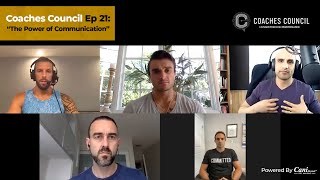
In this episode of the Coaches Council podcast, host Justin Roethlingshoefer and fellow elite coaches Brian, Pradeep, Drew, Craig, and occasional guest John discuss why communication is the foundation of high‑performance leadership, business, and personal relationships. The conversation begins with the premise that true communication starts with listening, not speaking. The panel explores how social media has shortened attention spans and altered the way messages are crafted, emphasizing the need for platform‑specific, concise, and visually appealing content. They warn about the pitfalls of text‑based misinterpretation and cite the Four Agreements as a mindset to avoid taking things personally. Consistency, frequency, and transparency are highlighted as essential habits; Craig stresses repeating core messages across multiple channels, while Brian adds the importance of simplifying language to a fifth‑grade level. The coaches share practical tactics for “social listening,” such as weekly giveaways, live Q&A sessions, and reviewing Amazon reviews to surface audience pain points. They also discuss how to conduct tough conversations—planting seeds of communication early, shrinking the time between issue identification and discussion, and creating safe spaces through clear intent, appropriate medium, and confirming understanding. Pradeep outlines a three‑step framework (message, medium, messenger) and stresses accountability. Throughout, the hosts interweave personal anecdotes, references to thought leaders like Gary Vee, and analogies (e.g., boxing, haymaker communication) to illustrate their points. The episode concludes with a call to action for listeners to engage with the Coaches Council for deeper coaching.
Chapters
it all comes back to the foundational aspect that communication actually doesn't start with what comes out of our mouth but it actually starts with listening when i
became really transparent and honest with them they weren't ready for it so it was what i called haymaker communication that's
what communication is we communicate because we want to influence the other party to do something in some way shape or form
this is the coaches council made up of six elite coaches dedicated to serving and ending personal struggle for high performers in business health and relationships as a collective we have built and helped build six seven and eight figure businesses dominate in multiple industries coached and played in professional sports leagues and developed some of the strongest and most intimate relationships both professional and personal this isn't your average podcast it's for the hungry the dedicated the doers for those that have a dream and truly want that dream to become reality people who want to take action leave their ego at the door and own every level of their life if that's you then step into the coach's council as we rewrite the truths to living that high performance life welcome back to another week of the coaches council and john brian pradeep and drew thank you guys for joining me it's again always a pleasure to see your guys shining faces and drew you're looking mighty fine after your one hundred miler with i see you've gotten back into the gym because the biceps are now popping again so today it's all about power of communication and i don't care if you're a business owner i don't care if you're a gym owner i don't care if you're a teacher i don't care if you don't have a job communication is the foundation to moving forward foundational to everything that we do in life because anytime that you have to interact with people even if you're doing an online business it's all about communication it's all about being able to articulate yourself and get your message across to the people that you are serving now we all have different businesses brian you're very much in person with people pradeep you have a combination of both drew you're very and same with craig you're very present online so i think hearing just the combination of how we use communication and the effectiveness in building businesses and creating relationships can create that powerful effect in what we're trying to accomplish now drew what is it that you found that has really been able to effectively drive your business online in learning how to communicate effectively with
people communication is one of those things that's always evolving especially with social media nowadays the way we communicate is so different right you look at a text message of how you talk to people now versus you know the way you would talk in person face to face is totally different and now people are saying lol you know as if it's like a word right and so communication is always evolving and it's it's evolved even since the time i started fit to fat two fit back in twenty eleven to now to you know find out what's engaging to people and you realize that for me from my perspective people's attention span has shortened completely and it's a product of social media right we can't last more than five to ten seconds of seeing the same thing it's every three seconds if you notice on reality tv shows or tv or youtube videos every three seconds it's something new it's something flashy it's something attention grabbing and so the way we communicate nowadays is just so different than what it was you know i think that's why our parents generation probably doesn't understand half the stuff we say because it doesn't make any sense to them but i think each generation has evolved in the way they communicate and so for me personally how it's how it looks for me now is you know through social media it's different because you're adding an image with text right and that's how we communicate instead of just me being on a youtube video and just just talking the whole time it's it's it's it's a little bit of video but it's a little bit of written context and you notice the way that we we look at the the paragraphs or the sentences that are written is it's not like us writing an essay it's one liners catches people's attention and then from there it draws them in and the way it's spaced out makes a big difference right so if you just write a big ten paragraph essay on your instagram post with no breaks no spaces in between no one's going to read that it's got to be pretty to the eyes and then i feel like that's how communication has evolved and so for me i'm not i don't consider myself an expert i really don't but i think to your question you're talking more specifically about in business and on social media online it's different versus if it's face to face and we're in a business meeting i'm going to communicate totally differently than i would if i'm going to write a social media post and so it's just knowing your platforms knowing your technology that you're using and knowing what works well and so you're always you're always guessing you're always evolving and upgrading as things happen and i think the best advice is to be fluid and flexible and don't think that the way you do it now is the way it's going to be done in two to three years so if you want to stay relevant it's important to know the trends of the times so that you can adapt and evolve and see what's working what's not working anymore and throw away the old stuff that doesn't work and i think gary vee is a great example of that of being able to adapt to each platform that he uses whether it's tiktok whether it's youtube whether it's twitter and it's like different languages that we're learning almost each platform has their own way of communication and it's just understanding and knowing each platform and what works well in all those platforms like i said i'm not an expert but i'm a student so i'm always trying to learn and that's what's helped me i think somewhat stay relevant over the past ten years well just on that
note drew what do you think like all of us are within our whether it's thirties or forties and we're within that age group where we're seeing that transition how are you finding it because i get a little bit frustrated sometimes with you can say the shortness of communication and i would even say in a lot of respects maybe it seems like it's not miscommunication but a lot of stuff is being missed out now because with social media or texting and all that kind of stuff it's easy to respond or reply but i don't find that a lot of people actually get the core piece of the communication
one hundred percent and i'll tell a little bit of personal story of why i dislike the modern form of communication because so many things get misinterpreted through text so if i text my girlfriend and i say something she might interpret it a totally different way than i intended and then i'm in trouble and then she's offended and she's mad and i'm like what are you talking about i just said this and same thing with social media you see social media arguments going on because you have it's hard to get everything out in written form of what you're trying to say because it's so easy for someone to you know interpret see that that text interpret it how they think versus if you're talking face to face they would see your body language they would see you know your emotions as you're talking they can't see that when it's in a written form and so it's complicated and it's frustrating to be totally honest with you i don't think it's the most effective way to communicate but sometimes it's all we have and that's why i'm a huge fan of the four agreements the book i think every human should read is don't take things personally and don't make assumptions this is why so many social media posts turn into arguments is because people take things personally and make assumptions about what that person is saying they judge them they put them in a box and they label them a certain way and then therefore you know everything's taken out of context and totally misinterpreted and so it is frustrating i don't have an answer for it to be honest with you but it's just one of those things that i first of all i don't engage on social media if someone's like drew you're fat you're stupid you're dumb you know for me i know not to take it personally the old version of myself probably did though well i was
just going to say based on you see what's happening right now with this whole black lives matter and this whole movement now you see people arguing in all fronts because someone will post something and they're taking it in a completely different context and now people are arguing about okay black lives matter all lives matter it just becomes this massive chaos when it comes to communication when i think essentially what everybody's trying to say is pretty much the exact same thing is that we all need to treat each other a little bit better the
big thing that you're talking about there pradeep is it all comes back to the foundational aspect that communication actually doesn't start with what comes out of our mouth but it actually starts with listening and listening skills are never spoken about they're never enhanced they're never worked on but it comes down to what can i say that can get the sale what can i say that can encourage somebody what can i say instead of actually just listening exuding a little bit of empathy exuding a little bit of transparency altering the way that maybe your point of view has been positioned and really listening to what that person has to say pausing absorbing it and then communicating it and we lose that through social media we lose that opportunity because how often you get through a message or you get halfway through and you're like oh i know what they're saying and you're already typing a response or you're listening to what somebody else has to say if you're in person and you're already you've already got your response like on the tip of your tongue it's the moment there's a pause a break i'm interjecting because i know what i want to say so it's that listening skill in communication that creates the power to have a for lack of a better word powerful conversation now craig you are so present online but also so present in person through your zoom masterminds obviously right now due to covid but even your in person masterminds what have you had to do to make sure that that communication is effective and powerful
the most important thing about effective communication is to be consistent with it so you know it's funny i was just thinking this this morning people can't spell my name right people that pay me a lot of money they either call me greg i've seriously known people that have known me for years and call me greg or they can't spell my last name right they can't spell my last name because okay it's a little bit tricky once but to consistently spell my last name wrong shows that you've got so many things going on that you can't pay attention and so if you're doing any type of communication and you expect things to be clearly understood even once even if it's a long communication you're going to be severely disappointed so therefore it's hard to wonder why anybody would misunderstand understand a very short communication you know they've just got a million messages coming in at them from every social media from every email newsletter from television from all the things that can deliver a message to them and so they will get lost in it now if you are communicating to a team of your team if you are communicating to your partner if you are communicating to your community your customers you must communicate almost the same message over and over and over and over again you know you're going to tell it and you know deliver the message in different ways through different stories but you don't need to have a whole lot of new things to say you just have to say the same thing over and over again sometimes in new ways so consistency is the key in the communication people who have read my books and you know come to my events they still get the principles wrong in how to build their days or they get off track on those principles and they need to have it communicated to them again either through a different medium or in a different story so again as experts we think that people understand us we think that people
there's
something called imposter syndrome where a lot of people feel like i don't know enough to be saying anything i think there's also something that would be called expert syndrome which is where you assume that the understanding of your audience is far greater than it is which is also actually contributed to imposter syndrome because people feel like they have imposter syndrome because they think everybody else knows as much as they do and therefore who are they to be a teacher of anything well the fact is if you are anywhere near an expert at anything even if you have a certification you know more than ninety of people and you will probably you've probably already forgotten more than ninety percent of people will ever know so that's why you should not be an imposter now the thing is if you fall victim to expert syndrome where you communicate on a high level up here because you think everybody else is up here but the reality is they have about ten percent of the knowledge your message will never be communicated properly because you're always communicating on too high of a level and there's a really great real world example or analogy of this which is known as writing at the fifth grade level that's you know when i actually started writing for men's health magazine they said seventh grade level so in twenty years we've lost two grade points in the general understanding of the general population in the written word but that's what they said to me when i first started writing write everything at a seventh grade level and now it's generally recommended that you write at a fifth grade level probably because people drew think lol is a word you need to communicate very very simply and if people are not getting what you're trying to communicate it's probably because you're trying to communicate on too high of a level i'll just give a real brief example of this my girlfriend recently hired a nutrition coach and the nutrition coach would do a weekly zoom on the weekly zoom the nutrition coach would come on and talk about such high level concepts of not just being out in the sun but i don't know if anybody's ever heard this crazy stuff like you got to look at the sun and you have to have grass fed organic butter now listen i'm not arguing against grass fed organic butter but i'm saying if misses jones is coming to you and she's eating pizza three times per week and drinks a liter of soda three or four times per week the last thing on her list of problems is whether her butter is organic or not if she wants to lose weight and yet this expert she would come on and nothing she talked about was at the level of her audience so there's a huge mismatch so if you're not consistent and you're not doing a good enough job in the quality of the message to your audience you could be consistent but you will inconsistently miss the mark so those are a couple of very important points for powerful communication that's a great
point craig and i've got a question for you is how do you through social media especially online content go back to that listening factor of if you are talking at too high of a level if you're communicating at too high of a level how do you listen to what your peers or to what your students are actually needing we do
giveaways every single week on our social media so we do we're up to about two giveaways per week now sometimes we're giving away copies of my books so all three of my books sometimes we're giving away coaching sometimes we're giving away my instagram course and we say to everybody all right it's a giveaway but the only way you can win the giveaway is if you comment below about if there was one thing you could ask me what would it be or if there was one problem in your business that needs help what would it be if you could sit down with me for five minutes what would you ask me and do there's the answer and you go what you've watched my video how could that be a question and it's because either i'm not clearly communicating it or in the content that i've created or i'm not communicating it clearly and consistently enough or i just haven't said it in a way that they understand it and so you're getting everything from your people that you could create content on that's listening in a social media thing or doing facebook lives or instagram lives where people can ask you questions or going on somebody's podcast and hearing like oh these are interesting questions that people keep on asking or with my clients i have you know the weekly accountability so they reply to ten questions and i hear the problems over and over and i see what what people are struggling with and it's almost a general level of struggle around main issues and allows me to create future content future books like the perfect week formula is my third book it came because the perfect day formula led to five hundred questions from people that were like what about this what about this what about this i'm like oh my god i wrote the wrong book here so i had to go back and write another book that solved all of those problems and it's basically me reading my reviews on amazon ryan moran has a great new book out called twelve months to one million he sold a supplement company for ten million bucks which is pretty cool he basically says if you really want to figure out what to sell just go to amazon go to amazon you want to sell yoga mats go to amazon and read all the reviews on a bunch of yoga mats you'll go oh this is what people don't like and this is what people do like and now i can go and create a yoga mat based on that there's plenty of opportunity in fact there's probably more opportunity than ever for you to listen to the other person
we'd be remiss if we didn't take this time to thank our sponsors that allow us to reach you each and every week the coaches council is powered by cannibrands a lab tested all natural pure hemp cbd company without the presence of thc they encompass our passion for health wellness and fitness that we have on the coaches council visit canibrands dot com and at checkout use the promo code coaches twenty to enhance your wellness journey i want to shift gears here a little bit and brian you're so you've got a team obviously a large team that works for you and how does the communication shift between having powerful conversations with your team as a leader versus a client or a student or somebody that we're working
with directly well you know craig hit it on the head in terms of keeping it simple and i didn't always do that early on i think earlier much earlier in my career i think the older i get i definitely try to keep it i mean as like fifth grade fourth grade third grade i mean the older i get the more i know actually the more i try to simplify it right and that's actually good for me because it's means that i really understand this more to simplify it with the people you're talking with so it's understanding different stuff right there are two different things serving your clients it's about maximizing their experience so when you're serving clients what are we really trying to do is that we're really trying to take the think out of it so if i'm serving somebody and i'm making them think a lot well then i don't provide much value to them because now i'm complicating the process because that's what they're paying me for they're paying me for them to come in have a great experience so if i'm making them think too much or work too much too hard then my value becomes really little to them so to craig's point not with the nutritionist we can't complicate it and i'll give a quick example a couple of years ago this is a real transparent example a couple years ago you know we had all this nutrition stuff and these books and things we would give you know to people when they first started and i remember asking our staff and these are you know trainers professionals experts right i said how many of you guys eat like this like in this book this is this is this is like perfect i mean there's no room for error whatsoever and this is like this perfect meal plan and nobody raised their hand and i said it's like expecting a kindergarten to learn calculus in one day it's so much how could we expect nobody in here but this is our job full time eats this perfect and it's too much and so that's the biggest thing is that with clients is you got to keep it simple and you got to make it around the experience in which they want now obviously it's different for different clients based on their level and their experience of that they've been doing something so you keep it in terms of that when it comes to staff you know everybody is different but there's there's a formula in which that's really worked for me because early on in my twenties and i'm not you know i'm thirty six now but ten years ago when i first started the company it was very much kind of like guns ablazing kind of a lot of football mentality head coach this is how it is we can just get after it team like that shit doesn't work definitely not in a professional setting you know not at least in our professional setting and so you know there are us the formula is when it comes to it's all about accountability real communication is about accountability and conversations are hard they're only really tough when there's a lack of accountability at the top so when those conversations aren't having are happening much and there's not a level of accountability then the conversations become really hard but what accountability is it's about number one is about transparency like being honest just calling it what it is being honest being transparent about what's the reality not being objective not making it personal or subjective like here's be transparent situation the second thing is as craig talked about consistency like you can't you can't have good communication without being consistent now you look at consistency saying hey we meet maybe once we meet every week that would be an example of consistency but the second thing is then i would say if you want to enhance your your communication is you increase your frequency now you don't want to increase your frequency before your consistency you want to have the consistency there so that way it's good and once you see hey look we're good we're good meeting once a week then you've got that down so people know that you're going to be meeting and having those conversations then you can increase your frequency a little bit more by having those conversations with them or becomes more specific things and then the fourth thing is that compassion and respect it's the empathy it's the three l's we talk about in our business which come to communication as you said justin which is spot on listen our second thing is learn and then we lead so we got to listen first all these things great points asking the questions whether that's on social on instagram getting the feedback what are people complaining about reviews all that type of stuff or what do people want you get a chance to learn that helps that helps drive in terms of things that you want to communicate but that was the biggest thing for me those first four was that you know the best analogy i can give with communication where i'm going to give you my mistakes first because i think that probably people may be doing this as well the biggest mistakes i have was i was throwing people when i when i would communicate early on with my team i wasn't consistent enough i wasn't frequent enough then when i became really transparent and honest with them they weren't ready for it so it was what i called haymaker communication like even though they needed to work on these things i would come out of them like once a month and be like hey drew we gotta fix this this this this this this this this this and i'm like whack whack whack whack and drew is like thinking everything's good because in drew's mind he's like no communication like no news is good news in his world and i'm seeing things drew's got to work on this drew's got to work on this drew's got to work on this so i would just hit him with the haymaker and it would crush him it would crush the morale and
so that's such a good analogy phrase for it too like yeah they're just walking they're just walking down the road like man life is good and then all of a sudden sucker punch and
it's the worst because you know right and as a leader we have to take one hundred percent responsibility because it's it eats at us it eats at us it eats at us and the reality is it's not just our problem it's we didn't help that person out like we saw something that they weren't doing right shame on us especially on our team for them to continue things that they needed to do right all the time so what i really had this mind shift years ago is that i'm going to treat our communication like boxing you see like if a boxer just does shadow boxing all the time and they just feel really good like i'm just shadow boxing i'm good i'm good but they never get in the ring and throw any jabs or take any hits well then the first time they get in the ring they're going to get their ass knocked out and be like screw this like this is tough so with the frequency you got to throw those jabs at them you got to make them tougher and the more frequent you can just throw those little jabs by letting them know what they need to work on the communication the areas in which they can improve now when something big comes into play like a COVID nineteen which is the world haymaker that threw people for a loop and said whoa whoa whoa holy crap this is a different game the market all this type of stuff rattles them once they've taken their shots they're saying hey i know how this thing i know how this works and so that was probably the biggest area that i struggled with and a lot of clients that i coach with they're coming to me a lot of my business coaching clients they're coming to me about employees didn't do this didn't do this didn't do this i'm like what was the last time we had these conversations well it's been weeks i'm like but you're not helping the person out have the conversation with them talk with them you know it's that mind shift because one you don't want to bear that stress and true two you want to help the other person out on the team and so you know be honest be transparent that's the ultimate form of respect that you can give somebody and there's the greatest this is probably one of the greatest things that i learned from football and from sports from coaching is when the coach would say worry when i stop coaching you worry when i stop giving you feedback worry when i stop communicating with you and that is so ingrained now in our company culture that now it's not the whole no news is good news type of situation it's like hey brian has not been cleaning things up that i'm doing because everyone here knows that our saying is our best is yet to come our best is yet to come so you've never made it like we always have room to grow and so it's just that mentality and that mind shift that if we're not getting coached if we're not getting the feedback then that's when we kind of need to start like worrying about type of stuff but as leaders that's the most form of respect we can give to our team is by just giving those jabs so you got to be transparent you got to be consistent first as craig mentioned it's everything because then you're unpredictable you don't know when you're gonna what message is gonna be conveyed when frequent and then have that compassion and respect so that way you don't come out them like a dragon which was my biggest biggest area of growth when i would you know lead people i wouldn't say it was the right leadership early on in my career by just going too hard at people so and all those things make up the ultimate ultimate aspect of communication is accountability so that's it right there for us brian you bring
up such a great point and it's truly how you get down into the trenches with your people it's about maintaining that level of consistency but how do you have that tough conversation because conversation communication it's like an ocean okay you got the four levels call it where you got above the water then you got just below the water and then you got slightly deeper than that and then you got the ocean floor and communication should be spread out between everything from light to kind of how's the weather to all the way down to the real tough conversation that when an earthquake happens it shakes everything and creates tsunamis and everything else so how do you create a safe space to have that tough conversation i know you have these conversations all the time with your clients one on one and i'd be curious to hear from each one of you guys something that's gonna help everybody else have those tough conversations cause those are the ones that really push us forward it's great to be consistent but it's the tough conversations that drive us
it's everything before the tough conversation so it's two parts one it's how you lead before that tough conversation so if you're not a good leader before that tough conversation it's gonna be shit because you didn't show any sign of consistency and frequency up into that process now i've had people on my team for five years six years eight years and i still to this day i'm going to give them feedback but if i did it every once in a while then they never want to listen to me so number one is you've got to plant a seed right now is being a consistent communicator even when there's not an issue whatsoever because if you only want to communicate when there's when times are tough nobody wants to listen to you but if you're communicating when times are good when times are tough you're neutral so you're never higher on the highs you're never low on the lows that's the first thing the second thing i would say is is timing time is the gasoline on a communication problem the more time that goes by of you not having that conversation with somebody the bigger the problem is why because people create narratives and stories in their head it's the same with business it's the same with employees the same with relationships and then you have that conversation with somebody you're like man it wasn't that big of a deal but time magnifies the problem so timing is everything shrink the time have it as quickly as possible so that way it doesn't grow and really it's not a tough conversation i was only nervous having those conversations when i never was when i never was consistent and frequent having those on a day to day basis in my business now the most like letting somebody go they already know they were going to let go because the seventeen times we have conversations or five times whatever the case is that happens before they know they're going to get a raise because of the track that they're on so communication needs to be predictable and that is the biggest biggest problem with people who suffer with it is their communication is so unpredictable because it's inconsistent because it's infrequent because it's transparent it's too personal based and never like real just logic or fact based with stuff so those would be my two biggest thing it's all about how you led before and shrinking the timing in terms of when there's an issue attack it as fast as possible by maintaining those things with compassion and transparency in the process pradeep i'd love to hear your thoughts on that brother well
i just want to add one before pradeep i'm just going to take over here sorry pradeep no but one of my mentors gave me this great line he said if someone is ever surprised like if you ever fire someone and they are surprised by it it's on you like they should not be surprised and brian that's exactly what brian said there so so if you're a business owner and you're like i gotta go fire that person and they're like what why are you firing me you've done a very poor job coaching that person and communicating yeah as you guys are
talking i'm actually just a couple of things were going through my mind because i there's a couple of things that my team just didn't complete and i was thinking okay what the heck why didn't they complete it and then i thought okay i was going through the the situations of my communication to them and i found a gap in my own communication to say okay i need to clarify this in order for them to execute so i think it's up to the communicator to make sure that the communication is done effectively if we're talking about tough conversations this is something that i found out for myself and i was a believer in you know what getting things done almost immediately but i found out that in order to communicate effectively you have to find the right timing to do so because not everyone can accept communication all the time sometimes people have other things on the go they have other things on their mind they're stressed out and if you have to deliver a tough message i found that it's a lot easier when you find the right timing when they're in a position when they're in the state to actually absorb that communication so if i'm having a tough conversation with a client or with an employee or even my wife or my kids i try to find the right timing where they're actually going to understand it and actually take it in the other piece is making sure that they understand the communication and so we have this thing now where anytime i communicate i ask okay do you completely understand that can you please repeat it back to me if it's extremely important because a lot of times i believe that we end up trying to communicate and the person might just not understand it or they understand a component of it but it's up to us as a communicator to make sure that they completely understand every single aspect and whenever i take a look at a message whether it's a tough message or a good message i take a look at three things a what's the message so what is the actual message and what's the intent and what do i want the outcome to be b is the medium so how do i want to communicate is this something that i can communicate over text is it an email do i have to be in person can i create a video whatever that is and the third one is the messenger and that basically means is who is actually who do i have to be from an identity perspective or the characteristics do i have to display to make sure that whoever's receiving that message gets it and takes it appropriately because we can have i'll give you a prime example take a look at trump i'm not a big fan of trump i think that you know what his leadership style is an ideal i don't think he's an effective communicator but everything that trump does now is being berated for example now he might have the right message he might be doing it through the right medium but just because he's trump now people are gonna say this guy's whatever he's saying is just a bunch of load of crap or whatever it is so we gotta take a look at those three aspects and ultimately here's how i see communication in any standpoint as well is it's a form of influence that's what communication is we communicate because we want to influence the other party to do something in some way shape or form and so if we take a look at it from that standpoint i think we just need to make sure and take the ownership as you guys have talked about especially brian is accountability everybody has a part to play in communication especially the person that's actually communicating that's exactly it and i mean
brian summed it up so well when he said his three l's you first off have to listen understand what the other person's saying give them their space give them their time and then you take what they say and you learn from it you really take all the words they're saying you comprehend them you back off maybe on your point of view and you really learn from that individual and then from there you respond and you lead and you lead from a place of authenticity authenticity and transparency and that's how effective his communication was had with that stay hungry stay humble and we'll see you guys next week thank you so much for joining us for another week of the coaches council if it wasn't for you viewers and listeners we wouldn't have a platform so again it's all about you guys and we want to give you a reward just for listening we want to give you access to each one of our coaches for a little bit deeper intimate experience so if you go to coaches dash counsel dot com coaches council dot com subscribe and like to whatever platform you're viewing on you're going to be entered to have that one on one experience so be sure to go coaches dash council dot com and really interact with us because we would love to interact with you until then stay safe stay hungry stay humble and thanks for listening
More from Justin




The Ultimate Blueprint for Taking Ownership of Your Health | Unlock Peak Performance

From Bullied & Anorexic to Healed & Purposeful: My Transformation Story (Justin Roethlingshoefer)


Forget "One-Size-Fits-All" Health! Unlock Your Best Self with True Personalization (The OWN IT Show)

Are Blood Tests Enough? Why Cellular Testing Might Be Better | Justin Roethlingshoefer

Your Body's Language: Understanding Stress & HRV| The Power of Ownership - Chapter 3 & 4


Is "normal" really making you sick? Dive into Different with The Power of Ownership:Chapters 1 & 2