Coaches Council Podcast Episode 27: Modern Day Masculinity Part 1 "The External Portrayal"
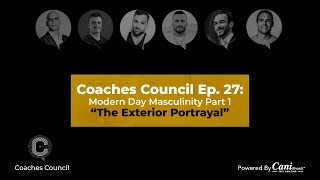
This is a YouTube video titled "Coaches Council Podcast Episode 27: Modern Day Masculinity Part 1 'The External Portrayal'" recorded in August 2020. It features a multi-speaker podcast discussion including Justin Roethlingshoefer, John, Peter Nguyen, Pradeep, and Matt Shakir. The conversation explores themes around modern masculinity, focusing on men's relationship with fashion, fitness, body image, and societal perceptions. The participants discuss how external appearance affects self-identity, social judgment, and the challenges men face in expressing masculinity authentically. The episode also touches on cultural and racial aspects influencing men's style and presentation.
Whether you choose to participate in fashion or not, you are participating in.
Guys have that natural tendency. We take a look at women and we say, well, women, they like to dress up, they like to look fancy. But guys have that same approach too. Guys like to do their hair. We got our things just like women do.
Men have a relationship to fashion that is very different because it does bring automatic, if not judgment, then at least curiosity.
This is the Coaches Council made up of six elite coaches dedicated to serving and ending personal struggle for high performers in business, health and relationships. As a collective, we have built and helped build six, seven and eight figure businesses, dominate in multiple industries, coached and played in professional sports leagues and developed some of the strongest and most intimate relationships, both professional and personal. This isn't your average podcast. It's for the hungry, the dedicated, the doers, for those that have a dream and truly want that dream to become reality. People who want to take action, leave their ego at the door and own every level of their life. If that's you, then step into the Coach's council as we rewrite the truths to living that high performance life. Welcome back. Welcome back to another week of the Coaches Council. We are joined with special guests today. Guys, we listen to your guys feedback as listeners and the episode that John went on his legendary rant on for the modern day masculinity. We've actually brought in two experts that are very high performing men as well in their own right but work specifically with men. We have Matt Shakir who's a conscious leadership and business coach for men and Peter Nguyen who is a private personal stylist for men in tech specifically but really wanting to get their thoughts on how men are portrayed and ultimately seen in society today. And these it's a two part series that we all know how well versed John is in masculinity and his study within it. The first episode that you're going to listen to today is all based upon the outward projection of men and how we're seeing in fitness and fashion and behavior. And the second one is going to go a little bit more internal about the experience and the expression of masculinity, the habits we have, what does it truly mean to be a man and that masculine feminine energy, balance or rhythm that we spoke about last time. So with that gentlemen, today we're going to get into that outward projection and really kind of tap into what that looks like. So first off, Matt, Peter, welcome to the show. And John, as always, great to see you.
That is fantastic to be here and yeah, again Matt and Peter, thank you so much for coming on and joining us. I think this is going to be really exciting.
Thanks for having us.
Yeah, thanks for having us.
When we talk about the, the external factors of manhood, it's really sort of impossible not to talk about two things. One is our physical body and how people react to that. And the other is sort of how we adorn that body and in particular our clothing. And we've got Peter on who dresses men. And so one of the things that I'm really interested in as I like to approach things as defeating other people's arguments because I get very heuristic about this. But you hear a lot of, of conversation about what it is to be a quote, real man, usually in the form of an attack against someone who is behaving in a way that the attacker doesn't feel is aligned with that. And so we hear this a lot with clothes. And you know, Peter, you and I came up in the early 2000s, in the era when there was a shift towards men being more stylish, with magazines like Details and GQ increasing in circulation. And that gave rise to a word that was coined called metrosexuality. The metrosexual being someone who lived in big cities, took care of themselves, was very, was fashion forward. And it was basically the term that was used. And the earliest reference I could find of this is 1998. Straight guys who dress and behave in a way that is perhaps ambiguous, or basically straight guys acting gay. And so there is this idea of that real men quote, real men dress a certain way. And what happens is that conversation gets very murky. You have the people who say, like, real men are like, they get their hands dirty. They wear jeans and flannels and they evidently work on fucking tractors and farms and shit. And then the other people are, you know, there's this nostalgia for this bygone era of, you know, people who watch Mad Men are like, no, do you remember in the 60s when real men, every man wore a suit? Those were real men. Now every man today is whatever it is that we are accused of being.
And T shirts, like all of us.
Right, we're so casual. It was coined by this, I forget the man's name, but coined by the same dude who coined the term metrosexual. And it didn't take off to quite the extent, but they have muscle enhancing tattoos. And it just seems to me so interesting that you don't see this with women. With men, it's dressing in a certain way, adhering to a Certain type of fashion requires almost by default that you now occur. You know, you, you like incur this moniker of definition by other people because you can't just be a guy who wears clothes. Even if you're a very fashion forward man and you wear a lot of suits, it's. You're a well dressed man. Nobody comments on a well dressed woman. It's expected. And so there is this, this thing that we have. Men have a relationship to fashion that is very different because it does bring automatic, if not judgment, then at least curiosity. And women don't face that same thing. But whether it's metrosexual or lumber sexual or spornosexual, there is like a little, a little hint of aspersion there where none of them are universally positive. Right. And I think that, Matt, this is an interesting question for you because you live in Colorado where, you know, like, Colorado is its own type of fashion. And so like everyone, everyone in Colorado is expected to wear Birkenstocks. I believe they issue them to you upon arrival and that, you know, it's like part of the tribesmanship of being there. Can you, can you speak to a little bit with what you see in terms of how people sort of niche them or identify by their clothing and the way that they interact with it?
Yeah, absolutely, John. And that's the thing. I think there's a way of being here that it's not about fashion. What you guys just mentioned is about that function. Does it work with hiking? Does it work with mountain biking? Does it work with my outdoor adventure lifestyle? And for me, coming from the east coast in New York, fashion is super important to me. I notice when I'm out in the community, I'm dressed so much differently than somebody that is from here, you know, and it's like even going out to dinner, seeing men in flip flops and I'm wearing boots or you know, wearing like nice sneakers. It's just so different about. It seems like there's not much of a care about the way they look. It's more about is this comfortable? Does this fit with going to dinner, going for a hike, and like being out in the community doing whatever you're doing. So it's, it's interesting because I've never been in a community that it's so universal to that function over style, you.
Know, And I think what's really interesting, John, going back to what you were talking about earlier and touching on what Matt just said was how many times, and I know my clients that I work with on a regular Basis really have this hard time discerning because they feel when they're wearing their suit, their tie, their dress, the way that they. It almost is like their superhero outfit. And the moment they put that on, they're unstoppable. They may be 80 pounds overweight, they may be a heavy smoker, they may drink with the best of them, but the moment they put their suit on, their. They feel like they are absolutely unstoppable. But take them to the beach, get them in a workout outfit, get them in their jammies when they go home, and they are the littlest boys you will ever meet in your life because they're all of a sudden, they're out of their superhero costume. They feel exposed. They feel uncomfortable with who they are. They feel that their vulnerabilities are exposed. They see weakness in areas of their life they haven't. And so that kind of goes back to my question, Peter, again is how would you, if we were speaking to a client, if this is what we're talking about, how would you go after or suggest to a man that has that aspect to himself, he only feels comfortable when he's in that superhero outfit, that he could go and become that better version of himself or feel more confident or build up his. The way he portrays himself once he takes that quote unquote costume off.
What I find with a lot of my clients is like transforming their style tends to be like the catalyst into other self improvement. It can be small things, like nice stuff for the office. A lot of the times it's getting into better shape. I had a client that lost 200 pounds and worked with me and kept going. It's really insane. And I kind of call it the outside in effect, where it's harder to see the progress you make when you're going on a fitness journey. Whereas you can put some guy in an outfit that actually fits him and he looks like 20 pounds lighter, looks really good, get him a nice haircut, and that kind of shows him the possibilities of what, you know, of this version of myself that he can attain. So it's sort of self working, I think. Does that make sense?
It does, and you make a really good point. There is this sort of instant, you know, when you go through it, let's call it a makeover. You put on clothes up, you get new clothes, you feel good about them. You know, you put on, you know, a cool bike or jacket, and it confers upon you this feeling of like, all right, this is different now. And in much the same way that Justin was Talking about when people are in their, let's say, their business suit, you know, they're a high powered attorney and that suit that they wear, they have created association between that and being a high performer. And then when they take it off, they're just, they're just, you know, like Bruce Wayne. But what, what we're seeing, you know, comparing it to a fitness journey, which is a journey of degrees, a makeover is like one of dimension. And it's very quick, but it does install the realization that changing my external appearance can change the way I feel inside. And if I could do that with this makeover, if I could do it with this haircut, this jacket, this new pair of glasses, these jeans that fit well, what more can I do? And so it really is cool that to echo what Peter said, it does provide this entry point for people. And I'm very curious where else people can do that. Obviously, fitness can be the entry point for some people. Business can be the entry point for many people. It's just some sort of outward thing. I think that for a lot of people, for a lot of men in particular, they try and attain it through the acquisition of items, whether it's cars or other types of toys. And that tends to feel hollow. So why do you think it is, Pradeep, that men will experience this jolt of like, self reidentification through changing something as simple as their, their style? Although to call that simple, I think is a misnomer. But they don't get that same thing when they get the, the Lambo. Why do you think that is? Pretty.
Sorry, I didn't totally get the question there, John, because you're comparing a Lambo to.
Well, what I'm seeing is, and what Peter has seen over and over is that when you do a style makeover for someone you read, it's their wardrobe. Right. So you're not changing anything fundamentally about them. But they put on these new clothes and they do tend to feel they behave differently. And it will often act as the doorway to new behaviors of self improvement. Whereas giving someone a Lambo doesn't, it doesn't happen in that same way. Usually that guy just becomes a bigger dick.
Yeah, well, if we take a look at it from a physical standpoint, that's a great question. Thanks for clarifying that for me. Well, our clothes is an extension of our skin. That's essentially what it is. It's the extension of how we're perceived. So someone driving a car, they're going to jump into it. Yes. It's cool to drive around and, you know, speed and race people. But then eventually you get out and people see you for who you are. So I think that's where clothing comes in. I think, again, it is an extension of your skin because if you physically. You can physically feel your clothes on you. Right. It's part of your skin. You just absorb it. And I think that's the difference there for people in terms of why they feel that way. I'm not one to actually. Peter, you probably have some thoughts there.
Yeah. I also think that there's so many steps in order for you to put on an outfit and do your hair. You're a part of it. Whereas the same person, I can give the same person who knows nothing about what I taught my client the same wardrobe, and he has no idea how to put it together. So when someone sees someone that's well dressed, there's this association that, like, oh, this person put in the effort. Whereas if you have a Lambo, you just wrote a check and you just went in the car.
You didn't build the Lambo, you didn't assemble it, you just bought it. Okay, that makes sense to me for sure.
That's a really good point, Peter, because.
If you did assemble it, I guarantee you'd be wearing cut up jeans and a flannel.
Yeah. Just to add to that point, Peter, because you make a really good point there. I think there's. You can't change your Lambo every week. Well, you could if you had enough money.
Right.
But your clothes, you can actually change up every once in a while. You can wear a new blazer with the same outfit and look, you can look and feel different. I think that that's the difference there too. And it's funny you were talking about hair because I don't have any hair right now, but even I sometimes I wake up in the middle of a dream where I actually have hair and I'm styling it and I'm doing it differently because I think guys have that natural tendency. We take a look at women and we say, well, women, they like to dress up, they like to look fancy. But guys, I think, have that same approach too. Guys like to do their hair, they like to have their facial hair. We got our things just like women do.
Yeah.
Dreams back of 2000s.
We all have our ways of trying to alter our outward presenting image in a way that, like, is fun. For me, it's all about change. Like, you know, I grow a beard just so I can shave the beard. Like, the experience of growing the beard becomes the hobby for like six weeks. And then when I shave it off, I, like, have three days where I look in the mirror. I'm like, oh, fuck, who's this guy? And, you know, and I don't want to say that, like, women wear makeup and men don't, because there are plenty of men who do. I happen. Well, there was a period when I was in emo bands where I did wear some eyeliner, but that was part of it. It was like, part of the costume. It was dope. And there's a lot of amazing makeup artists who are men on Instagram. And, like, and it's incredible. It's this amazing art form. But the idea that you get to change your whole face every day, that's both intimidating and a lot of work, but also cool. So we, you know, I do it with my facial hair and my clothes. And the thing is, with men, there is this. There's this pushback against it. The idea that, like, you. You shouldn't be working too hard at it, right? It. You can put in. It's. You put in tons and tons and tons of. There's an Italian word for this. I forget it, Peter. You might know it. It's putting in tons of effort to make it look effortless. It's not spezzatur. The art of. Or maybe it is.
Yeah, it is. Yeah, it is.
Okay. It's spezzature. So it's the art of putting in so much effort to make it look effortless. And that's what's, like, expected of men with fashion. But in fairness, it's like what's sort of expected with women everywhere, you know, the ability, the necessity to outperform men in everywhere. So, like, why. Why do we still have this, you know, why is there still this stigma? Why. Why is there still this need to. In some way, you know, you have to justify it with utilit. You have to fit into this category. You have, you know, it's the way that you look and present to the world. Why is there still this. This sort of low level negative association, the stigma with the. The time, effort, and money you put into it.
I think it has a lot to. Lot to do with this idea. It might be. I don't know if it's a cultural thing, especially with Western culture where, like, you can't talk about how hard you work at your job, right? Or you can't talk about how hard you work at your marriage. It has to be effortless. Things have to work because it's like magic and you fall in love and the same thing with style. I get a lot of guys applying to me saying that they don't want to look like they're trying too hard. And it's a weird thing because I think part of that is you are going to be trying a lot really hard, and you should be proud of that work you're putting into it. I don't have an answer. But, you know, one of the things I tell them is just like, you know, enjoy the fact that you are spending a lot of time in something that you like, you're starting to like and seeing the results of, and share how challenging it is, but don't see it as some sort of negative thing.
Do you think it comes back to. Sorry, John.
No, please, go ahead.
Do you think it comes back to. And we're talking about a lot of these things, cars, fashion, fitness, all of these outward projections of what the man should be. And it comes back to that struggle with authenticity. It comes back to the struggle of truly knowing who you are as a man, who you are as a person, that at the end of the day, you can't own it. You can't own who you are. And so in listening to a lot of this as listeners, as you are out there seeing it and going like, oh, yeah, I guess I do kind of hide behind my fashion a little bit. I guess I do hide behind the purchases I'm making. I do hide behind this fitness regimen that I'm on or this diet that I follow, simply because at the end of the day, I truly don't know who I am and I don't know where I fit.
I think that is probably true. But to look at it from a different direction, I think that these things are all paths to self discovery via self expression. Right? Like when you're in high school, you're trying on all these different personalities and you join all these clubs and you know, there are things that I did in high school that were like very extreme projections of like, no, I'm like into punk rock. I'm gonna like, listen, I'm gonna have Pixies buttons all over my denim jacket. And. And I don't need to project that to the world anymore because I don't need to rebel against the norm. But that, that level of, of trying something on and expressing it to, to a degree significantly greater than was probably authentic was part of the path to self discovery and realize like that was, that is a part of me, but it's not all of me. It's not the only piece of me. And you get there by going through these things. And I think whether it's fashion or fitness or tattoos or, you know, these ways that they start out as maybe masks and things that you hide behind because they become markers of identity, but over time they become not masks but accessories. And it's just, it's the way that you show up, it's the way that you present yourself. And I think that we have to touch on before we move away from clothing. And because I do want to move towards other external stuff like our bodies, we have to touch on the undeniable truth that how you present to the world in terms of the way you're dressed, it does affect the way people receive you and in turn, the way they treat you. So, Matt, I am very curious how people react to you. The debonair east coaster and the fancy boots when you walk into a Colorado bar full who just got back from a hike or whatever else they were doing on a mountain and like, they are dressed for the ability, like they could pick up and go on the hike at any point. Your boots are not suited for climbing the Rockies. They are suited for the cobblestone streets of the village. But people do react to you differently. So what is that like, what's that experience like to stand out in that way?
Yeah, I mean, first thing, there's definitely a feeling of judgment, naturally that I will sense intuitively. And then I have to curate a conversation to be able to drop in with that particular person and you can just see it. And there's been comments made too, where it's almost like that shock factor, like, whoa, why is this guy wearing fry boots and like rag and bone jeans? And everybody else is wearing cargo shorts and flannel long sleeve shirts. And so for me, it's just understanding that I have to break through that first shield in order to create a connection, you know, so it's, it's, it comes down to conversation, you know, because the exterior, the exterior is always going to be critical and judgmental. Especially I feel like with men, like, you know, there's that natural, like, ooh, what's he wearing? You know, can I trust him? Can I talk to him? You know, so I feel like I have to kind of break through that barrier in order for me to like create this level connection, you know, beyond the exterior of what I'm wearing.
So.
But it's interesting. It's definitely different than anything I've ever experienced.
We'd be remiss if we didn't take this time to thank our sponsors that allow us to reach you each and every week. The coaches council is powered by cannibrands, a lab tested all natural pure hemp CBD company without the presence of thc. They encompass our passion for health, wellness and fitness that we have on the coaches council. Visit canibrands.com and at checkout use the promo code coaches20 to enhance your wellness journey. I know where you're coming from because coming from a space where I was the jock all growing up and started to then branch out and get into the coaching realm. Well, as a coach you can't show up looking the same as you did as an athlete. And my transition was literally a 24 hour transition. And in doing that, you do get judged by the coaches who have been there for. I mean I entered into the coaching realm at 24 years old with coaches who are 45, 50 and they're tucking their T shirts into their shorts and they're wearing the collared shirts around and I'm just like, that is just not me. Like I just can't do that. And by owning who you are, by owning your purpose, by owning your look and your feel, I think it like, I think it comes back to that level of confidence and that level of truly knowing who you are and that there isn't a right or wrong thing to do and that you are going to be judged. That's just the way this world operates. But understanding that we can make the world a better place if you don't just fall into that category and judge somebody else for the way they show up. But do, as Matt said, show up by finding that level of common ground, by showing up as a true man. Because as much as the saying goes, the clothes make the man also do the behaviors and do the habits and do the true. The true measure is how a man shows up when somebody doesn't show up for them. And I think that is the biggest thing that we can take away is understanding that who you are innately is deeper than what you portray on the outer end.
Sure. But the way that you dress when you show up, let's say in a suit, it's not before you have any chance to interact with people. Let's not call it judgment, let's just call it assessment. People see what you're presenting and they're like, that is a person in a suit. And there is an immediate sort of thing, calculus that happens in the back of your head, that this person has an office job, they are stable. And then we project all of the qualities that go along with that. Like, hard working and stuff. Whereas, like, if you, if you show up in sweatpants, you are perceived a different way. And your. Your intrinsic perception of yourself and your value to the world is those don't change, but how people receive you does. And that it cannot, it cannot be understated how important that is, because it will affect you. And, you know, I live in Los Angeles now, and I don't think I've worn anything other than sweatpants. Well, I mean, first, we are in the midst of a pandemic, so there's like, really nowhere to go. But it is just sort of. It's fine in Venice. It's a very casual place. You have, like two types of people in Venice. You have the bodybuilder slash super fitnessy community, and, you know, you're just like going around in that. And then you have more of the, like the Venice consciousness community with a lot of linen and flowy stuff and tribal patterns and hats with crystals in the brim. And in either way, you are projecting outwardly to be whether intentional or not. Again, like Peter said, regardless of whether it's intentional, you are participating in fashion and people will make judgments about you. And I think it's important to say that even when you're not putting in effort, there's a reason that you're doing it. A great example is like, Bill Belichick, who, like many coaches, get dressed in suits and ties when they give their press conferences. And he wears a hoodie with three quarter cutoff sleeves, which is the most inconvenient length for a sleeve because he's cut it so you can't even roll it up. And so it's just dangling around your forearm like this weird medieval robe. But he's projecting outwardly to the world not only that he doesn't care, but the reason that he doesn't care, because he's all about the work and just like showing up and being nose to the grindstone about it. So even the I don't give a fuck outfit is giving a fuck and saying something to that. But just quickly circle back when we talk about, let's say, the halo effect, which is the halo effect is the positive projections that other people will assign to you based on you appearing a certain way. And with men, it is fitter, taller, white, and well dressed. Those are the things that will confer upon you the halo effect. So I get to just like walk around in sweatpants all the time. I am fit, I am white, I'm good looking, and it does not affect my life negatively. In any way, whereas other people do not have that privilege. Peter, you had a really brilliant post on your Instagram that talked about this trend that you had noticed. And just like something that was in discussion among young black men who felt the urgency to wear suits and to dress in a more businesslike fashion because it would be more likely that people would, quote, take them seriously or that they would appear less dangerous. And the net effect was that they would have less interaction with police or there would be less negativity conferred upon them. Can you just sort of, like, speak to that when you. You know, if that comes up with clients at all?
Yeah. So one of the things I found is about 75% of my clients are men of color. And I think that just has to do with the fact that I'm Asian. And so a lot of these guys come to me and they say, hey, I didn't know. Like, for example, an Asian guy can wear a suit, which sounds insane, but when you look at gq, it's like, six. Two Eastern European guys modeling the entire thing. There's no Asian models. And for these black clients, it's been interesting to have them reach out to me and say, hey, I want to get taken more seriously. But also, I don't want to get followed in a store anymore. I want to be taken seriously. I don't want to. I can't wear a hoodie. Like, what can I wear where I can be casual and comfortable but not be thought of as a threat? And these are things that I would never have thought about until I started working in the industry. Yeah, it's like, I don't. It's a new. It's a phenomenon that's been happening, apparently. I learned for a long time where, especially I think, in the Tumblr era, 2010, you see a lot of, like, Ivy style for black men coming to fashion with, like, Kanye west kind of prepping it up a little bit. And I think it's still going on, and I think it's heartbreaking to hear.
About the idea that you then. So to sort of touch back on what Justin said. For some people, it's like their power suit is their superhero outfit, and they feel like they can go perform. And for young men of color, it's a type of armor, and it's safety, and it makes it less likely that they'll get followed in a store. And so we just have to acknowledge that, like, the way that we present ourselves does. Does in some way affect the way that people receive us. And then we have to ask we have to weigh that against our, like, our values and where we fall in levels of social justice and decide, do I, now that I'm aware of that, do I want to participate in it? And for me, like, yes, the idea that like, I could, I could wear sweatpants and a hoodie anywhere, one, because it's Venice and two, because, you know, I can get away with that because I'm white. And that, does that mean that like, I should be more actively trying to change my behavior and just like wear regular clothes to be to try and have to try and live a lifestyle more in line with what people of color need to do to get the same treatment as I do? That's a larger question. But the thing that sticks out for me is as soon as we accept that people judge us for the way we look and there's nothing around that, then we also have to accept that every aspect of the way we look is incurring assessment and judgment. And that in turn has to filter into the way we assess and judge ourselves. And so once those clothes come off and it's just our bodies now, we're dealing with really deeply seated societal projections of masculinity. So Peter was a client of mine, you know, when we were working together. What did you lose, like 30 or 40 pounds initially?
About 30. Yeah.
30 completely changed the way that you look in particular. Like you just started wearing different clothes, you were more confident. Like the confidence in the fitness industry comes from like, all right, I changed myself. I know that I have the power to do that, but also there's a lot of social capital that comes with it. So talk a little bit about the way that people reacted to you in a different way or kind of kept feeding you the validation during the weight loss.
Yeah. So I mean, obviously it was really, really great for my business because I always felt more comfortable behind the camera. And now that I looked a certain way, I had that jawline, I was a lot more comfortable in front of the camera, was getting more clients got a lot more just positive comments. And I think it's weird because, you know, since we worked together, I probably gained another, you know, £19, you know, the COVID 19. But whenever I post photos, it's the same reaction. It's just the fact that I wasn't in my mind good enough to take photos of myself and post it. It's sort of like self fulfilling where I wasn't posting photos of myself, so I wasn't getting the nice comments. Yeah, but nothing has really changed. It was just sort of how I.
Process everything, which says a lot about how we self perceive based on our own fitness level. Justin, I'm not sure if you're aware, if you follow Matt McGory, who is an old friend of mine from the fitness industry who is now a very famous actor in Hollywood. He was on Orange is the New Black and then how to Get Away with Murder. He's also a very big social justice advocate and really his social justice trajectory was he got started in feminism and then moved more towards racial equality. And now he's speaking a lot about body shaming for men and body accept. And it was interesting to stumble upon his social media recently and he's gained quite a bit of weight and he wrote this beautiful article for Medium about his reclamation of his own body and how there's so much projected on men to be hard to eliminate softness and that includes softness of fat. And so in the world of athletics, the way you look is partially just based on, on the way you have to train to perform in that level. But like it also I think builds into your head that this is, it's part of your self identification. And so can you speak to a little bit about what like body image and body shaming is like in the world of super high professional athletics and then what it's like to transition into a world with like normal looking or people who aren't, who don't look like professional athletes all the time. And like what happens in your head when you're sort of in that environment?
Yeah, absolutely. So when it's become this wild array of.
You named it.
If you're an MMA fighter, if you're a boxer, or if you're a football player, or if you're a hockey player, you know what position they play or you know what sport they're in just simply by their body types and what their bodies are looking like. And it's gotten so far to a point where even and as an owner, as a gm, the biggest thing they're asking is where's the guy's body fat at. I don't care about where his, I don't care where his performance level's at, where's he at on the body fat scale? And it's gone so backwards versus actually just worrying about, hey, how is he from a mental health standpoint, how is he from a preparation for being able to perform? How is he on or she on the scale of actual preparation and being ready to perform? And it's just, I just want one number. What's his weight? What's his body fat. That's it. And it kind of got to a point where now that we got into the tech side, we can now eliminate those, the weight, the look and go into, okay, how's your heart rate recovery, how's your hrv, how is your sleep quality, how is your readiness score when you're showing up at the field of player, whatever it may be. And so that was our, that was a big thing that I did and kind of brought to sport at that level of being able to kind of push away from the body fat, from the scale, from the external factors, to really kind of take a look at the much bigger picture as to how it affects you on a day to day basis. Now transitioning over into the entrepreneur, the executive fitness wellness that I, that I work with now, I brought that same approach over that same database system where it goes back to what I was talking about in terms of the superhero costume is we use data to run our businesses. We use data to make decisions on marketing. We make, we run. If you're an entrepreneur executive, you're looking at data all day long. But when it comes to our fitness and our health, we're only ever looking at the subjective metrics that we're talking about. From looking at the mirror, from, where's my body fat at? Can you see the veins in my biceps? Can you. Whatever it might be. And instead, what has absolutely transformed the way that my clients show up, the results they get on a day to day basis is by looking and breaking them down from where the goal is to now three process steps. And those process steps are all having data in them. So we want to take a look. Okay, what do our sleep numbers have to be every single night? Let's just focus on having a better nighttime routine, a better morning routine. Let's focus on the, not the macro breakdown, but just the calories in and out. A simple habit of. Let's take a look at portion sizes. Are they the size, are the protein sizes the size of our palm or are they the size of our head?
One of the. So I think that like, what's really interesting there is all these people have been socialized to associate success with a low body fat percentage. And you're coming in with a new series of arbiters for success, which are these performance metrics. So what is that mental transition like with them where they're now like, you know, they're approaching you and they want to do better, but how do they. They've been socialized, we've all been socialized to associate like six packs with six success. It's like, I need this for my life. And then you get it. And it's like I, if I have a six pack, if I'm jacked, women want to have sex with me. And then you forget you're, you're eating hypocalorically and you're shredded and you don't get erections and your sex drives in the toilet. But if you start changing that and it's like the six pack goes away. And that's a whole different kind of mental trauma. So like what, what are the sort of, what's the interaction, the interplay where they're, they're starting to separate from the idea of low body fat as the hallmark of their success. And now you're giving them something new which is like, here are all these metrics. How is that detachment and then reattachment, like what does that look like for them? Is that challenging for them?
At first it is because they don't understand it. But at the end of the day it's not because they start to see the end result is the same. The end result of what they're getting in terms of the way they look, the way they feel are all on the upward trajectory. Whereas at a certain level they've been shooting for perfection this whole time. And it goes back to, I think this outward projection that we're trying to bring all back around, whether it's fitness, fashion behaviors, we've been desensitized to the state of perfection where I just want you to be better. I don't need perfection. I will always strive for consistency over frequency. And if we can't be consistent, there's no sense in adding in frequency because we're going to fail every single time. And at the end of the day, what people are truly looking for and going back to this on the performance side is results. And so if we can deduce it down to understanding the process steps of how we get there, breaking it down through data, breaking it down to a real high efficiency of quantifiable feedback. Just like looking in the mirror when you put on a great looking suit or a great looking outfit and you have this instantaneous wow, I feel good, I look good. And it's the catalyst, as Peter said, to a lot of further self betterment metrics or just even small habits, that they might start doing that in fact bolster their performance in other parts of their life. That is the same with fitness, that is the same with wellness, that is the same with these database metrics. If all of a sudden we start seeing that we're getting more sleep every night, well, all of a sudden these cravings for food I have aren't there anymore. All of a sudden the ability for me to blow off the 25 minute workout I have every day doesn't happen. All of a sudden the mental fog and fatigue I have at four in the afternoon when I need to slog another cup of coffee just to go and have a good quality zoom call for a major investor, that goes away as well. So we start to see these things and their body looks great, their energy levels are great. It all of a sudden seemingly is almost easier than what it was before. Those are the metrics that really, truly produce the results that change that psycho ingredient that we were talking about in terms of getting that true buy in and building a highly effective performance outward projection habit.
So we're still talking about like what happens when we separate fitness, which I'll talk about as performance, and appearance, which is aesthetics, right? So we've been socialized to believe that a certain aesthetic is superior and that it's muscular, it's lean, there's a hardness to it. And when, even when we're talking about this method, like detaching from the idea of body fat and instead focusing on consistency, it's still leading toward that. The larger, more philosophical question is, should that be the case? Should we be actively trying to detach from the idea that a certain body type is superior? And you know, I think we all have some trauma around our body, right? So like I'm, I am not what you would call a tall man. I am built low to the ground for speed purposes. And like that is just like a thing like every time I go on a dating app and you know, it's weird that women put like or in their profile that there's a height requirement. That's not something I can change. Like I'm fine being the height that I am, but like that's a weird thing. So like, are we, when we are making things outcome based, like if you do these habits, you get this result, but the result is still the same thing that we have been indoctrinated to believe is superior. Is that doing more harm for not only us, but for the world at large? And how can we begin to have that conversation and to tackle from it? Because it's very, you know, like there's nothing wrong with being a chubby person at all. Unless you're a chubby person and then the world is telling you that everything is wrong with You. And when we are even having a discussion about, like, bodies, and it's just like, okay, well, here are the metrics that you use. It's still leading down that path towards, you know, sweeping quads and a tight waist and a big V shaped, you know, upper body, as opposed to, you know, because. And the word you kept using, Justin, is like, results. And there's nothing wrong with that. Like, to be. To talk. Just like in terms of energetic. Energetics, the masculine. And by that I don't mean men. I just mean masculine. Energy is about results. It's about process, about structure, it's about outcomes. But, Matt, as a consciousness coach, I would love to sort of get your input on this. And because I know that you talk about masculine and feminine balance. Should we, in your opinion? And it's difficult and dangerous to talk and shoulds. But do you think there is value for individuals, but also the collective to be moving away from the idea of doing things for the result and just more for acceptance rather than doing these habits because they'll get you that body more towards doing the work of being like, this body, this vessel that I'm in is okay, the way it is, or does that in some. Because traditional masculinity would say that accepting is wrong and weak and stupid. So I would love for you to speak to that a little bit.
Yeah. And it's kind of like what Justin said earlier. It's about ownership, you know, I mean, I came out to Colorado and I was like, wow, I thought I was in good shape. And then everybody's a CrossFit athlete. An Ironman athlete, has run multiple marathons, ultramarathons. And I'm like, whoa, I'm not in the shape that I want to be in. So I started working out not for the exterior physical physique, but more for, like, I want to feel this way. And I feel like there's a rising awareness right now in the collective that people just want to feel better and they want to be able to, you know, succeed in their day and have perpetual energy and be able to operate in the different segments of their lives, like, optimized, you know. So I would say that what I'm seeing, especially in Colorado, which is a very, very active state, is people are yearning for more. So there's a mix. There's a lot of men are doing yoga now, and there's more types of exercise that are just not Olympic weightlifting or just CrossFit. So there's a desire to explore a variety because I think truly, even if they're not conscious of it yet. They want something that's more inner fulfillment, you know, from the inside out as opposed to, oh, I just want a six pack abs or I want 17 inch biceps. Like I feel like we are navigating away from that, you know, world or that envision of like this is going to make me happy and people want a more grounded fulfillment. And I think that's the shift that I'm seeing.
What you said when you, when I first moved out to Colorado, I thought I was in good shape. And then so what happened is you got placed in a new social context and comparatively you no longer measured up and that is what encouraged you to go out and seek these new things. Which to me says that we're still in the conversation about judging ourselves relative to other people. And I think I'd like to know Pradeep from, you know, as someone who works with men who are high achievers, you're working with them in business. But like do you do any work around just being like fucking relax like enough isn't like where is, where are the lines of enough? When do you just start transitioning from like getting people to perform higher and higher and better and better? When is it just like you actually have to decide for yourself when like let's just be good and work on the work now becomes being happy with where you are. And that can, in this case we're talking about the physicality, but I think that it applies everywhere.
Yeah, so I think you just nailed it because it really comes down to happiness. So yeah, I work with guys in business but we look at all aspects of their life, their relationship, we look at basically how they're parenting as a father, whatever that looks like, as well as their health, although I don't get into the health piece. But it really comes down to are they satisfied and are they enjoying their life? Because a guy can have a goal and he can be working his butt off to get to that goal, but he might not be enjoying it. And in business, for example, it's not a 12 month goal. Right. It's not like fitness, for example, that you can lose weight within three months or whatever that looks like, or six months or a year to build a proper business to make a substantial amount of income or increase your income. It could take years and if you're not enjoying the process, then it's going to be a tough number of years. So there's a lot of guys that I work with that have hit that point and what they really want at the end of the day is they want growth, they want to know, they want to be able to look back and say, okay, I actually grew as an individual, a person I've advanced from a year ago or whatever that looks like. So that point that you're talking about, a lot of guys have already surpassed that point. They're doing stuff for the sake of doing it because they believe it's going to make them feel better, but they're not feeling any better. And that's ultimately what it is. So there's guys that make millions and millions and millions of dollars and they want to make more, but it's not helping their family situation, it's not helping them as a dad, it's not helping them from a health perspective. And when you take, when we take a look at it, here's what I can really relate it to, is that they don't have goals in other areas of their life, is that they have unidirectional goals, one dimensional goals in life. And that's why it's really bringing it together as a complete, what I call the complete man. And to be a complete man, you have to understand that there's other aspects of your life. And unfortunately a lot of guys learn this too late. There's guys I work with that are in their late 60s and late 70s that are some of the richest men in the country, but they don't have relationships with their daughters or their sons or their grandkids. So they spent decades working their butt off based on a lot of the stuff that you talk about, John, in terms of these stereotypes that they thought they were supposed to achieve, whatever that looks like, and they realize that it hasn't done them any good. So it's really taking a look and saying, is it make, Ultimately this is what it comes down to. Is it making you happy? If you're going to live life, you might as well enjoy it. You might as well have those emotional feelings that you want that are actually positive rather than just tough all the time. I think the conversation that we're having here too relates back to, you know, if a lot of guys, I think we have this, I know I have this is, hey, I'm going to sacrifice, I'm going to put in this time, I'm going to make myself suffer so that when I do get to that point, I can say, yeah, I did it and now I can enjoy.
Yeah. And we lionize. The suffering is part of the experience. We somehow fetishize the idea that the more it hurts to get there, the greater the reward will be because, you know, everybody has the achievement wound in Western culture because it is. We're just infected by capitalism. It bleeds into everything that we do. And I'm not anti capitalist. It is, you know, it's competition, it's better, it's more. But the way that it affects men in particular, because the expectation to achieve is so heavily indoctrinated, there is no pathway for okay, there's no path. So we men are not taught to be content or to be satisfied. We're taught to be hungry. We're taught to achieve. There is never a point at which it's okay to just be like, okay, I'm going to maintain this now. And that to me says that there is a deeper conversation to be had and whether we look at it in our spiritual lives or romantic lives, but, you know, let's keep it external for now and in terms of our bodies. For someone like Peter or, you know, I'll use myself as an example. Like, I have gained weight during quarantine because gyms have been closed, right? I'm a person who has identified as a fit person the entirety of my adult life since I'm a 19 year old person. And so like even now at 38 years old, so I've been fit for half my life. I will be in the shower and I will look down and there's just like, ugh, all right, I got to like tighten up my diet. Like, there's this thing that happens automatically where I look down and because I'm softer, because I'm not under 10% body fat, there's this immediate dismissal of my value as a person. And I start thinking of ways that I can solve this problem or mitigate this so that I can get back to my, my previous shape so that I can reconcile my residual self image with my current physicality. And that takes some work to do. It's like so immediately what. Because I live in the masculine, my desire, my immediate reaction is to then fix the problem is to. That's where I want to put in the work. To lose the eight pounds I've gained and to be leaner for the zero people who see me other than myself. And like the zero people who care that like, oh, I'm my six pack isn't as visible my abs are. I don't have ab veins right now. But what I've come to realize and what I'm really working on now is I made the conscious decision to not try to lose the weight because it's making me uncomfortable. I want to move into that discomfort, which is still achievement based, super western idea. But the main thing is I recognize that the work I should be putting in isn't how do I get back to 9% body fat as quickly as possible. The work I should be putting in is acceptance, self acceptance. That's real self love. Why can't I just be as happy with myself when my stomach. And again we're taught these are champagne problems. There are people out here have serious, serious body image. So I apologize for anyone listening to this who is interpreting this as a bunch of fit guys jacking off to each other about how fit they are. But it is a thing for me. I have a body image thing where I decided for at least the next three months, I'm not going to attempt to lose the weight. I'm going to sit with the extra weight around my midsection and every day I'm going to do the work to enjoy my body, to love myself, to say this is okay, this doesn't change me, me, but I had to actively decide that. And we're not taught to do that at any point. And I understand that my privilege is such that even with this extra nine pounds, the world is still accepting me and I'm still within the range. I'm on the far right hand side of the bell curve for the western acceptance body standard. So but like when we are looking at other people who are not within that bell curve with those deviations of what's considered normal or attractive, whether they are very, very short men, very, very tall women, people whose faces just are not what we consider conventionally attractive, people who are very skinny people are very overweight. They're the entirety of the way that people, that society reacts to them is different than the way it reacts to you or I. And like the work that I am reading about in the body acceptance space, it should be for all of us to individually because that's how we in turn collectively detach from these norms of I need to be shredded to be a man, I need to have big biceps to be a man. Because it's not just like how do we get there without obsessing about it? And like, how do we, you know, worry about our performance instead of our body fat? It's why can't we just not fucking hate ourselves when we're chubby? And why can't. Because if we can't do that, if we can't let it go for ourselves, we're going to project it onto other people. And how can we as leaders in the space really figure out what the move is, because it can't simply be. And maybe it can, maybe it can be as simple as, like, yes, everybody is. We should all move toward body acceptance and that's awesome. And we can love our bodies, but that doesn't have to mean that like actively trying to change our bodies is inherently evil or bad as long as we recognize that the act or the desire to want to change them is inculcated by societal expectations that we've been brainwashed to believe. But. But we are who we are. We are where we are. Like, I like having a six pack, I like having big arms. Like, I. How do we begin to reconcile this? And how can we as leaders step up into this space where we're at the very least asking these questions where, like, it's totally okay to have 17 more pounds.
I think it comes back to it, John. And I mean with what you're talking about, I mean, Drew, Drew Manning, one of the coaches on the council, he's, he's gone through it for that purpose and that exact reason. He pushed, put on close to £70 in six months and then he took the £70 off purposefully. And by the time this podcast comes out, everybody's going to know that he's now going on that journey again to publicly display that weight gain and to go through the experience of what it feels to do that. And he talks about that in his experience of how people looked at him differently, how he consciously and mentally went through a major struggle. I'm very public about my eating disorder and through the ages of 14 through 18, at 16 years old was a 92 pound male simply because I was afraid of how I was looking, how I was portrayed. And it's a psychological thing. And to that point of how do we find that balance? And going back to how I use data with everybody, my company is actually called ownership. It, it's owning who you are, it's being okay with who you are. It's being great knowing where you are and not giving you a baseline of how do I look, not having before and after pictures, not having measurements, not having those types of things that garner it, but rather the subject of measures of do you have more energy, do you have more vitality, do you have more confidence just simply being who you are on a day to day basis and that is okay. And that it can be fun, it can be sustainable and it can actually allow you a lifestyle you truly love and enjoy, to Pradeep's point. So you can ultimately, at the end of the day, be successful and happy and feel like you're comfortable in your own skin, not just in your superhero costume when you go to work.
I love that. So as we wrap up today, I will close with saying this. I think it's very, very clear on this podcast of men that in just about every sense, women are always several steps ahead of us. And whether it is like women being very fashion forward and us trailing them with metrosexuality and then eventually like moving away from that or the, you know, like just being obsessed with their bodies and then now moving more towards the body acceptance and body love and antibody shaming movements, men now have to step into that conversation because it's so important to recognize two truths. One, yes, how you present to the world will 100% affect how the world sees you and interacts with you. And there are certain norms and let's say, areas of excellence where if you project those and fit into those, there will be undeniable social and probably professional benefits. That is a truth. And we can do the work in our social media platforms, we can do the work in our leadership platforms, we can do the work in leading the conversation to slowly deconstruct those so that, you know, short, overweight, trans, black people have the same, you know, the same level of possibility and potential for success as tall, good looking white men. But we have to accept that like we are where we are. The work is for us to accept who we are as we are because then we can lead that conversation.
And as always, stay hungry, stay humble and we'll see you next week. Thank you so much for joining us for another week of the coaches council. If it wasn't for you viewers and listeners, we wouldn't have a platform. So again, it's to up all about you guys and we want to give you a reward just for listening. We want to give you access to each one of our coaches for a little bit deeper intimate experience. So if you go to coaches-counsel.com coaches-counsel.com subscribe and like to whatever platform you're viewing on. You're going to be entered to have that one on one experience. So be sure to go coaches-counsel.com and really interact with us because we would love to interact with you. Until then, stay safe, stay hungry, stay humble and thanks for listening.
More from Justin




The Ultimate Blueprint for Taking Ownership of Your Health | Unlock Peak Performance

From Bullied & Anorexic to Healed & Purposeful: My Transformation Story (Justin Roethlingshoefer)


Forget "One-Size-Fits-All" Health! Unlock Your Best Self with True Personalization (The OWN IT Show)

Are Blood Tests Enough? Why Cellular Testing Might Be Better | Justin Roethlingshoefer

Your Body's Language: Understanding Stress & HRV| The Power of Ownership - Chapter 3 & 4


Is "normal" really making you sick? Dive into Different with The Power of Ownership:Chapters 1 & 2