Holistic Health & Heart Rate Variability: Insights from Dr. Jay Wiles
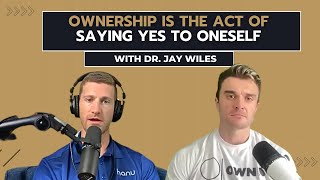
Justin Roethlingshoefer talks with health psychologist Dr. J. Wiles about heart rate variability as a measure of nervous system recovery. They discuss how HRV works as a biomarker, wearable technology for tracking it, and personal routines for building resilience.
So a lot of the times, you know, we think about kind of these buckets or pillars of health, whether that's exercise, nutrition, sleep, you know, relationships, stress mitigation. The one problem that happens is that people will put on their hat and see kind of health outcomes being driven by the silo that they're informed. So if you're an exercise physiologist, well, that's going to be the silo of the lens you go for from. If you're a mental health practitioner, well, then you're going to likely view it from a psychotherapeutic theoretical model.
This is the ownit show, where we tell stories of how everyday people made ownership theirs. Hey, everybody. How are you? Welcome back to the Own It Show. I'm your host, Justin Rothing Schoeffer, and I trust that wherever you are, wherever you're listening, you are well. And if you're new here, welcome. Definitely a lot of content for you to go and check back and see. We're hitting close to episode 250, so if you go back, you're going to find a whole bunch of amazing guests, a whole bunch of amazing information, and also, also, I think, a lot of perspective shifting along the way. And whether it's a guest that we have on, whether it's a solo podcast that I have, be sure to share it, be sure to review it, be sure to get it out there, because that's the way that content reaches more people. And the more that we can reach, the more impact we can make together and make this world a better place to help people ultimately realize their true potential. Today I'm super excited. We've got a guest that it feels like we're brothers from another mother and just has a massive passion for people, a massive passion for health. And as we've really developed a friendship over the last few months, it's been unique to see the roads of education, experience, entrepreneurship that have really started to become interwoven together in a very unique way. And the more that we lean into that, the more that we trust that, the more that we collaborate and are able to have fellowship together, you start to realize that you are not alone. Because I think oftentimes in the world of entrepreneurship, in the world of business, you feel like you're alone and you feel like you're doing it yourself. You're experiencing something that nobody else has experienced, and that's just the furthest thing from the truth. So without further ado, I'm really excited to bring on Dr. J. Wiles. He's just got A wealth of knowledge in getting his, his master's degree and then completing his doctorate in health psychology. And I think just the way in which the conversation we're about to have on heart rate variability, on health and what health means and how he's been able to figure out his rhythm within his life is going to be really rewarding for you guys as listeners. So, Dr. Wiles, it's a pleasure to have you and I can't wait for our conversation.
Yeah, Justin Brother, it's so good to be here, man. I'm excited to see where this conversation takes us.
So, Jay, I'd love you to kind of just give our audience a little insight into you. Who are you? Where did you come from? How did you know that this was something that you wanted to step into? And at what age did that kind of start to manifest within you?
I like to tell this story a lot by saying that I am one of those weird kids who didn't necessarily grow up saying, I want to be, you know, a firefighter, a police officer or an astronaut, or, you know, fill in the blank. I never had like, that type of ambition. I always thought those were cool things. I knew at a very early age that I wanted to be a therapist, which is kind of funny, right? Because kids don't normally think about that. Like my parents, just to be completely transparent, they were never in therapy. I didn't really know much about it, but I remember I was in, in, in church youth group. This was probably around middle school age or so. And I thought, oh man, the youth pastor, they do some really cool things, like within their church, working with, you know, youth. And I thought maybe that's what I wanted to do. And then in church, I was actually with plenty of individuals who are having some significant difficulty, you know, even in middle school, high school age with depression and anxiety and mental health related issues. And I remember thinking to myself, like, this is actually a pretty big concern. And I hadn't experienced anything like that at the time. Like, I went on later in life, spoiler alert to experience some, some anxiety and some even depressive times. But I would say that at that point in time I hadn't really experienced it, but I knew that it was pervasive and it was a problem. And so I said, well, how can I kind of leverage, you know, my passion for working with people in this capacity? And it was to go and a therapist. And at that time I didn't really know much about like, the education or what, what was involved. I learned about that later on. But I, I just always wanted to do it since I was in middle school. And then I remember I graduated high school and when I went to college, I knew I was majoring in psychology. Like I predetermined that whatever, five, six years beforehand, did the degree and went on and got my master's and then doctoral degree and became a psychologist, which is what I am now. And so the passionate pursuit was one that was laid before me at very young age. And I'm very happy that, that it was that way. I mean, it was just. It could have gone many different ways. I could have wasted a lot of time and money. But I'm doing what I love doing and I couldn't imagine doing anything else now. I work now pretty unconventionally as a psychologist. Like what I do for a living isn't what most psychologists do for a living, but I love what I do. So, you know, a little bit of my background, I started off with working with department in the Department of Veteran Affairs. So working with veterans, typically these individuals who have ComOrb related issues, which is a fancy way of saying they have a medical and mental health related issue. So a lot of them chronic pain, you know, cardiovascular disease, diabetes on top of anxiety, depression, ptsd, bipolar disorder and so forth. And it was during my exposure in working at the VA with veterans that I was really, my, my kind of heart was open to working with this population, number one, but number two, working with them from a very holistic and integrative perspective. And I got the opportunity to work in what was called the Veterans Integrative Pain Clinic at the R VA in Virginia. And this whole clinic was helping veterans to titrate off of opioid based medications. So chronic pain medications that we know are extremely addicting and over time people develop a high level of tolerance and they tend not to be as effective. And so in this clinic we were using a wide array of different tools. Things like mindfulness meditation and guided imagery, meditation and nutrition and acupuncture and chiropractic care. And then this thing called biofeedback. And I never heard of biofeedback until this point in time. Time, or I shouldn't say that. I should say I've heard of it but didn't have exposure to it. So you have to remember too, like, this is during a time when wearable technology was kind of at its infancy. So Fitbit was around, but they were, that was about it. And Fitbit was mainly only just tracking steps. Like there wasn't aura ring or whoop or all these other really Cool consumer wearable tech. It was Fitbit who was tracking steps, so not giving you a ton, but they were kind of the start of things. So we were doing biofeedback, and we were doing so using a metric called heart rate variability. And I had never heard about it. Then again, most. Most of the public had still never heard of this, this metric called heart rate variability. But I saw it being used, and I saw it being used in a way that was helping veterans get better. Their anxiety was going down, their pain was getting better. Like, all of these things were shifting when they leveraged data or biometric data as a guide for their mental health practice and their physical health practice. And my mind was blown at that point in time because I. I just thought, there's gotta be something else to this. Like, is there legit research behind it? And there was, there was, there is tons, I should say, of research behind the efficacy of biofeedback. We published studies at the va. I was hooked. So I went down that path and kind of never turned back and kind of became, I guess you could say, notable in the field of heart rate variability, biofeedback, and just heart rate variability in general. Opened up my own consulting clinic where I worked with a lot of professional athletes, a lot of Fortune 500 CEOs, high performers in leveraging this information from wearable technology, but also in. In the form of biofeedback as a mechanism of training the nervous system to become, you know, a better performer. And so I did that until 2021 when I was approached by a individual out of the Silicon Valley who was a tech entrepreneur who said, you know, I'd be really interested in consulting with you. So we, we did. I worked with him for quite some time, and he said, I think we can build better technology than what's out there. And so I decided to kind of leave in, you know, what was a cushy job, like, really kind of comfortable experience, even though I was running my own business, to run hanu, which is now what I am the co founder and chief scientific officer of. And so that was 2021. I haven't looked back. So here we are. Now I'm out to market with our product and our platform, and I am operating as a psychologist, but just in a really different capacity. So, sorry, I know that was a bit long winded.
No, it's great. I love it. And there's, there's a lot of things I want to touch on there, but I think that's where you and I just, just literally are separated. At birth almost in that way. Because obviously I did all my postgraduate research in heart rate variability and knew at a very young age. I actually started looking at heart rate variability back in 2003 and it was one of those things that just jumped off the page that was just like, why is this not everywhere? Why is this not being utilized for a key metric for us? Almost like a KPI to help us make better educated decisions on habits, behaviors and action steps in our lifestyles that are going to benefit us in the long run. And over the last three years, to your point, there's been about a rise of 250% of heart rate variability studies that have come out and obviously platforms and technology companies like Aura and Whoop have had a big play in that. But also the awareness factor of what heart rate variability is doing from an overall health standpoint. And I'm just such an advocate of it and just such a big fan of it. You talk about holistically integrated and these are two words that you and I have spoken about at length, but they have become very buzzwords, like very, I was going to say very buzzwordy in the health space. And I, I talk about this a lot in my keynotes where holistic. If the definition, if we look up the definition of holistic, it's all or everything. And if we look up the definition of integrated, it means to bring together or to be all inclusive, all encompassing, to make one. And when we look at the definition of health, it's mental, physical, spiritual and emotional condition of a human being. And so I've often had brush ups and issues with a lot of the way that practitioners work, whether it's a functionally med function or a holistically integrated functional medicine doc, or a holistically integrated strength coach, or a holistically integrated rd, even a holistically integrated therapist, where they're talking and using these words. But when we look at the definition of heal and what healing actually is all about, it's the same definition of is as integrated to make one, to bring together. And so I'm curious as to, and this is why I just love what, how you're approaching this and what, and where we run in that's just parallel circles is what does your thought process or how have you been able to create that truly holistically integrated model where everything comes together.
Yeah, and it's, it's, it's a good point to point out the nuances of this verbiage. You know, within the pain clinic that I worked at, which was integrative what we, when we refer to integrative, we're talking about the integration of discipline. So we talk about how we have physicians, we have nursing, we have mental health therapists, social workers for, you know, the social connectivity pieces. You know, we had chiropractors, kind of had all of these integrative disciplines, as opposed to this word holistic, which is talking about a prevalence or a survey of both mind, body and spiritual approaches and the intersection and interconnectedness of those. And we know that everything kind of within terms of when we term health, we are talking about different pathways that are all bi directional. We used to kind of think like one pathway led to the other and that was the endpoint. But there was no communication, you know, from that, that, that entity. Whereas now we're like, now everything's kind of bi directional. Everything is communicating and interconnected in this beautiful entangled web. And so when I think about holistic care, when I think about holistic therapies, I think about how we need to remove ourselves from the silo that we can find ourselves times. So a lot of the times, you know, we think about kind of these buckets or pillars of health, whether that's exercise, nutrition, sleep, you know, relationship stress, mitigation. The one problem that happens is that people will put on their hat and see kind of health outcomes being driven by the silo that they're informed. So if you're an exercise physiologist, well that's going to be the silo or the lens you view it for from. If you're a mental health practitioner, well then you're going to likely view it from a psychotherapeutic theoretical model. And it only makes sense because that our modern day education and training is how we are almost like taught to think. Whereas the holistically minded person and the integrative person says how can we take what we know from kind of our education and background and integrate it with these other disciplines and do so in a way that helps us to truly holistically care for the individual, to care for the whole of the individual as compared to approach from a singular silo that is exercise, you know, sleep, nutrition. We know that these are all interconnected, whether they have to do with how they affect physiology, how they affect behavior change, how they affect emotion, and then how they just again are all intercorrelated. So for me, when I it's all about, it's all about kind of taking a step back and saying, how can I survey this more from a 30,000 foot view of what it truly means to be well. And I think that the definition of well for people, in an attempt to not get too esoteric, the definition of well really depends on what their values are. It really depends on what matters to them. Because I could have a definition of what wellness means, means to me, and I can approach it holistically, and maybe I do end up with the outcome that I'm looking for, But I have to tie it to what wellness means and what my value system is, and it may look very different from someone else. So if we're going to operate in this new frame of healthcare, which is really trying to move us more towards precision medicine, if we're really going to be tailored and personalized and precise in what we're. We're doing, if we're truly going to be holistic and integrative, well, we have to start at the foundation of understanding what wellness means to that individual and why they would even want wellness in the first place. Because that's a question I ask a lot. Well, why do you want health in the first place? Like, you're somebody who's experiencing anxiety or depression. Like, you want to have that feeling of anxiety or depression removed. Okay, but why? Like, what, what is, what advantage does that give you other than not feeling anxious or depressed? And, you know, you'll hear people say, well, that frees up my ability to truly connect with people. Okay, we're getting somewhere now. We're starting to really hit on the depth of behavior change. We're still starting to align it with your value system that is going to drive more reinforced behavior. And so again, I know that's a little bit long winded. Think that we have to take a step back and evaluate those things if we truly want to provide tailored, personalized, precise care.
No, it's beautiful. And again, I love it because we always ask what's on the other side of said goal? Like what's. What's available to you when you achieve said goal that's not available to you right now? And when we're able to pinpoint that, when we're able to get really specific to that, we're no longer just talking about a physical goal, a physical thing. We've actually tapped into the spiritual side of things. Things. We've tapped into the identity and the desire of what somebody's actually wanting. And when you can touch that, when you can tap into that true identity piece and that spiritual connection, that's the moment that you're able to heal the mind, ultimately purify the heart and then create some level of sustainability and longevity to any type of behavior change that you're trying to implement. So I love it. And it was just. It was a very beautiful way in which you've kind of brought that all together. I'd love to kind of switch gears a little bit to you. And just the way in which I think something that attracted me to you so much, which is very difficult to find in this field, is the humility and just your general approach to how you show up. I always say everything that we're doing at onet. Everything that we do is. Has nothing to do with Justin, has nothing to do with me. We're here to serve. We're here to steward the gifts that we've been blessed with. And I, I noticed that same construct and that same approach from you. And so I'd be really curious as to where did that get taught or ingrained into you and where does that. Where does that truly come from?
It's a good question. I. I have. I have a couple thoughts on that. When it comes to my ability to derive what is my sense of meaning and purpose, I'm not so sure I'm the one who's deriving it. And again, I. I try my hardest not to speak too esoterically. I like to try to explain things as much as I can so that people are not like, this is all mystical. Bring it back. What do you mean? You don't derive, you know, kind of your own value, meaning and purp. And I say that it's driven by something that's much greater than I. And I think that for most of us, our sense of value, meaning and purpose is driven by something that is much greater than us. And I think that it's coined and it's termed for different people in different ways. I know that for me, I can only speak to personally what drives me, which is my desire to leave this world, not with a legacy. Because I honestly, I truly have no interest in my name being like, put on billboards and on buildings. Like, it just. This stuff doesn't. Doesn't really. That doesn't get me out of bed. Like, the money doesn't get me out of bed. What gets me out of bed is being able to say that I woke up today and did what I could to glorify God. That's. That's for me, what I wake up to do. And what that means is using what I've learned, using my skill set set to help people move in a positive direction, to help them find what it truly means to Live a life of joy and peace and contentment. Because so many people have a very difficult time finding joy, peace and contentment. It's always the next thing. It's always autopilot. It's always go, go, go. And so if I had to say anything, if I'm trying to leave a legacy, if I have to use that word, it's just that I can help people find one extra step in that direction, one step in that direction. And, you know, I've got two little boys, and I'm even more conscientious than I've ever been about just modeling behavior and just trying to model stillness and trying to model love. And for me, I think that that's the key drive. But I'm learning each day I screw up a lot. I feel a lot of pain. And that pain can see to my actions and my behavior. People can experience it that way. But I don't think it's not having that. Like, I think that that's always going to be a part of the human experience is that we mess up, mess up. It's just kind of learning from it and not repeating that. That so often is kind of my goal. So for me, it's just waking up each day and assessing my value system, assessing my sense of drive and meaning and purpose and saying, well, I'm going to do everything I can to live a life that's. That's congruent with that. And some days I win that, and somet names I fall short.
I love the. The uniqueness is, I think, the intentionality that you approach it with and that it's not just something that you pulled out of three words from a random place and said, hey, these are my values. This is what I stand for. This is what I want to operate from. This is where I want to really focus on. But no, it's been a iterative process over the course of time and being truly connected and obedient to what God's calling you to and to what you've. That fire that he's lit inside of. Because at the end of the day, God doesn't set bushes on fire anymore. He sets people on fire. And as people witness somebody on fire, they know, man, that is different. And I want what's on him. I want what's on her. And when we're able to lean into that, it's actually pretty, pretty powerful to be able to understand, okay, where do we. Where do we lean in? How do we come in? How do we realize this, this gifting and abide to the fruitfulness that we're ultimately seeking and that we're ultimately after. But it can only be when we're living in the fire. We're living in the flame and getting truly attached to that. You talk about waking up every morning and kind of getting into this. It was a great segue because I'd love to understand what your daily routine looks like. How do you stay in that flame? How do you move that way? Because oftentimes and opportunities, our audience hears this from me all the time. But there is no one solution. There is no one morning routine that's going to make you successful. There's no one night routine that's going to make you successful. And I think this culture and society that we live in continues to preach this. And when we hear this, everything becomes a laundry list. Everything becomes a do this or else type of mentality and it becomes really unhealthy. And so what I try to do, to pinpoint for our audiences to see here that we have successful person, successful person, successful person, person on fire, people who are of service, people who are winning, people who are living differently across the board. And not one of them has the same thing. Not one of them is doing the same thing. Not one of them is orchestrating their day in the same way. Not one of them is having. There might be a similarity, but not one of them is the exact same. And that's something that I want them to take away, is. Oh man, maybe it does. Does become a personal thing. Maybe it does become upon me to figure something out that works for me and my life and that's aligned with where I'm wanting to go. So I'd love to have an insight as to what you've developed for yourself and kind of the reasoning and the intention behind it and the purpose as to why that is.
Yeah, I, for me, I thrive on structure. I don't do really well if things are just kind of open and maybe somewhat ambiguous. I really love structure and I like building structure. For me and initially in establishing a routine was trying anything and everything to see what truly moved the needle and basically kind of treat it somewhat like an experiment, which can be great for some people and maybe not so great for other people. But for me, I thrive on those experiments. It's kind of the scientist mentality that I have and it kind of almost like I've been trained to do so for me like each and every morning. And this, this is. This is each every morning. This is not a Monday through Friday routine. This is a. This is a Sunday through Saturday routine. This is every single day of the week. And again, it's just because I work well on, on structure, not because it's, I'm telling people to do this because they should follow this routine. As you mentioned earlier, for me, I'm up early, I'm up early, but I go to bed early. I go to bed at like 9, 9:30 in the evening and I'm up at 5 every single morning. My, the first thing I do is I used to go take a nice warm shower. But then I was like, this doesn't make any sense because I go to the gym really early and I'm like, I'm just like using a shower just to go get dirty and take another shower. So normally go into the bathroom, throw a bunch of cold water on the face, kind of stimulate myself to, to, to wake up in that way just like really ice cold water. I head downstairs and the first thing I do is a morning devotion. So for me it's a, it's Bible reading. I, my wife and I have a Bible study that we do where we read the Bible every single year. So from, from COVID to cover essentially. And so I do that in the morning. A lot of prayer time and meditation that as well. I also do a lot of stoic reading. And so I read a lot of the stoic philosophers, very fond of people like Marcus Aurelius and Seneca Epictetus just find a lot of value in a lot of just stoic daily practices. A lot of just kind of like boots on the ground practices for maintaining really good emotional resiliency and not allowing my emotions to control behavior. And so I love doing that first thing. Also I should say before that one of the first things I do, I, I drink a really large glass of water that is full of sea salt as well as a thing of element, so element tea, the electrolyte supplement. I do that. And afterwards, you know, my wife and I, we generally talk in the morning. Maybe I'll do some extra additional reading. I'm a big time reader. I just, I just enjoy reading and that hasn't been something that I've done all my life. That's been only like maybe in the last like six or seven years that I've done a lot of reading. And then I hit the gym early, 6 o', clock, 6:30, I'm in the gym doing a workout. Always if it's not a zone 2 training, it's weights or resistance training. And then I'm doing some sauna afterwards always for 20 to 30 minutes. Or so. And then, then I'm, then I'm at work and that's about 7, 7:30 or so by the time I, you know, get to work and my, my day is on. So yeah, that's, that's about it.
Love it. I love it. And when you come into.
The direction.
And we kind of reroute it back to heart rate variability, where do you integrate HRV and these types of things into your daily practice, in your daily routine? I think for me, again, coming from that same similar scientist background, right, where you're curious and I'm wanting to run your body that way, I have a routine that I stick to that has some variations to what you were discussing. If I wake up any earlier than 6:15, I'm a disaster. Like I just can't not get going. And so, yeah, my day usually starts at 6:15. But whether I'm cold tubbing, whether I'm saunaing, whether I'm doing something more zone two or something more high intensity or leaning into certain volume of certain things, all is dependent on heart rate variability. For me, I run my body off heart rate variability. I adjust habits and routines daily off of that. So I'm curious how you utilize it and how you start to implement and reroute based upon it.
So when you were asking about my morning routine, I didn't know how granular you wanted me to get. So this is the, the part where I can get a little bit more granular with what I do and why I do it. When it comes to physiological biometrics, especially, namely heart rate variability. So there's a lot of different ways to track heart rate variability, and there's ways that are optimal, and then there are ways that are okay, and then there are ways that are, I would argue, would be suboptimal. So for a lot of people, like if they have an aura ring or if they have like the whoop or if they have anything else that's tracking heart rate variability at nighttime, you can look in the morning and see overnight what happened with autonomic nervous system recovery from start to finish via heart rate variability. And that's one way to do it. However, what I would argue and what Marco Altini would argue, who is, you know, one of the, if not the preeminent researcher in heart rate variability, especially from a recovery perspective, he would indicate that taking it in first thing in the morning is likely the best way to assess full nervous system recovery. So at nighttime, it could be that your nervous system just recovers rather slowly throughout the night. So in other words, it could just be that it takes your nervous system a little bit longer to optimally repair and to reset itself. If that's the case, then that's going to skew the data to make it look like the average change in heart rate variability is much smaller than what it actually is. But if you're taking heart rate variability first thing in the morning prior to any caffeine intake, doing so typically in a supine position or seated position, then what we get a better insight into or a better glimpse into is really how much did sleep impact recovery? Because that's when we expect to be at our highest level of recovery is during the evening time or when we sleep. So we look at it at the conclusion. The biggest thing about heart rate variability readings, especially if you're taking to, to look at autonomic nervous system recovery and not doing it continuously, is to be consistent with the reading. So for me, I take it very first thing in the morning when I wake up. So I'll roll out of bed, I'll go downstairs and sit on my couch where I do my, my reading and stuff, study, and I'll either put on a pore strap, which is what we use at Hanu. So I'll check with an ekg, or there's other wearable, you know, PPG technology that can be used. There's even ways to use the Apple Watch to do it. You just have to kind of bypass a couple things and it can be a little bit annoying sometimes. So for me, I'll take that reading. What am I looking at? Well, the first thing I'm looking at are changes in the time domain indices. And if people aren't familiar with what that means in heart rate variability. Heart rate variability at its core is looking at the change differences between inner beat intervals. So the heart beats at its pace that it's beating at and in between each successive heartbeat is the amount of time. And that time can vary from the heartbeat interval that came before it and the one before it and the one before it. So over time, we want to see how much in a, in a window of time, I should say, how much variability is occurring. And if there is movement in an upward direction from where we generally are, what we refer to our baseline, we can indicate that there are signs of recovery, there's signs of our nervous system's relaxation response being turned on. And this is a good thing. In general, there's nuances to, to everything. And in the opposite direction, if we see a downward trend in heart rate variability, it could be indicative of over taxation of the nervous system, maybe potentially overreaching or over training from a nervous system perspective or a recovery perspective is not moving in the right way. Or we see too that this individual may not be as resilient to handle the current internal or external stressors that they are encountering. So that's a long winded way of, for me saying I'm kind of looking that and compari comparison to my baseline. If you take heart rate variability as a singular reading, that, that data point that you have is essentially meaningless. But if you start to take it consistently over time and you have a week's worth of data, two weeks worth of data, a month, a year, well now we can look at trends. And that's really what heart rate variability is used as, is an operational guide of trends. Unless you're wearing it in real time and continuously, which I'll talk about here in a little bit, and how that relates to psychological stress.
Stress.
So for me I'm checking that in with that and very similar to you, Justin, I'm saying, okay, so what am I, what is my nervous system telling me right now? What, how can I use it as a guide? If I see, oh man, on the last three days I see a, excuse me, a significant downward trend. 20%. 20%, 20% again. So I've dropped pretty significantly from where my baseline is. Well, what does that mean? Well, I'm experiencing some over taxation of the neuroscience nervous system. Could be physiological stress, could be psychological stress. They're all interplaying and interconnected with one another. But that tells me like, do I need to dial up my exercise, dial it down? I rarely do. I find that it's just an all out, like sit out, don't do anything type of day unless I, unless I'm pretty, pretty off if I'm sick, like if I, my immune system's kicked into high gear, heart rate's elevated, you know, I've got a fever. I may not, I may dial it down to maybe nothing or maybe just a gentle walk or like some light movement. But I can use it as a guide to help inform me as to the power output that I'm looking for, the intensity, the duration, the type of workout. But also too, I use it as a mechanism to say should I be training some regulation in my nervous system? Given the information that I have from this morning's heart rate variability reading, what would that look like? Well, it could look like five to ten minutes of, of some heart rate variability biofeedback, which is a really good way to stimulate the vagus nerve and relaxation response and enhance recover. It's a great way to enhance resiliency to stress. So again very similar to you. I'm using it as, as, as a guide and if I find my heart rate variability significantly depressed from in the past few days then I might incorporate multiple practices of heart rate variability throughout the day. You know, I will use it to direct my workouts. It's a really valuable tool if you know how to use it correctly.
Totally. I, I love it. And just even for listeners out there that are taking this in, I've got a couple follow up questions to you on this but for, for everybody listening, it doesn't the when you're talking about best practices in terms of heart rate variability, there's a lot of I think nuance out there in terms of how specific do you have to be. Like if I, we, we start talking about the heart rate strap, obviously using a Polar H10 best in class in terms of getting beat to beat intervals and actually looking at the quality of data. But is that sustainable? Is it something that's going to be done long term? Is it something that's easily repeatable and we're going to be committed to doing every single day? And then there's the convenience of the passive collection of this type of data. And I think for me, a question that I had for you because again within all the research I've looked at and agreed with you, is the HRV strap or pardon me, is the heart rate strap the Polar H10 the best in class and way to do it, 100% bar none. But for people who are busy, people are moving, people are getting stuff done. I'm a huge fan and a huge proponent of wearable devices. I think they're outstanding. I think they're again looking at the trends of a week or a month or three months, even six months is a great way to start to understand how you're adapting to mental, physical, spiritual, emotional stress. Because our body can't tell the difference between them, can't tell the difference between real and perceived, positive or negative. The response is always very similar. And so how high is our cup, how full is our cup into where we have to start to drain it to open up a greater level of capacity. Now my question for you was when we're taught, and this is just what I've seen from the data and the different research is when we're grabbing heart rate variability at night over the course of time, what we're actually finding is that there's no external stimulus that's able to alter nervous system activity, nervous system excitement. Conversely, as soon as we wake up, the alarm clock goes off. Oh my gosh, there's a stimulus, we wake up and we have this presentation we have to do that day. There's anxiety, there's some level of sympathetic tone that's going to be there even subconsciously while we're getting our reading for the morning. That won't actually be garnering as accurate a number as if we were getting it passively when we were sleeping. And so I'm curious on your input of that and your thought process because. Because for me and for our clients and for just the research that I've seen, I'm a massive advocate for overnight hrv, looking at quality time, being able to grab a number, not saying that that number, like you said, means anything, but trend lines off of that number are extremely indicative and powerful, especially just given first thing in the morning. A kid could run in and wake you up and that's how you get woken up. And now you've got a kid in your bed trying to get your HRV reading and it's like, well, how, how accurate does that actually become and how misleading can it actually start to drive us on?
Yeah, I think it's a valuable question, I would say too, just to go back onto my point. While I use a polar H10 in the morning doesn't mean that that is necessary or required. You can use ppg, which is photoplesmography technology, which is light sensing, infrared, green, red lights. That can do a very effective job as long as you're in a controlled condition, meaning that you're still. If you remove and add artifact or noise, it can be hard for some software to remove all of that noise and you may not have an accurate reading. So Hanu, we use the EKG continuously. So you wear the chest strap continuously for at least a short period of time. And we're integrating other wearables into our technology. But so for me it's, it's. I'm wearing Hanu and I'm testing with Hanu, so I'm just kind of continuing to wear it. I don't even take the, the thing off. So, so what I would say, because I think it's a valuable question that you bring up, I think the biggest argument. So there's two things. Number one, at nighttime we have to understand how often it is being collected and when and interpret that data within that window. So for instance, if you look at whoop's algorithm, that they use and this is not me bashing whoop. This is just me telling you kind of like what we see in the science and kind of the general kind of consensus on how they do things is that they were taking heart rate variability, the interbeat intervals that came at the last deep, deep sleep stage cycle. There's no evidence in the literature that that is a effective way to do it. I think that's a proprietary way that they do it and I don't think it's a very consistent way to do it. And so for me, that's one that I tend not to trust. Whereas aura takes a 5 minute epoch or 5 minute time frame window, every single 5 minutes they take a window to look at heart rate variability and average it over the course of the. Which can be a very effective way of doing it. The argument against, against it would be the one that I made earlier, which is that you may not get a, a true overnight reading or understanding of heart rate variability. If you are someone who tends to recover pretty slowly and you have a really low heart rate variability at the beginning of the night and maybe it's not until an hour or two hours before you wake up that you hit good REM sleep, that really then enhances overall vagal recovery, which we know REM is extremely important for that. So therefore we have a skew of the data that, that we can't make a ton of sense out of.
Would you not, pardon me, sorry, but would you not also agree to that, that on a one night reading, a weeks long reading, a month long reading? Sure. But over the course of time, the longer you're getting that same data from the same wearable source in the same way you're going to be able to start to interpret that data in a really powerful way because that, that, that skew doesn't really change. You're going to be getting a number that to see trend lines because again, I think oftentimes with heart rate variability we get so hung up on the number, we get so hung up on that single digit of oh my Gosh, I'm at 52. Yesterday I was at 74. Okay, that it doesn't mean that you dropped 30% overnight. It's just an indication of where we're at. What's the bigger trend line actually look like? What's the longer scent of your nervous system recovery state actually looking like?
Yeah, the, the, the number is certainly not nearly as important as the direction. The direction is certainly what we're looking for. Actually. We know there's plenty of Evidence to indicate that the number in and of itself, the baseline number really doesn't have a lot of high correlations with hardly anything. It actually is more genetically propelled. There is some evidence that cardiorespiratory fitness, VO2 max, as we increase those, we can increase heart rate variability, but it's not nearly as substantially as how much we can decrease something like resting. So yes, we can use that number for meaningful interpretation. I think that the argument for taking it in the morning would be, is that even if something is jarring your nervous system, that would potentially lead to somewhat of a skewed reading. Number one, hopefully that's not happening every day. But if it is, well, we have some consistent variants. But what I would say is that it is more translative to how your nervous system adapts. So if we know that kind of constantly in the morning we're having, having a revving up or the need not to conserve energy but to expend energy, whether it's due to continuous kind of on firing nervous system due to stress, physiologically or psychologically. Well, now we have a. Well, now we have a lot more information in terms of how this is going to translate into your ability to recover both acutely and chronically throughout the day. So I could see, I see value in doing both, which is what I do. So like, I mean, I've got my aura on, I've got, I've got a whoop on. I've got an apple watch. I've got everything that.
You're like me. You literally are like me. We're walking, we're walking. Test dummy.
That's it, that's it. Strap.
I got the whoop band, I got the aura ring. It's. I even had this one. I, I can't remember what it was like a zip or something. There's all these wearables always coming out, right?
Yeah, yeah, yep. So I mean I'm always looking at both of them. For me, every morning I'm checking my aura score, I'm checking whoop. I'm placing more emphasis on aura to become, excuse me, completely transparent. And then I'm looking at my morning reading with, with Hanu. What is so important though, with Hanu is watching the transient changes that are occurring out the throughout the day continuously because that provides me more in the moment awareness of how my nervous system is either adapting well or not adapting well. So I think the, the case and point that I want to run home here is that I don't think that there is a quote unquote optimal way of doing it. I have a preference for the way that I do it. But I think that if you're like, listen, the way that I can sustain behavior and make sense of this information is to use overn data. By all means, like rock and roll, that data is still valuable. Yeah. But if you're like, you know what? I think I can control enough conditions to, you know, wake up and take it in the morning. I also see a lot of inherent value with that. And if you're willing to kind of, you know, bite the bullet, if you will, and wear, you know, a monitor throughout the day and see those transient changes that occur throughout the day. Well, now we're talking about extremely high fidelity information and data that can really inform in the moment decision making regarding things that you need to do to e. Stimulate the nervous system or relax it.
And I think, I think something else that we just noticed too is having worked with thousands of people now that have come through on it and kind of been in this space is, and I'm sure you see this even in, especially in the, the world of therapy is that people can get extremely obsessive about the numbers and way too obsessive. That's what I'm saying. And that's why I think, think even as we trust me, I was a purist at heart when it comes to data. And I was always the, I was always the heart rate monitor guy. I was the guy that would always train with a heart rate monitor. I'd literally, as soon as I got out of the shower, I changed the strap. The strap would hang, I'd have my day strap, I'd have my night strap, I'd have my workout strap, I'd always have a heart rate monitor on. I have 15 years, literally since I was 14 years old, until about I was 30, 30 of heart rate or of heart rate data that I then was able to go and extrapolate, create my own algorithms to get heart rate variability. But I have 15 years of heart rate data on myself and over the course of that time, and I'm very vocal about this, I suffered from anxiety, I suffered from depression. I suffered from exercise anorexia. I suffered from anorexia to like, at its, at its core. And a lot of it came back to being so obsessive about the numbers and looking and going, oh, oh my gosh, HRV went up, HRV went down. Like, this is like what's happening. Instead of just living and just being okay in the space that we're in, instead of just being okay where we're at. And this is where I mean, I don't wear a heart rate monitor when I at all anymore unless I'm training and figuring out what heart rate zone to be in. Yep. But getting back to the point now where we can use data as a guide. Use data as an empowerment tool to make a decision decision as to what behavior to lean into and what behavior to step away from. And just as a guide to understand, hey, what can you do to better enhance yourself? What can you do to better guide you on this journey that you can now learn something else about your body? Not that there's it ever is going to be perfect. There's no such thing as perfection. But there's something in terms of being willing to try, being willing to be empowered and know something about your body that you're no longer head in the sand of.
Of.
No, that doesn't exist. No, that's not happening. While at the same time you're stressed, you're out of shape, you're not eating well, you're not sleeping well, and you're literally a ticking time bomb waiting to either burn out or blow up.
Yeah. If you're, if you're finding that data is serving as a barrier to action and behavior change, get rid of it. Pure and simple. Get rid of it. I think that so many people feel like they have to be the quantified self now. And I, I admit it can be extremely valuable and helpful, but if it serves as a barrier to action, I think you should push it aside because that is being counterproductive to what you're trying to accomplish. And if it's instilling anxiety and stress regarding the movement or direction of the numbers and then it's stopping you from actually engaging, you have to get rid of it. If it's not serving its purpose well, then it has no value in being in and on you. And so I am fully with you on that as well because I used to take the, the data way too seriously. And what it did was it paused me way too often and it had me say, okay, well the data is pointing in this direction. So therefore, like now I'm going to live out this self fulfilling prophecy. Oh, you say I slept like crap Ora. Yeah, you're right. So I feel like crap. Which means that now I have an excuse not to get things done. Which means that I'm also allowed to be a little bit crabby to my wife and to my kids because my aura said I didn't sleep very well. And now we have this ugly Perpetual cycle that is unrelenting because we trusted too much in the data and we didn't check in subjectively. I tell people that it is always subjective on top of objective. It is always got to be that way. If we're not checking in subjectively with how we feel and we're just allowing data to run the show objectively, we're in some big trouble.
No, you're exactly right. And I just love that perspective so much, much, because when we, when we use data to help guide us, but also pair it heavily with a new level of subjective awareness of our body, that, that's, that's the magic. That's the intersection point. And if we can just know ourselves better, if we can get more in tune with what's actually happening and have quantifiable metrics in order to help empower us along that journey, I think it's really, really great. Jay, when you kind of come back to it and somebody who lives in this space and what we call ownership, what would you say your definition of ownership is?
Ownership's a really interesting word because I have studied that word a fair amount. And, you know, you hear guys like Jocko kind of explain like, you know what ownership means, and I take a lot of that heart. But I think that at the core, like this word ownership, what it, what it really means is you saying, yes, love that.
Very good.
Is you saying yes, very good.
Really love that because. And it's something, it reminds me of. Something my mom said is, choose your best yes is where does your best yes come from? And anytime you say yes to something, you're saying no to something else. So make sure you're taking ownership of what that yes is. And I, I love that. It's an outstanding answer, Jay. Where can people find you? Where can people get more action and information and be able to connect deeper?
Yeah, so I am very active on Instagram. So my company is Hanu Health H A N U Health. So at Hanu Health on Instagram, Facebook, my handle is at Dr. J Wiles Fad R J A Y W I L E S so Instagram, I'm pretty, pretty, pretty active on there as well. Check out our website out hanu health.com h a n u health.com where, you know, we have our device and our platform, which is obviously a mental health centric platform for stress, anxiety, depression. We also have therapists there as well, also licensed mental health therapists that leverage kind of our technology and biometrics alongside, like conventional psychotherapy to help with people with stress. Anxiety, depression and mental health. Routine related concerns.
Very cool. And they've got a Hanu health podcast as well. I'll be on that next in a few weeks after this is released. So it's again, always love, just real, positive and informational, that it has a high level of integrity behind it. That's. That's being put out in terms of content. So another place for you guys to go and look and to dive in. In. So fam. As you guys move forward, no matter where you're listening to this, whether it's in the car, during a workout, if. If what we spoke about today served you, be sure to share it, be sure to send it to somebody that needs to hear this. Because at the end of the day, what we need to realize is that we have to get clear on what we want. We need to get clear on our mission, vision and values. We need to know what happens deep internally, because remember, our body doesn't know the difference between mental, physical, spiritual or emotional stress. It doesn't know the differ between what's real or perceived. It doesn't know the difference what's positive or negative. And it's this beautiful entangled web that's occurring. And in order to be truly holistically integrated, we need to be able to remove ourselves from the silo and be able to do things together. We need to be able to create oneness. We need to be able to create joy, peace and contentment in the space that we are in. And you have the power to do it. Jay has the power to do it. I have the power, power to do it. But it comes back to being willing to say yes. It comes back to being willing to lean in and take that ownership mentality to steward what you've been given so that you can live different. We know success is different, so own your different and we'll see you guys next week.
More from Justin




The Ultimate Blueprint for Taking Ownership of Your Health | Unlock Peak Performance

From Bullied & Anorexic to Healed & Purposeful: My Transformation Story (Justin Roethlingshoefer)


Forget "One-Size-Fits-All" Health! Unlock Your Best Self with True Personalization (The OWN IT Show)

Are Blood Tests Enough? Why Cellular Testing Might Be Better | Justin Roethlingshoefer

Your Body's Language: Understanding Stress & HRV| The Power of Ownership - Chapter 3 & 4


Is "normal" really making you sick? Dive into Different with The Power of Ownership:Chapters 1 & 2