Leadership for Growth - Erik Huberman
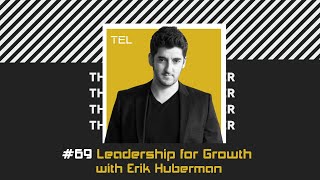
This is a YouTube video titled "Leadership for Growth - Erik Huberman" containing a multi-speaker discussion from June 14, 2021, focused on leadership, business scaling, and personal productivity strategies. The primary speaker is Eric Huberman, founder and CEO of Hawk Media, who shares insights on building and scaling a business, leadership philosophy, and balancing work with personal life. The conversation includes other speakers who engage with Eric on topics such as executive team development, time management, and entrepreneurial mindset. The content is a structured talk or interview rather than a casual conversation and does not include Justin Roethlingshoefer as a participant.
Every time I found myself doing a full time job, I hired someone to do that job. Because if I haven't priced my business well enough to be able to hire someone to do the work that I'm doing, I've made a mistake.
On the business model.
If you weren't willing to put the time, the effort, the work, the sweat equity in at the beginning, you're not able to reap the rewards at the end of the day and the moment you're aware of something, then you can acknowledge it and then you can take action. This is the energetic leader led by a team of three who have influenced people at the highest level of corporate, athletic, entrepreneur and the business world. We teach through science and data driven methods to help you lead through energy and influence. We don't just use our stories, but the stories of those who have walked the walk, been in your shoes, and ultimately excelled. Whether it's leading a team of 10 or 10,000, building a business of 1 million or 100 million, winning one championship or 10, they all have one thing in common. Energetic leadership. So with that, step inside and let's help transform you into that energetic leader. Welcome back to another week of the coaches council. We're down here in sunny Florida. This week it's been a little bit different than what we typically get up in New York. It's been cold rain and gray and unbelievably, you come down to Florida and it's just all fun in the sun. And so as we talk about often, guys, it's the mindset in which you show up with, it's the systems in which you can operate with, and ultimately the way in which they all interact together that create the success at the end of the day. And so I'm so excited to introduce this week's guest, Eric Huberman, who's the founder and CEO of Hawk Media. And. And I know that a lot of times I get questions about how do I market my company, how do I find my ideal client, how do I show the value that I can ultimately bring to people? And that's why I was like, you know what, I'm gonna go out and seek out the best because we all want the best. And so what he's been able to do over the last little bit has been amazing. He launched in 2014 and has ultimately built a CMO company for you. It's ad hoc, as you need in your vicinity, in your company, and valued it at 75 million, grew faster from basically seven employees to 150, and has done so in an Extremely organic and authentic way. And I cannot be more excited to introduce you guys to Eric Huberman. So Eric, thank you so much for taking the time to join us today and, and really kind of dive in here.
Yeah, no, thank you for having me.
I know you're out snowboarding in the morning, so how's that been for allowing yourself to really kind of get acclimated for your work days?
Yeah, I mean it's not that crazy. When I first like wanted to so I'd been snowboarding every day for an hour before work and at first I.
Was like, that seems like luxury.
And I just grew up with frankly a hard ass dad that was a successful entrepreneur that like when I tell him like I'm getting up at 5 every morning to grind, he's like, why aren't you getting up at 5?
Like it was always like do more.
And so the idea of taking an hour off every day to go snowboard was like, that sounds like way too much luxury for what I'm trying to build.
But then you realize like, no, I work out an hour every day.
So now I'm just working out between 8 and 9am Pacific as opposed to.
6 to 7pm and so I've been.
More productive than ever because other than snowboarding, it's cold outside, so I'm just inside on my laptop. Other than that hour, I get snowboarding. So it's, it's kind of been amazing because I've had a hyper productive month while also getting the snowboard every single day.
I'm curious to, to know, did you notice a difference from working out at 6 or 7pm to now changing your routine to working out in the morning or going snowboarding or spending.
The difference is like doing that's. I picked up mountain biking during so the whole quarantine again. I used to mountain bike in like high school and college, but I picked that up again.
Like when you're doing a sport that's.
Like, it is athletic and it is a workout, but it's also just a fun activity. You don't like, trust me, I'm like, when I'm snowboarding I like to go pretty hard at it. It's like I'm huffing and puffing.
But you don't really struggle with it.
In terms of like normal workouts. Like if I'm going to the gym, I know a lot of people that do better in the morning, I do better at night. I have more energy.
I do better at like that 6, 7pm window. And if I can do it like.
That 1 or 212 to 3pm is probably the best time for me to.
Work out, but I get a much.
Better workout in later in the day when I'm more awake. But with snowboarding again, I love it so much that it's just like I go like, I don't care that it was 12 degrees out today. When I was out snowboarding, it was like, you know, eight in the morning on chair with full. It was snowing like so full blown snow, 12 degrees. And I just had a blast. Like so that. And I'd been doing it for about a month. So it's one of those things that I've also noticed. Like I thought it might get old at some point, but it doesn't.
And that's so funny because that's often what we talk about with a lot of our clients and people we work with when we're talking about our DNA and epigenetic testing and really figuring out what your circadian rhythm works for you and what your patterning works like and ingraining it right down to the scientific aspect. So I love that you've had that amount of awareness as to what works for you and what doesn't. So that again, it kind of parlays into best for you and not the guru's game and what everybody else is saying.
Yeah, I agree with you when you.
I hear a lot of the, as.
You just said, gurus, a lot of.
Gurus love to say like, well, billionaires.
All sleep three hours a night, have a seven hour morning routine and like.
All this stuff, it's like, no, they don't.
Like, I work with a lot of billionaires, I work with a lot of successful people. I'd like to think I'm decently successful myself and I need eight hours of sleep and I don't actually have much of a morning routine. I mean, I do brush my teeth every morning, but like, no, I don't. Infrared sauna for two hours.
Like, frankly, I do have successful friends that do that, but the majority of.
People I know that do that aren't that successful because they're not prioritizing their business.
By the way, when I say I.
Should qualify that they're not financially as.
Successful, they're happy, they have a well balanced life.
I don't think there's anything wrong with that. But if you're going for maximized financial success, having a two hour morning routine is two hours you're not working. Just a thought.
No, you're exactly right. And there's so often, I mean, we kind of make fun of it sometimes is where you got to do your journaling, your yoga, your sauna, your interpretive dance, your bogos just before you can even get going. And you've woken up at 5am because you also want to be a part of the 5:00am Club. And it's now 8:30 and okay, now it's time to open the books and get working. And you've lost three and a half hours of your most productive time and most focused time of the day.
And here I am waking up at, I mean I do wake up at like 6:30 or 7 but like I start, usually start work around 7:30. So I wake up between an hour, half an hour, an hour before I actually get on my first call. And so like yeah, the person gets up at 5am Has a couple hours on me. But if they're spending all that time on an infrared sauna and you know, a morning clubhouse, like, congratulations, we're still going to be just as productive as each other. Unless for some reason that sauna makes you so much more energetic, which listen, infrared saunas are great but like I can find time to do that too. Again. I think you just nailed it with like, you got to do what's right for you.
It's the most important part.
This is definitely not where I thought this talk would go, but I love this because it goes right back to the fact of it all comes back to energy. It all comes back to where are you putting your energy, where are you directing your energy and what's the priority for you in the time of life that you're in. If it's time to really push and build that business, to ultimately allow yourself for a big exit, to allow yourself for, to grow a company that is going to be kind of a part of your legacy. What you're wanting to leave behind, then we have to put into, have to bring that into perspective. You're not going to be able to work a six, seven, eight hour day and be able to do that right off the hop. Eventually yeah, that's going to be able, be able to do that. But what we're looking for in terms of that routine is going to be down to what we spoke about. Your DNA, your epigenetics, the things that work for you, the things that are ingrained that are going to optimize that for you and the timing of which it works for you and where it fits well.
There's also in terms of building a business and going back to that in the beginning you're going to grind more than is healthy. If you want to build something big like it's, it's pretty standard. It's very rare that you don't to build something big. But there comes a point once it gets kind of the cadence going that then it kind of goes the other way where if you have to work 15 hours to keep your business going, there's nothing scalable or sustainable about it. So like you have to almost go the other direction where like the example I'll give is like this is a big example. We're seven and a half years in at this point, or will be. My partner is going on paternity leave in June. I'm going to Harvard to take their owners and presidents program. They're like Harvard Business School for owners and presidents. And, and we're both basically be out of the office for June. So now our executive, we have to.
Tell it, which we already talked to him.
But like we had to go to our executive team and be like, get ready, you've got a few months, you're going to run the company without us for a month. Because that's the only thing that becomes scalable. Because if they need to rely on us every day to run the company, then we're not doing things right. And so now, and then we're at the stage now where like that's actually pretty much there. I think if my partner and I disappear for a month, everything's fine. But now we're at the stage where it's like now their turn. So now you can't be a critical linchpin. So like our executives have to start delegating and building a team around them so they can do the same thing and they can go to Harvard for a month. Like that's where we're at now is building that and you kind of just keep trickling it down and then the people below them will have to get there, etc. And you build this organization where there's no single point of failure, where everything's scalable and repeatable. And that's what allows you to go from being a, let's say 10, 20, 30 million dollar business to 500 million billion dollar business is when no single person is really that critical. And it's a weird thing to say, but at the same time it's super important, including the founder, the CEO, the CEO. Like they can't be critical points of failure.
I want to dive deeper into that because what you just said is, is a key concept to building any business, scaling any business and taking it from good to Great to elite, to legendary in whatever form of words you want it to, you want to utilize. And you seem to have it down to where you're now executing at a, at a very high level. What was what systems, what processes, what steps did you take ultimately to get here?
Yeah, it again it's been seven years so and we're bootstrapped. But it was really just every time I found myself doing a full time job, I hired someone to do that job. Because if I haven't priced my business well enough to be able to hire someone to do the work that I'm doing, I made a mistake on the business model. So it was always about if I'm doing it full time and it's not and I can't afford to hire someone to do it, I definitely shouldn't. I'm the most expensive person at the company always. So like that definitely doesn't. If it doesn't make sense to hire someone, it definitely doesn't make sense for me to be doing and I need to tweak that role. And so the only places where I keep a job are things that are still a little too nuanced to go just hire someone to plug in until I work out the system and then I put people into the system. So you know, I bought a couple agencies, hired a head of Corp Dev to help me find more agencies to buy. Over time I'm still doing a lot of the work with him but over time he'll take that over off my plate and I probably will touch, you know, touch in to say hi to the people we're talking to and that's about it. Sales, same thing. I was the main seller. I was 85% of our sales three and a half years in. And then I realized there was nothing scalable about that. I need to prop up a sales.
Team and started doing that very quickly.
And even took a couple months step back to make that happen because I stopped fully selling which my close rate is going to be higher than most.
Of anyone I could hire as well.
So it was just always about looking at the future like I want to be a multi billion dollar company. So anytime I had a struggle with something current, I had to fix it for scale. And my, I've driven my team, mostly my recruiting team more than anyone I think nuts with this. Cause they'll say like listen, we're trying to fill 20 positions, it's really hard but like yeah and in three years we're going to be filling 200 positions. So figure it the fuck out. Like it's kind of like, you know, because my head is always like, I don't like. What do you mean problems now? We're not even there yet. What do you mean? We're having issues with scale now. That's bullshit. We're not even close to, you know, Accenture has 400,000 employees. We have 200 people. Like, there's a long way to go before you can tell me that we're having infrastructure problems. So. And don't get me wrong, I'm nicer than that a lot of the times. And collaborate on like, okay, we need to fix this. But that's how I think about it. Which with that mindset, forces you to do things a little differently because I also, like, I've already been offered to sell the company for more money than.
I never need to retire.
My grandkids would retire off like, it's. We're thankfully worth a lot of money at this point. And I also know how to. I come from a family of real estate investors that really know how to invest well. So if I wanted to just sell the company, I could do that. I don't. I want to build this for a long time and build it a lot bigger. And so that mindset changes a lot of how you act when it comes to reputation, how you treat people, partnerships, the way you grow your business. If I'm not trying to go for a three or five year exit, you look at things a lot differently, including how you profit. We didn't profit for two years because I had no one else to report.
To and I didn't need the money.
And I was like, we're just going to reinvest and keep going. And then I decided when Covid hit, we need to get hyper profitable, not by laying people off, but cutting everything else and see how much we can make this efficient. And so now we've built a huge amount of efficiency out of just a little fear more than anything of, like, what's coming, which now I know we can do it. So it's like those kind of things that you keep working on your processes and hopefully getting better and better and better and not repeating mistakes. And over time, your people get better, your executives get more up to speed and more aware of how the business works, and things start to hum more and more. And again, I think it all has to do with being long term focused on, like, what do you want to build? Because we got offered to sell the company. This was a big turning point. A year in, we got offered to sell the company for a Decent amount of money. And my partner and I decided not to, but had a meeting about, well, if we're not going to sell quickly, let's turn this into a marathon, not a sprint. What do you need along the way.
To make this fun?
At the time, this was before my partner had his third kid on the way, let alone any. And he wanted to golf every other Wednesday morning. I was like, cool, I want to go on two or three epic trips somewhere in the world a year. So that's going to be my balance. And then I'm going to grind the rest of the time. And that's how we're going to do it. You're going to grind the rest of the time too, but you get to golf every other week and I get to go somewhere really cool two or three times a year. And that priorities have changed. But that was always a concept. Like, I still want to have a balance. Like, this would be an example. I want to go live on a.
Mountain for a month.
I'm still going to work my ass off, but I'm going to go live.
On a mountain for a month.
And so that kind of mindset means, like, when we get offered to sell, it's like, yep, for what? Like, I already own the house I want, I already travel I want, I have the money I need. Like, the fuck am I selling for?
Like, why?
And so with that again, goes back to, so if I'm not selling, how do I continue to reinvest in this company to make it the thing I want to run and want to do for the rest of my life?
And again, different mindset.
I love that and I love the explanation you just gave about the time to grind. And again, I hate the word balance, but more like a rhythm, harmony, rhythm, the way in which you operate in. Because there's no such thing as a balance. If anyone is to look at that and say, oh, you guy goes golfing once every two weeks, or you go on three trips a year and then you're grinding the rest of time. That's not balanced, but for you, it's harmonious. It's what meets your needs from an internal perspective. To be able to put the work in that is required to grow what you want.
And balance connotes a balance that they're antithetical of each other.
And for us, like, you know, this.
Is a bad time for this. But most of my career at Hawk, I've been going on these crazy trips and going and meeting up with entrepreneurs and meeting great partners and business owners. And I mentioned before we jumped on here going on a heli boarding trip with 50 Canadian entrepreneurs every year, one of which is now an LP in my fund, a few of which have connected me with great brands, a few of which that we've worked with. Like, there is a true harmony of like, I can go have fun and do cool things and do business as well and have it all work together. And I think that's, that's where as an entrepreneur you can find happiness is when your business and pleasure just are.
All in one and you have the, and you have the ability to ultimately create that for yourself if you're clear and concise on what those things are.
Exactly. And that's exactly it. You have to figure out what your priorities actually are and what makes you happy. And thankfully working does make me happy. I love grinding.
I love the game.
My partner also said when we first we've had sales offers pretty consistently and one time it came up and he's like, yeah, but you like being the guy. Like, you like being who you are and if you sell what the, then what? You're a real estate investor. You don't want to be that. Like, you want to be you like this. And you know, and you know, to his credit, he's right. Like, I like this stuff. I like being on clubhouse, I like being on podcasts. I like meeting entrepreneurs. I like learning how to grow businesses. I like challenging my own comfort zone.
So yeah, without it. And again, it's about being self aware of that.
If you don't like it, you may.
Not want to do it. And that's a really harsh reality that.
A lot of people, a lot of people have made entrepreneurship sexy.
We talked about this again earlier, but my wife's at a private equity fund. She makes more money than the average entrepreneur and she doesn't, she's not an entrepreneur. She knows she never wants to be an entrepreneur. She loves, you know, working with a team and not creating it and she's crushing it. And it's. And you can go that path and like people get, they get into entrepreneurship for money. Like, I don't know what the average entrepreneur makes, but it's not very much because the chances of failure are so high. So like, don't get me wrong, there's the, it's kind of like the lottery ticket thing where like, yeah, that one person won the lottery. That doesn't mean you're going to, like, don't. That is not a good reason to.
Buy the lottery ticket.
And by the way, I have a.
Good friend that Won the lottery.
And it's terrible friend to have because it made it real. But still it's the same kind of mindset. Like if you're not starting a business because you love the process and what you're actually doing and you're doing it for some outcome, you're screwed.
Well, and you just, you said it at the very beginning is it's taken you seven going on eight years to get where you are today. And if you're weren't willing to put the time, the effort, the work, the sweat equity in at the beginning, you're not able to reap the rewards at the end of the day and it becomes that sustainability factor. Anybody can start a business, not anybody can grow and scale a business.
Well. And again, I made no money in 20, 18 and 19. I started the business in 14. So like it's not just the beginning. Like there's times where you're like, it's an, it's ebb and flows. It, you know, cash flows in and then sometimes it dries up because of how your business, it's not linear and you're gonna make mistakes. I thankfully have a dad that's a successful, successful entrepreneur. So like I went through those two years of like thin, thin, thin margins, like teetering on disaster. And then thankfully we got our P and L right and everything right before COVID So when it hit and we took a little hit, we had already right sized a little bit. And I told my dad about like how thin we were and stuff and he's like, yeah, won't be the last time. He's been building businesses very successfully, like way more than I am for what has it been, 40 something years. And he's like, yeah, happens all the time. Because you take bigger bets as you get bigger too, but. Which means your misses are bigger too and it's gonna happen.
I'm curious, what is your leadership strategy? What methodology and mindset do you take as a leader that has allowed you to reap the success that you've ultimately found?
And I'm not perfect at it. Cause I actually ended up apologizing to it to my executives yesterday over our meeting the day before. I try to be. I'm a part of the team. I'm not the boss, I'm not the CEO. I'm here to, to do my job. My job sometimes is to help manage our executive team. But like we all work here. So like I never take the ego driven, like CEO, this is my company ever. I don't believe in that. And it's not like out of intent in terms of like that's a idle. It'll cause a bad outcome. It's actually because I just don't believe that's how it works. I benefit from the fact that, that I'm the owner from a profitability standpoint. But I'm here to build the company like everyone else on my team. And so, you know, and if someone's, and let's put it like I'm the coach and so I'm gonna have to cut people sometimes if they're not, you know, bringing in for the team. But I also rely on my all stars just as much as they rely on me. And so it's really treating it like a team and being there for each other and that betting on people and investing in people, I think that is. And I'm actually learning more and more about it as I build my company again seven years in, which is a lot and a little. We have a really good executive team now and I'm learning the balance of keeping expectations, pushing them, et cetera, and then also respecting the fact that they're high performing, intelligent, successful individuals that are also working for me now. And it's not some 22 year old salesperson trying to get their first job out of college like that. They're seasoned veterans that have done this for a while, that mistakes happen and miscommunications happen, et cetera. But respect is big.
I think.
You talk about the mistakes that happen, you talk about the learnings that have occurred now because you're bringing on these all stars, you're around these types of high quality people that are bringing these experiences, these talents, these perspectives that maybe you wouldn't have had before. What are a couple mistakes that you blatantly know that you made over the course of your time that are just like eye opening learning experiences for you that others can pick up on.
The biggest one that took a while because again I'm trying to build something big, which means people are. The most important part of this is understanding. The lower the position in the sort of totem pole, the faster they ramp up. Meaning the more, the higher the position, the more experience, the more seasoned you're hiring, the longer it takes them to get up to speed because we all are. Like I don't believe anyone's that much smarter than the other. Like don't get right, there's IQ tests, blah blah blah. But just because someone has 20 years experience and someone's brand new, doesn't mean that person's smarter. And if they are not by. Maybe not by much. They're more experienced, but it takes them just as long to learn and to.
Get up to speed.
The difference is if you're hiring an executive, there's a lot more they have to get up to speed on. So it takes them a lot longer to start getting the nuance of their position, which is really when you get the value out of the person. So I've seen for at least us, our senior executives take about a year before they're really in a valuable position that we can actually rely on them. Before that, they'll make calls that don't make any sense because they haven't had the nuance of the business. I've got seven years of context. They have two months. Like, that's, that's the part that I had to really learn, because early on, I'd hire ahead of sales or head of marketing or something and be like, you've got 30 years experience. I'm not. Like, I haven't been working for 30 years. Like, it's all yours. Good luck. And then they'd make 70 mistakes. And I'm like, what are you doing? Like, how are you not smarter than this? And it's like, not an intelligence thing. They just didn't have the context. I do. And so I spent the past, like, I learned that a couple years ago. And so now with our recent executive team, I just, I don't put pressure on them to, you know, make change right away. I'm like, just observe. Like, we invest in executives. And don't get me wrong, they're expensive. They're the most expensive people in the company. But it's like, yeah, but I want them to be here for a long time. So, like, if, again, it's the kind of longevity thing, you'll be here for a decade. So the next three months don't fucking matter. Just take some time, get up to speed, then start to make some changes, start to make play. But I'm going to be there right with you, making sure I agree, because, again, I have more nuance than you. And we'll start to build this out. And that's. That has been. That has worked for us very well, our executives. You know, we have currently two of our sick or three of two of our six executives are like, let's say a year and a half to two years in, and they're solid. They've got a handle on that. They're hitting their numbers, they're performing how.
We need them to.
They're really great. And the others are getting up to speed.
What have you seen in the methods of getting them up to speed and helping them get it, like the understanding and the context that they need that has ultimately allowed them to succeed? What, what framework have you, have you seen that that works the best?
It's.
We're not perfect. Again, Like, I don't. Like, we're still figuring it out. So there's not like a set process. It's really just sitting there with them. It's time. It's just, I'm still on almost every.
Marketing meeting and marketing call and we're.
Going back and forth and going through that. He's been with us two months, to be clear. So like over time I'll be able to step back a little bit. But for now we're doing it together and we're going to do it together until I see that he's going to make the decisions I would or better without me.
There's a couple things you said there that really kind of stand out to me and correct me if I'm misinterpreting, but one is, one is time and patience. Being willing to give them the freedom, give them the flexibility, give them the time to really truly set into what is going to be optimal for them, but then also to lead by example and be there. If you're the face of the organization, if you're the face of the company and there's nothing that can replace that one on one, understand that, that conversation, that communication that you can continually have on a day to day basis and lead by example and guiding those people that ultimately you want to take over your job at some point, to ultimately give them the insights and the guidance firsthand from, from you.
Yep. Yeah. And it's. It's exactly that. It's. And then never stopping. Like I can't rest on my laurels. Like I wouldn't want anyone else to. Like I still have. It's.
I'm never going to have less experience.
Than anyone else at the company. I started it. I'm the longest standing employee. So there's almost always going to be a reason for me to be a part of the conversation in some way. I want that to be less and less and less. But strategically I think it'll always be the case because then the other piece.
Of this is I'll always have more.
Context than everyone because I'm looking at the forest from the tree. You know, the forest, not the trees. So when my head of marketing or head of sales or whatever are looking at things, I know what's going on in every other department. And we all meet, don't get wrong, we have executive meetings. But I also know that I'm planning on launching this thing and doing this and buying this and you know, opening our fund and da da da da da. Which you know, and not just know that it's happening because I inform them.
But I know all the nuances of.
It and how it could actually maybe help another part of the company and how things can collaborate. And there's just. And that's the fun part of business. When you can get there which we're there being strategic and figuring out how all like playing chess, not checkers. Super fun.
Eric, I'm really interested to kind of learn where you're wanting to take this company. And you talked earlier about the. What really sets you on fire, like what your passion is. If you wanted to exit from this, you could have 10 times over. But you have this deep desire of taking it somewhere. And before you answer that question of where you want to take this is for people who have found themselves being like, be it the bottleneck in the company, be it from being able to grow or finding that they're having to be too involved in the day to day and having to sit with all those people, like, you just don't have that amount of time. What are, what are some solutions or ways in which you can get around that or ways in which you have found that you can optimize your time and efficiency so that you can do what is needed to lead in the proper ways but also still grow the company?
Yeah, I don't believe in entrepreneurial victims. Like you made the choice to be an entrepreneur. You control your destiny. That's the whole point. So if you're finding yourself being a bottleneck, fix it. Like you know, whether it's. You need. Why are you a bottleneck? Is it because someone else needs to be doing that part of the job? Then hire someone. If you can't afford to hire someone, well, your business model is broken. Go figure that out because you shouldn't be, you should never be critical in your own business. And don't get me, I shouldn't say never in the beginning. It's different. You're gonna have to ramp up. You're gonna have to be the main salesperson. Someone told me again that you're the founder is going to be the biggest salesperson or the only salesperson for the first two years. And for me it was closer to three and a half as I mentioned. So like it takes a lot of time before you can really start passing stuff off, but you might have to grind. You might have to work your ass off. But if you are truly at, like, if you have more work than time in a day, you need to look at what you're working on because it should be generating enough revenue to start hiring people. If you're really working that hard, you should be just able to start offloading stuff to other people.
I love it. Such a great tangible takeaway. Because if what you're putting your time into is not generating profitability so that you can then offload certain things to continue to grow, it's a, it's like, it's like shoveling from one hole to the next.
Exactly.
You're just stealing from working. Exactly.
That was actually some of what I apologize for was talking to my executives who were, you know, we were like, why didn't we get some deadlines done, etc. And they're like, well, it's been really busy. We're all working our ass off. I was like, yeah, I frankly know that you're working your ass off. You're all very hard workers. And I also frankly don't give a shit because that doesn't impress me because we're all working hard. I appreciate that you're working hard, but if you're, if you're working that hard and not getting the things done that we need, then you're doing something broken. And that's the, you know, I was a little harsher than that. But like, that's the part that you need to know as an owner is like, if you're not, if you're working day and night and you're not accomplishing what you need to be accomplishing, then you're doing something wrong. Like, that is just the truth. You are spending your time on shit that doesn't matter. And you have to be really reflect on that.
How do you reflect on what's working and what's not?
I mean, it's just a constant. Like right now I'm working on a project to actually have a report on where I spend my time based on my calendar. Because, yeah, it's just you have to constantly be self aware and reassess and go, like, what is the best use of my time? And I listen to like anyone. I fall into problems, I fall into cycles where I'm spending time. I had a really exciting, like passion project I wanted to do and started spending all this time on it to try to get it put together. And like a couple of weeks in, I was like, fuck am I doing like, I have this bird in the hand, like, everything's going well here. Why am I distracted with this? Like, everyone gets a entrepreneurial add, especially when you're at the point, like we are, where I have a great exec team that's doing a great job that I can have the freedom to kind of where's the best place to spend my time? And so it really takes a very conscious assessment of right now what is the best use of my time for the company. And you know, for me, as an example, it's a combination of M and A getting our fund closed, which should happen today, actually. I'm on our sales and marketing meetings every day, coaching our sales team, working with our marketing team on the different marketing initiatives, on our strategy calls, with our executive team, figuring out the overall direction of the company, and then frankly, being the outward facing, beating the drum, waving the flag face of the company, that is the best place. So I always talk about it's like a third growth, a third promotion, and a third strategic. That's been how I've like dissected right now as the best use. I don't know how that changes over time, but for right now, that's how it is. And so then it's a function of knowing that's how I should probably spend my time. And then monitoring my own use of time. Is it falling into one of those buckets?
And how.
And is it the right use of that time? And you do have to be aware of it or have a great assistant that's aware of it, which I've seen a lot of people do have an assistant that basically ends up managing them. That's like, no, no, no, that's a waste of your time. Don't do that.
I love the word awareness because so often with the way that I've worked with clientele and my wife, the way she does as well, is it all comes back to that, that keyboard, which is awareness. The moment you're aware of something, then you can acknowledge it and then you can take action. It's those three A's of being able to identify what works and what doesn't, and then being able to apply it. Same thing with your third or third or third model is understanding, okay, is this third bringing the results that I ultimately want to gather. If you're aware of that, you can then assess it and take the proper action. At the end of the day, yeah.
You know, it's the same way we even look at marketing strategies. We talk about awareness, nurturing and trust. And so when we look at, like, where it's broken, this is like, we're literally writing a book about this. It's coming out later this year about, like, those are the three pillars. And looking at different marketing strategies, we can quickly identify which bucket is missing and then dive into the tactics and the individual, you know, things that need to happen. Same thing with the way I just talked about my time strategy, promotion and growth. Well, where are we slipping? Are we not being the, you know, being. Having enough awareness? Are we not growing fast enough? Or do I feel like we're screwing up on the actual efficiency and strategy and management of a company? And then I can spend more of my time in one of those three buckets depending on where I feel the week is.
So often we spend so much time on the tactics, so much time on the how versus spending time on being aware and the who. And I mean, there's an unbelievable book, who, not how, that just really kind of comes back to that same concept that we're talking about here is it's the awareness of putting the proper people around us and putting ourselves in the proper systems to operate at a higher level. It's not necessarily how we're doing it or what we're doing, but again, who's around us and the time we're spending. So, I mean, I love the concept and it's such a great takeaway for all you guys listening of how you can take yourself from A to B without having to get tied up in the nuances and tactics that are truly going to get you there. But just stepping back at the base level and have the awareness of. Of what's going on day to day.
Yep.
And yeah, it really is it. And I will say that. And then it's about, like, when you're going to the who, it's about bringing in people and then actually giving the freedom and autonomy to do what they need to do and getting them able to, like, control their own destiny and giving them guidelines and giving them bumpers. Don't just let them all go, you know, fall on their own sword, but at the same time, like, giving them the autonomy to make decisions. Especially when you're getting the executive level, you've got to do that. Or again, you're not scalable. You got like, my goal, it was the end of last year, but with COVID we changed too much to make it happen. But the end of this year, my goal is, like, nobody notices if I'm gone. Like, the company's going great. We have projections, we know how to manage to them, we know everyone's got functioning and they're gonna hit what they need to. And I'm here to check in. And that's not because I'm trying to retire, as we've kind of alluded to before, but because that if I get there, that means I can go spend all of my time on growth and expansion and I don't have to be in, you know, in the weeds on things and solving problems for our people. They got it. And so we're spending the next, as I mentioned, as well, the next, I guess.
What do we have left?
Three months trying to make it so that, like, when something comes up that I have to be involved with, I get, I eject.
All right, thank you, you, you, bye.
Like, that's, that's a lot of what's happening already and what's going to continue to happen the next three months so that I can just get back, get to a point. Which by the way, again, as an.
Owner, way more fun.
Way more fun to jump on an exec meeting, give my feedback, give some new ideas, then bounce out and go work on the newest expansion of Hawk and, you know, a new M and a project launching our fund, launching our financing arm, watch, watching our book launching for the brand awards that we're doing, the Brandys, working on E Commerce Week, working on all these cool things that we get to do that built the business. That's fun.
Completely. And I mean, if my fiance was on with this call with us, she'd be talking about how it's about. When you're talking about the who, it's putting people who match the company's energy level, match the company's personalities, match the company's career characteristics. Not just like you talked about who's got the experience or the resume to match it, but whose personality, whose characteristics, whose energy really match in and mesh. Because that's what's going to ultimately be able to increase the communication, increase the camaraderie, increase that culture that we so often speak about so that when you want to leave, the company actually runs better without you.
Exactly. And they all just roll, like, kind of take a deep sigh, like, thank God, go on vacation. We got. That's what I want. And I think we're getting there, but.
That is what I want. Like, again, we had this hard conversation.
Monday night with our exec team, but we're hitting our goals, which is great.
So, like, we're just always ambitious to.
Do more, but, like, the truth is we're getting there.
I love it. Where. Where can people find more about you, Eric, and really dive into Hawk Media and if they're looking for that, that, that ad hoc CMO that fits right into their business where they can again hire somebody to what they've been doing for so long to give them more time to focus on what matters.
Yeah, I mean we'll give anyone a free marketing audit.
You can just@hawkmedia.com you can sign up for that and we'll dive in and see if we can help you or if anything just point you in the right direction.
So always feel free to that.
And we have a financing arm, so if you're needing working capital to grow your business, you're doing over 20 grand a month in revenue. Even Hawk Capital is just that side. We have a venture fund invest in a lot of marketing technology, so always happy to help.
There got our podcast, Hawk Talk, interviewing.
A bunch of really amazing people about their origin stories and how they got there. And our whole mission is accessibility to great marketing for everyone. Like we really want to make it easy and accessible to work with incredible marketers. So everything we do is a la carte, month to month, super flexible, nimble and really good at what we do.
I love it. I love it. Now we always end with this question, always want to know what can our audience of big action takers really do for you?
Honestly, anyone that you know that needs marketing help, just feel free to reach out to me on any social platform or talkmedia.com like that's it. Our lifeblood of our business is helping people with their marketing and growing brands. We've grown over 3,000 brands at this point. We're actively managing over 550 brands marketing and we're looking to grow. We want to grow. And the cool thing is we grow by growing businesses. And again, with no long term contracts, we're kind of forced to do great work. So it's been a good thing. So yeah, it's really just referring us telling people about us spreading the word because we're just getting started. And I mean that not in a cliche, cheesy way, but like I really believe that we're looking at the next 30 years of being a massive global business because I think the entire marketing ecosystem has been broken with the way marketers work and the amount of snake oil. And we found a really good process to consistently scale businesses.
It's amazing. I absolutely love it. And it comes back to the cliche saying that if you want to grow large, help 10,000 people. And it's really what it comes down to the more people you can help, the more people you can provide value to, the more it's going to come back to you tenfold at the end of the day.
Exactly. Especially if you, again, it goes back to the long term vision. If you're going to be around, it'll come back. If you're doing this for two years, you might be a little short sighted, might be what you need to be. But we know that like when we, that's why we do free marketing audits.
For everyone, we know at some point they're going to come back or they're.
Going to tell a friend or something. It's worth it.
I love it. Absolutely love it. Eric, thank you so much for spending the time with us here. Guys, I implore you, go take a look at Eric and the work he's doing at Hawk Media. It's wild when you start to listen to stories of that nature that start from humble beginnings, start from an employee base of seven, actually an employee base of one as an entrepreneur to an employee base of seven to an employee base of over 200. And that growth is possible. Growth is possible when you're aware, when you're able to rehire for yourself and spend the time where it's most valuable. And it takes giving yourself that white space. It takes giving yourself that hour in the morning to go snowboarding, that hour in the day to day spend on yourself, finding out what works for you so that at the end of the day you can be better for not only yourself, but for your team, for your family and everybody else that's relying on you. Because at the end of the day, you're a winner. Stay hungry, stay humble and we'll see you next week.
More from Justin




The Ultimate Blueprint for Taking Ownership of Your Health | Unlock Peak Performance

From Bullied & Anorexic to Healed & Purposeful: My Transformation Story (Justin Roethlingshoefer)


Forget "One-Size-Fits-All" Health! Unlock Your Best Self with True Personalization (The OWN IT Show)

Are Blood Tests Enough? Why Cellular Testing Might Be Better | Justin Roethlingshoefer

Your Body's Language: Understanding Stress & HRV| The Power of Ownership - Chapter 3 & 4


Is "normal" really making you sick? Dive into Different with The Power of Ownership:Chapters 1 & 2