Marathon Lessons for Life: Mindset, Grit & More
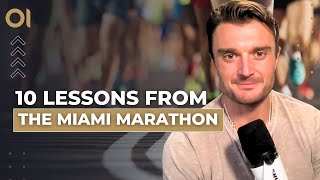
Justin Ralang, a chauffeur, shares what training for and running a marathon taught him about preparation, perseverance, and mindset. He uses the marathon as a lens for tackling life's bigger challenges and building the grit to see them through.
Preparation fuels performance. What you do in the dark lets you shine in the light. I can't stress on this enough. So many people think that they can just lean in and show up and just because they showed up on game day, that they should be able to be in the limelight, that they should be able to see success, that they should be able to see the outcomes that they want, but yet they haven't been willing to prepare themselves over the course of time. Over and over and over and over and over and over again. This is the Own it Show where we tell stories of how everyday people made ownership theirs. Hey, everybody. Welcome back to the Own it Show. I'm your host, Justin Ralang, chauffeur. And if it's your first time here, welcome. So good to have you. And I encourage you to go back and look at the 300 episodes that we've done on really what it means to live a life in ownership. What does it mean to live a life by design? Because here at the Own it Show, we tell stories of people who have made ownership theirs and ultimately realize a life that is different and that's available to you, too. So if it is your first time, be sure to go look at everything else. If it's not, be sure that you're subscribing, be sure that you're leaving a comment, be sure that you're sharing this with other people and even on social media so that we can continue to pour back into you. So today, today is another solo episode, and we're diving into what happened over the course of the weekend, because if you guys have been following me on social media, you know that I've been talking about this marathon for a while. You know that we've been Talking about the 26.2 miles that we were gonna be doing and we were gonna be taking on, and we were gonna be. And one of my buddies and the guy that we did it with, pastor for me, but also pastor for hundreds of thousands of people around the country and around the world. Actually, Rich Wilkerson is who he actually went and did it with. And it was not what I expected, let me put it that way. And it was extremely powerful, extremely moving, and taught me a lot. So let me give you a little background here. So what ended up happening was about seven months ago, Rich said to me, he goes, hey, Justin, why don't you run the Miami Marathon with us? Was like, sure, why not? I like to do hard things. You guys know if you've tracked any of my socials or anything, I'VE talked about. I've done hyrox races, I've done deca races, I've done half marathons, I've done CrossFit. I'd love to just compete at different things and challenge my body and do hard things. And when he asked me, I was like, man, I haven't really run more than a couple miles in years, but why not? Let's do this. And so over the course of the last five months, I'd say Rich, myself, Omar, Bijan, a couple other guys from the, from the church would start meeting throughout the week at 5, 30, 5, 45 in the morning and going for 5, 10, 15 mile runs and really doing some, some training. Well, five weeks ago, Rich had a major setback and realized that he had a stress fracture in his foot. And that stress fracture, he was concerned he wasn't going to be able to run. And so we shifted our training modalities for him a little, made sure that we could ultimately get him across the finish line. Came into the house utilizing Hypoxico, which is an altitude trainer that really takes your, the oxygen you're breathing from about 21% that we breathe at normal temperatures here or normal atmospheric pressure here to 8 or 9%. So you're having to be more efficient with oxygen. So he was able to get the breath without actually having to push his body as hard. He was able to do it on a bike so there was no pounding. All of these things that we were able to do. And I got this deep conviction over the course of this time that this wasn't my race. This wasn't the race that I was supposed to run, the one that I was supposed to push myself through and get my PR time and rather be able to move across and help Rich get across the line and help him and see what learning would come of this. And when race day came, Rich and I and actually one of his buddies, Corey, who was, he's not a professional marathoner, but he has run 11 marathons and he run runs on an average of about 2 hours and 40 minutes. So he, he's, he's a professional in terms of timing, but he doesn't do that as a career. So very, very impressive. But he was the guy that ran with us as well and really kind of took us on this journey together as we, as we all went on and embarked on this 26.2. But there was really 10 lessons, 10 takeaways that I had from this that I think were just so profound. And through the highs and the lows of this race. But finishing the 26.2 miles in less time than was needed was really impactful and doing so without having any foot issues with Rich. Being able to finish with people that were pushing you, that were just doing life with was amazing. But There were really 10 lessons that I took away. And so I wanted to kind of drop these to you and have you take them into your life and see how you can start to apply these to areas that you're struggling with or doing something hard. Because when you're doing something hard, when you're doing something like 26.2 miles, you have a lot of time to think, you have a lot of time to reflect and there's a lot of things that start to come out. And so these are things that I made a note of and wrote down. So number one is surround yourself with tip of the spear people. And what do I mean by tip of the spear people? I mean people who are pushing the envelope, people who are not normal, people who are uncommon, people who have like minded values to you, but continue to want to serve and impact. People who, who don't conform to the normal ways of doing things. Not because they are stubborn or egotistical, but because they simply are convicted in their thoughts, their beliefs and their desires to impact the world in a different way. So surrounding yourself with tip of the spear people. Because as humbly as I say this, I find myself to be a tip of the spear person. And as I'm typically pouring into other people my spear, the more that I use it, the more that I go, the more that I press it starts to wear, it starts to get a little less sharp, it starts to be, get, make, have, get some chips in. It starts to get a little dull. And so instead of completely fall out, I continue to find myself around tip of the spear people that only sharpen me, that only make that spear that much sharper, that much pointier, to be able to impact that much greater. And so surrounding yourself with tip of the spear people will allow you to get into those spaces. And if you've, you listen to the last episode with Doug Alex about how to build relationships, that's how you build relationship with tip of the spear people. Go back and listen to that episode. It was amazing of how we broke that down and how we really made it purposeful and actionable. Number two was, this was just so profound. But do not overestimate anything, do not underestimate anything, but respect everything. And I say this because going in, I think I underestimated some of the pain that I would feel in the race. But I overestimated the difficulty and scarcity of what a marathon would actually be and let me dive into that in a second. I underestimated because I had run 18 miles, was my longest race or longest run that I had done thus far in my training leading up to it. I was like, you know what? Like, this is pretty good. This isn't going to be all that bad. But because I ran the 18 miles at a faster pace in which we ran the marathon, really pacing out rich. And where we were going was my running gait changed, the time I was on my feet, pounding changed. And so I really started to feel daggers in my hips, daggers in my calves about mile 12, mile 13. And I was like, man, this is going to be really challenging. But I also overestimated how I would feel after I overestimated the, I think, the difficulty of what a marathon was actually going to do. But in doing that, in underestimating and overestimating, I failed to respect what the marathon actually was. And it wasn't until I was in it, it wasn't until I was there that I was like, I get it, I see it, I understand it. I've done long runs before. I'll tell the story of building up to multiple marathons in a row, but that I did on my own, on a track, really, just kind of trying to explore doing more hard things. But there's, again, something about doing it in community, something about doing it in this uniqueness. And when you fail to respect something and you simply estimate it or you judge it, overestimate or underestimate, it doesn't matter. It's a judgment. When you judge something, you can't respect it. And so by leaning in and being able to respect something, by leaning in and being able to truly understand what's happening there, that is the only time that it can change. That is the only time that you can actually get the most out of it and ultimately lean in in a very powerful way. Number three, you can't get to mile two without going through mile one, and you can't get to mile six without going through mile 25, basically meaning you have to take one step at a time. You have to take one mile at a time. You can't shortcut it. There is no shortcut. There is no shortcut. There is no hack. You have to literally take every mile at its time. I know at the very beginning of the race, we were trying to break it down, and we break it. No matter how you broke it, Down. Guess what, guys? It's just. You can more run 1 mile 26 times. Oh, hey, guess what? We just. We just finished mile 13. We just got to do that all over again. Hey, guys, we just got to do 3.5ks. Hey, guys, we just got to do two 10ks. Hey, guys, we just got to. We just got to do one mile at a time. You can't shortcut the game. You can't shortcut anything. You have to take it literally as it comes one step in front of the other. And when you realize that, that's the same as life. When you realize that's the same as building a business. When you realize that's the same as what it takes to get in shape. When you realize that's the same as what it takes to build a relationship. When you realize that's the same thing as what it takes to raise children. As you realize that's the same thing of what it takes to build a home. That's when everything changes. When you realize it's not about the outcome, but it's rather about the process and just the willingness to stay in it, the willingness to stay in the game, the willingness to be patient and do it over and over and over again and stay in the mundane. That's when you win. That's when you win, and that's when everything starts to change. And so numbers three and four is you can't get to miles two without going through mile one. You can't get to mile 25 or 26 without going through mile 25. And number four is it's one step at a time. Literally one foot in front of the other, one step after another. Every step might not be pretty. Every step might not be. Might not be perfect. There was a lot of steps that I didn't feel good. There was a lot of steps that I had to bear through that had calf pain, that had foot pain, that had hip pain. But then there were also a lot of steps that felt really good that I was powering through, that I felt strong. There were some steps that were up a hill. There were some steps that were downhill. There were some steps that were on uneven ground. There were some steps that were on soft ground. It was always Chang. And that is how it's going to be in life as well. Your season's gonna change. The difficulty is gonna change. But one step at a time. And the only thing that's guaranteed is when you take one more step at a time. There's gonna be continual things that go back and forth. There's gonna be cycles. As soon as you take one more step, the next step could be difficult. As soon as you take one more step, the next step could be easy. The next step you take, the next step could be treacherous. The next step you take, the next step could be safe. But that's the only guarantee, is you have to take the first step. Number five, life is better in community. I'll tell you what, those three guys that I ran this race with was incredible story I didn't say was. The night before, there was 14 guys that stayed overnight in this penthouse downtown in Miami. And we were in Norma Tech boots together. We had foam rollers, we were doing some stretching, we were talking, we were laughing, we were having some fellowship time. And I'll tell you what the cool part is, if you look back on that, every single guy that was in that room finished that race. And I'm not saying it was because they were in the room that they finished the race, but it was because a lot of them, to be honest with you, there was two for sure, that started only because they were in community and they weren't worried and fretting and anxious about it as heavy as they would have been if they were on their own. And so life is just better in community. When you're. When you're in community, it gives you this sense of common struggle, this thing that you can bond on, this thing that you can move forward on, which common struggle is not a negative thing. It's not going and building up drama. It's leading in and going, hey, this is what we're doing together. We get to do this together. We get to choose this together, we get to be in this together. And there's power there. Number six. The heat makes anything harder. And this is in like, take it for what it's worth in actual context, but also take it metaphorically so in actual context. And running that marathon in 85 degree weather with a high level of humidity, that's not easy. As soon as that sun started to rise and it was coming up, man, that heat pounded and it was hard and it was sweaty and it was just. There was a lot of times I was like, man, I'm exhausted and I am hot and I don't feel well, and this sucks. Versus when we started, I was like, man, it's cool. I feel good. And we're jamming. And then today, Filming this on the 29th of January, literally a day after the marathon, it's a low of 48 and a high of 65. Like, go figure, Right. But I think it was a lesson that the heat makes anything harder. And so the heat could be anything in our life. The heat could be when you get into a pressure situation. The heat could be when you start getting into an argument. The heat could be when something actually becomes more difficult. The heat make things harder. But the heat is meant to form you. The heat is meant to shape you. The heat is meant to forge you. So embrace the heat, love the heat, acknowledge the heat, know that it's there. But it's not a bad thing. The heat makes things better. And the heat, although it's making it harder, is only making you better, is only forging you to go to where you're meant to go. Because unless you're willing to face the heat, unless you're willing to stay in the heat, unless you're willing to absorb the heat and step into the heat, you're going to stay the same. Number seven. You sweat more than just water. And this again is, is crazy. I, I took in about 10 liters throughout the race. Five element packs, two, two or three, the right stuff packs. So eight different element or eight different electrolyte components. If you look at that, that's about 8,000 milligrams of sodium and all with, all with different levels of water. And at the end of the race, I weighed myself. I was still, still 8 pounds lighter than when I started. And so my shorts were soaked, my shirt was soaked, my shoes, like I was just drenched. It was, it was wild. And that was continuous through four plus hours. Like that is, that is wild when you actually start to think about this. So making sure that when you are running, when you're active, when you're just sitting around, it's no reason, it's no wonder why people who suffer from headaches all the time or when they're not actually replacing electrolytes on a regular basis and they're only drinking water, it's no wonder that they feel like they can't focus. You have brain fog because we're walking around chronically dehydrated. And so this is something that obviously we preach a lot at ONIT and really helping us understand our body in a unique way. But it was just so much so highlighted on me. Again, when you're running by people and you're looking at their shirts and they're not, their, their shirts have white sweat lines on them, which is actually salt. You look at their eyebrows and their face after and their sunglasses are all caked with, with salt and other compounds from, from their sweat. We Sweat more than just water. So you can't just replace it with water. Number eight, everyone's going to love this one. But Miami skies are unbeaten. We saw the sunrise. It was incredible. The colors, the pinks, the yellows, the blues, the oranges. You just can't beat a Miami sunrise. And when you see the skies throughout the day and you start looking at them and you just say, man, what a wonder where we live. What a wonder. And have massive gratitude for this. We the, the, the track or the race track was we started right downtown at the, at the arena, at the basketball arena. And we went up, we went across the bridge into South Beach. We ran up Ocean Drive, which takes you right along the beach. You come across another bridge, you've got got beautiful water on either side. You come across, run down into Coconut Grove, which is just like a jungle. And then you run through a bunch of cool neighborhoods, only coming back up and finishing right downtown at the front of the arena again. And so just being able to see the city that we live in, the beautiful skies that it has, just God's wonder in which he's created, in which the sun comes up and just the colors that shine. I've got photos in a lot of my Instagram posts if you're following. But just going and looking, all those were just, it was just absolutely incredible. Number nine, no matter the pain, don't panic. I saw a lot of people going through the, the race that were ill prepared for the race and started to panic. I started to panic because they didn't know what to do. And instead of seeking the guidance and I can kind of go into like my own experience here was I was about four miles in and I started to just have this terrible, terrible calf pain like pain that I, I, it was not a, it literally felt like my calf was going to pop and I was like, I don't know how I'm going to get through this. I don't know how I'm going to manage this pain from right now at onset, right through 26.2 miles. But I went back to my training. I went back to what I know. The truth is I went back to what I knew to do. And so I started to, when I was going up hills, I was making sure I was striking heel toe first. So I was getting a really good stretch in the Achilles and the calf, rather than continue to push through running on the balls of my feet more, which is just putting more tension and stress and strain, I took full advantage of making sure I was properly hydrated. Throughout the whole race. And so not having to come at it from a different angle and now have to struggle with dehydration as well. When we started to, in our group of three, when Corey and myself and Rich had different moments of struggle through, through this, we were there for one another to talk through it rather than to start panicking and make everything worse. And so there's going to be moments of pain. It's not if it comes, it's just when it comes, but making sure that you don't panic, that you stay calm, that you stay focused, that you stay intentional with what you're supposed to do, when you're supposed to do it, how you're supposed to do it. Which takes us to number 10. Preparation fuels performance. What you do in the dark lets you shine in the light. I can't stress on this enough. So many people think that they can just lean in and show up and just because they showed up on game day, that they should be able to be in the limelight, that they should be able to see success, that they should be able to see the outcomes that they want, but yet they haven't been willing to prepare themselves over the course of time, over and over and over and over and over and over again. There's a reason why Corey can show up and run 2 hour and 40 minute marathon is because he's done the reps, he's prepared over and over and over and over again. He's done the work required and necessary to do that and to operate at that level, whereas somebody else who hasn't done that can't go and show up that way. But at the same time, you need to realize that when you stay prepared, you don't have to get prepared. When you stay around people that are tip of the spear people, it will continue to sharpen you. And so a lot of these things, these lessons that I learned 1 through 10, they heavily overlap, they heavily intersect. And when you realize that and learn that, that is when you can start to actually see the fruits of your labors and you can start to feel confident in where you're going. And so I will be forever grateful for the memories, the process and the relationships that were built over the course of the last, I would say five, six months of actually running and training with these guys, but then also going and running and doing something hard like this. And you have to realize that anything you do is not the outcome is not necessarily in your control, but the process in which you get there is. And so making sure that you're Willing to do things differently, making sure you're willing to live differently, making sure that you're willing to have a different level of mindset and process and concept will allow you to have the outcomes that you ultimately desire. So going back through these, number one, surround yourself with people that are tip of the spear people get around those types of people. Number two, don't underestimate and don't overestimate anything, but always respect it. Number three, you can't get to mile two without going through mile one, and you can't get to mile 26 without going through mile 25. Number four, one step at a time, one foot in front of the other. Number five, life is better in community. Number six, the heat makes anything harder. Number seven, you sweat more than just water. Eight, Miami skies are unbeaten. Nine, no matter the pain, don't panic. And number ten, preparation fuels performance. What you do in the dark shines in the light. So, guys, no matter if you're choosing to run a marathon or not, no matter if you're choosing to do something physically challenging or not, remember that we're not necessarily talking about the physical component of something. We're talking about life in general. All of these principles can be applied there because life is constantly going to be difficult. Life is constantly going to throw you curveballs. Life is constantly going to throw you challenges. And if you're ill prepared, the outcome probably won't be what you're looking for. And so making sure that you're willing to prepare yourself, be that you're willing to live differently, that you're willing to do what the uncommon person is, or pardon me, you're willing to be uncommon and do what the common person is not willing to do, will ultimately get you to places that the common person can't access. And so at the end of the day, we know we say this all the time, success is different. So own your different it and we'll see you next week.
More from Justin




The Ultimate Blueprint for Taking Ownership of Your Health | Unlock Peak Performance

From Bullied & Anorexic to Healed & Purposeful: My Transformation Story (Justin Roethlingshoefer)


Forget "One-Size-Fits-All" Health! Unlock Your Best Self with True Personalization (The OWN IT Show)

Are Blood Tests Enough? Why Cellular Testing Might Be Better | Justin Roethlingshoefer

Your Body's Language: Understanding Stress & HRV| The Power of Ownership - Chapter 3 & 4


Is "normal" really making you sick? Dive into Different with The Power of Ownership:Chapters 1 & 2