Mindset Shift for Financial Freedom: Carving Away Limiting Beliefs with Justin Donald
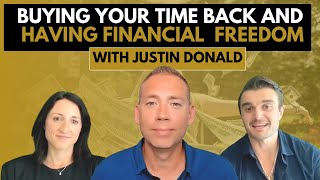
Justin Donald talks about the mindset shifts needed for financial freedom, focusing on ownership and buying back time. He emphasizes finding the right peer groups and education to build wealth and break through limiting beliefs about money.
What would you say is your definition of ownership?
Ownership to me is, is truly just buying your time back and having real financial freedom. This is the Own it show where we tell stories of how everyday people made ownership theirs.
Hey everybody. Welcome back to the Own It Show. I'm your host, Justin.
And I'm Elise. Welcome to the show.
And I'm super excited for our guest today because not only has he been introduced to us by an amazing group of like minded entrepreneurs, Christian entrepreneurs, but he, we had the opportunity to see him present and you know, when you're sitting in front of a great in anything, Whether you're watching LeBron James play a basketball game, whether you're watching Tiger woods hit a golf ball, whether you're watching Tony hawk hit a 980 flip on a half pipe, whenever you're able to see somebody great, lean into their greatness, lean into their gifting, lean into their calling. It's amazing. It is truly amazing to see. And that's what we were able to see Justin Donald do in his presentation and the masterclass that he held on financial freedom not about a week ago. And why we wanted to bring him on, why we wanted to get exposed to him was simply to be able to allow you to see a glimpse into his life, see the way that he thinks, see the way that he lives, see the, a true mindset shift in how you not only approach financial freedom and the financial component of your life, but also the mindset shift that happens in you and the journey that you go on throughout your entire life to get to that point. It's not something that you have to feel bad about because quite frankly, Elise and I halfway through go, oh my gosh, we are so far away from where he is. But ultimately at the end of the day, it's being able to feel like you can relate to that, being able to say, you know what, there is a journey that I can get to and I'm really curious to figure out what that is. And so without further ado, Justin, it is an absolute pleasure to have you on the Own it show and thank you for spending a little bit of time with us and being able to expose your knowledge to our audience.
Well, thanks for having me, Justin And Elise, I'm, I'm excited to be here. Thanks for the, the nice introduction. That's a lot of pressure to live up to. Those are a lot of great names. I don't want to be compared with the greats like that, but you know, really kind and cool to be on your show.
You Know, we always say that you never give the greatness title to anybody unless they have the results to prove it. So you fit into that category pretty well.
Well, thank you. I appreciate that. It's interesting because for most of my adult and professional life, I kept my financial world a bit of a secret. No one really knew what I had done or accomplished because I never wanted it to be about that. I never wanted people to. I never wanted people to care about me because of that. And the more I leaned into it, the more I saw that there's an immense amount of impact that can be had when people can, you know, take ownership and learn things and make moves and heal financial wounds and, you know, really move in a more powerful direction that that creates freedom and lifestyle and autonomy. And so it has been a really fun season teaching a lot of what I've done for the last 15 plus years.
Justin, you talked about something here and it's something that jumped out at me because for every other guest that we have on, we always talk about different wounds that come up. Whether that's through things that have made us feel badly, through our upbringing or a divorce or a relational wound or any of these types of things. But financial wounds are real as well. And I'm curious, through your experience, through your teachings, through things that you've seen, what type of people might not even know that they have financial wounds? And so what are these things that you've seen that ultimately can be taught or brought to the awareness of people so that they can start to heal from these and then move forward in a powerful way?
You know, it's a great question. And yeah, financial wounds are a real thing. You know, I think that a lot of it happens subconsciously and with just some work paying attention to it, you can realize it. You know, a lot of finances, a lot of like, creating wealth is a mindset shift. It's not a technical skill set that someone needs. I think you can acquire that skill set. I think that can be learned. But I actually think the way that the wealthiest people, you know, build their, you know, financial well being is different than what most people think it is. It's different than, you know, putting all of your assets in the stock market or, you know, following what Wall street does. You know, I think that there are, there's a small group of people that have maybe create a lot of wealth. Most wealthy people create their wealth and then put a small percentage, 20 to 25% in the stock market. But then they balance that out in many other things like private equity. Private credit, you know, a lot of, a lot of other real estate, a lot of other things. But the reality is it starts with that mindset. It starts with different beliefs around money. And a lot of people will develop beliefs that were never their own. They just take them as fact from their parents or from their friends or from their community, whatever was the, the norm or the constant in, in their younger years or impressionable years, whatever that environment looked like, you know, so for me it showed up. You know, in, in later years I heard my parents always saying, hey, money doesn't grow on trees. We can't afford that. You know, that type of language. And by the way, my parents didn't have a lot of means for most of my life. I mean, today I would say they still don't have a lot of means. I think my dad had a season where he had some good sales years. He sold cars and appliances most of his career. But I found myself like out of college, working hard, busting my butt, you know, earning six figures and having friends say something. And I would say, well, money doesn't grow on trees. You know, One of them like gave me a smart alec remark back that was like, well, that doesn't seem to be true for you. And I was like, wait a minute. Yeah, why, why do I even say that? Like, I don't, I don't understand why I this language exists. And I had dial back and figure out where it came from. And there's tons of that, you know, more scarce minded type of financial reality or financial beliefs in my world. And so I had to carve that away and just say no, actually I don't want to put those blinders and those limits on what it is because just one little small mindset shift and everything changes where it can change.
Yeah. And you're, you're speaking my language right now because you know, when it comes to the inner energy side of the business, it's all about the beliefs that you hold and how they ultimately create the life that you're living. So kind of what you're, what you're referring to here is as much as we take beliefs from our parents in a financial way, it happens in every single aspect of our lives. Right. You could take the way that you approach your health, you could take the way that you approach your relationships, the way that you approach your career. So many of these things are trickled down from generations of our family of origin to ultimately create a, the life that we have today. And as you said, it's as simple as shifting a Mindset, Right. Well, maybe I can. I can live in a way where it feels like money grows on trees. Right. So for our listeners out there who are like, I'm ready. I want to create that mindset shift, what would you say? And perhaps they're living in more of a scarcity mindset where they feel money might not grow. Money doesn't grow on trees. Right. They're aligning with that. That type of a belief, and they're just living that way. What would you say are a couple things they could do from a mindset? Not only a mindset, but also a tangible way to create shift in how they view their financial freedom?
Great question, Elise. I think the two biggest things are pretty simple. Simple in practice, maybe not as simple in application, because it creates some. It needs consistency. So I'd say it's education and peer groups. So what type of information are you feeding yourself? I think the more that you feed yourself, information of people that have a proven track record and a proven path in the area you want to be great in, whatever that area might be. This doesn't have to just be finances and accumulating wealth and freedom. And when I say wealth, I'm not just talking about money. Money is a component of it. But I'd say time is probably the greatest component of it. Who's buying their time back? Creating more time. But health, as you guys know, is a component. You know, your spirituality, your faith, your emotional health. Right. Like all these things are. Are components in this greater word of wealth. And so I think first and foremost, it's educating yourself, it's finding content. Because you. You may not have a peer group, right. You know, in your area, or you may not know. I mean, there is one. You just may not know it yet. I would say that is first. But for anyone that has the limiting belief that, oh, I don't know, these people are, you know, oh, they don't exist around me. I think you start by just using authors that have figured it out, you know, people that have training courses or whatever. Anyone that has done it, not just, you know, today. Everyone's a life coach, right? Everyone can coach you, everyone's qualified, but very few of them have done the thing that you want to do. So I only take, like, when I coach, when I pay someone, it's because they have done the exact thing that I want to do, not because they label themselves a life coach, you know, or a financial coach. I want to know that you've accomplished it. But, you know, the overarching, more important category is peer group, because those are the people that are going to impact and influence the way that you think, the way that you act, your belief systems, just like your parents or whoever was most influential in your younger years did. And even people with bad parents, by the way, that would say, I don't have a great relationship. When you really dig down, there's still influence from those people, whoever they viewed as, you know, in charge or protectors or whatever it is. And so we need to embrace that today. Who are the people we can learn from today? Who do we want to allow into our circle of influence that will ultimately, whether we want them to or not, will impact and influence our mindset, our education, the things we think about, how big we think, all those things.
I think it's really important to touch on something that you just said. And listeners, I want you to really tap into this, write this down, star this moment, and it's find the people who have done the thing that you want to do. And those are the people that you want to learn from. Those are the people you want to get around. Those are the people you want to be exposed to. Because I know we've all been burned. We've all been burned by hiring a coach that couldn't get us to where we wanted. We've all been burned by buying the course that promised great returns and ultimately led us down a wrong path. We've all bought the books that we thought were going to be life changing and ultimately was information that you could find on the back of a cereal box. And it comes to that place to really find the people who have done the thing that you want to do. And quite frankly, I'll be the first to admit that in my life that's probably something that, um, I, I often fell into the category of saying, I don't know who these people are, I don't know where to find them, and being scared or fearful to lean into and commit to somebody as a coach, lean into, commit to somebody or commit to a book or commit to a course, because you just didn't know. And it wasn't until I got out of my comfort zone, quite frankly, humbled myself to say, I don't have all the answers, I don't know what I'm looking for. And opened up to some of these people that I saw as experts and it's not the traditional ones that you would expect. You're not going to the bank and asking your financial advisor, hey, who's the best person that I should listen to for financial advice? They'll say, well, I'm right here in front of you. But we know that that's not the right answer. And it was being able to get into these, these mastermind groups. And the mastermind groups that have been the best or the groups that have been the best or the peer groups that have been the best are ultimately with the people who, who have done what you wanted to do. And so Justin, even I know you've got a group that you work with that is, that is incredible. But for people out there that still fall into this area of, I don't know these people, I don't know where to go. What are some suggestions for people just to start, just to say, hey, go check out website A, B and C or book A B and C or group A, B and C. Yeah, you.
Know, it's a great question because especially in the financial space, you have a lot of people that they, they tout their financial expertise except that they made all their money from the products that they created, not from actually being a good investor, not from the actual investments. So yeah, that, that is a really dangerous place if you're, if you don't know the background, if you don't know the level of success and sophistication that someone has. Additionally, a lot of the products that are out there are designed that you might get this. You know, often I'll hear people say, you know, well, I've always learned that you do it this way or I always heard you should do it this way. And there's so much education and content out there about how to get out of debt. And that's totally different than how to build wealth. And so, you know, I think, you know, for me, I got started with Robert Kiyosaki. Like he didn't know. I met him and had a great exchange with him, but he didn't know for like 20 years. He was my biggest mentor because I just read everything he ever put out, you know, and the book Cash Flow Quadrant was really the biggest game changer for me. And that led to a lot of other people that I read their books and learned and understood. You know, I read Tom Wheelwright's book on tax free wealth, which is like, he actually made taxes easy to understand. And when you can win the tax game, wow, can you ever get ahead? So I just found the people that actually were living what they were preaching, that they made all their money before they ever had any products to sell, books that they wrote, courses that they did. And I think that's important. So for me, like even on, like, you know, all my stuff for the lifestyle investor, we give tons of free stuff away because I want to be a place that people can go no matter where they are in their journey, their, their finances, their net worth, like, none of that matters. It doesn't matter where you start. It matters that you have a desire to move forward and there should be some education. So find the places where you can get free education or cheap, you know, podcasts, most of them are free. And then books, those are relatively cheap. And find people that, you know, find the books that have a long history of, of great ratings and great reviews.
The lifestyle investor, it's over his left shoulder, if you haven't noticed, and you're watching on YouTube.
So, Justin, I kind of want to switch course here a little bit because as much as you are an investor and you build your own personal wealth, you've also been through a lot to get there right in the entrepreneurial seat that you sit in. And a lot of our listeners are entrepreneurs as well. So can you share with our listeners, you know, maybe a really, really difficult challenge or something you went through that ultimately allowed you to level yourself up to get to where you're at today?
Yeah, you know, I look at myself, Elise, as an entrepreneur first and an investor second. I got my start as an entrepreneur, and I've had some endeavors that have gone well, and I've had some that have not gone as well, some that have been rockier than others. I mean, I could go through a laundry list of, like, mistakes or issues or dark seasons in business, but I also feel like those dark seasons helped define who I was and helped me build, you know, resiliency, tenacity, just help define the type of character that I have and the way that I move forward. But, yeah, I mean, I have started companies with partners that it didn't work out and we had to go our separate ways and it was less than amicable. I've had experiences where I gave, where I worked for a good sized company and I gave away all my IP for free. Because this was early on. I didn't even understand the idea of having intellectual property or systems or things that I created. And so I gave it all away for free. And I always wanted to be the guy that helped, only to find out later that, you know, they had no issue disposing of me when they felt like I was a threat to them, which I should have never, you know, they should have never felt that way. But, you know, I think sometimes in a scarcity mindset, you may get worried, well, what if this person no longer wants to be with us? What are they going to do? Are they going to recruit all of our people away? Which that wasn't the case, and I never did. But, you know, there was a nasty season there, you know? You know, so I've had some legal battles, unfortunately, you know, I've had some investments that haven't gone well for sure earlier on in my career. And every now and again, you know, you just realize you can't win at all, you know, and. And so there have been seasons, even in business, where it's like, is this business even gonna make it? I mean, are we gonna make it through Covid? Are we gonna. You know, so I totally get it. I've been bootstrapped to the gills, and I've been flush with cash and have spent it, either myself or our partnership agreed to spend it in a way that maybe turned out not to be a very smart way of spending it. So, gosh, I feel like I've made all the mistakes, and thank goodness I've been able to learn from hopefully most of them.
Yeah, absolutely. And it sounds like as difficult as they are, at the end of the day, they were put on your path to make you a better person and to make you more resilient and to make you more stronger and to hone your own personal skills, I think.
So in the season, it never feels hard to look at it that way. It never feels like that. Later on, in hindsight, it's like, wow, talk about the character shaping and the defining of who I am and the grit that I had to figure out to get through and weather these scenarios. But in the moment, it just always feels horrible. And I'm such a people person. So when. So relationally, when there's a rift that. That weighs heavily on me, I mean, I messes up my sleep at night. I wake up in the middle of the night. Like, that kind of stuff really bothers me even more than, you know, the financial woes, like the. The relational capital, when that's not right, that gives me the most sleepless nights and creates the most stress in my world.
Justin, you talked about you've had investments that have gone south or moments that just haven't worked out. And at the very beginning, we talked about this mindset shift that needs to happen in a lot of people to ultimately create this financial freedom, create the wealth that you're looking for. And so what were you able to do or what have you been able to do along your journey when you have had These strikeouts, when you have had these down seasons, these dark seasons, to create that mindset shift, to be able to go and press on and lean into areas that have ultimately allowed you to get out of it.
Yeah. So I think, you know, when, when you take one on the chin, I think there is this protection mechanism for most people at least where you're a little trigger shy. And I think that that is warranted. And so, you know, probably the best analogy I can give you, I've got, you know, my little AirPods here. But if this were a bar of soap, you know, I, I love talking to people and sharing this analogy of like, okay, when you've got a bar of soap and you're like squeezing that sucker as hard as you can and it's wet, right. You do this with one hand, what's going to happen? It's going to shoot out. Right. So as much as you try to control something, you, you can't. But if you just massage it, you influence, you toss it back and forth, you have so much more control. And to me that's how it is. Like people show up with their finances and maybe they've had like this lesson where they just got punched in the face and it was rough and they lost money. But if that forces you to hold on tighter to it, that's just a scarce existence around money and it will make it a lot harder to grow it, to multiply it. And I think the idea is we don't have to rush into anything, but how do we influence it vs control? Influence to me is always superior than control. You just can't really ever control things. And even when you find a way to do it, it's generally short lived and often it's not the best solution. I mean, even in business, when I tried to micromanage, it was never as good as when I just let go and hired great people and let them grow and figure things out and make mistakes and learn. But when I became a macromanager instead of a micromanager, our business took off, our retention took off and I think that's that control versus influence type of element.
I want to ask another question because not only are you an amazing, are you amazing with money, but you're an amazing man to begin with. You're a great father, you're a great husband, and you put all of this into play. And so how have you been able to, for our listeners out there, how have you been able to create great financial literacy in your children and pass that down to them, but also create a Great relationship with. With your wife in speaking about the financial situation of your family?
Well, that's a great question. I think there's another skill here, because often your kids just don't want to learn what you have to teach them. So I have seasons where I feel like I'm doing a great job, and I have other seasons where I feel like I'm totally striking out. I've got a daughter who is amazing, but she is also really stubborn. I think she may get that from her dad, maybe her mom, too. And so, you know, it's great when you see these qualities showing up in your kids. And it's like, you know, drives you crazy, but you're like, oh, they're just a reflection of me. Okay. So I have these seasons where I feel like I'm getting through to her, but then there are these other seasons where she's like, I don't want to learn anything. Like, whatever it is, there's just a roadblock. Total resistance. And so with her, it's best with application. And so we have her do a bunch of business fairs. I mean, she gets to choose. If she does, I. I mean, we've just helped her understand this is a way that she can make money. So she wants to do all these business fairs, which is fun. And this. This year was the first year where break even finally clicked. I've been talking about break evens, you know, for years. And of course, it was my wife's idea to create a spreadsheet and let her see the numbers as they change. And so I went to this business fair with her. She had the spreadsheet. We talked her through it. Nothing clicked. But then as she started selling some of her jewelry, she saw the numbers, like, the, you know, the negative of what she owed started to decrease. And then, you know, she was like, $17 away. And she's like, oh, I'm only $17 away from making money, dad. And I'm like, yes, exactly right? And then she got excited. She's like, dad, I just hit the break even. So now is everything profit? Yes. And so now it's like this real world, tangible experience because she's like, typing it in, entering the numbers when she sells. And then it's like, whoa. So she made $76, but she watched it compute in a spreadsheet the whole way. So that was like, the most success that I've had helping her understand that. But, I mean, I've tried doing everything. I took her to a bank. I was like, check this out. Here's the bank here's the vault. Here's the. She's like, dad, can we just go? This is boring. Can we go do something? So, you know, I feel like it's, you know, I do the best that I can, and it's not always well received. It's usually less well received than. Than whatever I want. But it's nice seeing in the long run it coming into fruition. And with my wife, you know, I just. I just treat everything as ours. I always talk about our investment, our move, our things that we did. And, you know, my wife will often tell people, well, I mean. I mean, I guess, like, it's really nice that you always include me because I know you're doing, you know, all the investing. So. But I. But I want her to feel like it's us and we're a team. So, you know, and that doesn't mean that it's always smooth. We both have different ideas of what financial success is and what it means. And my wife doesn't care about money at all. Like, not at all. I mean, she's not far from a minimalist. So stuff, possessions, finances, that means, like, just nothing to her. She wants quality time. She wants to build a family. And so it's interesting to see values around money as well. Now she values financial freedom. She values having the ability to do whatever she wants when she does it. And she does a lot of charity work, and she does a lot with our church and with some different women's groups. And she. She sees that. But from a stuff standpoint, from, you know, she likes experiencing cool things as a family. But where I kind of see this big picture of, hey, the more wealth you have, the more impact you can have, the more influence you can have, she's starting to see that more. But she also just, I don't think values it the way that society does, which is very refreshing. And it's good for me to counterbalance maybe the way I look at it.
Yeah, it's. It's really interesting to have that dichotomy in a relationship, to be aligned in your values, but to come from it, from two very different focuses. You so focused on that and her so focused on the family and time, freedom, time, wealth, ultimately, which it sounds like is a really powerful marriage of the two of you. One of the things that, you know, as I'm sitting here listening to you, and obviously I heard your story in the masterclass last week, but, you know, if I were a listener, I would be wondering, Justin, what was it like? What was the thing that made you change your life from having a full time job to seeking financial freedom. And what were the first few steps that you took to get there? What would that be? Or what was that?
Yeah, so I can share, you know, what it looked like for me, I think there are a lot of different ways to do it. I think there's a lot of different case studies, so I'll share mine. And hopefully that can be a path that many people can say, well, hey, at least Justin and I know a bunch of other people have taken this path. So at least Justin and many of his mentors and people he knows have done this. But for me specifically, I really just had a bad experience with a financial advisor. And it wasn't the advisor's fault. It was just more the corruption and manipulation that exists in Wall street in general, where the education that we get really stems from Wall street, the financial industry, banking industry. And so there's this certain education that most people have and it's kind of taught as absolute, when in reality it's nowhere close to that. And so I found myself being sold this lie that I was making money when really I wasn't. You know, all my investor statements said that I was making, you know, 7% average rate of return. You know, whatever the number was, it was, it looked good, everything looked good. But one day I looked at my total and I said, gosh, I feel like I put more money in than this. And if all these returns, all these positive returns over the years are really doing what they should be doing, I think I should have more money. So then I went through and calculated how much I actually put in of my own money. And then I calculated the return and I had actually lost money. So when I ran this spreadsheet, I was like, wait a minute, how have I lost money? But every statement I've gotten has said that my average rate of return is a good rate of return. And that's when I understood that there's this total misalignment where people, you know, where these institutions want as much money as they can, as frequently as they can, for as long as they can. And the people that are gathering that money get paid whether it does well or not. And that is a total misincentive. That is just not the right way to structure things in my way, in my opinion. And so I decided to part and say, hey, I'm done with this. I can't necessarily blame the financial advisor because I think they just bought the lie and just followed what they'd been taught without critically thinking about the fact that the numbers aren't the real numbers. An average rate of return is different than an actual rate of return. Why are we not quoting actual rates of return? Because when they don't look good, you're not going to get as much money and people are going to take it out. You know, that's, that's just a manipulation that's too far for me. So I love being able to point this out for people. And so now instead of outsourcing my financial livelihood, I'm taking ownership and saying, okay, I can't rely on someone else to do it because. And then I learned only 5% of financial advisors in the last 15 years did better than the S&P 500 index. So if I had just invested my own money in an index, which is the cheapest way for me to make money in the stock market, I would've outperformed 95% of the people out there that charged money to do it. So 95% of money managers charged people 2, 3, 4 times what it cost to be in an index to lose them money or to make them less than what they would have made. And it's just crazy that that is the reality and that the vast majority of, of people, people in the financial services don't even have the, the basic standard of a fiduciary, which means that you have to have your clients best interest in mind. So like 99% of the financial industry doesn't have to have your best information, your, your clients best interest in mind. You just have to make decisions that are beneficial to your firm, that could be beneficial to your clients. I mean, it's, it's just ludicrous. And so I was like, I gotta, I gotta do my own thing. I've got to figure this out. And so that's when I shifted. So 22 years ago, I started investing in the stock market. And then, you know, probably seven years later, that's when I pivoted and said, nope, I've got to do this myself, I've got to learn, I've got to be a student. And I had some friends investing in single family homes. They said that that was tougher than what they thought it was going to be. I had some other friends in apartment complexes, and then I had a friend say, hey, I'm selling all my homes, I'm going to get into mobile home parks. And I thought that sounded crazy. And he invited me to a boot camp and I was like, no way. And then he came back, sold all his homes, started buying mobile home Parks and did really well. And then I saw that he, like, didn't even really have to work anymore. And I was like, wait a minute. This guy just totally bought his time back. I want to do that. And for a while, I was the money helping him. So I was like, wait a minute, what if I just do it? He's like, yeah, you should just do it. And so I bought my first park, replaced my wife's income right there that day. We were then able to have our daughter. I mean, we could have sooner, but it kind of all fell in play where she didn't have to work. We could have her daughter. She could be stay at home mom if she wanted to. She didn't have to, but. And then I bought another one that replaced her survival income, which was just the bills that just covered what it was to get by. Not fancy vacations or eating out, just to live, just to survive. And then we replaced our lifestyle with the next park. And then we replaced the earned income that I had at that point in time so that I didn't have to work. But you guys. Justin, Elise, this is where it gets really interesting because most of my friends were like, hey, man, you just doubled up. This is incredible. And I said, no, no, I'm leaving this. I'm leaving the earned income. My friends thought I was crazy. They're like, you're gonna make half as much. And I'm like, yeah. My goal isn't to make more money. My goal is to buy my time back. I want more time. I want more freedom. I don't want more money. If I happen to create more money in the process, great. The irony is, once I had more time, I was able to create more money. I didn't think about it that way. I didn't know that it was going to work out that way. I had so much more fun doing it, and I had this clean slate with time and I could just figure out how I wanted to spend it, who I wanted to spend it with. And that just created so much passion and excitement and purpose, and it made the next chapter and season of my life really rewarding.
It's amazing and I love that it's. It's not the goal to have more money, but it's the moment to have more time and to be able to give yourself that opportunity to do so. I know you said I wrote this quote down last time, but it was, rich people have money and wealthy people have time. And I just think that that's so true and so profound. One question and you can do it in one minute or less. If you had 100k, 10k or a single $1,000 available, what would you do at this very moment, given the time and current economic status?
Well, it's a tricky question because what I would do is probably different than what your audience would do just based on where I'm at in life. The other interesting question is, do you want no responsibilities to that money or do you want it to make the best return and therefore you're a little more responsible to it? So let me try and do this as easily and simply as I can. Today in my life, I am trying to work as little as I can on the things that don't give me energy and really spend my time and the things I'm passionate about. So I would find probably some sort of real estate that's undervalued, some sort of, you know, senior secured credit fund or, or, you know, lending opportunity that's collateralized or backed by an asset or a group of assets worth a lot more, and I would just earn money passively from that. Earlier in my career, though, I didn't care as much about that. I was willing to put in time. I wanted to maximize the return. In which case that's when I started buying deeded property that I ran myself. I didn't hire someone to come do it, I bought it and I did everything. And then once I understood how to do everything, then I started outsourcing. So I think you could go in two directions. What do you value more, the return or the time that you're spending? And I think either path could yield a different answer.
Amazing.
Yeah. So this is one of our audience's favorite questions is in. In a word or a phrase, what would you say, Justin, from somebody who's so clearly lives an ownership lifestyle? Right. You've been through the ups and the downs. You're really connected to your purpose, you know, and are really, really clear on what true wealth looks like to you. What would you say is your definition of ownership?
Ownership to me is. Is truly just buying your time back and having real financial freedom, being able to live life on your terms with those you love most, doing the things that you love most. And I think when you own your time, when you buy it back, when you're no long slave to your job, your business, to security and safety and what always has been or the routine, I think when you can break free of that and kind of exit that rat race, that's when the magic begins.
It's amazing. Justin, where can people find you where can people find your courses? Where can people find your books and everything else that you're putting out? Because listeners, do not sleep on this, do not step back on this, do not be afraid to lean into this. Because Justin's got such a wealth of knowledge and high quality information, usable information, digestible information, applicable information that you can instill into your life. So, Justin, where would you want to direct them?
Well, I've got all kinds of things for people in different places in their life. If you go to lifestyleinvestor.com you can find everything. So I've got a blog that's obviously free. I've got a podcast called the Lifestyle Investor that's free. I've got a book. And for anyone that wants a free copy, they just have to pay for shipping. They can go to lifestyleinvestor.com freebook and all the proceeds of that book go to organizations that stop human trafficking. So whether you buy it on Amazon or you buy it, you know, you pay shipping to get it, it goes there. But you know, on my website there's masterclasses, one on passive income, one on mobile home park investing. There's, you know, an online course, we have a mastermind that's pretty high ticket. So the application process is, is pretty long and we make sure that we find the right people. But yeah, we've got a little bit of everything. And whatever someone's price point is, whether it be free or they're looking for the flagship experience, it's all there.
It's amazing. And, and guys, I really encourage you just to take advantage of that, lean into that, because it is so powerful in, in where you can go and there's something for everybody, it meets you exactly where you are. So as you go forward and you lean into this world that maybe you haven't been attuned to before, you maybe haven't been aware of, you haven't been focused on. It's okay to level yourself up. It's okay to come in as a beginner, it's okay to look like you don't know what you're doing, because that is your first step to being able to really, truly take a hold of something new. And so seek out new education, seek out new peer groups, find the people who have done the thing that you ultimately want to do and get around those types of people. Because ultimately rich people have money, but wealthy people have time. And when we come back to that, a lot of us are probably thinking we may have not just created a business, but we've actually just created ourselves a job. And if we can truly come back to ownership, and ultimately ownership is buying your time back, we can find a new level of success. And we know success is different. So own your different, and we'll see you guys next week.
More from Justin




The Ultimate Blueprint for Taking Ownership of Your Health | Unlock Peak Performance

From Bullied & Anorexic to Healed & Purposeful: My Transformation Story (Justin Roethlingshoefer)


Forget "One-Size-Fits-All" Health! Unlock Your Best Self with True Personalization (The OWN IT Show)

Are Blood Tests Enough? Why Cellular Testing Might Be Better | Justin Roethlingshoefer

Your Body's Language: Understanding Stress & HRV| The Power of Ownership - Chapter 3 & 4


Is "normal" really making you sick? Dive into Different with The Power of Ownership:Chapters 1 & 2