Ownership is Freedom with Lance Parker & Hollis Tuttle
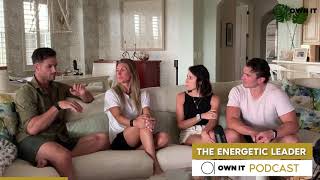
This is a YouTube video titled "Ownership is Freedom with Lance Parker & Hollis Tuttle" featuring a conversational podcast-style interview hosted by Justin Roethlingshoefer and Elise. Recorded in July 2021, the discussion centers on themes of personal ownership, discipline, resilience, and success, with guests Lance Parker and Hollis Tuttle sharing their athletic and professional journeys, mindset strategies, and life lessons. The content is motivational and focuses on how ownership and self-discipline contribute to achieving extraordinary success.
This is the Own it Show where we tell stories of how everyday people made ownership theirs to create extraordinary success. Hey, ownit crew. Welcome back. I'm Justin.
I'm Elise. And welcome to the Own it show.
If this is your first time to the show, be sure to subscribe or like or leave a comment so that we can again, help reach more people and really just spread the word of what it truly means to live in ownership. Just like our two guests have today, you guys are in for a real treat. If you've ever come across two people that seemingly just haven't really figured out they've got an unbelievable relationship. They live in ownership every single day. It's Lancen Hollis. And from owning the soccer pitch to owning the mirror studio to their Lululemon ambassadorship and truly just life in general, it's a pleasure for us to bring them and ultimately bring their story to you guys today. So without further ado, enjoy the show.
Hollis, Liz, so good to have you guys here with us today.
I'm so glad you flew in for this.
All the way from New York City. All the way from New York City.
All the way from New York to enjoy the amazing weather we've been having here in Florida.
It's been so nice.
Oh, my gosh, I can't thank you enough for this amazing invite. Good. I'm excited to be here with you and talking to all of your community.
Yeah.
So, guys, so crazy sometimes when you've kind of joined a fitness group for the first time and we all seen what it's like to be like on peloton or near, and you now see yourself on screen, what's the first thing that you guys think about when you see yourself on screen?
For me, so I have a little bit of a background in modeling, and so I've kind of gotten over that little lump of, oh, there. I see myself in that magazine or here or there. So I wasn't in too much of a shock, like, seeing myself recorded or any of that. How about you?
How small I look. And it's funny because people think that I'm actually a lot bigger than I am, and when they've met me in person, the first thing they say is, gosh, you're really tiny in real life. But when I look at myself on screen, I think I look small. So I guess it's all in the eye of the receiver, right?
Yep, absolutely. It sure is.
What was your kind of like, first, like, mirror aha moment where you first saw yourself and you were like, oh, my God, this Is real. Like, this is. I'm a public figure.
I don't know if I would say my first aha moment was like, I see myself as a public figure because it was back when Mirror was still in beta testing, and that was the first time I saw myself on mirror. And one of the best things you can do, or, you know, as an athlete, watching game footage, game film, is seeing yourself performing. And so watching myself perform on the mirror for the very first time, even though it wasn't live to the public yet, just seeing my mannerisms and certain things that I would say that I didn't realize I was saying, or certain pitches of tones that I was using, I'm like, oh, that sounds really annoying. I need to stop doing that.
Okay, what were some of those?
The worst one, because we're mic'd up, the mic is really, really close to the mouth. After, like, a really hard push, I would go, woo. The noise that came across the camera is just awful, awful, awful. So I was like, I immediately have to stop doing that.
Did you have one of those?
I think for me, I came on, gosh, just about a year ago, Right. So I've watched Lance go through this entire process, and it was seeing him in the national commercial. I was like, oh, my God, that's why it's on there. I was really excited about that. Um, and I think it's just now it's. It's such an honor to be someplace different. So we were in Tennessee a couple of weeks ago, and people would ask, you know, what do you do? And say, I'm an instructor on Mirror. Oh, we've seen the commercials for that. And so that was always really exciting to see that we are getting out and, like, making a really big impact.
So, yeah, that's amazing. You know, one of the things that you had mentioned to me is how small the fitness bubble is in New York, and obviously both of you making it to the pinnacle. Right. Like, Amir is essentially a version of Peloton. What would each of you say is the main quality or drive that you've had that's allowed you to get to the point that you're at right now?
That's such a good question. I think it's building relationships and taking the time to know as many people as possible in the fitness world and maintaining those relationships, because you never know what's going to become available. You never know what's in the background processing until it's released. I'm just thankful that I was able to dive into the fitness scene and meet People in all different disciplines, so that I had a really nice breadth of instructors and different connections. So when the opportunity came, I already knew a lot of people who were in it, and I knew them well and respected them and their work and knew that I wanted to be a part of that.
Yeah, that's amazing. It's so true. I mean, something that Justin and I often talk about is the importance of a network and fostering those relationships and continuing to, you know, even if it's the littlest, like, the littlest, remembering their name or remembering that little fact about them can go such a long way, and it just shows that you really care. And I know we certainly experience the importance of relationships as well on our end. How about you, Lance?
For me, it was not the opposite, but it was very much my work, effort and drive to kind of better myself. After I had retired from soccer, moved to New York City, started my own performance coaching company. And at the time, I was spending a lot of time doing continuing education, but as well as building my website, so putting a lot of time understanding what goes behind that and, like, writing the code on the back end to actually, like, build up that website. And so hundreds and hundreds of hours just researching all of these things to get to that point of having that opportunity to come and be ready for it when it did. And I didn't find this out until a couple years after working for the Mirror, but the one of that reached out to me from Mirror, I was like, how did you ever find me, by the way? Like, when you first reached out to me, and it was all from all of the work that I had been doing in the back end on my website, like search engine optimization, all that stuff she typed in, like, keywords, and that was one thing that came up. And so at the time when I was doing all that, I knew that it was really, really important that it would lead to something, but I didn't know what exactly. And so I'm always a big advocate of making sure that you are as prepared as with your skill sets, with your knowledge for when those opportunities do come. So when they do come, you can make the most of them.
Yep, absolutely. And it's so true. It's like the perfect marriage of two very different things. Hard work and relationships. And oftentimes, you know, those two different paths can lead to a very similar end result, obviously, as it. As it has for the both of you.
100%.
Yeah.
You guys come from very unique backgrounds, obviously. Lance, your professional soccer career, and then Hollis, you have a massive athletic athletic career as well, in your background from, like, high school. And how has that been able to parlay into your kind of reinventing of yourself today?
Ooh, that's good. I've always gravitated towards team sports. When I was younger, I played volleyball and loved it. And I love having a team and a coach and showing up to practice, and I've always recreated that wherever I've gone. And even as a collegiate triathlete, I was part of a team. And even though I competed for myself, I still went to practice with a team and a coach, and we were all still working towards our own best performance, but we would work together. And so when I now coach, I often refer to this as a team. This is a team effort. We're in this together. And I feel like that's such a gift to be in that coach position and to help others rise to their best self, because I know how much it meant to me at that point in my life. So I think that's kind of. It always folds in.
And I think that's what I see with you guys both. And what you do so well is even though you've won, like, you're instructors at a global company and very prevalent in the fitness world and in the modeling space, and with it, quite frankly, within a lot of global brands, you.
Continue to keep striving for more.
There's always more education, more learning.
There's.
You know that what you've done to.
Get to where you are today will.
Not get you to where you want to be tomorrow. And it's the continual pursuit of bettering yourself, because if you do better yourself, you're going to better everybody else that you touch. And so I think that's really impressive to see, and I think comes out in a lot of your energy and just your presence everywhere. So what is that drive that sits in there? What fosters that within you?
Nancy? Want to take that?
No, that was for you.
It's exciting to learn something new. It's exciting to start a new skill and be humbled by not being good at it, and then slowly starting to feel a little bit better and then a little bit better, and then like, oh, I kind of crushed it today. And that's really exciting. And that makes me feel alive. And then as far as the education, it's. I just want to continue to learn and I want to continue to. Like you said, the more that I have in my tool bag, the more that I can offer my clients. And that just makes me that much better at what I do. And I want to be as good as I can be. Like, I don't want to settle. Settling doesn't feel good to me. And so I think there's internal drive that is constantly pushing.
I'm curious, because you used a word there that for a lot of people is very hard to, one, say, but two, to live in. And that's being humbled. And in your journeys with what you've continued to do, you've continually had to be humbled. And I know over the course of your life, just knowing your story, as with all of us, there's always been times of struggle and things that we've.
Had to get over in order to do those.
But a lot of our listeners, I know that there's things that they know. Hey, I just. I can't get over that step to be humble. I can't get over that step to put my ego aside and dive into something new or learn something new or put myself out there. What skill or what strategy or what have you found works for both of you in that way to go and be okay not being the best today, but knowing that if you put the work in, you continue to strive, you can be the best next week, next.
Month, next year, I think, for me. And then I'll obviously. Lance, answer. The more you fail, the more comfortable you become failing, Right. And you also learn that that's where proven is made. And it's easy to do things you're good at. It's also boring to do things you're good at all the time.
Right.
And I like a challenge. And there have been times I walked out of the gym, so just frustrated, unhappy, you know, kicking rocks on the way home. I'm never going to go back to that kettlebell or whatever it may be. And then the next day you go back, you're like, okay, let's try it again. And like I said, it's that, like that little victory, that moment of, oh, I did really well, that keeps you coming back for more. Um, but I think I failed so many times that I'm better at failing now than it was earlier. So it's like, just. Just go. Just do it. Just fall off the wall or, you know, drop the weight or not finish the race and realize you don't die, you're okay, and you can come back and do it again. And I think that that's kind of. It's a little bit easier the more often it happens.
You're actually probably even stronger for it.
100%, I think.
So.
Yeah. And then you. I Think that's when you learn your resiliency. You have the ability to do hard.
Things, skills to get out of whatever situation you put yourself in, but realizing that if you can deal with adversity in nature, you can deal with adversity pretty much anywhere else.
It's a great point.
Yeah. I think growing up I was learning to survive an older brother who I felt like his life goal was to murder me, so. And I also wanted to, you know, play with him and his friends. And so like I had to level up and he didn't cut me any slack just because I was a small girl, you know, hey, if you want to come skateboard with us, you better be able to ride. If you want to come ride bikes, you better be able to ride. You know, if you want to come surfing, you better be able to get up on that board and whatever it was. So he was always pushing me and I also wanted to show him, you know, I can do it too, right, like, and I think that just kind of fostered it. But I've always had a very internal drive to do my best, whether it was school or sports or whatever it may be. And my mom always said I never had to worry about you because I knew that you were always very self guided. And then I think that that was just solidified in college. I was pre med in college, so I was always studying or I was at the gym or I was competing. And I lived a very structured life. And I've always maintained that structure because I know that worked for me then. And then as a professional building a career in real estate development, I worked really long hard hours, but I would always go back to my triathlon training. You know, I've spent four hours on the bike. I can sit here for another 30 minutes and finish whatever needs to be done or I run for two hours at a time. I can stay at this desk for a little bit longer. And so just knowing that I could withstand that or endure those really challenging moments, it made it a heck of a lot easier to push through and meet a deadline or whatever it may be.
It's such a great point because so often we think that we can just call upon the willpower or call upon this skill of this mindset in the darkest hour when we really need it. But if we haven't done the iterative work leading up to that big incremental point, we're going to be let down every single time.
Or you might not even know what you're actually capable of.
Exactly.
So I think that's a big part of it, too.
And I wanted to come bring that whole circle back. And even talking about failure or talking about the lessons, it's not really failure. They're all lessons. But you guys just came from a ultramarathon. That is a.
What's this?
What's the total distance that you were supposed to run?
Oh, it's the last man standing. So it was to go as far as you can.
There is no finishing.
There's no finishing.
And how long did it before this person go?
39 hours, 122 miles?
38 hours.
38 hours.
38 hours. And you lasted 10.
I lasted 10 hours, and you lasted 6. 5.
5. And so it's. It's in that exact moment, challenging yourself, pushing yourself beyond. Had you ever run for five hours.
And row straight before? Yes.
Had you ever run for 10 hours in a row straight?
No.
That was our first ultimate.
Yeah.
And so you going into that race thinking, oh, I'm going to win it, like, thinking, I'm going to go and I'm going to do my best. But that finishing, that was a win. That was a major win for you.
100%. It was really interesting, too, because on the course, people would ask, how far are you going to go? What's your goal distance? What's your goal time? And I answered every single question the exact same way.
One mindset, it's not something that you do for a week and it shifts. It's not something you do for a month. It's years of accumulation of testing yourself, putting yourself in those situations where you're failing and you're learning to build that resiliency and your mindset. For me, one of the first lessons I learned as a kid from my father was, if something is worth doing, do it right the first time. Right. And so just kind of building along that every time I would go to practice or whatever, it was school, you know, you do it right. You know, if it's worth doing, you do it right. And then sports, soccer specifically, was a big thing, you know, that taught me to be as resilient as possible with both winning and losing, with training, with injuries coming back from all of those. I had a lot of injuries playing soccer, and that kind of helped mold my mindset into, I guess you could say, a resilient mindset. And again, I always like to go back out to nature as well, and putting yourself in certain situations where it's an educated risk, I guess you could say, where, you know, you have capabilities and the skills to get out of Whatever situation you put yourself in, but realizing that if you can deal with adversity in nature, you can deal with adversity pretty much anywhere else.
It's a great point.
Yeah. I think growing up I was learning to survive an older brother who I felt like his life goal was to murder me, so. And I also wanted to, you know, play with him and his friends. And so like, I had to level up and he didn't cut me any slack just because I was a small girl, you know, hey, if you want to come skateboard with us, you better be able to ride. If you want to come ride bikes, you better be able to ride. You know, if you want to come surfing, you better be able to get up on that board and whatever it was. So he was always pushing me and I also wanted to show him, you know, I can do it too, right, like, and I think that just kind of fostered it. But I've always had a very internal drive to do my best, whether it was school or sports or whatever it may be. And my mom always said I never had to worry about you because I knew that you were always very self guided. And then I think that that was just solidified in college. I was pre med in college, so I was always studying or I was at the gym or I was competing. And I lived a very structured life. And I've always maintained that structure because I know that worked for me then. And then as a professional building a career in real estate development, I worked really long hard hours, but I would always go back to my triathlon training. I've spent four hours on the bike. I can sit here for another 30 minutes and finish whatever needs to be done or I've run for two hours at a time. I can stay at this desk for a little bit longer. Just knowing that I could withstand that or endure those really challenging moments. It made it a heck of a lot easier to push through and meet a deadline or whatever it may be.
It's such a great point because so often we think that we can just call upon the willpower or call upon this skill of this mindset in the darkest hour when we really need it. But if we haven't done the iterative work leading up to that big incremental point, we're going to be let down every single time.
Or you might not even know what you're actually capable of.
Exactly.
So I think that's a big part of it too.
And I wanted to come bring that whole circle back. And even talking about failure, talking about the lessons it's not really failure. They're all lessons. You guys just came from a ultramarathon. That is a. What's the total distance that you're supposed to run?
Oh, it's the last man standing. So it was to go as far as you can.
There is no finish.
There's no finishing.
And how long did it for this person go?
39 hours? 122 miles?
38 hours.
38 hours.
38 hours. And you lasted 10. I lasted 10 hours, and you lasted 6.
5.
5. And so it's. It's in that exact moment, challenging yourself, pushing yourself beyond. Had you ever run for five hours.
And row straight for. Yes.
Had you ever run for 10 hours in a row straight?
No.
That was our first ultimate.
Yeah.
And so you going into that race thinking, oh, I'm going to win it, like, thinking, I'm going to go and I'm going to do my best. But that finishing, that was a win. That was a major win for you.
100%. It was really interesting, too, because on the course, people would ask, how far are you going to go? What's your goal distance? What's. What's your goal time? And I answered every single question the exact same way. One laugh at a time.
Yeah.
Because that was what I was in control of. I was in control of that laugh at that moment, and I want to do my best at that moment. And I just continued to repeat that over and over and over and over and over again. So it ended up just being my mantra. And rather than getting overwhelmed with, oh, my gosh, I want to be the last female standing to just one lap at a time. I didn't make it to that ultimate goal. But the fact that I did a 50k, the fact I ran over 34 miles in 10 hours, I was like, I'll take it.
And it's. And it's taking that. But that is going to help you win somewhere down the road. It's going to help you continue to continue winning at other places down the road because you've taken ownership of what you were to do. And same with you, Lance. I know we've had this conversation, but it was okay. I've now identified a certain area of weakness within me, and I can now go back and start training a different way. I can start executing a different way so that I can then be better at another challenge that I want to put in front of myself. And I think that is so powerful. And it comes off in, just like Elise said, in the way that you guys think. And the way that you guys live and ultimately in the way that you guys perform. And it's led to the success in which you're feeling today. So it's very commendable.
Thank you.
In the realm of your life, if you take a look back, what is a catalyst, effect, or a moment that you truly owned that event that has led you to come and find the success that you guys are living in today?
Good question.
You took my next one.
For me, I was a VP of sales and marketing for a real estate development company. On paper, I had everything. I owned five units or apartments or townhouses, whatever you want to call them. I drove a sports car. I traveled all over the world. I didn't even have to look at my bank account because I knew there was plenty of money in there. I was incredibly unhappy and very unfulfilled. And I was sitting at the corporate meeting, and I just turned my computer over and I said, I'm done.
No way. In the meeting.
In the meeting, I just said I wanted to let all of you know. I wanted to let all of you know at the same time that this is my resignation. And two weeks later, I was in Europe and I was riding my bicycle around France. I thought, yes, I made the right decision. And I made a decision at that point to go back to what my passion is, which is health and fitness. And that's why I was originally pre med, because I wanted to help people be healthy. But I realized that it wasn't through medicine, and I realized it was through the preventative. So that's fitness. And that's why I continue to say that what I do is such a gift, because I help people live a more healthy life and focusing on what we can do now so that you don't have to go to the doctor, maybe you can delay going to the doctor. And so that's through nutrition and exercise and mindset.
So what was the feeling going into that meeting?
Oh, I was scared beyond belief. Yeah, of course, because I was giving up so much. And, you know, the couple of years after that were a bit of a struggle, an adjustment, because, you know, I wasn't making what I was making. And I had to sell the property and I had to downsize from one sports car to a small car, you know, like. And that was fine. That was a decision that I made because I knew that every decision that I was making was getting me to that whole thing. So to look back at that now, where I am now, it's like I hit that jackpot, you know, it's like, I look back and good job, Hollis. Like, you made the right call. You did it. And all those sacrifices got me to where you are now. I have an amazing partner. I have a great career that I absolutely love. And that struggle, so worth it for me.
It was probably one thing that I really ended up owning was my worst injury when I was playing soccer was my arm break. Compound fractured my humerus, tried with elbow, tore my triceps in, and half his bone shot out the back of the floor.
Really, really bad break.
My bone shattered like 30 something pieces. And the surgeon took me eight hours to like get all the pieces out, but a couple metal plates and like, I think 15 screws in there to kind of reconstruct it all. And he had said that I would never play again. And that was it for my career. And I spent the next 10 months rehabbing the arm, and I was actually able to come back and play the last half of the following season. Still, I didn't have near full range of motion extending or flexing the elbow. So then at the end of that season, had another surgery to take all the metal out, did another surgery, have came back, had the best season of my career, lowest goals against average of that season, and then played, played a couple more years. But it was one of the things driving that is I wanted to be in control of. When I stopped playing soccer, I didn't want it to be. I didn't want it to be taken away from me. I wanted to make sure that it was my decision to stop playing. And so going through all that so I could come back. And it ended up being the best years of my career. So I'm really happy that I did endure all that.
Yeah.
One of the things that is so important to attain the type of success that the both of you have is by following your own personal North Star.
Yeah.
So what would you say? Each of your own personal North Star is your guiding light that gets you up every single day to continue to show up with the energy that you do.
I feel like I have a purpose in life, and that fulfills me that every day I'm fulfilling my purpose. And I'm really lucky to be able to say that.
And what is that purpose?
To help people.
Yeah.
And to feel more confident. I believe in building confidence through movement. And if I can help somebody feel a little bit more confident in their own bodies, then I've done my job.
Yeah. And I can only imagine because I identify with your story a lot and I can imagine the shift that you must feel Waking up every day to that corporate life, to now, waking up every day, even though it looks different on paper, waking up to a life in which you are truly doing what you were designed to do.
100%.
Yeah. How about you, Lance?
Very similar, actually. Just that purpose of having the ability to help people live better lives, to help upgrade their lives through guiding them through, whether it's workouts or nutrition or recovery strategies, whatever it is, and then having that drive to, on a daily basis, learn and grow myself so that I can become a better tool, better medium for somebody else to learn from.
Right.
So you're giving them the best information possible to help them whatever they're needing help with. So just having real good understanding of all of that and the drive to be productive every day, that gives me a good feeling. Like if I have a day where I just do nothing, I feel like a complete slob. I need to move a little bit, I need to learn a little, which.
Is what, maybe once a year, maybe.
Time off is necessary, but active recovery plan.
So really what I'm hearing both of you say is, although you have a very similar purpose, very similar North Star, you have to first own yourself, you have to fully own it in order to be the best version of yourself every single day and help these other people fulfill what it is that they're meant to do.
Because if your cup is only half full, your. The people that you're helping are only going to get 50% of what you eventually give to them.
Yep.
So, Lance, you talked about the need.
To fill your cup, right? And I think so, from an outsider looking in, particularly with social media these days, it's like, oh, wow, that person is always active. But of course, we know that in order to fully own it, we have to find a way to fill up, fill our contact up. So how do each of you do that?
I like to do it by going out in nature and more often than not, spending alone time because we spend so much time interacting with others and giving so much of ourselves to them, that can be draining. And so just having that time to just like sit still or whether it's like kind of moving meditation, whether it's rock climbing or trail running or mountain biking, you're out there and it's, it's, you're, you're so entranced in what you're doing that there's no time to think about anything else. So everything else can just kind of melt away. And so that kind of helps fill my cup back up, recharge me a.
Little bit, and it works really well that I'm much the same way and we enjoy doing the same things. We enjoy doing the same things together, but we can go on a 12 mile trail run and talk very little and it's totally okay. And it's really nice that we can be in that same space together, enjoying that environment together. But there's no pressure to talk to me, talk to me. That's really nice. And then also I enjoy just quiet downtime and free reading. I love a good book and I can disappear into that world rather quickly.
Yeah. Yeah, that's great.
I love it. You guys are super active on social media. How can people like engage with you more, find you, search you and just get more of your lessons and essence outside of just having you sit on the couch?
Yeah, definitely. My Instagram handle is Lance A. Parker and my website is parkerpeakperformance.com so if anybody's interested in nutrition coaching, personal training, whatever, they can check that out. And then I always post a little smutty photo here and there.
And then look at my feed to look at all the comments about his post. And I am on Instagram. Hollis M. Tuttle. Really easy to find. Find. And then of course, the mirror.
I was just about to say, or else you can just get the mirror and take their classes whenever you want.
And hang out with them every single day.
That's right.
Exactly.
That's right.
And in a few words, how would each of you describe your own version of ownership?
Oh, ownership is blank.
Ownership is blank.
Oh, gosh. We played a game last night. It's called Blank Slate. It's a great. This is, this is shameless plug here. Honest to God, blank slate. We played for probably an hour, hour and a half and it was awesome. So look up that board game. It's awesome. Literally we're playing the blank slate game. It could be like a new little bit. Yeah, Blank slate. Ownership is.
Ownership is blank.
Is it only be one word?
Oh, yeah, you can go at it.
Oh, okay. I think this is something that I've really been try to own, if you will. Discipline gives me freedom and freedom is always one of my top goals. Like going through goal coaching, it always rises up to the top. And if I'm disciplined in my life, then that gives me the freedom that I want.
That's amazing. So for you, really, ownership is freedom and discipline is the medium that allows you to get there.
So well said. Yes.
Yeah, awesome.
Gosh, that was really well said for me. Ownership is, I would say, just.
At.
First, like we Talked about filling up your own cup first. Like, you have to. You have to focus in on yourself. You can't worry about what other people are doing or the circumstances that are out of your control that may lead to a situation that you're in. Just focusing on the controllables and what you can change and knowing the difference between, okay, I do have control of this and I don't have control of that, and then letting go of anything, any connection and depression or whatever it may be that's causing you stress from those things that you have no control.
He's phenomenal at that. He's been such a great coach for me, especially in that regard. It's been amazing to watch.
Let it go. You don't have any control over that. Who cares? It's going to go the way it is. All we can do is take care of our reaction to the situation. How are you going to respond to the situation that is presented to you? How are you going to play those cards that you've been dealt?
Yeah. So it's really you doing whatever it is you need to do. Letting go self care, managing the controllables to be the best version of yourself so you can help others be the best versions of themselves.
Very well said.
Got a knot for this.
So as you guys are going out seeking success on this Monday or whatever day that it is that you happen to find this podcast, remember that it always comes back to the discipline that you can enact upon yourself and allowing yourself to fill your own cup up first so that you can go serve, you can go dive into whatever you need to do to get that next win, to find that next space that will present itself at a further date. And the more that we can repeat that process over and over and over again, we can ultimately find the success that we want. Because remember, success is different. So be different and own it.
More from Justin




The Ultimate Blueprint for Taking Ownership of Your Health | Unlock Peak Performance

From Bullied & Anorexic to Healed & Purposeful: My Transformation Story (Justin Roethlingshoefer)


Forget "One-Size-Fits-All" Health! Unlock Your Best Self with True Personalization (The OWN IT Show)

Are Blood Tests Enough? Why Cellular Testing Might Be Better | Justin Roethlingshoefer

Your Body's Language: Understanding Stress & HRV| The Power of Ownership - Chapter 3 & 4


Is "normal" really making you sick? Dive into Different with The Power of Ownership:Chapters 1 & 2