Ownership is knowing you got yourself there with Sean Swarner
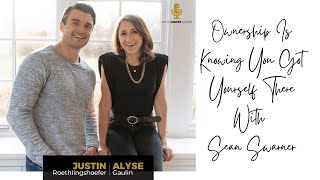
Sean Swarner, a two-time cancer survivor and mountain climber, talks about what ownership really means. He argues it's not just taking responsibility for failures, but knowing you earned your wins through your own effort and choices.
This is the Own it show, where we tell stories of how everyday people made ownership theirs to create extraordinary success.
Welcome back to another week of the Own It Show, Coach Conversations. I'm Justin.
And I'm Elise. Welcome to the show, guys.
City College, I mean, I was Belushi from Animal House. I had a wonderful time. I was reliving my high school years. I was a guy drinking way too much, swinging from the rafters. Now I'm focusing on climbing mountains, giving keynote presentations, and helping people understand what I know about life without having to go through what I went through. And they definitely change. However, there are some core values that are always there, like family and health. Those are always there. But actually, I have an online program called the Big Hill Challenge, and I do it every three weeks myself, because every three weeks, I put together a core values assessment where I personally evaluate my personal core values, and I always use those to help me make any decision in life.
It's such a great practice to have because life can oftentimes get away from us. And going back and revisiting that every three weeks helps keep it really fresh and at the forefront and to make sure that they're fully integrated into your life.
Oh, absolutely.
One of the things that I found really interesting is this idea you brought up at the beginning of trauma, right? You can either be forced to go through a change that has you living in alignment with your values, or you can choose to do it right. And some do one, some do the other. But for you, at a very young age, you were forced to go through experience extremely traumatic experiences twice. And one of the things that we notice with a lot of our guests on the podcast is there's a very clear before, there is a very clear event, and then there is a very clear after. And oftentimes in that after space is what we call stepping into living in alignment with your purpose, your passion, your values, and really what we like to call ownership. So, and you kind of referenced it. You said, I chose to start to live life to my fullest, which is that after peace. So can you describe to us what this afterpeace for you looks like and define what living life to its fullest truly is for you?
How much time do we have?
As long as you need.
I think that putting it succinctly, and I'll get into more detail, too, is I think because of what I've been through. And there are. I mean, I was right. My last right, you know, I was in a medically induced coma for a year of my life. I Have one functioning lung. And I think at this point in my life, I'm more afraid of not living than I am of dying. Because I mean, you know, here's. Here's where I was born, here's where I'm going to die. This is my lifeline. I can't change this. You know, it might be here, it might be there. It should have been here. When I had those two cancers, my life should have been really short. But I've been given, I've been gifted the gift of life to continue forward. And I don't know when my life's going to be over. No one does. I can hop into the car, I can trip down and get to an accident. I can trip down my stairs, going into the kitchen. But what I've really focused on in the after part of the cancer is kind of along the saying of, and I'm sure you've heard this before, that you are what you eat, but in reality, you are what you consume in any sort of way. Meals, obviously, but through media, through people who you surround yourself with, you are what you constantly consume. Humans are creatures of repetition, and we pretty much are a representation of repetition. What we do every morning decides how we're going to start our day or how our day is going to go. What do parents do when they wake up in the morning? They have a pattern, they have a routine. What do meteorologists do when they wake up in the morning? They have a routine. What do Olympic athletes do? It's all different, but what they do defines who they are. So a lot of people don't understand that if you want to change who you are, change what you do, and that really helps people hone in on, just pick one thing that you can change in the morning. It might be, don't get on social media, don't watch the news. For me, I wake up and every time I open my eyes, I literally tell myself, no matter what happens today, today is the best day ever. And I have a choice to make it that way because I can choose how to react to anything that happens to me. And I think what going through those cancers has really taught me was that I always have a choice. You know, going back to that 13 year old who was 60 pounds overweight, balled from head to toe in the shower, I literally saw it as me having two choices. I could fight for my life or give up and die. Why would I choose the latter? And I've also realized that going through everything that I've been through, I didn't. And this Is what I did as a 13 year old too, is I didn't want to focus on not dying. I wanted to focus on living. Because wherever we focus our attention is what we're going to get. You know, how many times have you left the house thinking to yourself, oh, don't forget my keys, or don't forget to do this, don't forget to do that. And you forget because your brain isn't programmed that way if you tell yourself to remember certain things or do certain things. So I've learned over the years that I want to focus on what I want, not the avoidance of what I don't. And I think that's really what's helped me. What I've really learned going through these two cancers, but also going up climbing Everest with one lung, I wasn't focused on not dying. Entrepreneurs, when they get into the business realm, I guarantee they don't think to themselves, hey, I don't want to lose money. So what I've learned through going through these, these cancers in my expeditions in life is it's all based on perspective. And you always have that choice on where you want your brain and your energy and focus to be.
It's. It's brilliant the way that you say that. I mean, guys, if you're listening, if you're in the car, don't write these down, but anywhere else, like write these down. Where you are, what you consume, you want to change who you are, change what you do. These one liners are so real. And to create change, change has to happen. And so often we, I mean, Einstein said it, the definition of insanity is doing the same thing over and over and over again and getting the exact same result, but expecting something different. And it is no different than for ourselves. And I am curious, Sean, when you were going through this as a 13 and 16 year old and then moving through this, going back to your quote of you are what you consume, how did that change who you were around the environment you were in, the mindset you had, the things that you listened to, the things that you watched? How did that truly define you or shape who you were to bring you forward?
I honestly think that I'm one of the most optimistic people I've ever met in my life. And I think it's because of a choice. And I keep going back to that word, choose. But it's so appropriate because when I got through the cancers, I chose not to let that negativity into my life. Why would I surround myself with people? And I was always in athletics as well. So why would I surround myself with people who would say something like, oh, you know, you could never break two minutes in the 800 meters. Why would I do that? But then also thinking about it, I realized that, well, I'll ask a question. Who do you speak to more than anyone else in the world?
Yourself.
Yourself. Research has shown that, on average, 80 to 85% of that internal dialogue is negative. Would you be friends with someone who's that negative to you?
Definitely not.
Then why do you do it to yourself? Everybody does it. So when I got through the cancers, I realized that in every situation, I had a choice, and I didn't want to surround myself with negative people. You know, even in the hospital, my parents helped me with this, too. Looking back at it and just thinking out loud, they didn't want me to be in the hospital and have a roommate with someone who was dying, who wasn't going to make it. It happened once. There was a friend of mine who had a brain tumor, and we were both released from the hospital. It was actually kind of a race. I remember we were sitting in the hospital and we were just waiting for the iv, the chemo drip bag, like, you know, I'm going to get out of here first. No, I'm going to get out of here first. So I called the nurse and I was like, turn it up. You know, give me more Dr. Per minute. And that was the last time I think I ever spoke to him. He ended up passing away from his brain tumor. So I know it's there, and I know that negativity is there, but I don't want to surround myself with it. But whenever I go on vacation, holiday, climbing, whatever, I also go to local hospitals and share my survivorship story with the patient because I know it's very cathartic for myself, but also it helps them see some hope. Someone who's been in this situation. But again, going back to how I choose to react, I see it as they have yet another life to live, or they have another. Yet another day to live. And they can choose to be happy with what they have. And that's something I do every night as well. I never go to bed thinking, oh, I didn't get this done. I should have done that. I wish I would have done that. I go to bed, my wife and I are laying in bed, and we share with each other every night five things that we're grateful for that happened that day. So that way, every single night we go to sleep, I close my eyes with an attitude of gratitude, and the same Thing when I was going through my cancers, when I was terrified to close my eyes because I didn't know if I was going to die in my sleep, I wasn't. Eventually got to a point where I was comfortable being uncomfortable and I would close my eyes, not being focused on, oh, my God, I might die or I didn't do this. I close my eyes every night, focused on everything that I was able to do that day.
It is so clear, Shawn, that you have an unstoppable mindset and that it is what is allowing you to live in the ownership state that you are today. Now, you have given us a couple tangible ways in which you practice this mindset. Right? You said you wake up every morning saying, this is going to be the best day ever. Practice that attitude of gratitude every night. What I am really curious to know, and I am sure a lot of our listeners are really curious to know, is what are some tangible ways in which you practice this when you're climbing a summit? Because you said, I don't remember if it was pre before we started recording, but when we were chatting, you said, you really have to go internal on those months because it's you and mother Nature, right? And so talk us through what's happening in those moments.
Okay? So, for example, I just got back from my 21st summit of Kilimanjaro. I take a group up every year as a fundraiser for a cancer charity. Anyone can go. But what we do is we actually pay for a survivor's trip, and then it's the responsibility of that survivor to raise funds for next year's Survivor, kind of paying it forward. So we raised enough to take two survivors this year. And while we were on the mountain the first night, I always ask people, well, what was in your mind? And most of them were thinking, oh, you know, don't stop. You know, I don't want to get hurt. Don't slip and fall. Don't trip. And I go around the tent, we'll say this tent back there. I go around the tent. And everybody always, 99% of time, always, they always tell me things that they don't want to happen. And I tell them, well, flip it around and focus on what you do want to happen. And I tell them, for me, what I do on the mountain is literally every step of the way, I tell myself, with one step, I say, the higher I go. With the other step, I say, the stronger I get, the higher I go, the stronger I get. The higher I go, the stronger I get. And if I'm taking say 150,000 steps up the mountain, that's 150,000 positive affirmations that I'm giving myself, you know, because the mind is just like a glass of water, let's say. And dirty water represents negative thoughts. Clean water represents positive thoughts. What's going to happen if you have a glass of dirty water? You turn on the faucet and just constantly flush that clean water through. It's the same thing as the thoughts that are in your brain. Constantly flood your brain with positive supporting affirmations, positive supporting thoughts. That's what's going to be there. That's what's going to push you forward.
The other thing that just popped in my mind as you were giving that analogy was you could have an entire glass of clean water and throw a drop of dirty water in there and the entire thing becomes dirty.
Absolutely.
And so that was. It was. It was a great analogy. Just to bring forward that and reinforce what you just spoke about is it takes so many more positive reinforcements to change that thinking and change that thought process than it does to intoxicate something and make it dirty or negative.
I love that. I've never thought about it the other way around before, but you're absolutely right. You know, all it takes is one. One negative thought, one negative seed, and all of a sudden you're growing weeds.
In your garden completely. I love it when that happens just so organically. But, Sean, talk a little bit about the. The other summits that you've made and how you've. Why. Why did you choose climbing, almost climbing as your new identity, really? Shaun the climber, the cancer climber, those types of things. What.
How did that.
How did that all come to be and to become this new Persona?
You know, I was. I was studying for my master's and my doctorate in Jacksonville, Florida, at the University of North Florida. And I took a sabbatical from the studies because I started thinking about what I'd been through. Because like I said earlier, I went to college, I was a party animal. And I never had time to reflect on what cancer meant to me and how it changed my life. Because anybody who goes through something traumatic, it changes you, but it's up to you to decide on how. So it took me a long time to literally sit down and stare myself in the mirror, to take that long, proverbial look in the mirror and ask those deep questions of, who are you? What do you want? Because when I was going through my cancers, my teen years were taken from me. I developed no concept of the future. My Future literally was in the moment. So now I was in grad school, and I was thinking, well, I got the rest of my life to live. You know, what the hell am I going to do? And then the whole time I was going through my life after the cancers, I realized that I had this baggage, and inside this giant bag was the cancer. So it was the first time I actually stopped to look in there and think, okay, well, I can't help anybody else until I help myself. So I thought that by being the first survivor to climb Everest, it would do two things. It would inspire people touched by cancer around the world to never give up, to show them what's possible, because oftentimes we just have to have that seed planted of this is possible. You know, going back to the miracle mile with Roger bannister, right? They thought it was impossible to run. I think it was under four minutes for the mile because they thought the body would suffer internal damage. But the instant he did it, thousands of other people have since. I wanted to do something similar in the cancer industry, in the cancer world, to give people the hope that there's something else for them as well. After cancer, it's not necessarily the end. It's the beginning of a new life. I wanted to do that first and foremost. Secondly, I just wanted to continue proving to myself that maybe I'm still alive and constantly push the envelope and reach around the world. Because after being the first cancer survivor to climb Everest, I ended up climbing the seven summits, the highest mountain, every continent, skiing to both poles and completed the hawaii iron. And I just want people to realize that, whether you think you can or you can't, you're absolutely right.
I love it. I absolutely love it. Because it's that mindset of continually challenging yourself and doing things that are seemingly impossible, but only because you haven't chosen to accept that you can do it. And I think that's what's so cool about you and your story. And I wanted to ask a question. I have it written down, is do you realize or do you have the awareness or when did this awareness arise that you have these skills? You have these skills to be positive. You have these skills to see things a certain way. You have these skills to show up in this way. And the reason I asked this question is because so often we're so internalized that we're like, oh, doesn't every family have two parents, a mom, and a dad? And doesn't every person know how to play soccer this well? And isn't everybody this great of an artist. If that's just skills that you have, naturally. And I'm so impressed by you in these ways in which you think, when are you aware of that? Of the skill set that you have there? And if so, when did you become aware of that?
That's a great question. And I don't think I've ever thought about it before. And I think therein lies the answer to your question, because I've never thought about it before. It's. It's not a skill I don't think I have. It's just who I am as part of my. My being, my DNA now.
Yeah.
You know, I don't think I've ever developed that skill. It just maybe I have with going through the cancers. And it's always been a choice, but it's something that everybody can do.
Yep. And that goes to my point, I think I'm trying to bring out to the audience as well, is that even by not reading every book on positivity and every book on mindset, or going to all the gurus, by just simply living and making the choice to be positive, making the choice to see the glass half full, making the choice to speak kindly to yourself, you've been able to put so much into what you're able to now invest into other people, and that every listener has that same ability.
Absolutely. And you can read all the books about business, all the books about being inspirational, motivational, but until you actually do something with it, until you actually do something that means something to you, you know, you can be an expert because you've read a million books on it, it doesn't matter. But if you're not doing something with it, what's the point?
100% right. Not doing something with it and not living it at the end.
Yeah, absolutely.
You know, Sean, one of the things I noticed about you is you have lived through many people's worst fears. Getting cancer twice, climbing a mountain. A lot of people are fearful of that.
And not just one mountain, like multiple.
Many.
What, other than not living life to its fullest? What scares you today?
Long silence. Honestly, I think it's. And this may sound really weird, but not living up to my potential, because I think we are for everybody. We're our own worst critics. And I think everybody has. It's usually four things that hold them back. I call them the gales. They're the gremlins. The interpretations, the assumptions, and the limiting beliefs. And for me, there's a little gremlin. And everybody has a gremlin. Right. That sits on Your shoulder. And it's most closely, deeply, emotionally laden negativity where it's that voice in the back of your mind where you hear, you're not good enough. You're not strong enough. Oh, everyone's going to laugh at you. And I've named mine Cooper, right? He's like this little gnome that sits on my shoulder. And it's not. The voice, isn't, hey, you're not good enough. It's that, hey, you're not going to do enough or you're not going to be enough. Because I know what I know going through these cancers, and I know how short life is, and I want to make the most of every moment that I have. So I don't know if I'll ever be happier, satisfied. And I'll never be complacent. That's a better word. I will never be complacent in my place in life because of Cooper. So he and I have actually, we've come to terms. We're like this now. So I'm like, listen, dude, when he rears his ugly head, I'm like, listen, dude, you were here in my life in the past to protect me from harm, from something. However, we both want what's best for me. Let's work together on making that happen. So let's work together on being the best we can be together, I mean. And I've learned to ignore those other voices in my head, so don't worry about that. But I think my biggest fear would be letting people down. And I think it was apparent because when I went to the north pole, I was followed by a film crew on Amazon. It's called True north, the Sean Swanner story. Tremendously well put together film and in there watching. I didn't even realize I said this, but I was watching it, and one of the cameramen asked me, you know, what are you afraid of? Or something like that. I said, I don't want to let these people down. And there are names of people I was putting on a flag that I was taking to the north pole. Names of people who've been touched by cancer. So I think my biggest fear, to answer your question, in I guess a political sort of way, like the way a politician would kind of beating around the bush. I think I'm more afraid of letting people down than anything else.
That's powerful. And how do you every single day, make sure you're not letting people down?
Lots of alcohol.
Copious amounts. That's how I actually climb the mountains.
Why do you think I climb the Mountains. There's whiskey on top. Right.
He actually walks it in zigzag fashion, right?
Yeah. You know, those switchbacks, those weren't intentional. How do I do? I think I focus on, again, what I have control over and what I have no control over. I let go, you know, I have no control. It's kind of like, again, taking people up Kilimanjaro. I tell people there's no such thing as bad weather, just bad gear. It's the same thing as life. If you're not prepared and you don't have the tools to handle life business, it doesn't matter. It's not the situation's fault. It's your fault for not being prepared. So I control what I can control by being prepared, by seeing what could potentially happen and dealing with it before it happens in my mind's eye and with other things that I have no control over.
Why worry about it?
And it's so clear that you are well prepared for the life that you are living at this point to its fullest. And it's. It's so amazing to witness this and to hear your story and to be able to talk to you about it. One of the things that we ask all of our guests on the podcast is one of our favorite questions that our listeners love to hear in a sentence or a phrase. What is your definition of ownership?
Wow. My definition of ownership would be knowing and understanding that I am where I am in life because I own all the seemingly mundane choices and decisions I've made in my past. So where I am right now is 100% my responsibility because of all the decisions I've made in the past. So ownership for me comes from recognizing and knowing that where I am in my life is my choice, my decision. And where I go in the future, I'm going to own, because it's, again, my choice based on my personal core values.
So you own the journey and you own the process.
It's my life, no one else's. Right?
Absolutely. Sure is.
You brought up core values again, and I want to. You breached this really briefly early in this podcast, and you said you have your own personal Hill Challenge that you come back to and you do it every three weeks. Can you walk through that process really quickly of what it looks like of how you continue to update and almost like checks and balance of your own value system?
Absolutely. I actually. I put together a journal. It's called the Summit Challenge Journal, but the program itself is called the Big Hill Challenge. I think you can just go to thebighillchallenge.com the first part is actually picking 10 different personal core values. It took me months and months, if not a year or more, to put a list of 60 personal core values together. Pick 10 of those, and then based on those 10, I want you to rate how you're living those core values on a scale of 1 to 10. So if you pick, say, I don't know, personal development as one of your personal core values, that must mean that you value that a lot. But if you're actually living that value at a 6 or a 5, you now see where you want to start focusing most of your energy and attention. And then based on that, I also have in the journal, you bookend your day on a positive note in the morning and with affirmations, and then you go to bed being grateful. And then there's also some vivid visualization. And there's a lot of things that just kind of map. It helps people develop their own personal route to their summit. You know, it's. It's not because I've been doing a lot of thinking about this, a lot of research, where there are numerous programs out there saying, hey, you know, do this, this, and this, and this will be. This will be your result. But there's nothing there helping people develop their own path, because we're all unique individuals, and we potentially have different motivating factors, which, ergo, back to your personal core values. So if you know what your personal core values are, you can start making conscious decisions based on where you want to strengthen your life more. And with that, you can just do it for three weeks, reevaluate those personal core values. You can see that you've increased it, say, from that five. Maybe now it's at a seven or an eight. And if you want to, you can pick a different personal core value based on what your goals are for that year, that week, that month, whatever it might be. So not only am I helping people be empowered, they're empowering and developing themselves how they want to be, not how I want them to be. So that's what I think. That's one of the greatest things about the Big Hill challenges. It's such a generic program that it works for everybody, but it's so incredibly specific based on what you want, not what the person who wrote the program wants for you. So I do that for myself. Every three weeks, I go there, okay, journal, done. Where do I want to focus now?
I love it. And, Sean, where can people engage with you more? Where can people find more about you? Where can they have access to the next Kilimanjaro journey that you guys are going on.
That's the easiest question you've asked me so far. You can just go to seansworner.com, s E A N and then like the Warner brothers, but slap an S on the front S E a N S W A R N E R. Or shoot me an email. SeanNancerClimber.org Fantastic.
And it's been such a pleasure having you on and really, truly learning about everything that you've gone through. And guys, no matter whether you're listening to this, working out, driving, taking a walk, it all comes back to what your values are. What core values do you truly live by? Because it's going to help you ultimately decide what you need to consume. And once you consume that, that's what you become. The more of it that you consume, the more of it you become. And ultimately you can only change what you are and who you are by what you do. And without having that true north, without having that guiding light of those core values, it's going to throw us in a multitude of directions and we ultimately won't be able to get to the success, get to the place that we want to be, get to the summit of our life, knowing where can they have access to the next Kilimanjaro journey that you guys are going on?
That's the easiest question you've asked me so far. You can just go to seanswarner.com, s E A N and then like the Warner brothers, but slap an S on the front S E a N S W a R. Or shoot me an email. SeanCancerClimber.org Fantastic.
And it's been such a pleasure having you on and really, truly learning about everything that you've gone through. And guys, no matter whether you're listening to this, working out, driving, taking a walk, it all comes back to what your values are. What core values do you truly live by? Because it's going to help you ultimately decide what you need to consume. And once you consume that, that's what you become. The more of it that you consume, the more of it you become. And ultimately you can only change what you are and who you are by what you do. And without having that true north, without having that guiding light of those core values, it's going to throw us in a multitude of directions and we ultimately won't be able to get to the success, get to the place that we want to be, get to the summit of our life knowing that every time we hit a summit, there is another one that we are going for and another one that we are going for and another one that we are going for. And at that point, it becomes more afraid of not living than it truly does of dying. Because we know that the best is not still inside us. So we know success is different. So be different. And Sam.
More from Justin




The Ultimate Blueprint for Taking Ownership of Your Health | Unlock Peak Performance

From Bullied & Anorexic to Healed & Purposeful: My Transformation Story (Justin Roethlingshoefer)


Forget "One-Size-Fits-All" Health! Unlock Your Best Self with True Personalization (The OWN IT Show)

Are Blood Tests Enough? Why Cellular Testing Might Be Better | Justin Roethlingshoefer

Your Body's Language: Understanding Stress & HRV| The Power of Ownership - Chapter 3 & 4


Is "normal" really making you sick? Dive into Different with The Power of Ownership:Chapters 1 & 2