Ownership Is Loving Who You Are With Emily Lyons
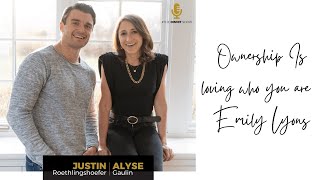
This is a YouTube video titled "Ownership Is Loving Who You Are With Emily Lyons" published in September 2021. It features a conversational interview hosted by Justin Roethlingshoefer and Elise with Emily Lyons, a serial entrepreneur. The discussion covers Emily's entrepreneurial journey, mindset, failures, successes, business growth strategies, and the importance of ownership and authenticity in personal and professional life. The content is motivational and aimed at entrepreneurs and business builders.
Here. 3, 2, 1. Welcome back to another week of the Onitch show Coach Conversations. I am Justin.
And I am Elise.
Welcome to the show and listeners. I know that as you guys have really been focused on building your businesses, growing your family, growing yourself, and every guest that we have brought on, there is always something tangible that you are able to take away. The biggest thing that we've started to hear and people have reached out is what happens when you get so many ideas, when you start getting so many opportunities, you start living in this state of abundance and it just starts to roll and starts to come. And starts to come. Well, we sought out somebody who has 10 businesses, is involved in a multitude of different platforms, has created so much for herself, and continues to execute at a high level. And so the nuggets that she's going to drop today, the insights that she's going to be able to provide for you, but also the level of ownership, mindset, and state of operations that she does things with, is something that I really want you guys to keep an eye on, because it's not what people have that's really admirable. It's the system, strategies, and processes that they've put in place to create those outcomes. So with that being said, Emily Lyons, so happy to have you on the show, and thank you for taking the time to be here with us today.
Thank you for having me.
Emily, I am so curious just to learn more about you. I have obviously done some research. I have listened to your podcast and your show, and I'd love to know just a little bit more about your journey that brought you to ultimately where you are today.
Yes, absolutely. So I started as an entrepreneur 12 years ago now, which is really kind of crazy to think about, but back in 2009, and it was never something that I had ever thought about entrepreneurship. Growing up in Stratford, it really wasn't a thing. I mean, people owned businesses, but they were ones that were passed down from generation to generation. And.
And just let people know. Stratford is like, if we're talking about this is like small city Canada. So I know a lot of our viewership is in the United States. So we're talking about small. Small. Like, what's the population of Stratford right now?
Now it's 30,000.
Exactly. So 30,000 people. So to go and create what you've had is completely altering the mindset of a lot of the people that are probably around you all the time.
Yes. So, absolutely. I mean, where I. Where I grew up, yeah, it's. It just wasn't a thing And I moved away at a very young age, 18 or 19. I moved to Australia to be a nanny and just got exposed to a lot of the different ways of the world and made my way back to Canada eventually and was in Toronto and was just unemployable. I couldn't keep a job because I sucked at working for other people. I wasn't passionate about it and so I just, I couldn't make it happen. Going to work was just soul crushing, no matter what I was doing. And I went through job after job after job in so many different areas. And my sister had sent me a book called Career Renegade. And this was back when Amazon just did books. So she used to send me books. And so she sent me this book and she was nagging me to read it and I hadn't. And so finally I said, okay, I'll read the first chapter. And it was how to make a great living doing what you love. And it was this man who had taken all different passions in his life and creatively monetized them and turned them into massive businesses. And so this just struck a light bulb in my head of if I can make $30,000 a year working for myself, I wrote down, I'll be happy, I'll be content, I can afford my crappy basement apartment that I live in and minimal food and I will be happy forever. That was my, my goal. And so I had that light bulb moment. And at the time, one of the jobs that I did enjoy was working as a brand ambassador. So I would do events when I could get them part time events where I would just be paid to go and basically socialize with people. And being young, 20 year old, I thought this is the greatest job known to man. You're paid to network and have fun and go to parties. But I mean, it was very few and far between. So I thought I can create an event staffing agency that provides those staff that I love to do. And I mean, I was thinking very, very small. I was thinking like, I'll do an event, I'll work the event with one other person, things like that. So that was the beginning of how it all started.
When you started to, when was the moment that you started to see traction? And the moment you started to see traction, when did that small vision start to become greater?
Yeah, so there was, there was a lot of things that seemed really big at the time, but I mean, once you hit the next, the next big one, then the other ones before that seemed so small. But the first real time that I started getting Bookings, I mean, it took a while and it was really frustrating and disheartening. I was utilizing any free service I could find, so free email marketing, social media, of course. And I was really struggling to pay my rent and just make any ends meet. I remember I was rationing my food for the week and I, I got a call, I had this old junkie flip phone and I got a call from a nightclub and it had said their usual agency had fallen through and if I could fill, fill the booking. And it was last minute and they said it was, it was in two hours time or something and I had no idea what I was doing and I just said yes without knowing and made it happen. So I went, I worked it myself, I booked some other stuff. I networked with everybody there, gave my card to absolutely everybody that was in the venue, and they were so happy that I could fulfill it last minute that they gave me another booking on the spot. And so from there I was able to leverage that and get into more venues. And before I knew it, we were doing all of the events around Toronto and we were working pretty much every night of the week in the nightlife space. So a lot of late nights, but really a lot, a lot of fun. And as I grew and I started to realize that that wasn't really where I wanted to be, I started to move into the corporate world and that was when we saw the biggest financial growth. Because now we're going from staffing a few, I mean maybe up to 20 staff at maybe like music nightclub to now we're staffing hundreds for a marketing campaign or staffing an entire trade show. And from there we, we, we grew and we grew. Um, there was little things I'm thankful that I did start with no money because there was little things I learned that I implemented early on that really paid off. So like search engine optimization, so blogging a lot and implementing all of those strategies that I read about got us ranking within a year for the top of the search engines. So we were having now this steady stream of new potential clients coming into us.
Emily, your story is so inspirational because like you said, you started in a tiny basement apartment, you had this big audacious goal at the time, which was $30,000. And fast forward a few years now, right? And you have completely cracked that goal wide open and assumingly surpassed, far surpassed what that was, and let me dig into a little bit about the mindset that it takes to do that. So clearly, as an entrepreneur and you as serial entrepreneur, you know, now overseeing multiple Businesses, not just one. What I would love to understand and if you could dive in a little bit about what it takes from a mindset perspective to put all your energy into one thing and then chase another thing, and then chase another thing and chase another thing, because the path that you've chosen is not a path well traveled.
Right.
And so talk to us a little bit about what it takes to be.
Able to do that.
Grit, perseverance. You just, you got to be willing to fail and just keep getting back up and learning from your failures. So any, any entrepreneur knows that failure is just part of the journey and they accept that and they don't let it derail them. But there are so many people that I have met along the way that have run into some sort of, of, of roadblock and then they give up. And so you have to just have that mindset where no matter what is coming your way, you are going to keep going. You might just have to change the path that you were going, change what you were doing, but you're going to keep going. And so I think that was the biggest thing for me is that I was just so stubborn that once I had this idea in my mind, I was going to make it happen. And so, yeah, that is really the mindset that I had that really paid off. There's a really great book, Grit by Angela Duckworth and they conducted this study, she actually has a TED Talk as well where they found the, the, the predict. The single quality that predicted success was wasn't financial backing or experience or education or where the person was born in the world, it was having. So that, that quality where no matter how many times you get knocked down, you keep getting back up, getting back up, getting back up. And they found that was the biggest determining factor for success in athletes or in, in business or just all across the board. So I think that being willing to fail, I mean, I'm not the smartest person out there by any means. I dropped out of high school in grade 10, but I am so stubborn. So I think once you realize what you are capable of, then you can do it in so many different areas.
Sounds like resiliency at its finest. So talk to us a little bit about how you knew it was time to start a new business.
Knew, you know, it's just a. I think like any entrepreneur, you get this idea and once you get that passion for something, you got to see it through. And so when something keeps nagging at me, nagging at me, I just gotta do it. And I don't think I'm dumb by any means. I still think there's a unicorn out there that I'm yet to find. But I really love. I love the actual process of building a business. It's my favorite part of seeing it come to life and everything that goes with it and seeing it succeed or fail. I mean, it's that rush, that scary part, that part where you get to innovate and create, and it's really my favorite part. So I just love the journey of it.
Emily, what were some of your failures along the way? That when you were in them, you saw them as failures, but ultimately became massive learning experiences for you that really helped propel you to your next success?
Yeah, there was a few things.
Not.
Having contracts at the beginning, like, being very nice. So I was very, very afraid to offend anybody or overcharge. So I was always really undercharging. And, you know, if I knew the person, I didn't want to have them sign a contract. And so the first employees that I brought on, I didn't have them sign contracts and of course ended up with a bad employee that tried to steal business. And it ended up in my first lawsuit against them. And so it was just this whole. Again, coming from a small city where everybody knows everybody and everybody trusts everyone, nobody locks their doors, it was like, mind blowing to me that people do this to one another. And so that to me was. Was just. I wanted to. To give up because it wasn't really in me to. I didn't think I had it in me to. To sue somebody. But I realized, you know, you can still be kind and you can. And strong at the same time. You know, kindness doesn't have to equate to weakness. And so it was finding the balance between the two of them. But it was a great learning experience because now I have everybody and my brother signed a contract. No matter who you are and what you do, and they're ironclad and they're always getting updated. And yeah, another. Another thing, a mistake that I made was really hiding my personal life and separating who I am from my businesses. So I know that a lot of people, especially, you know, back in the day, we had this professional image that we put out there, and it was separate from who we were. You know, we didn't share our personal life. And it wasn't until a few years in when I realized that the power was in my message. So my mess, I made my mess my message. And that was really when I saw people connecting with me on a whole other level. And My followers growing and getting asked for media interviews and, you know, Forbes reaching out to profile me and places like that, because that was what they liked. You know, what makes you weird is what makes you unique. And that's your strong point. And so I think hiding that and just curating these images and what you want to put out there is definitely not the way to go about it. And I think everybody should be doing that and building a personal brand because of this.
Go ahead.
That's certainly a great message and something that I personally relate to as well and have found a lot of personal growth in doing that. And like you said, it's something that has completely changed in today's day and age. It's almost expected that you show up as yourself instead of, nope, this is my professional self and this is my personal self. It's actually a great segue into the next question I have for you, which is one of the things that Justin and I often talk about is this idea of a rhythm between recovery and overreaching. Because somebody at your level continually overreaching and working and working and pushing it could easily lead to burnout. But to be successful at the level that you're at requires some level of recovery, some level of self care, some level of you really being able to put Emily first. So talk to us about how you mediate that balance for yourself.
You know, it's constantly a journey and a struggle. And I have these discussions often with friends. And a close friend of mine is Keith Grossman. He's the president of Time and he works non stop and really struggles with this. And so he does not believe that there needs to be a balance. But from my experience and from the majority, I really truly think to do good work, there has to be some sort of balance. Otherwise I know I burn out and that the work I start churning out just is subpar. So for me, that looks like taking a walk in the middle of the day. I usually will take a break when I start to notice that. I mean, I'll start to notice because I'll start to. The quality of stuff that I'm putting out there just isn't what I want it to be. So I'll take a break and I'll go for a half an hour walk and just kind of recoup. And you need that time to just be creative and let that part of you, if you're always in, go, go, go, go, go, then when is the time there for you to innovate and think of new things? And so I think self care of course, is just. And just stepping away, going for a walk somewhere. I like to go in the forest here and just disconnect because I can't get wi fi there, can't get texts at a surface. So that's what it looks like for me. But it's an interesting discussion for sure. For a long time I didn't have balance and I also didn't grow at the rate that I can grow now when I do have it. So I think that to be more productive, you really do need that balance.
When you notice that you kind of fall out of that balance and notice that you have that the adjustment in your work or the quality of work isn't what you want it to be, what is it that you're able to really latch onto and be that auto regulator for you that pulls you back into those action steps that allow you to come back to that high quality work? Emily.
I'm not sure I understand.
So when you notice that your quality work is starting to fall off or you're starting to get certain feelings internally that hey, I do need a break, I need to give myself a moment. What strategies do you utilize to maximize that self care time for you?
Yeah, I like to use meditation apps, so I'll use the Calm app. I also use Waking up by Sam Harris and I love the Sam Harris app. It's just a mindfulness app and really just constantly quieting your thoughts because like all of us, we're in this world of go, go, go, go, go, go, go. This next thing, this next thing, this next thing, got to keep up, got to go faster. So to just sit back and be forced to quiet your mind. And I think it's the Calm app has a walking meditation, which is really great. So when you're walking, you can just do a meditation while you're doing that as well. But I did one of the Waking up podcasts or not podcast meditations earlier today and there's practices as well within there. But I feel that that really brings it out and it just makes you stop and quiet your mind. You can go back to work with just kind of like a fresh slate.
Absolutely. And I am so curious because I've listened to five episodes now and obviously your podcast mind you'd business.
Really just.
Telling stories of extraordinary people that have been able to do things in a very unique way and have found success. And I'm curious, what have you found in terms of patterns or recurring themes that each one of these people have exuded in their journeys, in their stories that have allowed for that success within their businesses.
Yeah, that's a great question. And it's interesting because they say success leaves clues and I definitely think that's true. And the most successful people I find all do a few of the same things. So they all get up really early. So all of them are up, you know, like 5am or even earlier and oops. Yeah, so they all get up really early and are just very intentional about everything they do. They delegate as much as possible and I think that's a really, really important thing. When, when you're a new entrepreneur, you're afraid to delegate things out. You think nobody can do it as good as you or it's going to be too expensive. But you really can't afford not to because when you delegate it out, then you can focus on the highest income generating tasks, you can focus on propelling things forward and growing things. And also a lot of them for the most part lead really healthy lifestyles. So working out, eating well, taking supplements and keeping up with the newest trends. A lot of them go to therapy, which is funny and an interesting thing that we've all talked about. Even this top psychiatrist that I, that I spoke with, she was talking about her psychiatrist and I said, you see.
A psychiatrist as a psychiatrist and she's like, of course.
So I thought that was funny. But really? Yeah. Taking care of themselves and getting up early. It's funny because none of the. Nobody really that I've ever met stays up super late. I'm in bed by 9 o', clock, but my friends call me Grandma.
We're early birds as well. So clearly now you've started multiple businesses and a vast majority of our listeners are entrepreneurs themselves and I'm sure many of them, as I am myself, also wondering if there's, you know, a single piece or a couple pieces of advice you would give to some of those who are just starting out on their entrepreneurial journey.
Yeah, what would I tell them? I would say to not be afraid to make mistakes. I think that we all. Oh, sorry, just one second. Sorry, just give me two seconds. Hi, you can buzz in with the code. 61210. Sorry about that.
All good.
Hope you can edit it out.
We're going to find your house and buzz in. 61210.
Yeah, so I would say don't be afraid to fail. I think that we all are, especially at the beginning, so scared of failure. We think that failure is final so we really play it safe and that is ok. But I think the biggest growth comes from trying new things and Getting outside of our comfort zone and learning from these failures. I mean, what is wrong with failing if you learn it? I mean, my failures have been my greatest teachers. So when you use those failures to strengthen you and propel you forward, then that is when you're going to grow. I would tell them to fail. I fail all the time still. I've had epic failures, and I think it's an important part of the journey. And just to get used to it.
It'S an amazing piece of advice. And actually, it's funny you say that because I just wrote an email to our community today on that exact thing that oftentimes that, you know, there was a quote from Michael Jordan who said, I missed 6,000 jump shots and I lost hundreds of games, yet I learned.
From every single one of them.
And I learned to be a little bit better every single time. And with amazing success.
There's failure baked in.
Right? And like you said, you have to fail. It's part of the process. It's part of the journey. Without that, you're never going to get to where it is that you're trying to go 100%.
And without having to go up against any of those failures, it's amazing that you cannot add. You can. So many people that we've interviewed on the show or that we've spoken with or that have found any success in anything have had to overcome something. And some of the scales are ranging, some are more. A little bit more eye opening than others, but everybody has had to go through some type of failure, some type of hardship, because if you haven't the moment you're trying to create something great, you're going to face a wall, you're going to face an obstacle, you're going to face a hardship. And if you haven't built that muscle in the past, be it from a continuation of failures along the way or even some great level of learning lesson at a younger age, you're not going to have that muscle to flex when the time is right, when. When you really, truly need it, and you're going to turn your back and the. The resiliency that you need to climb over that mountain won't be there. And so I think it's such a great message, learning and knowing that you're not alone in this. As an entrepreneur, we often feel like we're running this race by ourselves and that we are falling away in these areas. And it's so clear in everything that you've done that you've come up, I guarantee you, against a million walls, but found a window to climb into. And that's, I think, the really unique part about it. With all the brands that you've worked with, and now we're talking major brands here, like Warner Brothers. And you mentioned Time magazine, you talked about Forbes, you talked about Maxim, you talk about some of these artists that you. That you've worked with, from Justin Bieber to what ultimately allowed you to get into those spaces, what allowed you to now play in the big leagues.
It was just a little bit of growth by a little bit of growth and leveraging those connections to get the next connection. But, I mean, you have to treat everybody like they're your next big client. So when we first worked with Warner Brothers, the person who put us forward was a PR person, a new PR woman that worked for them who used to work for me as a promotional model. And so she was a former staff member that went on, and so she was the one who put us forward. But once you have those clients, you can use them to get the next client and the next client. But I think getting really great testimonials proving your worth, and sometimes it takes a lot of knocking on doors and following up and following up and building those relationships until you get that opportunity. And then when you get that opportunity, really just knocking it out of the park. The first real corporate booking that we got, we had bid on, and they were going to give it to someone else, and I kept following up and he said, you know what? You're so eager. I'll give you guys a shot. And so that was really the first one that we got. But you have to. Yeah, you have to be putting yourself out there and not afraid to reach out to people and build those relationships, but making your name known, being on social media, being visible, especially in the spaces where you want to grow in.
It'S all about networking and branding at.
The end of the day. Is it?
Yeah.
You can make those clients look good. They are going to want you back.
Absolutely. Bit of a fun question here for you. Do you have a favorite child business?
A favorite. Sorry, just one second.
Sorry about that.
Do I have favorite child business?
That's a good question.
No, I love them all. I love them all. It's always the next one. That's my favorite.
Always the newest one. Because like you said, that process of starting a new business. Spoken like a true winner, a true serial entrepreneur.
Seriously. Ask Tom Brady, ask Kobe Bryant. Which championship's your favorite one? It's always the next one. The next one. So I love it. It's so Interesting. Just always to hear people's journeys and the way in which you've been able to do this. And we always ask our guests this question, but what does ownership truly mean to you?
Ownership? I think it means owning who you are in your story, all parts of your story. You know, the messy, the pretty, all of it. And being who you are. I don't think that the professional life and the personal life are separate anymore. I think that they go hand in hand. I don't think that it stops at the door when you, when you go into the office. I think they, they are all one and you need to own all aspects of that. So being who you are, because that is going to change someone else's story. And so that is really what ownership means to me.
Spoken like someone who truly lives in ownership. It has been so amazing hearing your story, Emily. Where can our listeners find out more about you and learn more about you?
Yes, they can go to my website, Ms. Emily Lyons. Com, or they can go to my Instagram. Emily Lyones is my handle.
I love it. And again, if listeners out there, be sure to tune into her podcast, mind your business with Emily Lyons. It's. It's really been great. I've really enjoyed a lot of your episodes and gotten a lot out of them, which, again, like I said at the beginning of the podcast, as a content creator, I always love to hear that. So always make sure that you make known to people when they put out. Good work.
Thank you so much.
You're very welcome. So, guys, as you go forward, every single person is going to have a story and own that story. Own the good, the bad, the ugly, the uphill battles, the successes. But know that you can truly be who you are, that your personal life, your professional life, they intermix and it's okay to own those. You become more relatable. You are able to ultimately move through and really test your grit level to see where you can truly get to, so that at the end of the day, you can find that level of success that you are looking for. Because as we always say, success is different. So be different and own it.
More from Justin




The Ultimate Blueprint for Taking Ownership of Your Health | Unlock Peak Performance

From Bullied & Anorexic to Healed & Purposeful: My Transformation Story (Justin Roethlingshoefer)


Forget "One-Size-Fits-All" Health! Unlock Your Best Self with True Personalization (The OWN IT Show)

Are Blood Tests Enough? Why Cellular Testing Might Be Better | Justin Roethlingshoefer

Your Body's Language: Understanding Stress & HRV| The Power of Ownership - Chapter 3 & 4


Is "normal" really making you sick? Dive into Different with The Power of Ownership:Chapters 1 & 2